-3.4 C
New York
Home Blog Page 764

OHT’s ‘Alfa Lift’ secures Dogger Bank contracts

0

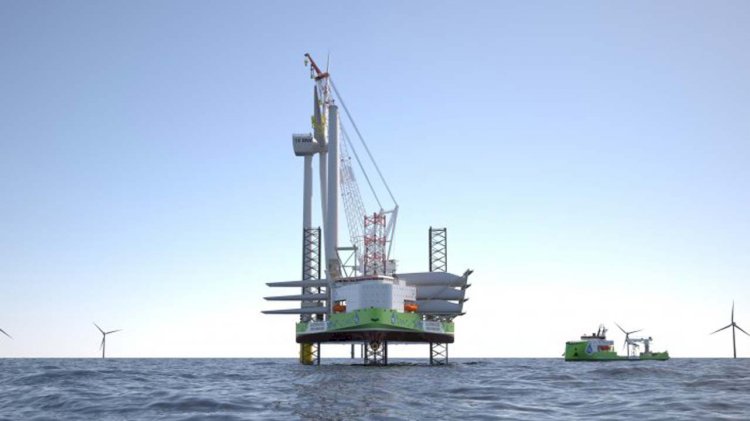
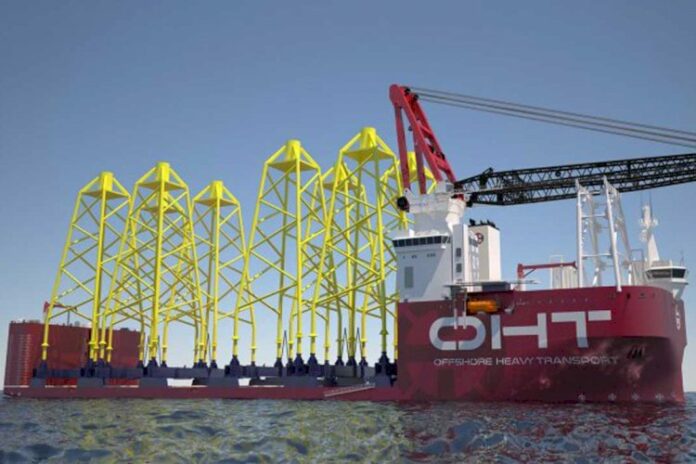
The shipowner Offshore Heavy Transport (OHT) has been awarded the contracts for the transport and installation of foundations at Dogger Bank A and B, using the newbuild Alfa Lift vessel, a ship design from Ulstein Design & Solutions BV.

The contracts follow after OHT in end 2019 announced the award of a preferred supplier agreement for Dogger Bank.

The ‘Alfa Lift’ will transport and install all monopile foundations and transition pieces for each of the two 1.2GW phases of the Dogger Bank project between 2022 and 2024.

Alfa Lift, designed by Ulstein. is currently under construction at the CMHI yard in China and is due for delivery next year. With this vessel, OHT sets a new benchmark in heavy offshore transport and installation. The vessel has the ability to perform heavy lift crane operations with the main deck submerged.

Coming from the offshore oil and gas industry, designing and building vessels for some of the world’s toughest areas and demanding operations, Ulstein has become a leading player in the growing offshore wind industry. The knowledge of how to integrate technical, operational and commercial aspects in a vessel design is paramount when contributing to the LCOE (Levelised Cost Of Energy) reduction in future offshore wind projects. New offshore wind farms are being developed further from shore, in rougher seas and deeper waters. This increases the need for higher carrying capacities, comfortable accommodation, vessel flexibility and operational availability and safety.

The Dogger Bank Wind Farm is being developed by SSE Renewables and Equinor, with first power expected in 2023. The contract award is subject to Dogger Bank A and B reaching Financial Close, which is expected in late 2020.

Fincantieri launches “Rotterdam” in Marghera

0

“Rotterdam”, the new cruise ship which Fincantieri is building for the ship-owner Holland America Line, a brand under Carnival Corporation & plc,  the world’s largest cruise operator, was launched today at the Marghera (Venice) shipyard.

The fitting-out phase can now begin, ending in summer 2021 with the handing over of the ship.

The event was introduced by the traditional and well-wishing “coin ceremony”, consisting, according to an ancient shipbuilding custom, in welding a silver dollar on the last deck of the ship. Madrina of the ceremony was Mai Elmar, executive director of Cruise Port Rotterdam in the Netherlands.

The ceremony was attended, among others, by Cyril Tatar, Holland America Group Vice President New Building on behalf of the ship-owner and Antonio Quintano, shipyard director, on behalf of Fincantieri.

The new unit, sister ship of “Koningsdam” and “Nieuw Statendam”, the “Pinnacle” class ships delivered respectively in March 2016 and 2018 from the same shipyard, is the fourteenth ship built for this brand by the Marghera shipyard. She will be about 99,800 gross tons, almost 300 meters long, with accommodation for 2,668 passengers on board in 1,340 cabins.

“Rotterdam” will be characterized by a modern and contemporary style, which blends perfectly with the traditional elegance distinguishing all the ships in the fleet. The design will be created, as for the sister ships, by two of the world’s major and prestigious architecture studios, Tihany Design and Yran & Storbraaten, with “the architecture of music” being an inspirational element for the design of many public areas.

The ship’s technology is aimed at optimizing energy efficiency and minimizing environmental impact and it responds to the most demanding and current safety regulations.

Baker Hughes launches its vessel-deployed subsea wellhead cutting system

0

Baker Hughes has announced the successful launch of Terminator, its vessel-deployed subsea wellhead cutting system. Using a first-of-its-kind mechanical wellhead removal method, the Terminator system has already proven its capabilities by successfully cutting a subsea wellhead from an abandoned exploration well owned by Wintershall DEA in Norway.

Romain Chambault, Europe vice president for oilfield equipment at Baker Hughes, said:

“In the current environment, every aspect of operations is under the spotlight. We see unavoidable costs for our customers, like wellhead removal, as opportunities to build new efficiencies into operations. The Terminator system is a game-changer for our industry, saving time, costs and fuel consumption to improve operators’ efficiencies and their carbon footprint.”

Baker Hughes worked with Wintershall DEA to cut the subsea wellhead from an abandoned exploration well in 360-metre water depth in only 35 minutes. By comparison, alternative abrasive cutting methods could take as long as five or six hours for the cut alone. The Terminator system can be deployed from a vessel and uses a mechanical cutter, rather than water jet cutting methods of conventional systems, to eliminate associated risks with high pressures. In addition, the system can reduce offshore personnel by two-thirds compared to conventional systems, requiring just two people instead of the typical six for water cutters.

The Terminator system can reduce fuel consumption with its 100-horsepower motor and is also smaller and lighter compared to the original 1000-horsepower abrasive water cutting system typically used on similar types of vessel-based operations. The Terminator technology is another example of Baker Hughes’ commitment to leading in the energy transition by helping customers decarbonize oil and gas operations.

Tore Oian, Drilling Manager for Wintershall DEA, said:

“While working with Baker Hughes on this project, we selected the Terminator system because of the lower CO2 impact it had on the environment. In addition, the solution required a minimum amount of deck space and only needed a crew of two people which gave us much more flexibility when selecting the vessel and reduced the mobilization time, considerably. Altogether, this was the best technical, environmental and economical solution for our operation.”

The total operation with Wintershall DEA, from deck deployment to laying down the Terminator system, took just two and a half hours – saving the operator up to 12 hours compared to conventional systems. After the cut was complete, the subsea wellhead, conductor and spudcan were removed immediately in a separate run from the same vessel.


Ulstein: Zero-emission turbine installation is today’s reality

0

Using readily available technology, the additional cost is limited to less than 5% of the total CAPEX.

Most new jack-up designs are featuring a battery hybrid system in addition to diesel gen sets, with a future option for hydrogen powered fuel cell system. The downside however of a high-power battery energy storage system (BESS) is its heavy weight and cost. That is not beneficial for a WTIV design, where weight savings are essential for minimizing Elevated Weight and optimising the Variable Deck Load.

Rather than to opt for technology to be matured to perfection and make a design that is prepared for future hydrogen powered fuel cells, Ulstein has taken the pragmatical, yet realistic approach. 

Ko Stroo, Product Manager at Ulstein, says:

‘We have carefully analysed the operational cycle of WTIVs and looked at the power demand in the various modes of operations. This analysis showed that ca. 75% of its time, a WTIV is in jacked-up position performing crane operations. Using a combination of a hydrogen fuel cell system and a relatively small battery energy storage system (BESS) is then sufficient to meet the overall power demand on board and crane peak loads.’

Edwin van Leeuwen, managing director of Ulstein’s Rotterdam design office, states:

‘The same design philosophy as on our first hydrogen powered SX190 design, resulted in a much more attractive business case when applied to a turbine installation vessel.’

The hydrogen hybrid system of the ULSTEIN J102 design has been developed in such a way, that future developments in hydrogen technology can easily be fitted into the vessel without major modifications. 

Stroo continues:

‘The limited availability of hydrogen bunker infrastructure in ports is often seen as a major hurdle. With our modular storage lay-out, we want to break the chicken and egg dilemma. It creates flexibility to operate the vessel worldwide, even when bunker infrastructure is not yet present.’

Edwin van Leeuwen says:

‘The strong focus on renewable energy and emission reduction to meet worldwide climate goals should also be reflected by investments in cleaner operations when installing offshore wind turbines. Hydrogen is one of the most promising zero-emission fuels for offshore vessels and we want to be leading in developing sustainable ships.’

Main features of ULSTEIN’s J102 hydrogen-hybrid zero-emission design are:

  • CO2 reduction per year: 4,000 mt
  • Emission reduction per installation cycle: 25 %
  • H2 fuel cell system: PEM fuel cell
  • H2 storage system: 7 x 40ft containers compressed H2
  • Battery energy storage

Mittelplate: Switch to 100% green power from shore will significantly reduce CO2 emissions

0

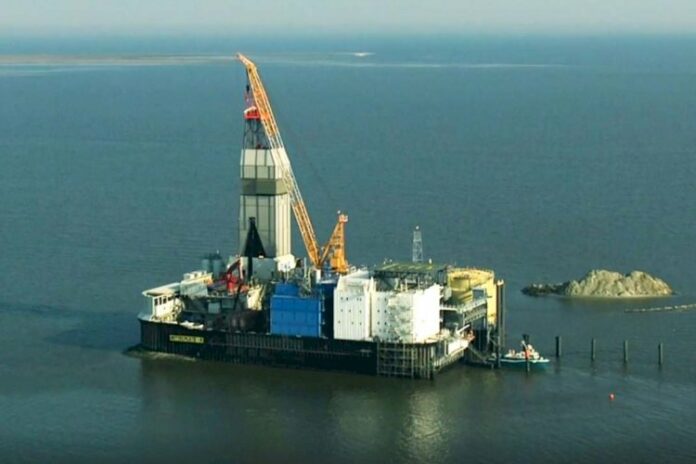
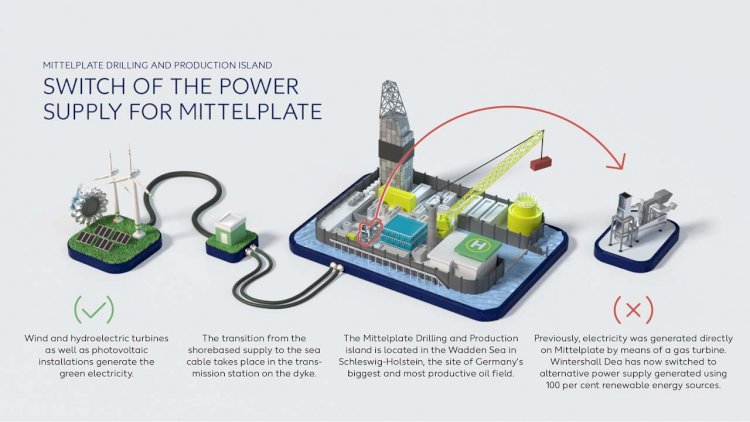
Wintershall Dea has switched the power supply to the Mittelplate Drilling and Production island in the Schleswig-Holstein Wadden Sea National Park to 100-percent certified electricity from renewable sources. This makes Mittelplate the first oilfield in Germany to be produced solely with green electricity.

Wintershall Dea’s Chief Technology Officer Hugo Dijkgraaf said:

“Through an innovative technological approach, we were able to stop generating electricity with a gas turbine and switch to green electricity from shore. Hereby we save up to 36,000 tonnes of CO2 annually and significantly reduce our ecological footprint in this sensitive natural environment. The changeover to electricity from renewable sources also represents a further step in implementing Wintershall Dea’s strategy to consistently reduce emissions that are harmful to the climate.”

In terms of direct emissions, in 2018 the international oil and gas industry emitted on average 17.4 kg CO2 per barrel of oil equivalent produced. By comparison, Mittelplate emitted just 3.6 kg CO2 per barrel of oil equivalent in 2019. Even better: as a result of measures such as shutting down the turbine and changing power supply, Wintershall Dea expects to emit only 0.4 kg per barrel of oil equivalent in 2021.

Dirk Warzecha, Head of Wintershall Dea’s Business Unit Germany, at today’s symbolic switch event on the dyke in Friedrichskoog, stressed:

“The use of green electricity is an important step in an ongoing process towards achieving even greater ecological sustainability and environmental protection – and it won’t be the last. By acting responsibly and using state-of-the-art technology, we will ensure that crude oil production and environmental protection in the tidelands off the coast of Friedrichskoog are compatible.”

Previously, the electricity needed on Mittelplate was primarily generated using a turbine on the island that was driven by the associated gas extracted along with the crude oil. Wintershall Dea is discontinuing power generation using the gas turbine and will now get all its power from the mainland exclusively from renewable sources. That also applies to all the other facilities belonging to the Holstein Production District on the mainland, such as the treatment plants and offices in Friedrichskoog, as well as the landing stage in Cuxhaven.

Dirk Warzecha also announced that by 2021, Wintershall Dea will switch all the production locations in Germany to certified electricity generated from renewable sources.

Port-IT introduces first maritime tailored NDR solution

0

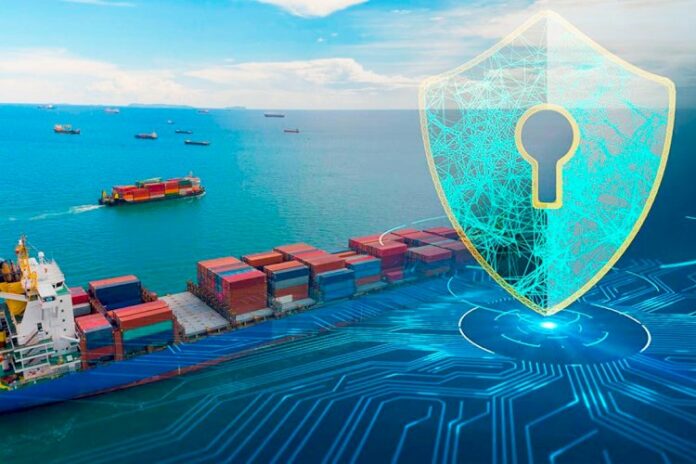
Perpetrators continue to devise new ways to exploit the vulnerabilities of a vessels network. Security investments onboard vessels need to include detection and response – not just prevention such as a regular anti virus. NDR is a vessels protection strategy against any cyber attack. Port-IT is the first IT cybersecurity provider to launch a fully maritime tailored NDR solution.

Network detection and response (NDR) is a security solution used to detect and prevent malicious network activity, investigate and perform forensics to determine root cause, and then respond and mitigate. Therefore protecting organizations against cyber threats. Implementing NDR also gives organizations greater visibility into what is actually on the network as well as all activity occurring. This, in turn, enables security teams to identify and stop suspicious network activity rapidly and minimize its impact on daily business.

Port-IT now introduces NDR specifically developed for the Maritime Industry. Implementing NDR is regarded as an important step in protecting vessels against the increasing cyber threat in the maritime market. Port-IT NDR silently monitors the vessels network, watching for malicious events or suspicious traffic traffic, even between devices only used internally, such as the VDR and a guest PC. Once this kind of traffic is detected the solution will deploy forensics, mitigate the issue and instantly informs the Port-IT Security Operations Center (SOC) team. 

To detect malicious kinds of traffic it uses a combination of artificial intelligence, machine learning and user-defined policies, offering intelligent layers on which the configuration can be strengthened. Port-IT NDR uses NTA, Network Traffic Analysis. NTA does not only monitor the network perimeter, but more importantly all traffic within the network for complete coverage. NDR detects threats across the entire network, including BYOD & IoT devices and even advanced unknown attacks that other solutions have missed.

With the NDR it is not needed to install software on any device, hence it is the ultimate solution to detect malicious activity from or within a network, regardless if it is crew, business or a guest network. NDR can be used on commercial vessels.

The Port-IT NDR solution integrates with with all existing security products of the Port-IT portfolio, providing the shipping companies with a full security-minded overview of all network elements of the vessel. Received data is monitored 24/7 and analyzed by a team of maritime trained network/security engineers.

Fuel cell project develops ground-breaking fuel solution for ships and offshore

0

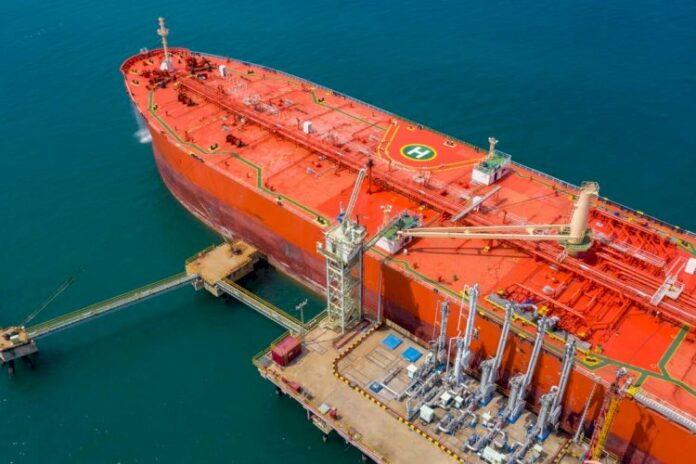
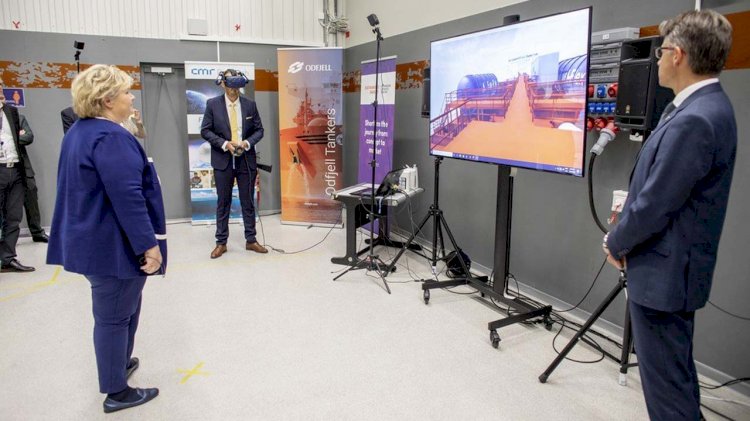
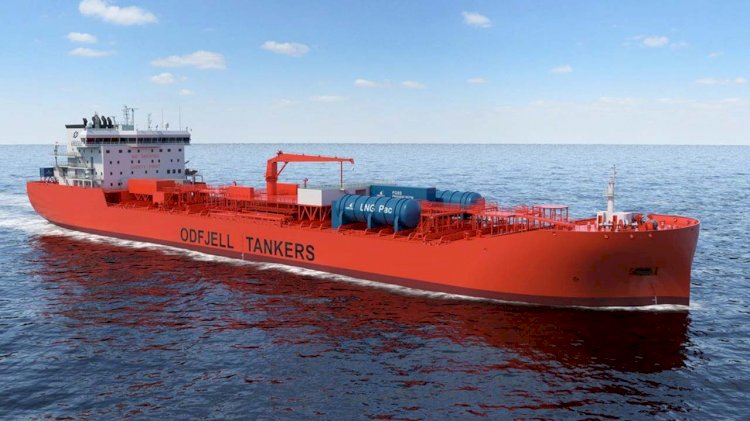
Partners from shipping, R&D and oil and gas are now constructing a pilot system that can use different types of fuel. The system will first be tested at the Sustainable Energy catapult centre in Norway before installation on board a chemical tanker. The unique project was presented to the Norwegian Prime Minister, Erna Solberg, during a ceremony celebrating an expansion of the catapult centre yesterday.

The new technology opens for many different types of fuel, including green ammonia and LNG. With this flexibility, vessels can choose fuel according to availability. The main partners in the project are Odfjell, Prototech, Wärtsilä and Lundin Energy Norway. Odfjell has leading expertise in global shipping, Prototech in fuel cell technology, Wärtsilä in maritime technology and energy, and Lundin Energy Norway in oil and gas.

Bernt Skeie, CEO of Prototech, says:

“Our tests show a CO2 reduction of as much as 40-45% when using LNG, compared to current solutions. Increased efficiency and reduced fuel consumption also provide significant cost savings, and the ship will be able to sail significantly longer on the same amount of energy. The system will also be ready to operate completely emission-free from the locations where, for instance, ammonia is available for bunkering. The technology also enables direct capture of CO2, which will be yet another alternative for emission-free operation when logistics for CO2 management become available.” 

Around 90% of the world trade is transported by ships. Ship transport is still the most environmentally efficient way of carrying goods, but to achieve Norwegian shipping’s target of becoming climate neutral by 2050, new, energy-efficient solutions must be introduced.

Photo: Odfjell.VP Technology Erik Hjortland of Odfjell and CEO of Prototech Bernt Skeie present the fuel cell solution for Prime Minister Erna Solberg

The project aims to develop a technology that can provide emission-free operation over long distances. Battery solutions are currently not suitable for operating ships that sail long distances, the so-called “deep-sea” fleet. This fleet consists of more than 50,000 ships globally and thus constitutes a big share of international shipping. It is difficult to achieve the goal of climate neutrality without finding solutions for this segment.
 
The unique feature of the new technology is its high energy efficiency and the flexibility that enables substantial emission reductions already from day one with the use of currently available infrastructure for LNG – while also preparing for emission-free operation in line with the development of value chains and infrastructure for sustainable fuels in the years to come.

Erik Hjortland, VP Technology at Odfjell SE, says:

“Ships are to be operated for 20-30 years, and we need flexible solutions that can meet future emission requirements. We do not have time to wait, we have to think about zero emissions already now. The fuel cell project is one of the paths we are pursuing. We focus on machinery rather than focusing on one single type of fuel. Fuel cell technology gives us flexibility that ensures environmentally efficient operation regardless of fuel changes that may occur in the years ahead.” 

Photo: Odfjell.

Ingve Sørfonn, Technical Director in Wärtsilä, says:

“The new energy solution has the potential to take us a big step closer to the goal of climate neutrality. Fuel flexibility will be a significant contribution to secure future solutions for new ships. And it does not stop with ships, this solution can also be used in offshore oil and gas operations.”

Harald Solberg, CEO of the Norwegian Shipowners’ Association, emphasizes the potential this project demonstrates:

“The development of this fuel cell is an example of how forward-looking shipping companies and our unique maritime expertise have the prerequisites to drive new solutions through a broad collaboration within the maritime cluster. In the long run, scaling up such solutions will be of great importance in achieving our climate goals, they will have business value, and they can create new jobs in Norway. Norwegian shipping has set ambitious climate goals. This type of project is very important for us to be able to develop solutions that quickly reduce emissions.”

So far, the project has been funded with support from Gassnova, NFR, and the participants themselves. Now the project is constructing a 1.2. MW prototype fuel cell that first will be tested at the Sustainable Energy catapult centre at Stord, Norway. Then it will be mounted and tested onboard one of Odfjell’s newest chemical tankers.

Transforming the UK’s transportation and reduce emission through Zero-carbon Coastal Highway

0

In a bid to help transform UK goods distribution, a collaborative investment of £530M is hoped to reduce reliance on road haulage and create a new coastal network. The partnership between industry, government and academia would realise greater use of safe, zero-carbon short sea shipping and move more than 25% of UK’s land haulage tonne km via a zero-carbon automated fleet by 2030.

The UK relies predominantly on road freight to distribute goods from its major ports to centres of manufacturing and use. The majority of freight is carried by Heavy Goods Vehicles (HGVs) leading to low efficiencies due to the large number of freight transactions, resultant high levels of CO2 emissions, significant contribution to harmful levels of air pollution close to populated areas, highly congested Strategic Road Network and increased risk of road accidents.

Such improvements to trade distribution would help to address urgent climate and environmental change imperatives and support reduction in congestion and road safety. Further, it could provide alternate transporting means that are less reliant on human intervention which is critical as we face the global COVID-19 pandemic.

The outcomes from the transformation will potentially generate more than £1.8 billion additional revenue to the UK and create 39,000 extra jobs; reduce land-based CO2 emissions by 30-40%; It is also hoped they will:

  • reduce road congestion by 25%;
  • distribute wealth to regional UK coastal communities;
  • contribute to the Zero Carbon Maritime Plan;
  • improve British shipbuilding productivity and competitiveness;
  • enhance port infrastructure whilst reducing their carbon footprint;
  • increase export opportunities; and
  • improve safety and reduce loss of life.

Creating a radical new zero-carbon approach to transport goods as part of an integrated autonomous system has not been attempted anywhere in the world. This would allow the UK maritime shipbuilding and service sector to sell to the world’s ever-expanding need for high quality advanced maritime transportation.

To help achieve these ambitions, Maritime Research and Innovation UK (MarRI-UK) have submitted a Comprehensive Spending Review bid, jointly developed by its members. MarRI-UK is an industry-led initiative, hosted at the University of Strathclyde, currently have six industrial members (BAE Systems, Babcock, BMT, Lloyd’s Register, Shell, QinetiQ), and four university members (Newcastle, Southampton, Strathclyde, UCL), partnering with the Society of Maritime Industry and Maritime UK, to address the lack of co-ordination and resource in the maritime research and development. The bid is is also supported by leaders of Society of Maritime Industries (SMI), Associated British Ports, Maritime UK, British Ports Association, UK Major Ports Group, UK Chamber of Shipping, Maritime Skill Alliance, and the Maritime and Coastguard Agency (MCA). 

John Howie MBE, Chief Executive – Marine, Babcock International Group and Chair of MarRI-UK, said:

“The zero-carbon coastal highway initiative has the potential to transform the transportation of goods in the UK, delivering significant reductions in environmental emissions through a solution that will showcase the very best of UK maritime innovation. By working together, across industry and academia, we can offer collaborative, forward thinking solutions that will benefit both the UK and wider maritime industry. Targeting a reduction in land-based transportation requirements underpins global environmental emissions ambitions and supports local communities however, is not without its challenges. We must continue to join forces wherever we can to provide a futureproof trade option.”

Sarah Kenny OBE, Chief Executive Officer of BMT and Vice-Chair of Maritime UK, said:

 “As Chief Executive Officer of BMT and Vice-Chair of Maritime UK, we believe that this Zero Carbon Coastal Highway Flagship Programme will both revitalise and enable the UK industry to recapture its position as leading innovators in the global maritime sector.

Working with our partners at a national level, we can ensure that there is a strong likelihood that maritime related priorities will be looked upon favourably. After all, as one of the most significant industries in the United Kingdom and the facilitator of 95% of all trade via seaborne means, we know we have a significant role to play in post COVID-19 economic recovery. Making the UK a scientific superpower, including leading in the development of technologies that will support the government’s ambition to reach net zero carbon emissions by 2050 is paramount to the UK’s future.

The Zero Carbon Coastal Highway Flagship Programme of technology development will, we believe, deliver a transformational change to the UK Transport Sector, reducing significantly emissions from the road network, enhancing our Ports and Harbours, supporting the levelling-up agenda through regional development and new innovative business models, accelerating change internationally. Based on this, the UK maritime sector is well-positioned on all the priorities set out by the Government and the Chancellor for the latest Comprehensive Spending Review.”

HPC supports Port of Switzerland in developing a digitalisation strategy

0

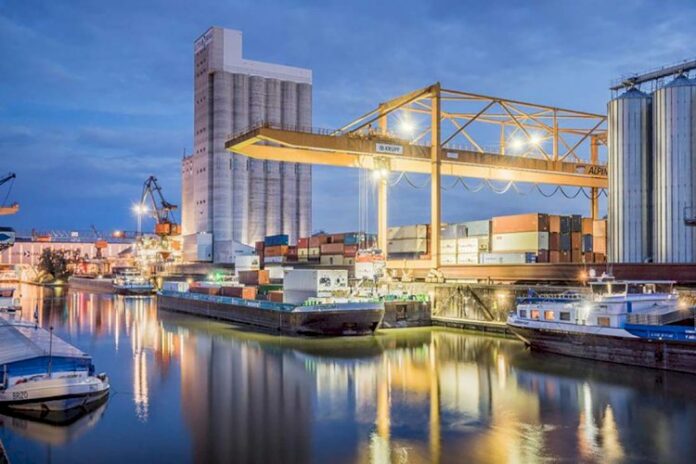
HPC Hamburg Port Consulting, the logistics consultants specialised in strategy and transformation services for ports, sea and inland terminals and intermodal rail transport, have been commissioned by Port of Switzerland to develop a digitalisation strategy. 

Like seaports, inland ports are also undergoing a transformation process from a goods handling centre to an interconnected goods and information handling hub within the global logistics chain.

Port of Switzerland is an important traffic hub on the freight corridor between the North Sea and the Mediterranean Sea with an annual turnover of approximately 6 million tons of goods. Situated at the end of the navigable part of the Rhine, Port of Switzerland connects the sea lane with an extensive European road and rail network. Approx. 60 % of goods are transported from here by rail.

The further development of the trimodal transport hub with ship, rail and truck is one of the port’s central tasks. The focus is on close cooperation with the Upper Rhine Ports in France and Germany, which is to be promoted in particular through the expansion of the digital port infrastructure.

HPC has been commissioned to develop a digitalisation strategy for the design of the digital infrastructure with the aim of increasing competitiveness, safety and sustainability of inland navigation and the Port of Switzerland. The cornerstones of digitalisation are the data flows of goods, processes and modes of transport, the automation of port equipment and digital access to products and services. The involvement of all stakeholders is crucial for the successful establishment of digital structures and correspondingly adapted operating procedures.

Martin Nusser, Deputy Director of Port of Switzerland, says:

“By providing digital port infrastructures, we want to shape our role as a service provider for the entire port community in a future-oriented way. In future, central processes with authorities, institutions and the port industry are to be handled via digital infrastructures. Through the intensive use of new technologies with all our customers and partners, we are striving for sustainably efficient, quality- and service-oriented cooperation. With the successful introduction of the RheinPorts Information System (RPIS), the first port community system for inland ports worldwide, in which HPC also played a supporting role, we have already laid a decisive foundation for a digital port infrastructure.”

With the implementation of the digitalisation strategy, the basis for the realisation of project plans within the scope of the digital transformation is set. Based on a comprehensive analysis of the stakeholder environment, the digital strategy recommends principles of action for the handling of planned projects as well as information strategies to ensure change management geared towards sustainability. A digital transformation roadmap ensures effective and successful project management.

Dr. Jennifer Sommer, Head of IT Consulting at HPC, says:

“With digitalisation strategies, companies can design their services in a user-oriented manner and network processes efficiently, thus both increasing effectiveness potential and opening up new business areas. Accompanying the Port of Switzerland’s team on their digital journey, encouraging them in their pioneering role, and helping to make inland navigation fit for the digital future is an exciting challenge.”

HPC was involved in several projects for the development of digital strategies and the establishment of port community systems for inland and seaports. As a central service of the IT consulting division, HPC also accompanies its clients through complex IT and integration projects in ports and logistics, covering all the different phases of an application life cycle.

Alewijnse signed up to work on two more AMELS 60 superyachts

0

This latest contract follows on from last year’s announcement that Damen Yachting awarded Alewijnse a similar contract to work on the first two AMELS 60 vessels, meaning that Alewijnse is now working on all four AMELS 60 vessels that are at various stages of engineering and construction.

In its role of all-round electrical systems integrator, Alewijnse has a well-established relationship with AMELS and Damen Yachting, having worked on multiple projects in the past. As such, the company’s design and installation engineers form a valuable part of the superyacht-building team at the Damen Yachting yard in Vlissingen, the Netherlands.

In particular, the knowledge built up so far by Alewijnse on its work on the first two AMELS 60 superyachts put it in a prime position to deliver excellent systems integration on the third and fourth vessels in this range of AMELS Limited Editions superyacht.

Dick Breure, Alewijnse sales manager, says:

“Just as with the first two AMELS 60 superyachts, we will providing the comprehensive package of electrical installation and systems integration. This includes the Integrated Bridge System, Audio-Video systems and IT network as well as the hybrid propulsion system.”

As current projects demonstrate, this experience is resulting in streamlined and efficient work procedures. Alewijnse has completed the majority of the engineering work for the first two vessels, in what is a cooperative process with the Damen Yachting team.

Dick Breure says that while the AMELS 60 range of superyachts are built in series, they are still customizable to owner demands:

“Yes, the major equipment like generators and switchboards are the same, but the systems that are closer to the owner are more flexible. To this end, we will be using the lessons learnt from the first two vessels on the second two vessels.”