-3.4 C
New York
Home Blog Page 763

Ørsted and Yara seek to develop groundbreaking green ammonia project in the Netherlands

0

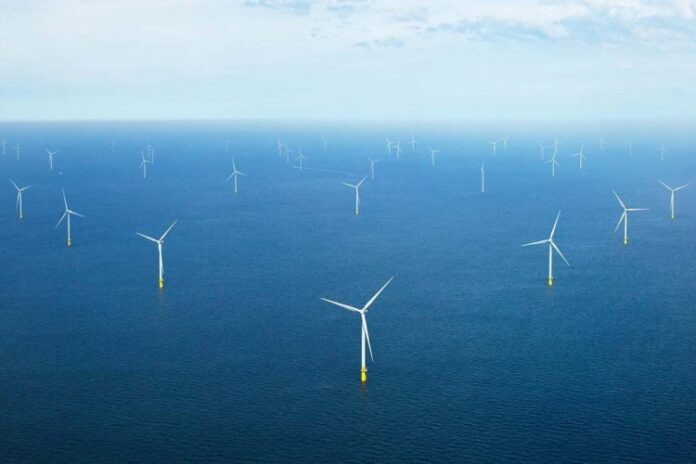
Ørsted, the world’s leading offshore wind developer, and Yara, the world’s leading fertilizer company, have joined forces in developing a pioneering project aiming at replacing fossil hydrogen with renewable hydrogen in the production of ammonia with the potential to abate more than 100,000 tonnes of CO2 per year, equivalent to taking 50,000 conventional cars off the road. If the required public co-funding is secured and the right regulatory framework is in place, the project could be operational in 2024/2025.  

Yara and Ørsted share the vision of creating a sustainable future through being first movers and have joined forces to develop a 100 MW wind powered electrolyser plant for renewable hydrogen production, aiming to replace fossil-based hydrogen with renewable hydrogen for ammonia production in Yara’s Sluiskil plant, located in the Dutch province of Zeeland. The renewable hydrogen would generate around 75,000 tons of green ammonia per year – approx. 10% of the capacity of one of the ammonia plants in Sluiskil – based on dedicated renewable energy supply from Ørsted’s offshore wind farms. Ørsted is about to inaugurate its Borssele 1&2 offshore wind farm, the second biggest in the world, located off the coast of Zeeland close to the Sluiskil plant.

The green ammonia is intended to be used in the production of carbon neutral fertilizer products, decarbonizing the food value chain, and also has potential as a future climate neutral shipping fuel.

Hydrogen produced from renewable energy sources offers a carbon-free alternative to fossil-based hydrogen, but currently comes at a significantly higher cost. Closing this cost gap takes time and will depend on public support to supplement private investments in large-scale renewable hydrogen and ammonia production. Ørsted and Yara will therefore now seek public co-funding for the development and construction of the 100MW electrolyser facility to support the project. Subject to sufficient co-funding and a confirmed business case, a final investment decision to build the new plant could be taken late 2021 or early 2022.

Martin Neubert, Executive Vice President and CEO of Ørsted Offshore, says:

“Ørsted is committed to investing in renewable hydrogen production at scale, and with the right support in place this joint flagship project between Yara and Ørsted will not only lead to a significant reduction of CO2 emissions, but also help mature the technology for the wider decarbonisation of European industry.”

Terje Knutsen, Executive Vice President and head of Farming Solutions in Yara, says:

“Green ammonia can be essential to enable sustainable food production, in addition it is emerging as the most promising carbon neutral energy carrier for several energy applications, such as decarbonized shipping fuel. Teaming up with Ørsted in this project in the Netherlands represents a major step forward in enabling Yara to deliver on its strategic ambitions.”

With its abundant offshore wind resources and large hydrogen consumption centres in coastal areas, the Netherlands are well-positioned to lead the way in the green transformation of heavy industry powered by offshore wind, while securing the competitiveness of key industrial sectors and creating economic activity and jobs. This project can be a milestone on the hydrogen roadmap of the Smart Delta Resources cluster in Zeeland, and an important step in the scaling of renewable hydrogen in the Netherlands towards 3-4 GW by 2030.
Government of Canada invests in cleaner, safer coastlines

0

Under the Oceans Protection Plan, Canada is investing in the Canadian Coast Guard to ensure it has modern equipment needed to respond to environmental spills quickly and effectively. These investments will allow it to continue protecting Canada’s waters, coasts and coastal communities from marine pollution.

Following an open competitive process, Public Services and Procurement Canada, on behalf of the Canadian Coast Guard, has awarded a $1.7 million contract to Can-Ross Environmental Services Ltd. of Oakville, Ontario for the acquisition of 10,000 feet of environmental response equipment known as Tidal Seal Boom. The contract includes options for an additional 8,200 feet.

Tidal Seal Boom acts as a barrier to protect coastal areas from spills and helps to contain pollution during active shoreline cleanup operations. The boom protects the shore by automatically adjusting to changing water levels, such as high and low tides, helping to ensure pollution doesn’t reach the shoreline while cleanup crews are at work.

The $1.5 billion Oceans Protection Plan is the largest investment ever made to protect Canada’s coasts and waterways. This national plan is creating a marine safety system that provides economic opportunities for Canadians today, while protecting our coastlines and clean water for generations to come. This work is being done in close collaboration with Indigenous peoples, local stakeholders and coastal communities.

The Honourable Bernadette Jordan, Minister of Fisheries, Oceans and the Canadian Coast Guard:

“Under the Oceans Protection Plan, we are providing our dedicated Canadian Coast Guard members across Canada with the best equipment possible. The Tidal Boom will ensure the Coast Guard can continue to respond quickly and efficiently in the event of an environmental emergency. These investments will help strengthen the Coast Guard and ensure it remains a world-leader in ocean protection and marine environmental response.”

The Honourable Anita Anand, Minister of Public Services and Procurement:

“We are committed to protecting Canada’s waters through the Oceans Protection Plan. This contract is an example of how we are stimulating the Canadian economy while helping the Coast Guard better protect our oceans and coastlines by strengthening its capacity with modern and effective equipment to safely and effectively address emergency situations.”

The Honourable Marc Garneau, Minister of Transport:

“Protecting Canada’s marine environment, oceans and waterways is of paramount importance, and we continue to take action to safeguard marine life, shorelines and coastal communities. Through the Oceans Protection Plan, the Government of Canada has strengthened our ability to respond to threats to our marine ecosystem, and has ensured our coasts are protected with modern and efficient technologies. This new equipment for the Canadian Coast Guard is a positive step in our commitment to environmental stewardship.”

Acquisition of Barents Sea portfolio from Idemitsu Petroleum Norge

0

Lundin Energy AB has announced that its wholly-owned subsidiary, Lundin Energy Norway AS (together Lundin Energy), has entered into an agreement with Idemitsu Petroleum Norge AS (IPN) to acquire interests in a portfolio of licences in the Barents Sea, including a 10 percent working interest in the Wisting oil discovery and a further 15 percent working interest in the Alta oil discovery.

The transaction gives Lundin Energy a 10 percent working interest in the major Wisting oil discovery (licences PL537 and PL537B*) with estimated gross resources of 500 million barrels of oil (MMbo), scheduled to be one of the next Barents Sea production hubs. Equinor, the operator of Wisting in the development phase, is targeting a PDO by end 2022, to benefit from the temporary tax incentives established by the Norwegian Government in June 2020.
The transaction also provides Lundin Energy with a further 15 percent working interest in licences PL609, PL609B and PL609D, increasing the Company’s working interest in the operated Alta oil discovery, from 40 percent to 55 percent. The potential to accelerate the development of Alta is being assessed, with the aim to benefit from the temporary tax incentives.

Additionally, Lundin Energy increases its working interests in licences PL609C and PL851, raising the Company’s working interest in the operated Polmak exploration well from 40 percent to 47.5 percent. Polmak is the first of three high impact exploration prospects to be drilled by the Company in the Barents Sea during the fourth quarter of 2020, which are targeting gross unrisked prospective resources of over 800 MMbo.

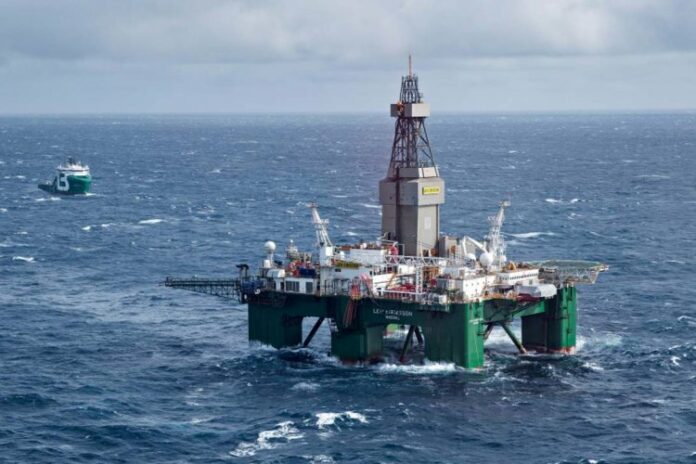
Polmak will be drilled by the West Bollsta semi-submersible drilling rig, with spud expected in early October 2020. This strategic transaction builds on the Company’s already substantial acreage position in the Barents Sea core exploration area and provides a material interest in the major Wisting oil discovery, expected to contribute to sustaining the Company’s production in the long-term.

The transaction, which is effective from January 2020, adds estimated net contingent resources of approximately 70 MMboe for a cash consideration of MUSD 125, and is subject to approval of the Board of Directors of Idemitsu Kosan Co.,Ltd. (the parent company of IPN) and usual Norwegian regulatory approvals.

Alex Schneiter, President and CEO of Lundin Energy:

“I am very pleased to announce this strategic acquisition which strengthens Lundin Energy’s position in one of our core exploration areas and provides an interest in a major commercial oil discovery, as well as increasing our working interest in the operated Alta oil discovery. As we have always maintained, we will look to supplement our successful organic growth strategy with value-add, bolt-on acquisitions which add high quality, commercial resources and importantly, also complement our low cost and low carbon emissions production portfolio. With the high impact Polmak well due to spud shortly, I am excited at the opportunity and position we have built in the Barents and look forward to reporting on our progress in the months ahead.”

Strike shuts down four Equinor fields in the North Sea

0

As a result of the escalation, Equinor has conducted a controlled closure of the fields Gudrun, Gina Krog, Kvitebjørn and Valemon.
A total of 54 members of the trade union Lederne will be on strike at Gudrun, Gina Krog and Kvitebjørn. The Valemon field must be shut down because it is linked to Kvitebjørn.

Production at the Johan Sverdrup platform continues for the present. 43 members of Lederne have been on strike there since Wednesday morning.

The strike is the result of a breach of mediation in the negotiations between the employer organisation Norwegian Oil and Gas Association and the trade union Lederne. 

Jan Hodneland, chief negotiator at Norwegian Oil and Gas, says:

“We presented a financial offer which was accepted by the Norwegian Union of Industry and Energy Workers (Industry Energy) and the Norwegian Union of Energy Workers (Safe). These represent 85 per cent of the offshore workforce. The smallest union, Lederne, rejected the offer and opted to strike. It has also demanded that the area covered by the collective pay settlement is expanded – which falls outside the scope of the negotiation over the offshore agreements.”

Falling within the framework agreed in the lead sector settlement, the offer from Norwegian Oil and Gas represents a growth in real pay and was made in identical terms to Lederne, Industry Energy and Safe.

Under the settlement, offshore workers are set to receive:

–        an overall pay rise of NOK 4 700

–        an increase of NOK 3.50 per hour in the shift and night-work supplement, to NOK 80 per hour

–        a rise in the conference supplement to NOK 100

–        an increase in the allowance for working on public holidays from NOK 2 025 to NOK 2 060 per day.

VideoRay begins shipping defender underwater robot systems to U.S. Navy

0

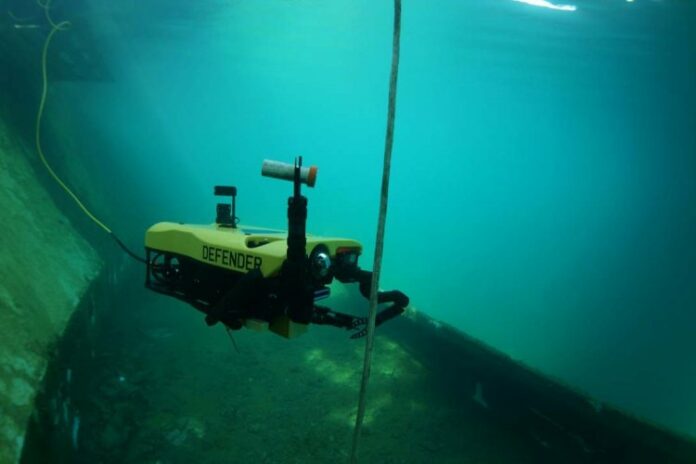
The systems are being delivered with solutions from Greensea, Blueprint Subsea, Nortek and Eddyfi. These best-in class sensors, tooling and software are integrated onto the Defender ROV platform.

The purchase is under VideoRay’s existing $49M contract to deliver the Navy’s Next Generation ROV. The systems are being assembled and tested in VideoRay’s Pottstown, PA facility. They will be used by the Navy for defense and security operations including very shallow water, littoral mine counter measures, port security missions and hull and pier inspection, and shipments will be complete by the end of the year.

The capabilities of the Defender have been cited from a military perspective in recent publications. The VideoRay ROV is prominently mentioned in an article published online titled “Code Name – The Blowfish Project: DTRA Securing the Waterways.” The article, which appears on the Defense Visual Information Distribution Service website, delves into the activities of the research and development arm of the U.S. Defense Threat Reduction Agency, which “has invested in a remotely operated underwater vehicle (ROV) system capable of identifying and neutralizing underwater improvised explosive devices (UWIEDs).”

In particular, U.S. Navy Lt. Cmdr. Michael Bailey, program integrator for the Counter Improvised Threat Technologies Department, is quoted as saying:

“Progress has enabled components of the Blowfish system to be integrated into a new ROV – the VideoRay Defender – which is destined to be part of a family of U.S. Navy EOD (Explosive Ordnance Disposal) response vehicles.”

And a U.S. Navy publication – “THE PRIMER: Support to the Fleet – Expeditionary Mine Countermeasures” – describes use of the Defender in its “First Real-World Response” for EOD purposes:

“The (VideoRay Defender) systems were formally introduced to fleet operators in March of 2020 when the equipment manufacturers provided training to units from EOD Group 1 and 2 in San Diego and Virginia Beach. During the training at the Virginia Beach location, EOD Senior Chief Jeffrey Spengler stationed at the EOD shore detachment at Norfolk Naval Base said the new systems were “more user friendly and capable” than their predecessor. He likened the VideoRay Defender to a “brute” with the required thrust to work in more challenging currents. EM1 Robert Smith who works in EOD Expeditionary Support Unit Two’s Robot Shop was pleased that the newer systems could be operated outside of the water for longer periods of time than Seabotix which will help with maintenance and operational checks prior to employment.”

102 million euros in funding on the horizon for Porthos carbon storage project

0

The Porthos project centres on the capture and storage of CO2 in the North Sea floor. If the European Parliament endorses this proposal, Europe will bear a substantial share of the investment in Porthos, which totals 450 to 500 million euros.

For a term of 15 years, Porthos will be storing some 2.5 Mt of CO2 per year – supplied by the Rotterdam locations of Air Liquide, Air Products, ExxonMobil and Shell – in the North Sea seabed. This is equivalent to 10% of the total emissions produced by Rotterdam’s industrial sector. As such, the Porthos project will significantly contribute to the Netherlands’s achievement of its climate targets.

The European Commission wants to financially support the construction of Porthos because the capture and sequestration of CO2 (known as Carbon Capture and Storage, CCS) is widely seen as a necessary measure to keep global warming below 2 degrees Celsius. Indeed, almost every scenario that satisfies this requirement involves CCS. Carbon storage also plays a key role in the recent Green Deal drawn up by the European Commission. 

Porthos is the most advanced project focussing on the large-scale storage of CO2 within the EU. The public funding will come from the budget of the Connecting Europe Facility. Porthos is eligible for this grant because it involves a partnership between Rotterdam, Antwerp and North Sea Port (Vlissingen, Terneuzen and Ghent) in the field of CCS. The European grant means that the Dutch state can scale down its funding support.

Part of the EU contribution will be used to construct a future-proof CO2 pipeline across the port area. The capacity of this pipeline will be such that other companies can also make use of the facility. This avoids the need for constructing a second pipeline in the future (with the associated costs and environmental impact). Besides investing in the construction of the pipeline itself, the EU will also contribute to the overall project budget.

Porthos is a joint venture of EBN, Gasunie and the Port of Rotterdam Authority. Companies will be charged a fee for having their carbon emissions transported and stored by the Porthos network. The precise amount of this fee is determined by the costs incurred by Porthos for the system’s construction and exploitation (including the energy costs for the pressurised injection of CO2 in the deeper substrate). Thanks to the EU’s financial support, these services can now be offered at a lower rate. The four companies that intend to supply Porthos with CO2 will also incur costs for the capture of carbon at the source. On the other hand, they will not be required to pay EU ETS allowances for the stored carbon. The Dutch government is prepared to cover the difference between the companies’ total costs and savings via the SDE++ scheme.

The companies will be able to apply for the SDE++ grant in late 2020. Over the course of 2021, it will become clear whether this funding will actually be awarded. Permit applications also need to be approved that year. Porthos and the four participating firms will make their final investment decision based on these results. According to planning, the Porthos system will be constructed over the course of 2022 and 2023 and taken into operation in 2024.

ZIM introduces the New Levant – Black Sea Express (LBX) service

0

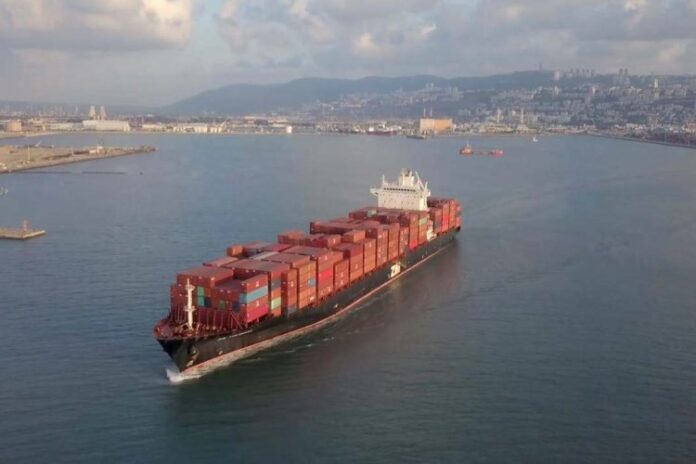
ZIM has announced a significant upgrade of its East Mediterranean & Black Sea Network, with the introduction of the Levant – Black Sea Express (LBX), planned to commence October 6th.

LBX is designed to enhance and extend the scope of ZIM’s services in the region through wider port coverage and precise synchronization with ZIM’s mainliners connecting to Asia and America.  

The new LBX, solely operated by ZIM, will have the following rotation:

Port Said East – Alexandria – Mersin – Novorossiysk – Constanta – Aliaga – Mersin – Haifa – Port Said East

LBX was planned to cater for the specific needs of customers in the region, including additional capacity and seasonal agricultural cargo, with the following advantages:

  • Smooth synchronized connectivity to Asia and America Mainliners
  • Improved service to Romania with better transit time, 2 weekly Asia Sailings & direct Israel service
  • Direct service between Egypt & Turkey to the Black Sea
  • Serving reefer cargo from Egypt and Turkey to Black Sea Ports
  • Additional capacity for the Russian Market
  • Enhanced coverage and additional calls in Turkey

Rani Ben-Yehuda, ZIM EVP Cross Suez and Atlantic BU, said:

“The introduction of the new LBX service is taking our regional network to a new level, with enhanced scope and coverage and smooth connections to mainliners, all tailor-made for the needs of our customers in the region.”

VOS Champagne ‘Biosafe Ship’ certified

0

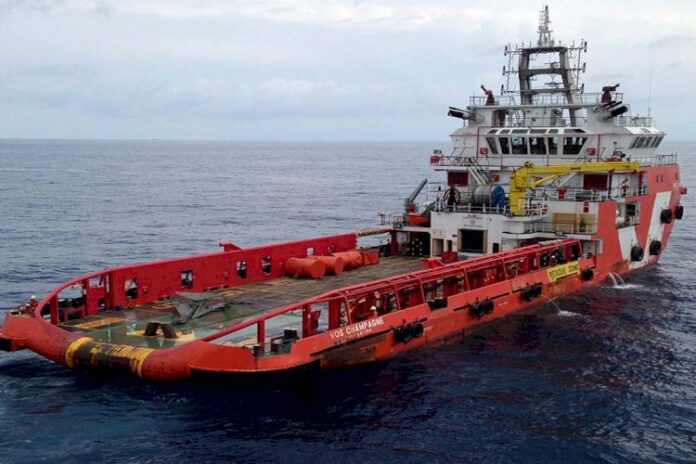
VOS Champagne, a 2015-built DP2 anchor-handling tug supply vessel managed by Vroon Offshore Services (VOS) Genoa, has been classified with the new RINA Class-notation ‘Biosafe Ship’. VOS Champagne is the world’s first cargo vessel assigned with this new notation.

The ‘Biosafe Ship’ notation is a new goal-based notation, based on many different systems, components and operative procedures to control and prevent possible onboard infection outbreak.

In response to the Covid-19 pandemic, Vroon has decided to comply with the RINA ‘Biosafe Ship’ guidelines, by making use of RINA’s dedicated services focussed on infection awareness, prevention and control.

VOS Genoa will classify all its vessels in order to reduce the risk of an infection on board, protecting all crew, charter personnel and visitors from the threat of biological agents.

New and specific procedures have been implemented on board and are now part of the vessel safety management system. A Specific Health Management plan was issued, based on specific risk assessments, health monitoring and treatments, and detailed procedures for contacting ashore authorities and hospital facilities.

A Ship Health Officer has been appointed as officer in charge of the management and control of the relevant procedures in place. In addition, an adequate crew training on health issues in normal health and emergency health conditions has been carried out.

RINA will perform annual audits on board in order to confirm procedures’ compliance.

An Engineering assessment has been provided by VOS Genoa’s Technical Department, in order to assess dedicated room treatment, routes for social distancing, the Heating, Ventilation and Air Conditioning (HVAC) independent system for contained areas, the Fresh Water and sewage disinfection systems and many more.
 

Thailand’s first fleet of fully-electric passenger ferries to hit the water in 2020

0

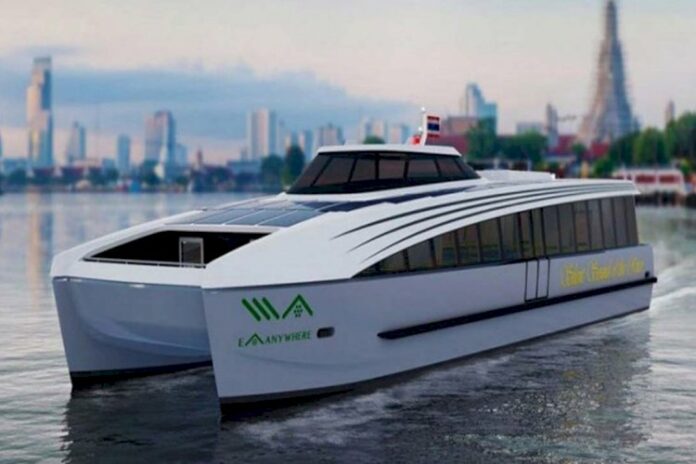
Danfoss Editron is part of the team delivering Thailand’s first fleet of fully-electric passenger ferries. 

The company is providing Energy Absolute with the electric drivetrain systems that will power the fleet of 27 catamarans, which will operate on and transform the country’s Chao Phraya River in Bangkok.

Bangkok is the world’s most visited city, welcoming nearly 23 million international visitors last year. However, the city’s air quality is regularly recorded at unhealthy levels due to a combination of factors, including traffic, construction and factory emissions and the burning of waste and crop residues. The city’s seasonal weather changes, which prevent pollutants such as exhaust fumes from dissipating, further exacerbates the issue. In January of this year, air pollution in the city was recorded at an unhealthy level for at least seven days.

The Government of Thailand is attempting to clean up its air via several methods, including the promotion of alternative energy modes of transport. Energy Absolute is leading the way in this area, with the fleet of fully-electric catamarans forming part of an ambitious blueprint which also includes a US$3 billion battery factory and range of electric cars.

Each 24m-long catamaran will be capable of carrying 200 passengers and will contain two EM-PMI375-T800 motors manufactured by Danfoss Editron. The motors provide a continuous power output of between 174-192kW, depending on the temperature they are operating at, and are based on synchronous reluctance assisted permanent magnet technology. They are also liquid-cooled, designed to work in harsh operating environments and offer smaller dimensions, lighter weight and higher efficiencies than current diesel motors.

Energy Absolute is investing US$33 million in the project, including installing fast-charging stations dockside which will be capable of charging the ferries in approximately 15 minutes. The ferries will be able of operating for between two and four hours on each charge, with a range of 80-100km.

Two of the ferries are currently undergoing testing. After the first two ferries have completed trials, the remainder of the fleet will be rolled out to operators over the course of a year. As well as operators, hotels and real estate developers have shown serious interest in the fully-electric catamarans as luxury living on the Bangkok riverside is becoming increasingly popular.

Commenting on the project, Danfoss Editron’s Business Development Manager for Asia-Pacific David Hunter said:

“Bangkok’s waterways have always played a vital role in transporting both people and logistics. This project can pave the way to bringing them back to life in a sustainable manner by linking key transport networks and providing a smooth and comfortable ride to commuters. It will also help to curb the need for further tunnels and roads, with the waterways becoming a more popular mode of transport once again. More of these projects coming to fruition will help the city become less polluted and congested. It is anticipated that introducing this fleet of fully-electric catamarans will remove approximately 9500 tons of CO2 emissions from the atmosphere annually.”

Climate change responsible for record sea temperature levels, says study

0

Global warming is driving an unprecedented rise in sea temperatures including in the Mediterranean, according to a major new report published by the peer-reviewed Journal of Operational Oceanography.

Data from the European Union’s (EU) Copernicus Marine Environment Monitoring Service (CMEMS) will increase concerns about the threat to the world’s seas and oceans from climate change.

The Ocean State Report reveals an overall trend globally of surface warming based on evidence from 1993 to 2018, with the largest rise in the Arctic Ocean.

European seas experienced record high temperatures in 2018, a phenomenon which the researchers attribute to extreme weather conditions—a marine heat wave lasting several months.

In the same year, a large mass of warm water occurred in the northeast Pacific Ocean, according to the report. This was similar to a marine heatwave—dubbed ‘the Blob’—which was first detected in 2013 and had devastating effects on marine life.

Now the study authors are calling for improved monitoring to provide better data and knowledge. They argue this will help countries progress towards sustainable use of seas and oceans which are an essential source of food, energy and other resources.

Findings from the report confirm record rises in sea temperatures

Karina von Schuckmann and Pierre-Yves Le Traon, the report’s editors, says:

“Changes to the ocean have impacted on these (ocean) ecosystem services and stretched them to unsustainable limits. More than ever a long term, comprehensive and systematic monitoring, assessment and reporting of the ocean is required. This is to ensure a sustainable science-based management of the ocean for societal benefit.”

The Ocean State Report identifies other major strains on the world’s seas and oceans from climate change including acidification caused by carbon dioxide uptake from the atmosphere, sea level rise, loss of oxygen and sea ice retreat.

Long-term evidence of global warming outlined in the report includes a decrease over 30 years of up to two days in the period of Baltic Sea ice cover and an acceleration in the global mean sea level rise.

The report highlights that the message from recent EU and global assessments of the state of seas and oceans is ‘we are not doing well’. The authors add:

“Human society has always been dependent on the seas. Failure to reach good environmental status for our seas and oceans is not an option.”

Source: Phys