-12 C
New York
Home Blog Page 759

Equinor and partners progress plan for zero carbon industrial cluster in the UK

0

The application by the Zero Carbon Humber (ZCH) Partnership is a first step to creating the world’s first net zero industrial cluster by 2040 and will support clean growth in the north-east of England. The bid, announced today, for Phase Two funding from the UK Government’s Industrial Strategy Challenge Fund, builds on a successful application for Phase One funding which was announced in April.

The ZCH Partnership includes Equinor, Associated British Ports, British Steel, Centrica Storage Ltd, Drax Group, Mitsubishi, National Grid Ventures, px Group, SSE Thermal, Saltend Cogeneration Company Limited, Uniper, and the University of Sheffield’s Advanced Manufacturing Centre (AMRC).

Al Cook, Equinor executive vice president and UK country manager, says:

“We are proud to be a leader of Zero Carbon Humber, partnering with a broad group of forward-looking companies. This proposal can bring tremendous benefits to the Humber region, protecting industries, creating jobs, promoting economic growth and reducing emissions. Our bid demonstrates the kind of ambitious action that is needed to for the UK to achieve its net zero carbon target by 2050.”

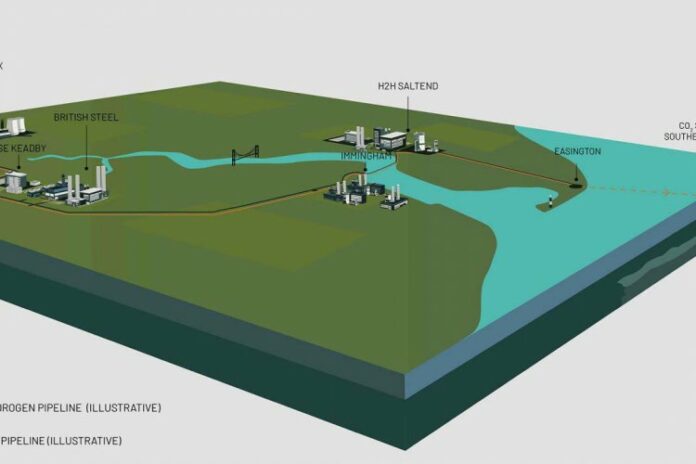
The bid centres around two elements, the first being the Equinor-led H2H Saltend (Hydrogen to Humber Saltend) hydrogen project at Saltend Chemicals Park near the city of Hull. H2H Saltend will be largest plant of its kind in the world to convert natural gas to hydrogen, combining a 600 megawatt autothermal reformer with carbon capture. From first production H2H Saltend will reduce industrial emissions by nearly 900,000 tonnes per year.

The second element is the hydrogen and carbon dioxide (CO2) pipeline network developed by National Grid Ventures that aims to link H2H Saltend to other industrial sites in the Humber region, enabling them in turn to fuel switch to hydrogen or capture their emissions. These sites include Drax Power station, SSE Thermal’s Keadby site, Uniper’s Killingholme site and British Steel at Scunthorpe.

Grete Tveit, Equinor senior vice president for low carbon solutions, says:

“We believe in the necessity of hydrogen and carbon capture to clean up heavy industry which is required to reach net zero targets. The technologies are proven and it’s now a question of putting them together. We and our partners have made great progress in our plans to decarbonise the Humber, through working with and learning from each other and also in engaging with national and local stakeholders. We are convinced that by continuing to work together we can make this happen.”

CO2 emissions from H2H Saltend and the other Humber sites will be transported by pipeline to Easington on the Yorkshire coast and then offshore to permanent storage under the Southern North Sea on the UK continental shelf. A consortium of world-class energy companies including Equinor is working to develop the offshore transport and storage infrastructure, and this network will be shared with the Teesside industrial cluster, where Equinor is also a partner in the Net Zero Teesside decarbonisation project.

The total size of the ZCH proposal is GBP 75 million, comprising private and public funding. The funds will be used to progress work towards a final investment decision during 2023 with H2H Saltend and the associated infrastructure potentially coming online in 2026.


14 million tonnes of microplastics on seafloor

0

This is more than double the amount of plastic pollution estimated to be on the ocean’s surface.

Justine Barrett from CSIRO’s Oceans and Atmosphere who led the study said the research extended our understanding of the amount of plastic pollution in our oceans and the impact of plastic items, both large and small. 

She said:

“Plastic pollution that ends up in the ocean deteriorates and breaks down, ending up as microplastics. Our research provides the first global estimate of how much microplastic there is on the seafloor. Even the deep ocean is susceptible to the plastic pollution problem. The results show microplastics are indeed sinking to the ocean floor.”

Millions of tonnes of plastic enter the marine environment annually, and quantities are expected to increase in coming years, despite increased attention on the detrimental impacts of plastic pollution on marine ecosystems, wildlife and human health.

The samples used in this study were collected using a robotic submarine in depths to 3000 metres at sites up to 380 kilometres offshore from South Australia.

The amount of microplastics recorded was 25 times higher than previous deep-sea studies.

Based on the results of deep-sea plastic densities, and scaling up to the size of the ocean, we calculated a global estimate of microplastics on the seafloor.

Dr Denise Hardesty, Principal Research Scientist and co-author, said plastic pollution of the world’s oceans was an internationally recognised environmental issue, with the results indicating the urgent need to generate effective plastic pollution solutions.

Dr Hardesty said:

“Our research found that the deep ocean is a sink for microplastics.” 

The number of microplastic fragments on the seafloor was generally higher in areas where there was also more floating rubbish.

Dr Hardesty added:

“We were surprised to observe high microplastic loads in such a remote location. By identifying where and how much microplastic there is, we get a better picture of the extent of the problem. This will help to inform waste management strategies and create behavioural change and opportunities to stop plastic and other rubbish entering our environment.

We can all help to reduce plastic ending up in our oceans by avoiding single-use plastics, supporting Australian recycling and waste industries, and disposing of our rubbish thoughtfully so it doesn’t end up in our environment. Government, industry and the community need to work together to significantly reduce the amount of litter we see along our beaches and in our oceans.”

The samples used for this research were an ancillary collection to a baseline survey of deep-sea geology and ecology funded by CSIRO and the Great Australian Bight Deepwater Marine Program (GABDMP). The GABDMP is a CSIRO-led research program sponsored by Chevron Australia, with data generated to be made publicly available.

ABS unveils a new platform for marine and offshore operators

0

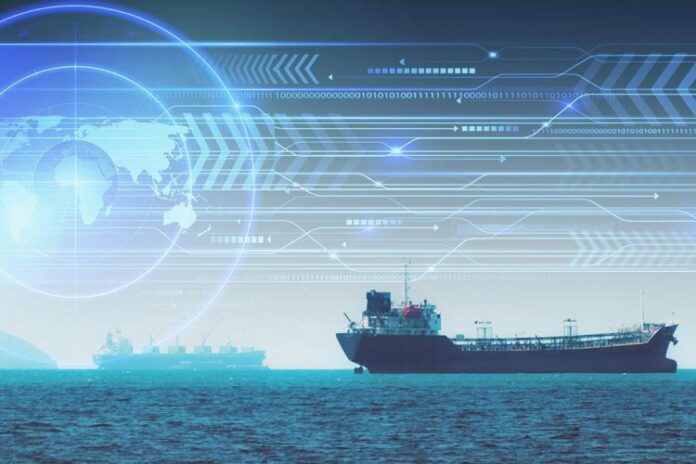
ABS My Digital FleetTM is a platform that provides real-time data-driven insights to improve fleet efficiency, reduce costs and help manage risks.

Christopher J. Wiernicki, ABS Chairman, President and CEO, said:

“Digitalization is the key enabler for asset management, sustainability and regulatory compliance strategies. Yet data silos and disparate systems have, until now, prevented owners and operators from realizing the safety and operational potential of their data. The ABS My Digital FleetTM web-based platform aggregates these data sources into one, centralized online environment and derives valuable insights by leveraging emerging technology such as artificial intelligence.

ABS is leading the industry by delivering a suite of solutions that quickly facilitate improvements in daily operations and support long-term business goals through improved risk management.

It’s fast, scalable and highly configurable to a user’s business and fleet needs. It represents the next phase of our commitment to delivering the safety, environmental and economic benefits of digitalization for the industry.”

Timely access to relevant information to support the safe and efficient operation of assets is critical in the digital era and offers a competitive edge. Vessel data typically resides in disparate systems, including third party sources, that are not integrated, thereby hampering gathering data and timely decision making. The ABS My Digital FleetTM platform addresses this challenge by fusing multiple data sources into a single visualized web application, unlocking real-time multi factor risk-based analysis capabilities. Users have the ability to be provided with an unprecedented level of visibility at the equipment, asset, and fleet level. The flexible nature of the platform allows rapid systems integration and fast-tracking delivery of a comprehensive fleet overview for better risk management among other safety and operational benefits.

Real-time alerts, an easy to understand interface and the flexibility to use it anytime and anywhere means users can see an asset’s performance in terms of regulatory compliance, fuel efficiency, structural and mechanical integrity or any other system the user chooses to integrate through the ABS My Digital FleetTM platform.

Kash Mahmood, ABS Senior Vice President, Digital Solutions, said:

“With the right tools and solutions implemented, insights are delivered in real time through the ABS My Digital FleetTM, a configurable intelligence platform that can interface with client systems so users aren’t required to replace existing infrastructure. This makes ABS My Digital FleetTM ideal for shipowners and asset operators to maximize their investments in digital and sensor technologies.”

NOAA grants to advance coral reef conservation science and management

0

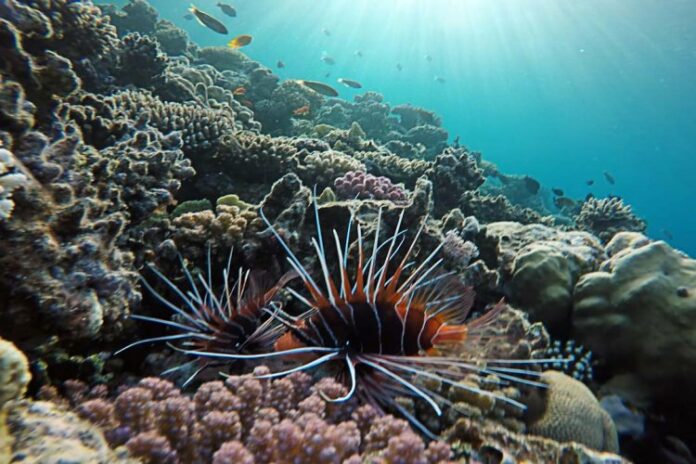
NOAA’s Coral Reef Conservation Program is awarding more than $10.5 million in grants to support coral conservation projects and scientific studies in seven U.S. states and territories, as well as international projects in the Caribbean, Micronesia and the western and south Pacific. 

Grant and cooperative agreement recipients are also providing more than $6.5 million in matching support — a total of $17 million for these critical projects.  

These projects and studies will help address the three primary threats to coral reefs: a changing global climate, land-based sources of pollution, and unsustainable fishing practices. The awards will also fund activities to heal and restore damaged coral reefs.

Jennifer Koss, director of the NOAA Coral Reef Conservation Program, said:

“Americans are intrinsically connected to the nation’s coral reefs through tourism and recreation, coastal flood and storm protection, and seafood production. We are proud to support the nation’s blue economy by funding research and activities that help sustain coral reef ecosystems by reducing local threats and advancing conservation strategies.”

Among other projects, the studies focus on the loss of coral reef from disease, and how water quality and environmental change can affect reefs. All of the proposals submitted for funding underwent extensive and rigorous technical review. 

Nearly half the funds will support projects led by state and territorial resource management agencies, while other projects will be run by non-governmental organizations, community groups and academic partners. A limited number of international projects will also support work in Micronesia, the south Pacific, the Coral Triangle region in the western Pacific, and the wider Caribbean region. The awards will also build on long-term project partnerships with the National Fish and Wildlife Foundationoffsite link and The Nature Conservancyoffsite link. 

The NOAA Coral Reef Conservation Program’s mission is to protect, conserve, and restore coral reef resources by maintaining healthy ecosystem function.

MSC Cruises receives RINA’s Biosafe additional class notation for infection risk mitigation

0

RINA had previously verified that the MSC Cruises health and safety protocol met the European Maritime Safety Agency (EMSA) and European Centre for Disease Prevention and Control (ECDC) Joint Guidance, which incorporates additional health standards including those from the EU Healthy Gateways Joint Action. 

This verification that the protocol is aligned with the guidance of the two key European authorities was a crucial part of the process to enable the August restart of operations in the Mediterranean.

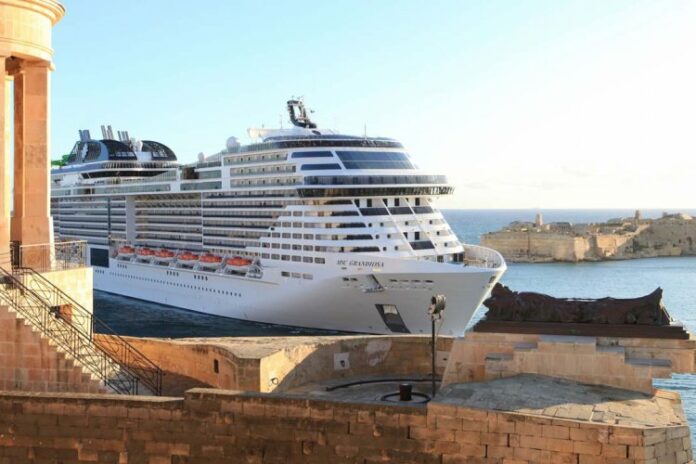
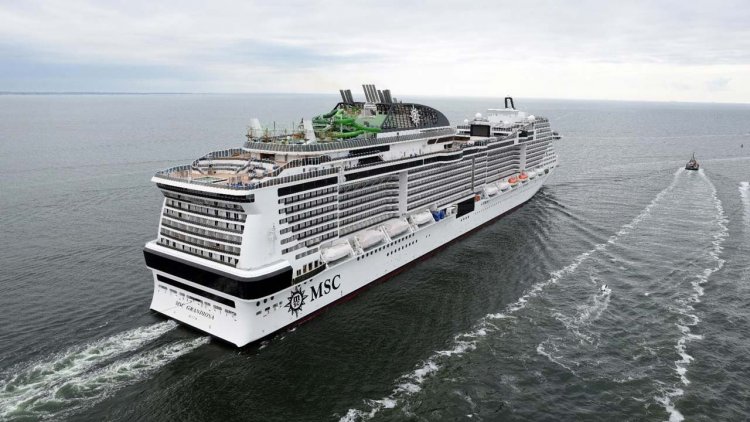
The Biosafe Ship, achieved by MSC Grandiosa, is a goal-based and voluntary notation that certifies that the ship is equipped with systems, components and has a layout and operational procedures that reduce infection risk.

MSC Grandiosa is currently on her eighth consecutive weekly cruise serving guests from the entire Schengen area. MSC Magnifica is scheduled to welcome back guests starting on 19 October for 10-night cruises across both the Western and Eastern Mediterranean.

For both ships, MSC Cruises has developed comprehensive operating procedures, that build upon already stringent health and safety measures that have long been in place on board the Company’s ships. The new procedures include universal COVID-19 testing for all guests and crew prior to embarkation, protected “social bubble” ashore visits at each destination as added level of protection for guests and the introduction of a COVID Protection Plan for further peace of mind. 

Kawasaki receives first order for coastal ship large-capacity-battery propulsion systems

0

Kawasaki made full use of its expertise in the field of systems integration to realize a system that efficiently supplies power and electricity to the main propulsion system and auxiliary equipment, and irregularity monitoring and protective functions have also been provided to safeguard the entire system including the Li-ion batteries. 

In addition, Kawasaki utilized electric power system knowledge cultivated through experience in the generator field to make this system usable as an emergency power supply source  in the event of a large-scale natural disaster, thus providing support for the business continuity plans and the life continuity plans in the region.

As the maritime shipping industry faces increasingly strict emission regulations from the International Maritime Organization (IMO) on carbon dioxide (CO2), nitrogen compounds and other gases, many are looking to cleaner, alternative power sources to replace traditional heavy fuel oil. Fully battery-powered vessels achieve major reductions in emissions of CO2, nitrogen oxides (NOx), sulfur oxides (SOx) and particulate matter (PM) during operation.

Basic Specifications for Kawasaki’s Large-capacity-battery Propulsion System:

  • Batteries: 1,740 kWh per set (total 3,480 kWh per ship)
  • Propulsion control system: Propulsive power control, energy and power flow control, maneuvering operation, system monitoring
  • Main propulsion system: Two 300 kW Kawasaki Rexpeller KST-115LF/AN-1.7 units (variable-speed, motor-driven control)

Stena Nordica returns to the ferry route between Gdynia and Karlskrona

0

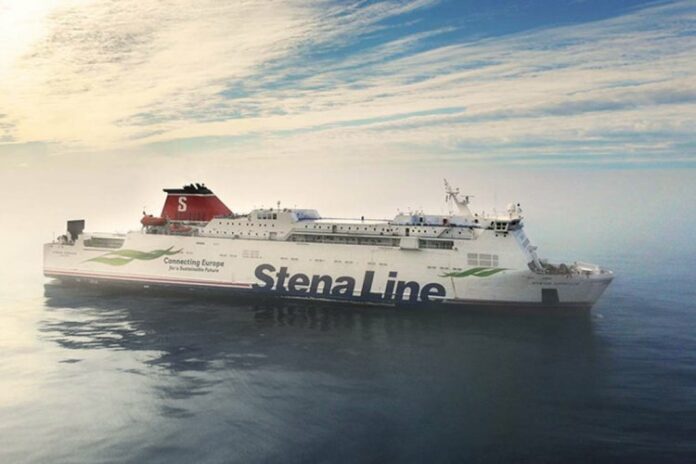
At the end of October the RoPax ferry Stena Nordica returns to the Stena Line’s route between Gdynia and Karlskrona.

Stena Nordica will replace the more freight focused vessel Stena Baltica and offers a wider choice for both passengers and freight customers. Stena Nordica will run five times a week in each direction and take freight, cars and passengers. 

Currently, there are three ferries operating on the Gdynia-Karlskrona route, including the two twin vessels Stena Vision and Stena Spirit, and the more freight focused Stena Baltica. In the end of October 2020 Stena Nordica will return to the route and replace the Stena Baltica.

Marek Kiersnowski, Trade Director Baltic Sea South, says:

“We say goodbye to Stena Baltica and welcome Stena Nordica back. She has sailed on the route before and is the best possible complement to the other vessels Stena vision and Stena Spirit. We will now be able to provide a more unified service, both for passengers and freight customers.”

The Stena Nordica is a modernly equipped Ro-Pax vessel combining freight, passengers and passenger cars. It is 170 meters long and can take about 450 passengers and 100 trailers or 300 cars at the same time. It sails regularly on the Gdynia-Karlskrona ferry route and the journey takes 10.5 hours. It also has twice the passenger capacity which means a wider choice of departure times and dates from Gdynia and Karlskrona for passengers.

Stena Nordica has previously sailed on the Gdynia-Karlskrona route several times, including the years 2004-2008. In 2018 she was back operating on the route but during the last year, this modern and versatile vessel has been assisting operations on other Stena Line routes, on the Irish Sea and the North Sea.

NPD conducted another search for seabed minerals by the use of new technology

0

The Norwegian Petroleum Directorate (NPD) has conducted another search for seabed minerals – this time facilitated by the use of new technology, new in this context, that is.

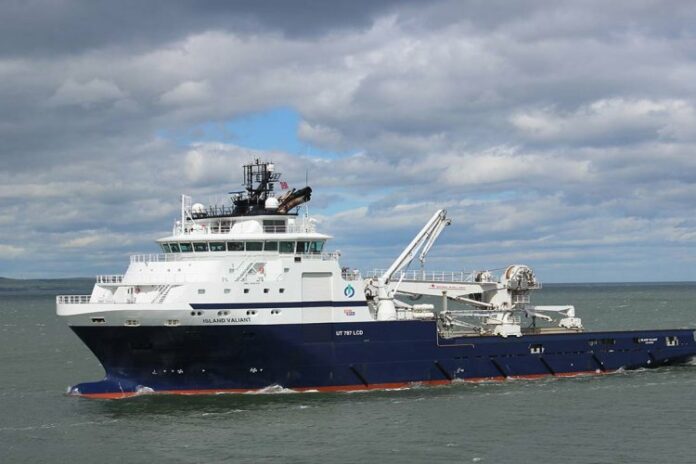
The Island Valiant was the vessel used by the NPD during the five-week expedition on the Mohn Ridge in the northwestern Norwegian Sea. The vessel docked at Hareid on the Sunnmøre coast earlier this week, after concluding a successful expedition.

On the expedition, operator TIOS conducted drilling operations in 3000 metres of water to secure samples of mineral deposits in the deep sea. The NPD has participated in a number of such mapping expeditions in recent years, both in cooperation with the University of Bergen and on the Directorate’s own behalf.

The deposits include metals and minerals that are important in battery technology, wind turbines and mobile telephones.

The Mohn Ridge is an oceanic spreading ridge that separates two tectonic plates. The objective of this expedition was to investigate under the seabed by drilling shallow boreholes in the mineral fields, and to test the drilling technology in these vast ocean depths.

The NPD is also the specialist directorate for seabed minerals. The Ministry of Petroleum and Energy has tasked the NPD with mapping and proving mineral deposits in the deep sea. 

The drilling operations were conducted with coiled tubing, which is a continuous drill string coiled on a reel. This is the first time this technology has been used to drill in water depths of more than 3000 m. In addition to TIOS, Island Offshore, Halliburton and Oceaneering have been instrumental in implementing the project. 

Exploration director Torgeir Stordal in the NPD says:

“This is a true pioneer expedition. This is the first time coiled tubing technology has been used in such deep waters, and the first time such drilling technology is used for exploration of seabed minerals. Since this is uncharted territory, we weren’t sure that it would work. But it did. We have taken many samples that will be useful in the work ahead. The expertise acquired by Norwegian industry after 50 years of experience from the petroleum activities meant that this ground-breaking work was successful. Norwegian technology and expertise leads the way also in this area and demonstrates that they are also leaders when it comes to investigation of seabed minerals.”

This is the third time the NPD has conducted its own deep sea operations aimed at mapping the potential for seabed minerals. The collected data and sample material will now be analysed.

NPD Director general Ingrid Sølvberg says:

“The results will become an important part of the basis for a seabed mineral resource assessment, which is the assignment the NPD has been given by the Ministry of Petroleum and Energy.”

Høglund Marine Solutions and Veracity by DNV GL sign collaboration agreement

0

Høglund is a provider of marine technology to the global shipping industry, specializing in integrated automation and energy solutions. By collaborating with the independent data platform provider, Veracity; Høglund’s ship performance monitoring software will be given access to Veracity’s significant maritime platform capabilities. It will provide Høglund with access to an extensive domain knowledge in terms of data requirements, data quality, cyber security and analytics.

For Veracity’s customers, the partnership will enable even faster implementation of various use-cases by having access to existing data sets which can be expanded efficiently.

Børge Nogva, President of Høglund Marine Solutions said: 

“We are excited by this cooperation with DNV GL, as we believe in the power of data to enhance vessel performance and make well-founded decisions for future operations. By combining Høglund’s expertise in how to create, standardize and export data through a vessel’s integrated automation systems with DNV GL’s industry knowledge and independent role we can provide owners and operators with a more accurate overview of a ship’s performance in compliance with regulations.”

New services can be enabled and scaled quickly as Høglund’s sophisticated data capture and ingest are combined on Veracity. The data platform will further make the collected data ready for re-use for various requirements such as digital twins.

Barry Authers, Partner Director at Veracity says:

“We are pleased to announce the partnership with Høglund. Their competence in capturing data from onboard systems, their existing footprint on more than 500 vessels and their vast amount of maritime data are a perfect fit for Veracity’s growing ecosystem. It will also support DNVGL Maritime in their ambitions to apply digital information in the future offering of independent verification services. In addition, Høglund’s commitment to creating smarter, cleaner, more efficient ships, while protecting the environment for future generations fits very well with the values we have at Veracity and DNV GL.”

One of the benefits users of Høglund and Veracity will notice is that when the data is on Veracity, it can be used for several use-cases, such as class requirements, digital class initiatives, enabling digital twins and operational efficiency.

Authers concludes:

“For our customers, the partnership means that their digitalization projects can move faster, because the data from Høglund is now already on the platform, contextualized and standardized -ready for use.”

Clear Seas launches a tool to assess the sensitivity of coastal areas to oil spills

0

Clear Seas Centre for Responsible Marine Shipping (Clear Seas) has launched an interactive tool to assess the sensitivity of coastal areas to oil spills.

The Sensitive Coastal Area (SCA) tool will help the shipping industry, regulators and coastal communities plan marine activities by better understanding the sensitivity of the coast in the event of an oil spill caused by marine shipping activity. 

The SCA tool, commissioned by Clear Seas and developed by Dillon Consulting Limited, has been initially applied to Canada’s Pacific Coast. The study assessed sensitivity to oil spills of the coastline and sea floor, any animal and plant species present, and any socio-economic activities. This tool is the first time that these sensitivities have been combined in an interactive, publicly accessible format.  

As new projects like liquefied natural gas exports and marine terminal expansions are evaluated, and the location of shipping lanes is assessed, the SCA tool will provide planners and developers with new insights to support the planning, approval, development and operation of these and other uses of the coast. The specialized mapping tool is part of Clear Seas’ Marine Transportation Corridors initiative – which allows planners to consider sensitivity when managing shipping needs in the context of other coastal uses. Planners can then avoid areas of high sensitivity or focus risk mitigation activities on those areas most in need of protection.

The SCA tool combines three categories of publicly available data using a highly detailed interactive web-map incorporating geographic information system (GIS) databases. The data is divided into a grid of two nautical mile cells that, in this first application, assessed 443,000 km2 of BC’s coastal waters.

The decision to use publicly available datasets with no licence restrictions is driven by Clear Seas’ commitment to disseminate information widely for public benefit as part of its mandate to provide fact-based information to facilitate informed dialogue.