-12 C
New York
Home Blog Page 758

Ecoscour protection at the Borssele Wind Farm Site V

0

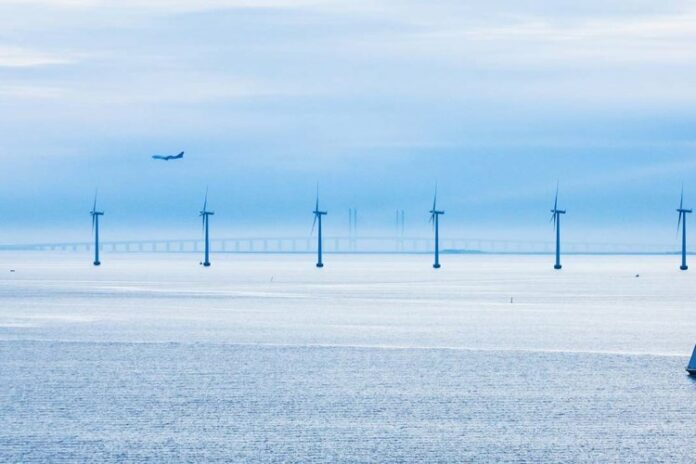
To investigate methods for the development of oyster reefs at offshore locations, a total of eight reef structures with oysters will be installed underwater within the Borssele Wind Farm Site V in the North Sea.

The Borssele Wind Farm Site V, located 20 km off the coast of the Netherlands, has been designated as an innovation site. Two Towers, consisting of Van Oord, Investri Offshore and Green Giraffe, has been awarded the concession and has therefore been given a unique opportunity to test and demonstrate advanced technologies. One of the technologies is the Ecofriendly scour (Ecoscour) protection.

Oyster reefs are the basis for a healthy, thriving underwater life. They filter the seawater and provide food, shelter, and spawning area for fishes and other marine species. Over a century ago, one-fifth of the Dutch part of the North Sea was covered with European flat oyster beds, but these have disappeared, due to overfishing, habitat destruction and disease. 

Because of the designation of marine protected areas and the construction of offshore wind farms, areas with undisturbed seafloor are increasing. This provides an opportunity for restoring the oyster reefs in the North Sea. The Ecoscour project generates knowledge on the development of oyster reefs. Van Oord works together with Wageningen Marine Research, HZ University of Applied Sciences, Bureau Waardenburg and the Netherlands Institute for Sea Research.
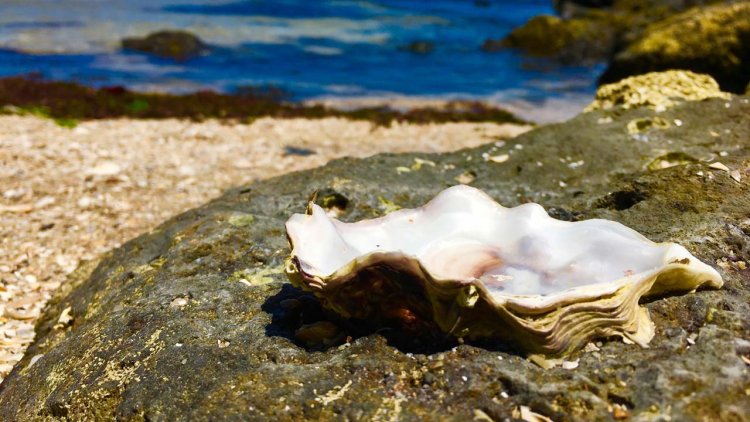
The potential for offshore wind parks in the North Sea to contribute to achieving biodiversity goals, restoring ecosystem functions, and enhancing ecosystem services is gaining commitment. A leading example is the offshore Borssele Wind Farm Site V which provides an opportunity to gain knowledge on best practices for oyster reef development. This research programme tests different outplacement methods for live European flat oysters on the two scour protections of Borssele Site V, by installing eight different structures offshore. 

On the different structures oysters will be placed in various ways such as contained, loose and pre settled. This is being done to determine which method works best for the long-term establishment of oyster reefs on scour protections. Additionally, the research team wants to gain knowledge about what the most effective life stage of a European flat oyster is for installation on the scour protection: for instance adult oysters or juvenile oysters / spat or a combination of both. By means of the Ecoscour research programme and the installation of these eight new reef structures offshore, the team aims to learn a great deal about developing oyster reefs in the North Sea on a large scale.

Over the past two years, several experiments have been executed, for example to learn about the type of substrate most likely to be successful in collecting oyster spat. The research findings provide insight that contributes to upscaling the development of oyster reefs in existing and future offshore wind farms. The acquired knowledge will enable developers and owners to incorporate methods for nature enhancement in their wind farms. These innovative eco-designs for monopile scour protection, cable crossings and other installations on the seafloor will benefit the marine environment and associated societal interests.
CyberOwl granted US Patent for network security monitoring technology

0

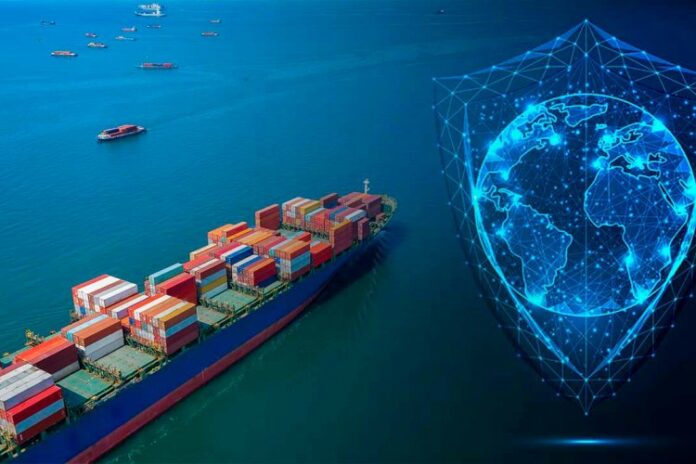
CyberOwl, a cybersecurity company that safeguards operational assets in maritime, defence and industrial sectors from attacks, has today announced the issuance of a new U.S. patent for the invention of its groundbreaking network security technology. 

The technology, invented by CyberOwl’s Chief Scientist, Professor Siraj Shaikh, is underpinned by research completed at Coventry University’s Institute for Future Transport and Cities. It looks to provide early warning of escalating cybersecurity threats and prioritise those warnings against critical assets in distributed, operational systems. It has since been developed to address the specific cybersecurity pain points of maritime transport and critical national infrastructure systems. The technology underpins CyberOwl’s industry-leading product Medulla, which is actively deployed on some of the world’s largest shipping fleets. 

The need for cybersecurity monitoring in the maritime sector has never been greater, following an unprecedented period of targeted, high profile cyber attacks on the sector; evidenced in recent days by cyber-attacks on container line CMA CGM and the United Nations agency for international shipping, the International Maritime Organization (IMO) . 

Professor Siraj Shaikh, Chief Scientist at CyberOwl, commented:

“With escalating threats and a perpetually growing list of vulnerabilities, the odds are stacked against the asset operator to defend their systems from cyber attack. We are constantly looking for advancements in CyberOwl’s technologies that can meaningfully give the advantage back to the asset operator. This latest patent is a testament to our commitment at CyberOwl to keep improving our products and services with cutting-edge research.”

Wärtsilä will supply two of its simulation solutions to the MMA in the USA

0

Wärtsilä Voyage will supply two of its advanced cloud-based simulation solutions to the Massachusetts Maritime Academy (MMA) in the USA under a one-year agreement.

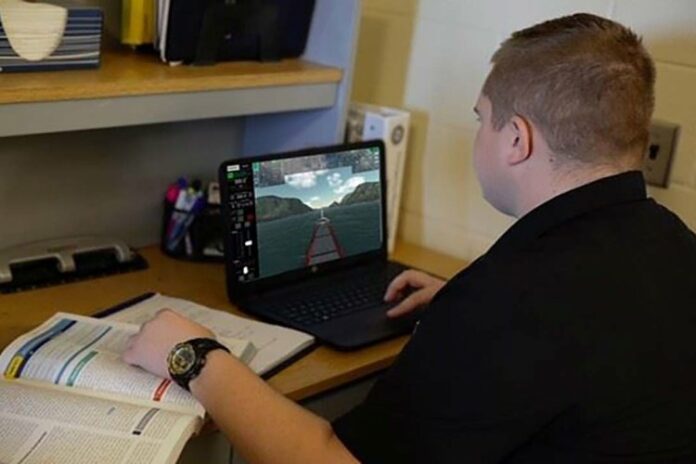
This will allow cadets at the Academy to continue receiving safe and effective navigational training, despite restrictions imposed because of the Covid-19 pandemic. The agreement was signed in September 2020 and was the first application of Wärtsilä’s cloud simulation technology in the US.

By adding cloud simulation, MMA can maintain total class volume but offer the same instruction either in the physical classroom or online, by shifting to a blended method of delivery as needed. The online simulator utilizes the same content as deployed in the on-campus classroom, allowing for quick implementation, while providing the flexibility needed to help in overcoming scheduling challenges. The cloud infrastructure also provides a ready-to-go solution as part of contingency planning in case of heightened restrictions being necessitated in the future.

John Belle, Associate Professor at the Academy, commented:

“Wärtsilä’s cloud simulation solution solves our immediate needs to offer expanded online content due to Covid-19. It also gives us a long-term platform for simulation in blended learning that will allow MMA to continue leading the industry with innovative technologies for our students.”

Neil Bennett, Director of Global Simulation Sales, Wärtsilä Voyage, said:

“Remote learning is a growing trend that is especially valuable in times like these, and it is important that the training of future maritime officers can continue with or without classroom attendance. The approved courses can carry on just as before, the only difference being the delivery method. This is a prime example of Wärtsilä’s success in developing smart technologies that enhance the efficiency and safety of maritime operations.” 

The Wärtsilä scope under this agreement includes the company’s Navi-Trainer Professional Marine Navigation Cloud Simulation software, two classrooms and TADS navigational charts.

Massachusetts Maritime Academy is a fully accredited, four year, co-educational state university offering Bachelor and Master of Science degrees for maritime cadets. The Academy is an established customer of Wärtsilä Voyage and utilizes a number of the company’s simulator solutions in its training program.

Neptune Energy digitalises drilling and wells with Halliburton Cloud Applications

0

Neptune Energy today announced it will adopt Halliburton’s DecisionSpace 365 well construction suite of cloud applications to consolidate all global drilling and wells activities, improve efficiency and significantly reduce non-productive time, leading to potential annual savings of more than $20 million.

The three-year agreement – part of Neptune’s digital subsurface programme – will create a platform for Neptune’s digital well program. It aims to reduce the duration for planning wells from weeks to days, automate engineering calculations and consolidate data currently held across multiple global locations into one.

Moving to a cloud-based solution will enable Neptune to incorporate artificial intelligence, machine learning and data analytics to solve upstream challenges and support the company’s overall digital transformation.

DecisionSpace 365 cloud applications will enable Neptune to build “digital twins” of its wells to not only plan and track their progress throughout their lifecycle, but to model opportunities to optimise performance and predict potential problems before they occur. It will also bring significant benefits to optimising inventories of Neptune’s plant, people and production resources.

Neptune’s Global Head of Drilling & Wells, Brett McIntyre, said:

“The industry faces unprecedented challenges at this time and new digital technologies are enabling E&P companies to be more efficient, maximise the value of their activities, reduce costs and support employees.

“We see significant opportunities to enhance the safety and productivity of our global drilling and wells activities, reducing non-productive time and supporting our global teams’ ability to work together to share knowledge and best practice.

“Our technology and digitisation strategy aims to enable Neptune to be safer and more responsible, ensuring production efficiency and profitable growth from our globally-diverse, gas-weighted portfolio. By applying technology smartly, we can also reduce waste across the whole value chain and support our ability to be a safer, faster and better business.”

By consolidating data from Neptune’s four enterprise data management (EDM) environments into one system in the cloud, Neptune’s drilling and wells teams can access all well data from any location, at any time; collaborate and share resources; ensure consistent approaches across the business and reduce costs associated with using multiple software platforms.

Ahmed Kenawi, Halliburton Senior Vice President for Eurasia, Europe and Sub-Saharan Africa said:

“We are excited to collaborate with Neptune Energy on the digital transformation of their drilling and wells activity. Our DecisionSpace 365 cloud applications powered by the iEnergy Hybrid Cloud will increase efficiency and productivity across the well lifecycle to maximise asset value.”

As part of Neptune’s digital subsurface programme, the company is also working with a range of partners and vendors to develop new tools to scan and interpret vast quantities of seismic data. This significantly reduces the time spent by geoscientists on administrative work and preparation, and provides them with data-informed insights they can use to identify hydrocarbons more efficiently and with more certainty, reducing the likelihood of drilling a dry well.

K Line subsidiary accredited for cyber security management

0

The certificate presentation ceremony was held on Oct. 2, 2020.

In recent years, information transmission such as ship operation data to the shore, and telecommunication between the ship and shore via internet connection tend to increase. “K” Line Group also advances fully equipping with the onboard ICT devices and computer network to promote developing utilization of IoT onboard and the telecommunication between the ship and shore, with a goal of enhancing the quality of safety.

Under these circumstances, it is necessary to take appropriate actions as maritime cyber risk management. As an international effort, a resolution for the maritime cyber risk management was passed by the International Maritime Organization (IMO) which is one of the UN organizations. “K” Line also had been proceeding with the preparations for appropriately dealing with maritime cyber risks in accordance with the CSMS guidelines of Class NK.

Although they were evaluated under the effect of COVID-19, CSMS Certification was acquired by remote-evaluation with Class NK.

Currently, in terms of other types of ships, the preparations for acquisition of CSMS Certification have been proceeded. 

Boskalis secures multiple dredging contracts in Germany

0

These dredging contracts carry a combined value of EUR 45 million for Boskalis and will all commence in the coming months.

The first contract was awarded by the German Waterways and Shipping Office WSA Weser-Jade-Nordsee to upgrade the existing coastal defense on the island of Wangerooge to provide flood protection to the island’s residents. This project will be executed with a local German partner and involves the reinforcement of the groins and revetment for which 200,000 tons of rock will be used. In addition to a backhoe dredger a number of split barges will be deployed. Construction works will commence in November 2020 and are expected to be completed late 2021.

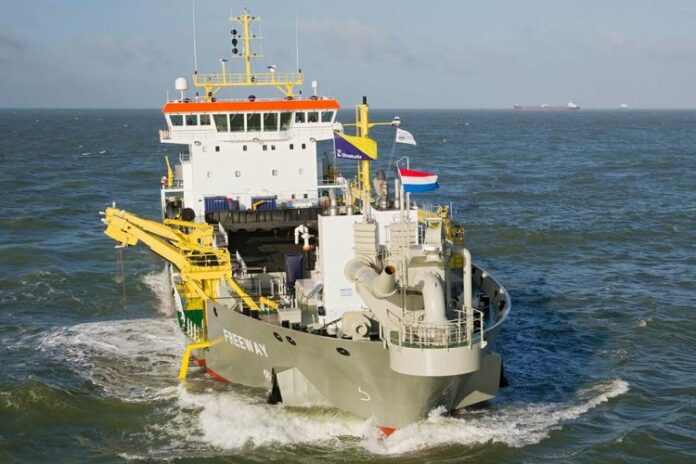
Boskalis furthermore received a contract award from WSA Weser-Jade-Nordsee for maintaining a 90-kilometer-long section of the shipping fairway of the Weser river between Nordenham and Bremerhaven. Under a two-year maintenance contract Boskalis will dredge a total quantity of around 14 million cubic meters of sand and silt, which will be deposited at designated locations along the river. Boskalis will deploy a medium-sized trailing suction hopper dredger to carry out the dredging work that will start early 2021 and last until the end of 2022.

The third contract that Boskalis secured was awarded by Niedersachsen Ports for the maintenance of the port of Emden, one of the largest German North Sea ports. Starting 1 November 2020, Boskalis will maintain the port at the required depth by dredging an annual volume of around 2.7 million cubic meters of sand and silt with a trailing suction hopper dredger for two consecutive years.

Boskalis’ strategy is aimed at benefitting from key macro-economic factors which drive worldwide demand in our markets: expansion of the global economy, increase in energy consumption, global population growth and the challenges that go hand in hand with climate change. The project on the island of Wangerooge is aimed at combatting the consequences of extreme weather related to climate change. The activities in the Weser river and the port of Emden are largely driven by the need to maintain the accessibility of ports to accommodate global seaborne trade. With its groundbreaking activities and unique expertise, Boskalis is exceptionally positioned to play a significant societal role in creating and protecting welfare and advancing the energy transition.

Pavilion Energy and Gasum agree to develop global LNG bunker supply network

0

Under a memorandum of understanding (MOU), the partners agree to leverage each other’s LNG bunker infrastructure and supply capabilities, in their respective regions of operations, to provide global supply points across for their customers. 

Mr Frédéric H. Barnaud, Group CEO of Pavilion Energy, said:

“Pavilion Energy is thrilled to partner with Gasum and provide customers with a wide supply LNG bunker network for ocean-going vessels sailing between the Far East and Northern Europe. We will complement this alliance with additional LNG bunkering partnerships in the Mediterranean, North Asia and the Americas. Our network will combine global commercial offerings with regional operational expertise and bring further momentum to the emergence of a thriving LNG bunkering industry.”

Mrs. Johanna Lamminen, CEO of Gasum, said:

“This partnership underlines our aim to build a world-wide partner network. For our customers this mean that we will support them with LNG wherever they are. We are very happy for having Pavilion Energy as a partner in the Far East supporting our shipping customers.”

Against the backdrop of a burgeoning industry for LNG as a marine fuel, this partnership combines Pavilion Energy’s pioneering LNG bunkering expertise in Southeast Asia with Gasum’s experience as a premier LNG bunker solutions provider in North West Europe. As a licensed LNG importer and bunker supplier for Singapore, Pavilion Energy has taken several firm steps to invest in and support Singapore’s LNG bunker readiness. Gasum has five LNG bunker vessels in operation and several LNG terminals in the Nordics.
 

Samskip launches new Grangemouth container service for exporters direct to Europe

0

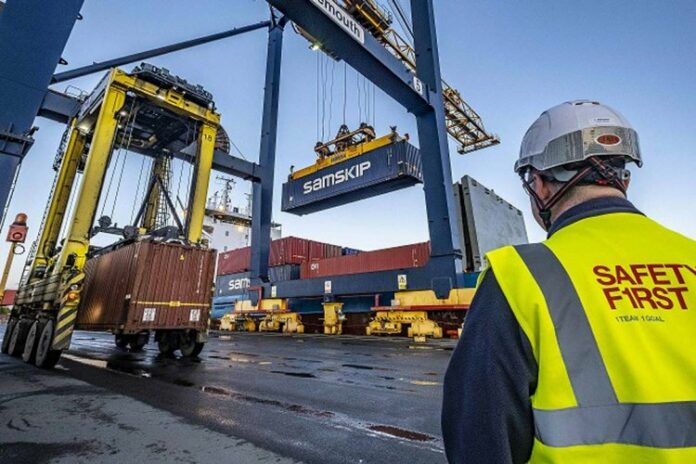
The arrival of the Vanquish into Scotland’s key strategic freight hub at The Port of Grangemouth has launched a new-short sea shipping call with Samskip for Scottish exporters and importers direct into mainland Europe.

At a crucial time for the UK as preparations are underway for the UK’s departure from the EU customs union, this new weekly call into Grangemouth expands the vessel rotation on Samskip’s existing Amsterdam/Hull service, opening up wider coverage for customers and providing Samskip with additional capacity to meet increasing demand from the Scottish market.

The service offers an alternative to customers current supply chains with a regular additional call into mainland Europe each week. Cargos expected to use the service include food and drink; paper and steel products. The weekly rotation calling into Grangemouth each Thursday, also calls into Hull and Amsterdam.

Scott Montgomery, Manager of Sales & Operations in Scotland for Samskip said:

“Customers have become accustomed to our reliability and the reach of our intermodal services deep into continental Europe. As their businesses have grown, we’ve grown with them, increasing our capacity on a regular basis to meet their needs and working closely with the Port of Grangemouth to move Scottish business through a Scottish port. Now we take the next step, adding a second ship to improve our capacity, frequency and transit times to and from a number of key markets, in particular, Germany. We’re Brexit ready and our additional ship can help our customers make sure their supply chains are too.”

Commenting on the new service, Derek Knox, Senior Port Manager at The Port of Grangemouth said:

“It’s great news for Grangemouth and for the Scottish market that Samskip have chosen the port for this additional call on their growing short-sea European service. The Port of Grangemouth plays a key role in Scotland’s logistics and freight sector and this additional call will increase the frequency of vessels connecting to mainland Europe and provide an enhancement to the current offering from the Port to the Scottish Market.  Grangemouth is Scotland’s key strategic freight hub with the country’s largest container port. Samskip’s customers will benefit from our efficient and fast turnaround times in addition to the many advantages that can be obtained from our key strategic location within Scotland.

 This call is a new alternative to existing supply chain solutions as the UK prepares to leave the EU on 31st December. These changes should both streamline supply chains and also contribute to our net zero targets as they will facilitate the transfer to short sea shipping routes as opposed to road transport. We continue to invest significantly in Grangemouth with new equipment, an expanded container terminal area and over 400 reefer connections securing us as Scotland’s freight hub of choice.”

 Koen Overtoom, CEO, Port of Amsterdam said:

“We are very pleased with this new Grangemouth-Amsterdam connection, as it further expands the short sea proposition of the port of Amsterdam. It shows the strength of the partnership between Forth Ports, Samskip, TMA Logistics and ourselves and connects the hinterland of Amsterdam with the Northern British market, offering new opportunities for shippers. Furthermore, this is a great confirmation coming from the market as it shows the importance of offering efficient and reliable services between our ports.”

Kongsberg to deliver integrated manoeuvring system for two 230m RoPax vessels

0

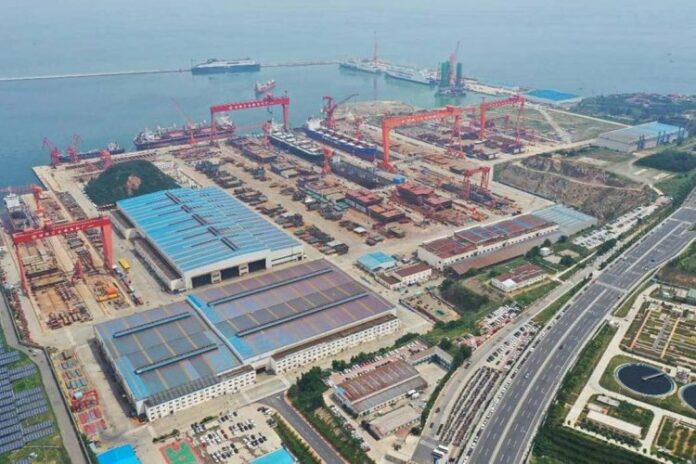
Currently under construction at Weihai and expected to be delivered for deployment in the Baltic Sea by 2023, the ships will each have capacity for 1,212 passengers and are specified with a focus on sustainable technologies and green operation.

Worth in excess of EUR 12 million, the contract will see the system fitted to Finnlines’ flagship Superstar RoPax vessels. The ships will be built to the highest Swedish/Finnish ice class (1A Super), with a twin shaft line propulsion system powered by four main engines. Kongsberg Maritime have proposed a system whereby the ships will be able to run two efficiency/speed profiles: 16 knots with two engines running, or 19 knots with four engines running. This capability is enabled via an innovative two-speed gearbox solution, delivering a propulsion efficiency increase of about 3% compared with a single-speed gearbox.

This sophisticated system is underpinned by Kongsberg Maritime’s world-class automation technologies. Yaling Liu, VP Sales and Marketing for Kongsberg Maritime in Greater China, said:

“We understand the conditions in which the customer’s vessels will operate and have developed strategies to improve energy efficiency, thereby saving fuel and reducing emissions. Our well-proven Ice Class 1A propulsion package will allow the vessels to work effectively in Arctic conditions, dealing with floating ice and extreme cold.”

Efficiency is further boosted through the use of KONGSBERG’s Controllable Pitch Propellers (CPPs). With the propeller and rudder integrated into a single system, hydrodynamic performance is optimised, thrust is increased and drag is reduced, with a consequent reduction in emissions. Combined with a ‘twisted’ rudder design that further improves manoeuvrability, twin-screw vessels can be expected to achieve efficiency gains of up to 6%.

Weisong Ni, Vice GM for China Merchants Jinling Shipyard (Weihai) Co. Ltd, said: 

“These vessels are being built to the highest standards for use in the sensitive environment of the Baltic Sea, so it is vital that we make every effort to choose technologies that ensure they will operate as sustainably as possible. KONGSBERG’s propulsion and manoeuvring system will help ensure that the vessels minimise fuel usage and emissions, whilst at the same time assisting manoeuvrability – often a crucial consideration for passenger ferries which may dock several times every day.”

Egil Haugsdal, President Kongsberg Maritime, said: 

“This is a major contract and a key endorsement of our propulsion, manoeuvring and automation systems, of which we are justly proud. We have developed strategies to improve energy efficiency, thereby saving fuel and reducing emissions. Kongsberg Maritime is committed to sustainability across our industry, and this contract is an example of how our technologies can fundamentally benefit both the environment and the enactment of onboard operations.”

VIDEO: Engineers built a squid-like robot for underwater exploration

0

The robot carries its own power source inside its body. It can also carry a sensor, such as a camera, for underwater exploration. The researchers detail their work in a recent issue of Bioinspiration and Biomimetics. 

Michael T. Tolley, one of the paper’s senior authors and a professor in the Department of Mechanical and Aerospace Engineering at UC San Diego, said:

“Essentially, we recreated all the key features that squids use for high-speed swimming. This is the first untethered robot that can generate jet pulses for rapid locomotion like the squid and can achieve these jet pulses by changing its body shape, which improves swimming efficiency.”

This squid robot is made mostly from soft materials such as acrylic polymer, with a few rigid, 3D printed and laser cut parts. Using soft robots in underwater exploration is important to protect fish and coral, which could be damaged by rigid robots. But soft robots tend to move slowly and have difficulty maneuvering.

The research team, which includes roboticists and experts in computer simulations as well as experimental fluid dynamics, turned to cephalopods as a good model to solve some of these issues. Squid, for example, can reach the fastest speeds of any aquatic invertebrates thanks to a jet propulsion mechanism. 

Their robot takes a volume of water into its body while storing elastic energy in its skin and flexible ribs. It then releases this energy by compressing its body and generates a jet of water to propel itself. 

At rest, the squid robot is shaped roughly like a paper lantern, and has flexible ribs, which act like springs, along its sides. The ribs are connected to two circular plates at each end of the robot. One of them is connected to a nozzle that both takes in water and ejects it when the robot’s body contracts. The other plate can carry a water-proof camera or a different type of sensor. 

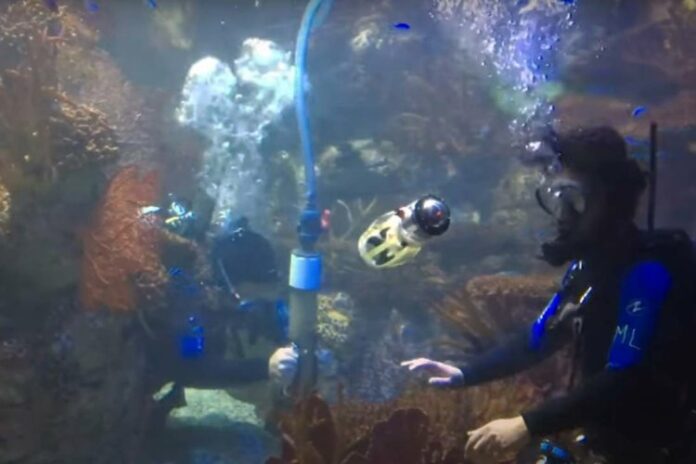
Engineers first tested the robot in a water testbed in the lab of Professor Geno Pawlak, in the UC San Diego Department of Mechanical and Aerospace Engineering. Then they took it out for a swim in one of the tanks at the UC San Diego Birch Aquarium at the Scripps Institution of Oceanography. 

They demonstrated that the robot could steer by adjusting the direction of the nozzle. As with any underwater robot, waterproofing was a key concern for electrical components such as the battery and camera.They clocked the robot’s speed at about 18 to 32 centimeters per second (roughly half a mile per hour), which is faster than most other soft robots. 

Caleb Christianson, who led the study as part of his Ph.D. work in Tolley’s research group, said:

“After we were able to optimize the design of the robot so that it would swim in a tank in the lab, it was especially exciting to see that the robot was able to successfully swim in a large aquarium among coral and fish, demonstrating its feasibility for real-world applications.”

Researchers conducted several experiments to find the optimal size and shape for the nozzle that would propel the robot. This in turn helped them increase the robot’s efficiency and its ability to maneuver and go faster. This was done mostly by simulating this kind of jet propulsion, work that was led by Professor Qiang Zhu and his team in the Department of Structural Engineering at UC San Diego. The team also learned more about how energy can be stored in the elastic component of the robot’s body and skin, which is later released to generate a jet.