-10.9 C
New York
Home Blog Page 756

NOAA supports American lobster and Jonah crab research fleet led by fishermen

0

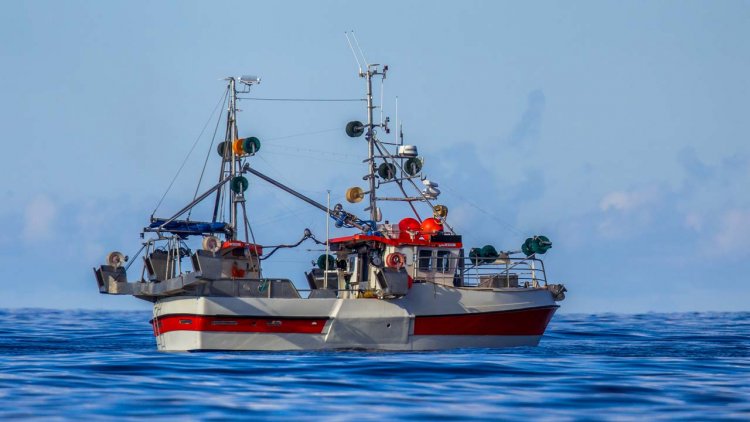
The Lobster and Jonah Crab Research Fleet, organized by the Commercial Fisheries Research Foundation (CFRF), was established in 2013. It has collected biological data from nearly 160,000 American lobsters and about 90,000 Jonah crabs from the Gulf of Maine and south to the Mid-Atlantic. Sensors on their gear record bottom-water temperatures.  

In September, the Northeast Fisheries Science Center provided funding to the Atlantic States Marine Fisheries Commission to support the research fleet’s work.

Anna Mercer, Science Center  Cooperative Research Branch Chief, says:

“I am thrilled that we were able to work with the Commission to provide support for the Lobster and Jonah Crab Research Fleet. The project exemplifies the value of working with fishermen to address science needs and has tangible impacts on the stock assessments and management of these valuable species. I look forward to following along as this research continues and expands.”

The American lobster fishery is the most valuable single-species fishery in the nation. Fishermen, scientists, and managers have highlighted that biological and environmental data from more areas and for more of the year are key to improving science and management for American lobster.  

While once considered bycatch in the lobster fishery, the Jonah crab fishery has experienced a recent growth in landings. There is now an urgent need to collect more biological and fishery data to support the development of a stock assessment for this species. The growth of this fishery provides an important opportunity for lobstermen to diversify their fishing portfolio. This will allow them to adapt in the face of declining Southern New England lobster populations.

This forward-looking project integrates biological and environmental data collection into standard fishing vessel operations. It is advancing working partnerships between scientists, managers, and members of the lobster and Jonah crab industry. In recent years, changing environmental conditions have affected both species. Once more of a bycatch in the lobster fishery, Jonah crab also now supports a developing fishery that can help supplement lobster catches. 
Dave Bethoney, CFRF Executive Director, says:

“Thanks to the hard work of participating fishermen and CFRF staff, the Lobster and Jonah Crab Research Fleet has become one of the most  important and reliable datasets for offshore biological and environmental data for lobster and Jonah crab management.”

Upcoming work will involve more than 20 fishing vessels sampling lobster, Jonah crab, and bottom-water temperature. We will obtain these samples from data-poor regions in the Gulf of Maine, Georges Bank, and Southern New England. Tablets pre-programmed with custom applications will be used to record and relay biological and bottom-water temperature data to a central database at CFRF. 

Resulting data will be shared with participating fishermen, stock assessment scientists, fishery managers, and regional ocean modelers. It will inform stock assessments and management plans for the American lobster and Jonah crab fisheries.

Robert Beal, executive director of the commission, which develops management plans for these species, said:

“The Atlantic States Marine Fisheries Commission is grateful to our Congressional partners for their long-standing support of the American lobster fishery and more recently, the Jonah crab fishery. The American Lobster Technical Committee recently completed the benchmark stock assessment for American lobster; the continued operation of the CFRF research fleet made possible by this funding was invaluable to characterizing the offshore fishery as input in the stock assessment.” 

Windward and Vortexa establish data sharing agreement for maritime cargo flow

0

Windward, the Predictive Maritime Intelligence company applying AI to transform global maritime operations, and Vortexa, the energy analytics company using AI and deep industry expertise to provide the most complete real-time view of crude oil, refined products, LPG and LNG flows globally, announced today a joint partnership to exchange maritime data in order to provide greater visibility into compliance and risk factors across the global tanker fleet in the context of physical trading and chartering activities.

Windward’s vessel risk assessment capabilities based on its AI-driven Predictive Intelligence solution will enrich Vortexa’s analytics platform. Vortexa’s real-time and detailed global cargo level information and advanced ship-to-ship tracking data will bolster Windward’s Predictive Maritime Intelligence solution.

Given the international regulatory and sanctions landscape it is more important than ever to exchange data related to comprehensive cargo flow and maritime risk factors. Mitigating risk is of paramount importance to charterers, shipping companies, and other stakeholders in the global maritime ecosystem, enabling them to minimize physical trading and operational risks and avoid heavy fines and costly delays.

Windward’s AI-based risk metrics are now available within Vortexa’s platform at the vessel level, while Vortexa’s cargo data will strengthen Windward’s ability to measure vessel risk more accurately. With the amalgamation of Windward’s and Vortexa’s data, maritime stakeholders can now identify and reduce risk as part of their high-stakes trading and chartering decisions.

Ami Daniel, CEO of Windward, said:

“Partnering with Vortexa is a win-win for global maritime intelligence and risk mitigation. Both companies have highly specialized capabilities and data, and sharing intelligence on certain risk factors will enable each company to continuously improve their offerings so maritime stakeholders can conduct business with confidence.”

Fabio Kuhn, Founder and CEO of Vortexa, said:

“Our partnership with Windward will enable physical trading and tanker chartering opportunities shown at Vortexa’s analytics platform to be analyzed together with vessel risk factors provided by Windward. This unique combination of predictive intelligence will help our clients to physically trade with a greater level of confidence and avoid some of the most P&L-destroying operational and compliance ‘surprises’.”

Mathematical tools predict if wave-energy devices stay afloat in the ocean

0

Texas A&M University researchers have developed analytical tools that can help characterize the movements of floating but anchored wave-energy devices. Unlike complicated simulations that are expensive and time-consuming, they said their technique is fast, yet accurate enough to estimate if wave-energy devices will turn over in an ever-changing ocean environment.

Dr. Jeffrey Falzarano, professor in the Department of Ocean Engineering, said:

“Wave-energy converters need to take advantage of large wave motions to make electricity. But when a big storm comes, you don’t want big wave, wind and current motions to destroy these devices. We have developed much simpler analytical tools to judge the performance of these devices in a dynamic ocean environment without necessitating massive amounts of simulations or physical model tests that take a lot of time to run and are cost-prohibitive.”

The mathematical tools are described online in the journal Ships and Offshore Structures in July.

Wave-energy devices function in two modes. In “normal mode,” they convert the energy from tidal waves into electricity. Thus, this mode largely determines whether the design of the wave-energy device is economically efficient. However, in “survival” mode, or when incident waves cause large motions in the wave-energy devices, the performance of the wave-energy devices is largely determined by a system of moorings that anchor the devices to a location at the bottom of the body of water.

Moorings can be of several types, including wharfs and anchor buoys, and can be arranged in different configurations. In addition, there are considerable variations in the shape of wave-energy devices, making the prediction of whether the device will capsize nontrivial.

Falzarano said:

“Ships come in a variety of shapes and sizes; tankers, for example, are very different from fishing vessels or other military ships. These different geometries affect the ship’s motion in the water. Similarly, the shape of wave-energy devices can be quite diverse.”

For the analysis, Hao Wang, Falzarano’ s graduate student, used a cylindrical wave-energy device. This generic shape allowed the researchers to simplify the problem of prediction and extended their analysis to other wave-energy converters of similar shape. He also considered three mooring configurations.

Hao used two analytical methods, the Markov and Melnikov approaches, to predict the risks of turning over under random excitation. More specifically, using information from the wave-energy device’s geometry, the configuration of the mooring system and tidal wave properties, the methods yield a graph containing an envelope-like region. Intuitively, if the waves are really big, like during a storm, and the floating vessel escapes this envelope, it will likely turnover.

The researchers noted that although the analytical models were completely different, they yielded almost the same results, validating their merit and accuracy. They also said that their mathematical approach can be applied to assess the performance of other floating devices, such as floating wind turbines.

Falzarano said:

“The platform for a floating wind turbine is the same as the one for wave-energy devices, and so floating turbines can also pitchpole or turnover if the waves are very high. My group has been leaders in developing methods for predicting ship stability. We’re now looking at applying those approaches to renewable, floating energy devices.”

Equinor collaborates with Microsoft on Northern Lights carbon capture and storage value chain

0

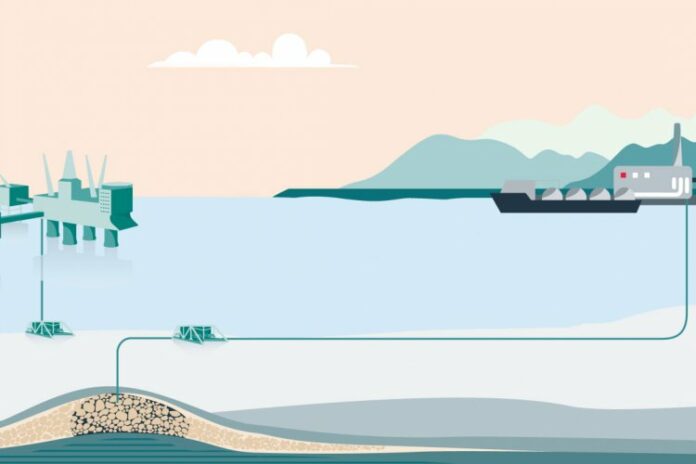
Equinor has signed a Memorandum of Understanding (MoU) with Microsoft to explore ways to support the Northern Lights carbon capture and storage (CCS) project as a technology partner. 

Equinor is developing the project together with Shell and Total as equal partners. Equinor Executive Vice President Irene Rummelhoff said:

“Carbon capture and storage is a proven technology and has the potential to play a key role in decarbonizing energy and industries across sectors to meet international climate targets. We look forward to working together with Microsoft and the Northern Lights partners to develop digital technologies for Northern Lights. We are also happy to partner with Microsoft to explore opportunities for the Northern Light project to remove carbon from Microsoft’s operations.”

Brad Smith, president of Microsoft, said:

“One of the world’s imperatives is the need to develop new ways to capture, transport, and permanently store carbon. This will require enormous investment and innovation, including a huge amount of computing power and data. As a company, Microsoft is excited about and committed to supporting promising carbon capture approaches. Our goal is not only to contribute our technology and know-how, but explore how new solutions like the Northern Lights project can help us meet our own carbon negative goals by 2030.”

Equinor and Microsoft have agreed to:

  • Explore a technology collaboration to integrate Microsoft’s digital expertise into the Northern Lights project.
  • Microsoft will explore the use of Northern Lights’ CO2 transport and storage facility as part of Microsoft’s portfolio of carbon capture, transportation, and storage projects.
  • Explore ways for Microsoft to invest in the effective development of Northern Lights.
  • Explore and establish advocacy of policies that help accelerate the contribution CCS can make to meeting Europe’s climate goals.

Syrie Crouch, Vice President for CCUS in Shell, says:

“Together with the other Northern Lights partners, we will explore how this carbon capture and storage project can help potential future customers to mitigate emissions caused by their own energy use. This relationship will make decarbonization solutions including carbon capture and storage technology available to increasing numbers of customers.”

Gabrielle Gauthey, Senior Vice President Carbon Neutrality Businesses at Total, says:

“As an historic CCS partner of Norway since 1996, Total is proud that its renewed commitment with Northern Lights project enables this new cooperation with Microsoft. Northern Lights and its partners are at the fore front of offering innovative services to the industry worldwide. We believe that this will be the start of a fruitful collaboration in line with our ambition to get to net zero by 2050.’’

Equinor, Shell and Total made a conditional investment decision on the Northern Lights CO2 transport and storage project in May 2020. Pending approval by regulatory authorities, the project partners will form a joint venture. It will be responsible for creating an open-source, ship-based carbon transport and storage network including developing business models to store captured CO2 from across Europe. The final investment decision is subject to the Norwegian parliament’s approval, anticipated late 2020. The plan is to start operations in the first half of 2024.

MoUs have been signed with eight European entities representing different industries, including Air Liquide, Arcelor Mittal, Ervia, Fortum Oyj, HeidelbergCement AG, Preem, Stockholm Exergi and ETH Zürich. As part of the MoUs, the parties are looking at solutions for CO₂ delivery, transport and storage of CO2, including logistics, CO2 specifications and roadmap towards potential start of operations.

Digital transformation set to produce Port of Gothenburg 2.0

0

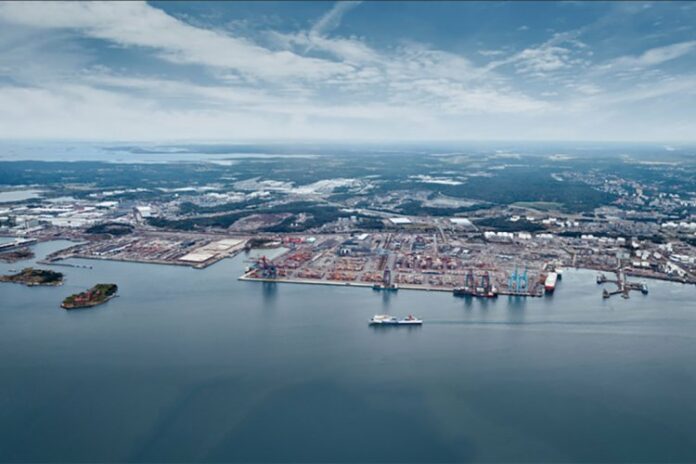
A customised digital platform is due to be rolled out during the second half of 2021. It will enhance freight flow transparency and have a direct impact on productivity, lead times, and delivery capacity throughout the entire transport chain.

Malin Collin, deputy CEO at the Gothenburg Port Authority, said:

“It will be something of a Port of Gothenburg 2.0 that will benefit everyone linked to the port. Having said that, what is truly revolutionary is not the just the technical transformation but what will emerge in its wake.”

The greatest challenge will be to bring together the hundreds of organisations that cooperate and compete for transport at the Port of Gothenburg. Shipping companies, terminal operators, rail operators, forwarding companies, freight owners, and inland terminals each represent an individual thread, and together they will intertwine to form a complex freight transport network.

At present, all those involved use separate IT systems that measure and handle individual elements in the transport chain based on fragmented information. Interaction between them often means dipping into the system manually.

The Gothenburg Port Authority is the network coordinator, which entails unravelling, digitalising, and reconnecting the threads. The plan is for all the fragments of information to be collated and processed using the very smartest technology in an effort to visualise and optimise the numerous processes at the Port of Gothenburg.

Joseph Sandwing, Head of Digital Business Transformation at the Gothenburg Port Authority, said:

“Determining how this unravelled system works is not just a matter of randomly pulling the individual threads. We need to adopt a cohesive approach, working with all the parties concerned, and we are currently building a platform that will help us realise our objectives. What will emerge is a new digital services ‘ecosystem’ for the Port of Gothenburg in its role as a freight hub.”

With these services, more rapid, high-quality information will facilitate flexible planning and collaboration between the different operators at the port. Data that is made available to us will allow shipping companies and ports to be integrated, with significant environmental gains as a result – through just-in-time arrival for example. Freight owners, rail operators, and terminal operators will be able to track their goods in real time. The response among those are affected has been overwhelmingly positive, and they have already identified the considerable potential that will be generated.

This week the procurement process was finalised with the provider Wabtec, which will be responsible for the technical solution. In the next phase, the Gothenburg Port Authority and Wabtec will lay out a joint project plan, bringing discussions with the various companies at the port to the next level and moving forward during the second half of 2021. What will materialise from this is a platform that can be built on and with at least one application based on three separate data sources.

Malin Collin said:

“We have a vision of being the world’s most competitive port and if we are to deliver on that vision we need to develop our ideas and expertise in partnership. Everyone sitting down and being smart in their own compartmentalised world is no longer sufficient. Instead we need to link up and share what we have in a novel way if are to make the pioneering advances that we have envisaged. There is strong support for this transition throughout the whole of the freight hub, and everyone is looking to develop a smart, sustainable port. We are now getting down to the task of bringing our plans and ambitions to fruition.”

ABB wins contract to equip Knutsen shuttle tankers with electric solutions

0

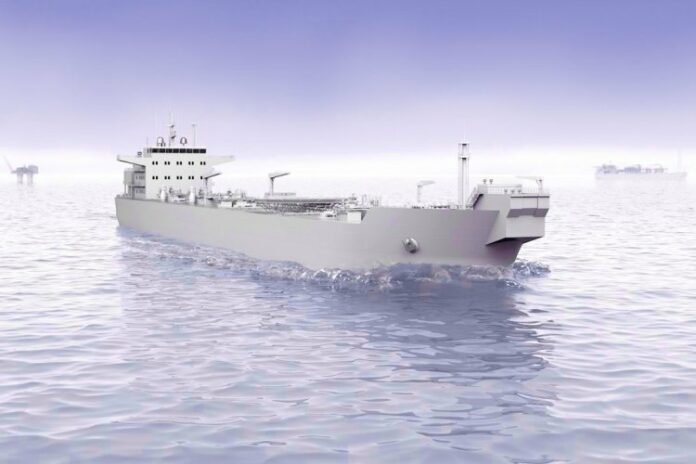
First two shuttle tankers for Knutsen NYK Offshore Tankers (KNOT) to feature battery technology, in addition to a wide scope of ABB’s electric solutions, will achieve significant gains in fuel efficiency, operational flexibility and emissions reduction.

Securing a contract from Daewoo Shipbuilding & Marine Engineering, ABB Marine & Ports will deliver the power and control technology for the two new KNOT shuttle tankers to future-proof them for the operations of tomorrow and enable the sustainability gains increasingly sought by energy majors.

The energy storage system was added at the request of the exploration and production company Vår Energi that has contracted KNOT to operate the shuttle tankers. The system will improve ship performance by optimizing engine responsiveness, whatever the load.

Tom Knutsen, Project manager at KNOT, said:

“We have been fully aware of charterers’ increased requirement for sustainability, so it was very important that our first commitment to battery power involved a supplier with a track record of delivering quality, safety and reliability to Knutsen, as well as service and remote expert support. ABB has significant experience in shipboard energy storage systems, and we are pleased that, on top of cutting emissions, this technology will also reduce OPEX.”

Built to endure harsh Arctic waters, the pair of 124,000 dwt tankers are set be delivered by the Daewoo Shipbuilding & Marine Engineering shipyard in 2022. The newbuild vessels will operate in the North Sea.

ABB’s scope of supply will also include the shaft generator system, main switchboards, thruster and cargo pump drive systems, and take care of project management, commissioning​​​​​​​ and sea trials.

The ABB twin battery package on board each Knutsen ship will have a storage capacity of 678kWh. The energy storage system will be able to ramp up engine responsiveness by working with the ABB MV AC system to control and optimize shaft generator power flexibility. The enhanced dynamic support for the energy storage system will be crucial in the event of sudden load changes, peak loading, including the specific demands of station keeping and cargo pump operations.

Being able to call on the integrated energy storage system improves operational flexibility but also means that auxiliaries are needed less frequently, and sometimes not at all, saving fuel and reducing emissions. Battery power may therefore offer a new competitive edge where ships are being replaced or upgraded. In a circular approach, when the shaft generator has produced more power than required, the excess power will be used to charge batteries.

Juha Koskela, Division President, ABB Marine & Ports, said:

“We are proud to once again deliver safe and efficient solutions to Knutsen to assist them in achieving their sustainability goals. Our shuttle tanker offering ensures that current and future operating goals can be met, and emissions targets can be reached.”

Pirates are kidnapping more seafarers off West Africa, IMB reports

0

ICC International Maritime Bureau (IMB) figures show a rise in piracy and armed robbery on the world’s seas in the first nine months of 2020, with a 40% increase in the number of kidnappings reported in the Gulf of Guinea, compared with the same period in 2019. 

2020 Q2 IMB Report 1IMB’s latest global piracy report details 132 attacks since the start of 2020, up from 119 incidents in the same period last year. Of the 85 seafarers kidnapped from their vessels and held for ransom, 80 were taken in the Gulf of Guinea – in 14 attacks reported off Nigeria, Benin, Gabon, Equatorial Guinea and Ghana. 

In the first nine months of 2020, seafarers reported 134 cases of assault, injury and threats, including 85 crewmembers being kidnapped and 31 held hostage onboard their ships. A total of 112 vessels were boarded and six were fired upon, while 12 reported attempted attacks. Two fishing vessels were hijacked, both in the Gulf of Guinea.

With approximately 95% of global kidnappings reported from within Gulf of Guinea waters, IMB warns that pirate gangs in the area are “well organized and targeting all vessel types over a wide range”. 

There has been a sharp quarterly decrease in the number of incidents within the Indonesian archipelagic, with four reported in Q3, down from 14 in Q2. These are viewed as low level opportunistic thefts with most reported on anchored vessels. 

All vessel types in in the Caribbean, Central and South America – including Brazil, Colombia, Ecuador, Haiti, Mexico and Peru are being targeted at anchor as well as underway, and during river passages under pilotage. On 26 September 2020, a container vessel was boarded by armed perpetrators during its river passage at Guayaquil. The attackers fired their weapons towards the accommodation and bridge, then opened containers and stole the contents before leaving.

However, as many more cases go unreported, IMB is urging all ship masters and operators to inform, in a timely manner, the 24-hour IMB Piracy Reporting Centre of any attacks to their vessels or crew. 

KOTUG starts first operation in South America

0

KOTUG has been awarded a long-term contract by Esso Exploration and Production Guyana Limited (EEPGL) to provide offshore terminal towage support for operations in Guyana. This contract marks KOTUG’s first operation in the South American subcontinent and upcoming oil-producing nation of Guyana.

Ard-Jan Kooren, CEO of KOTUG International, says:

“Being part of the growing offshore oil and gas activities in the cooperative republic of Guyana and working together with one of world’s largest oil majors ExxonMobil for us is an important milestone and in line with our long-term strategy to grow our business in the FPSO support business. KOTUG believes with its innovative and customer focused approach it can help clients meet their global commitments.”

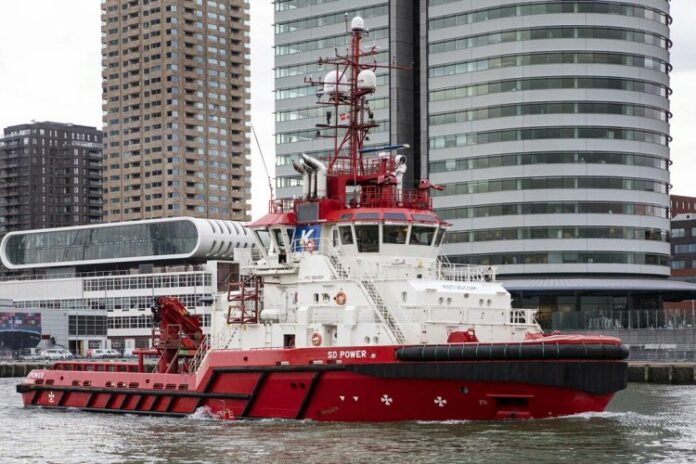
To support the operations in Guyana, KOTUG (through the local entity KOTUG Guyana Inc.) will employ its newly acquired vessel “SD Power”, a high-spec 130 tonnes bollard pull, DP-2 azimuth anchor-handling tug. This unique vessel will provide support to the existing and upcoming Floating Production and Storage Offloading units (FPSO’s) at the Liza Field, offshore Guyana by providing towage assistance to export tankers, infield support duties and cargo duties.

Asahi Tanker orders 2 of world’s 1st zero-emission electric-powered tankers

0

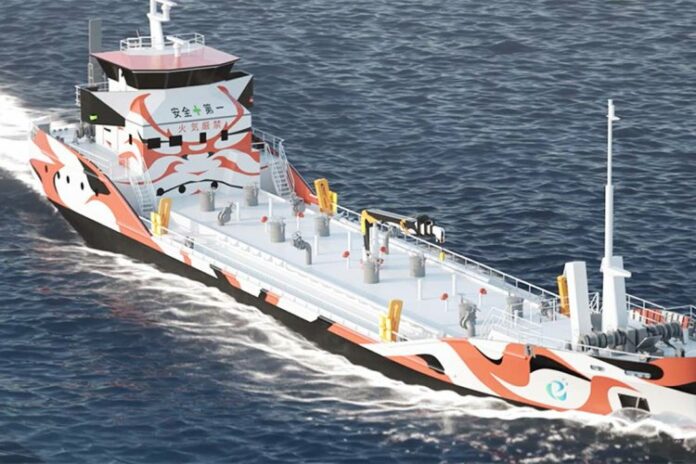
The two tankers will be powered completely by large-capacity lithium ion batteries and are slated to go into service as bunker vessels in Tokyo Bay.

The two tankers will achieve zero emissions of CO2, NOx, SOx, and particulates thanks to their all-electric core energy system, dramatically reducing their environmental impact. In addition, their reduced noise and vibration will create a more comfortable work environment for the crewmembers and limit noise pollution in the bay and its surroundings.

Adoption of various automated equipment and digital tools including Internet of Things (IoT) will reduce crews’ onboard workload and increase the ship’s operating efficiency.

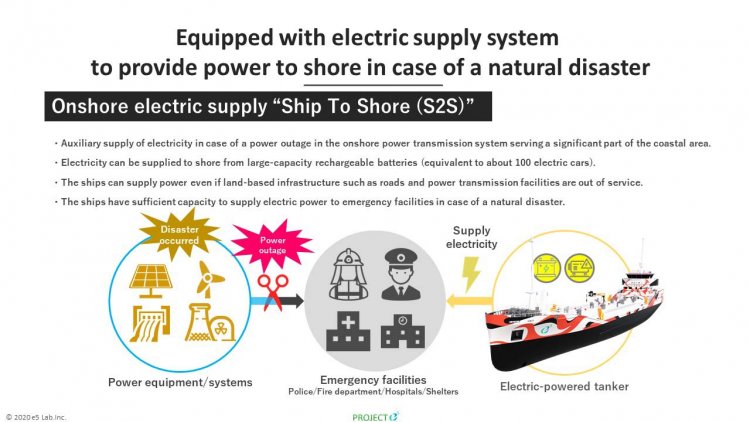
The tankers will play a new role in contributing to measures for the Business Continuity Plan (BCP) and Community Life Continuity Plan (LCP) in case of disaster or emergency, by making the electricity stored in their onboard batteries — defined as “large-capacity batteries for power supply in emergency”— available to supply emergency power. Asahi Tanker and TEPCO Energy Partner, Inc. are currently working on these initiatives.

Asahi Tanker and e5 Lab will realize a sustainable ocean shipping industry through efforts to improve the work environment for crewmembers, which is an urgent issue facing the coastal shipping sector, and global environmental protection through the development and introduction of these advanced ships.

Portsmouth welcomes Galicia – Brittany Ferries brand new ship for Spain

0

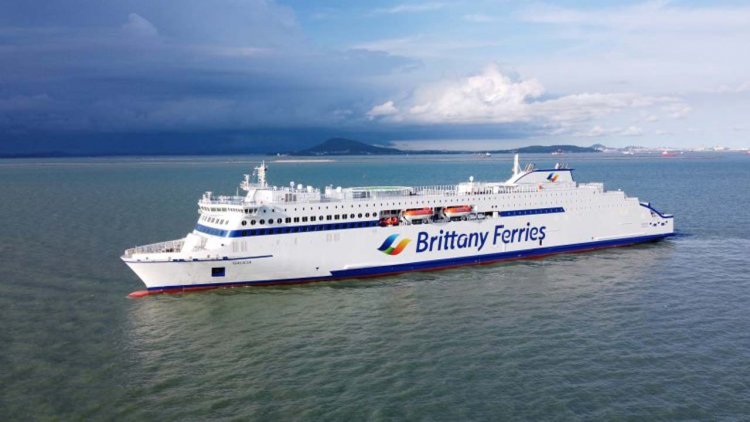
Galicia will undertake berthing trials in port on 13 October 2020 before her entry into service for passengers in December 2020.

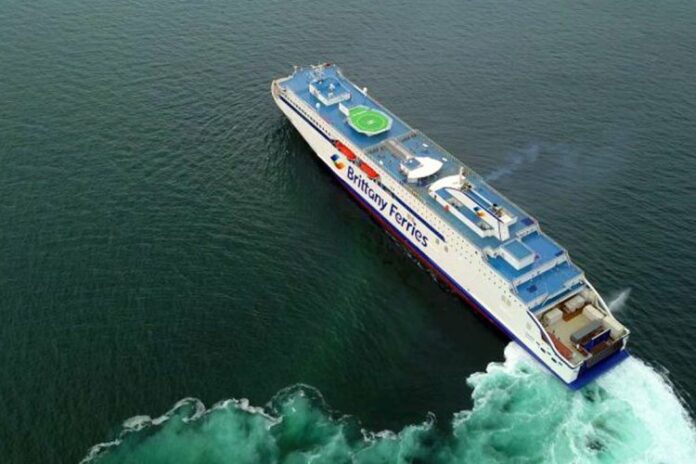
Galicia is the longest ship ever to have graced the Brittany Ferries fleet at 215m, hosting 3km of “lane metres” for freight and passenger traffic. She is the first new ship to join the fleet since 2009 and is the first since the company announced a multi-million euro investment in fleet renewal back in 2017.

The investment was, of course, made several years ago. But the company says it hopes the new ship will reassure customers of Brittany Ferries’ commitment to a brighter future. Galicia will serve the Portsmouth to Santander route, with two weekly rotations. And one weekly there-and-back from Portsmouth to Cherbourg in Normandy.

When the current storms have passed, Brittany Ferries will have three new ships in its fleet. Two ships will have joined Galicia by 2023, called Salamanca and Santoña, both powered by cleaner liquefied natural gas (LNG).

Christophe Mathieu Brittany Ferries CEO said:

“Fleet renewal is an integral part of our five-year recovery plan and Galicia’s arrival is the result of a commission made in happier times. That is why I am delighted to bring this good news story to our staff, freight drivers and passengers today. Our message is clear: we have invested in beautiful new ships. Given the right support to get through this terrible crisis Brittany Ferries can have a bright future, as well as a proud past.”

Mike Sellers, director at Portsmouth International Port said:

“I’m delighted to welcome Galicia to the city on behalf of the people of Portsmouth. 2020 has been a challenging year for us all, so it’s great to be able to look to the future positively with the arrival of this fantastic addition to the Brittany Ferries fleet. The additional freight capacity on the ship means more opportunities for trade to flow direct from the UK to Spain, and passengers will also be able to travel in style with some of the finest facilities in ferry travel available on-board”.