-8.5 C
New York
Home Blog Page 753

SSCV OOS Serooskerke will be towed out of the river from Nantong

0

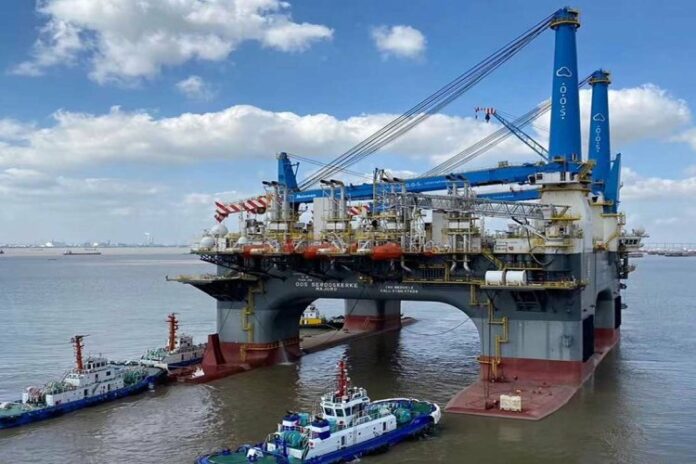
At 1040 on October 9, under the strict maintenance of the Nantong Maritime Safety Administration’s sea cruiser and 6 high-horsepower tugboats, the world’s most advanced semi-submersible heavy crane life platform “OOS Serooskerke” slowly left China Merchants Heavy Industries (Jiangsu) Co., Ltd. outfitted the dock, completed the formation and started the towing journey out of the river.

It is reported that the total length of the platform is 137.75 meters, the molded width is 81.0 meters, the molded depth is 12.0 meters, and the maximum height above the water is 96.3 meters. The total length of the towing vessel formation is 399 meters and the width is 101 meters. A homework activity for.

The “OOS Serooskerke” platform is manufactured by China Merchants Heavy Industries (Jiangsu) Co., Ltd. It adopts a left-right asymmetrical pontoon and column design. It is equipped with 6 single 3800KW propellers. The combined hoisting capacity of the crane is 4400 tons, which can be 750 at the same time. People provide comfortable and safe living and working conditions. 

The variable load of storm self-existing conditions can reach 6,300 tons, and it can work under severe conditions. It is equipped with DP3 closed-loop dynamic positioning system. It has oil and gas production, installation modules, underwater services, and dismantling. Platform, service support and other functions. Compared with the previous world’s largest semi-submersible heavy-lifting life platform “Pioneer Spirit”, this platform has the same functions but more advanced technology and information technology and more competitive construction costs.

The total length of the ship formation for this towing operation is 399 meters, the width is 101 meters, and the draft is 10.5 meters. The width of the towing and the difficulty of the operation both refresh the previous records of the navigation history of the Yangtze River. Therefore, the operation activities require extremely objective conditions such as hydrology, meteorology, and navigation environment. high. The average daily flow of ships in the waters of the ship formation is more than 2500. The flow of ships is large and the navigation environment is complicated. The towing formation exists during the period of departure, formation, crossing anchorage, crossing the main channel, port navigation, docking and mooring. Greater security risk.

In order to ensure the safety of towing on the “OOS Serooskerke” platform, under the unified coordination and command of Jiangsu Maritime Safety Administration, Nantong Maritime Safety Administration meticulously formulated a traffic organization and maintenance plan, issued large-scale towing permits, issued navigation notices, and organized relevant port and shipping companies to adjust The voyage production plan, as far as possible, “gave way” for the platform towing out of the river.

During the platform unberthing and towing period, the maritime departments of Nantong, Changshu, and Taicang strengthened the overall linkage, implemented temporary traffic control on the navigable waters in advance, and dispatched 7 marine patrol boats to escort the whole process. The maritime departments of the entire Jiangsu section of the Yangtze River will organize the implementation of downstream ship traffic control, stagger the towing nodes of the fleet in advance, and ensure the safety of navigation during the towing period of the “OOS Serooskerke” platform.

The “OOS Serooskerke” platform will temporarily dock at the Taicang Port Container Terminal at 1600 o’clock on October 9th , and leave the Jiangsu section of the Yangtze River in the early morning of the 10th, heading for the Shanghai Lvhuashan anchorage.
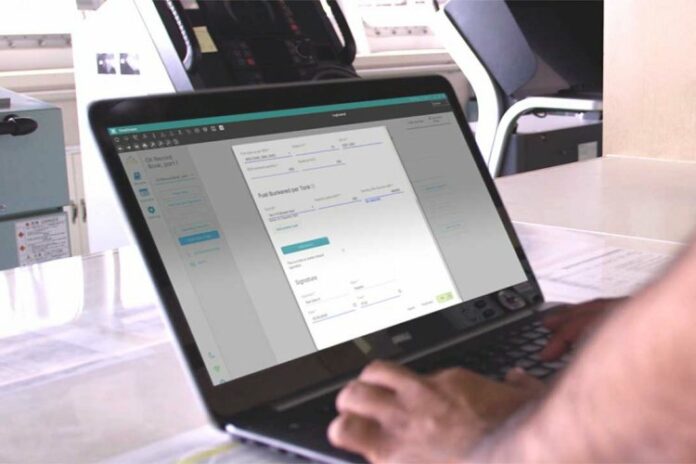
OneOcean adds Electronic LogBooks to its platform

0

OneOcean, the global leader in compliance and navigation services for the maritime industry, has announced the launch of LogCentral. This secure, easy-to-apply digital tool makes collecting and sharing vessel data simple, quick and requires no training to use.

Martin Taylor, Chief Executive Officer of OneOcean, says:

“LogCentral is a genuine breakthrough, not just for optimising the usage of electronic logbooks but also for driving fleet-wide efficiencies. Data goes through comprehensive validation at point of entry to massively improve accuracy. In addition to monitoring fleet activity in real time, shoreside management teams can compare and analyse trends in depth. This is thanks to LogCentral’s capacity to output graphs and tables which also factor in historical vessel data. The resulting insights are available through the online portal and are key for informed decision-making.”

LogCentral adheres to the IMO’s Marine Environment Protection Committee (MEPC) standards which came into force this month. These requirements provide industry-wide guidance for the use of electronic record books as an acceptable alternative to paper logbooks.

With its intuitive, clearly laid-out user interface, LogCentral makes recording, managing and distributing vessel logbook data easy for onboard personnel. Accommodating all daily operational information including waste disposal, sludge generation and ballast operations, as well as enabling all air and water emissions to be precisely recorded. This facilitates and proves compliance with MARPOL regulations for pollution prevention and control.

LogCentral completely overcomes the setbacks associated with completing paper logbooks. In the past, crews have incurred heavy fines for delays, errors or missing entries when handing their logbooks over to the authorities. In some cases, logbook irregularities have even led to vessels being impounded. This has adversely affected trading operations and the reputation of the fleet involved.

LogCentral helps to reduce the likelihood of errors by linking records, comprehensive validation mechanisms and auto-fills areas to issue visual alerts if inaccurate data is entered.  

Meanwhile, LogCentral’s shoreside core provides management teams with instant access to all logbook entries from each of their assets. This gives them complete company oversight from one convenient source. Any alerts generated in onboard record-keeping are also flagged up to onshore users.

Based on the data produced onboard, LogCentral creates analytical graphs and reports, capturing data that would otherwise be unavailable. This provides the company with a complete oversight of the record books as well as what is being completed and who is completing it.

Mitsubishi Shipbuilding receives BV approval for new LNG fuel system

0

Mitsubishi Shipbuilding Co., Ltd., a part of Mitsubishi Heavy Industries (MHI) Group, has been granted a new approval in principle (AIP) by Bureau Veritas (BV), a world leader in testing, inspection, and certification.

The approval is for a liquefied natural gas (LNG) fuel gas supply system (FGSS) for marine four-stroke dual fuel engines. The approval was confirmed in a presentation ceremony at Mitsubishi Shipbuilding’s Headquarters in Yokohama today.

The FGSS comprises an LNG fuel tank, gas supply unit, control systems, and other relevant equipment. The system was developed mainly to be installed on coastal ferries and small to mid-sized cargo ships.

Claude Maillot, Bureau Veritas Senior Vice President, North Asia, who presented the AiP certificate by a video call from Shanghai, commenting today, said:

‘This new system has received BV’s approval in principle recognizing that Mitsubishi Shipbuilding has clearly demonstrated that the new system meets our class rules and standards for gas safety and regulatory compliance. I congratulate Mitsubishi Shipbuilding – it is their deep experience and knowledge, acquired through decades of LNG carrier construction and technical development, that have enabled them to develop this innovative new system.’

The FGSS will use small size ‘vacuum-insulated’ type containment tanks with a double shell structure that ensures high heat insulation and also allows the external cylinder of the tank to remain at normal temperatures. This simplifies the support structure requirements for the tank and reduces installation work. Furthermore, the Tank Connection Space is also designed to reduce space, operational, and maintenance requirements.

Maillot concluded:

‘Innovations like these are helping drive the industry towards better environmental and operational performance – while reducing risk. Sharing our LNG expertise, we are very proud to be able to support Mitsubishi Shipbuilding in realizing their ambitions.’ 

Eurobulk works with Navarino to upgrade vessels’ ICT infrastructure

0

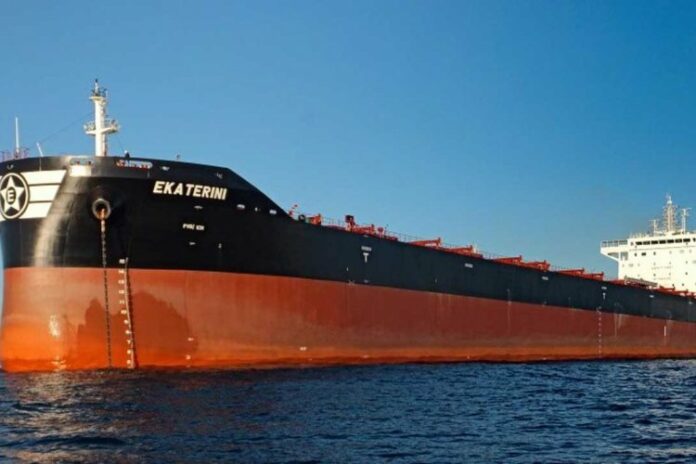
Eurobulk has a mixed fleet of 28 ocean-going bulkers and containers. 10 of them have already installed either Inmarsat Fleet Xpress or FleetBroadband with large allowance plans from Navarino and each vessel uses Infinity as the brain of the system to optimize the company’s business processes and to enhance its crew welfare offerings.

For the Fleet Xpress vessels, the company has chosen to to install a mix of Intellian GX60 and GX100 antennas, with Infinity Cube hosting the soft Network Service Device (NSD) and also offering high availability and active-active clustering. The FleetBroadband vessels use the Sailor 500 antenna with Infinity Standard, bringing a significant technology boost to the onboard infrastructure.

Eurobulk has also chosen 2 vessels to trial Spectrum, Navarino’s new designed-for-maritime ICT toolset which provides a centralized platform for remote monitoring, maintenance and management of the entire IT and connectivity infrastructure onboard including network devices, satellite terminals, operating systems, applications and security measures.

Ioannis Brougiannakis, the Navarino Account Manager for Eurobulk said:

‘Since we started our cooperation with Eurobulk’s IT team, we were looking to offer them truly great service on their vessels and to support their business needs with new services in this demanding shipping environment. Whether we install the high throughput FX service, or the robust FleetBroadband connection, we focus on enhancing the experience onboard with unique Infinity features such as light/ normal surfing, web acceleration and Quality of Service.

Spectrum provides the IT department at Eurobulk with asset management, network visualization and a real time, centralized IT & OTs management platform. We are very happy that Eurobulk showed great interest in Spectrum from the launch of the service and that they are trialing it on 2 vessels.  We will continue to work closely with Eurobulk to help them meet all of their connectivity requirements and enhance the way they do business and I look forwards to a long-lasting partnership between Navarino and Eurobulk. ‘

Mr. Petros Valsamis, Eurobulk’s IT Manager said:

‘Our communication needs are increasing and to meet those needs, we require a high level of performance and reliability with a dedicated support team that is available 24/7. Crew welfare is also of great importance to Eurobulk and the improved on-board connectivity using Navarino services and the Infinity solution is a big step forward for our crew offering. Navarino is helping us deliver on our promises and we very much like that they are committed to the ongoing development of the service as our business needs grow. Spectrum is another great solution which we are doing trials on to see how it can enhance our business operations. We are very happy with our collaboration with Navarino and its services and we look forwards to a long standing, professional relationship with Navarino for many years to come.‘

Harvey Gulf orders Wärtsilä Energy Storage for LNG-powered Supply Vessels

0

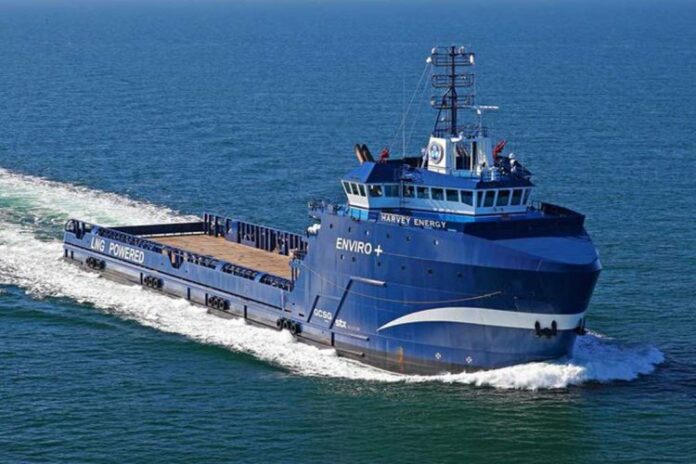
The technology group Wärtsilä, the marine industry’s leading LNG solutions and services provider, will supply its advanced Energy Storage System (ESS) to be retrofitted on four Harvey Energy class LNG-fuelled Platform Supply Vessels (PSVs). A fifth vessel in this class was earlier fitted with a Wärtsilä ESS. Louisiana-based Harvey Gulf placed this latest order with Wärtsilä in October.

When the upgrade project is completed, all five vessels will be capable of full tri-fuel operation, thus providing Harvey Gulf with the most flexible, fuel efficient class of PSVs in the Gulf of Mexico. The boats will be capable of closed bus Dynamic Positioning (DP) operation running only one engine augmented by the Wärtsilä Energy Storage System. When stationary in the field or in port, the boats will be able to operate on battery power only, thereby greatly reducing both fuel consumption and exhaust emissions.

Bill Amundsen, Key Account Manager for Wärtsilä Marine Power, says:

“Wärtsilä is very pleased and proud to partner with Harvey Gulf in yet another ground-breaking project bringing technological advancement to the North American marine market. The combination of cutting edge technology, strong customer service, and Harvey Gulf’s market-leading business approach has resulted in a very successful partnership.”

Shane Guidry, Harvey Gulf President and CEO, said:

“The conversion to tri-fuel technology is a tremendous addition to our already successful HARVEY ENERGY class PSV’s. Wärtsilä’s advanced technology and its unwavering commitment to service support were extremely important factors in our decision to select them for this project.” 

The four vessels, the ‘Harvey Power’, ‘Harvey Liberty’, ‘Harvey Freedom’, and ‘Harvey America’, will each be fitted with a Wärtsilä ESS comprising a Closed Bus-Tie 1360Kw Drive with 746 kWh 1100 VDC Batteries. The retrofitting project will be commenced in 2021 and will be completed in early 2022.

Founded in 1955, Louisiana-based Harvey Gulf International Marine is a marine transportation company that specializes in providing offshore supply and multi-purpose support vessels for deep water operations in the US Gulf of Mexico, Caribbean, Africa and Alaska.

Researchers find diverse communities comprise bacterial mats threatening coral reefs

0

Researchers are learning more about the brightly colored bacterial mats threatening the ecological health of coral reefs worldwide. In new research released this month, a Florida State University team revealed that these mats are more complex than scientists previously knew, opening the door for many questions about how to best protect reef ecosystems in the future.

FSU Assistant Professor of Biological Science Sophie McCoy and doctoral student Ethan Cissell published their findings in the journal Science of the Total Environment.

McCoy said:

“By targeting the full biological diversity of these mat communities on reefs, and by studying the transcriptome, which gives us information about which biochemical processes are being used by those organisms, we’re opening the door to a more complete understanding of the entire ecological role of mats.”

Though these cyanobacterial mats have been examined in the past, scientists focused on characterizing the cyanobacteria. Cissell and McCoy found that cyanobacteria only made up about 47.57% of the mats. Their analysis showed that mats also contained a type of algae called diatoms, fungi, a single cell organism called archaea, viruses and other forms of bacteria.

Cissell said:

“We know from other well-characterized systems that cyanobacteria, even in bloom-forming scenarios, associate with a diversity of other microorganisms that make significant and unique contributions to the overall dynamics and ecophysiology of these cyanobacteria-dominated consortia. We set out to determine if similar associations are found in proliferating cyanobacterial mats on coral reefs.”

Cyanobacterial mats have posed a huge problem for coral reef health. Coral reef bacteria have always played an important role in these ecological communities, but the growth—largely attributed to local and global climate stressors—has threatened to totally snuff out the life of precious corals.

Previously, the bacteria covered about 1% of reefs, but that has grown to 20 to 30% in some places.

Researchers said this greater understanding of the communities comprising the mats leads to more questions about how the mats form and grow.

Cissell said:

“What this means is that the mechanisms controlling mat bloom dynamics on coral reefs are likely more complex than previously thought. These data we present provide important baselines for future mechanistic-based exploration of the processes driving the growth, persistence, and decline of benthic cyanobacterial mats.”

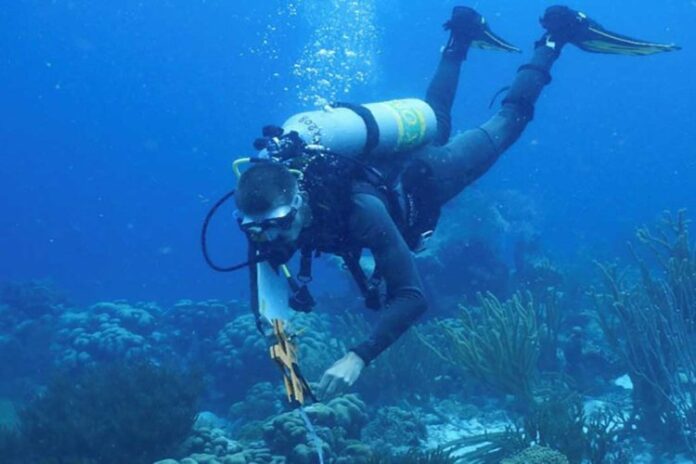
McCoy and Cissell conducted 29 diving expeditions in Bonaire, an island municipality of the Netherlands off the coast of Venezuela, for the project. They are currently conducting genetic sequencing on mat samples to get a better understanding of daily patterns of the communities comprising the mat. They are also examining samples taken from a dying mat to better understand compositional and functional shifts associated with mat death.

Damen signs with Vletterlieden for multi-purpose Stan Tug 1004

0

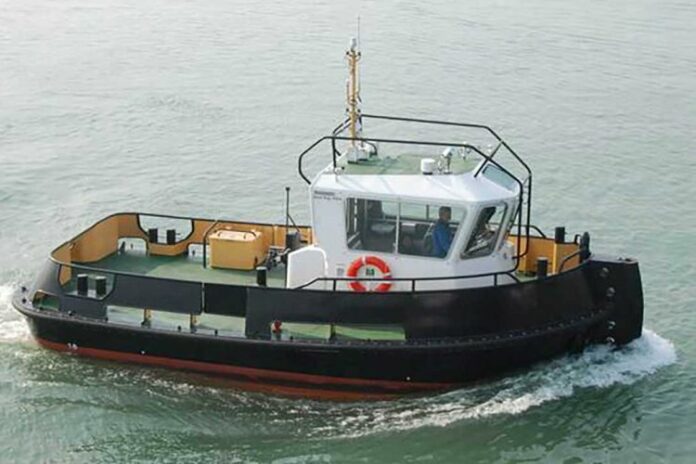
Damen Shipyards Group has recently signed a contract with Corps van Vletterlieden for a Stan Tug 1004. The company will use the Stan Tug for a wide range of tasks, including mooring, supply, crew transfer and diving support, in the Port of IJmuiden in the north of the Netherlands.

Having signed the contract on October 2nd, Damen expects to deliver the vessel in January next year. The speed of the delivery is facilitated by Damen’s practice of building standard vessels in series. As well as ensuring fast delivery, this also guarantees the customer of a reliable product.

Despite the standardised nature of its vessels, Damen is able to tailor them to its clients’ requirements with options. In the case of the Stan Tug 1004 for Vletterlieden, this includes installation of a crane, a generator set and coupling winches. These will enable the boat to fulfil its multi-purpose functionality.

Damen sales manager Vincent de Maat said:

“This is Vletterlieden’s first Damen vessel and we’ve been discussing the possibility of delivering a boat to them for some time, so I’m really pleased with this contract. We are looking forward to working with the client as we make the vessel ready for their needs in the coming months.”

Having been built at Damen Shipyards Changde in China, the Stan Tug 1004 is now at Damen Shipyards Hardinxveld in the Netherlands where she will be outfitted with the options ready for delivery to the client early next year.

The Damen Stan Tug 1004 is known for its superb manoeuvrability and outstanding handling characteristics. The vessel incorporates the latest hull and skeg designs and developments in fender, fairlead and winch design.

Thuraya’s new monitoring service set to boost efficiency on fishing vessels

0

Thuraya, the mobile satellite services subsidiary of the UAE’s Al Yah Satellite Communication Company (Yahsat), is collaborating with FrontM to launch Thuraya SatTrack, a cloud-based tracking and monitoring service that significantly increases operational efficiencies on board fishing vessels. Designed for the top-selling Thuraya MarineStar voice, tracking and monitoring solution, SatTrack will be available to users very soon.

In spite of digitalization and increased influx of information, the high cost of integrating third-party services and solutions is limiting the growth of the fishing industry. Thuraya SatTrack is a low-cost turnkey subscription service that provides interactive, real-time fleet tracking to monitor vessels. It enables operations with detailed maps, up-to-date weather layers and customized alerts with position reporting. 

Shawkat Ahmed, Chief Commercial Officer of Thuraya stated:

“Thuraya SatTrack is an integral part of our SeaLite service portfolio that provides fishing operators a competitive edge within the maritime industry. As the demand for compliance and access to information soars, satellite connectivity and smart applications are the only realistic and affordable means of ship-to-shore and inter-ship communications. By packaging SatTrack with Thuraya MarineStar, our aim is to provide partners and customers a multifunctional, reliable and affordable end-to-end solution that delivers significant cost savings from improved onboard safety and efficiencies.”

Thuraya SatTrack provides critical updates about vessels anywhere within Thuraya’s network that covers 80% of the world’s fishing hubs. Subscribers can also use it to remotely exchange data, establish and monitor geofences as well as access fish-catch reports in real-time, thereby reassuring regulatory bodies and buyers that the catch brought ashore is both legally caught and fresh. Besides guaranteeing crew safety, the SatTrack’s alert mechanism makes it ideal for search and rescue operations. Key beneficiaries include civil defense agencies and organizations with varied maritime interests such as police, port authorities, coast guards, transport authorities, coastal surveillance bodies, agriculture and fisheries ministries.

Lisa Moore, Vice President, Commercial Product Management of FrontM said:

“Our vision is to connect shore and ship teams with highly efficient operational and productivity applications maximizing on satellite connectivity technologies. We have been researching sustainable fisheries ecosystem requirements and offering tracking with situational awareness and shore-ship collaboration as of our marketplace apps.”

Thuraya SatTrack can be accessed through smart devices including PCs, laptops, smartphones and tablets. 

North Carolina Ports awarded $16 million grant for infrastructure improvements

0

The grant was awarded by the United States Department of Transportation (USDOT) through the Maritime Administration’s (MARAD) Port Infrastructure Development Program.

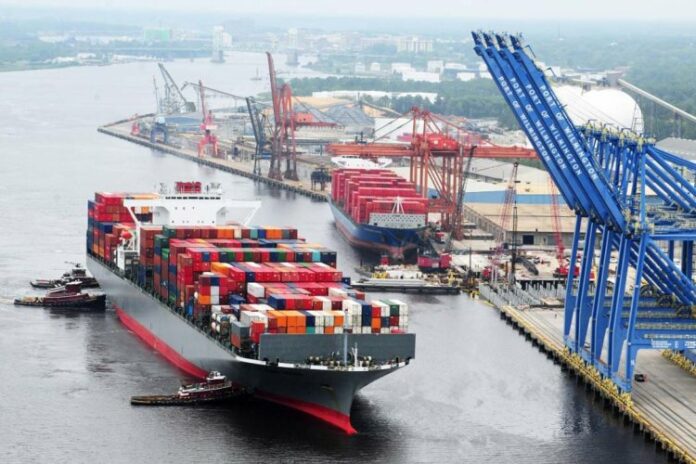
The funds will help support the development of a new container gate complex at the Port of Wilmington, as part of an overall five-year $200 million container yard expansion plan. The existing container gate is not adequate for the forecasted container volumes at the port; at completion, the new gate will allow the Wilmington container yard to more than triple container capacity. Improvements include increasing inbound lanes for truck traffic to seven and outbound lanes to six as well as a new container operations building.

Brian E. Clark, Chief Operating Officer, North Carolina Ports, said:

“This grant is the largest individual grant awarded to North Carolina Ports to date. We are thrilled to receive this grant which will support critical infrastructure projects that will further enable NC Ports and the Port of Wilmington to meet growing volumes and customer demand.”

As part of the project, the Ports Authority will also implement new terminal operating and gate operating systems which will aid in the efficiency of the Port of Wilmington’s container yard and container gate. The new truck gate interchange will feature technologies to improve safety and efficiency including optical character recognition, weigh in motion scales, and radio frequency identification that will allow trucks to move through the gate without stopping.

Clark added:

“Improving the container gate has long been part of our infrastructure improvements plan at the Port of Wilmington. We recognized early on the need for a more modern gate. Our terminal in Wilmington is known for its fast truck turn times and this modern complex will help us maintain the speed our customers expect.”

NOAA and local council to improve marine navigation near Valdez, Alaska

0

A new Physical Oceanographic Real-Time System, also known as PORTSⓇ, aims to improve maritime safety and efficiency off Valdez, Alaska. NOAA and the Prince William Sound Regional Citizens’ Advisory Counciloffsite link partnered to establish the third new PORTS system this year, the 36th in the nationwide network. 

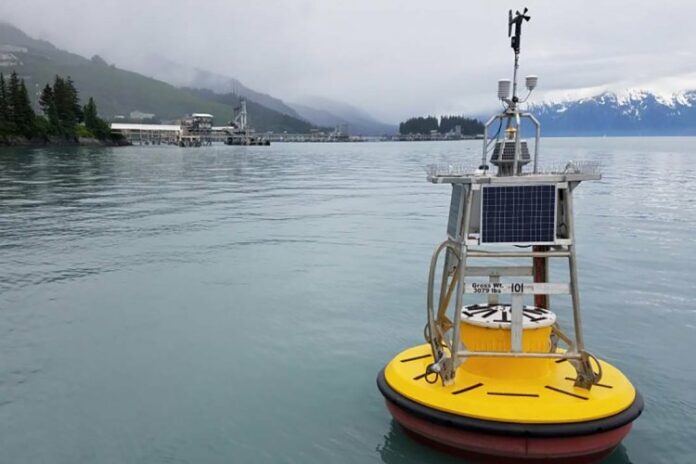
The Valdez PORTS will consist of an existing NOAA National Water Level Observation Network (NWLON) station at Valdez and two new meteorological-ocean buoys, operated and maintained by the council, that measure tidal currents, wind, air temperature, water temperature and barometric pressure.

One of the buoys is located off Jackson Point, at the Alyeska Pipeline Service Company’s Valdez Marine Terminal. The other is near the Valdez Duck Flats. In addition to maritime commerce, this information also improves natural resource management by collecting environmental data.

Steven Thur, Ph.D., acting deputy director of NOAA’s National Ocean Service, said:

“This new system, and the others like them around the country, reduce ship accidents by more than 50%, increase the size of ships that can get in and out of seaports, and reduce traffic delays. They also provide real-time, resilience-ready data as coastal conditions rapidly change, potentially threatening our coastal communities.”

The Port of Valdez is projected to see an increase in commercial ship traffic and passenger cruise ships in the next five to ten years. It is known as the northernmost ice-free U.S. port, where it does not freeze over in winter and is an ideal access point for goods shipped to interior Alaska locations. The Port of Valdez is located at the upper end of Prince William Sound, the site of the well known Exxon Valdez oil spill  in 1989, which spilled nearly 11 million gallons of crude oil.

Donna Schantz, executive director for the council, said:

“While the council’s sole purpose for installing these buoys is to promote the environmentally safe operation of the Valdez Marine Terminal and associated tankers, we believe the integration of this metocean data into NOAA’s PORTSⓇ will benefit and improve safety for a variety of other maritime users. This is another excellent example of how collaborative science can have wide-ranging impacts for the betterment of all.”

Data from the buoys is already being provided to the Alaska Ocean Observing System, a regional association of the NOAA-led U.S. Integrated Ocean Observing System (IOOSⓇ).  PORTS is leveraging that pathway to bring in the quality controlled buoy data and merge it with the Valdez NWLON data, enabling users to access all data in familiar PORTS products through one website.

The buoys were made possible through donations from Fairweather Science and partnerships with the Prince William Sound Science Center, Alyeska Pipeline Service Company, the City of Valdez and Valdez Fisheries Development Association. The installation has been permitted by several agencies, and cooperation with the U.S. Coast Guard and Alyeska Pipeline Service Company has allowed the council access into the marine security zone that borders the terminal. 

PORTS is a cost-shared partnership program with local port authorities, pilot associations, the U.S. Coast Guard, the U.S. Army Corps of Engineers, the U.S. Navy, academia, and other stakeholders across the nation. In addition to other noted benefits, these systems also improve hazardous spill response and enhance recreational activities.

The first PORTS was established in 1991 in Tampa Bay following a deadly collision that occurred in 1981; an inbound freighter collided with the Sunshine Skyway Bridge, causing a bridge collapse that killed 35 people. The accident underscored the need for integrated real-time information to provide comprehensive situational awareness to mariners making safety and operational decisions.