-9.6 C
New York
Home Blog Page 747

New multi-institutional grant will support a fleet of robotic floats

0

On October 29, 2020, the National Science Foundation approved a $53 million grant to a consortium of the country’s top ocean-research institutions to build a global network of chemical and biological sensors that will monitor ocean health. 

Scientists at the Monterey Bay Aquarium Research Institute (MBARI), Woods Hole Oceanographic Institution (WHOI), University of Washington, Scripps Institution of Oceanography, and Princeton University will use this grant to build and deploy 500 robotic ocean-monitoring floats around the globe.

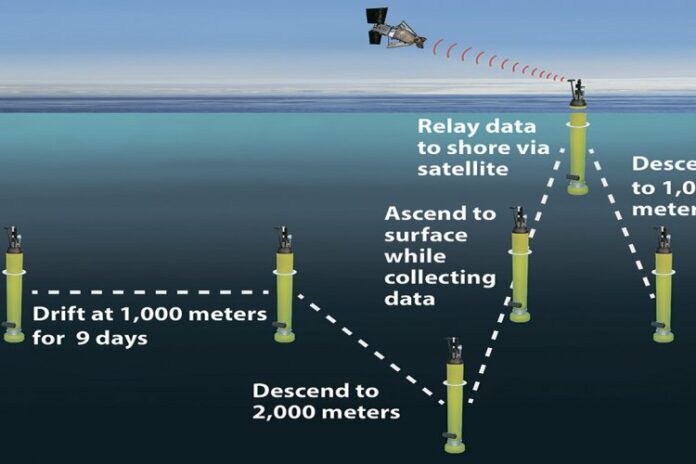
This new network of floats, called the Global Ocean Biogeochemistry Array (GO-BGC Array), will collect observations of ocean chemistry and biology between the surface and a depth of 2,000 meters (6,562 feet). Data streaming from the float array will be made freely available within a day of being collected, and will be used by scores of researchers, educators, and policy makers around the world.

These data will allow scientists to pursue fundamental questions about ocean ecosystems, observe ecosystem health and productivity, and monitor the elemental cycles of carbon, oxygen, and nitrogen in the ocean through all seasons of the year. Such essential data are needed to improve computer models of ocean fisheries and climate, and to monitor and forecast the effects of ocean warming and ocean acidification on sea life.

Although scientists can use Earth-orbiting platforms and research vessels to monitor the ocean, satellites can only monitor near-surface waters, and the small global fleet of open-ocean research ships can only remain at sea for relatively short periods of time. As a result, ocean-health observations only cover a tiny fraction of the ocean at any given time, leaving huge ocean regions unvisited for decades or longer.
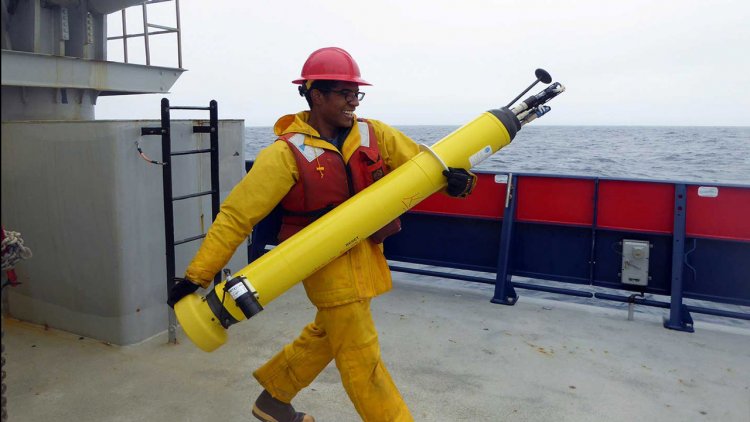
A single robotic float costs the same as two days at sea on a research ship. But floats can collect data autonomously for over five years, in all seasons, including during winter storms, when shipboard work is limited.

Funding for the GO-BGC Array is provided through the NSF’s Mid-scale Research Infrastructure-2 Program (MSRI-2). The GO-BGC Array is the National Science Foundation’s contribution to the Biogeochemical-Argo (BGC-Argo) project. It extends biological and chemical observing globally, and builds on two ongoing efforts to monitor the ocean using robotic floats, both of which have been highly successful.

The first of these programs, the Argo array, consists of 3,900 robotic floats that drift through the deep ocean basins, providing information on temperature and salinity in the water column. Since its inception in 1999, Argo data have been used in 4,100 scientific papers. As the first global, subsurface ocean observing system, the Argo array has done an incredible job of measuring the physical properties of our ocean, but Argo floats do not provide information about the ocean’s vital chemical and biological activity.

Starting in 2014, the Southern Ocean Carbon and Climate Observations and Modeling (SOCCOM) program deployed a large array of robotic “biogeochemical” floats, based on the Argo design, but carrying sensors to monitor the chemical and biological properties of the ocean. SOCCOM floats have operated for nearly six years in the remote, stormy, and often ice-covered Southern Ocean—arguably one of the harshest marine environments on Earth. These floats have already provided critical new information about how the Southern Ocean interacts with the Earth’s atmosphere and winter sea ice.

Similar to the SOCCOM floats, the new GO-BGC floats will carry a number of sensors in addition to the core Argo sensors for temperature, depth, and salinity. These include instruments to measure oxygen concentration, pH (ocean acidity), nitrate (an essential nutrient for microscopic algae), sunlight (required for algal growth), chlorophyll (an indicator of algal populations), and particles in the water (including microscopic algae). Over the last few years, researchers have been testing, refining, and calibrating these sensitive instruments as part of the SOCCOM program and other international efforts.

The instruments on these floats will allow researchers to monitor the health of the ocean, including the growth and respiration of phytoplankton (drifting algae and microbes that use sunlight as a source of energy) and the nutrients and light that control these processes. In addition to supporting most of life in the ocean, including commercial fisheries, phytoplankton supply oxygen to and remove carbon dioxide from the ocean and the atmosphere. These microscopic plankton have huge impacts on our climate through their control on carbon dioxide. The new floats will also provide first-hand data on long-term changes in the ocean, including ocean acidification and the expansion of low-oxygen zones.
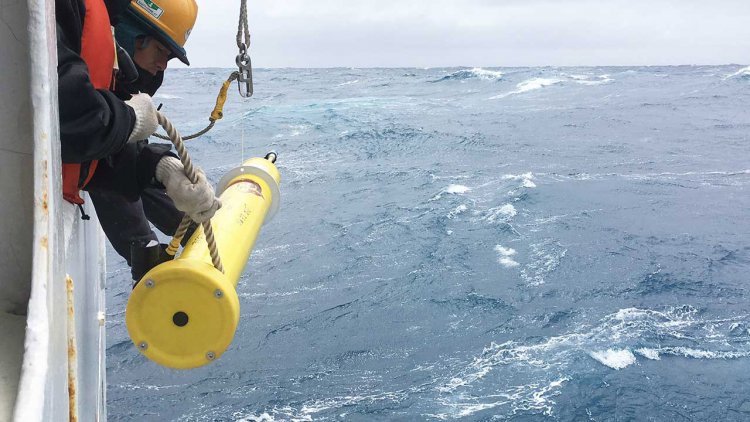
This five-year effort involves five research institutions. MBARI will coordinate the project, refine the sensors, take the lead in processing data from the floats, and perform outreach for the program. WHOI, the University of Washington, and the Scripps Institution of Oceanography,  will build and deploy floats in collaboration with commercial partners. Researchers at Princeton University will contribute to the array design and project management, and ensure that the data are linked to global computer models of the Earth’s ocean and climate. This program will also have a significant impact on the ocean technology industry, including a number of commercial suppliers of ocean sensors and profiling floats.

A broad public-outreach program, including workshops, web-based curricula, and hands-on activities, will help scientists, teachers, students, and others use these data. In an expansion of the existing SOCCOM Adopt-A-Float program, the floats will be adopted by elementary- to college-level classes. Student activities will be developed through a partnership with the national Marine Advanced Technology Education program. In addition, courses based on GO-BGC technology will be offered through the The Sandbox, a makerspace at the Scripps Institution of Oceanography.

The researchers hope that GO-BGC will inspire other countries to contribute similarly instrumented floats, as part of the new global biogeochemical ARGO effort. Ideally, this expanded network would grow to a sustained array of 1,000 biogeochemical floats uniformly distributed around the world ocean, and spaced about 1,000 kilometers (620 miles) apart.

Susan Wijffels, WHOI senior scientist and co-principal investigator of GO-BCG, added:

“Vast swaths of the Atlantic remain unmonitored with respect to ocean health, except for sporadic, infrequent research ship visits and widely spaced moored instruments. Based on what we know about the Atlantic’s critical role in Earth’s climate and other key planetary systems, we need to fill in those gaps.”

David “Roo” Nicholson, WHOI associate scientist and co-lead of GO-BCG at WHOI, said:

“The GO-BGC Array will provide the scientific community with the unprecedented ability to take the pulse of ocean ecosystems and monitor the health of underlying chemical cycles on a global scale. Such observations are critical to understanding how the ocean will respond to multiple, broad-scale stressors such as warming, acidification, and deoxygenation.”
Equinor sets ambition to reach net-zero emissions by 2050

0

Anders Opedal who today took over the position as Chief Executive Officer (CEO) and President of Equinor, says:

“It is a sound business strategy to ensure long-term competitiveness during a period of profound changes in the energy systems as society moves towards net zero. Over the coming months, we will update our strategy to continue to create value for our shareholders and to realise this ambition.”

Earlier this year, Equinor announced its plans to achieve carbon neutral global operations by 2030 and to reduce absolute greenhouse gas (GHG) emissions in Norway to near zero by 2050. At the same time, Equinor outlined a value-driven strategy for significant growth within renewables, as well as a new net carbon intensity ambition. Continuing to deliver on the short and mid-term ambitions will be key to achieving net-zero emissions.

Equinor expects to deliver an average annual oil and gas production growth of around 3 percent from 2019 to 2026. Equinor is well positioned with world-class global assets in attractive areas with substantial value creation potential. By optimizing its portfolio through financial discipline and prioritization, Equinor will continue to develop competitive and resilient projects whilst maintaining industry-leading recovery rates, unit costs and carbon efficiency. The net-zero ambition will strengthen future competitiveness and value creation at the Norwegian continental shelf (NCS). Equinor’s plans for production, development and exploration at the NCS remain firm.

Equinor is preparing for an expected gradual decline in global demand for oil and gas from around 2030 onwards. Value creation, not volume replacement, is and will be guiding Equinor’s decisions. In the longer term, Equinor expects to produce less oil and gas than today.

To develop Equinor as a broad energy company, renewables will be a significant growth area. Equinor has previously set ambitions for profitable growth within renewables and expects a production capacity of 4-6 Gigawatts (GW) by 2026 and 12-16 GW by 2035. Equinor now plans to expand its acquisition of wind acreage, with the aim of accelerating profitable growth and will continue to leverage its leading position in offshore wind. Equinor will establish renewables as a separate reporting segment from first quarter 2021.

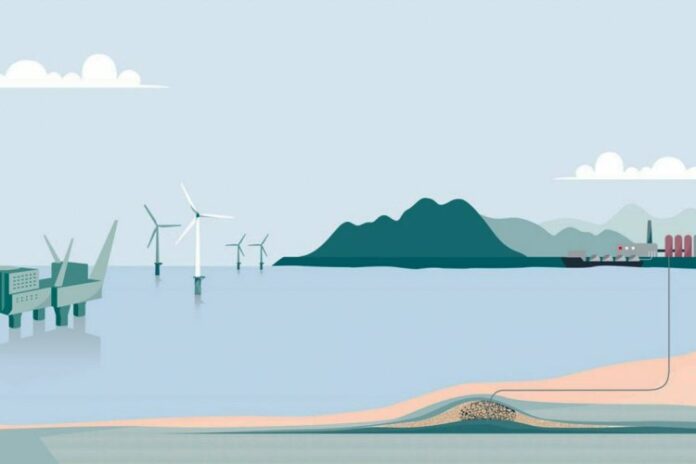
To achieve net-zero emissions requires a well-functioning market for carbon capture and storage (CCS) and natural sinks, as well as the development of competitive technologies for hydrogen. Building on its capabilities from oil and gas, Equinor is well positioned to provide low-carbon technologies and establish zero-emission value chains. Equinor is driving the development of these technologies through projects such as Northern Lights, which aims to store CO2 from industrial sites across Europe. Equinor also assumes that an increasing share of oil and gas will be used for petrochemicals towards 2050.

Opedal says:

“Climate change is a shared challenge. The combined efforts of governments, industries, investors and consumers are crucial to reaching net-zero emissions, for Equinor and for society. Together, we can overcome technological and commercial challenges, cut emissions, and develop CCS and zero-emission value chains for a net-zero future.”

Equinor expects to present an updated strategy at its Capital Markets Day in June 2021.

Equinor’s net-zero ambition covers scope 1 and 2 GHG emissions (operated basis 100%) and scope 3 GHG emissions (use of products, equity share).

The Carbon Trust launches the fourth stage of the Offshore Wind Accelerator

0

The Carbon Trust has launched the fourth stage of the Offshore Wind Accelerator (OWA), with all industry partners returning to participate and fund collaborative research, development and demonstration (RD&D) projects.

Partners for Stage 4 are EnBW, Equinor, Ørsted, RWE Renewables (including the former renewables business of innogy), ScottishPower Renewables, Shell, SSE Renewables, and Vattenfall.

The OWA has been pioneering industry-led RD&D activity since 2008, having undertaken more than 180 projects internationally. Over this period, rapid cost reductions have led to wide-scale deployment of offshore wind and the levelised cost of energy (LCOE) has significantly fallen. Technology RD&D efforts have played a significant role in this achievement, with 2018 analysis showing that OWA-supported innovations could deliver a 15 per cent reduction in the LCOE over a project’s lifetime, which translates to a £34bn saving for the European offshore wind industry based on 2030 build out targets.

The next phase of the OWA aims to continue the cost reduction of offshore wind, overcome market barriers, develop industry best practice, trigger the development of new industry standards and support the international expansion of offshore wind. 

OWA projects will be focused around the areas of access and logistics, cables, electrical systems, foundations, and energy yield and performance. This builds on previous work areas, but broadens the programme’s remit in line with developments in the offshore wind sector and the growing international market.

This year’s Clean Energy Innovation report from the International Energy Agency highlights offshore wind as an industry in which strong collaboration has created more rapid innovation cycles and calls for a “continued push on innovation” for renewables. The success of the OWA’s pioneering ‘collaborate to compete’ model for offshore wind innovation has led to the creation of other collaborative government and industry R&D programmes managed by Carbon Trust experts for areas including floating wind and consenting risk reduction.  

Kongsberg’s vessel insight gains DNV GL acceptance

0

KONGSBERG’s ship-to-cloud data infrastructure service has been qualified by technical advisor to the maritime industry, DNV GL. 

Digitalization is on the cusp of transforming the maritime industry, enabling operators to increase efficiency, safety and address new and stricter environmental standards. ​The first step operators need to address is gaining access to quality data from the vessels.

Each ship represents a unique configuration, and aspects such as poor or no connectivity and various vendor systems onboard renders standardization challenging. KONGSBERG identified this industry challenge and launched Vessel Insight as a subscription-based cost-efficient service for operators to start standardizing their data collection and contextualization, leveraging the company’s long history as a system integrator, and a leading provider of various automation systems, information management systems and as a system integrator. Now, the novel technology behind Vessel Insight has been qualified by DNV GL through their Technical Qualification program.

A secure and reliable data infrastructure play a critical role in enabling the digitalization of the maritime industry. The safety of crew and vessel as well as the confidentiality, integrity and availability of vessel data are key requirements for creating value with digital solutions. The systematic approach used by DNV-GL as part of the Technical Qualification provides evidence that Vessel Insight meets these requirements

Andreas Jagtøyen, EVP Digital Ocean, Kongsberg Digital, said:

“A Technical Qualification provided by DNV GL is an independent assessment providing the evidence that a technology will function within specified operational limits with an acceptable level of confidence. This qualification helps the developing party, KONGSBERG, to ensure certainty associated with working ahead of standards, and it gives an independent evaluation on the technology’s safety, security and quality to customers and the market.”

DNV GL writes in their report:

“Vessel Insight, consisting of both hardware and software, is intended to enable capturing data onboard a vessel, transfer this data securely to the cloud, and provide access to operational insights based on this data to onshore fleet operations staff.”

Following the Technical Qualification process in which safety and cybersecurity were the critical parameters, DNV GL is of the opinion that the Vessel Insight functions within specified operational limits with an acceptable level of confidence.

The Statement of Qualified Technology was extended on October 15th, 2020.

MAN Compressor Technology for largest FPSO Vessel offshore Brazil

0

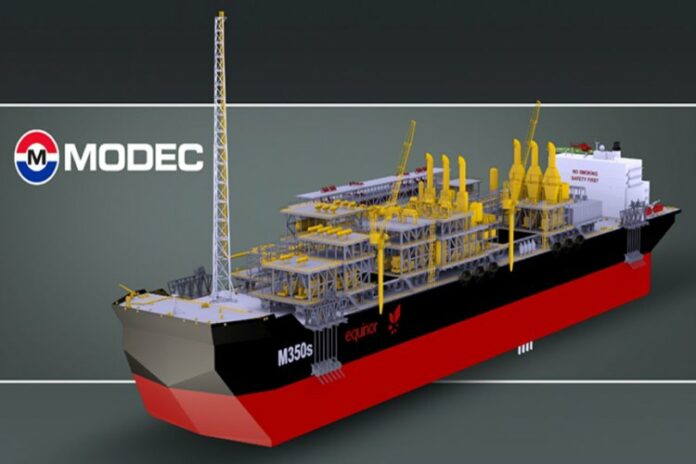
MODEC, the leading supplier and operator of offshore systems for the global oil and gas industry, has commissioned MAN Energy Solutions to supply a total of five radial compressor and two screw compressor trains for the first Brazilian offshore gas extraction project of end customer Equinor.

The compressor trains will be installed aboard the largest FPSO (Floating Production Storage and Offloading) vessel to ever be delivered to Brazil. The vessel will be deployed in the Bacalhau field, about 185 kilometers off the Brazilian coast – south of São Paulo – at a water depth of around 2,050 meters.

The FPSO plant will be designed to produce and process up to 220,000 barrels of crude oil and up to 15 million cubic meters of gas per day. The minimum storage capacity will be two million barrels of crude oil.

Jeff Knox, Project Manager at MODEC, commented:

“We are proud to support the further development of Brazil’s energy industry with this important, large-scale project. With MAN Energy Solutions, we have won a reliable partner for the compressor technology who can supply the required system components from one source.”

Christopher Bowles, Head of Sales – Oil & Gas Upstream – at MAN Energy Solutions, added:

“We can look back on a long history of success with numerous joint projects for FPSO applications and are looking forward to continuing the good cooperation with MODEC. There are strict goals for reducing CO2 that have to be met for this project. Our comprehensive, technical expertise and the unrivaled reliability of our compressor systems play a vital role in achieving this target.”

The compressor systems will help maintain the pressure in the Bacalhau field, thereby maximizing the production flow-rate and efficiency. The type RB compressors (2 × RB 45-4+5 and 3 × RB 28-6), which are driven by an electric, fixed-speed motor, will be utilized for gas-processing, full gas re-injection and gas-lifting applications.

The two SKUEL 510 screw compressors will be used as vapor-recovery units. These pressurize any flash-gas created and return it to the process instead of burning it off into the atmosphere. Not only does this increase the efficiency of gas processing, it also significantly reduces CO2 emissions.

While the radial compressors will be designed, manufactured and tested in Zurich (Switzerland), the screw compressors will be produced at the MAN site in Oberhausen (Germany). Delivery of all compressor trains is scheduled for the fourth quarter of 2021.

Research: Leaving more big fish in the sea reduces CO2 emissions

0

When a fish dies in the ocean it sinks to the depths, sequestrating all the carbon it contains with it. This is a form of ‘blue carbon’—carbon captured and stored by the world’s ocean and coastal ecosystems.

Gaël Mariani, a Ph.D. student at the University of Montpellier in France, said:

“But when a fish is caught, the carbon it contains is partly emitted into the atmosphere as CO2 a few days or weeks after.”

Mr Mariani led a world-first study showing how ocean fisheries have released at least 730 million metric tons of CO2 into the atmosphere since 1950. An estimated 20.4 metric tons of CO2 was emitted in 2014—equivalent to the annual emissions of 4.5 million cars.

Co-author Professor David Mouillot from the ARC Centre of Excellence for Coral Reef Studies at James Cook University (CoralCoE at JCU) and the University of Montpellier said the carbon footprint of fisheries is 25 percent higher than previous industry estimates.

Prof Mouillot said:

“Fishing boats produce greenhouse gases by consuming fuel. And now we know that extracting fish releases additional CO2 that would otherwise remain captive in the ocean.”

Large fish such as tuna, sharks, mackerel and swordfish are about 10 to 15 percent carbon.

Prof Mouillot said:

“When these fish die, they sink rapidly. As a result, most of the carbon they contain is sequestered at the bottom of the sea for thousands or even millions of years. They are therefore carbon sinks—the size of which has never been estimated before.”

He says this natural phenomenon—a blue carbon pump—has been increasingly and greatly disrupted by industrial fishing.

The authors also say the phenomenon has not only been overlooked until now, but it happens in areas where fishing is not economically profitable: in the Central Pacific, South Atlantic, and North Indian Oceans.

Mr Mariani said:

“Fishing boats sometimes go to very remote areas—with enormous fuel consumption—even though the fish caught in these areas are not profitable and fishing is only viable thanks to subsidies.”

For the authors of the study, the new data strongly supports more reasoned fishing.

Mr Mariani said:

“The annihilation of the blue carbon pump represented by large fish suggests new protection and management measures must be put in place, so that more large fish can remain a carbon sink and no longer become an additional CO2 source. And in doing so we further reduce CO2 emissions by burning less fuel.”

The study is published in Science Advances.

Launch of research and development to reduce cost of floating offshore wind turbines

0

MODEC, Toyo Construction and Furukawa Electric have announced that a proposal applied for the public offering of Research and Development for Technology to reduce Capital Expenditure (CAPEX) and Operating Expense (OPEX) of Floating Offshore Wind Turbines was officially adopted by New Energy and Industrial Technology Development Organization (“NEDO”) in Japan.

As of October 30, 2020, MODEC, Toyo Construction and Furukawa Electric signed a contract with NEDO related to the foregoing Research and Development.

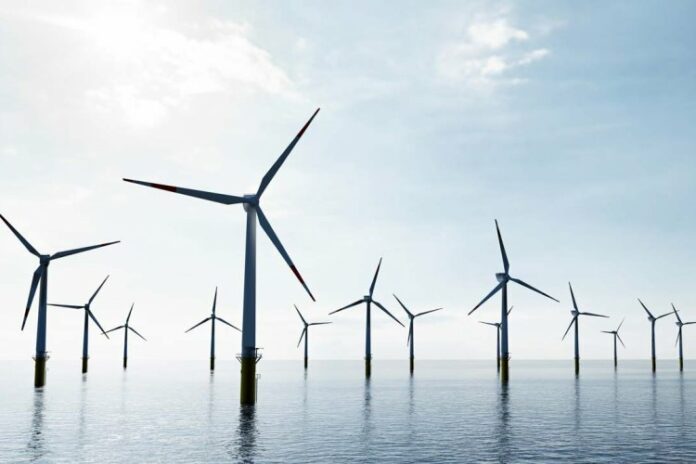
Offshore Wind Turbines, which are being widely introduced mainly in Europe toward a decarbonized society, will be moving from coastal installations to more windy offshore areas in order to obtain higher energy efficiency, so in addition to the fixed bed type, Floating Offshore Wind Turbines are getting attention as well.

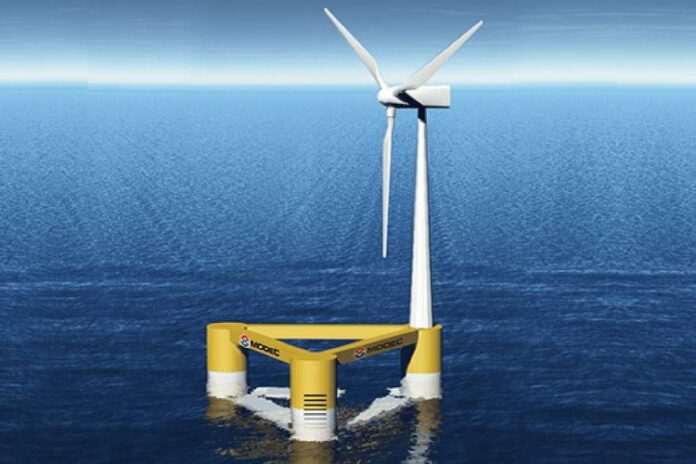
This research and development aim at reducing the overall cost of Floating Offshore Wind Turbines by adopting Tension Leg platform (TLP) instead of the catenary mooring which is being demonstrated in Japan and overseas. Taking advantage of platform stability by TLP, MODEC, Toyo Construction and Furukawa Electric will develop low-cost next-generation platform and mooring system with structural reliability required for a floater to be mounted with a large capacity wind turbine of over 10 MW, which is expected to be a common size in the actual business application, and durable submarine power transmission line system. In addition, comparing with catenary mooring, the area occupied by mooring lines in the sea can be significantly reduced, so the negative impact on fisheries and ship operations can be minimized, and excellent social acceptability can be realized.

This research and development will be carried out for two years until March 2022, by assigning TLP including mooring system to MODEC, mooring foundation design and offshore construction to Toyo Construction, and subsea power transmission system to Furukawa Electric.

MODEC has been providing competitive floating solutions for the offshore oil and gas industry and has been recognized as a leading specialist for floating oil and gas production systems such as Floating Production Storage and Offloading (FPSO) vessels and TLP. As a global leader, MODEC is the only specialist in Japan of this industry. As for the TLPs as oil and gas production facilities, MODEC has the world’s best track record, and its experience and technology enable the installation of large-capacity wind turbines, and also high social acceptability and economic efficiency. Toward the early realization for Floating Offshore Wind Turbines by using next-generation platform and mooring system, MODEC will work with Toyo Construction, who has abundant experience in designing and constructing offshore construction, and Furukawa Electric, who has a track record in building power transmission system.

Windward partners with multiple shipping companies and P&I Clubs

0

Prominent ship owners and P&I Clubs partner with Windward to implement its AI-powered platform, positioning them at the forefront of the shipping industry’s adoption of digital technology to transform maritime trade

Windward, the Predictive Intelligence company applying AI to transform global maritime trade, announced today that it has in place partnerships with a number of leading organizations in the maritime field including four major shipping companies – Norden, Eastern Pacific Shipping, Capital Ship Management, Interunity Management Corporation (IMC) – as well as seven Protection and Indemnity (P&I) Clubs, highlighting a paradigm shift towards adopting AI to drive digital transformation in the shipping industry. Windward is providing these companies with its proprietary AI-powered Predictive Intelligence platform, enabling comprehensive industry compliance and optimizing transparency and best business practices amongst its new partners.

The maritime industry is under increased focus regarding sanctions and compliance per recent advisories from the Office of Financial Sanctions Implementation (OFSI) in the UK and the Office of Foreign Assets Control (OFAC) in the US. Traditional list matching approaches alone can no longer address the requirements of OFAC so maritime stakeholders are now looking beyond legacy systems to AI-powered solutions in order to navigate the opaque nature of the latest advisories.

With this new reality, the wider industry is adopting technological and AI driven frameworks in order to have a scalable digital platform to make smarter business decisions, faster. The integration of Windward’s technology by four major global shipping companies is establishing a new industry standard by integrating the latest AI technologies, enabling them to be at the forefront of this paradigm shift in the shipping industry. Windward’s Predictive Intelligence solution is optimizing workflow processes and minimizing risk and financial losses, while also maximizing available partners and vessels to conduct business with.

Windward is also announcing today that it has partnership agreements with seven member Clubs of the International Group of P&I Clubs, including The American Club, Britannia P&I, Steamship Mutual, and others. These clubs provide liability coverage for nearly 65% of the world’s maritime trade, making Windward the leading global provider of Predictive Intelligence in the industry. The partnership with Windward empowers these insurance providers with the ability to analyze potential policyholder risk and ensure efficient business operations and compliance with the latest regulations and advisories. Through leveraging advanced AI and big data, Windward is providing a 360° solution for maritime compliance.

Ami Daniel, CEO of Windward, said:

“We are thrilled to announce our latest partnerships with four leading global shipping companies and seven P&I Clubs. Together, we are ushering in the next era of the maritime industry, providing AI-powered Predictive Intelligence technology for greater transparency, compliance, and optimized business operations. The long-awaited digital transformation in shipping is here and we are excited to lead this shift together with our partners.”

Windward’s Predictive Intelligence solution is powered by MAIA™ – Maritime Artificial Intelligence Analytics – an advanced AI platform based on 300 behavioral analytics models and over 10 billion data points. MAIA™ analyzes existing behaviors to predict in real-time which companies and vessels are likely to be high risk, and which are safe to conduct business with. Windward’s solution is easily integrated into existing workflows, enabling businesses to look to the future and optimize business practices.

Waves Group bags MWS contract on Vattenfall’s offshore wind farm

0

Waves Group, leading offshore marine and engineering consultancy company, is pleased to announce it has been awarded the Marine Warranty Surveyor (MWS) contract on one of the world’s largest energy output offshore wind farm, Hollandse Kust Zuid.

The project consists of 4 sites with a total generating capacity of 1.5GW.

The wind farm will have 140 wind turbine generators which will be connected to two 700MW offshore substations operated by Dutch TSO Tennet – HKZ Alpha and HKZ Beta.  When completed, it will offer a huge contribution to the reduction of the EU’s carbon footprint and a major contribution to the Dutch Government’s renewable energy targets. The project will also provide one third of the total installed offshore wind capacity in the Netherlands.

Waves Group is providing MWS services for all phases of the project which includes, the installation of foundations, turbines, and array cables. The company has already installed the Alpha export cables and transformer station jacket as part of the TenneT scope of work and will be working on Beta cables and transformer stations next year. The contract commenced in Q2 2020 and will continue through the WTG installation phase to Q2 2023.

Hollandse Kust Zuid is located between 18-36 km off the Dutch west coast within the North Sea. All operation and maintenance activities for the wind farm will be carried out from Vattenfall’s new service facility in the port of IJmuiden and in accordance with government regulations and conditions, the sea space between the turbines will be open for passage and co-use.

Waves Group has over 15 years’ experience in marine and offshore energy operations and 10 years’ working within the renewable energy sector.  Waves Group has supplied MWS services on several large-scale offshore wind farm projects across the UK, Europe and Asia such as, Triton Knoll, Horns Rev 3, Galloper, Beatrice, Seamade, Formosa 1 Phase 2, among others. 

Drones will be used to support control in the Antwerp port area

0

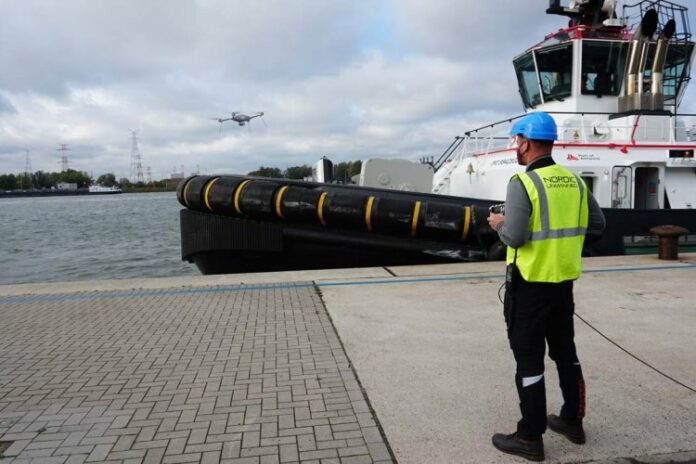
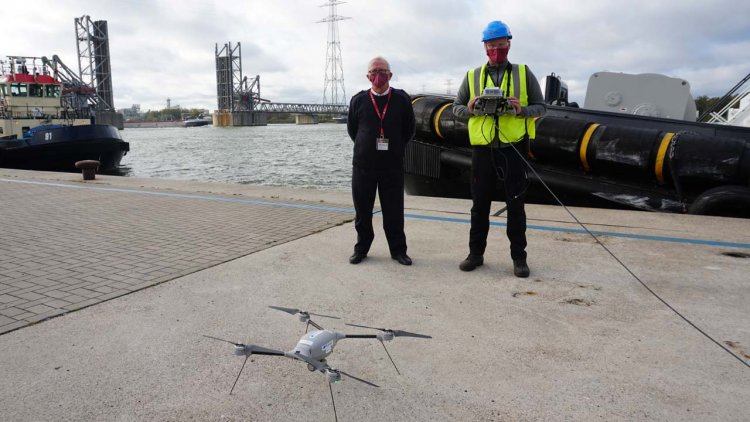
The port of Antwerp covers more than 120km² and contains sensitive industrial infrastructure. The use of drones can make a major contribution to overall safety in this complex environment. After all, drones enable port authorities to manage, inspect and supervise a large area quickly and safely.

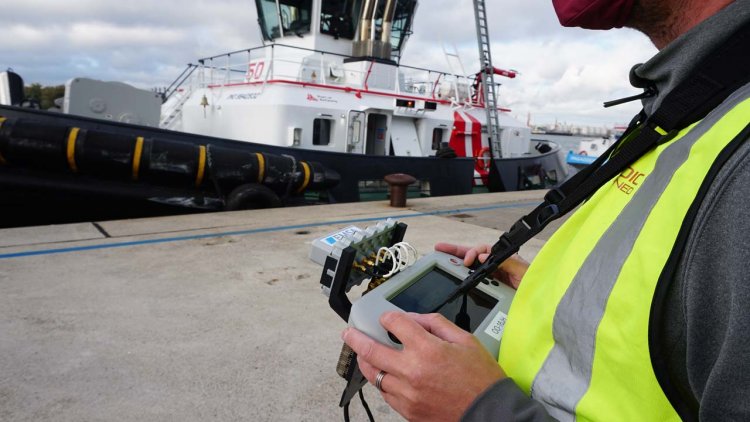
This is why Port of Antwerp, in collaboration with the FPS Mobility and Transport, has concluded an agreement with EMSA. The drone pilot will accompany Port Authority Officers during their enforcement tasks, and provide them with a bird’s-eye view of the situation on the ground. The images can also be accessed remotely, so they can be shared quickly with emergency services if necessary. Privacy is paramount here: the images are only used for monitoring purposes and are not stored.

The drone will not only be used during regular checks, but also in the event of incidents in order to gain a quick insight into the situation. The imagery of oil incidents will also be used by the University of Antwerp to train algorithms to automatically detect oil incidents in the future.

According to Port of Antwerp, the use of drones will play an increasingly important role in the port of the future. As part of Port of Antwerp’s participation in the SAFIR project, extensive tests have already been carried out to investigate the feasibility of manned and unmanned drones at the port. The ultimate goal of these projects is a network of autonomous drones that can provide a ‘live feed’ of the various port activities, in the context of a smart, safe and efficient port.  

Paul Wauters, Harbour Master at Port of Antwerp:

“This collaboration with EMSA allows us to use new technologies in our enforcement, in order to respond to incidents more quickly and to create a safer port for port users.”

Port alderman Annick De Ridder:

“We are doing everything we can to ensure a safe port and drones will become indispensable for this in the near future, including at our port. Innovation is crucial to guarantee the sustainable growth of our port in the long term. This collaboration also confirms that the port is the ideal environment in which to test and further develop innovative technology.”