-10.2 C
New York
Home Blog Page 745

Maersk Drilling awarded three-well contract by Petrogas

0

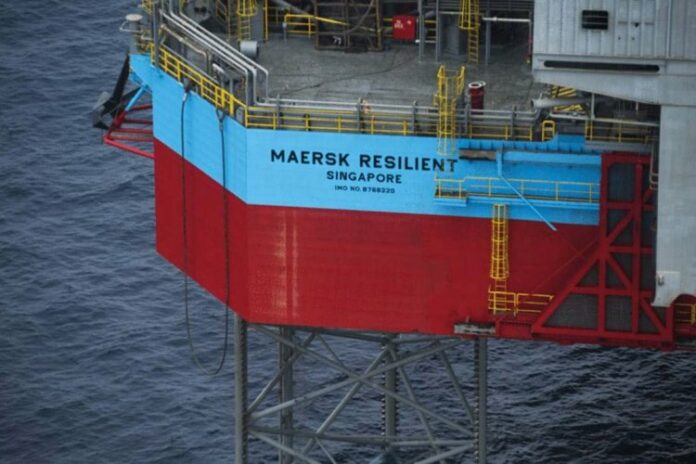
Maersk Drilling has secured a contract from Petrogas E&P Netherlands B.V. for the harsh environment jack-up rig Maersk Resilient to drill three wells at the B13 and A12 fields in the Dutch sector of the North Sea.

The contract is expected to commence in November 2020 and has an estimated duration of 110 days. The firm contract value is approximately USD 9.4m. The parties have further agreed that Maersk Drilling will be given exclusive options to work on a selected number of Petrogas’ planned projects in the Dutch sector in 2021 and 2022.

Claus Bachmann, Head of North Sea Division in Maersk Drilling, says:

“The three-well contract and the exclusivity agreement are yet another testament to our strong relationship with Petrogas. We are very pleased to be given the opportunity to continue our great collaboration and leverage the design of our R-class rig capabilities to support Petrogas’ business in one of their core markets in the Netherlands.” 

Separately, the previously announced contract with Petrogas North Sea Ltd for the drilling of one well at the Birgitta field in the UK sector of the North Sea will be cancelled and Maersk Drilling will receive compensation via a termination fee. Maersk Drilling retains an exclusive option with Petrogas North Sea to drill the Birgitta well in 2021 at rates reflecting the expected 2021 market.

Maersk Resilient is a 350 ft., Gusto-engineered MSC CJ 50 high-efficiency jack-up rig which was delivered in 2008. It is currently mobilising for the campaign for Petrogas in the Netherlands and thereafter Serica Energy UK Ltd.

NOAA chooses DriX USV to help build the next generation ocean exploration system

0

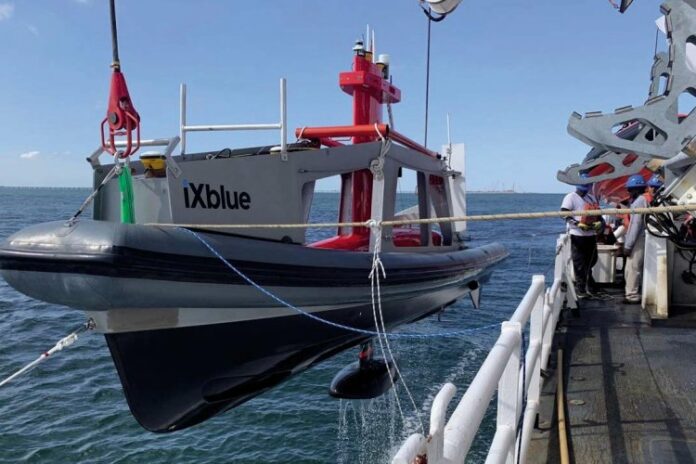
The Ocean Exploration Cooperative Institute (OECI), funded by NOAA’s Office of Ocean Exploration and Research (OER) recently signed a purchase contract to acquire a DriX Unmanned Surface Vessel (USV) from high-tech company iXblue.

Signed over the summer, this contract consists of one DriX USV along with a novel custom-designed Universal Deployment System able to launch and recover the USV as well as other AUVs. The autonomous solution is expected to be put to sea by mid-2021.

Along with the innovative Universal Deployment System, other features that led to the selection of the DriX were its mission endurance, ability to operate at high-speed and excellent offshore seakeeping ability.

Larry Mayer, Director of the Center of Coastal and Ocean Mapping and the University of New Hampshire’s co-PI on the Ocean Exploration Cooperative Institute, said:

“The ability to launch and recover unmanned surface vessels as well as other autonomous systems like AUV’s from the same launch and recovery system allows us to support a range of collaborative ocean exploration operations from a single research vessel. With these collaborative, multi-vehicle operations we hope to greatly expand the footprint and efficiency of ocean exploration.” 

The University of New Hampshire will operate the new DriX. The Ocean Exploration Cooperative Institute is funded by NOAA’s Office of Ocean Exploration and Research and is hosted at the University of Rhode Island in partnership with the University of New Hampshire, the University of Southern Mississippi, the Woods Hole Oceanographic Institution, and the not-for-profit Ocean Exploration Trust. This new five-year alliance is envisaged to extend NOAA’s reach and capabilities for its ocean exploration portfolio.

New launch system for unmanned craft proved in testing on Norway’s West Coast

0

SOLUSV is a cost-effective and compact equipment fit for an Unmanned Surface Vehicle (USV) and can be used with existing Davits.

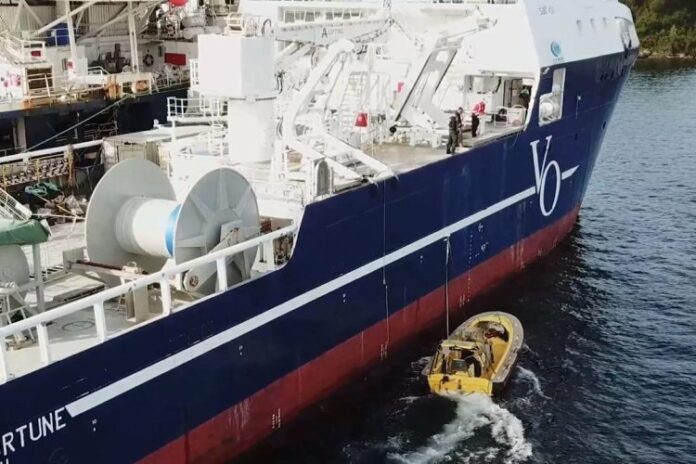
Sea trials conducted by a combined team of engineers from Vestdavit and H. Henriksen have provided proof of concept for SOLUSV – a new launch and recovery system that simplifies and enhances Unmanned Surface Vehicle handling. The tests took place on board a Vestland Offshore vessel, whose existing boat and davit system were modified to accommodate SOLUSV equipment before the team oversaw repeated Launch and Recovery cycles.

Kristian Moss, Technical Supervisor at Vestdavit, said:

“We were very pleased that the testing proved that SOLUSV is an excellent method for the Launch and Recover of USVs following a period of intense development. Not only did the equipment prove to be very user-friendly and perform flawlessly, but it was also extremely simple to install on the vessel’s existing infrastructure, taking very little time at all.”

The vessel’s Fast Rescue Craft stood in for the USV for the purposes of the test and was equipped with a lightweight winch drum set up with dyneema rope and a robust Telescopic Pole. The dyneema rope is eight times lighter than an equivalent steel wire, keeping the total system weight to an absolute minimum. The vessel’s davit system was also modified to take the dyneema rope.

Following the launch of the USV – accomplished by the usual method involving a boat-mounted safety offload hook – recovery is controlled completely by the operator on board the vessel. The USV returns to its station alongside the vessel, at which point the operator activates the telescopic pole extending the dyneema rope to deck level, allowing the operator to catch the rope. The soft links of the rope are then fed into the painter system and the davit respectively, at which point the USV is recovered.

New LNG carrier delivered and assigned to Cameron LNG project

0

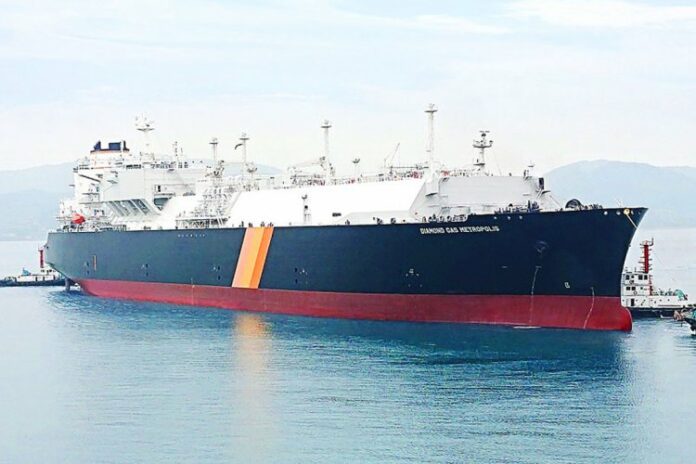
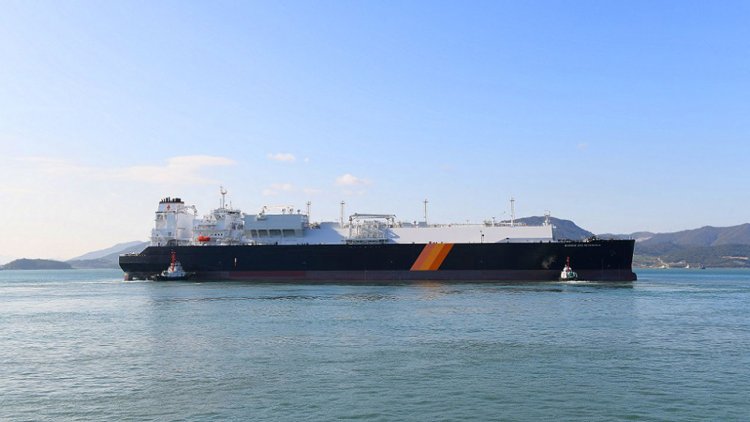
On November 3, the liquefied natural gas (LNG) carrier Diamond Gas Metropolis, owned by NYK and the Mitsubishi Corporation (MC), was delivered. The vessel was built at Hyundai Samho Heavy Industries.

The NYK Group will be responsible for ship management, and the new ship will transport LNG from the U.S. state of Louisiana for the Cameron LNG project, as well as from other locations around the world, under a long-term time-charter contract with Diamond Gas International Pte. Ltd., a wholly owned subsidiary of MC. NYK and MC both have a stake in the Cameron LNG project.

Diamond Gas Metropolis is equipped with a WinGD-made dual-fuel slow-speed diesel engine (i.e., X-DF diesel engine) that has superior fuel-consumption efficiency and can operate on marine gas oil or boil off gas stored in the cargo tank. The vessel will also feature a re-liquefaction system that can use re-liquefied excess boil-off gas and return it to the cargo tank.

The cargo tank will be a 174,000 cubic meter capacity membrane-type tank that will make use of advanced insulating materials to suppress the boil-off rate (percentage of gas volume that vaporizes during navigation) in the cargo tank and realize superior efficiency and economical LNG transportation.

Outline of Vessel

  • Length overall: about 297.00 meters
  • Breadth: about 46.40 meters
  • Gross tonnage: 117,564 tons
  • Main engine: X-DF engine
  • Cargo tank capacity: about 174,000 cubic meters
  • Shipbuilder: Hyundai Samho Heavy Industries Co. Ltd.
  • Flag state: Bahamas

SMST’s newest rental gangway in operation for Rem Offshore

0

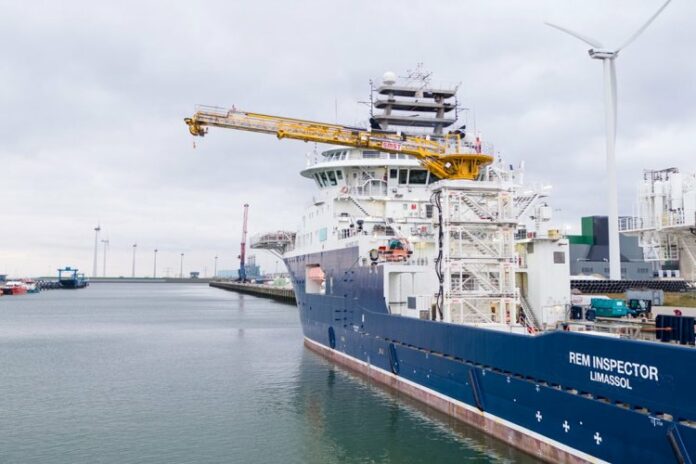
Rem Offshore AS has awarded SMST a rental contract for their newest type of rental gangway, the so-called Telescopic Access Bridge L-Series (TAB-L), including 4 stacking modules for working on height and a lifting winch for cargo handling.

The TAB-L has been installed on board of the Rem Inspector, Rem’s Construction Subsea Vessel (CSV) that is going to perform windfarm maintenance operations in the Dan Tysk offshore windfarm. Enhanced efficiency of PAX and cargo transfer is guaranteed with the TAB-L gangway.

The Rem Inspector has already experienced working with a gangway from the SMST range. Since April 2019, the Telescopic Access Bridge M-Series (TAB-M) is doing its walk-to-work duties and cargo handling on board the vessel. 

Thomas Dalsøren, COO at Rem Offshore AS, says:

“We have used the SMST gangway for several campaigns in various wind farms in the North Sea and Baltic Sea. We are pleased to expand our current positive experience and increase the performance at higher wave heights with this new type of gangway.”

After demobilizing the TAB-M, last week the successful mobilization of the TAB-L took place at the port of Eemshaven. This week the construction subsea vessel, chartered by Global Marine, will start its work in the Dan Tysk windfarm located in the North Sea, 70km west of the island of Sylt. The motion compensated gangway will stay on board throughout the coming winter period, increasing the vessel’s efficiency by the superior performance of the TAB-L, resulting in maximum utilization of the Rem Inspector.

The TAB-L is the latest addition to SMST’s rental fleet. The gangway has a length of 15 up to 25m and has a cargo handling capacity of 1t via a lifting winch below the bridge tip. The modular setup of the system ensures maximum operational flexibility. Working on various heights can be done with stacking modules, a proven concept. 

Jelle Dijk, Sales Manager at SMST, says:

“By adding this gangway to our rental fleet, we can offer an even higher workability, a greater availability and wider usability of our fleet. Furthermore, the TAB-L is meeting the latest requirements set out in today’s tenders in the offshore wind industry.”

Aker Arctic designs next generation Finnish and Swedish icebreakers

0

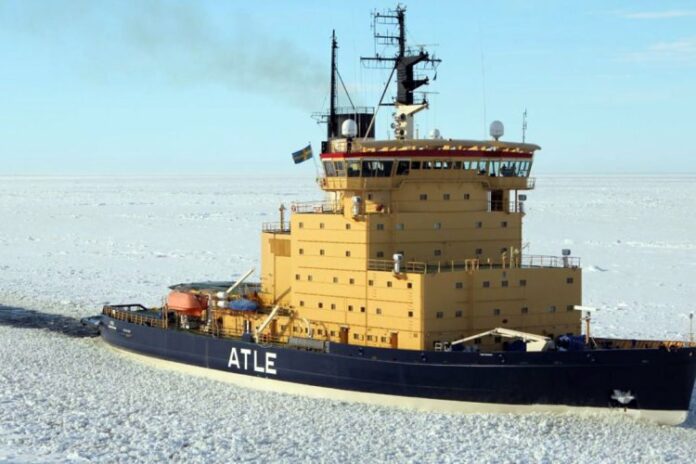
Aker Arctic Technology Inc, the Swedish Maritime Administration (SMA) and the Finnish Transport Infrastructure Agency (FTIA) have signed a contract for the development of new icebreakers for demanding Baltic Sea escort operations.

Aker Arctic will develop a next generation icebreaker design that is capable of assisting larger merchant ships, incorporates latest environmental technologies, and is ready for a future fossil-free fuels.

In the process to design a new generation of icebreakers, the emphasis is to find solutions to maintain the service level as the operating environment changes. The size of merchant vessels entering Finnish and Swedish ports is growing, and increasing environmental requirements gradually limit the engine power of the vessels. The growing size of vessels that need assistance and the weakening of their abilities to handle ice-covered waters make it difficult for vessels to pass through ice masses in challenging ice conditions in the Baltic Sea, which increases the need for icebreaker assistance.

Kari Wihlman, Director-General of the Finnish Transport Infrastructure Agency, says:

“Our foreign trade and competitiveness are based on year-round security of supply. The stocks of import and export logistics are largely located in moving ships. An adequate level of assistance available from icebreakers is a prerequisite for ensuring that the raw materials and different products are in the right place at the right time. New types of solutions are expected from this design project to respond to changes in the operating environment as well as to maintain an adequate level of service also in the future.”

Katarina Norén, Director-General of the Swedish Maritime Administration, says:

“The Swedish industry is dependent on icebreaking in the Baltic Sea up to 130 days a year. Our current fleet is old with increasing needs of repairs. Therefore we very much look forward to the design of the next generation of icebreakers to service larger ships in a fossil free environment.”

The design process starts with research and evaluation on alternative icebreaker concepts. The new icebreaker is required to be able to assist ships with 32 m beam. Cost-effective operation, low life-cycle costs, the transition to fossil-free fuel by 2030 and the reduction of CO2 emissions are also important goals.

Reko-Antti Suojanen, Managing Director of Aker Arctic, says:

“This new ship will represent a completely new generation of icebreakers. It will incorporate design, construction and operational experience from existing Baltic assistance icebreakers as well as our other icebreaker designs. As the operational requirements and environmental conditions are changing in the Bothnian Bay, we will work closely with the Finnish and Swedish operators to jointly develop a solution that best answers to the future icebreaking needs.

With an operational lifetime spanning half a century, the new icebreaker must be designed to comply with future emission goals. Responding to this major technological challenge today will require us to apply the full extent of our icebreaker design expertise as well as to utilize the latest environmental technologies developed by the maritime industry.

The design goals of this project are ambitious, and even though we have just designed icebreakers capable of reaching the North Pole, we consider this new icebreaker to be the most challenging design task we have ever faced.”

A concept will be selected in March when the first cost estimate for the construction of the icebreaker is available. After this, the focus will be on the design details and construction specification, which will form the basis of the shipyard tendering process once a decision to build the icebreakers is made.

Port of Rotterdam Authority performing trial with water injection dredging

0

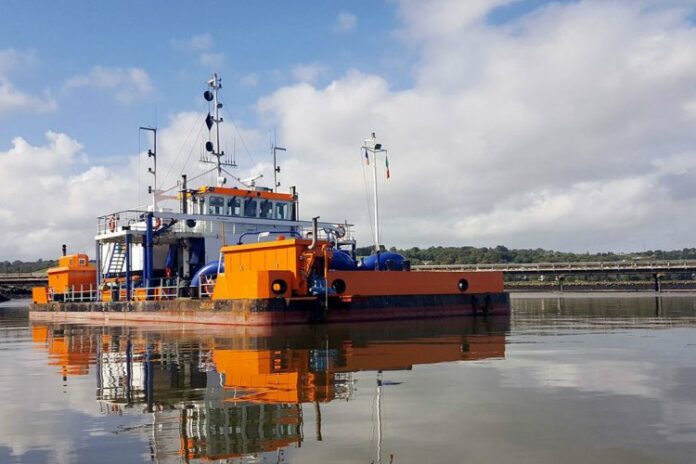
The current study fits within the Port Authority’s PRISMA research programme, which looks into new dredging methods and how sediment reacts to these techniques. The purpose of PRISMA is to improve the efficiency of dredging in the port area and reduce the associated carbon emissions.

The Port Authority is responsible for keeping Rotterdam’s basins and waterways at the required depths. Every year, some 5 million cubic metres of dredged material are removed from the port basins – equivalent to around 500 football pitches covered with a metre-thick layer of spoil.

Water injection dredging is seen as the most promising means by which to remove clean sediment along berths and waterways for maintenance purposes. The technique involves injecting water into the soil of the project site. This creates a homogeneous mixture of water and sediment, which then flows in a specific direction under the influence of gravity and/or currents.

Over the past two years, the Port Authority has conducted trials with water injection dredging in Calandkanaal, having set up a sludge repository in the waterway for this purpose. Injecting the sediment with water once every 6 to 8 weeks rather than removing it with a trailing suction hopper dredger has cut dredging costs at the site. In addition, water injection dredging is used at sites in the port area that are difficult to access, as well as frequently occupied berths. As a result, port users experience less hinder from shallow berths and dredging operations that impede freight handling.

PRISMA is an acronym for PRogramma Innovatie Sediment MAnagement. This programme was set up by the Port of Rotterdam Authority to explore new innovation opportunities within its dredging programme and increase insight into sediment’s specific characteristics. The PRISMA studies are performed in partnership with various research institutes, including Delft University of Technology, Deltares and MARIN.

Bureau Veritas and IQ Solutions announce new collaboration

0

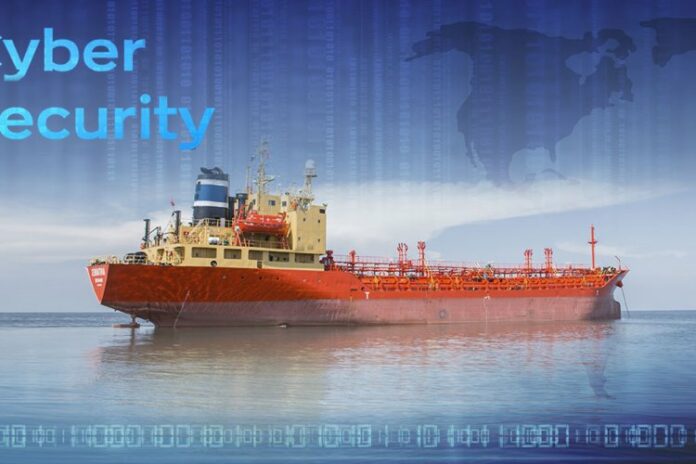
VCell is a fully integrated ICT solution, specifically designed to meet the needs of the maritime industry. VCell provides a smooth, secure, fully controlled, consolidated, centralized and multi-functional IT environment onboard for digital infrastructure and ship-to-shore communications that are managed and administered remotely on a 24-hour basis.

During the early stages of the VCell certification process, Bureau Veritas provided guidance for its cyber security requirements and protection of critical assets, such as component hardening; user profiles; authentication; encryption; storage; connections; and remote access.

Bureau Veritas and IQ Solutions have established rigorous evaluation and monitoring procedures of VCell to ensure the integrity and availability of information. A survey was performed to validate specific points such as equipment compliance; accounts and security policies; network architecture and security; as well as recovery and patch management procedures.

Vincent Lagny, Head of Cyber Security for Bureau Veritas, Marine & Offshore, commented:

“This certificate is proof that VCell meets Bureau Veritas’s cyber rule requirements. More importantly, this is the result of a fruitful collaboration between the cyber experts from both our companies. Relationships based on trust are the cornerstone to the way we work with stakeholders to build a solid cyber security eco-system.”

Paris Papanastasiou, Managing Director and CEO of IQ Solutions, said:

“Working with Bureau Veritas and reaching full compliance with BV’s cyber security rules was an unparalleled experience. BV’s professionalism and vast know-how in both ICT and the maritime industry, contributed to the completion of our vision, classifying VCell as a full compliant for a Cyber Safety, 360° vessel ICT ecosystem, for the world merchant fleet to enjoy.”

Minor gas discovery near the Maria field in the Norwegian Sea

0

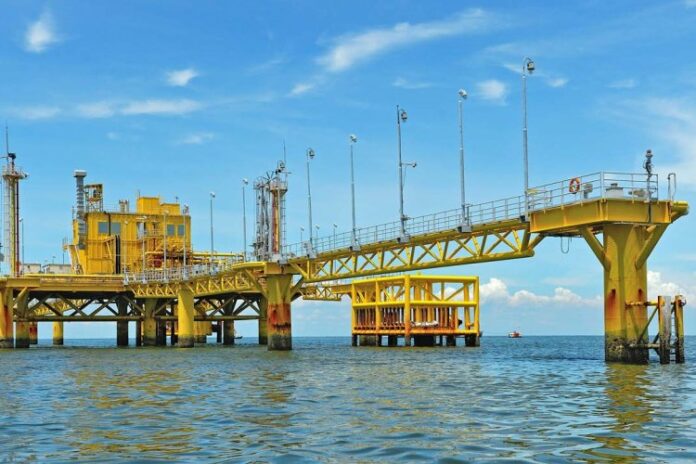
Equinor Energy AS, operator of production licence 263 D, has concluded the drilling of wildcat well 6407/1-8 S. 

The objective of the well was to prove petroleum in reservoir rocks from the Middle Jurassic Age (the Garn and Ile Formations).

The well encountered the Garn Formation with a thickness of about 85 metres, with reservoir rocks of moderate to very good reservoir quality. The well is dry in the Garn and Ile Formations.

The well encountered a 9-metre gas column in the Lange Formation from the Late Cretaceous Age, in which there were three thin sandstone layers totalling 4 metres with poor to moderate reservoir properties.

Preliminary estimates place the size of the discovery between 0.5 and 1.6 million Sm3 of recoverable oil equivalent.

The licensees will assess the discovery along with other discoveries/prospects in the vicinity as regards further follow-up.

The well was not formation-tested, but data acquisition was undertaken. This is the first exploration well in production license 263 D. The licence was awarded in APA 2017.

Well 6407/1-8 S was drilled to a vertical depth of 3518 metres below sea level and was terminated in the Ile Formation from the Middle Jurassic Age.

Water depth at the site is 295 metres. The well will be permanently plugged and abandoned.

Well 6407/1-8 S was drilled by the West Hercules drilling facility, which is moving on to drill wildcat well 7018/5-1 in production license 960 in the Barents Sea, where Equinor Energy AS is the operator.

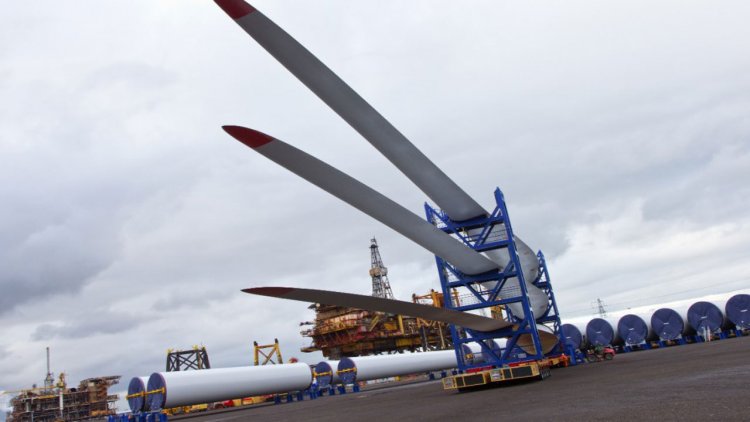
Triton Knoll marks a series of project ‘firsts’ as blades arrive at Seaton Port

0

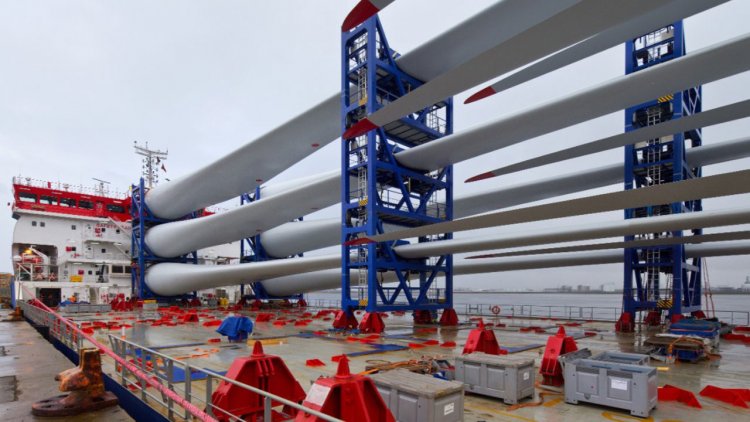
Able Seaton Port, near Hartlepool, is receiving offshore wind turbine components for the first time in its history, after a combined multi-million pound investment has helped transform the port into a specialist assembly and construction facility for use on the project by turbine supplier MHI Vestas Offshore Wind.

Triton Knoll, which is being constructed by RWE, will install and operate 90 MHI Vestas state-of-the-art V164-9.5 MW turbines, each stretching 164 metres tip to tip, and capable of powering a typical home for up to 29 hrs with a single rotation of its 80 metre long blades.
The first 15 turbine blades to arrive at the port were manufactured by MHI Vestas at its Isle of Wight UK facility and finished at its Fawley plant across the Solent.
Julian Garnsey, Project Director for Triton Knoll and RWE Renewables, said:

“Triton Knoll has made a significant investment into Able Seaton Port to establish wind turbine handling facilities there for the first time. It’s an investment that secures the North East of England at the very heart of the delivery of Triton Knoll, and which leaves a lasting legacy for future offshore wind farm projects to be constructed from the region.“

At Triton Knoll we remain committed to ensuring that our investments from this flagship project benefit local coastal communities, and the UK’s expanding offshore supply chain as much as possible. We are delighted to be working with MHI Vestas and Able UK delivering this new UK infrastructure, and to see the first Triton Knoll components arriving at Seaton, ready to begin installation early next year.”

MHI Vestas recently moved onto the 140,000 sq metre Able Seaton Port, where it is establishing a full turbine logistics and pre-assembly hub for the RWE-managed joint venture project.
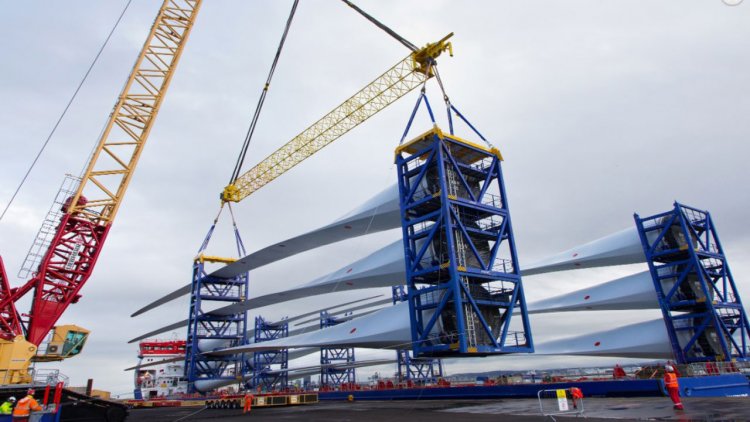
During its site preparations, MHI Vestas has prioritised UK companies in the delivery of the project. ASP now hosts technicians on-site from local suppliers, including Global Wind Service (GWS), Dawson and Boston Energy, as well as MHI Vestas employees. The main crane and Self-Propelled Modular Transporter (SPMT) to be used at ASP for moving turbine components will be supplied by Weldex, based out of Alfreton, UK. Finally, site stevedoring services are supplied by Able.

MHI Vestas Project Director Torben Damsgaard said:

“We are proud that first components, including our blades from the Isle of Wight, for the V164-9.5 MW turbines have now been delivered to the pre-assembly site at Able Seaton. Our V164 turbines are currently the largest turbines installed in commercial projects in the world, and the 80m blades to be used at Triton Knoll will be the largest blades installed in UK waters.

MHI Vestas is committed to the UK, as not only are these world-leading blades produced in the UK, but the Triton Knoll project as a whole is bringing substantial value to local communities. The successful preparation of the Able Seaton site has been one key value driver, as the joint effort by AbleUK and MHI Vestas to prepare the site will pay dividends to the Teesside region as an offshore wind hub for the present and future.” 
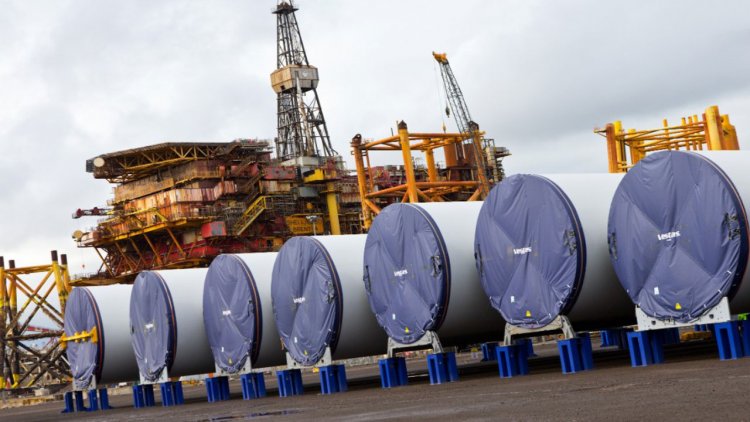
Able’s transformation of the site is a clear sign of its intent for the future as the facility, renowned for end-of-life handling of oil and gas platforms, is gearing up for a future supporting the renewable energy industry. It began the transformation of ASP ready for Triton Knoll in November 2019, and has established a 140,000 sq metre handling facility with specialist quayside, complete with roads and utilities infrastructure, accommodation and office units for those working on site.

Peter Stephenson, Able’s Executive Chairman said:

“There is no doubt in my mind that offshore wind is fast becoming a key element not only in terms of clean power generation, but also as a major factor that will drive the whole economy forward. The UK has the biggest market and our combined task is to seek to maximise local content and activity. We play our part by developing specialist future-proofed facilities that meet the demanding needs of our customer.”

The state-of-the-art Triton Knoll offshore wind farm will have a maximum installed capacity of 857 MW and, once fully operational, will be one of the three largest offshore wind farms in the world, capable of powering the equivalent of over 800,000 UK homes(1).

The project is located over 32 kilometres off the Lincolnshire coast, with a turbine array that covers an area of 145 square kilometres, bigger than the City of Manchester. It is jointly owned by RWE, J-Power and Kansai Electric Power, with RWE managing the wind farm’s construction and long-term operation and maintenance works, on behalf of its project partners.