-11.1 C
New York
Home Blog Page 743

Al-Shaheen Gallaf 1 Project successfully installed by Aegir

0

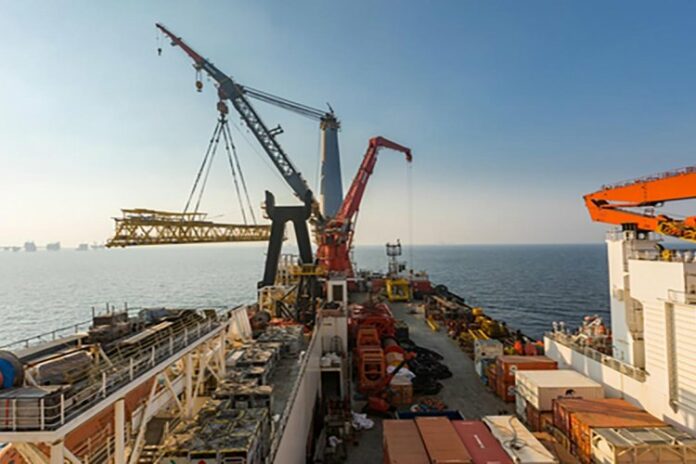
Heerema was contracted for the transportation and installation of three topsides and three bridges by PTSC M&C Vietnam, who fabricated the structures at their yard in Vung Tau, Vietnam. 

The work consisted of installing three topsides weighing between 2000 and 2500 metric tons and three bridges weighing between 700-1100 metric tons. These were installed onto pre-installed jackets in the Al-Shaheen field located around 80 km north of Ras Laffan, Qatar. Aegir arrived at block 5 of the Al-Shaheen on October 19, and began installing the DC bridge and topside. After that, the EG bridge and topside followed, and finally the project was completed with the FC bridge and topside on October 28. 

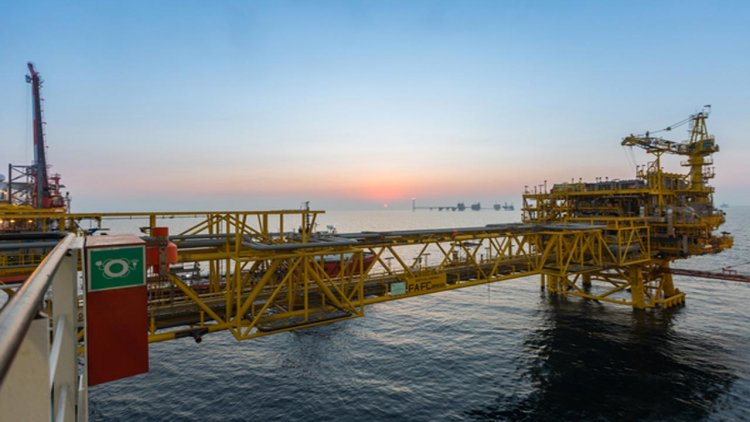
The Al-Shaheen oil field is Qatar’s largest and has a water depth of 60 meters with facilities consisting of 33 platforms and more than 300+ wells. The Al-Shaheen Gallaf 1 scope will support the North Oil Company’s ongoing development of the Al-Shaheen field. 

Despite scheduling challenges introduced by the ongoing pandemic the close collaboration between Heerema, their client PTSC M&C Vietnam, and company North Oil Company resulted in a successful project execution that was on schedule and with zero recordable HSE cases.
Koos-Jan van Brouwershaven, Heerema’s CEO, said:

‘The safe and successful installation of the Al-Shaheen Gallaf 1 project completes around 1.5 years of a close partnership between our client PTSC M&C Vietnam, and operator North Oil Company.  Together we worked on finding solutions, and there was a common drive to move forward despite the challenges we faced. We are appreciative for the open and constructive relationship we experienced with PTSC and the North Oil Company throughout this project.’

This project is Aegir’s second in Qatar, with the earlier completion of the Qatargas North Field Bravo Living Quarters Expansion project in February. Now Aegir will sail to Singapore to receive some upgrades, before moving on to the next project. 
MTU engines from Rolls-Royce to supply new “Peter Wessels” tug in Emden port

0

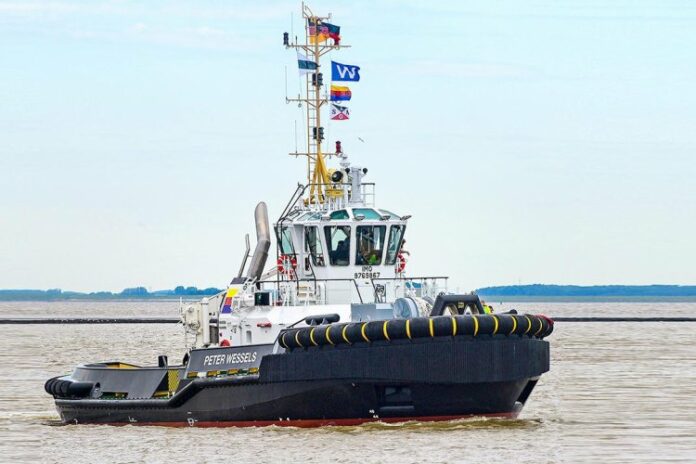
Germany’s westernmost seaport in Emden recently received a powerful addition in the form of the 28-meter-long “Peter Wessels” harbor tug.

To power the assistance and salvage tug, Rolls-Royce supplied two 12-cylinder MTU Series 4000 engines with a total output of 3,680 kilowatts. The operator, Emdener Schlepp-Betriebe GmbH (ESB), purchased the vessel from the Hamburg-based shipping company “Neue Schleppdampfschiffsreederei Louis Meyer GmbH & Co. KG” and recently put it into operation. The special ship was built by the Damen Shipyards Group in the Netherlands.

With a bollard pull of 63 tons, the “Peter Wessels” is by far the strongest ship in the fleet of the operator ESB in Emden, which has now grown to five tugs. The strongest ESB tug to date can carry 32.4 tons. The seaport is primarily a base port for the Volkswagen Group and Europe’s third largest automobile transhipment center – after Zeebrugge and Bremerhaven. Powerful port tugs play a key role in the smooth operation of the cargo ships.

ESB Managing Director Frank Wessels explains:

“For us, the tugboat is an investment in the future, as the car cargo ships that will be calling at Emden port in the future will be larger. It offers sufficient reserves for the expected volume of ships”.

Rolls-Royce has signed a VCA long-term maintenance contract (= Value Care Agreement) with the “Neue Schleppdampfschiffsreederei Louis Meyer GmbH & Co. KG” for MTU engines with a term of ten years. Jacqueline Wünning of Rolls-Royce’s Hamburg sales department, says:

“This covers all scheduled maintenance work that helps to avoid breakdowns as much as possible.”

Ireland’s first catamaran wind farm service craft under construction

0

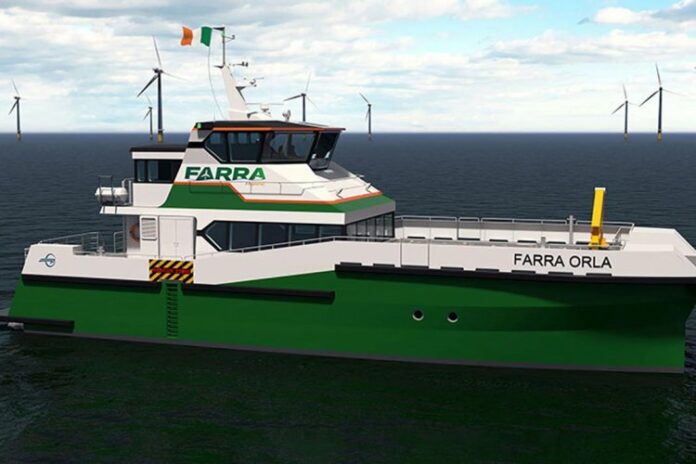
The third in Penguin’s Windflex 27 series, the vessel has been sold to Irish operator Farra Marine.

The vessel offers excellent speed, deadweight and seakeeping, making it capable of many roles in the Offshore Wind industry.

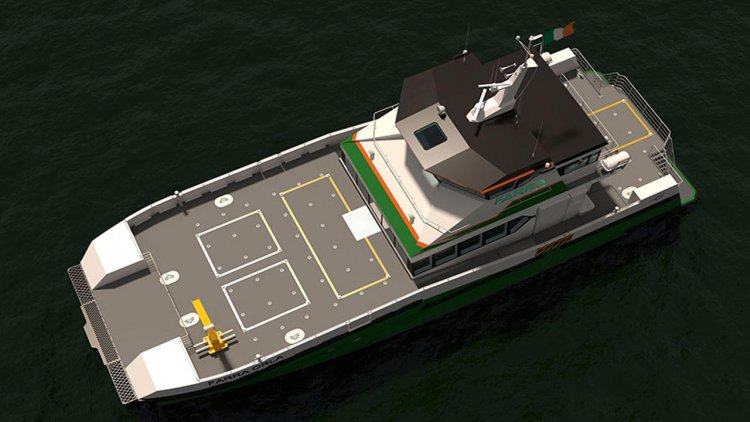
The vessel features two working decks. A large working deck forward can accommodate up to 4 x 10ft containers of 2 x 20 ft and is equipped with a deck crane. The aft deck can accommodate a 10ft container. Both decks multiple tie-down points for flexibility, accommodating every possible requirement or spares and equipment. The vessel has a deadweight above 50t.

Inside the main cabin is a large wet room with multiple showers, toilets and lockers. The main deck passenger space is large and open, with forward visibility, seating 24 personnel in comfortable suspended seats.

The upper deck features an elevated wheelhouse with commanding views over the bow, for safe transfer operations, behind which is a crew space with mess, bathroom and food preparation space.

The hulls feature 2 single crew cabins per side and bathrooms.

The Incat Crowther 27 is powered by quad Scania DI16 077M, each producing 662kW. Propulsion is via quad Hamilton 521 waterjets, giving the vessel excellent manoeuvrability. It will have an operating speed in excess of 29 knots.

The design is compliant with European regulations for the transfer of 24 offshore workers and will be classed with BV. It will be the first in the Farra Marine fleet and be the first such vessel operating under the Irish flag.

Penguin Shipyard commenced construction on the 3rd September with delivery expected Q2 2021.

Maersk Drilling awarded one-well exploration contract for Maersk Viking

0

The contract is expected to commence in March 2021, with an estimated duration of 35 days.

The firm contract value is approximately USD 9m, including additional services provided and a mobilisation fee. The contract includes an additional one-well option.

Morten Kelstrup, COO, Maersk Drilling, says:

“We’re happy to get this opportunity to add further to our great relationship with BSP. Our jack-up rig Maersk Convincer has been operating offshore Brunei Darussalam for several years now, and our performance has been recognised by Shell as Jack-up of the Year in both 2018 and 2019. I’m certain that Maersk Viking with its high-spec capabilities in combination with our fantastic crew will add even more value to our strong collaboration with BSP.”

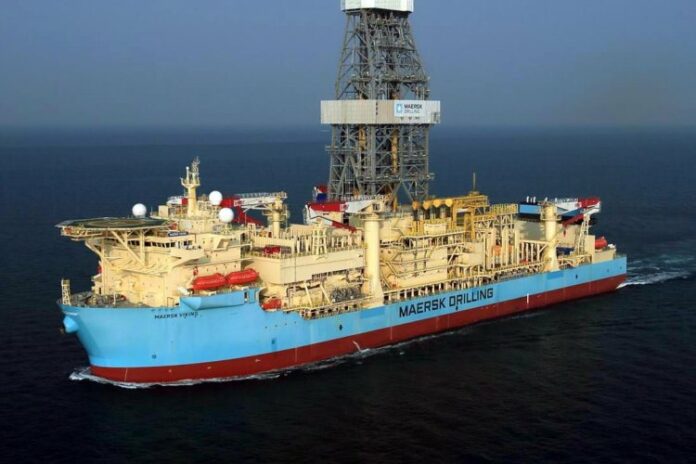
Maersk Viking is a high-spec ultra-deepwater drillship which was delivered in 2013. It is currently warm-stacked in Johor, Malaysia after completing a drilling campaign in the Bay of Bengal earlier this year.

Equinor: Contracts for services at seven supply bases in Norway

0

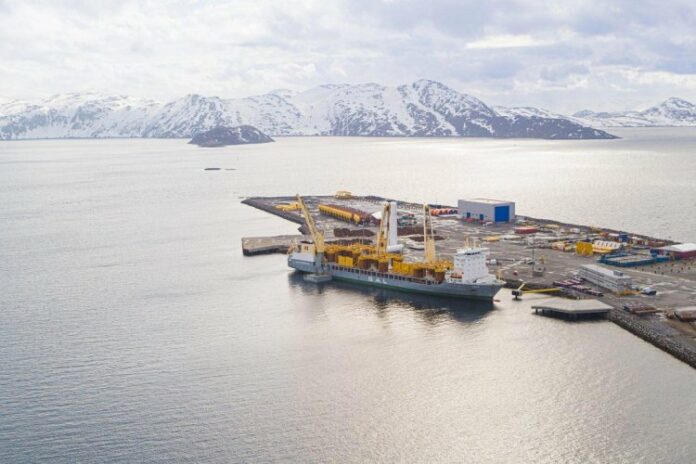
The contracts are awarded on behalf of Equinor operated licences on the Norwegian continental shelf.

Peggy Krantz-Underland, Equinor’s chief procurement officer, says:

“Employing over 800 people, from Dusavik in the South to Hammerfest in the North, the bases create important activity in the local communities along the Norwegian coast. The new two-year contracts help secure jobs and enable continuity for the bases and the business clusters associated with them.”

The three suppliers have been delivering safe and efficient operations at the supply bases since 2015. The new contracts are awarded through an exercise of options included in the framework agreements established in 2015.

The contracts will start up on 1 July 2021 and have a duration of two years. The total value of the contracts is estimated at about NOK 1.4 billion. The scope includes terminal and warehouse services.

Roger Foss, manager supply operations for Equinor on the Norwegian continental shelf, says:

“The supply bases in Norway are cornerstones for our offshore operations all along the coast. In 2019, around two million tons of goods and bulk were shipped via these bases to serve our offshore operations. We look forward to further cooperate and improve together with our supply base service suppliers on safety, efficiency and sustainability.”

Equinor cooperates with these and other suppliers at the bases to reduce CO2 emissions from logistical operations on the Norwegian continental shelf. A recent example is the common effort to enable shore-to-ship power supply, now in place at five of the bases. This significantly reduces both CO2 emissions and noise from vessels while docked at the bases.

Corvus Energy awarded contract with NOV for ESS delivery to offshore drilling rig

0

PowerBlade is an innovative energy storing unit developed by NOV that receives and provides energy based on operational needs on board offshore drilling units.

PowerBlade is used in two ways to move towards a cleaner and more efficient future for offshore drilling: energy regeneration and peak shaving, each of which is explored below.

Operations involving frequent and cyclic hoisting of heavy loads require high levels of energy from power systems to lift the loads. Until now, drilling units have not typically been able to make use of the regenerated energy created when lowering a load.

Oddbjørn Øye, Product Responsible Energy Recovery Systems – Robotic Control Drive Tech & Winch at NOV, says:

“Offshore drilling units perform advanced operations in uniquely challenging environments that involve waves, winds, and currents. Capitalizing on energy regenerated during heave compensation or tripping operations on offshore drilling units can be challenging.”

PowerBlade works by absorbing the braking energy emitted when a drillstring is lowered, storing it in the ESS, and then reusing that energy for the next hoist of the drillstring.

Oddbjørn Øye says:

“With our first PowerBlade installation, we determined that an energy storage system can reduce power consumption by the drawworks onboard a rig by up to 80% in active heave compensation mode compared to traditional design.”

On an offshore rig, the drilling drawworks places the heaviest burden on the rig’s energy supply by causing a wide variation in energy consumption over large power peaks.

NOV’s Øye explains:

“Typically, six to eight large diesel generators account for the rig’s total energy supply. An energy storage system smooths the load, levels out the power peaks of the lifting system, and provides the generator system a uniform load, improving equipment performance, enabling the generators to run at optimal load, and reducing wear and tear. By enabling some of the generators to shut down and run the remaining in high load, the ESS increases fuel efficiency and reduces emissions. A generator set running on high load consumes approximately 15% less energy compared to two generator sets when producing an equivalent total power. PowerBlade enables the operator to rely on a higher, optimum sustained generator load.”

The Corvus Energy Dolphin Power ESS installed on 1st delivery of PowerBlade ™ for drilling rig Deepsea Atlantic – a state-of-the-art semi-submersible drilling rig owned by Odfjell Drilling. The Corvus’ Dolphin Power is recognized for its high energy density combined with low weight and the highest power availability.

The impressive savings were shown in a study of the PowerBlade installation and other energy optimization projects onboard the drilling rig Deepsea Atlantic. Estimated savings on this specific drilling rig for the entire project, including the PowerBlade installation, were 6.5 tonnes of diesel, 20 tonnes of CO2, and 300 kg of NOx per day compared to log data prior to the project.

Efraim Kanestrøm, VP Sales Oil, Gas & Renewables at Corvus Energy, says:

“We are proud to support the oil and gas industry in their increasing commitment to investing in the green technologies that will help reduce the carbon footprint of their operations. Corvus batteries combined with NOV’s flywheel technology gives a robust and efficient solution for reducing emissions and the cost of drilling rig topside operations.

In light of the impressive results of the first NOV installation on the Deepsea Atlantic, we expect a large increase in offshore drilling rigs using energy storage technology for energy optimization in the future.”

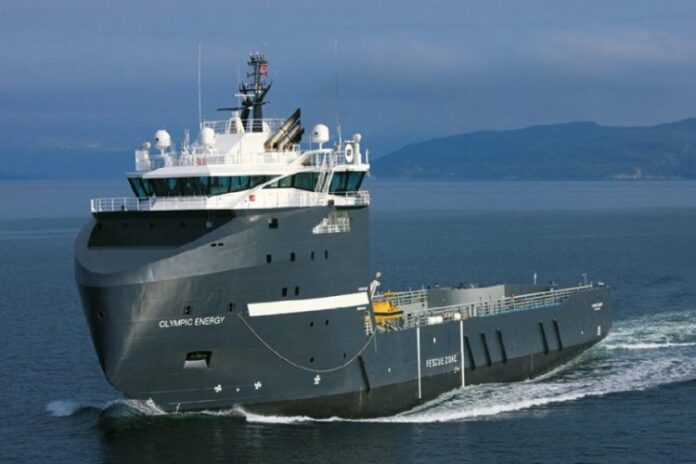
Vår Energi acquires Olympic Energy and Troms Sirius for service in the North Sea

0

The initiative is part of the company’s strategy for sustainability, where it is important to choose suppliers with solutions that can reduce Vår Energi’s environmental footprint.

Operations Support Manager at Vår Energi, Eivind Espe, says:

“We are constantly working to reduce our footprint, so we were extra happy when Olympic Energy became available. The supply vessel is one of the cleanest vessels in operation on the shelf and helps us move closer to a more environmentally friendly oil and gas production in the North Sea.”

Olympic Energy is special because in addition to running on natural gas (LNG), it has a battery pack of 460 kWh on board. The battery switches on when energy consumption is at its peak. In addition, the ship can connect to shore power and charge the battery when the ship is at the quay.

The second vessel is Troms Sirius. The ship uses traditional fuel but will be upgraded to be able to be connected to shore power during quay stays.

Both vessels will operate between the Balder field in the North Sea and Dusavik quay, north of Stavanger. Troms Sirius will commence late November 2020, and Olympic Energy in February 2021.

Vår Energi has a total of three supply vessels on contract. In addition to Troms Sirius and Olympic Energy serving the Balder field in the south, Stil Barents operates between Polarbase in Hammerfest and the Goliat field in the Barents Sea.

All vessels are equipped with technology that helps Vår Energi closer to the goal of a more environmentally friendly oil and gas production.

METIS introduces new Charter Party Agreement monitoring module

0

METIS Cyberspace Technology S.A. has launched a new software module to tackle the huge challenges shipping companies face in monitoring vessel performance effectively to meet Charter Party Agreement (CPA) reporting needs.

The new module, announced today, addresses the challenge with functionality that will greatly enhance the productivity of both operations and chartering departments.

The new module allows operators to monitor and track their vessel’s CPA performance at a glance through the online METIS platform using a set of visually rich dashboards. Once all CPA terms are imported into the system the user can monitor all vessels concerned and identify potential deviations to specified consumption and speed terms. In addition, the system provides automated notifications in case the speed consumption curve exceeds certain predefined limits.

Mike Konstantinidis, CEO, METIS Cyberspace Technology, says:

“Monitoring performance to match CPA expectations is one of the biggest challenges a vessel owner can face. The CPA module means the right information is always available during the voyage to take corrective actions and at the end of every voyage for performance evaluation and to address any potential claims.”

Konstantinidis adds that the analysis used is based solely on data collected automatically through METIS Ship Connect, the data acquisition system developed by METIS whose accuracy is approved by Lloyds Register. 

He adds:

“The analysis involves the utilization of weather data, vessel manoeuvring states and all other remarks included in the CPA, to provide a holistic view of the vessel’s compliance.”

Høglund and HB Hunte develop breakthrough CO2 Vessel, Tank and Cargo Handling concept

0

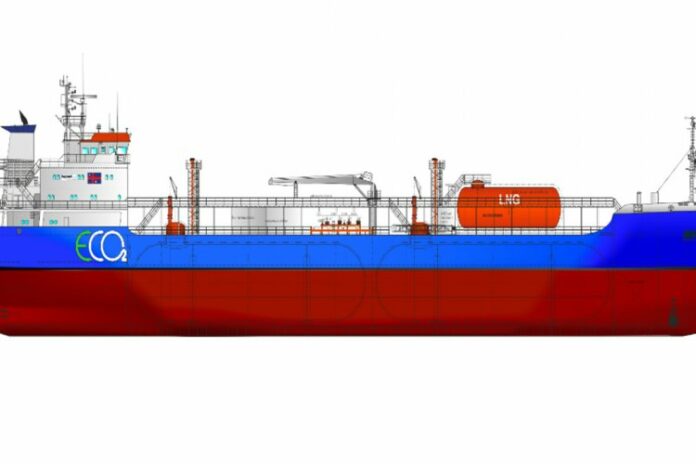
Automation, gas and system integration specialists, Høglund Marine Solutions, in collaboration with Oldenburg-based HB Hunte Engineering, has developed a breakthrough tank concept for LPG and CO2 transportation, based on existing, proven technology. This new system more than doubles current vessel cargo capacity to transport liquified CO2, representing a vital step forward in the development of maritime transport solutions for the expanding CCS market, which will require maritime CO2 transport to scale up rapidly.

Høglund and HB Hunte’s transportation solution uses a unique bilobe tank with a capacity of 8000cbm, drawing on Cargo Handling System (CHS) and tank designs that they have previously proven in LNG, LPG and other sectors. The development of this unique solution came following a proof of concept request from gas technology experts.

The solution is readily available for use in existing tanker designs. It more than doubles the transportation capacity of liquid CO2 over current vessel capacity without the size, weight and stability concerns that would have come from a higher capacity “monolobe” design. It can be quickly adapted for LPG, giving extra flexibility to a vessel that uses them.

The tank configuration has a direct and positive impact for the use of different alternative material and reasonable fabrication processes while complying with IGC Code and conventional rule. This allowed the production of a solution which is substantially lower cost and risk than conventional very large diameter cylindrical type offering the same capacity.

Currently, the maximum capacity for transporting liquified CO2 is approximately 3600cbm, or roughly 1770 tonnes in dedicated CO2 tankers predominantly with specialist operators, Larvik shipping who have been transporting CO2 since 1988. However, as CCS chains develop, maritime transportation capacity needs to increase significantly, requiring innovation in tank design and cargo handling systems.

Commenting on this new groundbreaking solution, David Gunaseelan, Vice President of Sales and Marketing at Høglund: “With the global economy facing more pressure to reduce its carbon emissions, we must develop the technology for a viable CCS chain, and new ways of solving the complex challenges that come with upscaling CO2 transportation. I’m thrilled to work with HB Hunte to develop a readily viable solution, which significantly broadens our horizons and demonstrates the cross-sector thinking needed to reduce atmospheric carbon levels in as many ways as possible.

Adding his thoughts on the product, Wolfgang Franzelius, Director Sales & Business Development at HB Hunte:

“CCS is a core technology area in realising the important goal of a net-zero economy. With new lines of finance emerging that support decarbonisation, we must develop the technology to achieve it at pace and scale. We are happy to team up with Høglund to support the development of safe and economical sea transport of captured carbon to a point where it cannot harm our planet.”

ABB puts sustainable power solution at heart of FrøyGruppen’s innovative live fish carrier

0

The innovative live fish carrier, designed by Møre Maritime AS, will be the first vessel of its kind to feature ABB’s award-wining power distribution system Onboard DC Grid™.

The system will optimize energy use, whether drawing on main engine power, energy storage power or a combination of the two. The power setup on board will be managed by ABB’s integrated Power and Energy Management System (PEMS™), which will ensure optimal use of the vessel’s total power resources.

Geir Antonsen, Technical Manager, Frøy Rederi AS, FrøyGruppen, said:

“We are very proud to install such a comprehensive hybrid solution on board. By working closely with ABB, we have designed a power system that will contribute towards a sustainable food supply chain for many years to come.” 

Efkan Turan, Senior Technical Project Engineer, Sefine Shipyard, said:

“This will be our second project with ABB that includes the Onboard DC Grid™ system and an energy storage system, delivering greater efficiency and sustainability for FrøyGruppen vessel. Having experienced ABB as a reliable partner in the past, we look forward to collaborating with them on this forward-looking vessel that is tailored for the needs of today and has the flexibility to adapt to future technologies of tomorrow.”

PEMS™ allows the integrated electrical system to leverage the high-speed digital communication within ABB switchboards, protection devices and controllers to improve information flow and provide full system control from power generation to consumption. Onboard DC Grid™ delivers a highly fault-tolerant system platform, which offers safe and efficient operation that is less exposed to the peak-power total harmonic distortion that affects AC ship power distribution performance.

Sindre Sætre, head of ABB Marine & Ports in Norway, said:

“This order continues the maritime shift towards greener hybrid power and propulsion technology, and confirms that the reliability, redundancy and inherent safety of Onboard DC Grid™ are available for even the most specialized of vessels.”

The full ABB package also includes the digital and connected ABB Ability™ Remote Diagnostic System for Marine, which will further enhance the vessel’s operational safety and ensure optimal performance, while helping to promptly detect and correct faults on board.

The vessel’s high-power CFlow fish-handling system will feature the combination of ABB’s ACS880 multi-drives and single-drives, which integrate seamlessly with the functionality of Onboard DC Grid™, delivering further operational efficiencies.