-10.7 C
New York
Home Blog Page 741

First ever V164-9.5 MW turbine installed on a floating wind project Aarhus

0

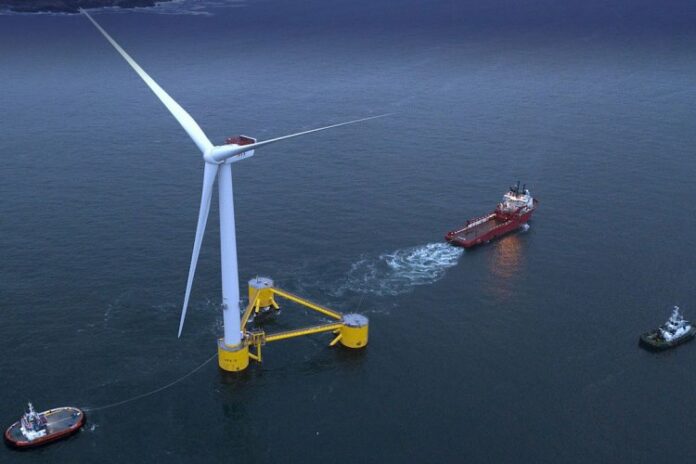
MHI Vestas Offshore Wind (MHI Vestas) has installed the largest and most powerful offshore wind turbine on a floating platform for the Kincardine offshore wind project.

The first V164-9.5 MW turbine was installed on a Principle Power WindFloat platform, the first of 5 such units to be installed at the Kincardine project.

This advance in turbine nameplate capacity is a continuation of MHI Vestas’ world-leading floating wind credentials, including the recent installation of WindFloat Atlantic.

Kincardine, being developed by Cobra Group, is set to be the largest floating wind farm in the world by nameplate capacity.

The five units at the project will be installed about 15km off the coast of Kincardineshire, at water depths ranging from 60m to 80m. This first 9.5MW unit is expected to be anchored at the project site in December 2020.

MHI Vestas Project Director, Allan Birk Wisby, said:

“We are proud to have the most powerful turbines installed on a floating offshore wind platform. The V164-9.5 MW turbines are an excellent fit for the Kincardine project, and it is a great achievement by the team to have completed first installation at the quayside. We look forward to completing the remaining 4 units.”

Cobra Group said: “This is an exciting, world leading project developed by Cobra Group. The Kincardine floating windfarm will be the biggest ever built. The installation of the largest turbine ever to have been placed on a floating foundation represents a major milestone for the project and we are very much looking forward to seeing it generate power at site very soon.”

About Kincardine Floating Offshore Wind

  • Developer: Kincardine Offshore Wind, Ltd (KOWL). Majority owned by the Cobra Group
  • EPC Contractor: Cobra Wind International Limited (CWIL).
  • Turbines: 5 x V164-9.525 MW + 1 V80-2.0 MW
  • Blade tip height: 190 metres
  • Foundation: WindFloat (floating, semi-submersible type)
  • Project Capacity: 49.625 MW
  • Location: Aberdeen Bay, Scotland
  • Distance from Shore: 15 km
  • Sea Depth: 60-80 metres
  • Nominal Voltage: 33 kV
  • Number of homes powered annually: 35,000
  • Expected life: 25 years
  • Noteworthy fact: Most powerful wind turbines operating on a floating foundation

Flow batteries to combine with tidal power to produce world’s first continuous green hydrogen

0

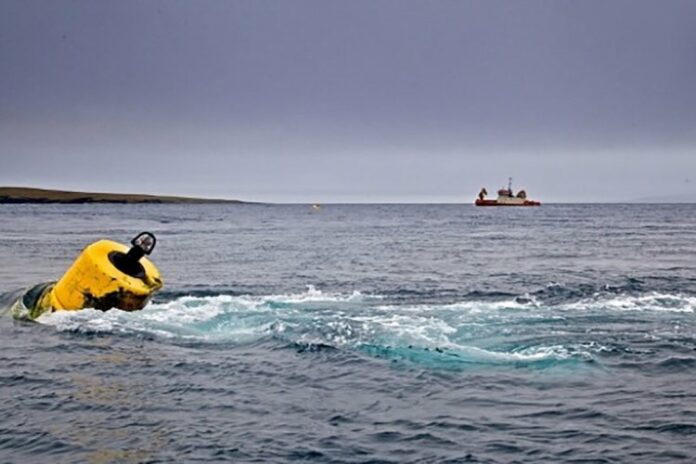
The European Marine Energy Centre (EMEC), Orkney, Scotland will deploy an Invinity Energy Systems 1.8 MWh flow battery at EMEC’s tidal energy test site on the island of Eday.

This unique combination of tidal power and flow batteries will be used to power EMEC’s hydrogen production plant, demonstrating continuous hydrogen production from variable renewable generation.

The commercialisation of green hydrogen is an essential step toward a 100% renewable future. Green hydrogen is created and consumed without carbon emissions and can replace fossil fuels in the energy mix, supporting the decarbonisation of heavy industry and transport sectors. The Offshore Renewable Energy Catapult estimate that developing a green hydrogen industry could create 120,000 jobs and deliver £320 bn to the UK economy by 2050.

Funded by the Scottish Government, via Highlands and Islands Enterprise (HIE), Invinity’s modular flow battery system will be assembled at the company’s manufacturing facility in Bathgate, West Lothian and consist of eight Invinity VS3 battery modules linked together into a single system. The project is expected to go live next year.

Scotland’s Energy Minister, Paul Wheelhouse, said:

“We are delighted to support this world-first innovative energy systems project in Orkney, with £1.8 million of funding from the Scottish Government.”

Invinity’s vanadium flow batteries (VFBs) are a form of heavy duty, stationary energy storage which are deployed in high-utilisation, industrial applications. They provide hours of continuous power, one or more times per day, through decades of service. This makes them the perfect candidate for regulating the generation of tidal energy, an application where more conventional lithium-ion batteries would degrade and eventually wear out.

Tidal generation is predictable yet variable, with two high and two low tides occurring each day. This is an extremely heavy cycling application, requiring up to four cycles per day, compared to solar coupled energy storage projects which typically require just one charge and discharge each day.
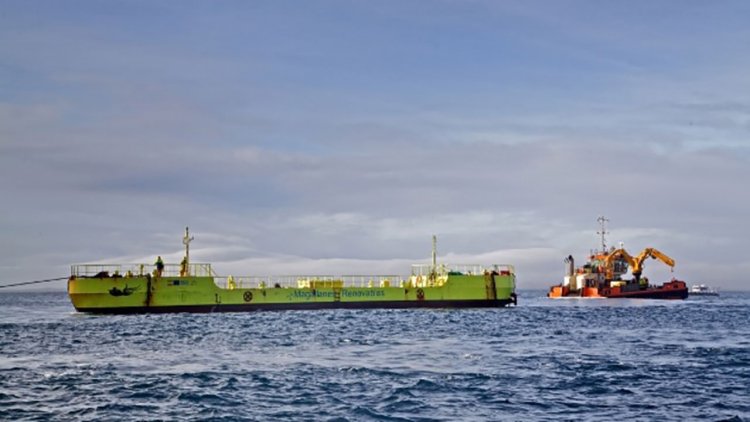
At EMEC’s site, the system will store electricity generated by tidal turbines during high power periods, and discharge it during low power periods. This will ‘smooth’ tidal generation to create continuous, on-demand electricity to turn into hydrogen using EMEC’s 670 kW hydrogen electrolyser. This will optimise hydrogen production at the site to enable tonnes of green hydrogen generation each year.

Neil Kermode, Managing Director at EMEC, said:

“EMEC’s core purpose is to demonstrate technologies in new and inspired ways to decarbonise our energy system. This is the first time that a flow battery will have been coupled with tidal energy and hydrogen production, and will support the development of the innovative energy storage solution being developed in the Interreg NWE ITEG project.

“Following a technical review looking at how to improve the efficiencies of the electrolyser we assessed that flow batteries would be the best fit for the energy system. As flow batteries store electrical charge in a liquid rather than a solid, they can provide industrial quantities of power for a sustained period, can deeply discharge without damaging itself, as well as stand fully charged for extended periods without losing charge. These are all necessary qualities to integrate battery technology with the renewable power generation and hydrogen production process.”

Matt Harper, Chief Commercial Officer at Invinity, said:

“This project is truly groundbreaking. Because of their inherent variability, all renewable energy sources – including wind, solar and tidal – have difficulty providing the consistent power that industrial processes like electrolysis need to operate most effectively. Including energy storage in a comprehensive renewables-to-hydrogen system bridges that gap, providing a path to accelerated commercialisation of future green hydrogen projects.

“Vanadium flow batteries are the perfect partner for tidal power, continually absorbing then dispatching four or more hours of continuous power, multiple times per day, over decades of service – a duty cycle that would rapidly degrade lithium batteries.”

Graeme Harrison, Orkney Area Manager with HIE said:

“The establishment of EMEC in 2003 was a key factor in placing Orkney at the international forefront of renewable energy development, particularly in the marine sector. Demonstration of the production/use of green hydrogen within the Orkney energy system is the latest in a series of highly innovative projects in these islands that have helped us maintain our global lead ever since.”

Ro-ro terminal opens at Sweden’s newest port

0

The port is a hub for the sustainable provision of goods due to its exceptional location in the Baltic Sea and its efficient connecting transport links.

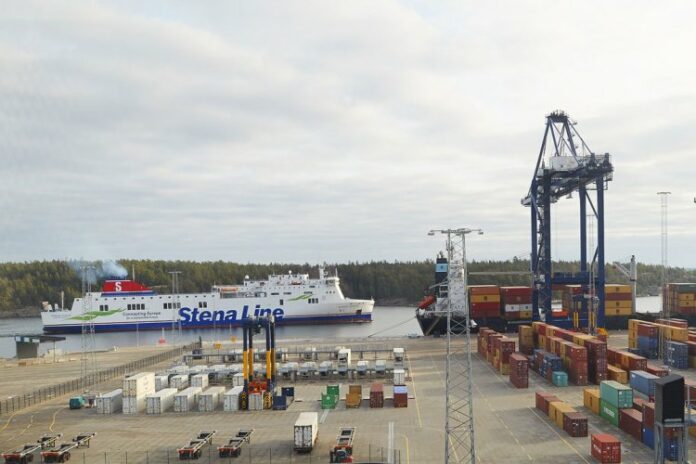
On 9th November the Stena Line vessel Stena Flavia was the maiden RoRo-quay call at Stockholm Norvik Port. The arrival coincided with the opening of the gates to the new RoRo terminal, offering substantially greater capacity and growth opportunities for multiple shipping companies.

Johan Wallén, Marketing and Sales Manager at Ports of Stockholm, says:

“With the strategic location of Stockholm Norvik Port, state-of-the-art infrastructure and great opportunities for storage and load handling, we have created completely new prerequisites for our customers. We warmly welcome Stena Line to Stockholm Norvik Port. We are very pleased with our many years of collaboration and also that Stena Line has chosen this commitment to the Baltic Sea’s new mega-port.”

Stockholm Norvik Port is located in what is Sweden’s biggest consumer area. The port has exceptional storage and loading capacity, as well as efficient intermodal transport connections to the whole of Sweden.

Johan Edelman, Trade Director at Stena Line, responsible for routes to and from Latvia, says:

“Moving to Stockholm Norvik Port is an important part of our expansion in the Baltic Sea, and provides us with good prerequisites to continue to grow, together with our customers. Already at the beginning of 2021 we will welcome the first of two new, modern vessels that will increase our freight-carrying capacity on the route by 30 percent.”

Stockholm Norvik Port is a brand new RoRo and container port with the best location possible in the Baltic Sea. A hub with short approach lanes, efficient transport links and a newly built railway ensures the sustainable supply of goods to the growing Stockholm region. 

ChartWorld delivers updates to MyRA

0

MyRA provides both vessels and onshore personnel with a proposed ECDIS-ready voyage plan. The plan is based on a route network, port databases, bathymetry from ENCs, weather forecasts and the relevant ship model. 

The MyRA version 1.4 release rolled out in October 2020 includes the following improvements: 

  • Further simplification of the install process
  • Advanced routing algorithm, considering vessel air draft for voyage calculations
  • New Data Services for weather routing by NAPA and Environmental Voyage Overview by EMH.

The Environmental Voyage Overview available through MyRA is a result of ChartWorld International’s partnership with EMH Systems Ltd. The Environmental Voyage Overview delivers innovative Environmental Compliance, enabling enhanced voyage planning. MARPOL and local environmental regulations are taken into account and, in addition, the EMH Hub web platform will enable shipping companies and managers to have a far greater focus on environmental compliance as part of their voyage planning.

MyRA weather routing by NAPA provides an optimal voyage that includes schedule information as well as performance-related information (such as e.g. speed, propeller RPM, propulsion power and fuel consumption). Performance is evaluated using NAPA’s proprietary model taking wind, wind waves, swell, currents and water depth into account. 

Shipping companies subscribed to MyRA with the NAPA weather service, are given access to the NAPA Fleet Intelligence web portal with full information about the ship and voyage performance.

ABB’s OCTOPUS software employed for ATLANTIS offshore project

0

ABB Marine & Ports has been selected as a key technology partner for a far-reaching EU project exploring the use of remote offshore inspection and maintenance techniques for wind farms.

With funding from the biggest EU research and innovation program Horizon 2020, the project is targeting a more efficient, cost-effective and sustainable offshore ecosystem. The project results will be made available under EU’s Community Research and Development Information Service (CORDIS).

In a project milestone, ABB is supplying a new module of the ABB Ability™ Marine Advisory System – OCTOPUS optimization software. The software has been enhanced to allow onshore operators to plan a vessel mission from port to wind farm in the most optimal way, backed by data-driven decisions. This will enable improved efficiencies by cutting the transfer times between land and wind farms, as well as by reducing the vessel waiting time and working time on-site.

Dr. Andry Maykol Pinto, Project Coordinator, ATLANTIS, said:

“ATLANTIS is a unique project that promises to unlock new potential in the operation of offshore wind farms – the fastest-growing segment of the offshore industry. Research projects like ATLANTIS are crucial to this industry’s ongoing development, and solutions like OCTOPUS allow stakeholders to leverage the benefits on an increasingly electric, digital and connected marine environment. Together, we will help the offshore wind market to cut costs while enhancing efficiency, sustainability and safety in inspection and maintenance operations.”

In addition to planning missions from port to wind farm, the new module of OCTOPUS will be taking into consideration the operational limitations of the ship and personnel, as well as assess deployment opportunities for remotely operated underwater vehicles (ROVs), unmanned surface vehicles and unmanned aerial vehicles.

As an industry-leading solution for optimizing performance in marine operations, OCTOPUS has been drawing on ABB hydrodynamic expertise to deploy its real-time data capability and ship-specific information to maximize efficiency across a growing range of vessel types.

Antto Shemeikka, Vice President Digital Services, ABB Marine & Ports, said:

“OCTOPUS is about turning data into actionable insights to support decision making at sea. The new module is an industry first as it allows the user ashore to plan offshore operations according to the performance of the vessel, crew and equipment in the conditions they face. This is a significant step forward for remote decision making: in adverse weather or rough seas, a mission or an ROV launch could be aborted to save a wasted deployment or worse. There are clear benefits for safety as well efficiency.”

Although the latest addition to the OCTOPUS suite was developed with ATLANTIS in mind, its potential applications extend beyond the offshore wind industry. ABB’s vision is to develop this module as a tool to serve multiple sectors – such as planning short routes for passenger ships or supply operations for rigs and floating offshore units. In addition, if a vessel of any kind is caught in unfavorable conditions, OCTOPUS would be able to determine a smoother, safer course.

Mitsubishi Shipbuilding joins ROBOSHIP project

0

Mitsubishi Shipbuilding Co., Ltd., a part of Mitsubishi Heavy Industries (MHI) Group, is participating in an inter-business project to explore the potential of the “ROBOSHIP” as the marine vessel of the future. 

A proof of concept (PoC) test using two actual surface vessels was jointly conducted on November 11, 2020. This PoC test, to be held in the sea off Toyosu in Tokyo using a passenger vessel owned by Tokyo Cruise Ship Co., Ltd., intended to demonstrate the cutting-edge technologies and ideas of the participating companies, with the aim of supporting the development and widespread adoption of a navigational support system for coastal vessels.

The PoC testing is part of the “ROBOSHIP Joint Value Creation Project” led by e5 Lab Inc., a firm jointly established in 2019 by four companies representing shipping companies and a trading company to develop EV (electric vehicle) ships and digitization technologies. 

The project is a collaborative effort between e5 Lab, 22 companies and a ship classification society, including firms outside the shipbuilding and marine transport field, as a cooperative platform to create value and turn challenges into opportunities by addressing issues facing the ocean shipping industry. Specifically, a two-day event to be held on November 11-12, entitled “ROBOSHIP Joint Value Creation Project PoC in Tokyo 2020” is being conducted on the theme of “Ideas for future ships envisioned by e5 Lab, 22 partner companies, and a ship classification society.”

Mitsubishi Shipbuilding, with assistance from related sections within MHI Group, has provided maritime-related engineering services, support for marine vessel remote control/autonomous navigation, and system integration for the vessel propulsion units. 

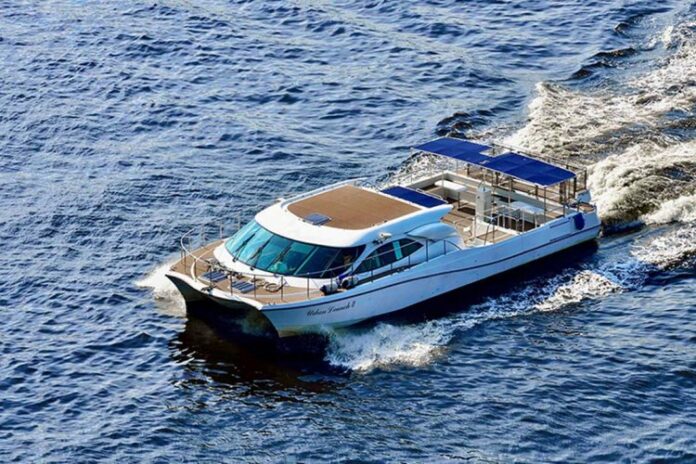
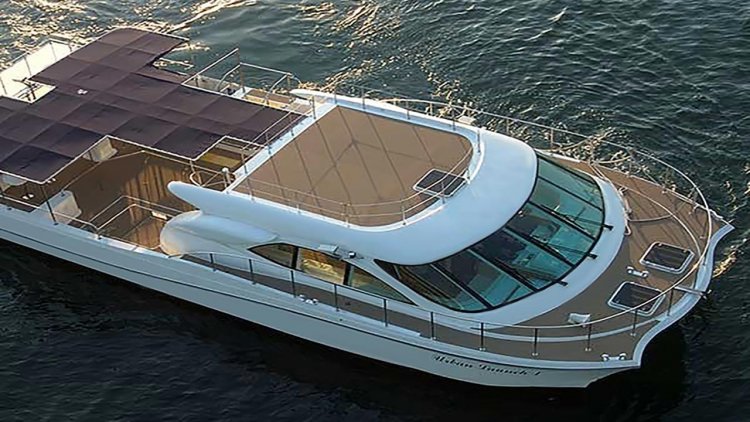
As part of the test, a navigation support system called SUPERBRIDGE-X, with functions including route planning, course control, vessel speed control, and collision avoidance, has been installed in “Urban Launch,” a passenger vessel operated by Tokyo Cruise Ship Co., Ltd. to conduct cruises in Tokyo Bay and other areas. In addition, a remotely operated unmanned surface vessel developed by MHI has also been made available, and the two vessels used to demonstrate collision avoidance.

In its “MARINE FUTURE STREAM” growth strategy, Mitsubishi Shipbuilding has set goals for the decarbonization of the maritime economy through renewable energy and the carbon recycle, and effective utilization of the marine space with digitalization and electrification, aiming to generate new ideas through marine-related innovation, and making them a reality. 

Meanwhile, e5 Lab is a solution provider working to solve issues in the maritime industry through development of EV ships and digitization, in order to promote safe navigation for vessels, a better work environment for crews, and conservation of the global environment. While sharing concepts for activities in a full-fledged effort to find solutions to the social challenges facing the marine transport and maritime industry, Mitsubishi Shipbuilding will pursue cooperation through the joint value creation project.

Going forward, Mitsubishi Shipbuilding will leverage the marine-related technologies accumulated by wide range of technologies of MHI Group, and by providing shipbuilding engineering services as well as system integration for EV ship powertrains and digitalization to improve the work environment, will find solutions to the various challenges facing customers and society. In cooperation with e5 Lab, Mitsubishi Shipbuilding aims to be a solution provider working to resolve issues in the maritime industry.

Business partnership for the development and promotion of pure electric vessels

0

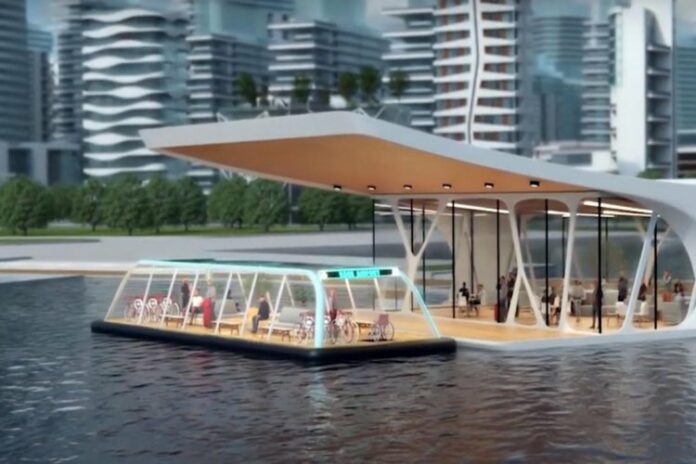
Kansai Electric Power Co., Inc. (hereafter KEPCO) and e5 Lab Inc. (hereafter e5) have reached an agreement today on a business partnership for the development and promotion of pure electric vessels “Water Urban Mobility” (hereafter EV) in the Kansai bay area.

In recent years, the Japanese shipping industry is facing issues such as eliminating GHG emissions from vessels and the shortage of skilled seafarers. Therefore, development of EV technology and autonomous navigation systems for vessels is imperative. There is also high expectation for the development of various mobility in preparation for the Osaka/Kansai Expo in 2025.

e5 will be responsible for the planning and development of next-generation EV that improves comfortability by reducing noise and vibration due to electrification, enhances usability by making more transportation options, and creates entertainment spaces by highly flexible architecture and interior design which meets customer’s needs. KEPCO will develop “Bidirectional Wireless Charge/Discharge System” for large-capacity storage batteries to be installed on EV. This will be the first case in Japan if it is successfully installed.

This charge/discharge system connects storage batteries on the vessel side and charge/discharge devices on the shore side to control electric power. It is expected to be used for energy management of the facilities nearby shore side and BCP measures.

In the future, the project aims to propose and sell new mobility services using EV technology and charge/discharge systems to local governments and corporations. Both companies will accelerate the development and diffusion of EV, and contribute to the sustainable management of the Japanese shipping industry and the realization of a decarbonized society.

A provider of ocean shipping solutions based on electrification and digitalization of ocean-going vessels. e5 Lab’s mission is to create sustainable coastal shipping, which is the lifeline of Japan. The company aims to contribute to society through its efforts on safe operation of vessels and global environmental conservation, by combining cutting-edge technologies and ideas to create added value, and solving the issues facing coastal shipping.

ADNOC L&S acquires three Ultramax carriers to bolster dry bulk fleet

0

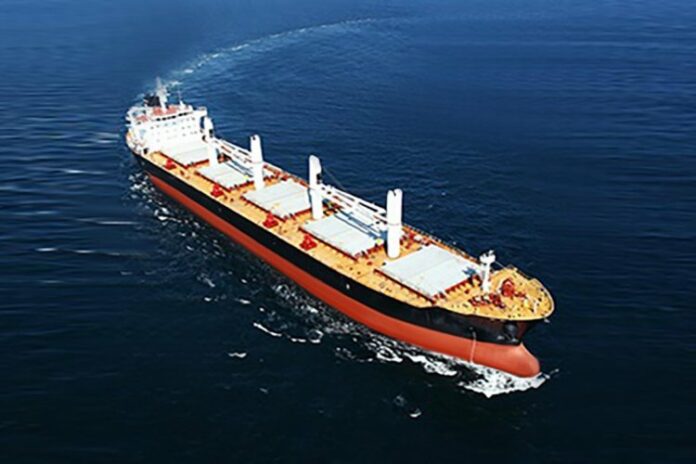
ADNOC Logistics & Services (L&S), the maritime arm of ADNOC, has announced the acquisition of an Ultramax bulk carrier (Al Karama), following the acquisition of two Ultramax carriers earlier this year. 

The Al Karama bulk carrier vessel was built in 2019 and has a deadweight of 64,000 metric tonnes. It will immediately be deployed on key ADNOC L&S trading routes, including the transport of sulphur from facilities in Ruwais, Abu Dhabi, to global customers. 

The Al Karama joins the Motor Vessel Al Dhafra and Motor Vessel Al Wathba, which were built in 2019 in Japan, as part of the ADNOC L&S Ultramax dry bulk fleet. These vessels play an important role in delivering products to ADNOC customers around the world and, in particular, service the long-term sulphur supply agreement signed between ADNOC and OCP Morocco, one of the world’s largest sulphur importers. 

Speaking at this year’s virtual Abu Dhabi International Petroleum Exhibition and Conference (ADIPEC), Abdulkareem Al Masabi, Chief Executive Officer of ADNOC L&S said: 

“The addition of these modern bulk carriers to our fleet is a key milestone in the delivery our growth plans. The vessels will increase ADNOC L&S’ regional presence and will enable allow us to explore more cargo options outside the UAE market. As we continue to invest in our shipping fleet to service our global network of customers, we remain focused on delivering a safer and smarter growth strategy in shipping, driving growth opportunities and creating value for ADNOC, Abu Dhabi and the UAE.”

The new Ultramax bulk carriers feature economically efficient engines and smart speed management technology, allowing the vessels to operate at very low engine speeds resulting in a marked decrease in fuel consumption and lower emissions. 

The MV Ghantout, a smaller class of bulk carrier with the capacity of 23,000 metric tonnes, has also recently joined the ADNOC L&S fleet. This vessel will be used to transport calcined petcoke from ADNOC’s Ruwais terminal to Jebel Ali and Khalifa Port in the UAE, supporting a long-term supply contract between ADNOC and Emirates Global Aluminum (EGA), which was signed in 2019.

The addition of these four vessels increases ADNOC L&S’s bulk cargo tonnage by 214,000 metric tonnes. The purchases reflect the company’s focus on modernizing its fleet and optimizing its cargo capacity, thereby ensuring that its vessels are at the forefront of technology and sustainable shipping. 

The new fleet will enable ADNOC L&S to deliver more backhaul bulk cargoes in the open market, thereby making fewer ballast voyages and delivering greater value from each journey. More broadly, the expansion of ADNOC L&S’ dry bulk fleet also supports ADNOC’s Downstream growth and its move into Trading.

First SafeGuardTM certification for the offshore marine industry in South Asia

0

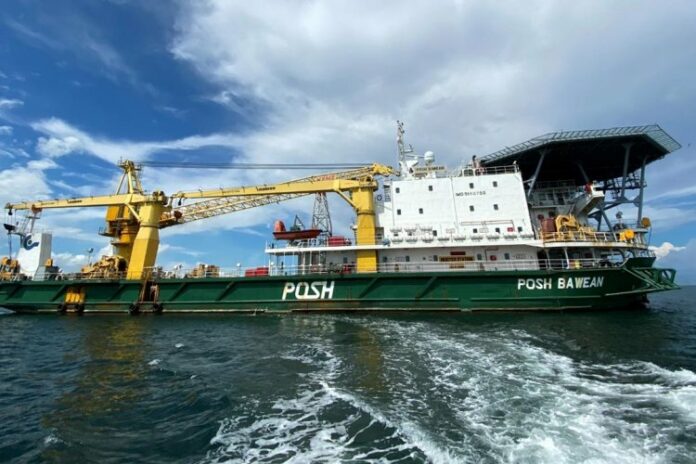
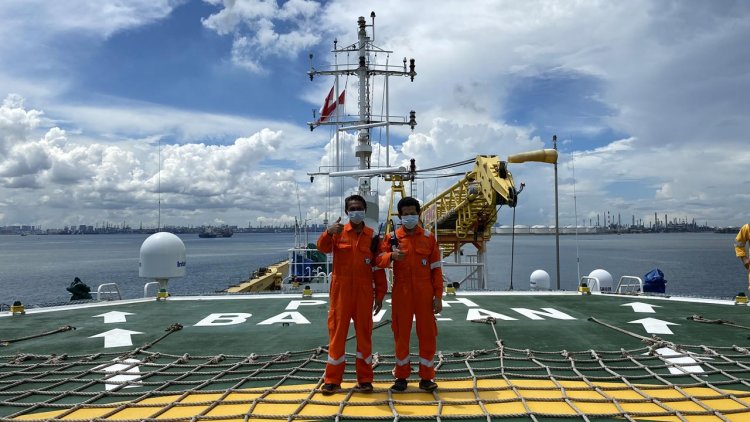
Bureau Veritas (BV), a world leader in testing, inspection, and certification services, has awarded its SafeGuardTM label to PACC Offshore Services Holdings Ltd (POSH) – a leading solutions provider for offshore energy operations – for its offshore accommodation vessel ‘POSH Bawean’ while in operation at the Eastern Working Anchorage in Singapore as a reception and holding facility for seafarers in transit.

‘POSH Bawean’ is the first facility in the South Asia offshore marine sector to receive the certification, which assures stakeholders that a business has implemented health, safety, and hygiene standards that meet local and international guidelines, as well as global best practices, to restart business safely amid COVID-19.

In securing the SafeGuardTM label for ‘POSH Bawean’, POSH and BV worked closely on a tailored checklist that addresses specific risks at all locations and to ensure all measures were well implemented, including:Managing onboard processes which includes crew training and knowledge in response to various situationsIncreasing safety for personnel and passengers by monitoring compliance with the reinforced rules.Reducing risk for onboard facilities by limiting contact and preventive measuresImplementing cleanliness procedures, such as frequent disinfection, changes to air conditioning systems and specific procedures for sanitizing restrooms, stairs and more.SafeGuardTM has been developed by Bureau Veritas to provide a framework and standard to help businesses across many sectors establish and manage adherence to health, safety, and hygiene standards. It has been adopted by large operators in the hotel and passengership sectors in particular but, in the marine and offshore it has broad applicability relevant to helping ensure safer operations. 

David Barrow, Vice-President of South Asia and Pacific for Bureau Veritas Marine & Offshore, said:

‘Safety is an absolute at Bureau Veritas and even more so during the challenging and uncertain COVID-19 environment we operate in. Ensuring the health and safety of seafarers and offshore workers is critical to help ensure that we keep our industry moving. We are delighted to be working with POSH to support their enhanced protocols. Compliance with the BV SafeGuardTM systems gives all of their stakeholders extremely high levels of confidence as we move forward in uncharted waters. The best practices undertaken by POSH are setting extremely high standards. We are encouraging others to follow in their approach.’ 

Captain Priyadarshan Pandey, General Manager of Operations at PACC Offshore Services Holdings Ltd (POSH), said:

‘We are proud to be the first in our industry to receive the BV SafeGuardTM certification for POSH Bawean, which has played an important strategic role in the fight against COVID-19 in Singapore. POSH has always put health and safety as our top priority, and has actively enhanced our hygiene and cleanliness protocols both onshore and at sea. This certification will give our staff, crew, customers, and other stakeholders greater peace of mind as we continue to resume operations in a safe and responsible manner.’

POSH Bawean was one of two designated holding facilities for seafarers transiting in Singapore and supporting more than 1,000 crew changes during her deployment.

First ship-to-ship LNG bunkering in Malaysia

0

Titan LNG has successfully arranged the first LNG bunkering in the port of Pasir Gudang, partnering with Malaysian oil and gas corp., Petronas.

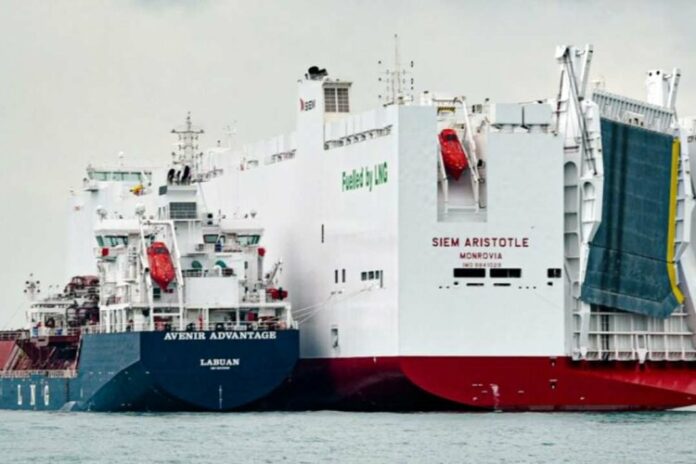
The parcel — purchased by Titan LNG — was delivered to the LNG-powered vessel, Siem Aristotle on the 9th November. This builds on last year’s Singaporean and Indonesian operations, servicing the world’s largest crane vessel, the Sleipnir owned by Heerema.

Petronas Marine’s LNG bunker barge, MV Avenir Advantage, recently came under their long-term charter and has delivered ~3,000 cbm of LNG to the Siem Aristotle as a fuel. The new barge can also be used as feeder vessel, servicing its customers in the region by leveraging on the strategic locations of its facilities, the Regasification Terminal Sungai Udang (RGTSU), Pengerang and Johor.

Michael Schaap, Titan LNG’s Commercial Director Marine, says:

“We are very happy with the project and expect more deliveries to other customers of ours to be delivered in the same structure, being a supplier ourselves puts us in the position to assist our customers and suppliers to get the best deal, helping both sides to optimize the LNG supply process and add technical knowhow for speedy and efficient compatibility checks.”

Siem Car Carriers is a leader in the PCTC market and operates a global liner service, specialising in the movement of new autos, roll on roll off (RO-RO) and project cargo.

Michael Dugdale, Head of Procurement at Siem, added:

“The location that was chosen by the parties was ideal for us as it required minimal deviation from our schedule. The vessel will now proceed en-route to Europe where it will go on charter and join its sister vessel, Siem Confucius in servic.”