-10.7 C
New York
Home Blog Page 740

ABB wins major power and propulsion order for five Fincantieri vessels

0

ABB will equip five newbuild vessels with Azipod® electric propulsion, which has a proven ability to significantly reduce fuel consumption on board.

Each cruise ship will be powered by twin Azipod® units, bringing the total ordered propulsion power for the five newbuilds to 178 megawatts (238,700 horsepower). Part of the order includes the largest and most powerful Azipod® propulsion units ever to be installed at Fincantieri, rating at 20 megawatts each. The vessels will enter service between 2023 and 2026.

Juha Koskela, Division President, ABB Marine & Ports, said:

“We look forward to collaborating with Fincantieri on these world-class vessels, setting them on course for eco-conscious cruising. Today’s passengers expect sustainable journeys, and we are honored to support Fincantieri’s environmental goals with our technology that stands for innovation and efficiency like no other.” 

Luigi Matarazzo, General Manager Merchant Ships Division, Fincantieri, said:

“Our collaboration with ABB spans over two decades, with the first Azipod® propulsion installation at Fincantieri dating back to late 1990s. Today, we are taking further advancements in our commitment to environmentally friendly shipping, and we are delighted to once again work with a trusted partner whose solutions have over the years delivered superior performance, reliability, safety and sustainability gains for the cruise segment.” 

With the electric drive motor situated in a submerged pod outside the ship hull, the Azipod® system can rotate 360 degrees, significantly increasing maneuverability and operating efficiency of a vessel and cutting fuel consumption by up to 20 percent compared to conventional shaftline systems. 

Today, over 100 cruise vessels rely on Azipod® technology, which has become the industry standard in the cruise segment. Since its launch three decades ago, Azipod® propulsion has saved a total of over 900,000 tons of fuel in the passenger cruise segment alone. Options for Azipod® propulsion range from 1 to 22 megawatts, and its technology plays a key role in ABB’s strong position for environmentally friendly electric propulsion.

Each vessel will also feature ABB’s integrated electric power plant setup, encompassing generators, drives, switchboards, propulsion transformers and a remote-control system to maneuver the Azipod® units from the bridge. Combining Azipod® propulsion with the electric power plant allows to configure all relevant equipment for optimized performance, resulting in increased efficiency and sustainability of operations.

In line with ABB Marine & Ports ‘Electric. Digital. Connected.’ approach that envisages shipping’s digital and connected future, these vessels will have the capability to leverage the ABB Ability™ Collaborative Operations infrastructure and centers. Collaborative Operations uses remote equipment monitoring and data analytics to enable predictive maintenance, planned interventions and remote technical support.
DNV GL and partners launch a new project to study maritime battery health

0

The research institute Fraunhofer ISE, battery supplier Corvus, Carnival Maritime GmbH and DNV GL, the world’s leading classification society, have launched “DDD-Batman”, a new MarTERA-sponsored project to study maritime battery health.

As the uptake of maritime batteries increases, being able to provide a better picture of the overall health of installed batteries and the available power, is important for building confidence in the safety of hybrid and electric systems. MarTERA is an EU Horizon 2020 cofound scheme, aimed at strengthening the European Research Area (ERA).

In the automotive industry, all roads seem to be leading to electric vehicles. In shipping the tide is turning a little more slowly, but using battery systems onboard is increasingly becoming an attractive solution in many shipping segments. In addition to pure electric vessels, batteries can enable significant gains in efficiency and emissions reductions in many ship types.

The objective of the DDD-Batman project is to develop data-driven methods for diagnostics and prognostics of battery systems and to provide methods for verifying the battery state of health (SOH) based on real-time sensor measurements. Continuous operational sensor data of the temperatures, discharge rates, voltages and impedance behaviour can be used to model and forecast the degradation of the battery – showing the SOH at any time.

Sverre Eriksen, Senior Principal Engineer, at DNV GL – Maritime, says:

“At the moment, vessels that depend on a Li-ion battery system need an annual validation test of the battery’s SOH. At DNV GL we require an annual validation testing of a battery’s SoH for ships utilizing Li-ion battery systems for propulsion or manoeuvring. This can be quite time consuming and has some limitations in the data we obtain. As batteries continue to penetrate the industry, we need to improve the data we have, especially as we see batteries in operation for longer periods. The DDD-Batman project could result in us having much better data on the health of a battery system, enabling predictive maintenance strategies and offering a better look at the remaining useful life of the battery.”

Jens Kohlmann, Vice President Asset Management Carnival Maritime GmbH, says:

“The Costa group wants to take a further important step forward along the path to emission-neutral ship operations by installing innovative battery technology on board. In conjunction with Corvus Energy, we are working on the use of lithium-ion battery storage systems on board the AIDA fleet. AIDAperla is to be fitted with a battery storage system with an output of ten megawatt hours in what will be the largest system of its kind ever installed on a passenger ship.”

Maximilian Bruch, scientist at Fraunhofer ISE, says:

“The service life of battery cells has become significantly longer in recent years. However, since battery systems are associated with high investment costs and have to work reliably, precise state of health monitoring and, ideally, extension of service life by adjusting the operating conditions is of great importance. A major obstacle at present is that although some aging processes are understood, their interaction as well as measurement and prediction during operation are still a huge challenge. The targeted laboratory tests and at the same time the analysis of load profiles and operating data in real use cases make the DDD-Batman project an excellent approach to significantly increase the precision and validity of online ageing monitoring. In addition to the applied development, the project contributes to the general scientific understanding of battery aging.”

The project will collect operational data from ships in addition to laboratory data and develop reliable and secure strategies for data collection, storage and sharing. The primary focus will be on battery systems for cruise ships, including battery lifetimes, replacement strategies, life cycle assessments and shore connection procedures.

DDD-Batman is also looking to set new standards for reliability and lifetime prognostics, deliver recommendations and give input to standards, recommended practices and class rules for batteries. The project hopes to increase confidence in battery-powered ships, making batteries a more attractive alternative and helping to enhance shipping’s uptake of electric propulsion systems.

Exploration well completed on the Polmak prospect in the southern Barents Sea

0

Lundin Energy AB announces that its wholly owned subsidiary Lundin Energy Norway AS (together Lundin Energy), has completed exploration well 7221/4-1, targeting the Polmak prospect in licences PL609 and PL1027, in the southern Barents Sea. The well was dry.

The main objective of the well was to prove hydrocarbons in Triassic aged sandstones within the Kobbe formation of the Polmak prospect. The well encountered indications of hydrocarbons in a 9 meter interval in poor quality reservoir in the targeted formation and the well was classified as dry.

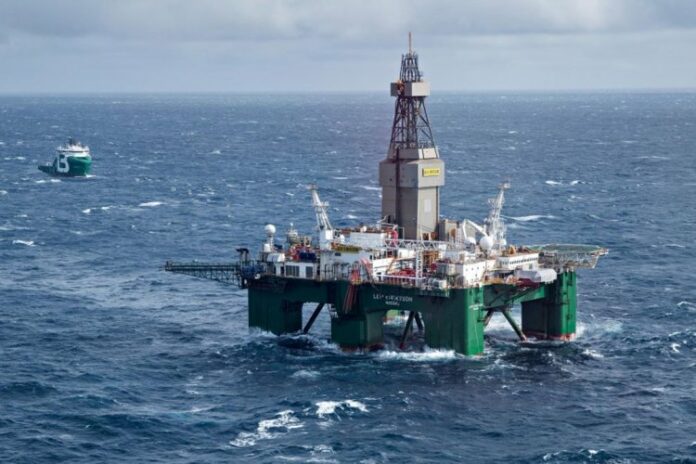
The well was drilled 30 km east of the Johan Castberg discovery, by the West Bollsta semi-submersible drilling rig. Lundin Energy is the operator of Polmak with a 47.51 percent working interest. The partners are Wintershall DEA Norge AS with 25 percent, INPEX Norge AS with 10 percent, DNO Norge AS with 10 percent and Idemitsu Petroleum Norge AS with 7.5 percent working interests.

The West Bollsta rig will now proceed to drill the Lundin Energy operated (40 percent working interest), Bask prospect in PL533B. Well 7219/11-1 will target Paleocene aged sandstones, estimated to hold gross unrisked prospective resources of 250 MMbo. The partners are Aker BP with 35 percent and Wintershall DEA with 25 percent working interests.

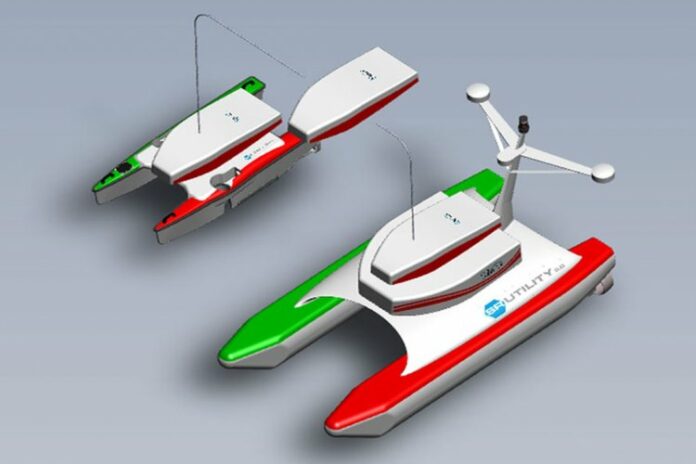
SeaRobotics launches next generation “Utility Class” ASV

0

This latest addition to the SRC portfolio is designed to extend the range and versatility of unmanned coastal marine survey operations by providing professional surveyors with a configurable platform that allows for interchangeable payloads and sensors, including the incorporation of existing instrumentation.

Lou Dennis, VP of programs at SeaRobotics, said:

“We have been building ASVs for over twenty years now and understand that there is always a need for some degree of customization when defining form and function, but increasingly we see surveyors demand systems that they themselves are capable of modifying to fit certain applications.” 

The launch of the SR-Utility 3.0 follows the successful 2019 introduction of the SR-Surveyor M1.8, a smaller, tightly integrated ASV designed specifically for the survey of shallow and hard-to-access areas. System compatibility was a key design principle for the new Utility Class ASV, and the SR-Utility 3.0 and SR-Surveyor M1.8 will share the same operator, survey and autonomy controls and unique SRC Uni-Cab architecture.

Dennis added:

“The growing appetite for autonomous systems among commercial surveyors calls for ever more flexible and intuitive plug and play platforms like the SR-Utility 3.0, which offers a modular approach to set-up, intuitive interfacing, and—thanks to a shared common Uni-Cab architecture—the option of modular upgradeable expansion to multi-ASV deployments.”

One of the first confirmed contract awards is from CSA Ocean Sciences, a US-based marine environmental consultancy firm that already uses a number of other SRC ASV models on large-scale environmental, hydrographic and geospatial survey projects.

Speaking of the order, CSA CEO Kevin Peterson said:

“We are excited about the addition of the SR-Utility 3.0 to our existing fleet of SR-Surveyor M1.8s and the benefits that this breakthrough technology offers to our customers. Having a highly reliable and standardized suite of ASVs helps us maintain the same established crew training, spare parts, and support depots—it is ultimately about optimizing efficiency in the collection of precise data.”

Abu Dhabi Ports and DNV GL sign MoU to transform Emirate’s Maritime Ecosystem

0

Abu Dhabi Ports, part of ADQ, one of the largest holding companies, have signed a MoU with DNV GL, the world’s largest consultancy of independent maritime and energy experts, to accelerate the sustainable development of Abu Dhabi’s maritime ecosystem.

Under the terms of the agreement, both companies agree to work together in advancing the digital transformation and further economic development of Abu Dhabi’s maritime sector, through the deployment of leading-edge innovations including autonomous technology, AI, machine learning, electrification, as well as logistics and supply-chain authentication based on blockchain.

The partnership also creates opportunities to encourage Emirati graduates to pursue a career in Abu Dhabi’s maritime trade ecosystem by offering research and development opportunities in the field of decarbonisation, such as alternative fuels and renewable energy usage.

Commenting on the MoU, Captain Mohamed Juma Al Shamisi, Group CEO, Abu Dhabi Ports, said:

“A vital aspect in Abu Dhabi’s philosophy is constantly researching and developing smarter ways to do things, and then integrating them into our local environment.“

Abu Dhabi Ports’ strategic partnership with DNV GL ensures our emirate elevates its status as a world-leading maritime centre in the years ahead. Through the guidance of our wise leadership, we are committed to instilling a new generation of Emiratis with a strong ethos that values a sustainable model for economic growth, and embraces decarbonisation and digitalisation across the entire maritime and logistics supply chain.”

Remi Eriksen, CEO and Group President, DNV GL, said:

“It is an honour for DNV GL to support ADPC in achieving its strategic vision. Digitalisation and decarbonisation are important themes in shaping a maritime industry that are future fit, and by working together we will maximise the impact. We are looking forward to working with the leadership of Abu Dhabi Ports and being a partner in this transformational journey.”

GTMaritime delivers free service to support continuous ship software cyber compliance

0

As shipping lines grow ever more reliant on digital links to shore, GTMaritime is releasing Compliance Maintenance, a new service for customers that provides the option of automatically keeping GTMaritime software used onboard up-to-date to ensure that owners are constantly compliant with IMO cyber-security guidelines.  

The new service is the latest addition to a GTMaritime portfolio designed with the common goal of shielding onboard systems from multiplying cyber-threats, which can disrupt crew’s day-to-day work and even compromise vessel safety.

Running older versions of software is a key vector for cyber-criminals to penetrate onboard systems, but installing updates is often time-consuming and costly. The importance of a systematic approach to software updating is repeatedly emphasised in BIMCO’s Guidelines on Cyber Security Onboard Ships – the industry’s go-to guidance for hardening digital infrastructure ahead of cyber-security becoming mandatory within the ISM Code in January next year.

GTMaritime Operations Director, Jamie Jones, said:

“Updating is laborious and unrewarding, and therefore easily put off. It is particularly onerous when ships have varying software inventories or have legacy, though mission-critical applications that may stop working following a major OS update. Compliance Maintenance has been introduced so that owners can be confident that their GTMaritime solutions are fully up-to-date at all times.”

GTMaritime Compliance Maintenance will be provided free-of-charge to existing customers, making it available to more than 6,500 ships, or more than 10% of the global fleet. It will automatically update all GTMaritime solutions installed on an owner’s fleet.

After initial configuration, Compliance Maintenance updates are distributed fleetwide with no crew intervention required. This is enabled through FastNet, a new core hardware-agnostic platform for data transfer which works with all satellite link airtime providers.

FastNet was engineered to set a new standard for the maritime industry by providing a secure, auditable and independent platform for ship/shore data transfers. As a multi-stream platform, it uses sophisticated bandwidth management techniques to optimise, secure and then deliver data packets according to business needs.

Jones explained:

“With vessel operation becoming increasingly digitalised, we saw a pressing need for getting both raw data and applications on and off ships in a managed way that caters for expected exponential growth in data volumes; today’s piecemeal approach is no longer sustainable.”

FastNet already underpins GTDeploy, a software deployment application allowing remote patch management and software updates across all solutions fleet wide, and GTReplicate – an application for replicating/synchronising critical data files between ship and shore. Capable of seamlessly synchronising files of all types and sizes, GTReplicate is highly configurable and offers extensive reporting functions to meet auditing requirements.

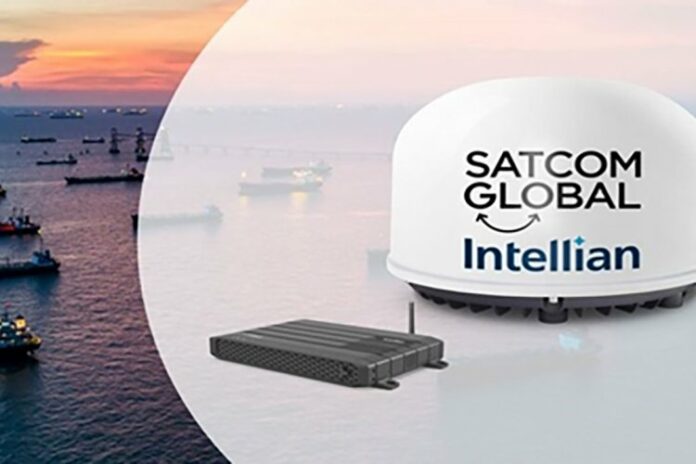
Satcom Global and Intellian take the new C700 Iridium Certus terminal to market

0

The agreement will see Satcom Global install a significant number of C700 terminals across its global customer base by the end of 2021, as part of an extensive volume commitment.

Delivering the very best in satellite technology to the maritime market, Satcom Global is adding the feature-rich C700 terminal to its primary service portfolio, due to its advanced capabilities including best in class RF performance, unique 12-patch phased array antenna design and out-of-the-box speeds of 352kbps up and 704kbps down.

The C700 Iridium Certus terminal will be the preferred hardware choice for the Iridium Certus back up connection that forms part of the Satcom Global Aura VSAT service. The C700 terminal will provide a reliable companion to Intellian NX series antenna’s, delivering seamless redundancy and continuity of high-quality connectivity for vessel operations, safety services and crew communications, should it be required.

The C700 will also be offered as a high-performance standalone solution, with key integrated features including firewall, IP PBX, WAN port and built-in Wi-Fi, making it incredibly easy for vessels to deploy with minimum cost and effort. The compact and lightweight antenna enables quick and easy installation, with user-friendly commissioning support from the AptusLX software.

Alex Stewart, Chief Operating Officer, Satcom Global commented:

“We are delighted that Intellian has developed the C700 terminal, applying their experience in producing class leading antenna’s to Iridium Certus. We have been using the market leading Ku antennas from Intellian to deliver the superior connectivity of Aura VSAT for a number of years now. As a result, we are confident that we are adding the most powerful and best-supported Iridium Certus terminal to our portfolio.”

The C700 supply agreement is an extension to the strategic partnership entered into back in 2016, which gave accredited installer and VSAT market leader, Satcom Global, access to Intellian’s full range of Ku-band, Ka-band and FleetBroadband hardware, supporting the delivery of its portfolio of VSAT and L-band services to customers within the Americas, EMEA, Asia and Oceania.

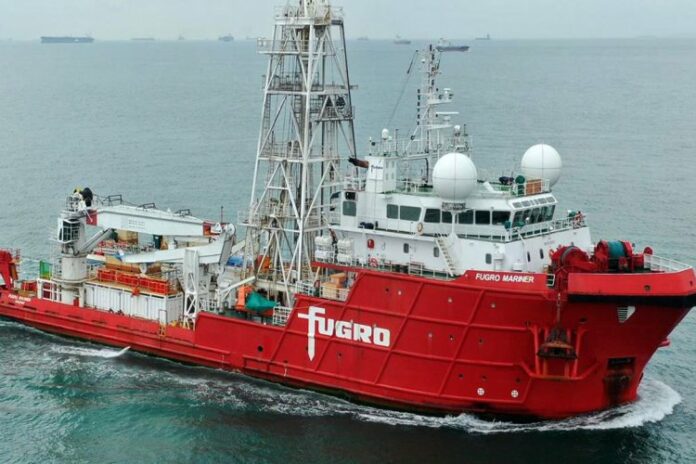
Fugro and NYK set to expand offshore wind geotechnical services in Japan

0

They will also collaborate on a feasibility study into jointly operating a specialist investigation vessel for renewables projects. This strategic partnership will benefit from Fugro’s technical and operational expertise in offshore wind and NYK’s knowledge of the Japanese market.

Japan’s burgeoning offshore wind industry is predicted to increase national demand for geotechnical investigation vessels. By joining forces, Fugro and NYK will be able to meet this demand and contribute to the successful development of offshore wind as a sustainable energy source for the country.

Akira Kono, NYK’s Senior Managing Executive Officer, said:

“Fugro’s expertise in geotechnical investigations and NYK’s knowledge of the Japanese market will be essential for supporting our customers and this partnership will contribute to the positive development of offshore wind business in Japan.”

Jerry Paisley, Fugro’s Marine Site Characterisation Director for Asia-Pacific, said:

“This strategic partnership with NYK further demonstrates our Geo-data expertise in the renewables sector. As a market leader, Fugro has over 25 years’ experience in European offshore renewables and has been delivering offshore wind projects in Asia-Pacific since 2016. Offshore wind developments in Japan are accelerating and this partnership with NYK positions Fugro at the forefront of these developments that support our vision to create a safe and liveable world.”

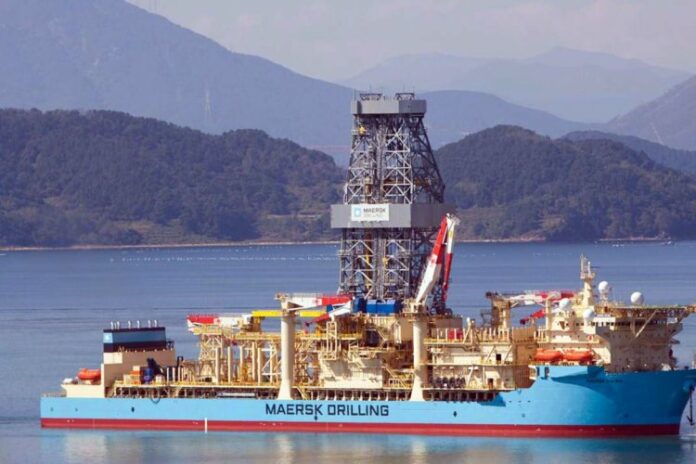
Maersk Drilling secures one-well contract extension for drillship Maersk Viking

0

Brunei Shell Petroleum Company Sdn. Bhd. (BSP) has exercised the option to add exploration drilling of one deepwater well to the work scope of the 7th generation drillship Maersk Viking.

The contract extension has an estimated duration of 35 days, with work expected to commence in May 2021 in direct continuation of the rig’s previously agreed work scope. The contract value of the extension is approximately USD 7.1m, including additional services provided.

Maersk Viking is a high-spec ultra-deepwater drillship which was delivered in 2013. It is currently preparing for the drilling campaign for BSP, which is expected to commence in March 2021, after having been warm-stacked in Johor, Malaysia.

MacGregor secures contract to supply LNG bunker barge hose handling cranes

0

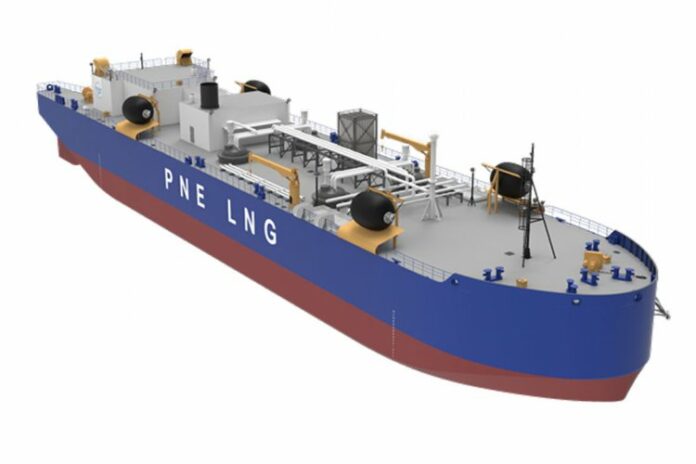
MacGregor, part of Cargotec, has received an order from Fincantieri Bay Shipbuilding in Wisconsin, USA to supply two fixed boom cranes that will handle the hoses on a new 5,400m3 Liquefied Natural Gas (LNG) bunker barge currently under construction and an estimated delivery by the end of 2021. 

The order was booked into Cargotec’s third quarter of 2020 order intake.

The MacGregor Rapp HP63-13F cranes will handle the hoses that transfer LNG from the barge to the LNG-powered vessel during bunkering operations. The hoses will be 63 ft. long and designed to handle 6,500 lbs. at 42 ft. and 1000 lbs. at 63 ft. 

MacGregor has a long record of accomplishment of delivering high-quality hose handling cranes for oil tanker barges to Fincantieri Bay Shipbuilding, and many other barge constructors in the U.S. This will be the first pair of cranes to be delivered for an LNG bunkering application.

The barge is being built for Polaris New Energy, a subsidiary of Northstar Midstream. The homeport will be Jacksonville, Florida, USA and operations will service customers along the Florida coast.

Hugh Haggerty, Project Engineer, Fincantieri Bay Shipbuilding, says:

“We are glad to select MacGregor as the supplier for our LNG Bunker Barge project’s hose handling cranes. MacGregor’s support prior to order was an important part of our design development. We are confident that these cranes will meet or exceed our customer’s requirements.”

John Carnall, Senior Vice President, Global Services Division, MacGregor, says:

“We have a long-standing relationship with Fincantieri Bay Shipbuilding, and a proven reputation of delivering high-quality hose handling cranes to the US barge market. These are the first hose handling cranes that MacGregor will deliver to an LNG bunkering barge, and we have tailored the specification in close cooperation with Fincantieri Bay Shipbuilding’s engineering group to ensure the exact configuration for the owner’s hose handling operations.”