-8.8 C
New York
Home Blog Page 739

Aurora Expeditions reveals cutting-edge design of its second expedition ship

0

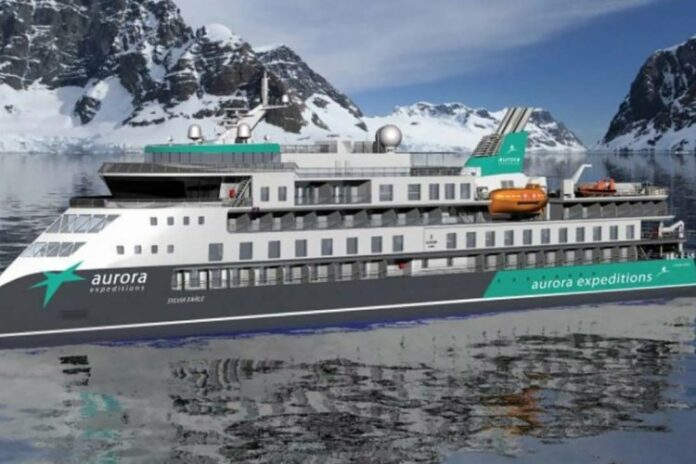
Aurora Expeditions is on schedule with the build of its second state-of-the-art expedition ship, the Sylvia Earle, and recently revealed its new exterior design. The expedition cruise vessel, and X-BOW design from Ulstein Design & Solutions, is under construction at the CMHI yard, China.

The Sylvia Earle is Aurora Expeditions’ second purpose-built expedition ship. The keel was laid in July 2020, and the vessel is planned to be delivered in autumn 2021.

The cutting-edge design of the Sylvia Earle features the ULSTEIN X-BOW, whose inverted bow blueprint offers unrivalled stability and comfort on ocean-going crossings. The X-BOW also offers extraordinary views to the front of the ship. This means when cruising in the polar regions, passengers will be able to appreciate the majesty of an iceberg immediately as it appears on the horizon.

The ship will also have an outdoor, heated swimming pool and its interiors reflect a casual, elegant style to make guests feel at home.

There will also be a Sylvia Earle Science Centre to host onboard science programs.

CEO Monique Ponfoort says:

“Exploring the natural world is at the heart of what we do and therefore we have brought elements of nature into the interior design of the Sylvia Earle. Ensuring passengers completely immerse themselves in the destination is of paramount importance to Aurora Expeditions.

The goal for us has always been to create lifelong ambassadors for the protection of the wilderness areas they travel to and education and conservation are integral to our DNA and this design is reflective of that.”

MSC announces its new Sunrise service

0

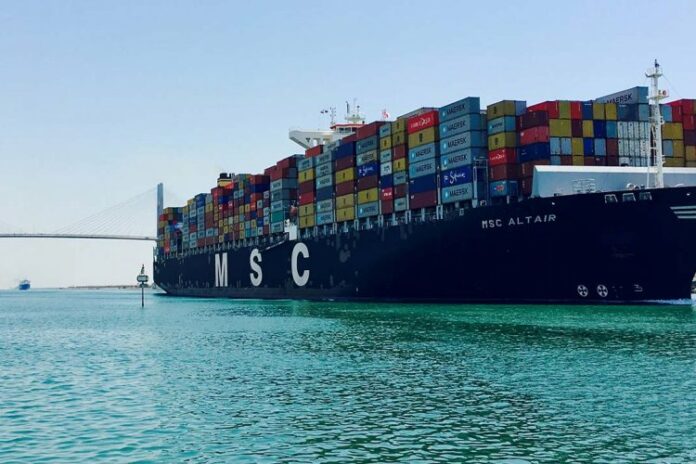
MSC has announced its new Sunrise service, connecting, Japan, Korea and Russia, effective from week 49.

The Sunrise is a weekly service opening a new route between Japan, Korea and the major container ports in eastern Russia, Vladivostok and Vostochniy, offering additional business opportunities for its customers. This new service complements MSC’s recently updated Golden Horn service, which operates between northern China, Korea and Russia.

These two services will not only offer new perspectives at a regional level but also at a global level in terms of access to the most important rail gateways linking Asia to Europe via Vladivostok.

Sunrise’s first sailings will be:

  • MSC Nora, voyage HT049R, ETA Busan 30 November 2020
  • La Tour, voyage HT048A, ETA Busan 2 December 2020

The full port rotation for the new Sunrise service is: Yokohama – Osaka – Kobe – Hakata – Busan – Vladivostok – Vostochniy – Busan

NABTU and Ørsted sign MOU for U.S. offshore wind workforce transition

0

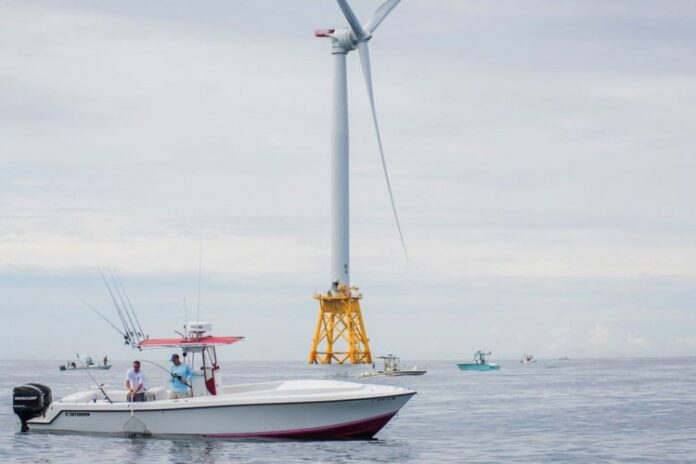
Ørsted, the global leader in offshore wind development, announced today a landmark initiative with North America’s Building Trades Unions (NABTU), the labor organization representing more than 3 million skilled craft professionals. The partnership will create a national agreement designed to transition U.S. union construction workers into the offshore wind industry in collaboration with the leadership of the 14 U.S. NABTU affiliates and the AFL-CIO.

Ørsted’s agreement with NABTU represents a transformative moment for organized labor and the clean energy industry. This framework sets a model for labor-management cooperation and workforce development in the budding offshore wind industry. There are currently 15 active commercial leases for offshore wind development in the U.S. According to a report released by the American Wind Energy Association, if fully built, these leases would support up to 30 GW of offshore wind capacity – representing an estimated 83,000 jobs and $25 billion in annual economic output within the next decade.

Sean McGarvey, President of NABTU, said:

“Today’s agreement expands career pathways of opportunities for our members to flourish in this transition. Our highly trained men and women professionals have the best craft skills in the world, and now will gain new experience in deep-water ocean work. Our agreement is based on a successful model developed by the Rhode Island Building Trades for the Block Island Wind Farm project. We commend Ørsted for coming to the table to work in partnership with us and our membership, and we also thank AFL-CIO Secretary-Treasurer Liz Shuler for her help and support throughout the process.”

Ørsted has the largest footprint of any offshore wind developer operating in U.S. waters, having been awarded 2.9GW of power contracts up and down the Eastern seaboard from Rhode Island to Maryland. This announcement underscores the company’s desire to solidify offshore wind’s position as an incubator for union green-collar job creation and innovation.

David Hardy, CEO of Ørsted Offshore North America, said:

“Ørsted believes the best workers are always the best-trained workers, and we are proud to have earned a strong record of working with skilled union labor to build the country’s first offshore wind farm, the Block Island Wind Farm, where more than 300 union workers were employed. We appreciate NABTU’s cooperation and the collaborative approach our union partners have brought to this endeavor and look forward to learning from and working with them on this groundbreaking partnership.”

As part of this national framework, Ørsted, along with their partners, will work together with the building trades’ unions to identify the skills necessary to accelerate an offshore wind construction workforce. The groups will match those needs against the available workforce, timelines, scopes of work, and certification requirements to fulfill Ørsted’s pipeline of projects down the East Coast, creating expansive job opportunities in a brand-new American industry for years to come and raising economics for a just transition in the renewable sector.

Ørsted and NABTU, along with their affiliates and state and local councils, have agreed to work together on long-term strategic plans for the balanced and sustainable development of Ørsted’s offshore wind projects. This planning effort will help ensure that site and state specific programming will be ready when federal permits are obtained, and construction begins.

These are the green jobs of the future, and this framework demonstrates that just transition can be accomplished through prioritization of workforce training and middle-class labor standards with family-sustaining wages, healthcare benefits, and pension security. Ørsted remains fully committed to coordinating with local unions and NABTU councils to create a consistent workforce pipeline and cohesive network to lead an effective just transition into the vast and complex nature of offshore wind development in the United States.

Alfa Laval launches marine system for reduction of greenhouse gases

0

Alfa Laval has launched a new marine environmental system, Alfa Laval PureCool.

The system, in combination with WinGD’s iCER technology, can reduce methane slip from ships’ gas engines which, if released in the atmosphere, has a higher global warming potential than CO2. The new PureCool system is the latest addition to Alfa Laval’s extensive marine environmental product portfolio. 

The International Maritime Organization (IMO) has the target of cutting vessel-related greenhouse gas emissions by at least 50 percent by 2050. As the marine industry works towards a future based on non-fossil fuels, Liquid Natural Gas (LNG) is expected to be one of the transition fuels towards decarbonization.

The new Alfa Laval PureCool system, in combination with WinGD’s iCER technology (as mentioned in a press release on June 25, 2020) targets an unaddressed emission source: methane slip, which is the small percentage of unburned methane that escapes through the engine when LNG is used as fuel. Although combusted LNG releases less CO2 than other fossil fuels, the methane has a higher global warming potential than CO2, which makes the unburned fraction a concern. No regulations currently exist for methane slip, but the issue should be addressed if the marine industry is to reach a 50 percent reduction in marine greenhouse gas emissions by 2050.

Sameer Kalra, President of the Marine Division, says:

“As LNG is an important bridge fuel in the transition to a zero-carbon future we need to mitigate the  negative environmental consequences  of this fuel as far as possible. Our new Alfa Laval PureCool system not only helps in the reduction of methane slip but also enables fuel savings which makes it a good solution for both our customers and the environment.”

Equinor: Increasing capacity on Johan Sverdrup to half a million barrels of oil per day

0

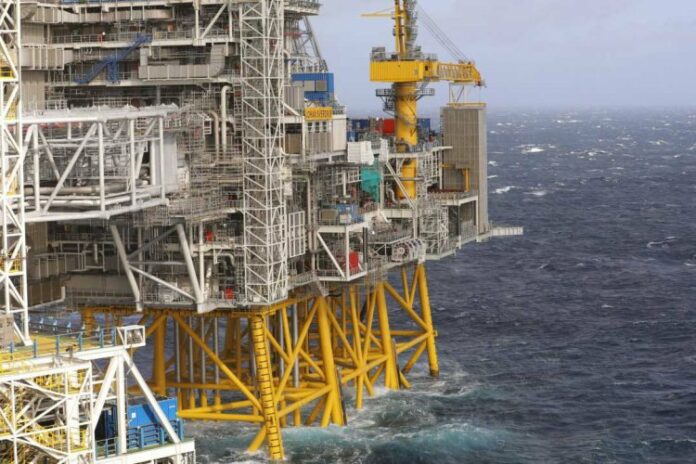
Once again, the Johan Sverdrup field is increasing its daily production capacity, expecting to reach around 500,000 barrels of oil per day by the end of the year – around 60,000 barrels more than the original basis when the field came on stream.

Equinor and its partners have tested the plant capacity in November to verify a possible production rise. As the test results have been very positive a production increase is called for by the end of 2020.

By then the production capacity will rise from today’s 470,000 to around 500,000 barrels of oil per day. The Johan Sverdrup field has had safe and stable operation since it came on stream just over a year ago.

Jez Averty, senior vice president for operations south in Development and Production Norway, says:

“For the second time since the start-up the plant is able to increase its daily capacity. As Johan Sverdrup is a field with high profitability and low CO2 emissions, a production rise is great news. The field has low operating costs, providing revenue for the companies and Norwegian society, even in periods with low prices.”

The Johan Sverdrup field is powered from shore with very low CO2 emissions per barrel. Emissions during the field life are estimated at less than 0.7kg CO2 per produced barrel.

Phase 2 of the Johan Sverdrup field development is on schedule, and production start is scheduled for the fourth quarter of 2022. The increase means that the Johan Sverdrup full-field plateau production capacity is expected to rise from 690,000 to around 720,000 barrels of oil per day.

The Johan Sverdrup field is using water injection to secure high recovery of reserves and maintain production at a high level.

Rune Nedregaard, vice president for Johan Sverdrup operations, says:

“Based on the positive results of the capacity test where we produced at rates of over 500,000 barrels of oil per day, we are now working on solutions to increase the water injection capacity which should allow us to further increase daily production capacity beyond this level by mid-2021.”

​Qatargas delivers first LNG cargo on Q-Max vessel to Tianjin Terminal in China

0

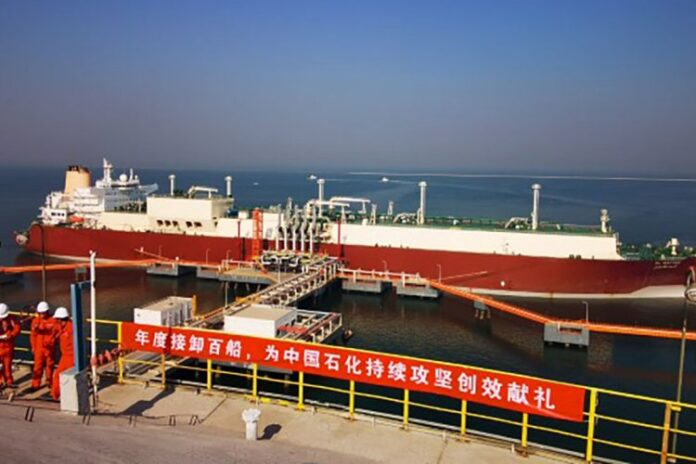
​Qatargas Operating Company Limited (Qatargas) announced today the delivery of the first cargo of liquefied natural gas (LNG) on a Q-Max LNG carrier to the Tianjin LNG Receiving Terminal in China.

The cargo aboard the Qatargas-chartered LNG vessel, ‘Al Mafyar,’ was loaded at Ras Laffan on 21 October 2020 and delivered to the Tianjin Terminal, located in the northern port city of Tianjin, near Beijing, on 10th November 2020.

This is the first cargo discharge operation by Qatargas to this LNG terminal involving a Q-Max LNG carrier. The Q-Max is the largest LNG vessel class in the world and has the ability to deliver 266,000 cubic metres of LNG.

The Tianjin LNG Receiving Terminal is owned and operated by the China Petroleum & Chemical Corporation (Sinopec), one of China’s largest state-owned enterprises. The terminal has a capacity of six million tonnes per annum (MTPA) and is currently being expanded to handle up to 10.8 MTPA by 2022. The Tianjin LNG receiving terminal received its first LNG cargo in February 2018 and has received more than 200 LNG cargoes so far.

Currently China has a total of 22 LNG receiving terminals (including 3 small scale terminals), 11 of which can accommodate Q-Max LNG vessels. Qatargas has to date delivered LNG cargoes to 13 LNG terminals in China. Ever since the first LNG cargo was delivered to China in September 2009, more than 62 million tonnes of LNG was delivered to China in total.​

Al Mafyar is the first Q-Max LNG vessel to call at the Tianjin LNG receiving terminal and the 100th LNG vessel to call at the terminal in 2020.

Aulong delivers third high-speed catamaran ferry to Blue Sea Jet in China

0

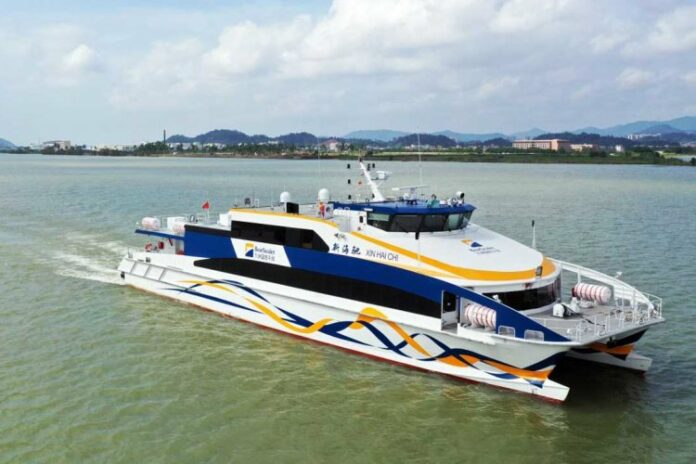
Austal Limited has announced that Aulong Shipbuilding, a joint venture between Austal and Jianglong Shipbuilding, in China, has delivered a 42 metre, high-speed catamaran passenger ferry to repeat customer, Blue Sea Jet of China. 

The new ferry, named “Xin Hai Chi”, was constructed at Aulong’s shipyard in Zhongshan City and is the third ship to be designed and constructed for Blue Sea Jet since 2016.

Austal Chief Executive Officer David Singleton said the delivery of the third ship to Blue Sea Jet confirmed Aulong’s position as a preferred shipbuilder by China’s leading ferry operators.  

Mr Singleton said:

“Aulong has quickly developed a strong reputation for delivering China’s best high speed craft – drawing on Austal’s expertise in commercial ferry design and Jianglong’s local shipbuilding capability. Our congratulations to Blue Sea Jet on this latest addition to their growing, impressive fleet.”

Blue Sea Jet will operate “Xin Hai Chi”, with capacity for 272 passengers over two decks, in the waters of the Dawan District between Guangdong, Hong Kong, and Macau.

Aulong Shipbuilding Co. Ltd (Aulong) is a joint venture between Guangdong Jianglong Shipbuilding Company (Jianglong Shipbuilding) of Zhuhai, China and Austal Limited. It was established in June 2016 with the aim of pursuing commercial passenger and non-military vessel opportunities in mainland China.

Total and CMA CGM complete world’s largest LNG bunkering operation at Port of Rotterdam

0

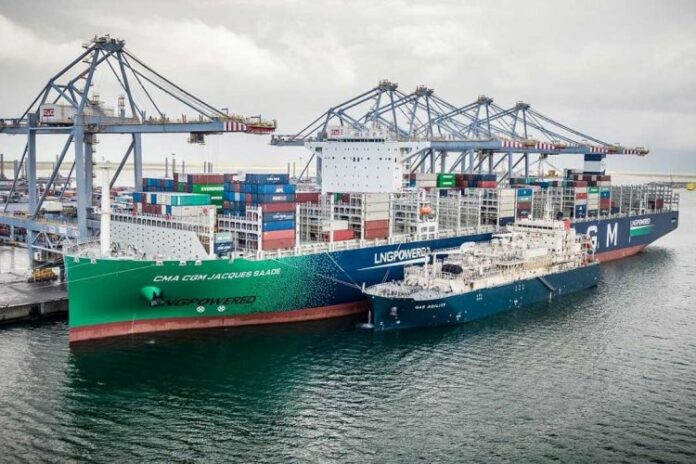
The CMA CGM Jacques Saadé, the world’s largest containership powered by Liquefied Natural Gas (LNG) has completed her first LNG bunkering with Total’s LNG bunker vessel, the Gas Agility, on November 13th 2020 at the Port of Rotterdam in the Netherlands. The 23,000 TEU containership received around 17,300 m3 of LNG, making it the largest LNG bunkering operation to ever take place.

Safe and efficient bunkering operation was performed by the Gas Agility at the Rotterdam World Gateway terminal by means of a ship-to-ship transfer, while the CMA CGM Jacques Saadé carried out cargo operations simultaneously. The supply of LNG was provided by Total Marine Fuels Global Solutions, Total’s dedicated business unit in charge of worldwide bunkering activities. Refueling took approximately 24 hours to complete.

As part of this operation, the carbon footprint of the LNG delivered was further reduced with the introduction of biomethane for approximately 13% of the quantity delivered, through the Guarantee of Origin (GO) certificates mechanism. The biomethane is produced in the Schipol area in the Netherlands, mainly by organic municipal waste.

The pioneering bunkering operation is a ground-breaking development for the global LNG market and concretely demonstrates Total and CMA CGM’s pledge to advance the use of LNG as a marine fuel, the best, immediately available solution in terms of energy transition to help reduce the environmental footprint of maritime transport. LNG makes it possible to eliminate almost all the air pollutants generated by the combustion of fossil fuels: 
 
•    99% of sulphur oxide emissions;
•    99% of fine particles emissions;
•    Up to 85% of nitrogen oxide emissions;

A LNG-powered vessel also emits up to 20% less CO2 than conventional fuel-powered systems. The development of bio and synthetic LNG will further drive forward LNG as a viable pathway to support the International Maritime Organization’s strategy on reducing GHG emissions from international shipping.

Jérôme Leprince-Ringuet, Vice President Marine Fuels at Total, said:

“We are really proud of this landmark achievement, which is the culmination of a 3-year close collaboration between Total and CMA CGM. It also marks the shipping industry’s first commercial use of biomethane on this scale. Such introduction reflects Total’s ambition to get to Net Zero by 2050 and our commitment to help reduce the carbon intensity of the energy products used by our customers.” 

Christine Cabau, CMA CGM Executive Vice President, Group Industrial Assets, said:

“CMA CGM has chosen Total as part of a major industrial partnership to supply them with gas. Thereby making CMA CGM the initiator in structuring a genuine LNG field of excellence in maritime transport. The pioneering choice of LNG we announced in 2017 is a step forward to achieve our objective of being carbon neutral by 2050 and to accelerate the energy transition in transport and logistics.”

ZIM to boost Alibaba.com’s cross border e-commerce shipping

0

ZIM introduced Ladingo’s technology which is expected to improve logistics services to both sellers and buyers on China’s largest e-commerce platform.

Alibaba.com is the largest B2B e-commerce platform in the world, and recent improvements will probably solidify its position at the top for the foreseeable future. The improvements include tools that can help buyers find the right suppliers using reviews, transaction history, and a very useful trade assurance buyer protection coverage.

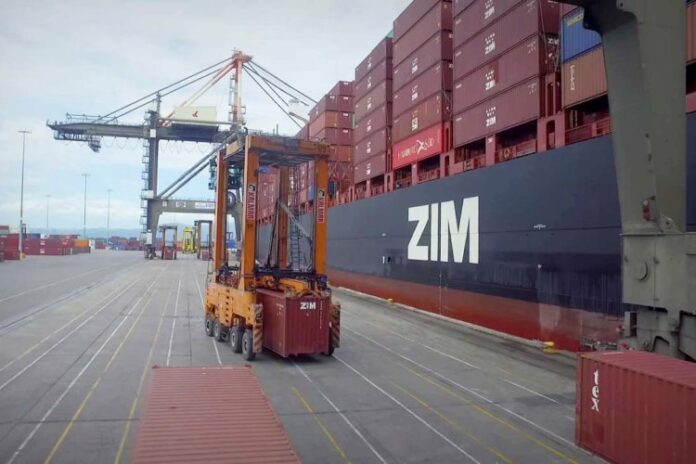
ZIM is a global player in ocean freight shipping, with substantial market share in China’s main export trades. ZIM has been targeting the e commerce sector by making strategic investments in companies that aim to streamline B2B & B2C cross-border logistics. One of ZIM’s investments, initially made back in 2019, was in the Israeli logistics startup Ladingo, which developed a groundbreaking technology that combines optimization of cargo and routes, while enabling taxes automation as well as E2E shipment management, for small and medium importers eager to focus on increasing revenue and decreasing shipping costs.

As part of the collaboration between Alibaba.com and ZIM, Ladingo’s innovative logistics technology will simplify the shipping process while powering ZIM’s full door-2-door service through cloud software.

Ladingo’s system can be used by both sellers and buyers. Its shipping rate includes taxes and duties, and all customs clearance is taken care of by Ladingo and is seamless to users. All parties agree that it’s “the full DDP solution”. Ladingo technology will enable Alibaba.com’s sellers and buyers to take full advantage of its optimization and consolidation capabilities, thus ensuring that they enjoy highly competitive rates.  The full DDP solution is already operational.

Eli Glickman, ZIM President and CEO, said:

“ZIM leads the way in the introduction of advanced new technologies within the shipping industry. This is especially important nowadays, since COVID-19 changed the way we live and work almost overnight. Aligned with our vision, ‘Innovative Shipping Dedicated to You’, our unique tailor-made solution powered by ZIM Logistics China and Ladingo will enable Alibaba.com to stay ahead of the curve”.

Ladingo CEO Hagar Valiano Rips says:

“B2B cross-border e-commerce should be as easy as classic B2C. When one wants to make an order of 2 pallets or even a container, there is no reason why the shipping or shopping experience should be any different.” 

$1.6 million funding for 11 new projects to drive maritime innovation

0

Mr Chee Hong Tat, Senior Minister of State for Transport and Foreign Affairs at the Smart Port Challenge 2020 Finals, said:

“As the world’s busiest transhipment hub, Singapore must embrace technologies to ensure operations remain efficient. We believe that solutions that work in our busy waters are likely to work in other parts of the world. Hence, we proactively partner the industry and provide an environment that is needed to grow an innovative maritime ecosystem.”

Five of these projects will address operational resilience and productivity needs. Scheduled to be completed by the third quarter of 2021, these projects will help transform the way operations are carried out in a post-COVID new normal. The projects will also strengthen the resilience in the way these operations carried out. 

Another six projects will look at using additive manufacturing for Singapore to become a hub for just-in-time provision of marine parts. The consortiums behind these projects aim to deepen additive manufacturing capabilities in Singapore and trial the use of at least 26 3D-printed parts onboard Singapore-registered vessels to test the viability of these parts. These projects are expected to be completed by the first quarter of 2022 and bring about greater efficiency and cost savings for the industry.

MPA had launched joint calls for proposals in these two areas with the Singapore Shipping Association (SSA) and National Additive Manufacturing Innovation Cluster (NAMIC) earlier this year and received 40 proposals from the maritime industry. Proposals were evaluated based on their technological innovation and differentiation, impact to the industry, and strength of capability development. The selected projects have been co-funded by MPA’s Maritime Innovation and Technology (MINT) Fund, which aims to support maritime companies to digitalise and trial technologies that can help to develop Singapore as a centre of excellence for maritime R&D and technology solutions.

Mr Michael Phoon, SSA Executive Director said:

“The varied JIP projects by SSA members’ reflect the increasing focus on digitalisation and sustainability to meet long-term business competitiveness. We are very encouraged that from identifying some 100 ship parts in Phase 1, we will be trialling the use of at least 26 3D printed parts onboard Singapore-registered vessels in Phase 2. We look forward to the wider adoption and acceptance of such transformation technologies by the global maritime community.”

Dr Ho Chaw Sing, NAMIC Managing Director said:

“The MPA-NAMIC-SSA Joint Industry Programme has provided a platform for multiple industry cluster teams – comprising of 3D printing service providers, public-sector research performers, classification societies, and major ship companies – to accelerate the deployment of certified and field-trialled 3D printed maritime parts. This accelerated approach deepens the industry engagement, harnessing the collective resources and innovative capabilities to develop Singapore into a global AM hub for the maritime industry, cementing Singapore’s position as a world-class global maritime centre and hub port. Together with our partners, NAMIC will continue to scale efforts in pull-through from research into business outcomes for value capture through the adoption of additive manufacturing technology and solutions.”