-8.8 C
New York
Home Blog Page 738

StratumFive signs up as a new Inmarsat Fleet Data application provider

0

UK-based StratumFive, a leading maritime tech company, and Inmarsat, the world leader in global, mobile satellite communications, have signed an agreement for StratumFive to join the fast-growing group of Certified Application Providers connecting with Inmarsat’s Fleet Data service.

Fleet Data collects data from onboard sensors, pre-processes that data, and uploads it to a central cloud-based database, equipped with a dashboard and an Application Process Interface (API). StratumFive will use the Fleet Data API to eliminate the problem of connecting shipboard data to cutting edge applications such as StratumFive’s voyage intelligence platform, Podium.

Podium moves data interpretation forward by connecting data sources or third party applications and integrating them within its unique timeline architecture. Users can quickly visualise correlated data streams in an agile dashboard environment, transforming operational monitoring and decision-making. These benefits can only be achieved with first-class data inputs, so the addition of Fleet Data is a major step forward and allows the StratumFive and Inmarsat-serviced fleets to connect to Podium.

Within the Podium environment, billions of data points received through Fleet Data can be assembled by the user to deliver optimum voyage context and insight. With past vessel performance, near real-time visibility of present performance, and predictive performance, opportunities to save fuel, cut emissions, and lower operational costs are made easier.

Ross Martin, StratumFive COO, said:

“The addition of Fleet Data to the growing list of Podium integrations provides our clients a complete end-to-end integrated IoT experience, without the prohibitive costs of alternative solutions. Accessing timely sensor data ashore has been historically challenging and expensive for many ship owners and operators, typically requiring bespoke onboard data networks with connections to hundreds of individual data points. Often this has involved custom interfaces to legacy equipment or delayed and unreliable manual inputs.

“When combined with Podium, the Fleet Data solution addresses these problems, enabling all clients to quickly visualise correlated data streams, fleet-wide, in an agile shore-side dashboard environment. This is the solution that our industry needs in order to reap the promised cost savings and other operational efficiencies of digitalisation.”

Marco Cristoforo Camporeale, Head of Digital Solutions, Inmarsat Maritime, said:

“We are delighted to be working with StratumFive, and as a trusted and respected company in the shipping community, Inmarsat and StratumFive will combine connectivity and mission-critical data to harness the true potential of data for vessel optimisation and trans-form the future of shipping.”
Tiller Technical and Helm Operations launch expansion in Australian ports

0

Canadian software company Helm Operations (Victoria, BC) and Western Australian marine consultant Tiller Technical (Perth, WA) have signed a new partnership agreement to help vessel operators digitalize their operations.

As part of the partnership, Tiller Technical will use its industry expertise and local knowledge to help companies implement and use Helm CONNECT—Helm’s industry-leading harbor services and fleet management software—to modernize, digitalize, and streamline their operations.

Since launching in 2016, Helm CONNECT has become the world’s fastest growing maritime software platform, now used by more than 220 companies and 4000 vessels worldwide to help manage fleet operations, including vessel maintenance, regulatory compliance, personnel management, and vessel scheduling and billing.

With Helm CONNECT already in use by many of Australia’s largest vessel operators, the partnership between Tiller Technical and Helm Operations will focus primarily on helping small and medium-sized operators take advantage of software to streamline their operations. This service is much needed as Australian operators, like their counterparts around the world, look to move to paperless systems.

Tiller Technical Director, Drew Pirrit, says:

“While Australia’s largest operators often have full teams dedicated to implementing new systems and improving operations, many smaller operators have traditionally lacked the resources to implement new technology to the same level. After working closely with Helm for two years now, we’ve found that Helm CONNECT makes it possible for smaller operators to quickly and effectively implement software systems for maintenance, compliance, and complete harbor operations, bridging the gap to many larger operators.”

As an active marine engineer with over 15 years of engineering and technical management experience, Drew has worked extensively with mining and offshore support fleets in the Pilbara region, helping companies set up, manage, and support new operations by focusing on fleet reliability and supply chain management. Built in part on that experience, Perth-based Tiller Technical has made its name in Australia as an engineering and operations support company offering safety system and maintenance plans for commercial vessels in line with Australian Maritime Safety Authority (AMSA) and Maritime New Zealand (MNZ) requirements. That experience was also a major draw for Helm as it looks to expand its operations to better support operators in Australia and New Zealand.

Nolan Barclay, CEO of Helm Operations, says:

“Over the past two years, Tiller has been an essential partner for us in helping optimize the maintenance and compliance features of Helm CONNECT, especially from the point of implementation and crew adoption. Working with Tiller, we’ve seen that it’s often the small and medium operators who can benefit the most from implementing electronic systems but making software systems work well for both management and crew is a challenge that often requires on-site training and support to achieve. This partnership will make it possible for us to better support operators in Australia and New Zealand and give them the close support they need to be successful moving to newer, more modern systems.”

This partnership agreement is just the start, says Drew, as Tiller looks to bring more technology to the industry in the year to come:

“We see Helm CONNECT as a key platform for companies looking to optimize operations. It’s effective and powerful on its own but, through integrations with other new technology, it can also open doors for optimizing entire operations. From integrating with telematics and onboard equipment to improve reliability, to digitalizing the entire harbor towage process from agent and order through billing, there is a tremendous opportunity to really drive innovation throughout the maritime sector here in Australia, as well as in New Zealand, and we’re excited to bring that to the table.”

First discovery in 120 years: a new coral reef in Australia’s Great Barrier Reef

0

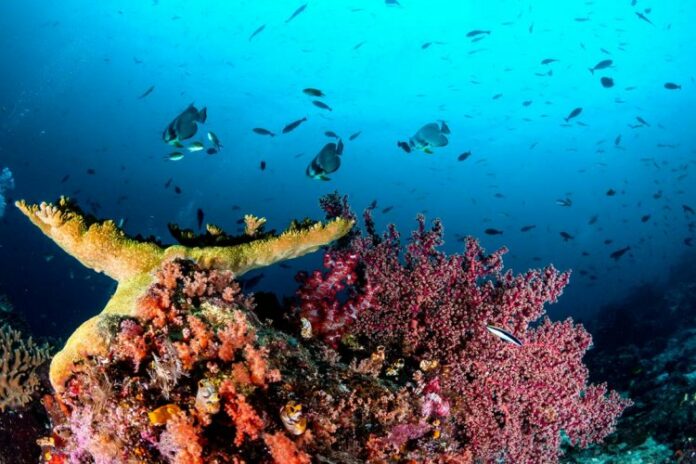
A researcher from the University of Granada (UGR) is co-leading a geological and biological research campaign that is being carried out at Australia’s Great Barrier Reef (GBR)—the largest coral reef in the world. Geologists, biologists, and marine ecologists from various Australian universities and research centers are participating in the campaign.

The research vessel Falkor has been the focal point of this expedition, starting out on September 30 and continuing until November 17. The work is being funded by the Schmidt Ocean Institute, a not-for-profit organization devoted to advancing and disseminating knowledge about the world’s oceans.

One team member is Ángel Puga Bernabéu, a researcher at the UGR’s Department of Stratigraphy and Paleontology, said:

“On October 21, the Falkor discovered a new ‘detached’ reef, measuring 500 meters high off the seafloor. Its shallowest part, measuring 300 meters long and 50 wide, is located at a depth of about 40 meters.” 

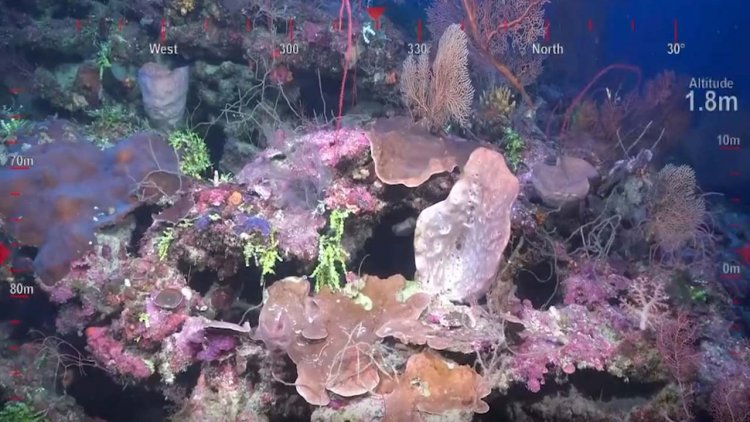
This new reef is the first to be discovered in the GBR in 120 years. Furthermore, the images taken by the remotely-operated underwater vehicle (ROUV) show a tremendous diversity of benthic organisms (that is, those living on the seabed) and fish on this new reef.

The primary objective of the research campaign is to study the deep marine environment along Cape York Peninsula, located at the northernmost tip of the GBR—one of the most remote and isolated regions of Australia. Such environments in this region constitute one of the great mysteries for the scientific community, as the only information available to date has been gathered from disparate data obtained by other research vessels during their passage through these waters (just five in the last 12 years). For this reason, the area is considered a “frontier” of scientific knowledge.

To shed light on the many unknowns that remain, the Falkor is carrying out extensive mapping of the seafloor using a high-resolution multibeam sonar. 

Puga explains:

“At this stage in the campaign, we have already made some fascinating discoveries that point to several years of work ahead for scientists.” 

For example, researchers have successfully mapped the entire SwainSlide underwater landslide. This large displacement consists of reefs and sediments that fell away from the continental shelf and slid down the margin, about 250 km from the coast.

Understanding what triggered this major underwater shift is of great scientific interest. Crucially, catastrophic events of this type can generate tsunamis that affect the entire coast in a matter of a few hours, as well as damaging underwater infrastructures such as communication cables or pipelines. 

The researchers have also observed rich marine ecosystems at the edge of the continental shelf at unexpected depths of over 100 m and in deep marine environments on the walls and at the foot of underwater canyons. This shows that the tremendous ecological richness and diversity of the GBR are not restricted solely to the better-known shallow waters.

ORBCOMM launches first commercial LoRa WAN™ on-board vessel IoT solution

0

ORBCOMM Inc., a global provider of Internet of Things (IoT) solutions, has expanded its industry-leading portfolio of on-board vessel IoT systems to include LoRa WAN™ (LoRa) technology.

Through a partnership with Net Feasa, a global IoT service provider based in Dingle, Ireland and Sunnyvale, CA, ORBCOMM has deployed the first commercially available solution using LoRa technology to monitor containers on board vessels for a large global shipping line.

The solution combines VesselConnect, ORBCOMM’s industry-leading refrigerated container management application with Net Feasa’s EvenKeelTM IoT device connectivity, management and services platform. Refrigerated containers communicate in real time through LoRa gateways mounted in strategic locations on the vessel. Key container data, including temperature, humidity and alarms, is collected in EvenKeel and updated in ORBCOMM’s VesselConnect. 

The VesselConnect application communicates over satellite back to ORBCOMM’s land-based platform, enabling customers to see the location of all vessels as well the status of each container on board from a single, comprehensive command and control center. ORBCOMM’s fully integrated system supports two-way commands, allowing users on the vessel or at land-based operations to change the container’s temperature set points and other parameters. ORBCOMM’s on-board vessel IoT solution is designed primarily to eliminate the “black hole” of refrigerated container visibility at sea. In addition, ORBCOMM’s solution helps customers enhance crew efficiency and safety by eliminating the need for manual inspections of the containers and improve operational efficiency through remote pre-trip inspections along with actionable data on maintenance and repair status.

ORBCOMM’s new LoRa-based system is compliant with the Digital Container Shipping Association’s (DCSA) new IoT connectivity standards created to make the shipping container supply chain more transparent, reliable and secure. As one of the DCSA-approved technologies for on-vessel operations, LoRa offers an alternative to cellular and other communication technologies in use today. ORBCOMM’s VesselConnect is unique in offering multiple choices for on-board vessel network connectivity so that customers can utilize the technology that best suits their use case.

Christian Allred, ORBCOMM’s Senior Vice President and General Manager of Global Sales, said:

“ORBCOMM’s new LoRa-based on-board vessel IoT solution complements our best-in-class portfolio of refrigerated container management solutions and further demonstrates our commitment to continued innovation supporting the global supply chain. Together with Net Feasa, we’re helping shipping companies drive digital transformation, while achieving measurable savings.”

Mike Fitzgerald, Net Feasa’s Chairman, said:

“As global concerns for cargo quality and security as well as traceability increase, the real-time tracking and monitoring of refrigerated containers is becoming the industry norm. We’re pleased to partner with ORBCOMM to bring our expertise in global IoT networks together with their leadership in innovation and compliance with IoT industry standards to the global container marketplace.”

BMT’s new solution can enhance autonomous operations planning using ADMIRALTY data

0

The UK Hydrographic Office (UKHO) has announced leading international design, engineering, science and risk management consultancy BMT as the winner of the first ADMIRALTY Marine Innovation Programme challenge.

Launched earlier this year in collaboration with RE_SET, the programme aims to help start-ups and innovators develop new solutions that support safe, secure and thriving oceans. The programme’s first innovation challenge focused on ‘Unlocking Autonomous Navigation’ and tasked participants with identifying how marine geospatial data can support the safe navigation of commercial autonomous ships.

For this challenge BMT created a new navigation system, which combines their REMBRANDT® and TUFLOW® simulation technologies to enhance autonomous operations planning and real-time navigation safety in busy waterways and ports.

The system successfully simulated the navigation of a 140m part-autonomous ferry in Plymouth port using multiple ADMIRALTY data sets, including bathymetry, tidal streams and heights, seabed composition and ship routing. This new application by BMT can also be linked to other external and environmental data sources, including satellite and AIS receivers, to ensure safety and efficiency.

As the challenge winner, BMT will collaborate with the UKHO, utilising its marine geospatial data and expertise, to develop an alpha product for the autonomous shipping sector. In addition, as part of this challenge, BMT has won a seat at the IoT Tribe Space Endeavour Accelerator to further develop technologies using satellite-derived data.

Sarah Kenny OBE, Chief Executive of BMT, commented:

“We strongly believe in the development and transition to a fully autonomous world and we are particularly proud to put our experience and knowledge towards a challenging navigation project that could become a catalytic factor for industrial innovation in this area and beyond. Thanks to these initiatives, introduced for the very first time this year by the UKHO, BMT will strengthen its technological leadership in a very competitive sector.”

Dr Phil Thompson, Director of Simulation and Training Products at BMT, commented:

“Receiving this international award from the highly-esteemed UKHO is indeed an honour. BMT continues to further develop its technological expertise in the field of autonomous vessels navigation with the goal to create a centre of excellence in the UK for one of the strongest growing maritime sectors.”

Mark Casey, Head of Research, Design and Innovation at the UKHO, said:

“We’re delighted to announce BMT as the winner of our Autonomous Navigation Challenge. This is a great achievement for BMT and an exciting milestone in the UKHO’s journey to support safe, secure and thriving oceans.

“The ADMIRALTY Marine Innovation Programme was established to inspire innovative solutions to the threats faced by our oceans, as well as the opportunities. Our challenges aim to support the growth of the Blue Economy and unlock the power of marine geospatial data across a range of sectors. The team at BMT share the same goal and we’re looking forward to continuing our work with them.”

Wärtsilä 14 EU Stage V compliant engines selected for Swiss Inland ferries

0

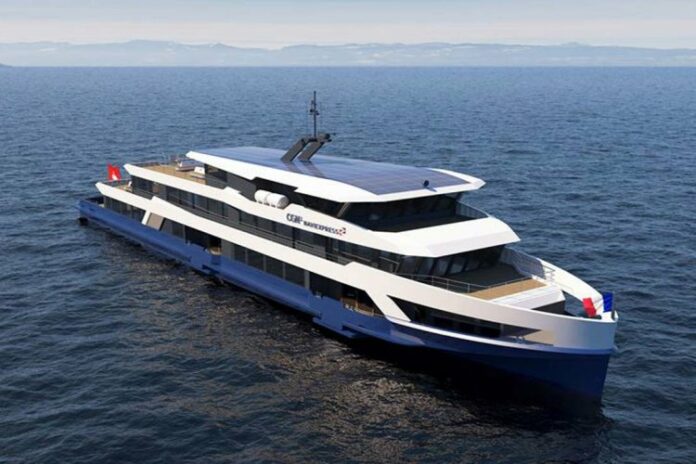
The technology group Wärtsilä has been selected to supply the engines and related emissions control after-treatment systems for two new passenger ferries being built for operation between Switzerland and France across Lake Geneva. 

The ferries are being built at the Shiptec AG yard in Switzerland for General Navigation Company (CGN), a Swiss ferry operator based in Lausanne. The order with Wärtsilä was placed in September 2020.

The high-speed Wärtsilä 14 engines chosen for this project are compliant with the stringent EU Stage V emissions standard for inland waterway vessels, which came into force in the EU earlier this year. The 60 metres long, 700 passenger capacity vessels will feature advanced hybrid energy and propulsion systems, for which the Wärtsilä 14 is a perfect match. High efficiency and environmental compliance were key factors in the selection of this engine.

Johan Penninga, Account Manager, Wärtsilä Marine Power, says:

“Environmental sustainability was strongly emphasised in the specifications for this newbuild project. We are, therefore, extremely pleased and proud that the Wärtsilä 14 engine was selected to provide the power and reliability needed, while complying with the EU Stage V emissions standard.”

Martin Einsiedler, Head of naval architecture and engineering at Shiptec, says:

“Minimising the emissions from their operations is of great importance to CGN, and these new vessels are designed to operate cleanly and efficiently. The Wärtsilä engine was chosen with these criteria very much in mind.” 

The Wärtsilä equipment is scheduled for delivery beginning in summer 2021, and the first vessel is expected to commence commercial operations in December 2022. The second ferry will be delivered approximately one year later.

The Wärtsilä 14 is the most compact engine in its power range in the marine market, serving both propulsion and auxiliary genset applications. The engine is an integral element within Wärtsilä’s Smart Marine vision for the future of shipping, whereby optimal efficiency, safety, and environmental sustainability will be the key pillars in achieving and maintaining profitable operations for ship owners and operators around the world.

The Wärtsilä 14 high-speed engine is available in 12- and 16-cylinder configurations, having a power output between 749 and 1340 kWm in mechanical propulsion, and between 675 and 1155 kWe in auxiliary generating set and diesel-electric propulsion applications.

Gasum signs a new agreement with Equinor

0

The expansion is possible due to a new agreement with Equinor, with whom Gasum has been in successful co-operation since 2011. The aim is to deliver bunkers of liquefied natural gas (LNG) to Equinor.

Gasum is extending its geographical area from the Nordics to the Antwerp, Rotterdam and Amsterdam region also known as the ARA area. The company has signed a new agreement with their long-term partner Equinor on supplying them with LNG in the ARA area.

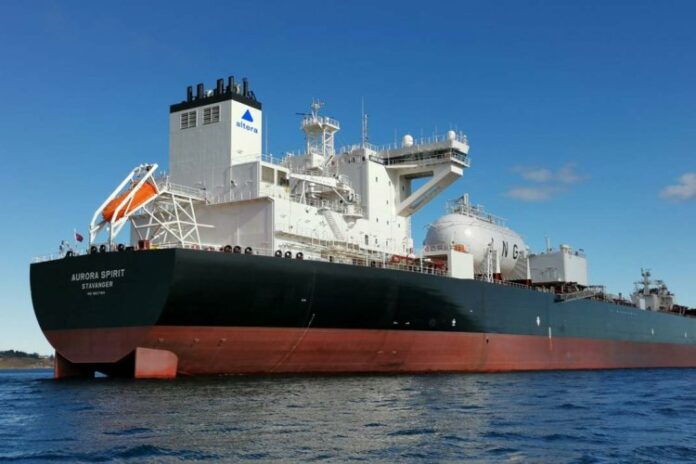
Equinor is a large international energy company, headquartered in Norway. Gasum and Equinor have been co-operating on various projects and LNG supply chain development for Equinor’s vessels since 2011. Lately Gasum has been bunkering Equinor’s oil tankers that are shipping crude oil from North Sea to Swedish and Baltic ports.

Gasum’s LNG Maritime Sales Director Jacob Granqvist says:

“We are very proud that Equinor chose Gasum as their partner in the ARA region. Equinor is one of the forerunners using LNG in their operations, and they were our first LNG customer in the maritime segment. This new agreement marks yet another milestone in our co-operation and in Gasum’s growth.”

The bunkering for Equinor will mainly be performed by Gasum’s bunker vessels Coralius and Kairos. Co-operation with Equinor in the ARA region extends Gasum’s existing business area with the ability to serve also other customers in the region. This development promotes Gasum’s objective to provide solutions for decarbonizing the shipping industry.

NextDecade selects Great Lakes Dredge to complete ship channel improvements

0

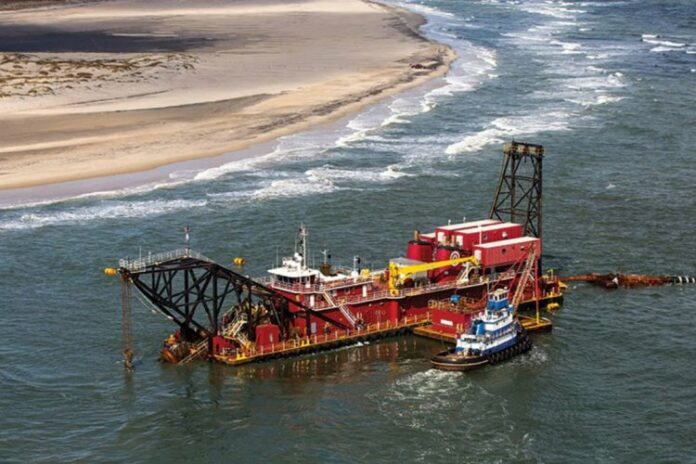
NextDecade Corporation has completed a competitive bid and contracting process and has selected Great Lakes Dredge & Dock Corporation to perform essential improvements to the Brownsville Ship Channel.

These improvements, which include deepening the Channel, will enhance commercial navigation into and out of the Port of Brownsville, ensuring the safe and reliable access of LNG carriers to NextDecade’s Rio Grande LNG facility and optimizing the ability of shallower draft traffic to pass LNG carriers in either direction in accordance with U.S. Coast Guard guidelines. NextDecade, in coordination with the Port of Brownsville, has completed the permitting process for the project activities within the scope of the Dredge and Disposal Construction Agreement (DDCA) announced today.

The DDCA is consistent with NextDecade’s overall Rio Grande LNG construction budget and timeline and features provisions that enable efficient sequencing and coordination with Rio Grande LNG project development activities pursuant to engineering, procurement, and construction contracts executed with Bechtel Oil, Gas & Chemicals in May 2019.

Matt Schatzman, NextDecade’s Chairman and Chief Executive Officer, said:

“We have finalized our contract for channel improvements with Great Lakes Dredge & Dock, the nation’s largest provider of marine dredging services. These improvements, to be completed without the use of public funds, will benefit existing Port tenants and pave the way for future development of the Port of Brownsville. As we continue to advance our development activities, we are pleased to demonstrate our continued commitment to the Port, to Cameron County, and to the entire Rio Grande Valley.”

Lasse Petterson, Great Lakes’ President and Chief Executive Officer, said:

“Great Lakes looks forward to partnering with NextDecade on this important project. Great Lakes’ extensive dredging experience, proven track record for successful completion of similar projects, and emphasis on safe work performance uniquely qualifies Great Lakes for this work. We are encouraged by the project’s commitment to the Port of Brownsville and we look forward to supporting this effort during our dredging program. This will be the largest project ever undertaken by Great Lakes and we anticipate adding this project to backlog once a Notice to Proceed is received.”

DNV GL launches industry’s first recommended practice for digital twins

0

DNV GL, in collaboration with TechnipFMC, has published the oil and gas industry’s first recommended practice (RP) on how to build and quality-assure digital twins. This sets a benchmark for the sector’s varying approaches to building and operating the technology.

Developed in collaboration with TechnipFMC, DNVGL-RP-A204: Qualification and assurance of digital twins sets a benchmark for the sector’s varying approaches to building and operating the technology. It guides industry professionals through:

  • assessing whether a digital twin will deliver to stakeholders’ expectations from the inception of a project 
  • establishing confidence in the data and computational models that a digital twin runs on 
  • evaluating an organization’s readiness to work with and evolve alongside a digital twin.  

Seventy-five percent of organizations implementing Internet of Things (IoT) already use digital twins or plan to within a year, according to Gartner. However, there has previously been no commonly agreed methodology for developing and operating the technology among global oil and gas operators and their supply chains.

DNV GL’s RP provides valuable guidance for digital twin developers, introduces a contractual reference between suppliers and users, and acts as a framework for verification and validation of the technology. It builds upon the principles of DNV GL’s Recommended Practices for the qualification of novel hardware technology and assurance of data and data-driven models.

Liv A. Hovem, CEO, DNV GL – Oil & Gas, said:

“Physical oil and gas assets are built to perform to the highest standards and undergo rigorous assurance processes throughout their life. However, there has been no requirement for their digital counterparts to go through the same procedures. Our new recommended practice seeks to remedy this issue as the technology begins a path of significant scaling across the sector. It is time to prove that twins can be trusted, and that the investments made in them give the right return.” 

The methodology behind DNV GL’s new RP has been piloted on 10 projects with companies including Aker BP, Kongsberg Digital and NOV Offshore Cranes. It has also been through an extensive external hearing process involving the industry at large. In addition, TechnipFMC’s deep domain knowledge and expertise in digital technologies and oil and gas infrastructures has made an essential contribution to jointly developing the RP.

The framework provides clarity on the definition of a digital twin; required data quality and algorithm performance; and requirements on the interaction between the digital twin and the operating system. It addresses three distinct parts: the physical asset, the virtual representation, and the connection between the two. This connection amounts to the data streams that flow between the physical asset to the digital twin and information that is available from the digital twin to the asset and the operator for decision making.

Kjell Eriksson, VP, Digital Partnering, DNV GL – Oil & Gas, said:

“Some digital twins are simple, covering a single component. Others are highly complex, spanning entire facilities. All of them must be trusted because millions of decisions about the design, construction and operation of hundreds of thousands of real-world assets will be taken based on them.”

Eriksson added:

“Backed by our new recommended practice, DNV GL’s oil and gas and data science experts are now supporting digital twin adoption from inception, through to operation and evolution alongside a twin’s physical counterpart. Our methodology considers the digital twin as a collection of elements, with various levels of complexity, each with their own distinct role and function. I am pleased to see DNV GL and TechnipFMC successfully set a new benchmark for oil and gas operators, supply chain partners and regulators.” 

IMO Environment Committee approves amendments to cut ship emissions

0

Draft new mandatory regulations  to cut the carbon intensity of existing ships have been approved by the International Maritime Organization (IMO) Marine Environment Protection Committee (MEPC).  

This builds on current mandatory energy efficiency requirements to further reduce greenhouse gas emissions from shipping.  The MEPC also agreed the  terms of reference for assessing the possible impacts on States, paying particular attention to the needs of developing countries, in particular Small Island Developing States (SIDS) and least developed countries (LDCs).  
 
The draft amendments to the MARPOL convention would require ships to combine a technical and an operational approach to reduce their carbon intensity. This is in line with the ambition of the Initial IMO GHG Strategy, which aims to reduce carbon intensity of international shipping by 40% by 2030, compared to 2008. The amendments were developed by the seventh session of the Intersessional Working Group on Reduction of GHG Emissions from Ships (ISWG-GHG 7), held as a remote meeting 19-23 October 2020.   

The draft amendments will now be put forward for formal adoption at MEPC 76 session, to be held during 2021.   

IMO Secretary-General Kitack Lim, said:

“Considerable further work on the implementation of the measures is still ahead of us, but I am confident that, the IMO spirit of cooperation, shown during the past years, will enable swift progress with the development of technical guidelines and a Carbon Intensity Code as well as the essential further work on the comprehensive assessment of impacts of the measures on developing countries, SIDs and LDCs.” 

The progress in developing the short-term measures follows the timeline as set out in the initial IMO GHG strategy. The strategy proposed that short-term measures should be those measures finalized and agreed by the Committee between 2018 and 2023.