-6.8 C
New York
Home Blog Page 737

CMA CGM to launch the TURKEY MED EXPRESS 2

0

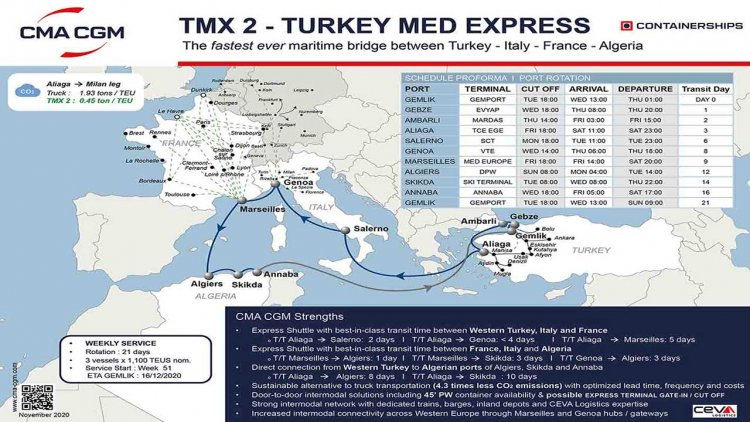
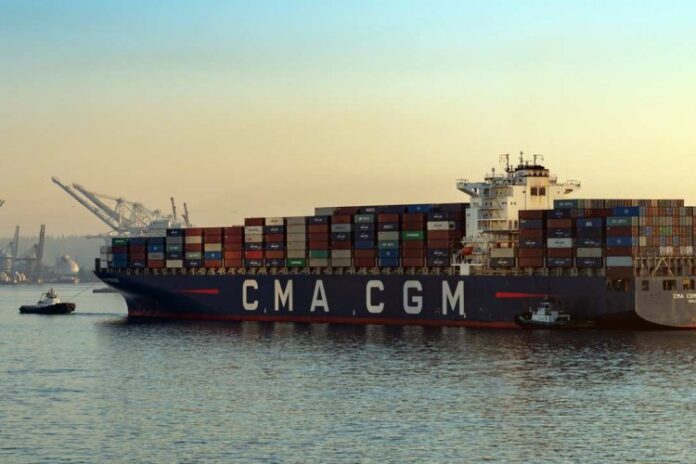
CMA CGM is pleased to announce the implementation of TMX 2 – TURKEY MED EXPRESS 2, the fastest ever maritime bridge between Turkey, Italy, France & Algeria, a new Short Sea Med service starting December 16th, 2020 with m/v “OPS HAMBURG” ex Gemlik.

TMX 2 features are the following:

  • This TURKEY > ITALY / FRANCE Express service will provide new gateway possibilities to route your cargo destined to other Western Europe locations (Italy, Switzerland, Germany, Belgium, Netherlands).
  • This sustainable option aiming at optimizing your transportation lead-time, your frequency and your costs is a consistent alternative to traditional Truck flows from Turkey to Western Europe.
  • Our strong intermodal network combined with shortened vessels port stay (less than 12 hours), Express Terminal Gate in / Cut off and a special container equipment fleet of 45’ Pallet Wide will foster an optimized supply chain dynamic.
  • Finally, this Pendulum Service will provide the fastest transit times from TURKEY / ITALY / FRANCE to ALGERIA

Vikand selected for medical management services by Marella Cruises

0

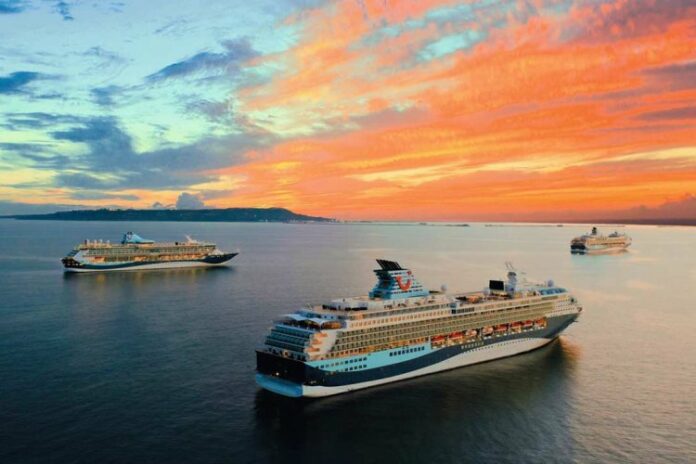
Vikand Solutions, LLC—a global maritime medical operations and public health solutions provider—has been appointed by Marella Cruises—a brand of the TUI Group—to manage its medical operations onboard its fleet of cruise ships.

Peter Hult, Vikand CEO, says:

“Vikand will manage all aspects of onboard medical care and support Marella’s regulatory compliance to ensure the safe resumption of cruising. In addition to ensuring a best-in-class medical operation onboard, Vikand is working with all regulatory organizations, governmental agencies and CLIA to ensure that Marella is in total compliance when the UK is opening cruising again.”

Vikand’s services encompass all aspects of healthcare at sea including medical staff, 24/7 dedicated shoreside medical support, policies and procedure, regulatory compliance, case and claims management, medical escorts, formulary and supplies, biomedical equipment management, public health consulting and proven strategies for proactive health management, including mental health support.

Hult comments:

“Together with our approach to COVID-19 identification, mitigation, and prevention—which is fast moving, fluid and profoundly serious—we provide the breadth of healthcare solutions that need to become available at increasing speeds. It is our goal to offer Marella operational peace of mind.”

Scientists organize to tackle crisis of coral bleaching

0

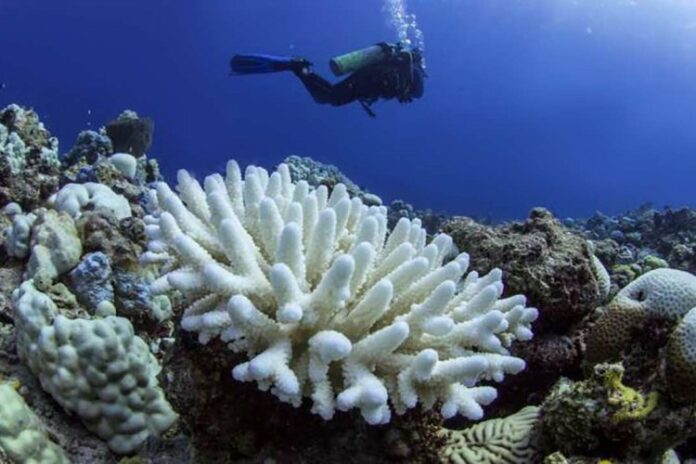
Coral bleaching is a significant problem for the world’s ocean ecosystems: When coral becomes bleached, it loses the algae that live inside it, turning it white.

“Coral bleaching is a major crisis and we have to find a way to move the science forward faster,” said Andréa Grottoli, a professor of earth sciences at The Ohio State University and lead author of a paper on guidelines published TBD in the journal Ecological Applications.

The common framework covers a broad range of variables that scientists generally monitor in their experiments, including temperature, water flow, light and others. It does not dictate what levels of each should be present during an experiment into the causes of coral bleaching; rather, it offers a common framework for increasing comparability of reported variables.

Grottoli, who also is director of the consortium that developed the common framework, said:

“Our goal was to create a structure that would allow researchers to anchor their studies, so we would have a common language and common reference points for comparing among studies.” 

Coral can survive a bleaching but being bleached puts coral at higher risk for disease and death. And that can be catastrophic: Coral protects coastlines from erosion, offers a boost to tourism in coastal regions, and is an essential habitat to more than 25% of the world’s marine species.

Bleaching events have been happening with greater frequency and in greater numbers as the world’s atmosphere—and oceans—have warmed because of climate change.

Grottoli said:

“Reefs are in crisis, and as scientists, we have a responsibility to do our jobs as quickly, cost-effectively, professionally and as well as we can. The proposed common framework is one mechanism for enhancing that.”

The consortium leading this effort is the Coral Bleaching Research Coordination Network, an international group of coral researchers. Twenty-seven scientists from the network, representing 21 institutions around the world, worked together as part of a workshop at Ohio State in May 2019 to develop the common framework.

The goal, Grottoli said, is to allow scientists to compare their work, make the most of the coral samples they collect, and find ways to create a common framework for coral experimentation.

Their recommendations include guidelines for experiments that help scientists understand what happens when coral is exposed to changes in light or temperature over a short period of time, a moderate period, and long periods. The guidelines include a compendium of the most common methods used for recording and reporting physical and biological parameters in a coral bleaching experiment.

That such a framework hasn’t already been established is not surprising: The scientific field that seeks to understand the causes of and solutions for coral bleaching is relatively young. The first reported bleaching occurred in 1971 in Hawaii; the first wide-spread bleaching event was reported in Panama and was connected with the 1982-83 El Niño.

But experiments to understand coral bleaching didn’t really start in earnest until the 1990s—and a companion paper by many of the same authors found that two-thirds of the scientific papers about coral bleaching have been published in the last 10 years.

Researchers are still trying to understand why some coral species seem to be more vulnerable to bleaching than others, Grottoli said, and setting up experiments with consistency will help the science move forward more quickly and economically.

Grottoli said:

“Adopting a common framework for experiments around coral bleaching would make us more efficient as a discipline. We’d be able to better collaborate, and to build on one another’s work more easily. It would help us progress in our understanding of coral bleaching—and because of climate change and the vulnerability of the coral, we need to progress more quickly.”

GCT Vanterm implements Navis N4 as part of $160M modernization project

0

Navis, a part of Cargotec Corporation, and the provider of operational technologies and services that unlock greater performance and efficiency for leading organizations throughout the global shipping industry, announced today that Global Container Terminals (GCT) Vanterm has gone live with Navis N4 via remote assistance.

Following the announcement of its New York location going live with Navis earlier this year, GCT continued to invest in Navis’ innovative technology by selecting them for the TOS at its Vanterm location, which also marked the final GCT terminal to go-live on N4 in North America.

Located in the inner harbor, GCT Vanterm operates in naturally occurring deep water and is considered the most productive terminal in the Port of Vancouver. With strategic plans to modernize operations and increase capacity at the terminal by 25% in the near-term, GCT selected N4 for its Vanterm location to help achieve its business goals with a more contemporary TOS. The N4 go-live was part of GCT Vanterm’s $160 million modernization and densification project to implement more technologically advanced solutions, increase capacity within the terminal’s existing footprint, create jobs in the region and reduce greenhouse gas emissions at its location. GCT Vanterm was also the final of four GCT operated terminals in North America to implement N4 on-site, which will help standardize operations and IT infrastructure across the continent for better service to its customers.

Erik Ward, CIO at GCT, said:

“GCT Vanterm is known for its industry-leading productivity and this important upgrade supports our commitment to maintaining that advantage as we digitize and grow the terminal. With GCT Vanterm’s upgrade to Navis N4, we are ensuring that our customers have access to best-in-class service, consistency and visibility across all four terminals GCT operates. We are proud of our ongoing investment in the best technology, people, and processes to enhance fluidity, transparency, safety, and service.”

Kim Kuesel, VP & General Manager, Americas at Navis, said:

“At Navis, we know now more than ever, providing customers with top service and innovative offerings is essential to maintain and grow any terminal business. By working with our customers to upgrade their systems to a more modern TOS via remote support, we have helped countless customers forge ahead with business plans and reach their operational goals this year. We are glad to have built an extensive partnership with GCT and look forward to helping its terminals run at their peak performance together using N4 TOS.”

Damen completes a conversion project for Eidsvaag

0

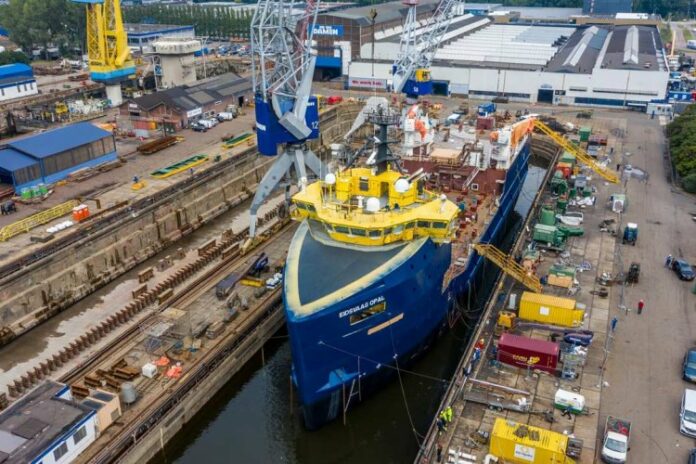
Damen Shipyards Group has recently completed a conversion project for Norwegian company Eidsvaag. Following a tender procedure, Damen Shiprepair Amsterdam (DSAm) converted a former platform supply vessel (PSV) into a fish feed carrier, named Eidsvaag Opal, in a project involving a series of major works.

Amongst other things, Damen was required to extend the vessel by 5 metres. This involved the yard cutting the hull in two and inserting in new steel sections. Damen was also required to widen the beam of the vessel – using a series of side boxes – to give additional stability and cargo capacity.

Additionally the yard integrated 35 new silos and a big bag hold, enabling Eidsvaag Opal to transport up to 2,800 tonnes of fish feed. Damen also outfitted the vessel with five new cranes and a discharge system of conveyors, buckets, elevators and a discharge arm.

The project also required considerable electrical work, carried out by FMJ Marine Automation. The supplier removed some 480 cables – approximately 15 kilometres – from the old cargo systems alone. In total, the company pulled 51 kilometres of cable and connected 1,237 cables on the project.

DSAm secured the tender to carry out the conversion of Eidsvaag Opal due, amongst other things to its close proximity to Niron Staal – Damen’s specialist steel fabricator. Another factor in the award of tender was Damen’s previous conversion experience for the aquaculture sector and the fact that the company knew the vessel – having built the PSV back in 2013.

The project required considerable steel work, totalling 875 tonnes. In addition to the steel work required, the Eidsvaag Opal conversion was given an additional layer of complexity with the arrival of the coronavirus epidemic. This required the yard to cease work on the project for one week, in order to implement robust safety measure. Thanks to this, the project was able to continue with minimum danger to health. Despite the need to socially distance during work on the project, work continued at a good pace – taking in total 346 days.

In week 43, the Eidsvaag Opal underwent her first loading in order to test the new system. The test involved the vessel carrying 180 tonnes of feed in the silo and 55 tonnes in big bags. Loading went well, requiring only small adjustments to the loading equipment in the big bag room. The feed was unloaded at a fish farm close to Tromsø, at which point the capacity and quality was approved by the product owner. In week 44, a bigger load was transported for the second test – some 700 tonnes.

DSAm senior project manager Arjan de Vos explains:

“Naturally we were very concerned with the well-being of everyone working on the project and had to take the time to implement safety measures. This proved to be very effective and not only were we able to continue the work, but we did it in good time. I’m very pleased with the way that we have risen to the challenge presented by the pandemic as a team and been able to continue to safely serve our clients during this time.”

The vessel will operate in the Fjordfrende collaboration. This collaboration will be operated by Eidsvaag for Skretting and Cargill. Ordinarily, Skretting and Cargill are competitors in the fish feed market, but are collaborating in outbound logistics. The partnership is based on a number of horizontal logistics projects receiving funding from the EU Commission, aiming at increasing sustainability and efficiency in the aquaculture industry. As a result of Fjordfrende, the CO2 emissions of both companies will be reduced by one fifth, some 10-20 million kg CO2 per year.

Aker Solutions wins maintenance and modifications contract in Brazil from Equinor

0

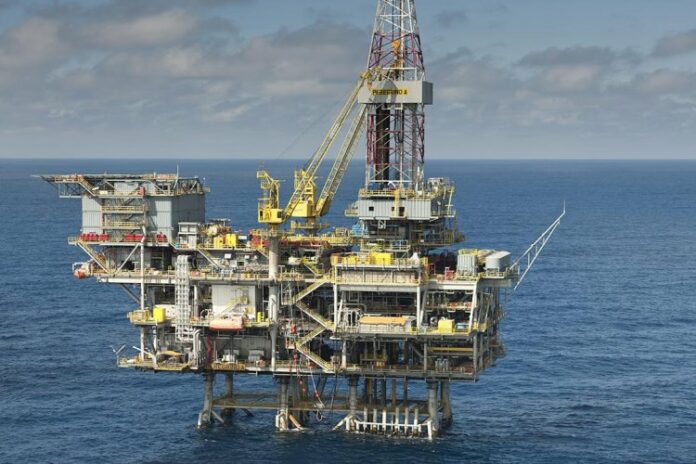
Aker Solutions won a framework agreement with Equinor to provide maintenance and modifications services at the Peregrino field, offshore Brazil.

The contract has a fixed period of four years and includes an option for a two-year extension.

The new contract means an expansion of the more than 40 years of cooperation in the North Sea.

Linda Litlekalsøy Aase, executive vice president, electrification, maintenance and modifications at Aker Solutions, said:

“We are excited to build on our strong relationship with Equinor. Together we will ensure safe and successful operations in Brazil, work to extend the lifetime of Equinor´s assets and find low-carbon solutions where possible.”

Brazil is a vital market where Aker Solutions sees opportunities for several types of deliveries. The company’s strategy is to use its subsea manufacturing facilities in the country as a hub to serve both local projects and international developments.

In recent years, Aker Solutions has won several subsea contracts from Equinor, where parts of the subsea equipment are manufactured in Brazil. This includes projects such as Johan Castberg, Troll and Breidablikk in Norway. 

Incat Crowther releases details of next ShadowCAT concept

0

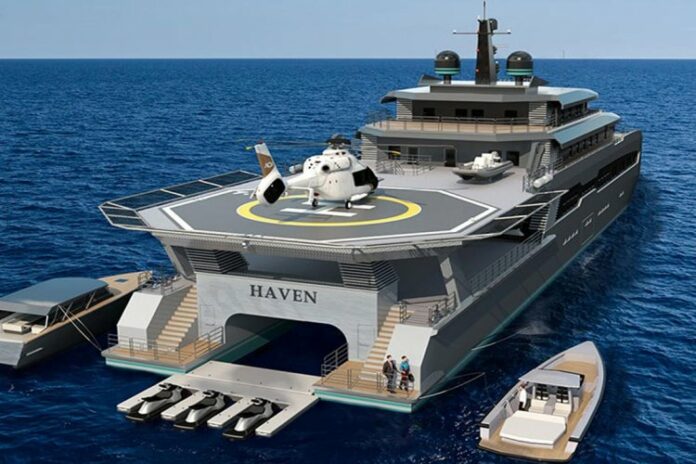
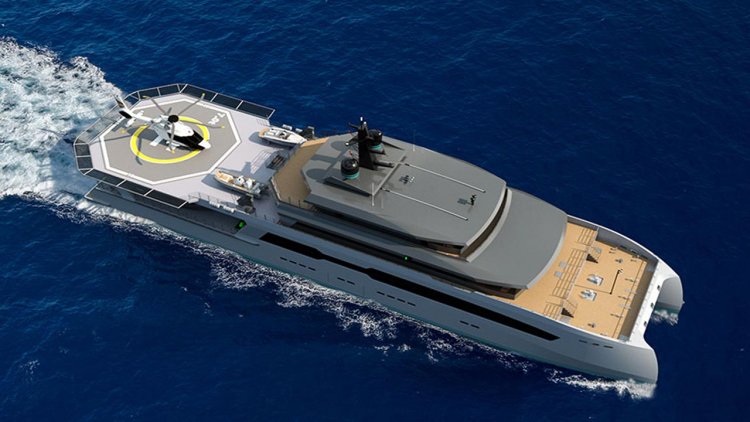
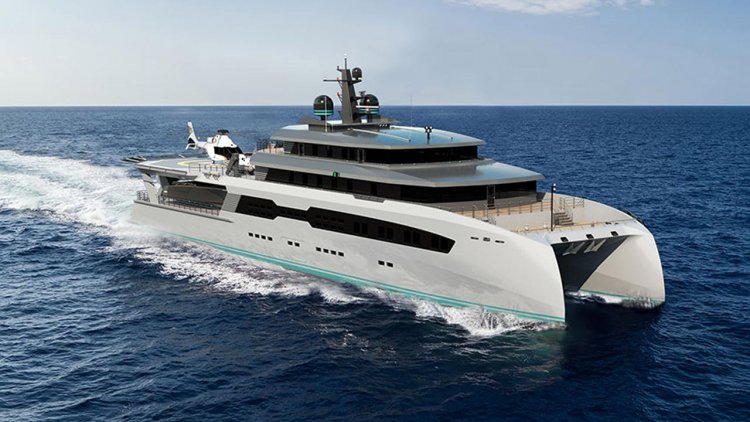
The team has unveiled a new COVID-19 inspired shadow vessel concept named Haven.

Designed by Incat Crowther, the ShadowCAT Haven is described as a “protective layer” to the owner’s mothership. By acting as a buffer between the main yacht and outside world, Haven allows owners and charterers to maintain COVID-secure social bubbles on board.

The yacht will act as a COVID-19 testing facility and quarantine space before allowing guests and crew to proceed onto the mothership.

Key features include a hospital and laboratory, allowing the monitoring of all crew on board Haven and the mothership. This will ensure the owner’s crew only come into contact with tested Haven crew. All new crew and guests must pass through Haven for testing before boarding the mothership.

As a result, the mothership will have no direct contact with the shore. All stores and transfers will be handled entirely by Haven.

The multihull design of the yacht allows Haven to operate in two zones contained in the separate hulls. Shore zone will deal with any potential risk of infection, such as new guests, crew or stores. The yacht side meanwhile will remain tested and clean.

The shadow vessel will be equipped with all the latest COVID 19 testing equipment, as well as strategically located thermal cameras to pick up any signs of infection.

Air conditioning and circulation systems will be combined with “nanotechnological surfaces” that destroy viruses and bacteria.

Elsewhere, Haven will boast all the expected facilities of a capable support vessel, including storage for Jet Skis, tenders, a submarine, diving centre and decompression chamber. A helicopter landing pad and fueling area are also found on board, as well as the option to add a dedicated hangar.

Other innovations include hydroponic gardens, research labs and offices for security and aviation staff.

Havyard establishes company for hydrogen power for ships

0

The group is now establishing a separate company to meet market demand for the solution, which will make it possible also for large ships to sail longer distances with zero emissions.

For several years now, the Havyard Group has carried out research and development work on hydrogen propulsion for large vessels, for example through a Pilot E project, in order to develop a large-scale maritime hydrogen project.

Havyard will have the first system ready for approval in principle next year, and its know-how and expertise will now be brought together in the newly formed company Havyard Hydrogen AS.

Both the Norwegian authorities and IMO have made it a goal to reduce emissions from shipping by at least 50 per cent. Gunnar Larsen, CEO of the Havyard Group, says that, if we are to achieve this goal, many ships will have to sail zero emissions. He said:

‘We are seeing increasing interest in the market for hydrogen. This form of energy produces zero emissions at the same time as it is the most technologically mature for large vessels sailing over relatively long distances. With our know-how and expertise in hydrogen, we are in an excellent position to be among the leading players in the development and delivery of hydrogen systems. We are therefore establishing Havyard Hydrogen AS to offer customers a complete solution for hydrogen-powered ships.’

Havyard Hydrogen will be the system integrator and will deliver complete hydrogen energy systems for ships in cooperation with partners and subcontractors. 

Kristian Osnes from Havyard’s R&D department will be Executive Vice President of Havyard Hydrogen AS.

He says that Havyard has accumulated a lot of know-how about hydrogen as a result of recent years’ development work, adding that the Group’s research work has focused on large-scale systems, unlike previous maritime hydrogen projects, which have concentrated on lower output and smaller vessels.

Havyard said:

‘We can now offer a system with 3.2 MW fuel cells. This will make it possible for large vessels to sail with zero emissions over longer distances. At the same time, the system is scalable and can be used by both large and small vessels.’

Such large-scale hydrogen systems make completely different demands as regards hydrogen handling, for example how important it is that the system also works as intended when a ship is out in the open sea and experiencing sea movement.

In addition to being scalable, the system also includes flexible placement of the hydrogen tank, so that it will be easy to place in both newbuilds and modifications.

Osnes says that, by establishing this new company, Havyard is getting ready to commercialise the hydrogen solutions developed through the FreeCo2ast project:

‘If Norway and the rest of the world are to achieve the emission reduction goals, we need solutions that can reduce emissions towards zero. We believe that the timing is right, given that both the market and the regulatory requirements create demand for concrete solutions that can result in substantial reductions in emissions from shipping. It will be very interesting for Havyard to be part of taking these solutions a step further, and thereby contribute to the ongoing green shift.’


MacGregor supports China’s Lingshui 17-2 gas field development

0

It is a significant project in the development of China’s deepwater gas production strategy, and will be China’s first wholly owned and operated deepwater gas platform. It is expected to commence gas production in 2021. 

In 2019, MacGregor was chosen to supply the on-vessel mooring systems and riser pull-in system to the LS 17-2 platform. The mooring system was successfully delivered on schedule in June, despite the impact of the Coronavirus pandemic. 

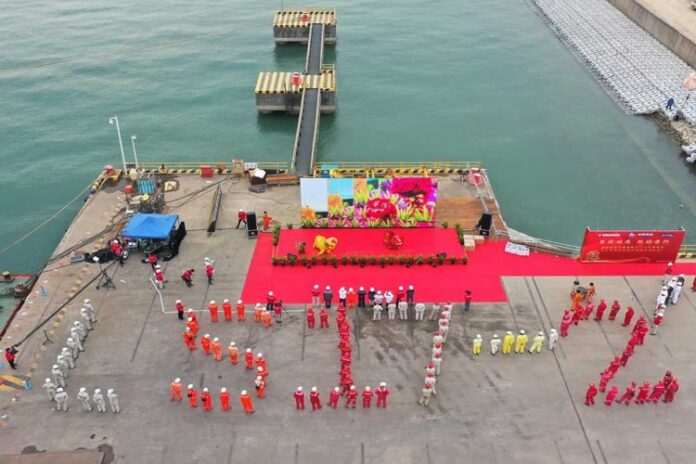
Last week, a delivery ceremony for the riser pull-in system was held in Zhuhai, a city located on the southeastern edge of Pearl River Delta, China. 

You Xuegang, deputy chief manager of CNOOC Zhanjiang branch, said:

“The LS17-2 project is focused on technology and quality. It is a brand new project for both CNOOC and MacGregor, with the importance of the riser system in deepwater development being equivalent to the human carotid artery.

We have been fully supported by MacGregor since the project commenced, especially during the most difficult time when the pandemic broke at the beginning of this year. The project team members, at home or abroad, have worked tirelessly to achieve the delivery schedules.” 

Leif Byström, Head of Offshore Solutions, MacGregor, says:

“This project demonstrates MacGregor’s strengths, with our global capabilities enabling uninterrupted delivery of our products and services despite the Coronavirus pandemic restrictions, and the ability to quickly respond to our customer’s needs through a strong local presence in China. We have built a strong relationship with CNOOC and look forward to cooperating further on future projects.”

Speaking at the delivery ceremony, Jane Chen highlighted the cooperation between MacGregor and CNOOC during the past ten years:

“We are proud to have provided active heave compensated cranes to CNOOC’s Haiyang Shiyou 286 and Haiyang Shiyou 691, and been recognized as one of the two Suppliers of Excellence for the delivery of AHC crane and A-Frame for Haiyang Shiyou 295. We greatly appreciate CNOOC’s trust in MacGregor, and we will continue to support CNOOC with excellent products and services.” 

“Together with my management team colleagues, we look forward to the LS 17-2 platform being completed and successfully entering service during next year.”

Bolloré successfully transports the components of the Goldwind Moorabool wind farm

0

Bolloré Logistics has successfully completed the unloading, handling and inland delivery of the components of the Goldwind Moorabool Wind Farm in Australia, the operation taking slightly over one year.

The equipment was transported by sea from the manufacturing sites in China to the Port of Geelong in Victoria State and then by road to the two wind-farm sites located 70 km north of the port.

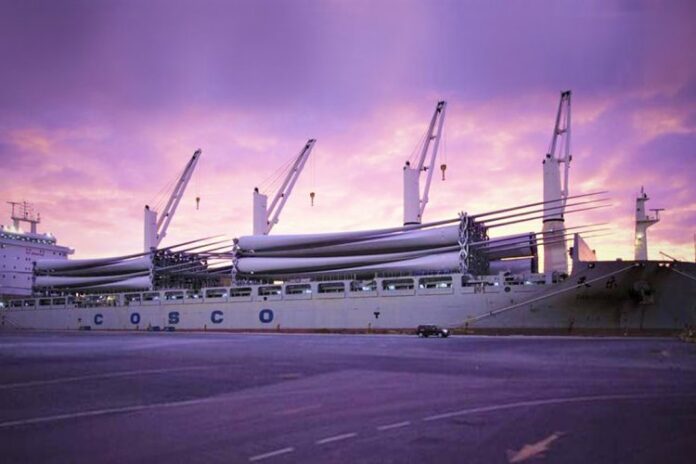
The project, initiated in March 2019, required the mobilisation of the Bolloré Logistics teams in China and Australia. Owing to the exceptional dimensions of the components, including 69-metre curved blades (around five times longer than a standard semi-trailer and among the longest currently in use at a wind farm worldwide), specialised transport equipment solutions were devised, such as extendable trailers used to transport the blades through tight and hard-to-access spaces. 

The teams worked closely with COSCO on the maritime transport, making a total of 13 voyages, each one carrying approximately 50,000 freight tonnes, or over 1,100 oversized parcels. Inland delivery was carried out by Ares Transport. The shipments were meticulously planned and organised in compliance with the regulations of the Victorian authorities, deliveries being permitted at night only, amid minimal traffic.

Thibault Janssens, Pacific director of Bolloré Logistics, said:

“It is a testament of our staff’s expertise and professionalism that we managed to successfully complete this operation and achieve another milestone in the execution of complex and oversized projects. Consistent with our CSR vision, this new achievement also reflects our determination to support our customers in their sustainable-development projects.”