-5.8 C
New York
Home Blog Page 734

SATHScale awarded to accelerate SATH Technology commercialization

0

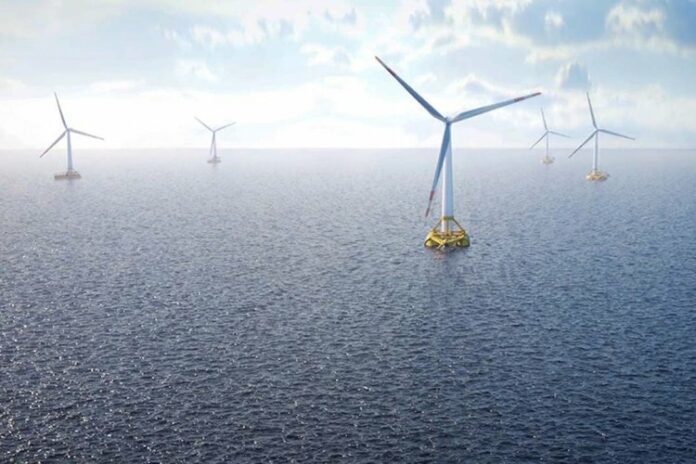
Saitec Engineering has been awarded with 2.4M€ funding by the European Commission “Blue Economy Window” call.

The European Maritime and Fisheries Fund (EMFF) launched in November 2019 a call for proposals named `BlueInvest Grants: Investing in Blue Innovation´ with a total investment of 22M€ to develop and bring to market new products, services, and business models for small and medium enterprises that could ultimately improve market readiness of technologies and/or maritime services.

The funding for SATHScale project will allow to address the challenge of bringing to market SATH floating wind technology through scaling-up the prototype from the technology validation and demonstration in a relevant environment to Technology Readiness Levels (TRLs) required for commercial products in the relevant markets, i.e., to industrial readiness and maturity for market introduction, exploiting real experiences of the ongoing open-sea 2MW demonstrator that will be deployed at BiMEP (Biscay Marine Energy Platform) in Biscay (Spain).

Carlos Garrido-Mendoza, Head of R&D, said:

“SATHScale is an important project for Saitec with a view of industrialize, internationalize and scaling-up SATH technology. SATHScale will help us to move forward to the required commercial maturity level through an open-sea experience, which is essential to fully understand the challenges in device performance, survivability and reliability prior to market take-up.”

Prefabrication is one of the main advantages of this technology. For that reason, SATHScale will focus on the development of an industrialized fabrication system for mass production, covering the manufacturing process, transportation, installation, commissioning, O&M and dismantling of the floating wind platform. The portability of the manufacturing will allow the use of local labour to ease the management of projects and to enhance the local supply chain.

Another key point is the design optimization in terms of cost and dynamic behaviour. Getting feedback from real experience data and then checking this against the values obtained through conservative calculation will provide relevant information to be applied in the following design processes.

Risk reduction of the technology innovations and reducing unplanned activities, improving health and safety, and reducing costs will be achieved by the optimization of operations and maintenance logistics data and analytics of DemoSATH. A 2MW prototype to be installed in open-sea test area off Basque Coast.

And finally, the project aims the technology internationalization through branches in markets with floating wind high potential as offshore wind is making a great progress on the target of carbon emission neutrality in many countries.
OHT completes jacket transportation for Moray East Offshore Wind Farm

0

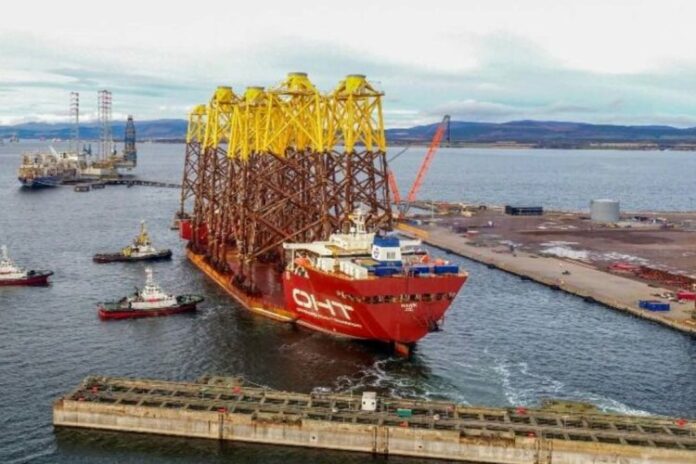
OHT’s heavy transportation vessel carried her second load of ten jackets from Lamprell’s fabrication site in Hamriyah, UAE, arriving at the Port of Nigg in the Cromarty Firth on November 12th.

This marks the completion of OHT’s eight-month transportation campaign which also utilised their vessels MV Osprey and MV Albatross. The company transported a total of 48 three-legged jacket foundations averaging more than 1,000 tonnes and up to 80 metres in height.

OHT were contracted by DEME Offshore, the project’s balance of plant EPCI contractor, in September 2019.

load master, Yegor Khodursky, said:

‘It has been a pleasure to work closely with DEME Offshore, as well as the excellent team at Global Energy and the Port of Nigg. The operation has been smooth and incident free, thanks to the experienced crew on board, and the excellent coordination by DEME and all involved.’

OHT’s Project Manager, Egil Ismar, said:

‘The jacket foundations are amongst the largest in deployment for offshore wind turbines. We are immensely proud to have played a key role in delivering such a critical component for this remarkable offshore wind project.’ 

Once complete, Moray Offshore Windfarm (East) Ltd (known as ‘Moray East’) will consist of 100 V164 – 9.5MW turbines and will generate sufficient electricity to save 1.4 million tonnes CO₂ equivalent annually. Power will be generated at the lowest cost of any new renewable generation.

Keppel secures contract worth about S$100 million for FPSO project

0

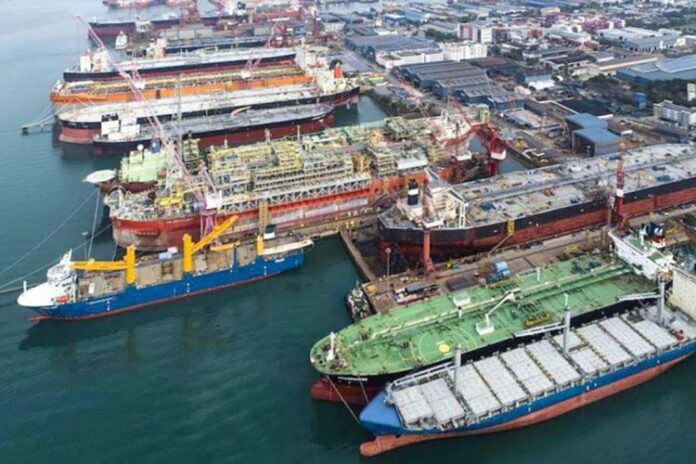
Keppel Offshore & Marine Ltd (Keppel O&M) has through its wholly-owned subsidiary, Keppel Shipyard Ltd (Keppel Shipyard), secured a contract from a repeat customer worth about S$100m for the fabrication and integration work on a Floating Production Storage and Offloading vessel (FPSO).

Scheduled for delivery in 4Q 2022, Keppel Shipyard’s scope of work includes the fabrication, installation and integration of topside modules, riser balconies and spread mooring support structures, as well as supporting the customer on pre-commissioning and commissioning work. Ahead of the FPSO’s arrival in the yard, Keppel Shipyard will commence with pre-fabrication work on the topside components in 1Q next year.

Mr Chor How Jat, Managing Director (Conversions & Repairs) of Keppel O&M said:

“We are pleased to secure our 140th conversion project to help meet the world’s need for energy. As the world’s leader in FPSO conversion and integration projects, we have built up strong capabilities to add value to our customers’ projects and efficiently deliver high quality FPSOs, while contributing to the circular economy with our conversion solutions.

With the challenges posed by Covid-19, the health and safety of our workforce is paramount. We have put in place measures to safeguard our people and maintain our operations to ensure that each project entrusted to us is delivered as planned.”

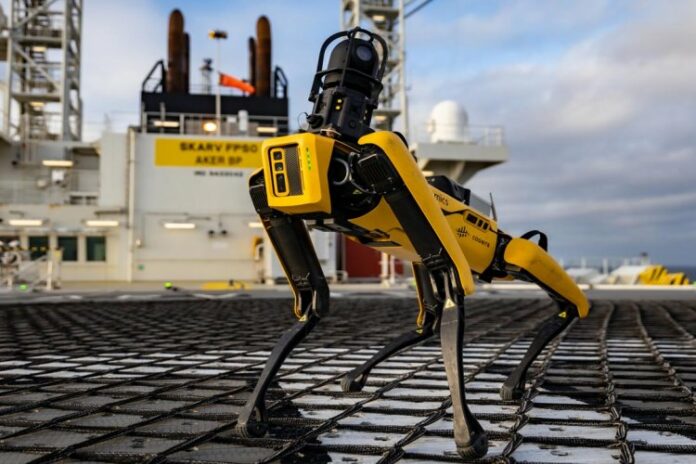
Aker BP and Cognite partner on robotic dog deployment in North Sea

0

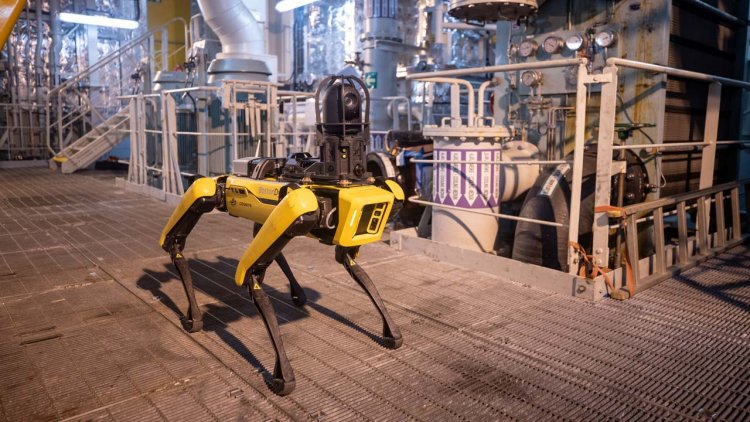
Cognite Data Fusion powers Spot, the Boston Dynamics quadruped robot dog, as it completes autonomous mission onboard Aker BP Skarv installation in the Norwegian Sea

Cognite a global industrial AI software-as-a-service (SaaS) company supporting the full-scale digital transformation of heavy-asset industries around the world, has partnered with fully-fledged exploration and production company Aker BP to deploy Spot, the quadruped robotic dog, to pioneer the remote controlled offshore mission on the Skarv installation, 210 kilometers offshore in the Norwegian Sea.

The effort continues to build upon Aker BP and Cognite’s bold digital agenda to transform the industry through digitalization, which will result in improved efficiency, safety, and sustainability offshore.  This recent endeavor signals a significant opportunity to transform the oil and gas industry worldwide.

Aker BP is committed to affordable, reliable, sustainable, and modern energy for all, and using robotics is a strong part of this vision.  Spot’s work offshore is the next step in his journey as he was issued his official employee number in February at the Aker BP Capital Markets Day.  In addition Aker BP has a number of other projects involving drones and additional mobile robots to deliver on their vision of optimized remote operations using Cognite’s data driven technology.

Cognite’s main software product, Cognite Data Fusion (CDF), served as the data infrastructure for the offshore test which collected images, scans, sensors from robotics systems and then shared the data across Aker BP via a dashboard to make it actionable.  Tasks included: autonomous inspection, high-quality data capture, and automatic report generation. These data insights provide onshore operators with telepresence on offshore installations allowing them complete realtime mission planning and help drive crucial activities.

The mobility of Spot offshore, and the communication between Spot, Cognite Data Fusion and Aker BP was both verified and tested.  Data from Spot was available and sorted in Cognite Data Fusion in milliseconds, and Spot was remote controlled from a Cognite home office onshore demonstrating how robots and digital twins can have synergies and enhance each other. In addition, data from an operator round was collected to analyze if the sensor-stack on Spot was sufficient to comply with the proposed task.

Karl Johnny Hersvik, CEO of Aker BP, said:

“We are eager to explore how robotics systems can make offshore operations safer, more efficient and more sustainable. The Spot’s offshore visit at Skarv FPSO is one small step towards Aker BP’s vision to digitalize all our operations from cradle to grave in order to increase productivity, enhance quality and improve the safety of our employee.”

Michael Perry, Vice President of Business Development at Boston Dynamics, said:

“We can use missions like these to advance Spot’s capabilities and Cognite continues to lead the way in testing and validating Spot’s ability to reduce risk to humans and provide value in the energy industry.”

Dr. John Markus Lervik, CEO of Cognite, said:

“This historic pairing of minds and machines working together to solve industry problems demonstrates that data driven decisions can change industry now. This ability to guide Spot by remote control is a huge step forward for the industry and something we will continue to work closely with our partners on as we continue to innovate and provide data driven solutions.”

Cognite Data Fusion (CDF) is a cloud-based industrial data operations and intelligence platform, and it integrates seamlessly with existing IT and OT applications in the cloud, edge, and on-premise. CDF contextually enriches industrial data, providing an open, unified industrial data model that is easily accessible for humans and applications, enabling better analytical operations and data-driven decisions.

BW Lilac will deliver its first LNG cargo to Klaipėdos LNG terminal

0

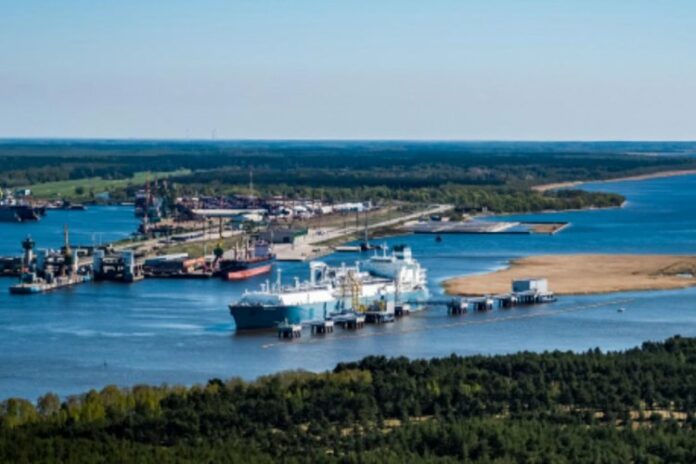
It is planned that the gas carrier BW Lilac will arrive at the liquefied natural gas (LNG) terminal operated by KN (AB Klaipėdos Nafta) on December 2nd and deliver LNG from the US port of Louisiana. This is the first visit of the gas carrier BW Lilac to Klaipeda port.
 
Standard 174 thousand cub. m, 294 m long and 46 m wide gas carrier BW Lilac was built in 2018 and is operating under the flag of Malta. She brings about 155 thousand cub. m of LNG to Klaipeda loaded at the Cameron LNG liquefaction plant in the Port of Louisiana, US. This liquefaction plant resumed its operations, which were temporarily suspended due to a hurricane.
 
This will be the 7th LNG cargo from the US in 2020 at Klaipeda LNG terminal and the 4th new year of natural gas (2021), which began on October 1 of this year. Totally 9 LNG cargoes from the US have been delivered since the LNG terminal in Klaipėda started its operations in 2014.
 
Mindaugas Navikas, KN Chief Sales Officer, notes that the US has been exporting natural gas since 2016 and in 2019-2020 significantly increased exports to Europe. This was mainly due to an increase in liquefaction capacity and new emerging projects in the US that boosted demand and supply to Europe.

M. Navikas  comments:

“Although this year is rather exceptional than reflecting a long-term trend for the global LNG market, Klaipėda LNG terminal users can take best advantage of the current market situation and acquire the most favorable cargoes both in terms of price and existing contractual obligations with suppliers. Thanks to the flexibility of terminal services, we can quickly respond to customer needs and thus increase the competitiveness of our existing infrastructure. We also hope that from 2021 onwards the changed pricing of the LNG terminal reloading services and its differentiation according to the size of carrier/cargo will encourage the attraction of new users or extra quantities of cargo.”

Offshore charging facility for electrified vessels set to revolutionise offshore operations

0

A consortium of offshore renewable energy and marine companies will lead a project to explore the viability of developing an offshore charging facility for vessels as part of the industry’s efforts to decarbonise its vessel operations.

Funded by the first phase of the UK Government’s Sustainable Innovation Fund, the project – led by Turbulent Simulations, alongside Aluminium Marine Consultants, the Offshore Renewable Energy (ORE) Catapult, MJR Power & Automation, Tidal Transit and Bibby Marine Services – will look into the design of a permanently stationed Offshore Charging Vessel.

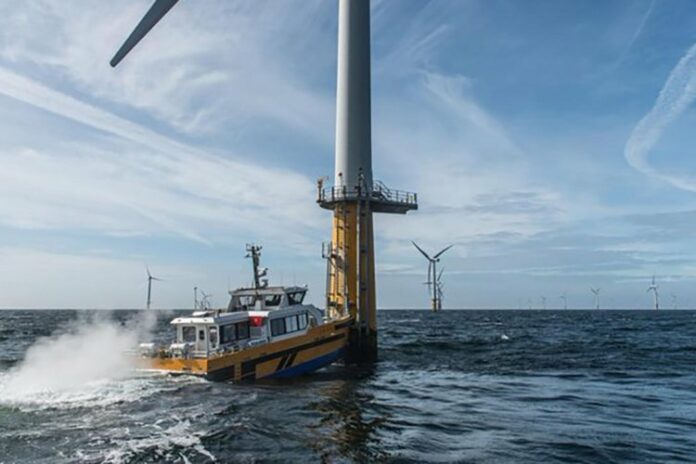
The technology would allow electrified vessels, such as Crew Transfer Vessels (CTVs) and Service Operating Vessels (SOVs), to dock and recharge whilst operating offshore, giving them greater range and bigger operating windows. The charging vessel would, in turn, draw power from wind farms at times of low demand, storing it in onboard batteries.

Having a charging capability offshore should bolster an owner/operator’s confidence to invest in electrified vessels, which will have greater flexibility to operate in the field for longer periods, supporting a reduction in operations and maintenance costs.  Decarbonising the offshore fleet is vital if the UK is to meet its net-zero targets by 2050. The project partners will also explore the potential for the charging vessel to store modular battery units that could be swapped for the used battery on the operating vessel.

The project has already attracted significant interest, with confirmed backing from industry advisers, including Vattenfall Networks, Vattenfall Renewables and the Workboat Association (WA). The consortium is also hoping to advance to the second phase of the Sustainable Innovation Fund, potentially accessing £3m of grant funding to undertake a detailed design and demonstration of the charging vessel.

Trevor Linn, CEO of Turbulent Simulations, said:

“We see huge potential and strong market demand for this innovative technology as the offshore wind industry and the broader maritime sector seek solutions for charging the next generation of electric and hybrid service vessels.”

Stuart Barnes, Regional Partnership Manager at ORE Catapult, said:

“ORE Catapult recognises the strong industry demand for clean maritime solutions to help the industry reduce its emissions during the operations and maintenance of offshore wind farms. Early indications suggest that electric and hybrid CTVs are gaining popularity among operators and an important enabler to unleash their full potential is the capability to charge offshore. Delivering this capability requires a number of technical, commercial and regulatory barriers to be addressed and ORE Catapult is pleased to be working with this group of highly skilled UK SMEs involved in bringing forward this innovation.”

Leo Hambro, Director at Tidal Transit said:

“As a vessel operator actively pursuing net-zero maritime operations, we believe that offshore charging capability is an important enabler to the rapid deployment of electric and hybrid electric vessels in offshore wind. As such we take a great interest in this emerging technology and we’re very pleased to be providing direct support to the development of this important innovation.”

Hernan Vargas from Vattenfall added:

“As an offshore wind farm operator, Vattenfall is committed to the goal of fossil free living within one generation. An important step in achieving this goal is decarbonising transport and we’re actively planning ways to decarbonise our own maritime operations involved in operating and maintaining our offshore wind farms.  Electric and hybrid Crew Transfer Vessels are one potential technology and offshore charging capability is an important enabler to their deployment.”

Port of Rotterdam to embark on 100 innovative pilot projects

0

The COVID-19 pandemic has caused many innovation projects to be put on hold or cancelled. 

This has dealt a serious blow to a lot of entrepreneurs who had just started out, as well as established businesses in Rotterdam’s port area. After all, a lot of local potential is going untapped during this hiatus – while investing in a strong, future-proof port is actually more important than ever. That is why PortXL will be launching the new innovation programme MATCH. Its objective? To initiate 100 innovative pilot projects in the port of Rotterdam over the course of the next year, in partnership with the local private sector. Bringing existing businesses and start-ups together creates new opportunities to introduce innovations that can help make the port of Rotterdam cleaner, more sustainable and smarter.

As Europe’s largest sea port, the port of Rotterdam serves as a vital hub for numerous global cargo flows. Nevertheless, the Covid-19 pandemic continues to put a damper on world trade, and some market players have become very hesitant to make large investments in response to the crisis. However, to enable the port economy to swiftly recover from this ‘Covid dip’, it is important to invest in innovative solutions that help create an even smarter and more competitive port – now more than ever. Actively bringing the port’s private sector in touch with innovative start-ups will allow us to test and implement new technologies, sophisticated automation solutions and other new applications.

The MATCH innovation project is an initiative of PortXL. This accelerator programme has been working since 2015 to help entrepreneurs in the port area bring new innovations to market. Having already built up a worldwide network of over 4,000 innovative entrepreneurs, PortXL can find a solution to virtually every problem. PortXL helps innovative entrepreneurs and start-ups ‘get on the radar’ of companies that want to improve their processes. For start-ups, finding the right opening at a potential client and starting up novel projects can be a time-consuming and often expensive undertaking. And established firms in turn can benefit from the swift inception of innovative projects, since this allows them to increase the efficiency of their operations and save costs.

Over the course of 2021, working in partnership with the port’s business community, PortXL aims to launch 100 innovative pilot projects within the MATCH innovation programme. Companies can submit their specific market challenges to PORTXL, which will then go in search of potential solutions and bring the companies in touch with one or more members of their global innovation network.

Participation in the programme is free. 

Port of Leith announces investment in Scotland’s Offshore Renewables Future

0

The Port of Leith is enhancing its position in the offshore renewables market with a seven figure privately funded investment at the port to bring to the market an additional 25 hectares of land linked to over 3km of deep water quaysides. This investment will see the skyline of the port changed, with the final stages of the demolition of the Imperial Grain Silo being completed.

The Port has seen an unprecedented surge in activity over the past few years with the energy transition to low carbon becoming a strong influence in the future of Scotland and Leith. The Port of Leith has been able to demonstrate its agility through responding to project needs ranging from utilising the deep water for the storage of offshore wind farm foundation jackets to significant project work associated with the subsea elements of the development of offshore windfarms.

Shipping and onshore economic activity has been boosted at Scotland’s capital port this year with its key role in supporting EDF Renewables’ and ESB’s major offshore wind farm Neart na Gaoithe (NnG) at various stages of the project. This major Scottish project will supply enough low carbon electricity for around 375,000 homes and has a capacity of c. 450 megawatts (MW) of low carbon energy, will offsetting over 400,000 tonnes of Co2 emissions each year. 

Commenting on the investment and plans, David Webster, Senior Port Manager at Forth Ports, said:

“This investment is another example of our commitment to bring large-scale renewables to Scotland. This will allow Leith to build on its current success as well as complement the significant upgrades that are under way in our Dundee facility. The foundation logistics in Leith will be supported by the wind turbine hub in Dundee, we see this as the future to local content in Scotland that will drive employment.”

Matthias Haag, NnG Project Director, said:

“It’s really exciting to see the Port of Leith making such a huge investment in offshore renewables, especially as it will play a key role in the successful delivery of NnG. Since the offshore construction of NnG started in August, the Port of Leith is already Marine Logistics Base for the pile casings. These casings will form part of the foundations on which the project’s 54 turbines and two substations will stand.”

Ørsted’s first Dutch offshore wind farm fully commissioned

0

The wind farm has a capacity of 752 MW, making it the largest offshore wind farm in the Netherlands and the second largest operating offshore wind farm in the world. Borssele 1 & 2 provides enough green electricity to power one million Dutch households. Borssele 1 & 2 is Ørsted’s first offshore wind farm in the Netherlands.

Henrik Poulsen, CEO and President of Ørsted, says:

“This is an important milestone for the green transformation and for Ørsted. We’re proud that we’ve commissioned our first offshore wind farm in the Netherlands, who is among the global frontrunners in the energy transition. With Borssele 1 & 2 as the first step, we wish to make a significant contribution to the Dutch transition from fossil to renewable energy. We’re proud that we completed this large-scale clean energy project on time and within budget during the COVID-19 pandemic, while maintaining our focus on health and safety.”

In 1991 Ørsted built the world’s first offshore wind farm in Denmark. Since then, Ørsted has constructed and is operating more than 25 offshore windfarms across Europe, Asia Pacific and North America. Turbine number 25 installed at Borssele 1 & 2 turbine was at the same time the 1,500th offshore wind turbine installed across Ørsted’s portfolio.

Steven Engels, General Manager Benelux at Ørsted, says:

“It’s great that we now can deliver enough green electricity to power one million Dutch households. Ørsted has delivered what it promised back in 2016, when we won the tender with a ground-breaking bid price. Realising the first project of the large-scale offshore wind roll out programme in the Netherlands is an important milestone for the Dutch energy transition. I’d like to thank the Dutch national and regional governments and so many other stakeholders who have helped us achieve this result. Zeeland has welcomed us with open arms, which provides an excellent starting point for our operations out of Vlissingen for many years to come. Moreover, it’s a good basis for future projects around industry decarbonization in the region, such as the renewable hydrogen project that we announced with Yara.”

Flemming Thomsen, Ørsted’s Senior Programme Director for Borssele 1 & 2 says:

“Together with our suppliers, our construction team has successfully installed this wind farm at high quality in less than nine months. By introducing additional health and safety measures offshore as well as onshore, we were able to continue construction during a global pandemic. We’re grateful and proud of the result delivered and pleased to witness the commissioning of Borssele 1 & 2.”

Telemar scoops five-year vessel service contract for NSC-Group fleet

0

Marlink Group company Telemar has been awarded the contract to provide in-person and remote service support for bridge navigation equipment to NSC-Group fleet of vessels. NSC-Group is already a customer of Marlink’s smart network solutions, having renewed its agreement for provision of high bandwidth Sealink VSAT to its fleet in April 2020.

The agreement with Telemar runs for five years and includes inspection, maintenance, testing and overhaul of bridge equipment including Radio Surveys, Voyage Data Recorders, Gyro Compass, X-band and S-band radars. Telemar will also provide NSC with access to its system advising of due dates for service and parts replacement as well as dual language remote service support on a 24x7x365 basis.

NSC-Group operates a diverse fleet consisting of containerships, multi-purpose carriers, bulkers, con-bulkers, car carriers and tankers. The combination of high-performance connectivity across intelligent hybrid networks and support for bridge electronics further supports its strategy for digitalisation and vessel performance optimisation.

The service agreement provides NSC-Group with complete predictability in terms of its maintenance programme as well as scheduled service costs, enabling better planning and execution and ensuring that vessels operate safely and in regulatory compliance.

Björn Eichhorn, Director Fleet Management at NSC-Group, said:

“Digitalised and efficient vessel operations require reliable connectivity and certainty of service for critical bridge navigation components and systems. Our experience with Marlink’s professional approach to connectivity and the efforts of the Telemar team to respond to our request for service were critical deciding factors.”

Kai Sangkuhl, Managing Director, Telemar Electronics GmbH, said:

“Marlink is delighted to have secured this further opportunity to provide our services to NSC-Group for an extended period that provides both parties with confidence for the future. Our strong position among the shipmanagement and operations community in Germany is a reflection of the speed and quality of response to customer requests and delivery of best in class products and service.”