-5.3 C
New York
Home Blog Page 735

DEME awarded the Abu Qir port project in Egypt

0

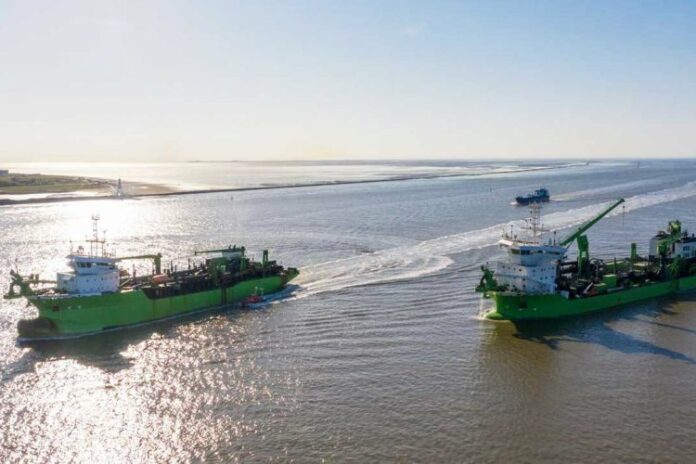
DEME has secured a large contract for the Abu Qir port project in Egypt. The project will see the deployment of DEME’s giant new cutter suction dredger ‘Spartacus’.

This vast project includes the reclamation of 1,000 hectares of new land, the deepening of the port’s approach channel to 23 m and the dredging of a turning basin to 22 m. An enormous volume of more than 150 million m³ will be dredged.

The marine works, including 6,800 m of quay walls for new berths, 8,800 m of breakwaters and soil improvement works, will be executed by DEME’s consortium partner GIECO, Egypt’s leading marine engineering company. 

This ambitious megaproject creates land for the expansion and further development of Abu Qir, which boasts an ancient history and is slated to become a bustling economic hub, supplementing nearby Alexandria. Alongside this, a large multifunctional port facility can be developed adjacent to the Abu Qir Container Terminal, which is currently under construction. 

DEME will deploy the world’s most powerful cutter suction dredger (CSD) ‘Spartacus’ on the project. This game-changing vessel will join DEME’s fleet in 2021. With a total installed power of 44,180 kW, this CSD is unrivalled in terms of production rates, pumping power and her ability to cut hard material. In addition to ‘Spartacus’, DEME will deploy a wide range of different sized trailing suction hopper dredgers.

The project’s preparation has already started, with the main works set to commence in early 2021. The project is due for completion in 2023.

The unmatched technical capabilities and power of ‘Spartacus’ in combination with DEME’s versatile fleet, featuring the latest technology, were key factors in securing this important contract. In addition, DEME has built an excellent reputation, strong local footprint and long-term track record in Egypt, which includes its participation in the iconic Suez Canal widening and deepening project (2015).

Crucially, DEME’s engineering capabilities enabled the company to develop the most cost-efficient approach for the execution of the project. The solution DEME provides carefully manages the many interfaces of this complex and multi-faceted project.

Luc Vandenbulcke, CEO of DEME Group, emphasises:

“We are very proud to have secured our largest ever dredging and land reclamation contract to date, and to support the Arab Republic of Egypt in its ambitions to develop a world-class project. This contract underlines our technical capabilities and engineering expertise, and undoubtedly our powerful ‘Spartacus’ was a key differentiating factor in enabling us to win such a special contract. We look forward to working with our client and consortium partner to successfully deliver this exceptional project.”
NKT signs long-term service agreements covering offshore power cable systems

0

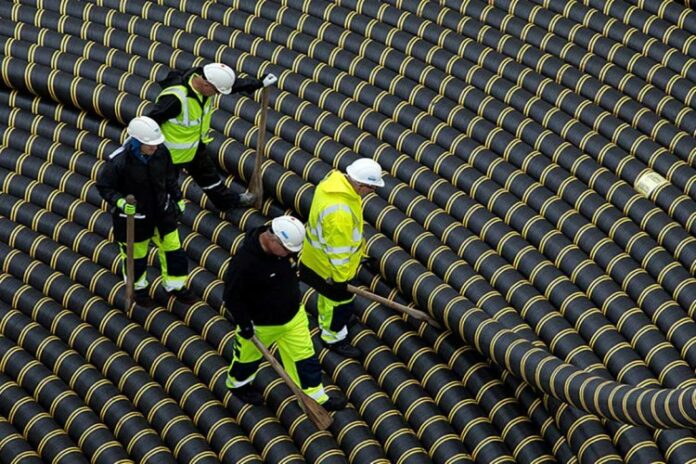
NKT has entered into service agreements with Elia, 50Hertz and Nemo Link with the purpose to ensure efficient integration of energy into the Belgian, UK and German power grid. 

With the agreements, NKT and the three grid operators join forces to ensure minimum downtime in case of unpredicted damages to the assets included. The agreements cover several export cables connecting offshore wind parks to the onshore grid, and the interconnector Nemo Link connecting Belgium and the UK.

Within the scope of the agreements with Elia and 50Hertz, NKT will ensure offshore repair preparedness, including inspection and maintenance of spare parts, vessel support for fault localisation, offshore cable handling, offshore cable jointing work as well as engineering. An integral part of the agreements is also the vessel mobilisation guarantee. Within the agreement with Nemo Link, NKT will carry out all cable repair logistics.

Axel Barnekow-Widmark, Executive Vice President and Head of Service & Installation at NKT, says:

“As the world moves towards green energy, the uptime of power cable connections become increasingly important to ensure efficient usage of the renewable energy produces. With these agreements, we are well prepared to support Elia, 50Hertz and Nemo Link with a fast response in the event of power cable damage. With the contracts, we once again demonstrate our leading market position as cable service provider for own as well as third party cables.”

NKT will be providing its technicians as well as suitable vessels, equipment and tools. The work will be carried out in accordance with tailored repair preparedness plans designed by NKT to ensure a quick mobilisation in case of damages to the offshore power cables.

Shearwater GeoServices awarded significant Petrobras OBN 4D baseline survey

0

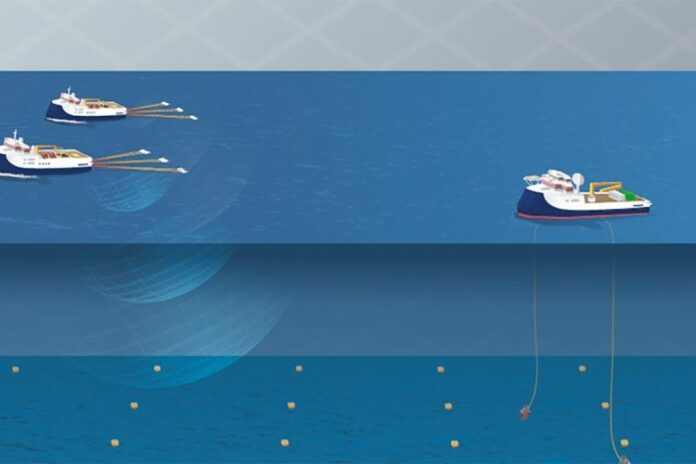
Shearwater GeoServices Holding AS (“Shearwater”) has announced the award by Petrobras of a large Ocean Bottom Node 4D Baseline survey over the Jubarte Field in the Campos Basin offshore Brazil.

Irene Waage Basili, the CEO of Shearwater GeoServices, said:

“We welcome this contract awarded by Petrobras and look forward to supporting their continued ambitions in the Jubarte Field. This deepwater OBN award reflects our experience in operating offshore Brazil, our position in the deep water OBN segment, and our strategy of marine seismic leadership and unique in-house developed technology and solutions.”

The 810 sq. km survey will commence in the first half of 2021 and be conducted over a 3-month period.

The survey will utilise the SW Diamond operating Shearwater’s unique 3×3 source which is equipped with three sub-arrays on each of the three sources, compared to the conventional two, allowing increased efficiency without source compromise. While conventional sources vary their energy in one direction versus another, this project’s omni directional source is designed to give out energy uniformly in all directions which will be key to 4D repeatability for this rich azimuth deepwater OBN acquisition.

Kongsberg to supply SIMRAD sonar equipment for a new 75m Pelagic trawler Artemis

0

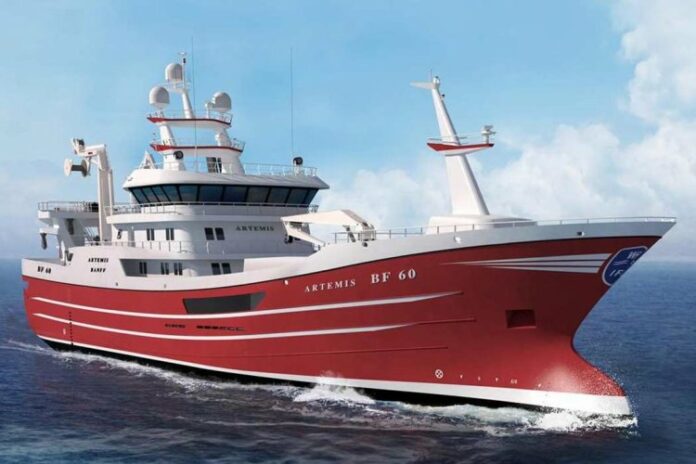
Kongsberg Maritime has announced that it will be supplying a portfolio of SIMRAD sonar equipment for a new 75m Pelagic trawler, currently in build at Karstensen’s Shipyard in Skagen, Denmark.

Commissioned in partnership by Scottish fishing companies Northbay Fishing Co. Ltd and Wiseman Fishing Co. Ltd, the new vessel – to be called Artemis – will be based in Banff, Scotland.

Pelagic trawlers target fish in the mid- and surface water, such as herring and mackerel, and the range of products to be fitted to Artemis reflects this mode of operation. Scheduled for delivery in June 2022, the vessel will be equipped with SIMRAD ST94, SN93 and CS90 fishfinding sonars, providing a range of omnidirectional and targeted fish location and tracking options across multiple frequencies.

Andrew Masson, Sales Director at SIMRAD dealer Echomaster Marine, who concluded the deal, said:

“The Artemis vessel owners knew of SIMRAD products already, as they had deployed ES80 fishery echosounders and FS70 trawl sonar on previous vessels. After we presented the SIMRAD sonar portfolio they spoke to other vessel owners in Norway, Sweden and the UK and decided to order SIMRAD acoustic products for this new-build project.

Masson continued:

“They were particularly impressed with reports about the ST90, SN90 and new CS90 broadband mid-frequency sonar. The feedback from other vessel owners was that CS90 sonar is a leap forward in technology, compared to similar mid-frequency sonar products they have previously deployed.”

Mads Dahl, Manager Marketing & Sales, Fishery, Kongsberg Maritime, added:

“This is strategically a very important sale for us, and fully demonstrates the scope and capabilities of SIMRAD equipment available for trawl operations. We are very pleased to have been given this order.”

Artemis will also be fitted with a SIMRAD ES80 split-beam echosounder and fishfinder, FS70 third-wire trawl sonar to monitor net opening and fishing conditions, and the PX Multicatch trawl monitoring system. A Kongsberg Maritime MRU-S Motion Reference Unit completes the order, providing an accurate picture of roll, pitch, yaw and heave motion for enhanced sonar stabilisation, enabling a steady image of the target fish shoals even in rough weather conditions.

OSIL produces two data buoys for the collaborative research project

0

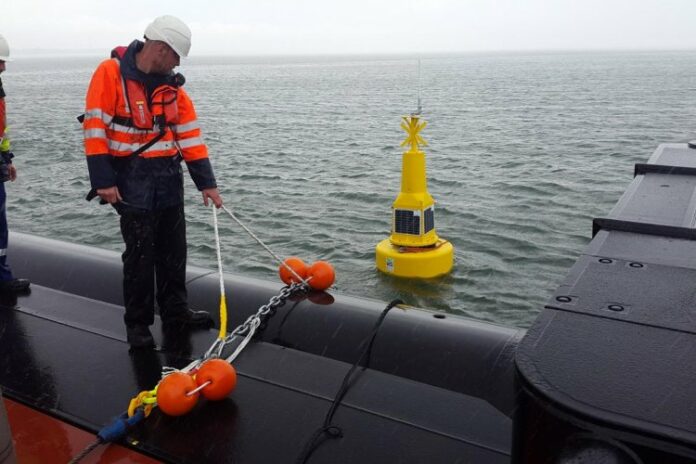
The University of Rhode Island (URI) had a recent requirement for two oceanographic buoy systems and land-based deck unit for ongoing oceanographic research under the Rhode Island Consortium for Coastal Ecology Assessment Innovation & Modeling (RI-CAIM), a five-year grant program funded by the National Science Foundation.

Representatives from the University approached leading global data buoy manufacturers Ocean Scientific International Ltd (OSIL) with their specifications.

Researchers have requested systems that can utilise a new array of sensors and equipment, called the integrated Bay Observatory, that has already been acquired by URI through RI C-AIM. The data from this platform will be sent back to a computer system hosted at URI’s Bay Campus and parsed to a networked database, RI C-AIM’s Rhode Island Data Discovery Center, for real-time or near-real time data display. This database would operate within a suitable software system that would allow users to change settings or trigger samplers remotely (using either programmed interval sampling, or manually triggered by a user). OSIL have an established reputation for providing fully integrated systems that consistently deliver high quality data to the end user in practical formats.

OSIL are providing two of their 1.2m Tern Buoys for the project, tough and durable systems that can withstand the harshest of conditions and are ideal for extended coastal monitoring deployments. The Tern buoy hull design incorporates a stainless steel sub frame with a moon pool for instrument protection, and its modular manufacture makes the buoy easy to ship and assemble on-site following delivery. The buoy frame design has also been modified to allow an autonomous water sampler system to be connected to the bottom of the buoys.

The buoys are to be deployed year-round in Narragansett Bay, while the land-based deck unit is to be housed in a permanent monitoring station set up within a disused lighthouse.  All systems will host a range of SeaBird sensors in addition to a full suite of meteorological instruments and GPS tracking fitted to the data buoys.

Fully integrated Wärtsilä Hybrid Solution selected for new Misje Rederi bulk carriers

0

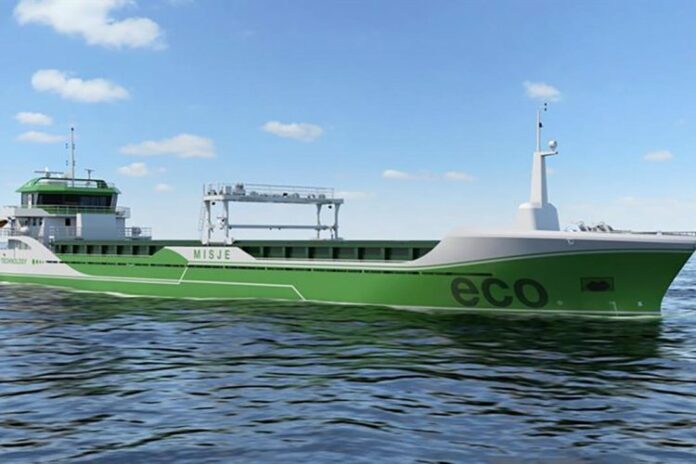
The technology group Wärtsilä’s extensive experience in marine hybrid propulsion solutions will enable a greatly decreased emissions footprint for three newbuild eco-friendly 5,000 dwt bulk carriers.

The 90 metres long ships are being built at the Colombo Dockyard in Sri Lanka for Misje Eco Bulk, a unit of the Norway based Misje Rederi group. The fully integrated Wärtsilä Hybrid Solution will enable the vessels to sail in and out of port, and to perform cargo operations, completely emissions-free. The order with Wärtsilä was signed in October 2020 and includes an option for an additional three vessels.

The development of the efficient and sustainable propulsion solution was carried out from an early stage of the project in close cooperation between Wärtsilä and Misje Eco Bulk. This co-creation approach has enabled a tailored solution that fully meets the owner’s requirements regarding reduced operating costs, operational flexibility, and environmental sustainability. The vessels are designed to be converted to full zero emissions operation as the technology develops.

Roald Misje, Technical Manager, Misje Rederi, says:

“This newbuild project is in line with our ambition to have one of the world’s cleanest and most sustainable fleets. Our collaboration with Wärtsilä, and their deep understanding and know-how of hybrid technology, make this ambition achievable, and we see great benefit in this very strong integrated solution to us as the owner from a lifecycle perspective.”

Grant Gassner, Director Integrated Systems and Solutions, Wärtsilä Marine Power, says:

“We are extremely honoured to have worked closely with Misje Eco Bulk to develop this fully integrated hybrid propulsion solution, which represents a new overall benchmark for bulk carriers in terms of operational flexibility, high efficiency, and low emission levels. We look forward to continuing our good collaboration with both Misje and Colombo Dockyard during the construction and commissioning of these ground-breaking vessels.”

The Wärtsilä scope of supply includes a Wärtsilä 20 main engine, the Wärtsilä NOx Reducer (NOR), the power transmission system, the controllable pitch propeller (CPP), The Wärtsilä ProTouch bridge control system, the electrical and automation systems, the hybrid battery solutions, energy management system (EMS), transformers, motors and shaft line. The EMS functions as the ‘brain’ in the Wärtsilä Hybrid solution optimising the energy flows between the different power sources, storage and consumers to achieve the highest efficiency possible.

Delivery of the equipment will commence in autumn 2021, and the first of the three ships is scheduled to enter service in mid-2022. The subsequent vessels will be delivered at four month intervals.

ABS and DSME sign JDP to explore using solid oxide fuel cells on-board VLCCs

0

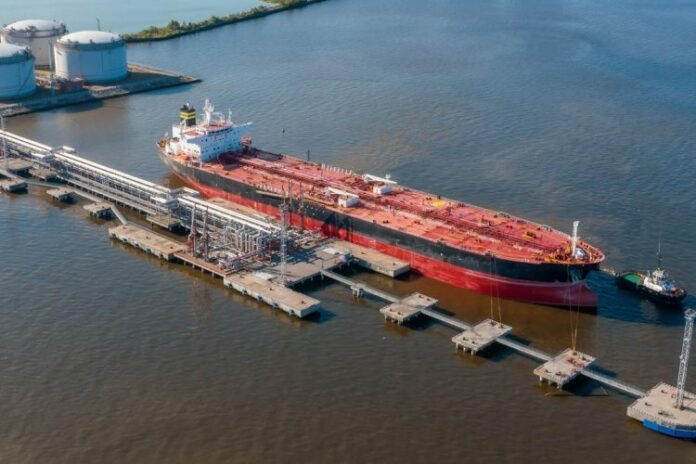
ABS and Daewoo Shipbuilding & Marine Engineering Co., Ltd. (DSME) have signed a joint development project (JDP) to use Solid Oxide Fuel Cell (SOFC) technology to replace at least one of three diesel generators typically on-board a Very Large Crude Carrier (VLCC).

It’s the second SOFC focused JDP between ABS and DSME, with the first collaboration in 2019 revealing the high efficiency of a SOFC and gas turbine hybrid system due to the re-use of hot exhaust off-gas.

ABS Darren Leskoski, Regional Vice President North Pacific of Business Development, said:

“SOFC systems have significant potential for applications in maritime transport and we are excited to be able to support this project, which will advance the industry’s understanding of their possibilities. The work builds on our experience from the first collaboration. Together ABS and DSME are shaping the vessels of tomorrow.” 

Mr. Il Guk Woo  Vice president of Naval and Energy System Research and Development Institute, DSME, said:

“This JDP will contribute to gain knowledge on safe use and accommodation of a fuel cell system with constraints of space on the ocean going vessels, benefitting maritime sectors seeking green technology for electricity and propulsion.”

In this latest JDP, both DSME and ABS will review the feasibility of a SOFC System being installed on a VLCC.

DSME will select the particular type of VLCC for the study, considering analysis of load requirements, emission control zone, stack characterization and system footprint prediction as well as simulation of process flow and arrangement of the system on the vessel and risk analysis.

ABS will review the findings and evaluate safety issues arising from the arrangement of the system with respect to existing structures and equipment of the vessel in accordance with ABS Rules and Guides. Ultimately, DSME intends to seek ABS Approval for the design.

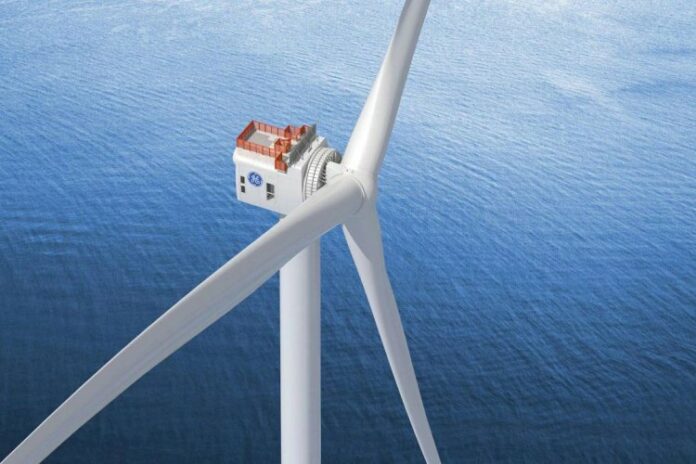
Equinor and partner reach financial close on world’s biggest offshore wind farm

0

Dogger Bank wind farm owners, Equinor and SSE, have today announced financial close on the first two phases of the project, representing in aggregate the largest offshore wind project financing to date globally.

Pål Eitrheim, Equinor’s executive vice president of New Energy Solutions, says:

“Reaching financial close on the two first phases of Dogger Bank is a major milestone, demonstrating our commitment to profitable growth within offshore wind. The extensive interest from lenders underpins the attractiveness of UK offshore wind assets and confidence in SSE and Equinor. As the wind farm’s future operator, we are proud to take this big step forward in delivering what will be the backbone of a growing wind hub in the North Sea.” 

The total senior debt facilities across the two phases is GBP 4.8 billion, plus ancillary facilities of around GBP 0.7 billion. Dogger Bank A and B are being project financed with gearing of 65% to 70% for the generation assets. Gearing on the transmission facilities is set to 90% of the forecasted OFTO sale proceeds.

With the strong interest from lenders, Dogger Bank A and B were able to secure competitive terms, despite unprecedented economic circumstances arising from the global coronavirus pandemic. The final group of lenders, comprising 29 banks and three export credit agencies, includes experienced lenders in the sector along with relationship lenders of both SSE and Equinor. The level of interest achieved reflects the quality of the project and enables strong returns on shareholder capital to be delivered.

Eitrheim says:

“Through the sheer scale of the project we have delivered record-low contract prices for the UK market, and as operator of the wind farm we will continue to deliver value to the UK for years to come. Dogger Bank will generate renewable electricity for British homes, whilst creating jobs and attracting significant investment to the UK.”

The project is being built in three 1.2 GW phases, with the first two phases being constructed at the same time to take advantage of the synergies resulting from their geographical proximity and use of common technology and contractors. As such, the two phases are being financed concurrently with all lenders participating in each phase in equal proportions. Dogger Bank A and B will each require total capital expenditure of around GBP 3 billion, including the capex for the offshore transmission station (OFTO). The third phase, Dogger Bank C, is being developed on a different timescale with financial close to follow at a later stage.

SSE Renewables are leading the construction of the 3.6 GW project, and Equinor will lead on the wind farm’s operations.

Equinor is developing as a broad energy company, and on 2 November this year Equinor announced its ambition to become a net-zero energy company by 2050. The company aims to become a global offshore wind major and expects to increase its current installed capacity to 12-16 GW, around 30 times the current level, by 2035.

Equinor is building material offshore wind clusters in the North Sea, the US North East and in the Baltic Sea and powers over one million European homes with renewable electricity from offshore wind. In the UK, the company currently operates three offshore wind farms, including the world’s first floating wind farm, Hywind Scotland. As well as progressing Dogger Bank, Equinor plans to extend two of its UK wind farms, doubling its offshore wind capacity off the coast of Norfolk.

Wallem Shipmanagement signs global crisis media deal with Navigate Response

0

Wallem Shipmanagement – one of the largest and most experienced providers of ship management services – has appointed Navigate Response to enhance its global media response capability.

As a leading provider of technology driven maritime solutions for shipowners world-wide, Wallem has engaged Navigate Response to deliver crisis communications support and training to its global operations on shore and at sea.

Frank Coles, Chief Executive Officer, Wallem Group, said:

“Wallem Shipmanagement is committed to investing in technology that primarily enhances the safety of our seafarers and improves security, productivity and efficiency. In Navigate Response we recognise a similar commitment to leveraging digital solutions to deliver world-class crisis communications and on-line training.”

Through its regional headquarters and service centres in Hong Kong, London, Singapore and Houston, together with its global network of 45 offices, Navigate Response will provide a comprehensive package of 24/7 support and training.

Chosen for its adoption of market leading applications of digital technology, Navigate Response will provide a range of bespoke training programs within an interactive, on-line environment ensuring that the entire Wallem Shipmanagement community has access to high-quality training delivered in the most efficient and interactive way.

Cutting-edge media and social media monitoring and analytical solutions, around the clock global support and expert advice also delivered by Navigate Response will enable Wallem Shipmanagement to prepare and communicate effectively in even the most challenging situations.

Edward Ion, Managing Director, Navigate Response, said:

“We are pleased to be working with one of the iconic names in shipping. Wallem has a rich history and heritage stemming from its Hong Kong roots as well as an enviable reputation for innovation and excellence. We are delighted that Wallem has recognised our shared commitment to providing state-of-the-art digital technology solutions to media training and crisis response and we look forward to working with them.”

Maritieme Academie Harlingen upgrades to the latest CESNI standards

0

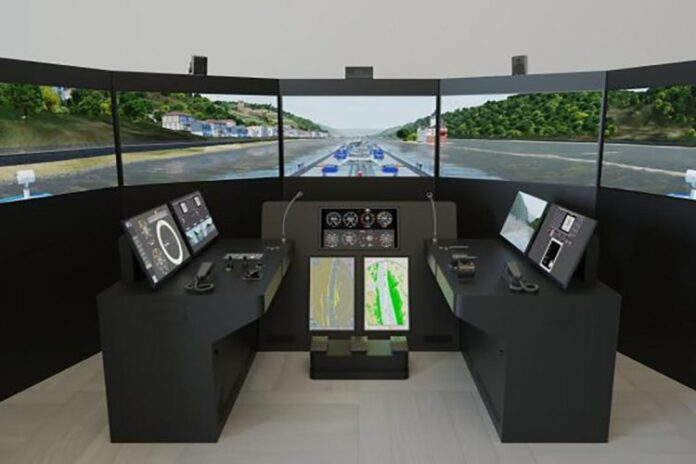
One of the most renowned inland navigation training schools in Europe – Maritime Academie Harlingen (MAH), which uses NAUTIS Inland Simulators to offer a wide range of inland maritime courses to hundreds of trainees each year, is now upgrading three of their Vessel Handling Simulators to the latest CESNI (2019) regulations. Their NAUTIS Vessel Handling+ Simulator is already compliant to the latest standards.

This upgrade of the rest of the simulators is being undertaken to remain compliant with the European Inland Shipping guidelines set by CESNI. It involves expanding the bridge view (i.e. screen view) of the NAUTIS Inland Simulators at MAH & Nova College to 210°. By 2022, all European Inland Navigation schools must be compliant with the CESNI Standards and this upgrade guarantees compliance to technical requirements of Inland Navigation Vessels.

According to Mr. Boll (Head of Inland Navigation Simulator Center, MAH), there has been a major shift in the inland navigation segment towards hands-on, competence-based training. NAUTIS Inland Simulator enables MAH to offer a very high-quality training with the added benefit of having controllable and repeatable training scenarios that do not pose any threat to the crews, vessel or the environment at a reasonable cost.

NAUTIS simulators are one of the most advanced maritime simulators available in the market and VSTEP team is always committed to developing the most efficient, innovative and user-friendly maritime simulators, which are not only compliant to industry standards but can also be adapted to comply with local rules and regulations.