-5.8 C
New York
Home Blog Page 733

KTH succeeded: The Oceanbird model sails using wind power

0

With support from their teachers, the students have managed to finish in time despite extraordinary circumstances.

For the last 20 years, KTH have held a course that aim to transform the passive student to an active engineer. Over the years, they have built everything from a man-powered submarines, solar powered aircraft to electric surf boards.

When KTH professor Jakob Kuttenkeuler engaged in the research project wPCC (wind Powered Car Carrier) together with Wallenius Marine and SSPA, he immediately thought of the course. The task for the students was to build and sail a seven meter long (1:30 scale) functional Oceanbird model with four wing sails. After successfully testing the model in open water one year later, they could state: mission accomplished.

Jakob Kuttenkeuler says:

“I am impressed by the finish of the craft and that the students managed to assemble all sub-systems into a working system. The students have grown with the task and really made it their own.”

The ten students come from all over the world. The work got more complicated by the fact that they couldn’t be in the lab as much as needed and not at the same time, due to corona restrictions. Jakob and the other two teachers in the course: Ulysse Dhomé and Stefan Hallström, had to be more involved in the practical work than they normally are. Therefore, KTH have decided to put the course on temporary hold during next year.

But the wPCC project is not on hold. With a fully functioning model, the testing can now be intensified by doctoral students and faculty at KTH to produce data for the research and development of the full scale ship.

Jakob says:

“It is extremely exciting to be a part of the transition towards sustainable transport systems. This project is for real, not just driven by academia. We are affected, inspired and challenged by the determination from Wallenius Marine to sail a full scale ship in 2024. As a result, there is a positive nerve in this project which we all feel.”

Danelec combines strengths with Veracity to drive maritime digitalization

0

Danelec Marine (Danelec) and Veracity have signed a pilot agreement to enable new maritime use-cases; combining the strengths of DanelecConnect’s onboard data capture capabilities and Veracity’s eco-system and platform architecture.

Veracity supports the implementation of Danelec’s agnostic and cost-efficient IoT ship-2-shore solution ‘DanelecConnect’ on customers’ vessels. It makes essential data from Danelec or third party Virtual Data Rooms (VDRs) and other data sources easily available to stakeholders.

Danelec has signed a pilot agreement with Veracity by DNV GL to combine the strength and flexibility of their extensive eco-system and platform architecture with the power of its revolutionary DanelecConnect ship-to-shore data solution to drive the adoption of digitization across the maritime industry.

Casper Jensen, CEO, Danelec Marine says:

“DanelecConnect taps into existing data infrastructure to create resilient IoT capabilities for customers looking to collect more data for diverse use cases with multiple stakeholders, such as vessel performance optimization, safety and voyage documentation, and remote VDR surveys,”

DanelecConnect already provides data to optimise route planning, vessel performance and fuel consumption for hundreds of ships. This is enabled by their versatile Vessel Remote Server (VRS) solution and powered by low-cost hardware modules on board.

Jensen continues:

“Over 20 years of experience at the forefront of VDR technology has informed the development of DanelecConnect. We are confident that its balance of high performance and reliability, combined with lower capital and operational exposure, will help position us as a leader in the maritime data collection segment over the coming years.”

In May this year, Veracity announced the platform now supports ingest of data towards the maritime data standards; ISO19847 and ISO19848. Acknowledging the importance of standardized and contextualized data for efficiency and re-usability; Danelec became the first data provider on Veracity to standardize its data according to the ISO standard.

Managing Director of Veracity, Mikkel Skou, says:

“The fact that Danelec has decided to standardize its data and make it available on Veracity, will facilitate for shipowners, managers and other data consumers to both acquire, use and re-use data across many different use-cases. This truly shows Danelec’s ambition to support digitalization in the maritime field. We are very glad to have them onboard Veracity and look forward to exploring how we together can accelerate digitalization in the maritime industry.”

Barry Authers, Partner Director at Veracity adds:

“Danelec’s digital ambition combined with their presence on board more than 6000 vessels makes a very good starting point for a platform collaboration”

New ‘Superstar’ Finnlines ferries will feature Wärtsilä engines and hybrid systems

0

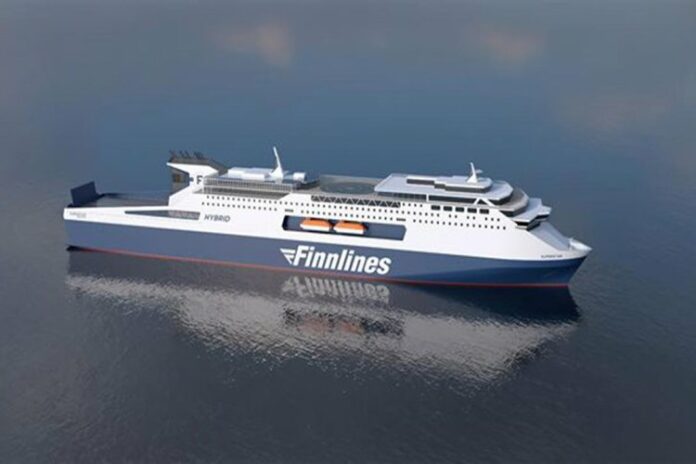
The technology group Wärtsilä has won the contract to supply the engines and a range of its electric solutions for two new ferries under construction at the China Merchants Jinling Shipyard (Weihai) in China.

The ships are being built for Finnlines, a part of the Grimaldi Group, and are designed to incorporate the latest technical and environmental concepts. The order for the engines was placed in July 2020, with the remaining Wärtsilä equipment ordered in September 2020.

The two ‘Superstar’ vessels will operate between Finland and Sweden across the Baltic Sea. They will feature Wärtsilä 46F main engines, thrusters, and a state-of-the-art electric package. This includes a hybrid shaft generator system comprising a fully integrated Multidrive capable of driving the shaft generators in both directions as motors and/or generators. The package also includes the thruster control system, and a highly efficient energy management system for performance optimisation. This will enable the vessels to operate free of emissions on either batteries or shore power while in port.

Mikael Lindholm, Head of the Newbuilding Department at Finnlines,  says:

“This investment is aimed at energy efficiency and emissions reduction and is part of our intention to lead the development of energy-efficient transport services in the Baltic Sea region. We have Wärtsilä solutions in most of our ships, so we are familiar with the efficiency and reliability they offer.”

Mika Ojutkangas, General Manager, Sales, Wärtsilä Marine Power, says:

“High efficiency and sustainable operations are increasingly becoming the key focus areas for ferry operators around the world, and our range of products, systems, and integrated solutions are designed and developed to achieve the highest levels of performance in these areas. This latest Finnlines order is further evidence of the success of this approach. These new ferries will be among the most eco-friendly ferries of their type, setting new standards for sustainability and energy efficiency.” 

The 230 metres long ferries will be capable of carrying approximately 1,100 passengers and will have 5,100 lane metres for rolling freight. The Wärtsilä equipment is scheduled for delivery to the yard commencing in spring 2022, and the vessels are expected to enter operational service in 2023.

Pacific Basin expands its fleet with the acquisition of four modern Ultramax vessels

0

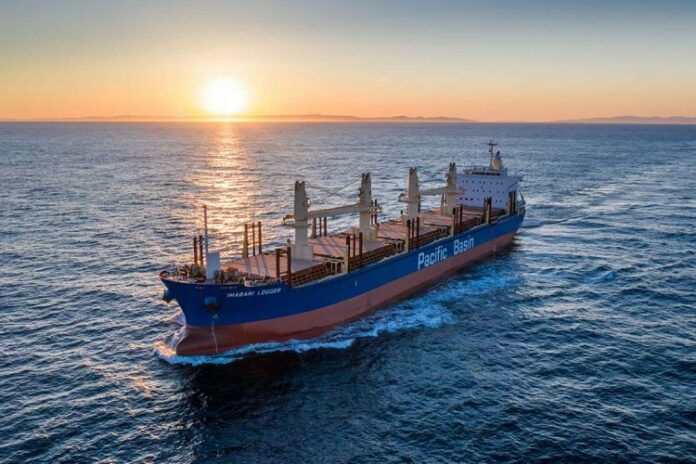
Pacific Basin Shipping Limited, one of the world’s leading dry bulk shipping companies, today announced its agreement to acquire four 2015-built Ultramax dry bulk vessels for an aggregate consideration of US$67.0 million and with delivery by late April 2021.

The transaction is consistent with the Company’s previously announced resumption of its strategic plan to grow and renew its owned fleet with larger, high-quality, modern second-hand acquisitions, focusing especially on adding Supramax and Ultramax ships and trading up its smaller, older Handysize ships to newer vessels with larger carrying capacity and longer asset lives. The transaction will be funded by Pacific Basin’s cash reserves.

Mr. Mats Berglund, CEO of Pacific Basin, said:

“This is an excellent opportunity to expand our fleet with several high-quality, larger ships at an attractive price. We consider these vessels to be well constructed and efficient ships of excellent design for our trades.

The four sister vessels each have cargo carrying capacities of over 61,000 dwt and are Kawasaki Heavy Industry designs built by Nantong COSCO KHI Ship Engineering Co., Ltd. (NACKS), which is a joint venture between Kawasaki Shipbuilding Corporation and COSCO. All four ships are fitted with scrubbers and ballast water treatment systems, and two are equipped to carry logs.”

For more detail about this transaction, which remains subject to approval of the sellers’ financiers, please refer to the relevant discloseable transaction announcement on Pacific Basin’s website.

Orbital and Designworks unveil futuristic tidal and river turbines

0

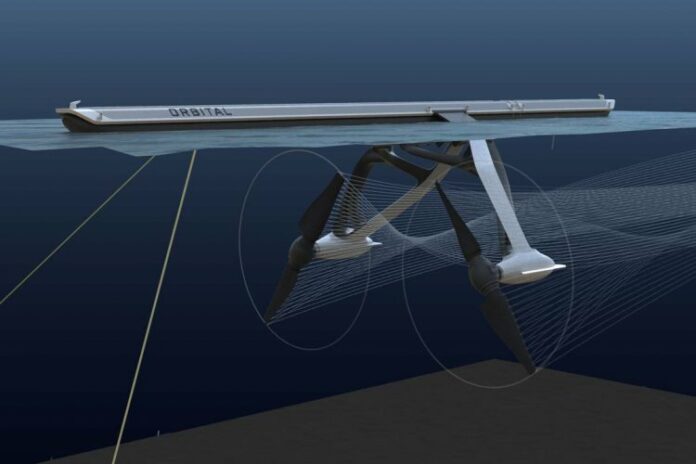
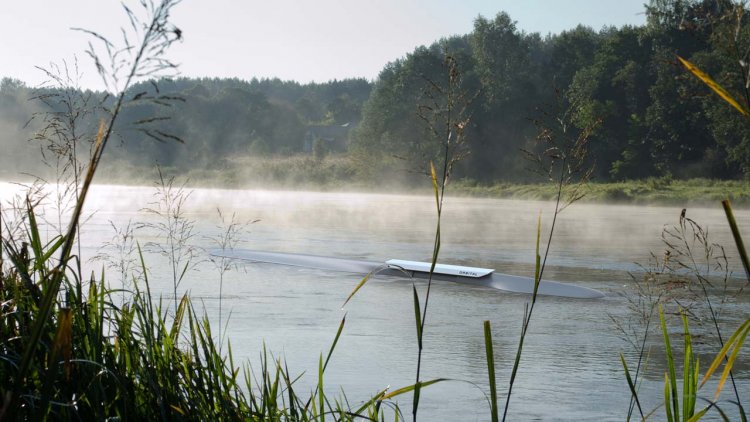
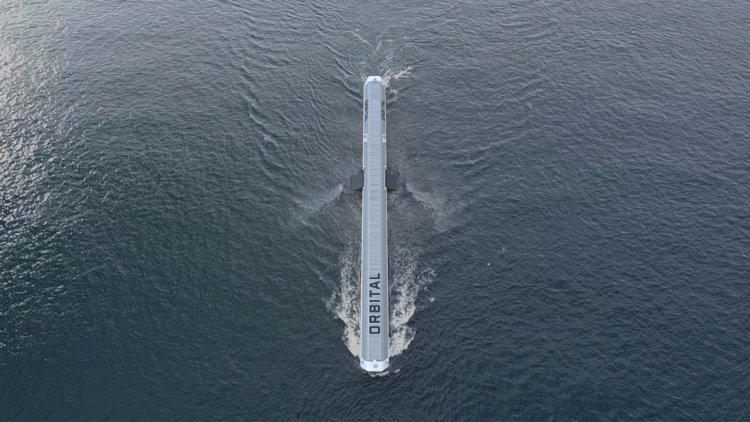
UK based Orbital Marine Power and Designworks, BMW Group’s Advanced Design Company, have collaborated to produce a striking vision for Orbital’s floating energy generation technology, with the utility scale Orbital OA model and a smaller Riverkinetic model included in the line up.

Orbital recently completed a world record delivery of over 3.2GWh of tidal stream power to the UK grid. Its current production turbine, the Orbital O2, is set to increase this low carbon power generation capacity further when it launches in 2021.

World renowned design innovation company Designworks has studios in Munich, Los Angeles and Shanghai. For more than 25 years its strategic design has stimulated the BMW Group as well as a select group of partner companies, creating designs that help them stay at the forefront of their industries.

The collaboration combines Orbital’s deep engineering and marine experience, with Designworks expertise in design strategy and advanced simulation modelling.

Starting with large utility turbines, the two teams looked at how advancements in hydrodynamic performances, cost engineering and advanced production methods will influence the design of tidal turbines in the future. Streamlined systems in connected grid arrays are forecast to yield greater efficiencies in cost with increasing operational autonomy. Indeed, the vision for the OA model sees turbines becoming less like traditional vessels, and more akin to autonomous power generation fleets in the future.

The vision work also developed a smaller Riverkinetic turbine tailored to communities with a need for greater energy independence. Lighter in weight and readily transportable the design and engineering team envisioned a quiet and clean design, in contrast reference to the diesel generators relied on by so many people in remote locations today.

Andrew Scott, CEO Orbital, said:

“Our goal is to see our technology deployed across the world to help deliver a cleaner, more sustainable planet. The collaborative work between Orbital and BMW Group Designworks has been an inspirational exercise, an exciting combination of collective experience and talent across the teams”

Holger Hampf, President Designworks, said:

“Orbital’s embrace of strategic design exemplifies the benefit of including design early in the development process. It is rewarding to see such significant advances in clean energy, and I hope the resulting design inspires more companies particularly when pursuing benefits to our planet.”

BC Ferries to trial two ship service on Campbell River – Quadra Island route

0

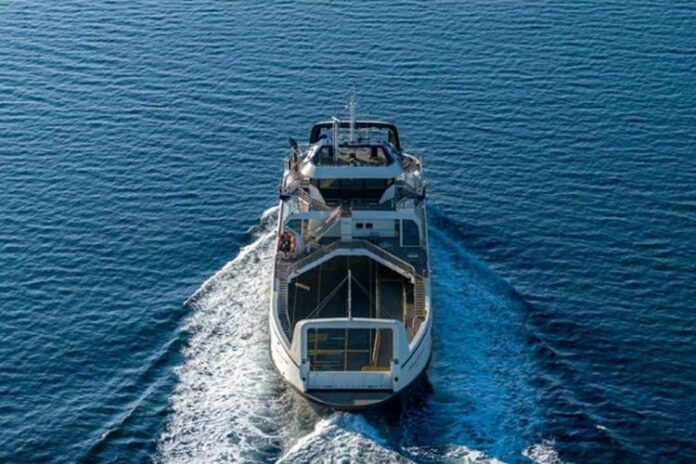
Those who need to travel for essential reasons can sail aboard the Island Aurora and experience this new class of vessel safely, while following COVID-19 protocols. The Island Aurora will sail in conjunction with the Powell River Queen, which will operate on its regular schedule during the trial.

The Island Aurora is currently undergoing planned warranty work at Point Hope Martime in Victoria. As the vessel sails back to the Port McNeill – Alert Bay – Sointula route, there is an opportunity to stop in Campbell River. The trial will lead to learnings regarding operational efficiencies, loading times and sailing intervals. BC Ferries will use these learnings to collaborate with the community on sailing schedules during community engagement in early 2021.

In early 2022, BC Ferries will introduce two new Island Class vessels to the route, replacing the Powell River Queen. Customers travelling for essential reasons may sail on the Island Aurora on December 4 and 5 during the trial and regular fares will apply. More details regarding the trial and timing will be shared early next week.

Corrine Storey, BC Ferries Vice President and Chief Operating Officer, said:

“Bringing two new Island Class vessels to the route increases the daily passenger and vehicle capacity of the route and creates a positive economic impact in the community. Two vessels also increases frequency and reduces wait times, and helps BC Ferries transition to a lower carbon future.”

The Island Class vessels are designed for future full electric operation. The ships are fitted with hybrid technology that bridges the gap until shore charging infrastructure and funding become available.

On board the Island Class, passenger lounges and washrooms are situated on the main deck for easy access. BC Ferries designed the lounge areas for comfort, with a variety of seating choices and charging stations for electronics. An overhead sundeck with seating, windbreaks and an accessible washroom provide a comfortable space to sit outdoors.

DFDS: Partnership aims to develop hydrogen ferry for Oslo-Copenhagen

0

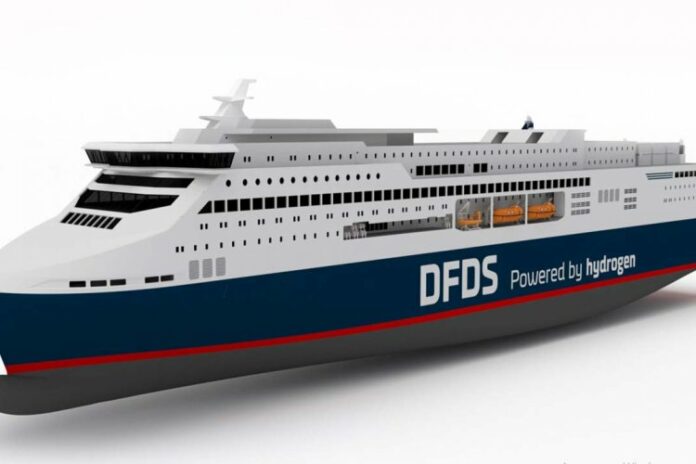
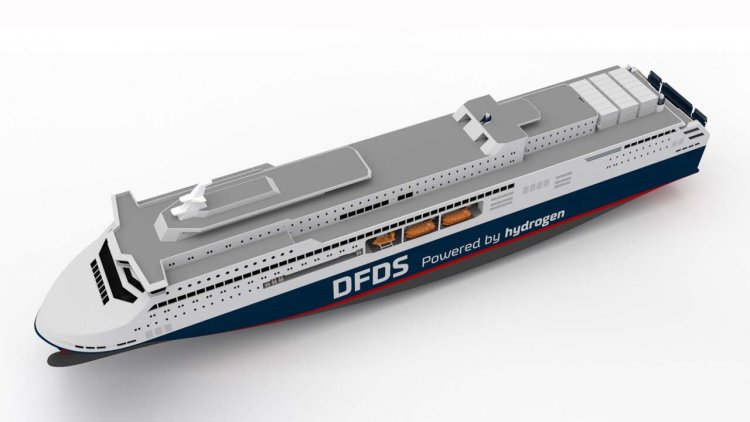
DFDS and its partners have applied for EU support for development of a ferry powered by electricity from a hydrogen fuel cell which only emits water. Green hydrogen is to be produced by a projected offshore wind energy-powered electrolyser plant in Greater Copenhagen.

A group of companies have partnered up in order to develop a 100% hydrogen powered ferry for DFDS’ Oslo – Frederikshavn – Copenhagen route.

The ferry will be powered by electricity from a hydrogen fuel cell system that emits only water and can produce up to 23 MW to propel the ferry.

Torben Carlsen, CEO of DFDS, says:

“The largest fuel cell systems today produce only 1-5 MW, and the development of such large-scale fuel cell installations for an electric ferry is a monumental task. We can only succeed in partnerships with companies that together can muster some of the globe’s finest expertise in design, approval, building, financing and operation of innovative vessels.” 

The partnership committed to achieving this includes DFDS, ABB, Ballard Power Systems Europe, Hexagon Purus, Lloyd’s Register, KNUD E. HANSEN, Ørsted and Danish Ship Finance.

Torben says:

“Together, we expect to learn how to make these fuel types and technologies commercially viable, which is key to a transition of the industry to climate neutrality, which is also the ultimate goal of DFDS’ climate plan.”

The partnership has applied for support from the EU Innovation Fund. As there are no ferries of this kind in the world today, the development of the ferry will also require public involvement. However, if the project develops as projected, the ferry could be in full operation on the route as early as 2027.

The hydrogen will be produced locally in Greater Copenhagen based on offshore wind, and the project will investigate how to optimally integrate with the local energy system.

The ferry that has the working name Europa Seaways, is designed for 1,800 passengers and has capacity for 120 lorries or 380 cars.

Prysmian Group accelerates in Race to net zero CO2 emission

0

Prysmian Group announces the launch of a new project aimed at accelerating the race to net-zero CO2 emission. 

The announcement has been made during its “Sustainability Day”, the digital stakeholders engagement event with Group top management sharing Prysmian’s vision, priorities and plans for a sustainability roadmap. The project aims to set science-based carbon reduction targets for the Prysmian Group, and will consider both Scope 1&2 (own organization) and Scope 3 (value chain) GHG emissions. Carbon targets are considered ‘science-based’ if they are in line with what the latest climate science says is necessary to meet the goals of the Paris Agreement — to limit global warming to well-below 2°C above pre-industrial levels and pursue efforts to limit warming to 1.5°C.

Prysmian Group is supported in the project by the Carbon Trust, the leading organization helping companies and government in realizing ambitious plans for a sustainable, low carbon future.

Prysmian Group Chief Executive Officer Valerio Battista says:

“As a Public Company we believe that sustainability must be part of our DNA. We are focused on improving the sustainability of our supply chain and in our organization and on the development of cable and optical fiber technologies for electrical and telecommunications networks, suitable to support the transition towards the use of renewable energy sources and towards a decarbonized economy”.

By 2022, Prysmian has planned to invest around 450 million euro to further improve the sustainability of its organization and supply chain and to accelerate the development of advanced cable technologies as well as assets and services. Energy consumption reduction, circularity and waste recyclability, health & safety culture are key in Prysmian’s efforts to improve sustainability of its supply chain.

The Transition towards renewable energy is very much linked to the capability to transmit and dispatch energy from one place to another, from those locations where renewable energy is produced (offshore wind farms) to those locations where is consumed (urban centers). Prysmian Group is committed to support the development of greener and smarter power grids, by making available innovative cable technologies to cover longer distances and sea depths, ensuring higher performances, reliability and sustainability. The launch of the new vessel “Leonardo da Vinci”, the world’s best performing and most capable cable layer, has also been confirmed and it will enter into operation in July 2021.

COWI and Port of Oslo sign framework contract

0

Under a new framework contract, COWI will now provide engineering services including electrification solutions, water and waste, HVAC, rail, structural design, geotechnics and environmental measures.

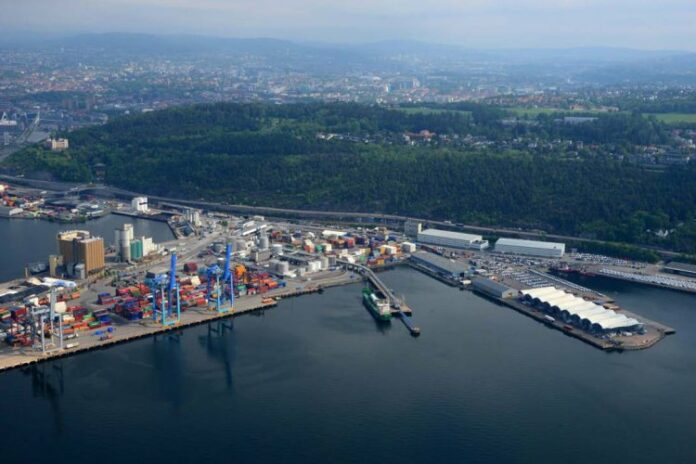
The Port of Oslo is Norway’s largest public commercial port, served by international, regional and local ferries and heavily used for cargo. Between 50 and 70 ships dock there every week. 

Property Director for the Port of Oslo, Åsa Nes, says:

“The Port Authority is planning major investments to provide Oslo and the region with a modern, environmentally-friendly port. The port is working to realise its ambitions for the ‘Fjord City’, and the South Harbour (Sydhavna) will be developed into an efficient cargo port in the coming years. We look forward to having COWI on the team to realise our vision of developing the Port of Oslo into the world’s most efficient and environmentally-friendly port city.”

The ‘Fjord City’ is the name given to the parts of the Oslo waterfront that have been developed since 2000 from industrial and container facilities into new districts. Today, 20 years after the Fjord City renewal project, Oslo has been transformed. The Fjord City has a life of its own with tourists, residents, workplaces and cultural life.

Svein Ove Svendsen, Vice President Energy at COWI, looks forward to assisting in the ongoing development of the future port areas.

Svendsen says:

“We are very grateful at COWI that the Port of Oslo has chosen us, and we find it very exciting to work with a port authority which is so forward-looking and has set itself such clear targets for reducing emissions. We want to support the Port’s ambition to become one of the world’s first zero-emission ports. We believe this goal is completely achievable, and we have to dare to think in new ways and challenge the established wisdom.

Electrification, charging infrastructure, renewable energy, energy storage and collaboration will be key to any solutions for achieving zero emissions. COWI has great expertise in this area, and we are already working on electrification projects in ports in Norway, Denmark and Sweden.”

With increased electrification, the Port of Oslo will see significantly greater energy needs. Providing sufficient capacity calls for both local and regional cooperation. COWI is working on electrification solutions on the Elnett21 project, which is creating systems for local production, storage and management of energy between Stavanger airport, the port of Stavanger and Forus business park.

The Agreement will take form as a cross-border collaboration between COWI Denmark and Norway, with Hafslund E-CO as partners.

Project manager Øyvind Sverre Pettersen from COWI says:

“The Port of Oslo has a need for engineers with great technical expertise to give advice on all aspects of building and construction projects.” 

Marine experts from COWI in Denmark add special expertise within port planning, marine structures and climate adaptation solutions to secure the port planning in the crucial transition area from sea to land. Planning tools such as vessel simulation software to be used for port planning of new navigations channels and ferry berths will be helpful to both visualize but also to optimize the development of the port of Oslo.

Henrik Hostrup-Pedersen, project director from COWIs department for Marine and Foundation says:

“The customer must be able to trust that everything works as it should. At the same time we apply the ”Smart Port” approach and tailor the port to be designed for the energy solutions and climate challenges of the future. ”

COWI will also be providing services such as status assessments and project design of quays and buildings.

The strategic plan for the Port of Oslo for 2019–2034 anticipates a need to handle 40 per cent more passengers and 50 per cent more freight.

Pettersen continues:

“COWI has built up deep all-round expertise from port development projects all over the world, which we believe will provide the Port of Oslo with efficient and environmentally-friendly ocean transport to and from the city, while also minimising the social costs.”

Damen commences Australian icebreaker seatrials

0

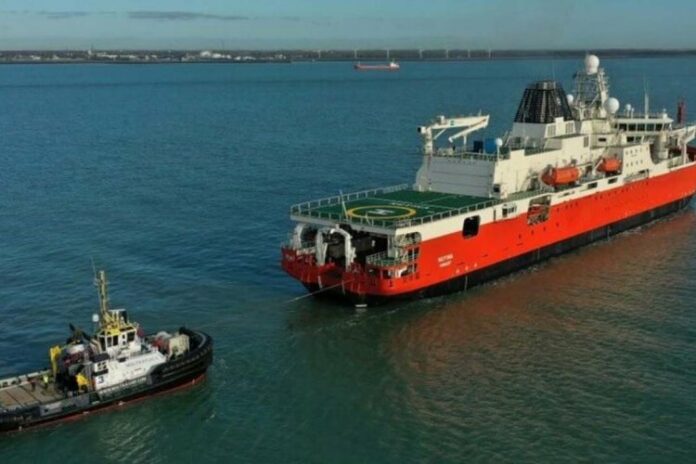
After her arrival in the Netherlands at the end of August, Australia’s icebreaker RSV Nuyina is commencing her seatrials in the North Sea.

This marks the start of a month-long phase and an important milestone for all involved in the icebreaker project; the Australian Antarctic Division, ship managers Serco and shipbuilder Damen.

Damen has been working on the icebreaker since 2016. Seatrials will be followed by additional weeks of deepwater trials. Testing of the ship’s speed, noise, propulsion systems, steering, advanced electrical systems, and science equipment will take place as the vessel prepares for final sea ice trials in the Arctic early next year.

One of the most advanced vessels of its kind, RSV Nuyina will provide a world-class scientific platform for Antarctic researchers, carrying cutting-edge equipment to study the depths of the Southern Ocean, sea ice and the upper atmosphere. The vessel is expected to arrive in its home port of Hobart in mid-2021 to commence Antarctic operations in next year’s Southern Hemisphere summer season.