-6.5 C
New York
Home Blog Page 730

VIDEO: Austal launches first of two Cape-class Patrol Boats for TTCG

0

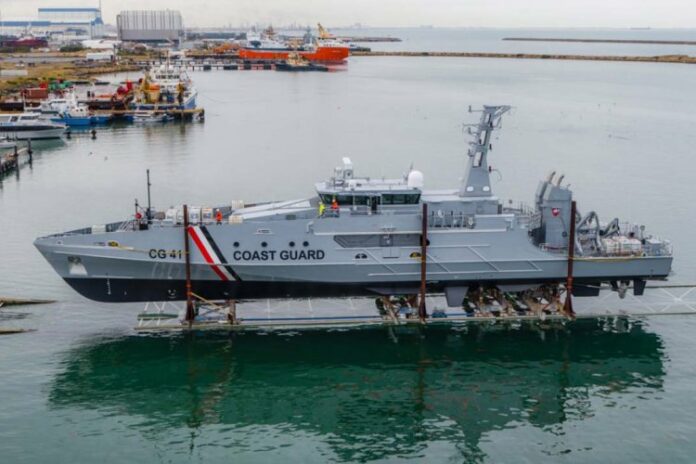
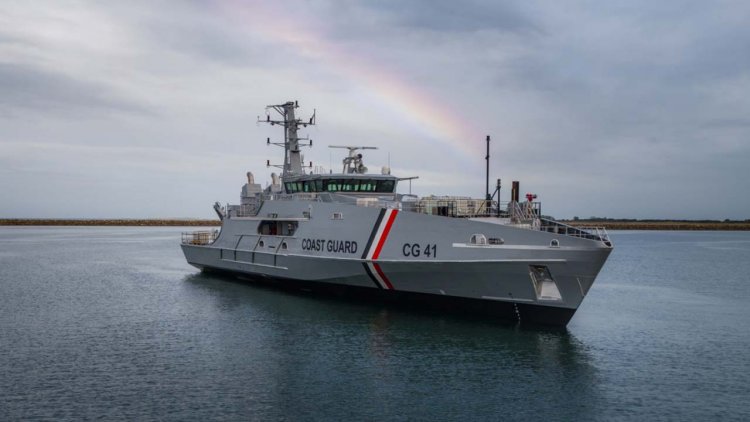
Austal Limited has launched the first of two Cape-class Patrol Boats for the Trinidad and Tobago Coast Guard (TTCG), under construction at the Company’s Henderson, Western Australia shipyard.

Under a A$126 million contract awarded by the Government of the Republic of Trinidad and Tobago (GORTT), Austal is constructing two 58 metre Cape-class Patrol Boats for the TTCG, scheduled for delivery in the first half of 2021.

Austal Chief Executive Officer David Singleton said the launch of the vessel, Hull 398, provided a genuine sense of accomplishment and anticipation throughout Austal’s Australasian business.
Mr Singleton said:

“With 10 vessels already in operation with the Australian Border Force and Royal Australian Navy, and a further 6 ordered by the Navy, the Cape is undoubtedly one of Austal’s most successful and proven naval vessel designs. Now, we’re exporting the Capes to the world, and we look forward to additional international orders that will continue to build Australia’s sovereign shipbuilding capability.” 

The new TTCG Capes are based on the 58 metre aluminium monohull patrol boat, first developed by Austal in Australia for Australian Border Force. The vessels have a 4,000 nautical mile range and 28-day patrol cycle, with a crew of up to 22. Each Cape is equipped with two high-speed 7.3 metre rigid hull inflatable boats used for intercepting other vessels.

Austal is also delivering 21 Guardian-class Patrol Boats for 12 Pacific Island nations and Timor Leste under the SEA3036-1 Pacific Patrol Boat Replacement Project, with eight patrol boats delivered since 2018. Austal provides in-service support to both the Cape and Guardian-class Patrol Boat fleets through an expanding service centre network including Henderson, Western Australia, Cairns, Queensland and Darwin, Northern Territory.
Alewijnse wins electrical fit-out of second TSHD at Thecla Bodewes Shipyards

0

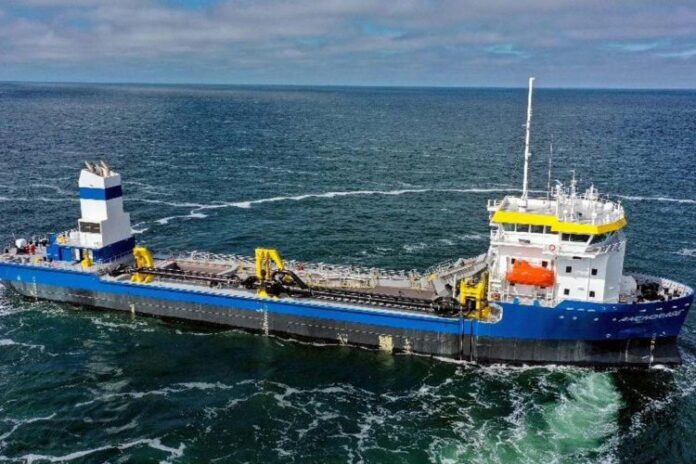
Electrical systems integrator Alewijnse has been awarded the contract for the complete electrical and automation installation on board the sister vessel of trailing suction hopper dredgers (TSHD) Anchorage, which was successfully delivered earlier this year. The innovative vessel is currently under construction at Barkmeijer Shipyards, part of Thecla Bodewes Shipyards. Delivery is scheduled for April 2022.

Both TSHDs are designed to extract sand and gravel aggregates from the seabed. Each vessel has a single suction pipe and a hopper capacity of 3,000 m³.

The complete electrical and automation outfitting is the responsibility of Alewijnse Marine. This includes the design, building, installation and commissioning of the switchboards, consoles and the dedicated alarm, monitoring and control systems. It also includes the design, engineering, supply and commissioning of the dredging automation system, including visualisation, monitoring and process control.

For the control and monitoring of the dredging process, Barkmeijer Shipyards has collaborated with Alewijnse to develop an intelligent and integrated bus-driven system. In addition to delivering high dredging performance, its capabilities mean that a crew of just 7 or 8 is all that is required to manage, load and unload the vessel. This ground-breaking system is now being made available to other clients via Alewijnse. Elsewhere on board, the diesel-electric power plants, provided by D&A Electric, significantly reduce energy consumption and emissions.

In addition, several advanced automation systems are being integrated on board, including an alarm and monitoring system (AMS) for fire door signaling and remote tank sounding and a bridge operating system (BOS) for the control and monitoring of the lighting systems. Also being fitted are a dredge control system (DCS) for the control and signaling of the remote controlled dredging valves, position indication and control of the swell compensator, overflow, pumps, screen/hopper loading system and hydraulic installation, and a ship system control (SSC) for control and signaling of the trim valves, ventilation and supervision of the emergency generator.

The company is also installing an Alewijnse draught and loading system (ADLS) for the continuous measuring of the equipment’s draught and the calculation of the actual load, trim and list. The Alewijnse suction tube system (ASTS) combines software and hardware for the measuring, calculating, visualisation and monitoring of the hopper dredger’s suction tube position under water.

Barkmeijer Shipyards and Alewijnse have been working together successfully for more than 40 years. Earlier projects include the joint delivery of the German Waddenferry Adler Rüm Hart, hopper dredgers UKD Orca (2010) and Charlock (2016) and three pilot station vessels built for the Dutch Pilots’ Organisation; the Polaris, Pollux and Procyon (2012 – 2014). Alewijnse has been contracted again for these two new TSHDs because of its extensive knowledge and experience combined with the long and strong relationship with Barkmeijer.

Martin Terpstra, Operational Manager at Alewijnse, said:

“We are very proud to have been awarded this second contract and it confirms the good cooperation between Barkmeijer Shipyards and Alewijnse. We look forward to demonstrating our electrical and automation expertise once again with this project and to delivering jointly this second, high quality vessel.”

Jos de Groot, Manager R&D at Thecla Bodewes Shipyards, added:

“I have worked with Alewijnse on many complex projects over the last 22 years but their performance on these particularly complex vessels deserves great appreciation!  I hope to continue the cooperation on new challenges in the future.”

MSC Cruises to temporarily pause cruise operation in the Mediterranean

0

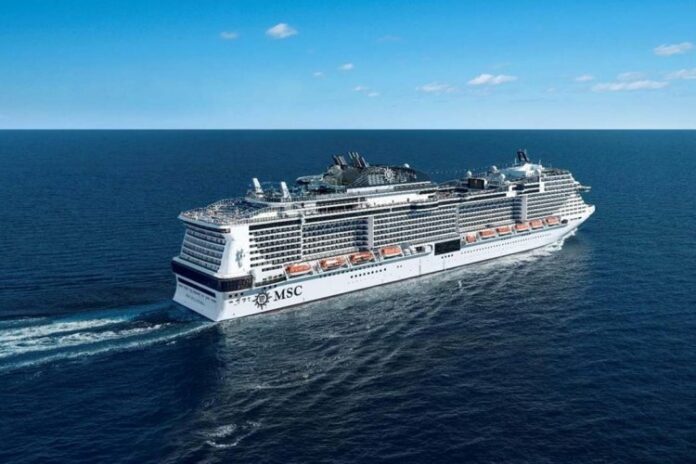
MSC Cruises will temporarily pause the operation of MSC Grandiosa later this month and move to January the planned restart of MSC Magnifica as a result of new travel measures introduced by the Italian government for the Christmas and New Year period.

The new rules include extensive restrictions to people’s mobility across the entire country that will severely impact the ability of future guests – Italian residents, plus those from overseas – to reach any of the ships’ embarkation ports in Italy.

The Italian government has said it will completely tighten the movement of its residents between regions, cities and towns in its efforts to combat the pandemic ashore between 21 December, 2020 and 6 January, 2021, which will also restrict the ability of holidaymakers from abroad to travel to, through and from Italy.

This has caused the cancellation of three future planned voyages of MSC Grandiosa and three sailings of MSC Magnifica.

MSC Grandiosa will temporarily pause her current programme of 7-night voyage sailings on 20 December in Genoa, Italy and will resume her Western Mediterranean cruises on 10 January, 2021, also from Genoa.

MSC Magnifica, which was due to re-start 10-night voyages in the West and East Mediterranean on 18 December from Genoa, will now commence its sailing programme on 15 January, 2021 following the cancellation of three previous sailings.

MSC Cruises in January 2021 will welcome back guests on board MSC Grandiosa and MSC Magnifica under the protection of its comprehensive health and safety protocol which during the last four months – when the pandemic ashore was at its most recent peak – proved to be effective for the protection of guests, crew as well as the communities its ships visit.

Costa also cancels Christmas and New Year cruises. Costa cruises will resume with Costa Smeralda on January 7, 2021 with the one-week itinerary of the flagship of the Costa fleet, dedicated exclusively to Italy, that can be divided into two short cruises of three and four days departing from Civitavecchia. The four-day mini-cruise is directed to Central and Southern Italy, with stopovers in Naples, Messina and Cagliari. The three-day cruise instead sails towards Central and Northern Italy, and includes visits to Civitavecchia, La Spezia and Savona. 

First ship with MAN engine already running on climate-friendly fuel

0

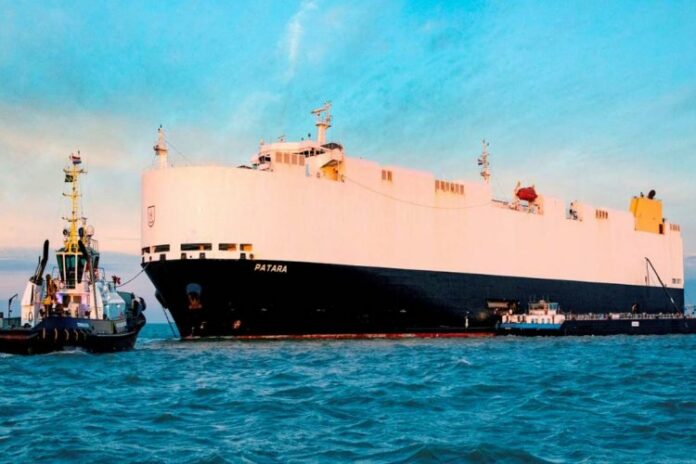
The fuel is produced from materials such as used oil from restaurants and the food industry. The first car freighter was re-fuelled for the first time with this oil in mid-November 2020 and a second ship is due to follow at the beginning of 2021.

Thomas Zernechel, Head of Volkswagen Group Logistics, says:

“We are the first automaker to make widespread use of this fuel. This way, we reuse waste oil in an environmentally compatible way. With 85% lower CO2 emissions than with conventional fossil fuels, the contribution to climate protection is enormous.”

For European shipments, Volkswagen Group Logistics continuously charters two vessels which carry up to 3,500 vehicles on a route from Emden via Dublin (Ireland), Santander (Spain) and Setubal (Portugal) back to Emden about 50 times per year. In the course of their journeys, they carry about 250,000 new vehicles of the AUDI, SEAT, ŠKODA, Volkswagen Passenger Cars and Volkswagen Commercial Vehicles brands every year.

The two ships, which are both 180 metres long, are each powered by an MAN marine diesel engine with more than 19,000 PS (14,220 kW). In future, the two ships are to be refueled at sea off the coast of Vlissingen (Netherlands) with alternative fuel supplied by the Dutch company GoodFuels. This way, the CO2 emissions of the two conventional vessels along their route will be reduced by more than 85% – from over 60,000 to about 9,000 tonnes per year. In addition, sulphur oxide emissions will be almost completely avoided.

This change is part of a strategy to make Group Logistics even greener: another element is the use of liquefied natural gas (LNG) to power car freighters. These vessels travel between Europe, North America and Latin America. Furthermore, all rail shipments in Germany with DB Cargo are being changed over to eco-power. 

Eni enters the UK offshore wind market

0

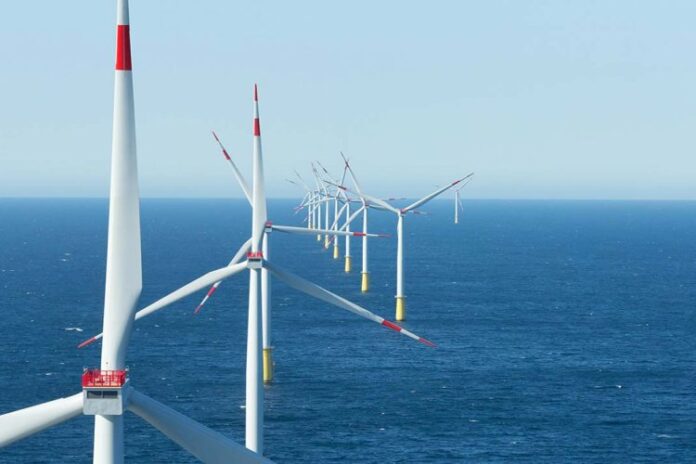
Eni enters the world’s largest offshore wind project with the acquisition of a 20% stake in the UK Dogger Bank (A and B) 2.4 GW project.Eni has entered the UK offshore wind market for electricity production through the acquisition of a 20% stake from Equinor New Energy and SSEW Renewables of the Dogger Bank (A and B) project.

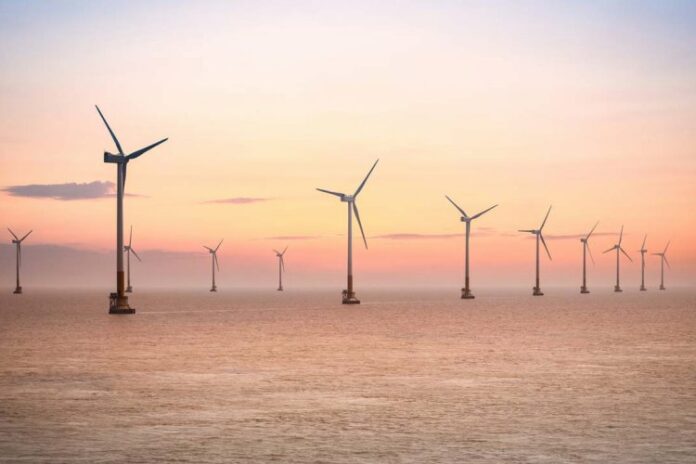
The project involves the installation of 190 state-of-the-art turbines situated approximately 80 miles from the British coast. Each turbine has a capacity of 13 MW for a total capacity of 2.4 GW. At full capacity, Dogger Bank (3.6 GW) will be the world’s largest project of its kind, generating around 5% of UK demand for renewable electricity and supplying energy to approximately 6 million British families.

The construction of the Dogger Bank (A and B) is expected to cost a total of £6 billion and will take place in two stages, with the first to be completed by 2023, and the second by 2024.

This acquisition sees Eni enter the Northern Europe offshore wind market, one of the most promising and stable in the world, with two partners that have extensive experience in the sector, and with whom it will be able to enhance its own expertise in the construction and operation of offshore wind farms for future projects in other areas as well.

By entering the Dogger Bank (A and B) project, Eni adds 480 MW of renewable energy to its 2025 target of 5GW of installed capacity from renewable sources, while it will additionally be able to explore potential synergies with the retail business.

Eni has been advised on this transaction by RBC Europe limited, acting as exclusive financial advisor, and Bracewell (UK) LLP as legal advisor.

Claudio Descalzi, Chief Executive Officer of Eni, has stated:

“For Eni, entering the offshore wind market in Northern Europe is a great opportunity to gain further skills in the sector thanks to the collaboration with two of the industry’s leading companies, and to make a substantial contribution to the 2025 target of 5 GW of installed capacity from renewables, an intermediate step towards the more ambitious target of zero net direct and indirect greenhouse gas emissions in Europe by 2050”.

iFROG robot leaps ahead in ability to inspect and maintain offshore assets

0

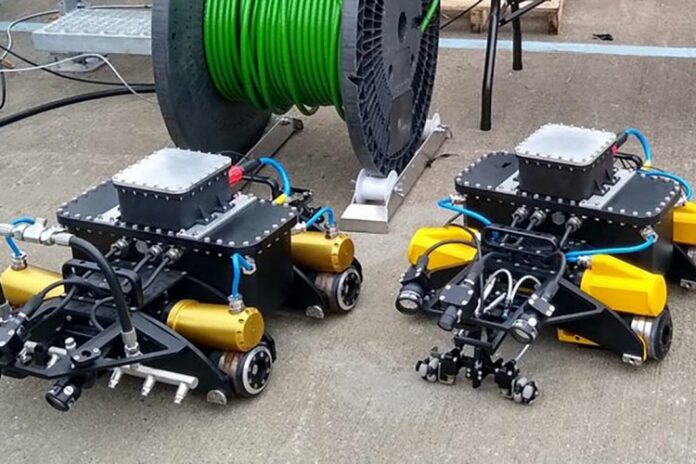
iFROG, an amphibious robot capable of working in teams to clean and inspect monopiles above water level and up to 60 metres below (~6 bar), has successfully completed trials at the Offshore Renewable Energy (ORE) Catapult’s National Renewable Energy Centre in Blyth.

The multi-robot solution was developed under a three-year project that was funded by Innovate UK and brought together iFROG developer InnoTecUK, ORE Catapult, TWI and Brunel University London. Teams of iFROG robots will be able to clean corrosion and biofouling from monopiles, before inspecting the surfaces and conducting pre-emptive checks of weld integrity.

The technology has the potential to be a game-changer in the offshore wind industry, reducing the safety risks and costs involved in deploying human divers to monopiles, as well as shifting the maintenance approach from reactive to preventative. By upping the frequency and quality of subsea inspections, iFROG can save up to £150,000 per offshore wind turbine per annum.

Initial technology demonstrations, which took place at the ORE Catapult dry and wet docks earlier this autumn, saw iFROG navigate a monopile interior using magnetic adhesion and conduct non-destructive testing (NDT).

The robot proved its ability to scale the interiors of monopiles diagonally, not just up and down as wheeled robots have done previously. Its amphibious capabilities were tested too, with the robot moving easily between dry and underwater sections of the monopile.

During the final trials, two robots demonstrated how they can work together in a team above and below the waterline. The first robot performed corrosion mapping and water-jet cleaning of the monopile. The second robot inspected weld lines to assess integrity and flag potential defects.

The technology is also expected to find markets beyond the offshore wind industry by targeting the oil and gas sector, ship hull manufacturing and maintenance, military, and other large-structure related industries, both on and off land.

Panagiotis Karfakis, Robotics Engineer at InnoTecUK commented:

“During the first trials, the consortium validated the performance of the onboard non-destructive testing interfaces, which enable a wide range of equipment for asset inspections. iFROG incorporates essential cleaning gear and can remove biofouling and corrosion from off the steel surface at relatively fast rates.

“The robot is also capable of semi-automated navigation which allows the operator to focus on the important part of the inspection rather than the driving, speeding up the overall operation significantly. The final set of trials has demonstrated the full capabilities of this technology and its impact in real-world scenarios, especially in extreme offshore environments.”

Chris Hill, Operational Performance Director at ORE Catapult added:

“iFROG is one of a series of highly ambitious robotics projects coming through our innovation programmes and our Operations and Maintenance Centre of Excellence (OMCE). Deploying robotic platforms in teams across offshore wind sites will tighten up inspection and maintenance schedules, reducing the need for human technicians to deploy in potentially hazardous environments.

“Versatile applications like iFROG have the potential for high economic impact in the future. The UK is already a world leader in operations and maintenance for the offshore wind sector, and that market is set to grow rapidly in the coming decades. With applications now being assessed across a variety of other sectors, the technology is set to be a driver of market expansion and job creation in the coming years.”

1,900 containers lost or damaged on ONE Boxship

0

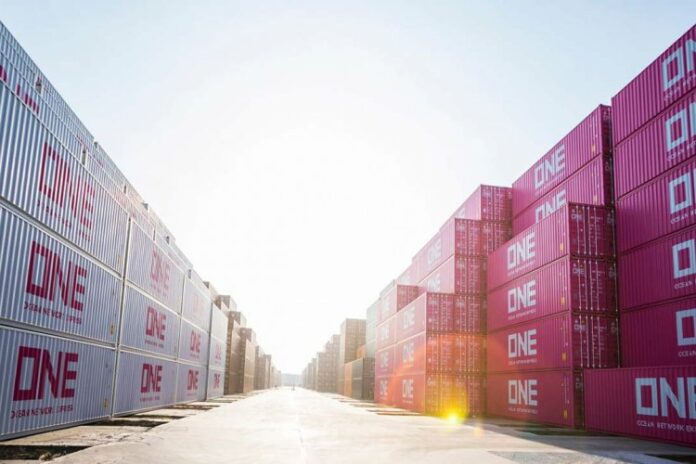
Chidori Ship Holding LLC as owners and NYK Shipmanagement Pte Ltd as managers of the container vessel ONE Apus (IMO# 9806079) can confirm that the ship is proceeding to the port of Kobe, Japan with an ETA of December 8, after encountering severe weather on Monday, November 30, 2020, and losing sections of its load.

The vessel was on passage from Yantian to Long Beach, approximately 1600NM North West of Hawaii, when it encountered a violent storm cell producing gale force winds and large swells which caused the ONE Apus to roll heavily resulting in the dislodging of the lost containers.

The priority remains on getting the vessel and crew safely to port. Once berthed, it’s expected to take some time to offload the dislodged containers that remain on board. Then a thorough assessment will be made on the exact number and type of containers that have been lost or damaged.

Whilst it remains unsafe for the crew to conduct close-quarter inspections of the impacted container bays at sea, it is estimated that the number of lost or damaged units could exceed 1,900, of which some 40 are believed to be Dangerous Goods containers.

Once the ONE Apus is in port and deemed safe, a full investigation will be conducted into this incident in conjunction with the Flag State and the relevant maritime authorities.

Wärtsilä Optimised Maintenance Agreement ensuring certainty of operations for two VLGCs

0

The technology group Wärtsilä has signed 5-year Optimised Maintenance Agreements covering the main engines for two Very Large Gas Carrier (VLGC) vessels operated by Latsco Marine Management (LMM). The contract, which became effective from September, was signed in August 2020.

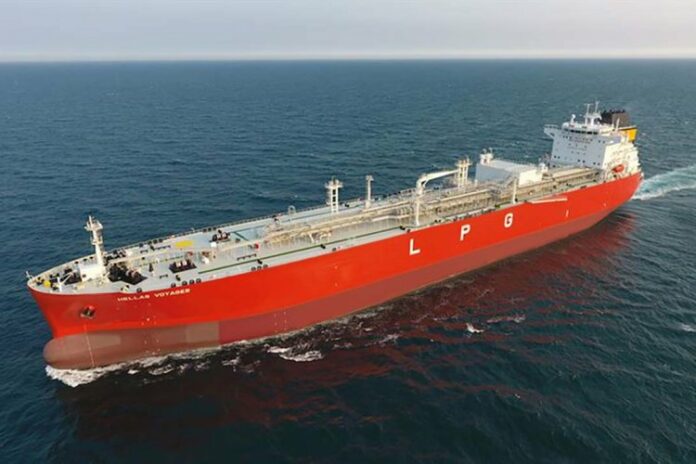
The two vessels, the Hellas Dynasty and the Hellas Voyager, were built in 2020 at the Hyundai Heavy Industries (HHI) yard in South Korea. Optimised maintenance agreements are a key element within Wärtsilä’s Lifecycle Solutions offering and are designed to ensure certainty of operations with budgeted maintenance costs.

Mr Kostas Vlachos, Chief Operating Officer, Latsco Marine Management, says:

“We very much appreciate Wärtsilä’s support and recognise their extensive service capabilities, which are unmatched in the marine industry. This agreement will ensure that our vessels can operate with maximum reliability, availability, and performance.”

Rajeev Janardhan, Sales Manager, 2-stroke engines Lifecycle Solutions at Wärtsilä Marine Power, says:

“By applying smart technology and performance optimisation services, Wärtsilä aims to deliver greater efficiencies, a minimised impact on the environment, and a higher level of safety to the shipping industry. This agreement will provide LMM with maintenance cost predictability while allowing them to focus on their core business.”

Under the terms of the agreement, Wärtsilä will provide remote support and condition monitoring systems, including Expert Insight, a unique digital offering that has recently been extended from 4-stroke engines to include also 2-stroke engines. Expert Insight enables support to be delivered proactively to customers by Wärtsilä Expertise Centres around the world, thereby ensuring long-term accurate insight for predictive maintenance.

The service can reduce unplanned maintenance by up to 50 percent, while also reducing fuel consumption and emissions by 3 to 4 percent. Wärtsilä will also provide a broad range of services for the vessels’ engines includes 24/7 remote technical support and annual audits, as well as the planning and delivery of spare part required for the overhauls.

Wärtsilä currently has more than 700 vessels covered under maintenance agreements.

ZeroNorth’s carbon-cutting software to be integrated with fleet management platform

0

ZeroNorth’s voyage optimisation software will be integrated with Veson Nautical’s Veson IMOS Platform, unlocking market-leading insights that reduce bunker spend and CO2 emissions for more tramp shippers

The agreement will allow ZeroNorth’s vessel optimisation software, Optimise, to securely integrate with the Veson IMOS Platform (VIP), allowing a seamless transfer of data for joint customers. VIP is the maritime sector’s leading solution for commercial freight management. The native data integration will provide VIP users with tramp ships the option to unlock better vessel performance and optimise bunkers to increase their profitability, cut CO2 emissions, and improve the sustainability of their fleets.

Optimise activates VIP fleet and vessel data by combining it with ZeroNorth’s weather, port and market data. Tangible actions are created for the operator — powered by the algorithm — to improve their time charter equivalent rate (TCE) while also lowering CO2 emissions. Operators can realise ‘dollars and cents’ savings and deliver benefits to the environment at the same time, in line with the shipping industry’s decarbonisation targets.

The strategic product partnership encourages users from across the sector to work together and realise actionable insights from their data; something that is only possible by breaking down data silos and generating tangible commercial and environmental benefits from digitalisation. 300 vessels from Veson customers are already using or have committed to use this new integration to connect and empower their data in Optimise.

Speaking on the partnership, Søren Meyer, CEO, ZeroNorth, said:

“Shipping needs innovative digital technologies if we are to successfully – and profitably – decarbonise. We believe that our partnership with Veson Nautical further demonstrates ZeroNorth’s continued and rapid growth trajectory, and our mission to accelerate the uptake of digital solutions that generate both dollar value and sustainability progress. By working with Veson, we put Optimise into the hands of more operators across tramp shipping, providing them all with the power to turn their data into actionable insights that benefit their business, our sector, and our impact on the world.”

This announcement is a landmark for data visibility and collaboration within shipping, further extending one of shipping’s most powerful data ecosystems in VIP, and providing the market with crucial visibility of sustainability impacts.

Jere Richardson, Chief Commercial Officer, Veson Nautical, said:

“This new integration partnership exemplifies our clear commitment to use the power of digitalisation to drive the decarbonisation and future sustainability of the shipping industry. Collaborating with ZeroNorth extends the value of the data captured and maintained in VIP by connecting it to a powerful tool that enables additional analysis through the lens of sustainability. This adds to VIP’s considerable suite of digital solutions that, taken together, will power the clear decisions needed to successfully face the challenges of the future.”

ZeroNorth and Veson Nautical will continue to work together after the integration, ensuring that all customers are fully supported in their journey to increase earnings and reduce emissions.

Ørsted and MITAGS form new offshore wind partnership

0

With Ørsted’s support, MITAGS has created a virtual offshore wind farm navigation simulator for mariners. The simulator allows mariners to experience piloting through a commercial-scale offshore wind farm.

The facility, which is located in Linthicum Heights, Maryland will give mariners an opportunity to experience navigating through a virtual simulation of Ørsted’s Ocean Wind and Revolution Wind projects. Ocean Wind will be located 15 miles off the coast of southern New Jersey and is the largest project in Ørsted’s portfolio at 1,100 MW. Revolution Wind is a 704 MW project and will be located approximately 15 miles south of the Rhode Island Coast. Currently, mariners do not have easily accessible opportunities to navigate through commercial-scale offshore wind farms without traveling to Europe.

John O’Keeffe, Head of Marine Affairs at Ørsted, said:

“This innovative partnership with MITAGS has allowed us to enhance how we engage with our maritime stakeholders. The reaction from mariners has been extremely positive and the experience is much more impactful than talking about navigation based on project charts. We’re looking forward to inviting more stakeholders in the coming months.”

Glen Paine, Executive Director of MITAGS, said:

“MITAGS simulation provides a “virtual reality” from the load port out to the offshore wind farms. This greatly enhances safety and efficiency. MITAGS is honored to partner with Ørsted in the advancement of offshore wind energy for the United States.” 

MITAGS multiple bridge capabilities allow for up to six full-mission bridges, and six-part task to be integrated in one exercise. The simulation can be viewed remotely, in real time, by stakeholders that cannot travel due to pandemic restrictions.