-4 C
New York
Home Blog Page 725

Explorer vessel Project Ocean in build in the UK

0

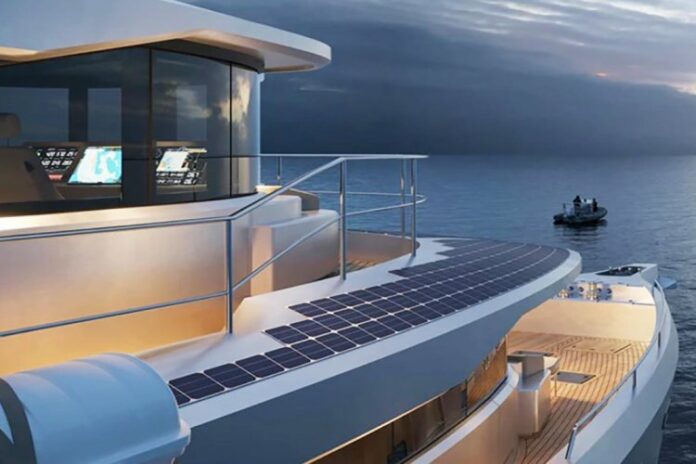
Less than two years ago, Arksen unveiled their innovative vision for a new wave of sustainable marine adventure. The project has rapidly gained momentum and now their first Explorer Vessel, the Arksen 85 “Project Ocean”, has gone into production in the UK. The 85 model is the ‘flagship’ of the Arksen Explorer Series which also includes the 60 and 75, with larger models in the pipeline. 

Project Ocean will have four cabins accommodating up to 12 explorers including a full beam master suite with multi-purpose library / study / media room / children’s cabin. She has an efficient cruising speed of 9-11 knots, top speed of 14 knots and a maximum range of up to 7,000nm. “Project Ocean” has a full hybrid propulsion package and energy management system supplied by Praxis Automation. Solar capacity onboard offers up to 7kW of zero-carbon electrical power. Onboard heating and ventilation systems use thermal reclaim for improved efficiency. 

The Arksen 85 is designed to offer stability in excess of MCA requirements for unlimited operation, with 180 degrees of positive stability in cruising trim. All Arksen vessels are designed with marine research in mind. Through the Arksen Foundation, owners are invited to pledge 10 percent of their vessels’ sea time to ocean-exploration projects, allowing scientists and researchers access to the oceans to seek a better understanding of the marine ecosystem.

Partnerships with UK South Coast businesses are helping to bring the project to life. World-renowned naval architecture and yacht design studio, Humphreys Yacht Design have delivered the exterior design and naval architecture whilst working closely with Chartwell Marine who provided a complete structural engineering service to meet the high levels of additional robustness and efficiency required for a serious long-range explorer vessel. The first 85 started build earlier this month at Isle of Wight based Wight Shipyard Company, who have a wealth of knowledge spanning commercial, defense and superyacht projects. 

Jo Daly, COO, commented:

“Wight Shipyard Co has built a reputation for light-weight fuel-efficient vessels to reduce both costs for our customers and lower their carbon footprint. We have been working alongside Arksen to develop a vessel built to the highest of standards that will become a model for the future.”

Circular economy principles have been adopted throughout; from designing out waste and keeping materials in use to minimising carbon footprint and resource efficiency. It’s an approach Arksen and their partners believe, more than ever, is an essential approach in working towards a sustainable marine future. Tom Humphreys, Co-Director of Humphreys Yacht Design, said:

“Arksen’s dedication to researching and understanding our impact on the environment will be invaluable in helping to re-shape the development of leisure-vessel production in the motor yacht sector.”

The Arksen 85’s hull and superstructure are built in aluminium, which contains recycled material and can again be recycled at the end of the vessel’s life. The hull design is highly efficient, leading to reduced fuel consumption which equates to lower running costs and lower emissions. 
The interior is created by Design Unlimited and will use a wide range of sustainable materials including many from recycled sources. Even the soft furnishings include fabrics created using recycled plastic bottles.

Mark Tucker, Creative Director of Design Unlimited, said:

“The Design Unlimited studio have created an interior that is dynamic, functional, attractive and sustainable in both the materials used and in its on-going functionality and versatility of use.” 

The team are expecting an 18-month build schedule, with sea trials planned for spring 2022. A large portion of the “Project Ocean” sea time will be donated to the Arksen Foundation.

 

Icebreaker leaves Australia after 150 Antarctica trips

0

Next stop: a shipyard in Dubai, where it will be refurbished and either leased or sold.

The Australian Antarctic Division announced earlier this year that after 30 years of sailing to the frozen continent for research and to support Australian bases in Antarctica, the Aurora Australis would be replaced by a larger ship.

The 95-meter (312-foot) Aurora Australis was built in Newcastle north of Sydney and launched in September 1989. It undertook its maiden voyage to Heard Island, an external Australian territory in Antarctica, in 1990.

It has since ferried researchers, crucial food and fuel supplies and been involved in several rescues.

In December 2013, it transported 52 people from the MV Akademik Shokalskiy to safety after the Russian ship became stranded in thick ice.

The Aurora Australis will be replaced by the $398 million RSV Nuyina, named after a Tasmanian Aboriginal word for southern lights.

The new ship, currently undergoing sea trials in Europe after some construction delays, is expected to be in Hobart by the middle of next year.

It will carry up to 117 crew and travelers, 1,200 metric tons of cargo and nearly 2 million liters (500,000 gallons) of fuel, substantially more than the Aurora Australis, which completed its last Antarctic supply trip in March.

Japan’s MOl, Tohoku ink deal for wind-powered coal ship

0

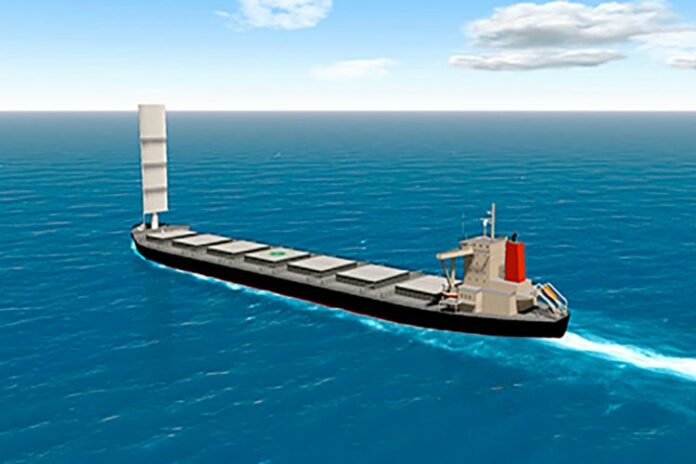
Mitsui O.S.K. Lines, Ltd. has announced that the company has reached a coal transport deal with Tohoku Electric Power Co., using a coal carrier equipped with a hard sail wind power propulsion system, also known as the “Wind Challenger”.

Construction of the vessel will start at Oshima Shipbuilding Co., aiming to start operation in 2022.

The introduction of the Wind Challenger is expected to reduce emissions of greenhouse gases (GHGs) by about 5% on the Japan-Australia route or about 8% on the Japan-North America West Coast route, in comparison with a conventional vessel of the same class.

MOL and Tohoku Electric Power will conduct more verification tests on the system’s GHG reduction effects toward the 2022 target date for the new carrier to begin operation.

The Wind Challenger is a telescoping hard sail that converts wind energy to propulsive force. Installation of the system on merchant ships has the potential to significantly reduce fuel consumption, which in turn reduces the environmental impact of vessel operation while improving economic efficiency.

This follows the “Wind Challenger Plan” started in 2009, an industryacademia joint research project led by The University of Tokyo. In January 2018, MOL and Oshima Shipbuilding took charge of the plan and now play a central role in this project. In October 2019, it acquired Approval in Principle (AIP) for the design of a hard sail system. 

Marine-i helps Falco Drone Technologies get ready for lift off

0

A prototype of their innovative design will commence trials in summer 2021.

Part funded by the European Regional Development Fund, Marine-i is designed to help the marine tech sector in Cornwall and the Isles of Scilly grow through harnessing the full potential of research and innovation.

Existing drone technology is limited by two crucial factors: flight times and the ability to fly in adverse weather. High winds exacerbate this problem further, reducing flight times and grounding most drones in wind speeds over 25 mph – a particularly bad problem for exposed offshore installations. Falco Drone Technologies’ innovative design addresses these issues, as their Director, Patrick Maletz, explains:

“Our technology allows for drastically improved flight performance of multirotor drones by mimicking bird flight. The technology allows drones to efficiently harness local wind energy to supplement lift whilst being able to fly long distances with the efficiencies of a plane, perfectly blending the benefits of fixed wing and multirotor aircraft. The typical flight time for a conventional battery powered drone is at most one hour and often much less. We believe that we can increase this up to six hours.”

To accelerate development, the company engaged with Marine-i. Neil Farrington, Regional Innovation Manager at Marine-i partner, the Offshore Renewable Energy (ORE) Catapult, says:

“There are two main elements to the Marine-i support package. ORE Catapult is providing expert analysis of the offshore energy surveying and O&M tasks that could be delivered by this new technology. In summer 2021, we will move to the crucial stage, which will be launch and recovery trials at our Levenmouth Demonstration Turbine off the Fife coast.”

Professor Lars Johanning of University of Exeter, lead partner for Marine-i, said:

“To seize the fast growing opportunities in offshore renewables including floating wind, Marine-i is working with innovative businesses like Falco Drone Technologies,  which have the talent to make these kinds of creative leaps in technology and design. Marine-i is providing world class RD&I support to help accelerate commercialisation. If successful, this ground-breaking solution would have worldwide applications and put Cornwall at the forefront of another breakthrough for the offshore marine industry.” 

WHOI reveals upgrades to iconic submersible Alvin

0

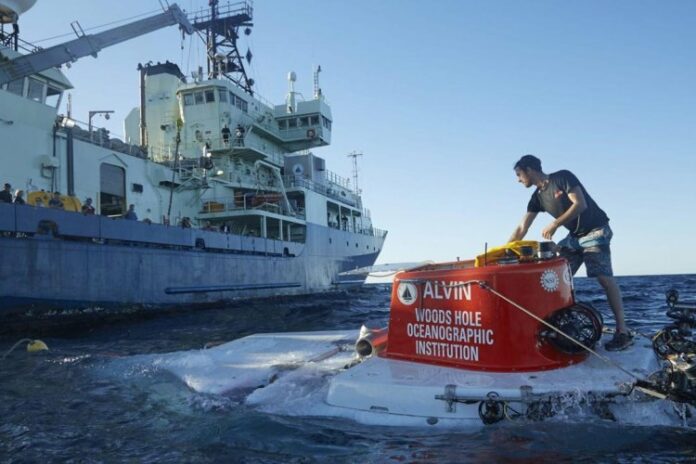
Increased depth range and the ability to explore 99% of the ocean floor, including the abyssal region—one of the least understood areas of the deep sea—are just some of the upgrades underway for the iconic human-occupied Vehicle (HOV) Alvin that were unveiled today at the American Geophysical Union’s (AGU) Fall Meeting 2020.
 
Researchers from Woods Hole Oceanographic Institution (WHOI), Portland State University, and National Oceanic and Atmospheric Administration (NOAA) shared details on the upgrades, the importance of human exploration of the deep ocean, and what new science questions they hope to answer when Alvin dives again in September 2021.

Participating in today’s event were Bruce Strickrott, WHOI Group Manager and Chief Pilot of the Deep Submergence Vehicle Alvin; Adam Soule, Chief Scientist of the National Deep Submergence Facility (NDSF) at WHOI; Dr. Anna-Louise Reysenbach, Professor of Microbiology in the Biology Department at Portland State University, Portland, Oregon and current chair of the Deep Submergence Science Committee (DeSSC); and Chad King, a research specialist at NOAA’s Monterey Bay National Marine Sanctuary (MBNMS) in California.

Alvin is one of the most recognized deep submergence vessels in the world and the only one in the U.S. capable of carrying humans into extreme ocean depths. The sub has completed 5,065 successful dives, more than all other submersible programs worldwide combined. When Alvin relaunches next fall, the iconic sub will have the ability to dive to 6500 meters (21,325 feet)—almost 4 miles deep and 2,000 meters deeper than Alvin’s current maximum depth of 4500 meters (14,800 feet). The upgrade will also give the sub access to 99% of the ocean floor.

Alvin was commissioned in 1964 and is named after WHOI physicist and oceanographer Allyn Vine, who was an early proponent of U.S investment deep-sea submersibles. The original Alvin was only rated for depths up to 1,829 meters (6,000 feet), but advancements in syntactic foam, a specialized material that can provide buoyancy at great depth, provided access to greater depths.

As this and other technologies have improved, the scope of Alvin’s capabilities have also expanded. When this latest overhaul is completed, Alvin will enable in-person study of the lower Abyssal Zone and the upper Hadal Zone—one of the least-understood parts of the deep sea and home to high-temperature hydrothermal vents, submarine volcanoes, subduction trenches, mineral resources, and more. This will also give the science community an unprecedented opportunity to visit a critically under-studied part of the planet that plays a role in carbon and nutrient cycling and that will offer a view into how life might be evolved to conditions in oceans beyond Earth.

Alvin is the only publicly funded, human-occupied vehicle available to the U.S. scientific community for exploring the abyssal region in-person. To date, 3,076 researchers have shared a firsthand experience unlike any other in science, allowing in-situ data and sample collection and direct observation of the seafloor and water column on dives lasting up to 10 hours.

Chad King is a research specialist at NOAA’s Monterey Bay National Marine Sanctuary (MBNMS) in California who made his first dive in Alvin in March 2019 to a part of the sanctuary now known as the Octopus Garden.  It was the first visit to this area after its discovery in 2018, and data collected by King in Alvin that confirmed that warm water was seeping from the seafloor, something the mother octopuses appeared to be using to incubate their eggs. The dive also documented the first hatching of baby octopus at this site, proving that it was a viable nursery.

King said:

“It was a remarkable experience to be able to see, for the first time, these animals mere feet away, in three dimensions, and to give context to the surrounding environment. It’s an experience I will never forget.”

According to Adam Soule, the sub is also an important tool for fostering new generations of scientists. 

He said:

“Sometimes the sub is viewed as inaccessible to early-career scientists or those who haven’t used it yet. That is not true. If someone has a good idea and they want to use Alvin, they will get to use Alvin. The increased range and scope will be incredibly helpful in an environment where we know very little and have to use our observation skills to decide where to go and what samples to collect.”

Research expedition begins to measure world’s largest system of ocean currents

0

These measurements are used to understand the natural variability of the ocean and climate system and its impact on the weather. 

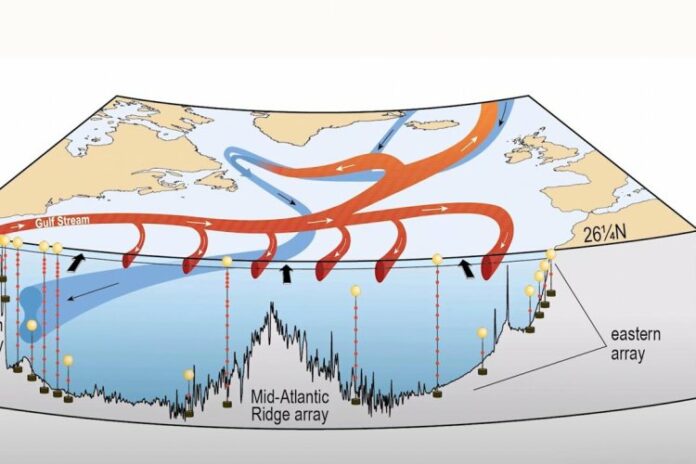
The research expedition forms part of the NOC led RAPID-AMOC 26N project, which has been collecting data on the AMOC since 2004, in collaboration with the University of Miami and NOAA in the USA. 

Currently an array of more than 200 instruments are in the water gathering data on the temperature, salinity and flow rate of the AMOC, which is responsible for the transfer of large volumes of heat from the tropics to northwest Europe, keeping its climate relatively mild. The energy involved in this heat transfer is equivalent to 35,000 times the average rate of electricity consumption in the UK or about one million times the output of an average UK nuclear power station. 

Chief Scientist, Dr Ben Moat, from the NOC, said:

“With every recovery of data from the RAPID 26N array of instruments, we learn new things about how the large-scale ocean changes on timescales of days to decades. These observations provide a unique dataset used to validate the numerical models used for weather and climate predictions.” 

This project has continued to evolve by using and supporting innovative technology. In this expedition, the on-board team will be recovering water samplers and oxygen measurements to help scientists on the ABC-fluxes project better understand the role of the subtropical North Atlantic in the global carbon cycle. 

Based on recent cold winters in the northern North Atlantic, the outcomes of the RAPID-AMOC 26N project predict that the large-scale ocean circulation will have intensified. 

NOC scientist and RAPID-AMOC 26N project lead, Dr Eleanor Frajka-Williams, added:

“At the end of the expedition we’ll use the data we recover to make a preliminary estimate of the circulation strength over the past 18 months, so stay tuned!” 

RAPID-AMOC 26N started in 2004 as a collaborative project between Natural Environment Research Council (NERC) in the UK, and the National Science Foundation as well as the National Oceanic and Atmospheric Administration (NOAA) in the US. The RAPID data are available online. 

FairWind awarded offshore pre-assembly at Formosa 2 in Taiwan

0

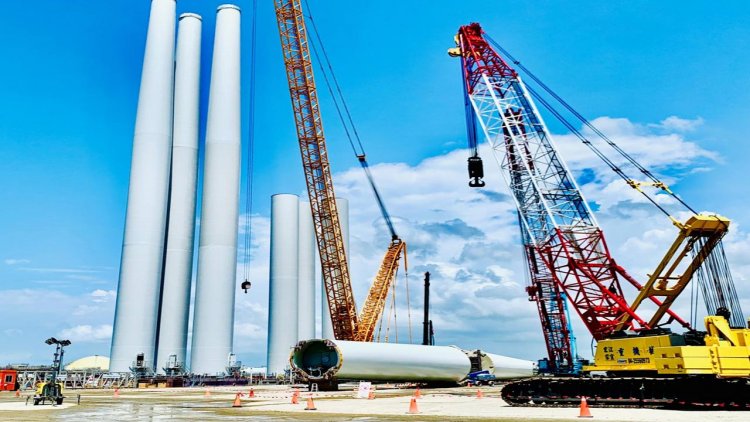
FairWind will be responsible for pre-assembly of towers for 47 SGRE 8.0MW wind turbine generators, scheduled to start in March, 2021.

René Damgaard, Head of Offshore & Electrical, High Voltage, said:

“This is an important opportunity for FairWind Offshore to once again prove ourselves in terms of safety, quality, planning and execution in Taiwan. FairWind will continue building our presence in Asia by expanding our regional setup and hiring and training local Taiwanese technicians and staff, with the anticipation that our orders there will continue to grow in the coming years.”

FairWind entered the Taiwanese market in  2018, completing pre-assembly of towers for 20 SGRE 6.0MW wind turbine generators for the Formosa 1 Phase 2 project. Later, FairWind was awarded another pre-assembly project consisting of 80 SGRE 8.0MW wind turbine generators for Yunlin.

As part of these projects, FairWind has committed to developing a local setup, and hiring and training local Taiwanese technicians. In September 2020, at the Employment Expo in Taiwan, FairWind stood with industry leaders such as Siemens Gamesa, Ørsted, and MHI Vestas in signing a letter of intent committing to offer employment opportunities in Taiwan with competitive salaries and benefits.

KR and DSME complete world’s first ship to ship LNG bunkering for gas trial

0

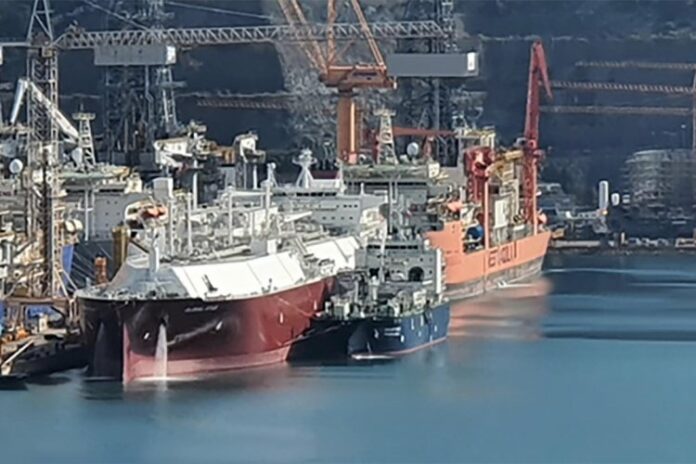
The SM JEJU LNG2 has supplied LNG in the STS gas-trial to a 173.400 cbm LNG carrier. The demonstration test took place at DSME’s Okpo Shipyard from 24-26 November, 2020.

KR and DSME have been working together since an MOU on joint research for LNG bunkering was signed by Mr. Lee Hyung-Chul, Chairman and CEO of KR, and Dr. Lee Seung Geun, CEO of DSME, last August. The collaboration is part of a partnership agreement for LNG bunkering/transport work with Korean shipyards with the aim of “Developing standards for LNG bunkering procedures in Korea”, conducting “Risk evaluation of LNG bunkering operations,” and “Development of LNG bunkering to support technology based on standards and guidelines jointly developed by DSME and KR”.  

Applying its extensive safety engineering technology, KR has identified a diverse range of potential hazards through its risk assessments for STS LNG loading/transport operations between two ships and has suggested effective ways to reduce that risk to DSME. In addition, a safer work environment and safety work procedures for workers have been developed as a result of a comprehensive study looking at the establishment of ‘CONTROL ZONES’ around the two ships during LNG transportation. 
 
DSME has demonstrated its own technology without vapour return to the bunkering vessel or venting to atmospheric areas during ship to ship LNG loading /transport operations. This is because DSME has a wealth of experience and excellent technology in LNG offshore operations and BOG (boil off gas) control. To date, DSME has conducted eight gas trials without venting to atmospheric areas.

This project was carried out with close collaboration from DSME, KR, SM KLC, SM KLCSM, and KOGAS, which provided full support for LNG bunkering vessels and safety management technology and LNG supply. 

Norway launches major Wind Power Research Centre

0

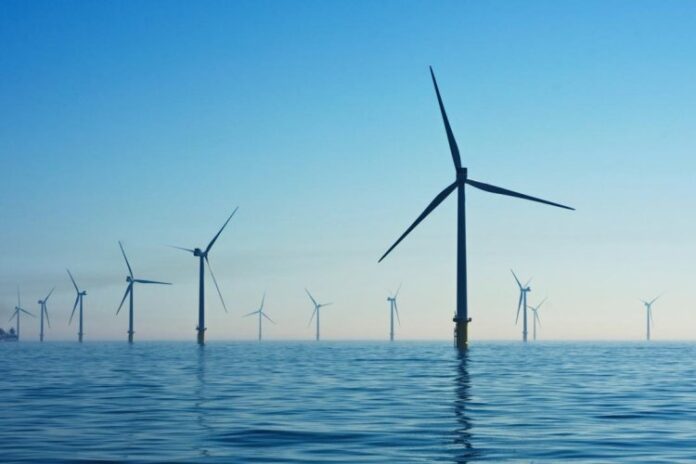
The Norwegian Minister of Petroleum and Energy, Tina Bru, has announced an investment of 120 million NOK (11.3 million EUR) in a new wind power research centre in Norway.

The NorthWind research centre will be at the cutting edge, working on innovations to make wind power cheaper, more efficient, and more sustainable. One of the centre’s main priorities will be offshore wind research.

Tina Bru, Norway’s Petroleum and Energy Minister, said:

“Rapid growth in offshore wind power internationally offers great opportunities for Norwegian businesses. Research and development is crucial to secure lower costs, less environmental impact and improved operating models for such projects. I believe a longterm research centre with industry partners, the research community and the government will contribute to further development of offshore wind power in Norway.”

Northwind will bring together over 50 partners from research institutions and industry all around the world. It will be led by the research institute SINTEF, with partners NTNU (Norwegian University of Science and Technology), NINA (The Norwegian Institute for Nature Research), NGI (Norwegian Geotechnical Institute) and UiO (University of Oslo).

Alexandra Bech Gjørv, CEO of SINTEF, said:

“The Centre’s innovations will benefit Norwegian industry and the world at large. Offshore wind has the potential to meet the world’s electricity needs many times over and innovations cutting its costs will help bring this renewable energy to the market even faster.”

The centre will draw on Norwegian research and industry’s long-standing expertise in offshore projects. 

The rector of NTNU, Anne Borg, said:

“It will provide an important launching pad for students of the field aiming to become the experts of tomorrow.”

iSURVEY completes landmark North Sea Project

0

The seven-figure project has not only seen a 10-strong group of offshore survey experts complete an incredible 6,300km of survey since mobilisation in late July, it also breaks the Aberdeen-based team’s single contract value record.

The contract – which consisted of two workscopes – was awarded by Norwegian ocean bottom seismic experts, Magseis Fairfield ASA. The two circa. 500 square km surveys have contributed to Magseis Fairfield’s ocean bottom node (OBN) exploration project within the Cornerstone area, which has been described as one of the most challenging locations in the North Sea.

iSURVEY Managing Director, Andrew McMurtrie commented:

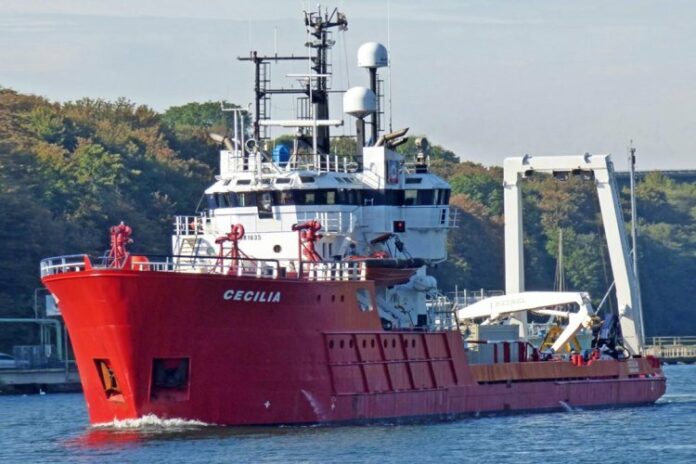
“November marks the end of a long and successful seabed survey programme for the iSURVEY team. Mobilising on the Northern Survey OSV Cecilia just a week after contract award, I am hugely impressed with the results we have achieved and proud that our client has been so pleased with our performance.”

“Equipped with multi-beam echosounder (MBES), side-scan sonar (SSS) and magnetometers, our spread of equipment and personnel dealt with the full gamut of North Sea weather, whilst safely achieving all workscope objectives and completing this milestone project on schedule.”

A spokesperson for Magseis Fairfield added:

“iSURVEY understood our unique survey requirements and produced a high-quality product.”