-5.8 C
New York
Home Blog Page 724

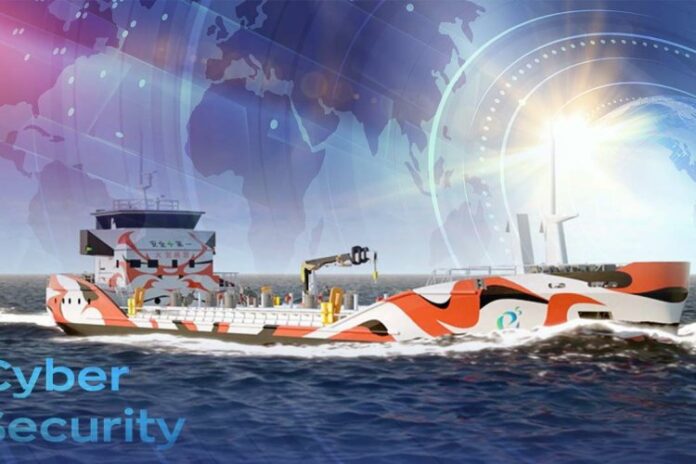
e5 Lab and ClassNK sign joint research agreement on cyber security

0

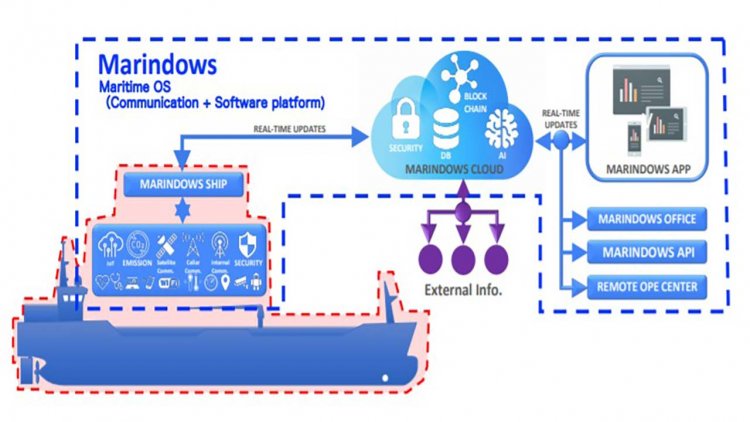
For their first joint research project, they will conduct a proof of concept (PoC) on “Marindows”, a comprehensive digital platform for ships being developed by e5 Lab.

e5 Lab is developing a comprehensive digital platform for ships (Marindows) that consists of connection and applications necessary for the robotization of ships.

Marindows not only significantly improves the safety, productivity and efficiency of ships, but also enables them to evolve at the speed that software evolves, rather than at the speed of hardware as in the past. With OTA (Over the Air) updates, Marindows will continue to evolve to become safer, smarter, more efficient, and environmentally friendly.

The comments regarding this joint research are as follows.
Chief Technology Officer (CTO), e5 Lab, Mr. Yasumasa Suetsugu, said:

“e5 Lab will create new value and business in “environment (EV)” and “digital (Marindows)”, the growing industries of the 21st century. Working with the best partners domestically and overseas, Marindows will bring unprecedented innovation to the maritime industry.

By considering cyber security together with ClassNK, a cybersecurity expert in the maritime industry, we will expand the speed and scale of the digital revolution in the maritime industry that starts with Marindows. Digital and cyber security must be considered as a set, and I am deeply grateful for the opportunity to actively collaborate with ClassNK.”

Executive Vice President, Director of Innovation Development Division, ClassNK, Mr. Hirofumi Takano, said:

“We are very pleased to sign this joint research agreement with e5 Lab, who is engaged in cutting-edge digital initiatives, and be involved in such an advanced project. Cyber security measures must be widely implemented since the comprehensive digital platform forships needs to connect various devices and systems on board. Through this joint research, we would like to verify the best practices that the Society has jointly established with cooperating organizations, together with the e5 Lab experts, and use the knowledge obtained to establish standards for comprehensive digital platform for ships.”

Fugro awarded Petronas contract for positioning services in Guyana-Suriname Basin

0

Fugro in the Caribbean has received a contract award from PETRONAS Suriname E&P B.V., a subsidiary of PETRONAS, for the provision of positioning services for an exploration programme in Block 52, off the coast of the capital Paramaribo in the Guyana-Suriname Basin.

PETRONAS is a global energy and solutions partner and ranks amongst the largest corporations in Fortune Global 500.

The 2-year contract involves Fugro’s Starfix® precise positioning solution to help ensure safe and efficient transit, anchoring and drilling activities for the programme’s semi-submersible rig and support vessels. Work on the contract has already begun and executing these services in a restrictive Covid-19 environment has so far posed multiple operational challenges for Fugro. 

As an example, both Suriname and Trinidad and Tobago’s international borders were closed ahead of the programme’s first rig move in October 2020 but Fugro’s local staff worked with regulators to overcome these hurdles and deliver the surface and subsurface positioning services that PSEPBV needed to safely and accurately position the rig onsite.

Brian Hottman, Director of Fugro’s Caribbean and Pacific South America Operations, said:

“Our 40 years of Geo-data knowledge and expertise in the Caribbean and Pacific South American region includes more than 15 years of operational experience in Suriname and 20 years in Trinidad and Tobago. We are pleased to support PSEPBV in their operations through this landmark programme and will continue to work diligently for them, as we have for our other clients in the region, to ensure careful progress on critical energy and infrastructure goals during these challenging times.”

Opinion: Decarbonisation key to future of Asia Pacific’s upstream industry

0

Rising quickly to the top of corporate agendas in 2020 was the topic of carbon. As decarbonisation and talks of a “green recovery” intensify, operators are closely examining the carbon content of their assets. This is particularly important for Asia Pacific, where many sour gas and high carbon dioxide fields sit in portfolios – and on balance sheets – as potential commercial investments.

Wood Mackenzie research associate Saloni Kapoor said:

“Each company must now chart its course down the yellow brick road to carbon neutrality. It will be fraught with obstacles, particularly in Asia Pacific due to its ever-expanding energy requirements.”

For Asian national oil companies (NOCs), this will be an especially hard journey to navigate. They must balance the provision of affordable energy for the country, which is their mandate, with generating much-needed revenue, focusing on domestic resource development, including carbon-mitigation schemes, while appeasing private and public stakeholders.

As a result, NOCs will push governments for incentives to facilitate an energy shift. China’s 14th five-year development plan, to be unveiled in early 2021, will potentially include a roadmap for the world’s largest emitter to achieve net-zero emissions by 2060.

Kapoor said:

“78% of oil and gas output in this region comes from countries that are more likely to implement some form of carbon policy. These include Australia, China, Indonesia, Malaysia, Philippines, and Vietnam.

“While international oil companies’ (IOC) decarbonisation strategies were the talk of the town in H2 2020, look out for NOC energy transition plans to be presented through 2021. And, as with the Majors, we will see divergence here too.”

PETRONAS and PetroChina are evaluating investment into hydrogen, renewables and carbon sequestration (CCUS) as they start journeys towards net-zero by 2050. CCUS projects will be crucial for PETRONAS to continue developing high contaminant gas offshore Sarawak. Urgency has been added by Asian LNG buyers’ push in 2020 for greener LNG cargoes with greater emissions transparency.

In India, NOCs are taking different approaches. Some will aggressively pursue biodiesel as a green solution, while others are still undecided over which new energy investments to bring into portfolios. In Southeast Asia, PTTEP and PERTAMINA are also still testing the waters of the energy transition.

Kapoor said:

“It would be interesting to see if these strategic re-thinks have an impact on upstream M&A activity. The landscape of buyers and sellers has never been less predictable. 2020 gave us meagre Asia Pacific deal data points to work with, making it near impossible to calculate what barrels are worth to investors in region. But that changes in H1 2021. We expect the logjam to break and long-anticipated deal announcements to emerge.”

By the end of 2021, there should be signs of a refreshed corporate landscape, with fully vested players seeking to grow assets, extracting new value for themselves and other stakeholders.

There is a less palatable alternative – that the bids coming in are below the value expectations of the incumbents and asset owners choose not to sell.

Kapoor said:

“While we do expect this to be the case in some transactions, we also believe the Majors must make progress on regional divestments in 2021 to hit wider strategic targets. That should be a powerful deal driver.”

Wärtsilä to upgrade Østensjø Rederi vessel duo with hybrid tech

0

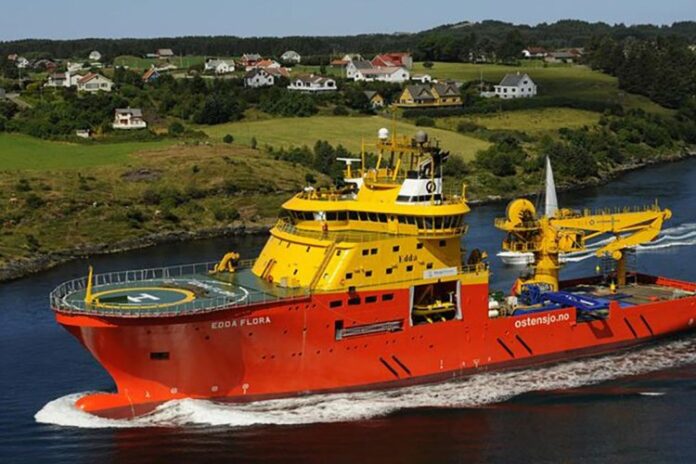
The Wärtsilä Hybrid Upgrade solution, has been selected for retrofitting two offshore construction vessels owned by Norwegian operator Østensjø Rederi. 

The upgrading project will allow less use of the ships’ engines with correspondingly lower levels of exhaust emissions while operating in dynamic positioning (DP) mode, and will also lower emission levels in all other operational modes. The order with the technology group Wärtsilä was placed in the third quarter of 2020.

The two ships, the ‘Edda Fauna’ and ‘Edda Flora’, were built in 2008. The customer opted for the Wärtsilä Hybrid Upgrade solution in order to give the ships a more attractive environmental profile for potential charterers. The Wärtsilä Hybrid Upgrade solution will include the company’s new electronic DC bus-link, which allows a vessel to operate in DP 2 and 3 modes with a closed DC bus in hybrid, and an open bus on the AC system. The reduced running of the engines saves fuel and lessens the carbon footprint, while engine maintenance requirements are also alleviated.

Egil Arne Skare, Chief Project Officer, Østensjø Rederi, says:

“We intend to be a shipping company that leads in sustainable operations. Today’s carbon footprint is to be reduced through systematic efforts and continued technical development at all levels. This is why we have chosen to upgrade these vessels to hybrid propulsion, which is an area of technology where Wärtsilä excels.”

Helge Solberg, Senior Proposal Engineer, Wärtsilä Marine Power, says:

“The Wärtsilä Hybrid Upgrade solution aligns with our five strategic themes; Towards Zero Emissions, Efficiency, Safety, Reliability, and Fuel Flexibility. There is a growing trend in the marine sector towards hybrid propulsion, with more and more companies taking advantage of the benefits it offers.” 

Delivery of the Wärtsilä equipment to both vessels is planned for January 2021.

Funding from Enova, the Norwegian government enterprise that promotes the environmentally friendly production and consumption of energy, has been an important contribution to this project.

By combining its competences in marine electrical, automation and engine technology, Wärtsilä has brought together multiple functions and systems to deliver a single integrated hybrid power module that combines engines, an energy storage system, and power electronics optimised by a unique and highly sophisticated, energy management system (EMS). 

The EMS functions as the ‘brain’ in the Wärtsilä Hybrid System optimising the energy flows between the different power sources, storage and consumers to achieve the highest efficiency possible.

Verifavia Shipping provides BSM with IHM maintenance services for around 350 vessels

0

Verifavia Shipping provides Bernhard Schulte Shipmanagement (BSM) with Inventory of Hazardous Materials (IHM) maintenance services for around 350 vessels in the BSM fleet. 

This, along with several other contracts, brings Verifavia Shipping’s total IHM Maintenance fleet to almost 1,300 vessels.
 
This contract follows the launch of Verifavia’s new “3-Way Plug & Play” IHM Maintenance Dashboard, a platform which provides efficient and continuous maintenance of IHM reports. The dashboard is the industry’s leading online platform providing shipowners, superintendents, vessels, and even Port State Control (PSC) and Classification Societies with live access to the IHM maintenance status of every vessel.
 
From 31st December 2020, the EU Ship Recycling Regulation (EU SRR) will be extended to cover all EU-flagged ships, as well as ships trading under the flag of a third country, that call at an EU port or anchorage. The regulation restricts or prohibits the use of hazardous materials onboard vessels and requires ships to carry a certified and maintained IHM which specifies the location and quantities of those materials.
 
Maintenance involves ensuring the IHM is continuously updated with relevant suppliers documents such as Material Declarations (MDs) and Suppliers Documents of Conformity (SDoCs) throughout the ship’s operational life and renewed every five years. It covers all items and equipment that are installed, modernised or replaced.
 
Julien Dufour, CEO, Verifavia Shipping explained:

“As we get closer to 31st December, it is essential for the industry to be confident that its operations comply with the EU SRR regulation, including the maintenance of IHM. We are seeing increasing demand for IHM maintenance services, particularly in the lead up to the regulation deadline. Our global IHM partners global hazmat experts are based across the world, in almost 50 locations, from Brazil to Sydney to help with the preparation of IHM surveys and ensure we can facilitate surveys ahead of the deadline in local ports around the world. Indeed, our managed fleet has doubled to 1,300 vessels in just one week! We’re very proud to be working with BSM and providing them with a reliable and efficient service for around 350 vessels.”

Equinor: Snorre expansion project now in production

0

This major Increased Oil Recovery project will add almost 200 million barrels of recoverable oil reserves and help extend the productive life of the Snorre field through 2040. The project was originally scheduled to come on stream in the first quarter of 2021.

The Snorre field partnership consists of Equinor, Petoro, Vår Energi, Idemitsu and Wintershall Dea.

Geir Tungesvik, Equinor’s executive vice president for Technology, Projects and Drilling, says:

“I am proud that we have managed to achieve safe start-up of the Snorre Expansion Project ahead of schedule in such a challenging year as 2020. In addition, the project is set to be delivered more than NOK 1 billion below the cost estimate in the plan for development and operation (PDO).” 

The Snorre field has been on stream since 1992. There are substantial resources left in the ground on the Snorre field. In December 2017, Equinor and the Snorre partners submitted a modified plan for development and operation (PDO) for the Snorre field to Norwegian authorities. The recovery factor will now be increased from 46 to 51 percent, representing significant value for a field with 2 billion barrels of recoverable oil reserves.

The Hywind Tampen project, featuring 11 floating wind turbines that will supply the Snorre and Gullfaks fields with power, is expected to come on stream in the third quarter of 2022. Some 35 percent of the power requirement for the two fields is expected to be met using wind power.

According to the original PDO, the Snorre field was intended to be closed in 2011-2014, but continues to produce thanks to the authorities’ consent to extend the field’s life.

Arne Sigve Nylund, Equinor’s executive vice president for Development and Production Norway, says:

“Life extension represents good resource management. The new volumes brought to Snorre A help ensure activity offshore and onshore, creating substantial value for the Norwegian society.” 

The investments in Snorre Expansion Project total NOK 19.5 billion (2020 value), and the development is profitable even at far lower oil prices than today. The project has had substantial spin-off effects for the supply industry in Norway, particularly in Eastern Norway and in Rogaland.

24 new wells will be drilled to recover the new volumes. The wells are divided into six subsea templates. Bundles connecting the new wells to the platform have also been installed, in addition to new risers. The project also includes a new module and modifications on Snorre A.

After three years of modifications being carried out on a platform on stream, the final preparations to receive oil from the new wells were performed during a major turnaround this autumn. The turnaround and work were performed without injuries or serious incidents.

Although the Snorre Expansion Project had progressed far when the Covid-19 pandemic began, the project has experienced challenges associated with deliveries, closed borders and plants, in addition to limited workforce on the platform due to infection control measures. 2020 has been a busy year, particularly when it comes to marine operations and modifications. Despite this, production began ahead of schedule.

Umitron develops a smart fish body measurement system called UMITRON LENS

0

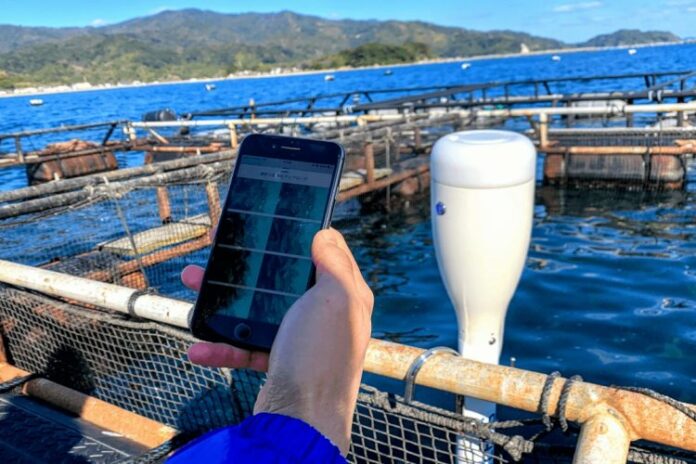
Umitron K. K. has developed a new service using AI and IoT technology – a smart fish body measurement system for aquaculture farmers called “UMITRON LENS®︎”. Using a portable camera paired with a mobile app, Lens automatically measures fish size underwater and all of the data is accessible in the cloud.

Being able to track fish during their growth cycles is an essential part of farm management.The current way of measuring fish growth involves sampling an adequate number of fish frequently, and this is not only a labour intensive operation for farmers, but can also cause stress to the fish, sometimes resulting in injuries or even death. 

Lens utilizes small stereo cameras and artificial intelligence (AI) to automatically measure fish size in the cages and connects to the Internet to store data in the cloud. In this way, the process of checking fish growth is made much easier for farmers, helping them to reduce their workload, manage their operations more efficiently, and in turn increase their profits.

Umitron has been developing this system in Oita prefectures in Japan since 2018, focusing on improving the user experience on actual farming sites, gathering useful data sets from measurement operations and increasing the accuracy of the size estimations. 

New contract for Sangomar Field Development FPSO to be deployed offshore Senegal

0

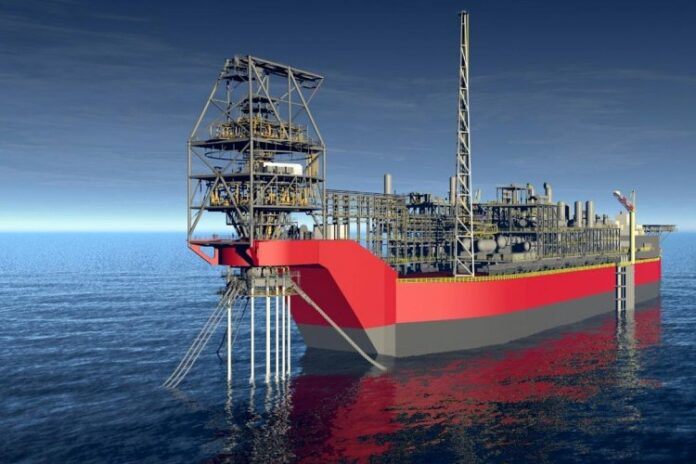
MODEC, Inc. has announced that MODEC SENEGAL S.A.S.U (“MOSEN”) as MODEC Group company has signed a contract with Woodside Energy1 for the operations and maintenance of a Floating Production Storage and Offloading (FPSO) vessel for the Sangomar (formerly SNE) Field Development Phase 1 (Sangomar Field Development) project in the Sangomar Offshore and Sangomar Offshore Deep oil blocks, located offshore Senegal.

Following the FPSO purchase contract which was signed between Woodside and MODEC on January 10, 2020, with respect to the supply of the FPSO, MOSEN will be responsible for the operations and maintenance of the FPSO. The operations and maintenance contract will cover all in-country installation and commissioning activities following which an initial 10 year operations and maintenance term will commence. Extension options are allowed for every year thereafter up to 10 additional years.

The FPSO will be deployed at the Sangomar field located approximately 100 kilometers south of Dakar, Senegal. The Sangomar Field Development is expected to be Senegal’s first offshore oil development.

Scheduled for delivery in 2023, the FPSO vessel will be permanently moored at a water depth of approximately 780 meters by an External Turret mooring system to be supplied by SOFEC, Inc. (“SOFEC”), a MODEC group company.

The FPSO will be capable of processing 100,000 barrels of crude oil per day, 130 million standard cubic feet of gas per day, 145,000 barrels of water injection per day and will have minimum storage capacity of 1,300,000 barrels of crude oil.

Yuji Kozai, President and CEO of MODEC, commented:

“We are delighted and proud that Woodside awarded us the contract for the operations and maintenance of the memorable first FPSO for Senegalese waters further to another major contract for the supply of this FPSO. In West Africa, we have accumulated well nearly 30 years of operational experience with three (3) FPSOs by identifying and involving local based professionals and labor. We are pleased to be a part of the team that will contribute to the advancement of local energy industry with this long-term operational project in Senegal too.”

In recent years, numerous offshore oil fields have been discovered in West Africa, and MODEC considers this as one of its most important core regions. MODEC currently operates three (3) FPSOs in Ghana and Côte d’Ivoire as well as it has supplied another seven (7) floating production facilities such as FPSO, FSO and Tension Leg Platform (TLP) that have been installed in Angola, Cameroon, Equatorial Guinea, Gabon and Nigeria.

AI-powered ship operation support system developed by Swedish consortium

0

​Swedish ship propulsion optimization experts, Lean Marine and AI-application developers Molflow have been collaborating with academics from the Chalmers University of Technology in Gothenburg to develop a new AI-powered, semi-autonomous system for planning and executing more energy-efficient sea voyages since the project commenced in August 2020. The project goes by the name Via Kaizen and is funded by the Swedish Transport Administration.

The technology available in the companies enables a high degree of digitization and automation in vessel operations. The systems optimize the propulsion line dynamically, in real-time, based on orders given by the AI system that has been developed. Data collected from the AI system and other signals on-board are then fed into a cloud-based performance management platform which shares information with other systems. With “Deep Learning” technologies, the systems will then be able to determine, given the constraints of the route and the ship, the most energy-efficient voyage and calculate the commands that need to be set to reach the destination with the least possible amount of fuel consumed. 

Linus Ideskog, development manager at Lean Marine, says that when the perfect simulated journey is determined, their system steps in and creates an interface between the captain and the AI-based solution for travel planning. 

Linus Ideskog says:

“This gives human and machine the opportunity to collaborate and carry out the journey in an optimal way. The system can automatically and directly optimize the propulsion machinery based on commands given by the captain or received directly from the AI-solution.” 

From an academic perspective, naval architect researchers at the Chalmers University of Technology are working in close collaboration with Lean Marine and Molflow on the development of new methods, models, and algorithms. 

Wengang Mao, professor at the Division of Marine Technology at the Department of Mechanics and Maritime Sciences, says:

“In this project, we at Chalmers will develop dynamic ship speed-power performance models by combining theoretical naval architecture knowledge with AI to predict the dynamic time series of a ship’s propulsive power when the ship is encountering different wind and wave conditions.”

Researchers from social anthropology and human factors at Gothenburg University and Linnaeus University are conducting research on what happens to practices onboard and ashore as the new technology is implemented. The Swedish Shipowners’ Association is also participating in the project, providing vital insights and input from the Swedish shipping industry and by contributing to the dissemination of research findings and development information to the Swedish maritime industry. 

In addition to the project partners, a trio of ship owners and operators are involved in the project, including chemical/product tanker owner and operator, Rederiet Stenersen and pure car and truck carrier (PCTC) owner and operator, UECC. By offering their vessels for technology and product validations, they will enable onboard testing, and the results will be directly evaluated within the scope of the project. 

Mikael Laurin, CEO of Lean Marine, says:

“We believe this project will contribute considerably to the reduction of emissions both from international and domestic transportation, importantly making Swedish shipping more sustainable and competitive in the long-term.”

KVH expands maritime network coverage for Hudson Bay and North Atlantic

0

KVH Industries has expanded its mini-VSAT Broadbandsm HTS network coverage throughout Hudson Bay and the North Atlantic, including northeastern Canada, the Labrador Sea, Iceland, and Greenland. 

The expansion represents an addition of nearly 4 million square kilometers of Ku-band coverage to the 272 million square kilometers of global coverage that KVH’s HTS network provides. The Hudson Bay coverage is particularly important to commercial fishing fleets who rely on satellite connectivity for operations and crew welfare.

Mark Woodhead, KVH’s executive vice president for mobile connectivity, says:

“This expansion of coverage reflects our continued commitment to providing the maritime industry with a complete end-to-end solution for global connectivity. Today, vessels use connectivity for everything from communications and crew welfare to performance optimization and we see our network as essential to their success.”

KVH launched its mini-VSAT Broadband HTS network in late 2017, and continually enhances the network with technological advancements. The network utilizes Intelsat’s FlexMaritime service to deliver global multi-layered coverage, enabling vessels to see multiple HTS and wide beam satellites for maximum availability of broadband service.