-3.8 C
New York
Home Blog Page 726

SeaRoad opts for MoorMaster NxG for Melbourne-Devonport service

0

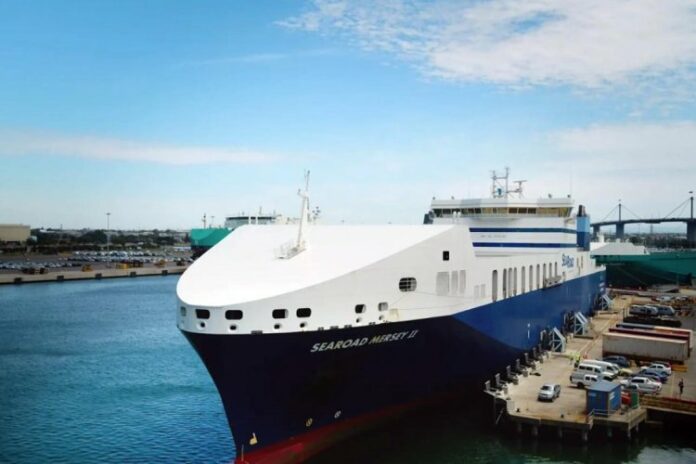
In mid-2021, transport and logistics provider, SeaRoad, will be the first to put the next generation Cavotec vacuum mooring technology, MoorMaster NxG, into commercial operation. The new NxG units will be integrated with SeaRoad’s original MoorMaster systems installed in 2003. 

The two MoorMaster® fast, rope-free mooring systems will enable SeaRoad to introduce a new, larger Ro/Ro vessel to meet increased demand. The systems will allow the new vessel to overhang the existing quays without costly and time-consuming extensions to the berth. A solution only made possible by MoorMaster’s enhanced vacuum design. The vessel will operate on SeaRoad’s daily cargo service between Melbourne in Australia and Devonport in Tasmania.

Stuart Michael, General Manager Marine, SeaRoad, says:

“Over the past 17 years, our MoorMaster systems have been extremely consistent, and Cavotec’s support exemplary. We’re extremely excited to be the first company to install the next generation of MoorMaster as we introduce larger tonnage to meet our customers’ demands.”

This is the second order for Cavotec’s next generation vacuum mooring technology, MoorMaster NxG, which was launched on 27 October 2020. The new generation of MoorMaster incorporates learnings from two decades of providing fast, hands-free mooring systems. It features a radically slimmer footprint – a 40 per cent reduction on previous designs, so it can be integrated in terminals with limited space between the edge of the quay and obstructions such as cranes. Installation time has also been reduced by 50 per cent – and in some cases by as much as 90 per cent.

Patrick Mares, President Cavotec Ports and Maritime, says:

“The continued operation of SeaRoad’s MoorMaster systems highlights the durability of the MoorMaster technology. Every day, some 100 MoorMaster systems across the globe will complete around 1,000 moorings, and we’re incredibly proud that those moorings still include SeaRoad’s systems in Melbourne and Devonport.” 
Faroe Islands’ 11km undersea tunnel to open this month

0

The Faroe Islands, a series of 18 islets in the North Atlantic located halfway between Iceland and Norway, constitute an autonomous region of Denmark.

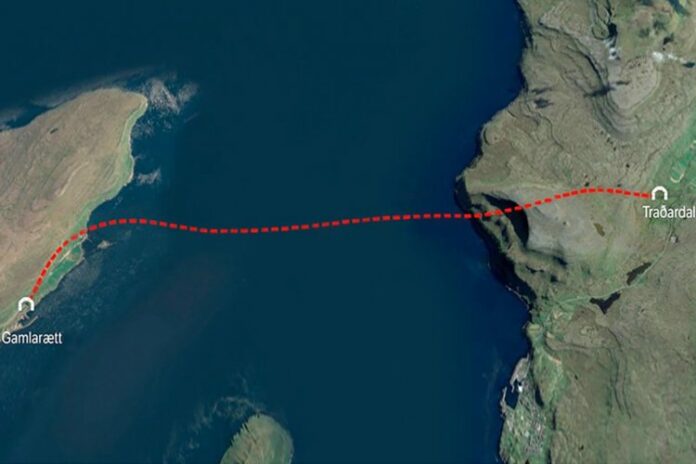
The $166m tunnel features what may be the world’s first undersea roundabout, with light effects designed by local artist Tróndur Patursson. The system is due to open on 19 December, reports BBC News. 

The tunnel will cut the travel time from 74 minutes to 16 between Tórshavn on Streymoy, the capital of the Islands, and the port-village of Runavík on the island of Eysturoy to the east.

The roundabout is located where the tunnel splits in two in its approach to Eysturoy, with each end surfacing on either side of the Skala fjord.

While the maximum grade of the roadway is five degrees, the lowest point of the tunnels will still be 187 meters below sea level. 

The project is being developed by Eystur-og Sandoyartunlar, a company set up by the County Council of the Faroe Islands.

As well as the Tórshavn–Runavík tunnel, the company is working on a second tunnel between Streymoy and the southern island of Sandoy.

Both tunnels, which are about the same length and cost, are being built by Swedish contractor NCC using a combination of drilling and blasting.

The company built two other tunnels on the island in the 2000s which, it notes, furnished it with useful data for its current project.

Alf Helge Tollefsen, NCC’s project manager, commented that work on the tunnel had been complicated by the poor quality of the rock. He said:

“The tunnel required considerably more injection than was typical for the other tunnels on the Faroe Islands – 7,500 tonnes of injection grout, to be precise.”

Work began on the Streymoy–Sandoy tunnel in June last year, and will complete in 2023.

The archipelago now hosts a total of 19 tunnels. Two of them are subsea tunnels built by NCC in the early 2000s. All other roads between the islands are connected by bridges and ferries.

Sources: GCR, NCC, BBC

Neptune announces feasibility study into CCS plan for Netherlands

0

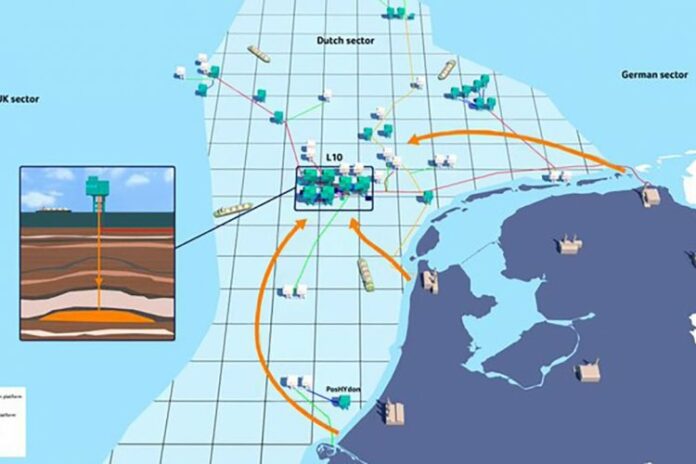
Neptune Energy has announced a feasibility study into plans for a large-scale offshore Carbon Capture and Storage (CCS) project in the Dutch North Sea, with the potential to safely store 120-150 million tonnes of CO2. Neptune will conduct the study in cooperation with its licence partners and CO2 emitters.

The study will assess the feasibility of injecting between 5 and 8 million tonnes of CO2 annually into the depleted gas fields around the Neptune-operated L10-A, L10-B and L10-E areas. If the project is developed, it will be one of the largest CCS facilities in the Dutch North Sea and could meet more than 50% of the CO2 reduction being targeted by the Dutch industrial sector.

The Dutch North Sea has the potential to become a ‘new energy hub’, given its existing infrastructure that connects offshore with onshore. It will also be home to the world’s first offshore green hydrogen pilot, PosHYdon, which Neptune’s Q13a platform will host.

Lex de Groot, Managing Director of Neptune Energy in the Netherlands, said:

“The first step is a feasibility study to confirm that CO2 can be handled and stored safely in these depleted gas reservoirs, using our existing infrastructure. We will engage with organisations and emitters to offer safe and competitively priced CO2 storage.

“As the largest offshore gas producer in the Dutch sector of the North Sea, we are well-positioned to help the Netherlands achieve its climate goals by using existing infrastructure to enable offshore CCS and offshore green hydrogen production.”

Jan Willem van Hoogstraten, CEO of Energie Beheer Nederland (EBN):

“CCS is crucial for the Netherlands to achieve the Paris climate goals. We are already making great strides with the Porthos and Athos projects that want to store CO2 in empty gas fields off the coast of Rotterdam and IJmuiden respectively. This study by Neptune is another important step to convert the empty offshore gas fields into large-scale CO2 storage.

“Obviously, we are pleased to participate in projects of our joint venture partners that use existing infrastructure for the safe offshore storage of CO2.”

There is growing consensus that CCS will be required at scale to meet the ambitious targets set out by the Paris Agreement. In all scenarios, CCS is part of the solution to achieve the Netherlands’ goal of reducing CO2 emissions by 49 to 55% by 2030.

Neptune already has significant experience with CCS, having carried out a 14-year project on its K12-B platform offshore the Netherlands, reinjecting CO2 into the gas field. The project was carried out in partnership with TNO, the Netherlands Organisation for applied scientific research.

Mitsubishi Shipbuilding participating in “Planning and Design Center for Greener Ships”

0

Mitsubishi Shipbuilding Co., Ltd., a part of Mitsubishi Heavy Industries (MHI) Group, has become a member of “Planning and Design Center for Greener Ships,” a core organization established to plan and propose state-of-the-art ships on a continuing basis through integration of the accumulated expertise of Japan’s shipbuilding industry.

Together with other members of domestic shipbuilders, going forward Mitsubishi Shipbuilding will pursue development of advanced environmental performance-enhancing technologies for the era of carbon neutrality, targeting near-zero carbon emissions, and engage in activities focusing on research and development related to commercialization of next-generation greener ships.

The founding aim of the Planning and Design Center for Greener Ships is to contribute to the growth of Japan’s shipbuilding industry by developing advanced environmental performance-enhancing technologies that will respond to tightening of environmental regulations over the long term through consolidation of the country’s technologies in ship design, and by advancing commercialization of next-generation greener ships. A total of nine domestic shipbuilders, including Mitsubishi Shipbuilding, together with Nippon Kaiji Kyokai (ClassNK), have already joined or announced intent to join the Center.

Going forward, further participation will be sought among domestic companies involved in marine business, shipping companies, trading houses and other entities supporting the Center’s aims. Initially, the Center, representing Japan’s shipbuilding industry, will strive to prepare a detailed proposal on next-generation ships that will reduce greenhouse gas (GHG) emissions, in a quest to achieve the medium to long-range targets of the International Maritime Organization (IMO), the United Nations specialized agency that serves to promote international cooperation concerning maritime issues.

On December 10, a presentation was held in Yokohama to announce the establishment of Planning and Design Center for Greener Ships. At this news conference, a number of messages were launched directly for the domestic marine industry. One focused on the current situation in which global industrial society, including the marine industry, has entered a period of significant change stemming from response to the problem of global warming, rapid progress in digital technologies, etc., and in particular the accelerating demands for efforts to achieve zero carbon.

Another emphasized that the future of Japan’s shipbuilding industry, which today faces a critical situation largely attributable to the supply-and-demand imbalance in the global shipbuilding market, will be carved out by accelerating efforts to lead the world in integrating diverse environmental technologies and building competitive ships.

NYK conducts second test of remote navigation of tugboat

0

NYK and its group companies MTI Co. Ltd., Keihin Dock Co. Ltd., and Japan Marine Science Inc. (JMS) obtained useful results in the second test of the remote navigation of a tugboat as a part of the Japanese government’s Sea Trial Project on Remote Control Navigation for the realization of autonomous ships by 2025.

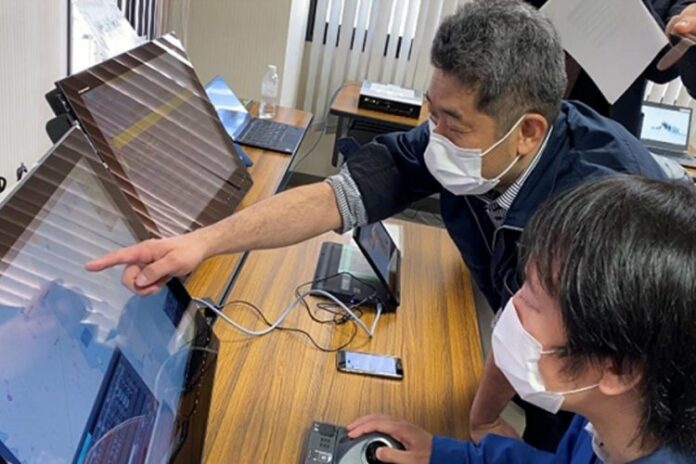
Within Tokyo Bay, a manned tugboat equipped with a remotely controlled system was operated remotely from the operation center in the city of Nishinomiya in Hyogo prefecture approximately 400 kilometers away. In the previous test in January this year, the operator in the remote operation center used sensors and cameras equipped to the tugboat to recognize surrounding conditions, created a route plan and action plan (collision avoidance route plan) for the remote control. In this second test this time, the below two tests to respond to malfunctions of equipment or ship-shore communication were conducted.

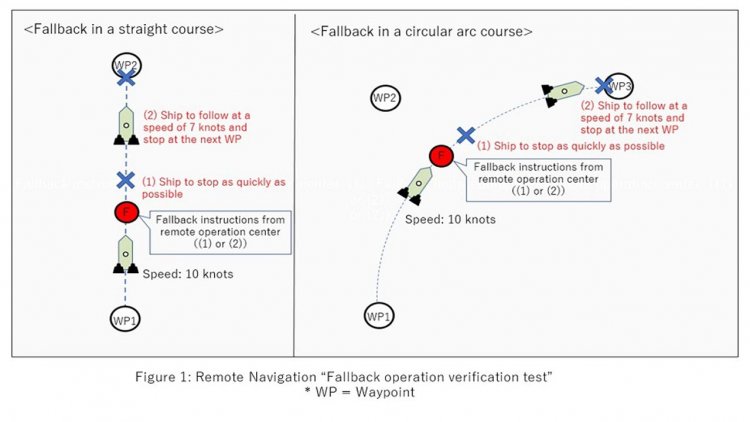
Tests to confirm response functions to equipment malfunctions or interruptions of ship-shore communication were conducted. In the tests, a signal sent remotely to the ship to stop as quickly as possible, and automatically navigate at a reduced speed until the next waypoint, to ensure ship safety functions or maintaining limited usage of the ship in the situation of troubles of equipment or ship-shore communication.

The purpose of this test was to confirm the optimization function of data communication amount depending on the available communication bandwidth for remote control. To ensure stable remote maneuvering, the amount of communication needs to be automatically adjusted. For that reason, the transferring data amount of radar echo should be controlled according to available communication bandwidth so that it does not affect other data transmissions. For remote control, it is necessary to monitor the position of the ship and nearby obstacles in real time, and communication interruption due to communication overload has to be avoided so that confirmation of this communication optimization function is indispensable.

Jan De Nul acquires Ocean Yield’s cable-lay vessel Connector

0

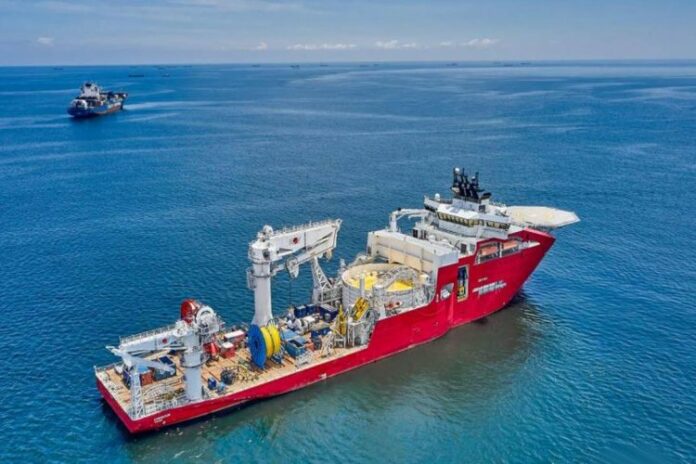
Jan De Nul Group has signed on 4 December 2020 an agreement for the purchase of the Offshore Construction and Cable-Lay Vessel Connector from Ocean Yield ASA. This marks a further investment in the offshore installation capacities of the Luxembourg based maritime contractor. The vessel will be officially transferred during the fourth quarter of 2020.

With a focus on delivering the next generation offshore energy projects, Jan De Nul Group invests strategically in its offshore installation fleet. With the acquisition of the cable-lay vessel Connector, Jan De Nul Group further specialises in this offshore energy market as part of a running investment programme following the order in 2019 of the new-build Offshore Jack-Up Installation Vessel Voltaire and Floating Crane Installation Vessel Les Alizés.

Philippe Hutse, Director Offshore Division at Jan De Nul Group:

“The Connector has a very good reputation in the sector and is known as one of the world’s top tier subsea installation and construction vessels. She’s capable of operating in ultra-deep water up to 3,000 metres deep. Through the market consolidation involving this new investment, we now own and operate the largest fleet of dedicated cable-lay vessels. The Connector will further strengthen the Jan De Nul fleet for the future of offshore energy production.” 

Andreas Reklev, SVP Investments of Ocean Yield ASA:

“The Connector was operating on a long-term bareboat charter until February 2017. In anticipation of a market recovery, Ocean Yield has for the past years traded the vessel in the short-term market. Through this position we have realized that in fact an industrial setup is required to operate the vessel efficiently in the cable-lay market whereby total solutions can be offered including dedicated engineering and operations teams. As such, we believe Jan De Nul will be well placed to efficiently operate the vessel which we see leaving in an excellent condition after having just completed its 10 year dry docking and class renewal surveys.”

Wouter Vermeersch, Manager Offshore Cables at Jan De Nul Group:

“The Connector makes a perfect combination with our Cable-Lay Vessel Isaac Newton. Both vessels are interchangeable with similar large carrying capacities thanks to similar dual turntable systems, while at the same time they each have their own specific characteristics that make them complementary. Our third Cable-Lay Vessel Willem de Vlamingh completes our trio with its unique all-round capabilities including operating in very shallow waters.”

Thanks to these investments, Jan De Nul Group operates a very modern and balanced offshore fleet now comprising three offshore jack-up installation vessels, three floating crane installation vessels, three cable-lay vessels, five rock installation vessels and two multipurpose vessels.

The Connector, built in 2011, is a DP3 Ultra Deepwater Multipurpose Subsea Cable- and Flex-Lay Construction Vessel. The vessel has a proven track record of installing power cables and umbilicals using its dual turntables with a combined total pay-load capacity of 9,000 tonnes, as well as risers using its two heave-compensated 400 mt and 100 mt offshore cranes. The Connector is also fitted with two built-in WROV’s which can work in water depths of up to 4,000 meters.

The Connector has superior manoeuvrability and a high transit speed for worldwide operations. Thanks to her excellent station keeping and stability capabilities, she can operate in the most harsh environments.

Finally, the vessel has a very large deck area and crane coverage, turning it into the ideal platform to perform cable repairs.

Underdeep Solutions gets third Seaeye Falcon

0

Seaeye Falcon is rated the top underwater robotic vehicle in class worldwide, and Underdeep’s latest Falcon is the second 1000m deep-rated version for the company, who specialise in fish farm inspection and support throughout Chile and the region.

Underdeep’s three Falcons are currently working at full capacity in the aquaculture facilities of the major aquaculture company, Salmones Camanchaca.

In addition, Underdeep Solutions has been working for several years in the removal of structures from the Salmones Camanchaca concessions, as requested by current local regulations, thus complying with the continuous plan for the removal of structures for the entire company

Along with inspecting nets and moorings, Underdeep deploy their Falcons, fitted with manipulators, to perform light work tasks around fastenings and buoys, as well as collecting and recovering items.

Their new Seaeye Falcon DR is fitted with a five-function manipulator and soft rope cutter, a Kongsberg HDTV camera, B&W reverse camera, a BlueView multi-beam sonar and an Applied Acoustic high-end USBL — that is now fitted to all Underdeep’s Falcons.

The success of the Falcon in Underdeep’s aquaculture work comes from its reassuring reliability, favoured by their pilots for working in isolated locations and its power, agility and steadiness in strong cross currents and harsh conditions whilst heavily loaded with equipment.

The Falcon’s concept comes from having created a highly reliable vehicle packed with five powerful thrusters and Saab Seaeye’s iCON™ intelligent power and distributed control architecture, all fitted into an easily handled metre-sized vehicle that can adopt different tools and sensors for undertaking numerous intricate and demanding tasks.

A Seaeye Cougar XTi is being considered as an addition to Underdeep’s vehicle fleet. The 3000m rated Cougar has six powerful SM7 thrusters and Seaeye’s iCON™ control system, making it ideal for handling robust equipment in strong currents whilst manoeuvring around complex structures.

Together with its aquaculture support operations, Underdeep also undertakes a range of other work across South America, including shipwreck recovery, tunnel inspection and offshore support.

Total closes its participation in the Energía Costa Azul LNG Export Project

0

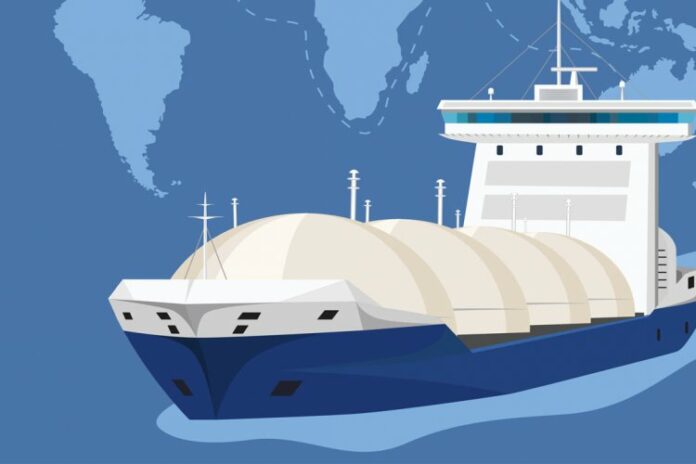
Total, Sempra LNG and IEnova have signed binding agreements finalizing Total’s equity investment in the Energía Costa Azul liquefied natural gas export project (ECA LNG), located in Baja California, Mexico.

Total now holds a 16.6% equity share of the project, for which the final investment decision was taken last November for the development, construction and operation of a single-train liquefaction facility with a nameplate capacity of 3.25 million tonnes per annum (Mtpa) of LNG and an expected start in 2024. Last April, Total also closed a twenty-year offtake agreement for 1.7 Mtpa of LNG.

Philippe Sauquet, President Gas, Renewables & Power at Total, said:

“We are very pleased to further strengthen our partnership with Sempra Energy through our participation in the ECA LNG project, that benefits from brownfield synergies with existing facilities and from the proximity to Asian markets. This investment is in line with our strategy to grow our LNG integrated portfolio across the entire gas value chain, which is a key to meet a growing global demand for energy while decreasing the carbon intensity of the products sold to our customers.”

ECA LNG is owned by Sempra LNG (41.7%), IEnova, Sempra Energy’s subsidiary in Mexico (41.7%), and Total (16.6%).

Total is the world’s second largest privately owned LNG player, with a global portfolio of nearly 50 Mtpa by 2025 and a global market share of around 10%.

The Group benefits from strong and diversified positions throughout the LNG value chain: gas production and liquefaction, LNG transportation and trading, and contribution to the development of the LNG industry for maritime transport. 

Through its interests in liquefaction plants in Qatar, Nigeria, Russia, Norway, Oman, Egypt, the United Arab Emirates, the United States, Australia and Angola, the Group markets LNG on all world markets. 

Bakker Sliedrecht electrifies crane vessels Heerema

0

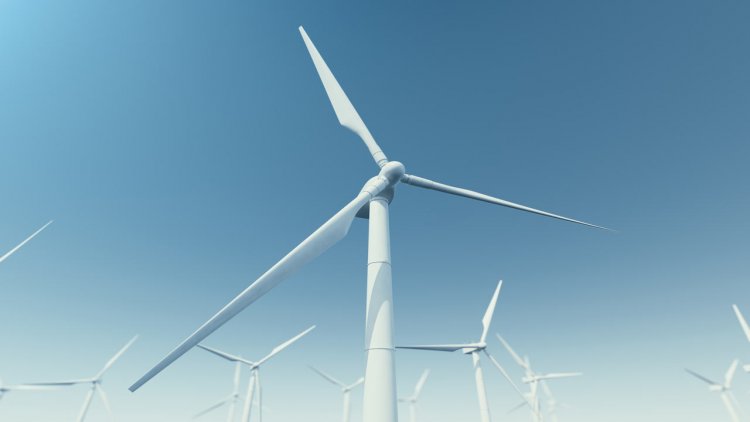
Wind turbines at the quay of the Calandkanaal in Rotterdam generate this sustainable energy. The shore power connection allows the vessels to turn off their diesel generators, which significantly reduces noise and CO2, nitrogen, sulphur dioxide and particulate matter emissions.

The electrification of the vessels is part of a shore power project, in which, in addition to Heerema, power company Eneco, the Port of Rotterdam Authority and the City of Rotterdam are also participating.

As part of the project, nine modern wind turbines with a total capacity of 27 megawatts will replace ten existing wind turbines on the headland at Rozenburg. Since August, the project consortium has been building a so-called e-house on the quay near the canal. This is a gigantic socket that can supply 20 megawatts (2 x 10 MW) of green wind energy.

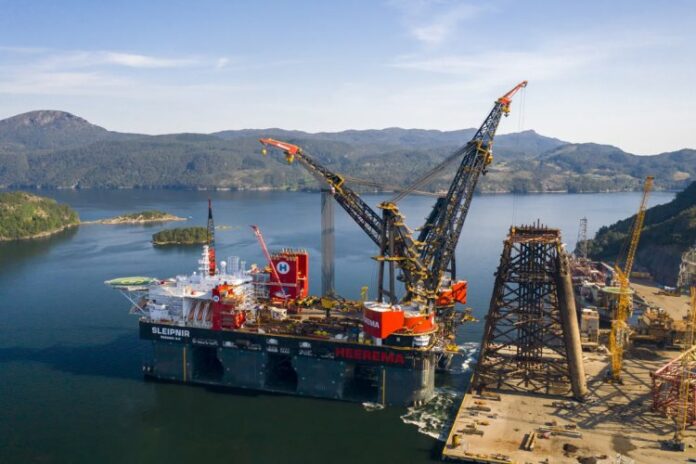
Heerema is their first client. The offshore company’s Thialf and Sleipnir are the largest crane vessels in the world. About 400 people can live and work on board. During the winter period, the crane vessels are regularly moored in the Calandkanaal in Rotterdam, for maintenance or in preparation of projects at sea. Then all on board facilities are powered by diesel generators. By connecting the ships to sustainable shore power from the new e-house, they can be turned off. That saves the amount of emissions as from 5000 diesel cars. CO2-emissions into the air are reduced with 15,000 tons and the vessels produce hardly any noise. Heerema will reduce its CO2-footprint with the project.

In order to use this sustainable shore power, Bakker Sliedrecht is carrying out various adjustments on board. Bakker Sliedrecht will, among other things, supply the required transformers, shore connection switchboards and interface to the existing power distribution system. Bakker Sliedrecht will also expand the existing installations and switchboards and install the low and high voltage cables. The voltage must be converted from 11 kV to 4.16 kV. All new equipment will be installed on board the Thialf early next year. After that the work at the Sleipnir will start. That crane vessel is brand-new, which is why fewer electrical adjustments are required there and the work package is less extensive.

Heerema consciously opted for Bakker Sliedrecht. Project Manager Andy Waterstreet and Account Manager John Hollemans of Bakker Sliedrecht, say:

“We have a long-term relationship together. We are Heerema’s preferred supplier and have supplied significant parts and equipment for the crane vessels, varying from switchboards to generators and also propulsion systems. Now we are delivering the shore supply switchboards on board so that the crane vessels can actually use the sustainable electricity from shore.”

The construction of electrical infrastructure on vessels and land installations is a specialty of Bakker Sliedrecht, whether it concerns high, medium or low voltage. In addition to Heerema’s crane vessels, more ships and companies in the port of Rotterdam will be able to use the sustainable shore power in the future. In these projects Bakker Sliedrecht can also play a part.

UK Government selected companies to develop a Technology Roadmap

0

The Offshore Renewable Energy (ORE) Catapult and the Workboat Association (WA) have been selected by UK Government to develop a Technology Roadmap, outlining a route to the decarbonisation of North Sea offshore wind operations and maintenance (O&M) vessels.

The roadmap will consider key areas such as vessels, ports, and alternative fuels. The Department for Transport (DfT) and the Foreign, Commonwealth & Development Office (FCDO) are funding this research and an accompanying industry engagement programme – both in the UK and Europe – ahead of the UK Government hosting COP26, due to take place in November 2021 in Glasgow.

As part of this engagement, ORE Catapult and the WA will undertake one-to-one interviews and focus groups with a wide range of stakeholders, including: wind farm and port operators; vessel designers, operators and ship builders; electrical and alternative fuel producers, distribution and storage providers; maritime regulation, certification and market experts; as well as local, regional and national government departments and agencies.

The programme will inform the Roadmap, due in Spring next year. It will recommend a set of clear, evidence-based guidelines with an aim to inform industry, investors and policymakers on how to best decarbonise the sector.

Maritime Minister Robert Courts said:

“Our maritime sector is vital to the success of the UK’s economy, but emissions create a global challenge, requiring an international solution. With over £20m being invested into greener maritime, and an ambitious Clean Maritime Plan to cut carbon across the sector, the UK is turning the tide on reducing emissions.”

Chris Hill, Director of Operational Performance at ORE Catapult added:

“We are pleased to be delivering this important project in support of UK Government. The UK has a strong maritime heritage as well as thriving, innovative maritime and clean-tech industries. By helping to identify the right interventions and actions for government, industry and regulators, we hope that the rapid decarbonisation of the offshore wind industry’s maritime logistics will prove to be a springboard to broader maritime decarbonisation and the creation of a thriving clean maritime industry in the UK.”

Hernan Vargas, O&M Engineer and Roadmap Lead for Vattenfall added:

“As an operator of offshore wind farms we are committed to enhancing the sustainability of the way that we operate these sites, including the vessel logistics needed to move out technicians, tools and parts to and from the wind farm. Decarbonising maritime logistics is a real focus for our business and we welcome the initiative from UK government to help develop a better understanding of some of the technical, regulatory and market challenges involved.”

Kerrie Forster, Chief Executive Officer of the Workboat Association, said:

“UK registered vessels make up the largest market share of the global offshore wind <500gt vessel sector, the outcomes of this project are fundamental to both our UK membership and external membership, with benefits directly affecting the wider international offshore wind and workboat sectors.”