-7.5 C
New York
Home Blog Page 722

BAE Systems to provide digital support to the Royal Canadian Navy

0

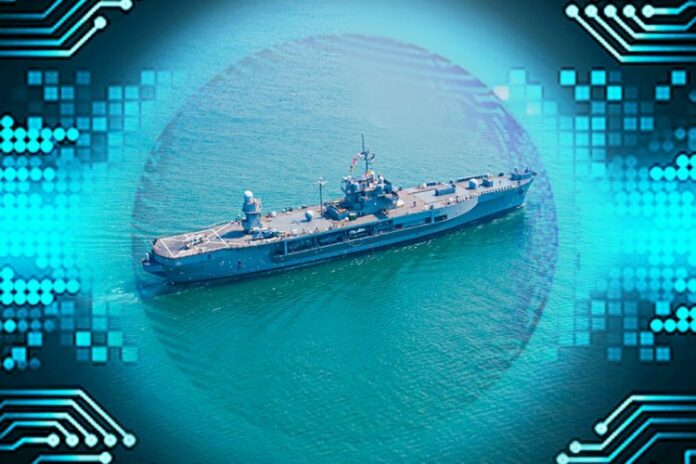
This contract will see the deployment and integration of BAE Systems’ Integrated Data Environment (IDE) to enable effective and efficient shore-side support to Halifax-Class frigates. Fleetway will benefit from access to a range of BAE Systems digital capabilities, including its expertise in configuration management, obsolescence management, and digital twinning.

The IDE will allow Fleetway engineers and their enterprise partners to collaborate easily and gain access to engineering life cycle management data, as well as to share, withdraw, edit and re-publish data necessary for supporting the vessels. It will also facilitate a clearer understanding of the complex network of interdependencies between ship systems and components. This will help decrease support time and cost and enable Fleetway to maximise fleet availability.

Darren Nice, Head of Digital Services at BAE Systems Maritime Services, added:

“As organisations and armed forces around the world continue to digitise their operations, we will continue to develop a range of first-class integrated, through-life, digital solutions that help organisations deliver operational excellence and maximum availability.”

This is the latest in a series of contracts awarded to BAE Systems for work with the Royal Canadian Navy. In February 2019, BAE Systems’ Type 26 Global Combat Ship was chosen as the design for the Canadian Surface Combatant (CSC), Canada’s 15 new multi-purpose frigates.

BAE Systems also supports and repairs Canada’s Victoria-class submarines and BAE Systems recently hosted the Royal Canadian Navy’s Halifax-class frigate, HMCS Toronto, at Portsmouth Naval Base, where it performed a number of repairs. This Halifax-class project further underscores the trust placed in BAE Systems to deliver technological innovation to the Canadian Armed Forces.
Singapore chooses Wilhelmsen Consortium for Ship Parts 3D Printing Project

0

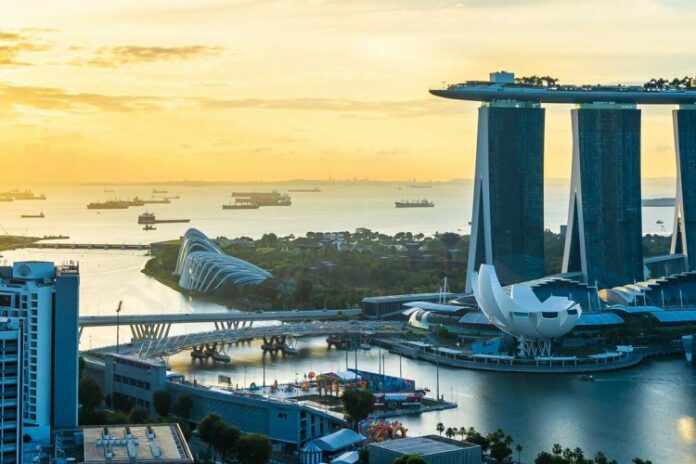
Kawasaki Heavy Industries, Ltd. announced today that the Wilhelmsen consortium, of which Kawasaki is a part, has been selected by the Maritime and Port Authority of Singapore (MPA) in Singapore for participation in a Joint Industry Project (JIP) to continue to unlock the value of 3D printing technology for the maritime industry.

The Wilhelmsen-led JIP is one of the 11 projects awarded by MPA under its Maritime Innovation and Technology (MINT) Fund, sharing a total of S$1.625 million in co-funding, where the Wilhelmsen consortium will continue to develop its marine specific, additive manufacturing offering.

The consortium is led by Wilhelmsen, a leading global maritime company, and includes marine equipment manufacturers Kawasaki, Wärtsila and Hamworthy Pumps, class society DNV GL, technology partners thyssenkrupp, Ivaldi Group and Tytus3D, and a number of forward-leaning end users already part of Wilhelmsen’s 3D printing customer program: OSM, Gearbulk, Thome Group, Berge Bulk, Wilhelmsen Ship Management, BW Group, Executive Group, Carnival Maritime and Yinson.

Through the “Business Idea Challenge”* in-house idea submission framework, Kawasaki is pursuing a new approach that involves digitalizing spare ship parts and using 3D printers at ports to print said parts. This will make it possible to enhance spare parts availability in times of emergency and maximize safe ship operating times. While taking part in tests to determine compatibility and suitability of 3D-printed parts in actual usage, Kawasaki hopes to develop new business models.

Atsushi Ogura, Project Leader, Kawasaki Heavy Industries, said:

“Through the JIP, Kawasaki will establish technologies for fabricating spare ship parts by additive manufacturing and contribute to enhancing spare parts availability in times of emergency and maximize safe ship operating times. We’ll accelerate the feasibility study of additive manufacturing for spare ship parts.”

Hussain Quraishi, Strategic Innovation Manager, Wärtsila, said:

“For the right parts, additive manufacturing offers clear benefits in performance, lead times and enables more resilient distributed supply chains.”

Jerald Yun, CEO of Tytus3D System Inc, said:

“Today’s economy demand companies to leap beyond themselves and make a significant paradigm shift in their thinking and how they operate. On-demand manufacturing, enabled with additive manufacturing, allows successful companies to do just that. It is a perfect solution for the unique demands of maritime spare parts market.”

Espen Sivertsen, CEO of Ivaldi, said:

“This is an important milestone for maritime adoption of digital distribution. Up until now, certification of critical parts has been very costly and time-consuming because each part has to cover new ground. By working together on key part categories, we aim to remove some of the remaining barriers for mass adoption.”

While taking part in tests to determine compatibility and suitability of 3D-printed parts in actual usage, Kawasaki hopes to develop new business models by pursuing a new approach that involves digitalizing spare ship parts and using 3D printers at ports to print said parts to enhance spare parts availability in times of emergency and maximize safe ship operating times.

ABS, Sembcorp Marine and IHPC to develop new gas technologies

0

ABS, Sembcorp Marine and A*STAR’s Institute of High Performance Computing (IHPC) have successfully completed joint development projects in LNG bunkering and the use of LNG as a marine fuel.

The projects arose out of the Memorandum of Understanding signed by ABS, Sembcorp Marine and A*STAR’s IHPC in 2018 to advance the use of LNG as a marine fuel and to make LNG more accessible, reliable and safer for the industry.

The joint development projects (JDPs) brought together engineers with diverse backgrounds and expertise to study a range of key issues including leakage during LNG bunkering, boil-off rate management for Type C tanks, and the heat transfer between LNG containment and surrounding structures.

Simulation methodologies developed in the JDPs will facilitate advances in mitigation measures for containing gas leaks, Type C Tank design, through better prediction of boil-off rates, and insulation design for cryogenic storage systems.

Dr. Gu Hai, ABS Vice President, Singapore Innovation and Research Center, said:

“Through this collaboration, the partners have made headway in research and development that can help drive greater adoption of LNG as a bridging fuel, through innovative solutions for the transfer and containment of LNG. The success of these projects demonstrates ABS’ commitment to collaborating with industry partners to develop sustainable solutions.”

Dr Lim Keng Hui, Executive Director, IHPC, A*STAR said:

“We are committed to creating new value for our partners through the translation of R&D into positive outcomes for the offshore, marine and energy sectors. IHPC’s multidisciplinary core capabilities have been applied to address industry challenges and encourage the adoption of LNG as a sustainable fuel.”

Mr. Simon Kuik, Head of Research and Development, Sembcorp Marine, said:

“Recognized as the cleanest form of fossil fuel, LNG is suitable to be used as an interim source of fuel for the coming decade. Sembcorp Marine has a strong track record of providing LNG-ready solutions that ensure the safe, reliable and cost-effective adoption of this fuel. This collaboration with ABS and IHPC leverages on Sembcorp Marine Tuas Boulevard Yard as a living lab for our engineers and partners to test-bed and validate R&D outcomes in line with our continuing mission to innovate, enhance and expand our product solutions.”

VSTEP Simulation to supply SDIS 67 with the Response Simulator solution

0

SDIS 67 (Fire & Rescue Service 67 in Strasbourg, France) has recently signed a contract with VSTEP Simulation for the delivery of two Response Simulator stations and three extensive maritime, aviation and industrial content packages. 

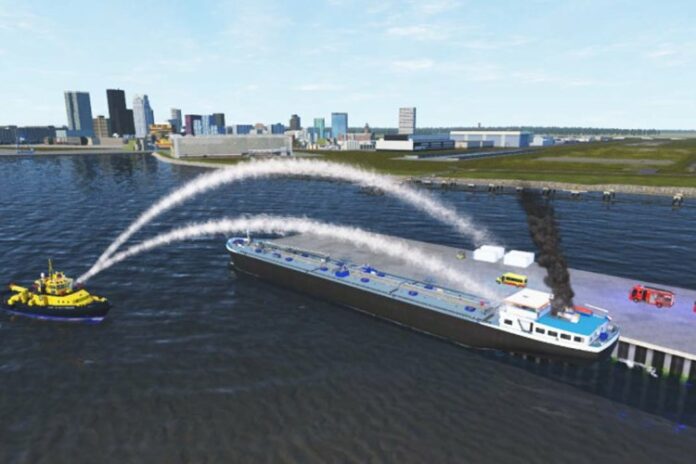
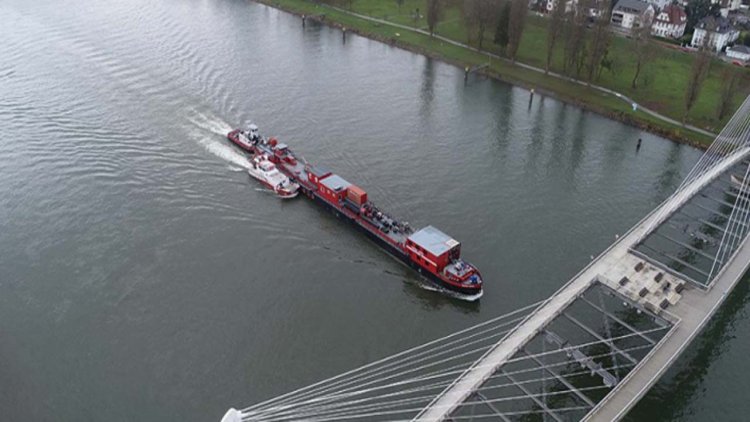
With the RS solution, the specialized firefighters from three cross-border regions (France, Switzerland and Germany) will be able to train their skills for various crisis situations and ultimately, enhance the safety level of the Rhine territory and surrounding areas. 

SDIS 67 is an autonomous public department that operates in the Bas-Rhin area. With its mission to protect people, SDIS 67 continuously improves their emergency response education with cutting edge technology. The fire department initiated the Cross-border Risk Academy (l’académie transfrontalière des risques) with several German and Swiss partners. The aim of the academy is to connect safety and security professionals along the Rhine in order to bring together their knowledge on emergency issues and better prepare for critical challenges of today and tomorrow. 

The Rhine is one of the major European rivers, fulfilling important societal functions: safety against flooding, inland waterways, and freshwater supply. Therefore, it is vital to ensure that firefighters in the area have the necessary skills to protect citizens and the environment in the event of a crisis. With the Response Simulator solution, French, German and Swiss firefighters can create highly detailed scenarios such as: inland terrorism, fire and explosions on board vessels, oil leakage, and many more. Afterwards, they are able to train response strategies to emergency situations and evaluate their action through debriefing mode. The capabilities of the RS software will enable them to enhance skills and carry out their daily operations with more confidence. They will also benefit from cross-border and multilingual training exercises, as the software offers French and English language options with German soon to be released. More relevant than ever before with the constraints of the COVID-19 pandemic is the possibility to conduct remote training.

Tije Vos, Business Development Director at VSTEP Simulation, says:

“In the time of an exceptional health crisis, SDIS 67 firefighters must perform vital roles in everyday emergencies while still maintaining social distancing. With the remote solution that Response Simulator offers, the challenges of training can be mitigated as firefighters will be able able to train closely to reality, whenever and wherever. We are proud to add SDIS 67 to our client base and look forward to helping them enhance their safety training program.“ 

Ulstein designed GLDD subsea rock installation vessel for US offshore wind industry

0

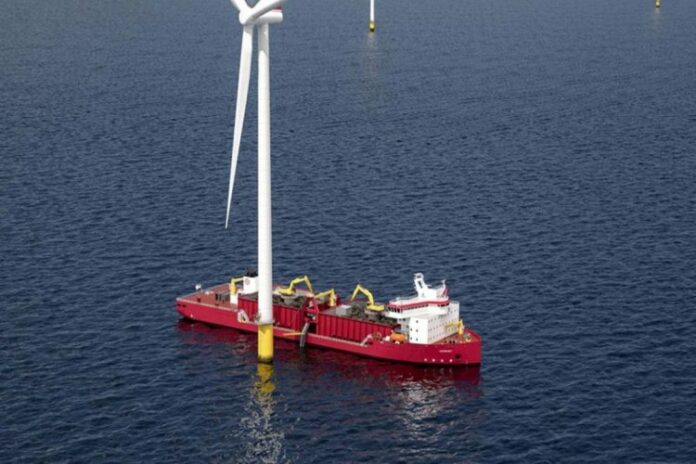
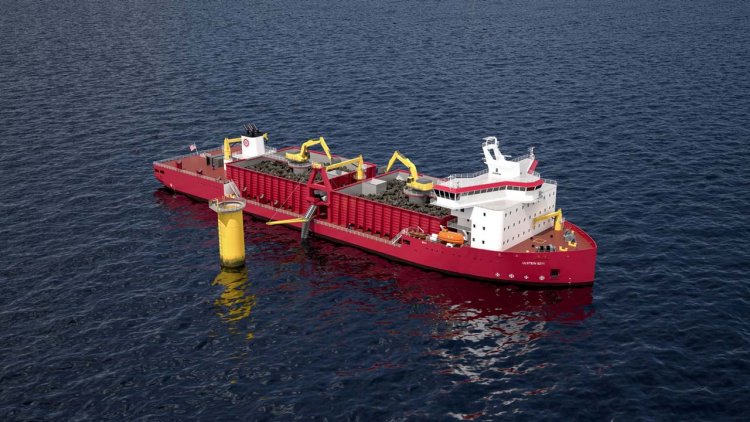
Great Lakes Dredge & Dock contracted Ulstein Design & Solutions BV to design the first U.S. flagged Jones Act compliant, inclined fallpipe vessel for subsea rock installation. 

Edwin van Leeuwen, managing director at Ulstein’s Dutch design office, says:

“We are extremely proud that Great Lakes Dredge & Dock Co. LLC (GLDD) has entrusted us to develop their new asset. We much enjoyed the cooperation with the GLDD team in developing the concept over the last couple of months, even though we never met physically due to the COVID-19 travel restrictions. Our team is eager to continue the further development of the vessel with GLDD.”

The vessel will primarily serve the growing needs in US offshore wind, installing protective layers of rock at offshore wind turbine foundations by means of an inclined fall pipe system. Furthermore, its large and strong aft deck area makes the vessel a highly flexible asset to GLDD enabling specialised subsea operations.

Ko Stroo, Ulstein’s lead naval architect and project manager, mentions:

“At the start of the design we applied our newly developed ‘Blended Design’ method, enabling GLDD to co-evolve their business case with the ship concept. This resulted in significant gains in economic performance, at the same time reducing fuel consumption and emissions, by optimising vessel main dimensions, speed and dynamic positioning capability. Our design for this US Coast Guard compliant vessel strongly focused on Jones Act compliant shipbuilding in the USA and ease of construction.”

The Basic Design will be developed by Ulstein’s Dutch design office, with strong engineering contributions from its sister offices in Norway and Poland.

All three Finnlines’ hybrid ro-ro vessels are now in construction

0

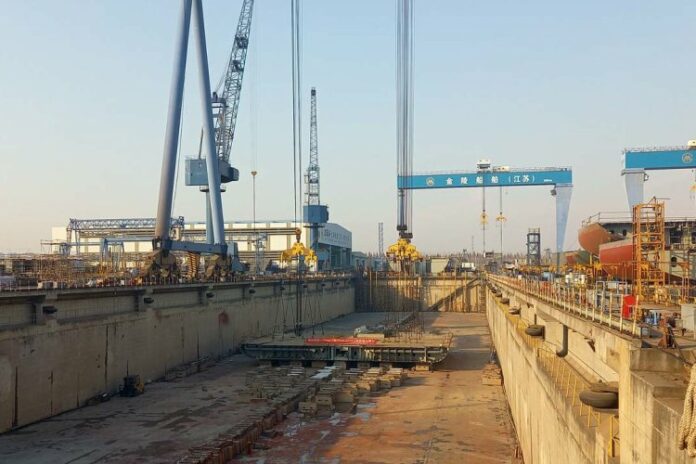
The steel plates of the third new hybrid ro-ro were cut in a traditional steel cutting ceremony at the Nanjing Jinling shipyard in China on 16 December 2020. Furthermore, the keel laying of the first hybrid ro-ro took place on the same day.

The new ro-ro vessels are part of Finnlines’ ongoing EUR 500-million newbuilding programme, which includes two eco-efficient ro-pax vessels in addition to the three hybrid ro-ro vessels. The newbuildings will improve the energy efficiency of the Company’s fleet, as well as reduce emissions, as they will be built with the latest environmentally efficient solutions and technologies. Lithium-ion battery systems will allow zero-emission port visits as well as modern two-stroke engines, emission abatement systems, solar panels and an innovative air lubrication system will cut emissions further.

These new hybrid ro-ro vessels, Finneco I, Finneco II and Finneco III are expected to be delivered during 2021–2022.

Emanuele Grimaldi, CEO of Finnlines, says:

“In the past years, we have steered investments to sustainable development. We have invested in energy efficiency and green technologies and our newbuilding programme focuses on many energy-saving features. These world’s most environmentally friendly ro-ro vessels, and our entire newbuilding programme will continue to implement our sustainable strategy. In the future, we are able to meet the needs of our customers and society even better and continue to guarantee high-quality sea transport services.”

Aker Solutions awarded new Johan Sverdrup contract

0

At peak the contract will provide jobs for around 1,300 people and have a value of up to NOK 500 million.

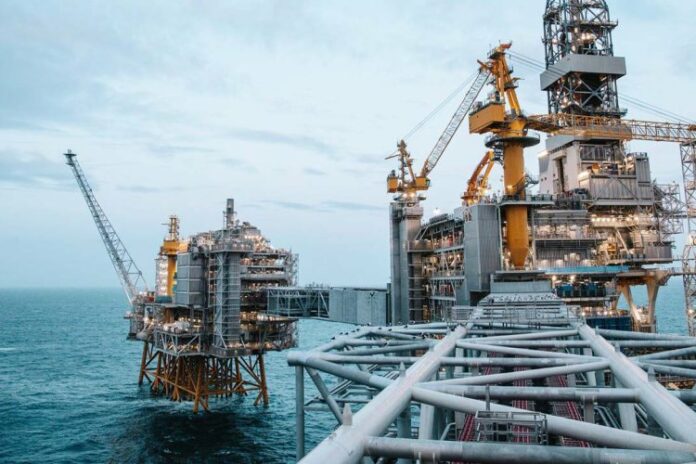
Johan Sverdrup phase 2 includes a new processing platform currently under construction by Aibel. After the assembly in sheltered waters in 2021, it will be towed back to Haugesund for completion before installation on the field in the spring of 2022.

The new contract awarded to Aker Solutions covers hook-up on the field and other hook-up and completion tasks that must be carried out after the platform has been installed to prepare it for operation. It will be connected to the existing field installations by a gangway to the existing riser platform.

Aker Solutions was awarded a similar contract in the first phase of the Johan Sverdrup development.

Bjarne Bakken, project director for Johan Sverdrup phase 2, says:

“Now Aker Solutions is modifying the riser platform for phase 2 and can move on to  the hook-up and completion of the new processing platform on the field in 2022.”

Planning of the work will start immediately. At peak in 2022 the project will employ around 1,200 people distributed on three offshore shifts of 400 people each, in addition to an onshore organization of around 100 people. Production start for Johan Sverdrup phase 2 is planned in the fourth quarter of 2022.

Peggy Krantz-Underland, Equinor’s chief procurement officer, says:

“Johan Sverdrup phase 2 will provide high value creation with record-low emissions. The project generates activity and spinoffs in Norway. More than 90 percent of the project contracts have been awarded to Norwegian suppliers. The contracts have been awarded in strong international competition, proving the competitiveness of the Norwegian supplier industry.”

Licence owners: Equinor Energy AS: 42.6267% (operator), Lundin Energy Norway AS: 20%, Petoro AS 17.36%, Aker BP ASA: 11.5733% and Total E&P Norge AS: 8.44%.

Stena Line reveals the names of the new Baltic Sea vessels

0

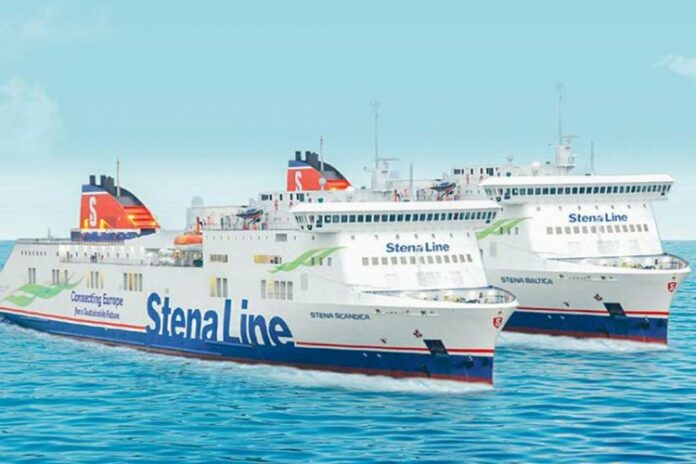
The new ferries will add a further 30 per cent freight capacity and offer an attractive alternative way to travel on the Baltic Sea. After receiving close to 600 name suggestions from customers online the new names are – Stena Scandica and Stena Baltica.

In October Stena Line announced the strengthening of their Baltic Sea fleet  with the deployment of two modern RoPax vessels on the route between Nynäshamn in Sweden and Ventspils in Latvia during 2021, which will add 30 per cent more lane metres freight capacity and offer a brand new modern onboard experience. The two modern RoPax vessels were built at the Italian shipyard Visentini in 2005 and have been operating on Stena Line’s Irish Sea route between Belfast and Liverpool for the last 10 years, with the names Stena Lagan and Stena Mersey. Before they start operating on their new route in the Baltic Sea the two vessels will be modernised and lengthened by sister company Stena RoRo, as well as receive new names.

Johan Edelman, Trade Director Baltic Sea North, says:

“The new vessel names connect with our Scandinavian heritage as well as the region where they will operate. They vessels will add a brand new modern onboard experience for both travel and freight customers on the Baltic Sea.”

The first of the two vessels, Stena Scandica (ex. Stena Lagan) is currently undergoing a ground-breaking conversion at the Sedef Shipyard in Tuzla, Turkey. It will join the Stena Line fleet and start operating on the Nynäshamn-Ventspils route during the first quarter of 2021.

The second vessel, Stena Mersey, is still operating on the Irish Sea where it will be replaced by Stena Line’s new E-flexer, Stena Embla, when it arrives from China in the new year. It will be modernised and lengthened during the spring at the same shipyard and will rejoin the fleet and start sailing on the Baltic Sea before the summer. She will inherit the classic Stena Line vessel name Stena Baltica.

The two vessels will be lengthened with a 36 metre mid-section; after the conversion they will be 222 metres long and have a capacity of 200 cabins, 970 passengers and 2,875 freight lane meters plus the additional car deck; adding another 30 per cent freight capacity on the route. To increase the loading efficiency, they will also be modified with drive through capabilities on two levels. The vessels will also be fitted with hybrid scrubbers.

Johan Edelman, Trade Director Baltic Sea North, says:

“We have seen an increase in demand from our customers across the Baltic Sea region. We are now strengthening our position and customer offer further with new modern vessels, more capacity and an attractive onboard experience on both our routes to and from Latvia during 2021.”

GRAHAM appointed to deliver Major Wharf & land upgrade at The Port of Dundee

0

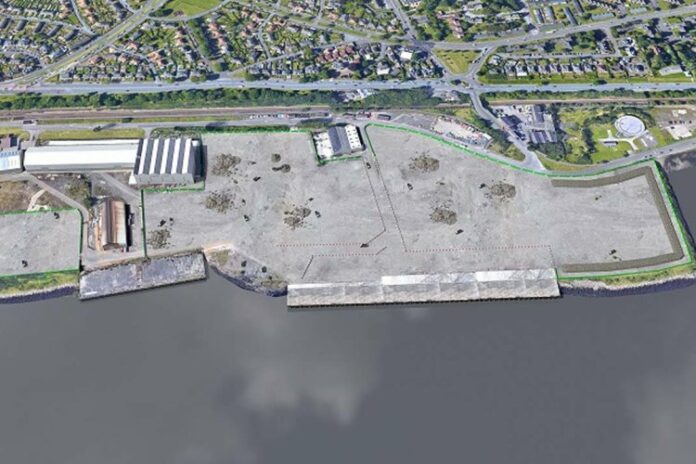
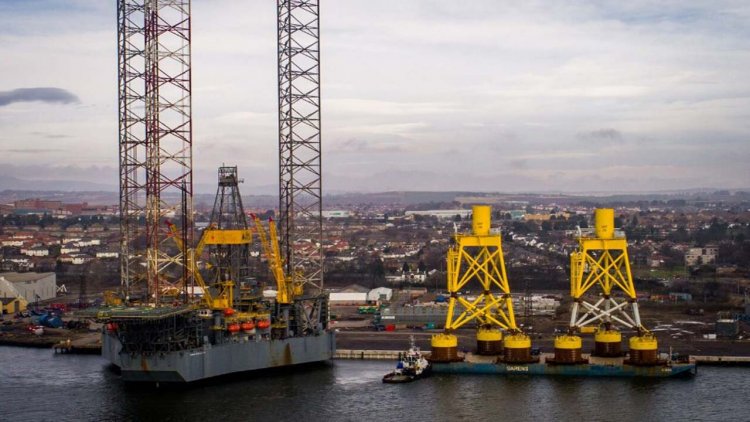
The investment programme in the redevelopment in the Port of Dundee, Scotland, totalling £40m, has reached a significant milestone with the start of the latest contract for the construction of a new wharf alongside land upgrades to secure the port’s future in offshore renewable energy and North Sea Oil and Gas projects. This work will augment the development work already completed at the port during 2018/2019.

The work, being delivered by construction and civils engineering company GRAHAM, consists of the construction of a new wharf and the preparation and upgrade of over 15 hectares of land (equivalent to 20 full size football pitches) for the emerging energy transition sector.

The port’s existing Caledon East Warf is being replaced with a new heavy lift quayside that is capable of roll on/off operations as well as conventional lift on/off. Prince Charles Wharf is also undergoing an upgrade after almost 45 years’ service.

Once completed at the end of 2021, the total quayside available at this specific part of the port will be 485m. The quayside, combined with the capital dredging program under way in the River Tay, will allow large semi-submersible vessels (HTV) or wind installation (WIV) to berth in the port.

Dundee is currently the wind turbine hub for the construction of EDF Renewables’ and ESB’s major offshore wind farm, Neart na Gaoithe (NnG).

Commenting on the investment in Dundee, Senior Port Manager, David Webster, said:

“This significant investment in the Port of Dundee demonstrates our commitment to bring large-scale renewables and decommissioning projects to Scotland. We are pleased to work with GRAHAM on this project in Dundee following their successful delivery of our new freight ferry terminal in Tilbury2 earlier this year.”

Leo Martin, managing director of GRAHAM’s civil engineering division, said:

“This will be our second project working in collaboration with Forth Ports, following our completion of Tilbury2 on the Thames.

“The offshore renewables construction facility at the Port of Dundee promises to bring significant benefits to both Dundee and indeed the whole of Scotland, both socially and economically, creating jobs and supporting the supply of low carbon electricity.”

Gasum’s bunker vessel Coralius with record number of ship-to-ship deliveries

0

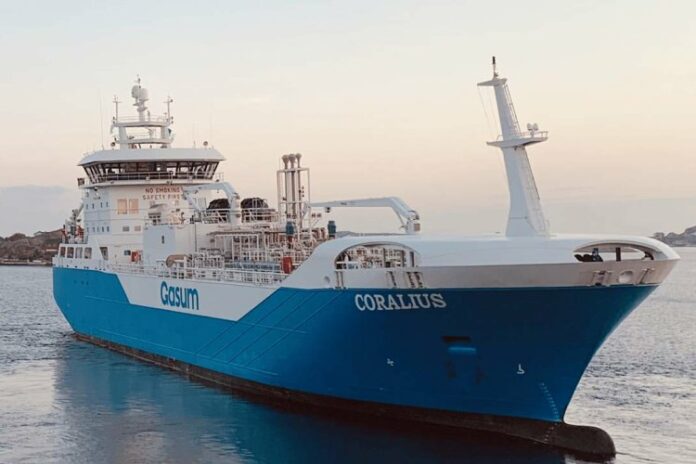
This was a new record and another milestone for the bunkering vessel. The ship-to-ship bunkering took place in Gothenburg, Sweden.

Four oil/chemical tankers needed fuel of liquefied natural gas (LNG) that last day of November. Ramelia and Thun Venern operated by Furetank and Tern Ocean and Thun Evolve operated by Preem. Gasum’s Coralius supplied the four tankers within twelve hours enabling them to continue their operation and voyages in the Baltic area.

Jacob Granqvist, Sales Director Maritime in Gasum, says:

“So far Coralius has done several hundred ship-to-ship LNG bunkerings. She has a very experienced crew and this day in Gothenburg has really proven her capability. The availability of LNG is not even a question when we see this kind of efficiency and achievement”.

The use of LNG contributes significantly to the decarbonization of the shipping industry. It reduces greenhouse gas emissions by at least 20% as well as improves local air quality. In addition, it meets all current and forthcoming regulations set out by the International Maritime Organization and EU regulations.