-8.3 C
New York
Home Blog Page 720

The most consumed species of mussels contain microplastics all around the world

0

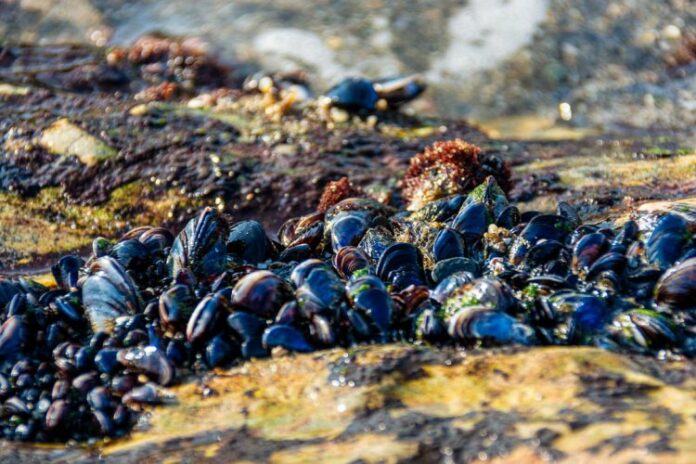
“If you eat mussels, you eat microplastics.” This was already known to a limited extent about mussels from individual ocean regions. A new study by the University of Bayreuth, led by Prof. Dr. Christian Laforsch, reveals that this claim holds true globally. 

The Bayreuth team investigated the microplastic load of four mussel species which are particularly often sold as food in supermarkets from twelve countries around the world. The scientists now present their research results in the journal Environmental Pollution.

All the samples analyzed contained microplastic particles, and the researchers detected a total of nine different types of plastic. Polypropylene (PP) and polyethylene terephthalate (PET) were the most common types of plastic. Both are plastics ubiquitous to people’s everyday lives all over the world. To make the analyses of different sized mussels comparable, one gram of mussel meat was used as a fixed reference. According to the study, one gram of mussel meat contained between 0.13 and 2.45 microplastic particles. Mussel samples from the North Atlantic and South Pacific were the most contaminated. Because mussels filter out microplastic particles from the water in addition to food particles, a microplastic investigation of the mussels allows indirect conclusions to be drawn about pollution in their respective areas of origin.

The four species of mussels sampled were the European blue mussel, the greenshell mussel, the undulate venus, and the Pacific venus clam. All of the mussels sampled were purchased from grocery stores. Some of them had been farmed while some were wild catch from the North Sea, the Mediterranean Sea, the Atlantic Ocean, the South Pacific Ocean, the South China Sea, and the Gulf of Thailand.

The microplastic particles detected in the mussels were of a size of between three and 5,000 micrometers, i.e. between 0.003 and five millimeters. Special enzymatic purification was followed by chemical analysis of the particles via micro-Fourier transform infrared spectrometry (micro-FTIR) and Raman spectroscopy. 

Dr. Martin Löder, head of the plastics working group at the chair of Prof. Dr. Christian Laforsch, says:

“To analyze the types of microplastic, we used so-called random forest algorithms for the first time in this study, both for the immensely large micro-FTIR data sets and for the Raman measurement data. These enabled us to evaluate data quickly, automatically, and reliably.”

Indeed, the contamination of different organisms with microplastics has been investigated in earlier research. However, the results available to date can only be compared with each other to a very limited extent because often different analytical methods were used in the studies. 

Prof. Dr. Christian Laforsch says:

“Our new study represents an important advance in terms of methodology. We have combined the latest technologies and procedures in sample preparation, measurement, and analysis of microplastic contamination in such a way that comparable results can be obtained on this basis in the future. Such methodological harmonization is an indispensable prerequisite for correctly assessing and evaluating risks potentially emanating from the spread of microplastics in the environment.”

Source: Phys
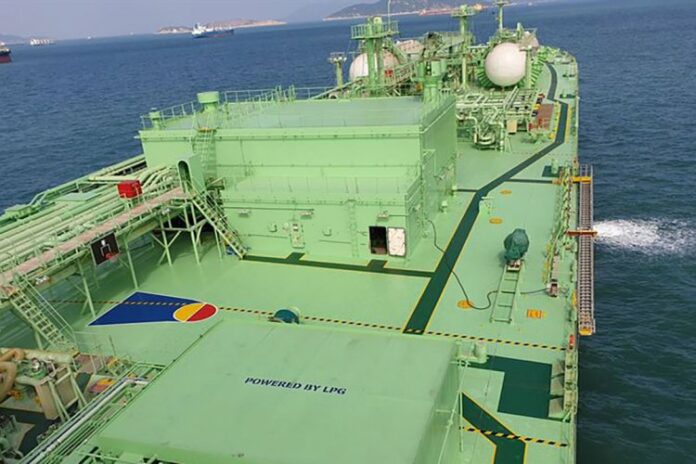
Wärtsilä LPG Fuel Supply System to be retrofitted to an additional three BW LPG ships

0

The technology group Wärtsilä’s industry leading R&D investments in enabling liquefied petroleum gas (LPG) to become a viable marine fuel has resulted in a further order for the company’s LPG Fuel Supply System (LFSS). 

Oslo-listed BW LPG, the world’s largest LPG shipping company, has ordered the system to be retrofitted to three very large gas carrier (VLGC) vessels. BW LPG had previously ordered four Wärtsilä LFSS’ in 2018, and an additional eight systems in February 2020. This latest order placed in November 2020, thus brings the total to be delivered to the same customer to 15, thereby emphasising their satisfaction with the technology.

The initial order was placed following Wärtsilä’s successful full-scale testing of the system in 2018 with a full-sized 2-stroke marine engine operating on LPG fuel. This was the world’s first such testing protocol. For the retrofitting, Wärtsilä has been designated as the system integrator, which involves not only installation of the system, but also the required ship design modifications.

Pontus Berg, Executive Vice President, Technical and Operation at BW LPG, said:

“BW LPG took the first step to invest in pioneering propulsion technology based on excellent test results. Subsequent strong performance of the Wärtsilä technology has exceeded our expectations, and we have proceeded to equip our fleet with the LFSS as an important step in our commitment towards fewer emissions, bigger savings, and also a large step towards zero-carbon propulsion.” 

Kjell Ove Ulstein, Director of Sales and Marketing at Wärtsilä, commented:

“For any fuel to become viable, it takes more than just an engine capable of burning the fuel. An efficient and well designed, high quality fuel supply system is essential, and we have worked hard to bring the Wärtsilä LFSS to the market. LPG as a marine fuel supports environmental sustainability, and we are proud to be contributing to this.”

Retrofitting of the latest three systems for BW LPG will take place at the end of 2021 or the beginning of 2022.

Maersk Intrepid shows promising emission reduction levels after entering operations in Norway

0

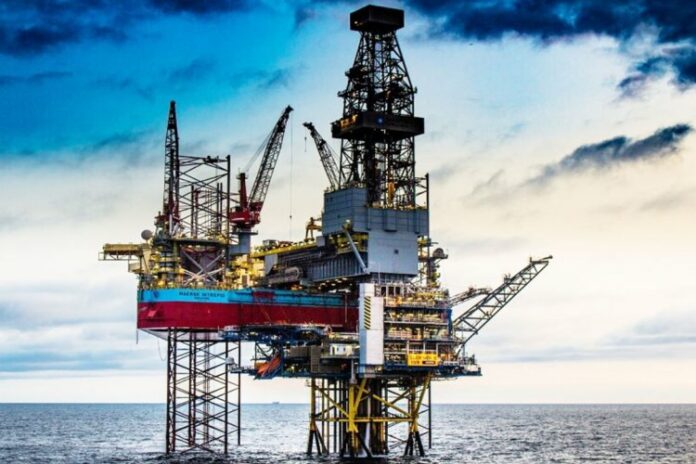
Maersk Intrepid is currently working for Equinor on the Martin Linge field where the ultra-harsh environment jack-up in November this year commenced its first drilling operation with the full low-emission package in use.

The full technology package was expected to deliver a double-digit energy savings potential, and this has now been confirmed on Maersk Intrepid where the first month of operations on Martin Linge produced an initial data point of reducing fuel consumption and CO2 emissions by approximately 25% compared to the baseline average for the rig. In addition, NOx emissions were reduced by approximately 95%, an improvement from the original target of 90%.

The installation of low-emission technology is one of several initiatives that support Maersk Drilling’s efforts to reach the company’s recently announced target of reducing its CO2 emissions intensity by 50% by 2030. Other initiatives relating to CO2 reductions include operating rigs on shore power and participation in the Project Greensand consortium which is targeting the use of discontinued oil and gas fields for permanent storage of CO2 offshore Denmark.

Caroline Alting, Head of Integrity & Projects, Maersk Drilling, says:

“We’re thrilled to now see the full complement of low-emission technology in use on Maersk Intrepid, and to receive a very promising first dataset on emission reductions. It’s still too early to make any definitive conclusions on average emission reductions over time, but the preliminary results are very promising with reductions around 25% compared to the rig’s baseline, driven by both energy-saving technology and behavioural changes supported by the low-emission package. We want to do our part in the transition towards a sustainable energy future, and we’re thankful for the engagement of our customer Equinor and the NOx Fund in realising this project.”

The hybrid, low-emission upgrades installed on Maersk Intrepid are supported by a grant from the Norwegian NOx Fund and by Equinor’s decision to introduce compensation formats to stimulate emission reductions. The upgrades combine the use of hybrid power with NOx conversion units, adding data intelligence to further reduce energy consumption and CO2 emissions. As part of the Master Frame Agreement between Maersk Drilling and Equinor, the parties have committed to exploring further initiatives to limit greenhouse gas emissions from drilling operations.

The full package of hybrid, low-emissions upgrades is also being installed on the ultra-harsh environment jack-up rig Maersk Integrator which is expected to start operating in full low-emission mode in early 2021 in Norway.

Tommy Johnsen, General Manager of the NOx Fund, says:

“Maersk Drilling shows that it is technically and financially feasible to retrofit offshore rigs with low-emission solutions. It is also important that the ambitions do not stop there, but, as in this case, that the new technology opens for further reductions towards a zero-emission future. If Norway is to meet its national emission targets, it is crucial that offshore rigs contribute with their share, and with the improvements on Maersk Intrepid, Maersk Drilling is showing the way. The NOx Fund is ready for more applications of similar character and hopes that rig operators and entrepreneurs together can develop new projects.”

Maersk Intrepid is an ultra-harsh environment CJ70 jack-up rig, designed for year-round operations in the North Sea. It was delivered in 2014 and has been operating in Norway ever since.

Scorpio Bulkers announces exit from dry bulk sector during 2021

0

Scorpio Bulkers has announced that following the recent sales of vessels by the Company, its Board of Directors has authorized the Company, as part of its transition to a sustainable future, to sell its remaining dry bulk vessels and exit the dry bulk sector during 2021.  

As a result of this decision, the Company expects to record a write-down ranging from $475.0 million to $500.0 million on vessels sold and classified as held for sale.  This estimated write-down includes non-cash charges of $425.0 million to $440.0 million to reflect the current fair market value of the fleet and $50.0 million to $60.0 million of estimated cash charges, which include $34.0 million to $36.0 million for the termination of various vessel-related agreements, as well as other selling costs.  The Company will also write-off approximately $10.0 million of deferred financing costs as outstanding debt is repaid.

Pursuant to the Master Agreement previously filed with the SEC governing the commercial and technical management of its vessels, the Company has submitted a notice of termination to its managers, effectively ending its relationship with Scorpio Commercial Management s.a.m. and Scorpio Ship Management s.a.m.

To reflect its transition, the Board of Directors has also resolved to seek shareholders’ approval to change the name of the Company.  The proposed new name of the Company will be announced on or before January 8, 2021.

BMT to lead Ocean Energy Smart Grid Integration Project in Canada

0

The project will commercialize the integration of ocean energy solutions to help reduce the dependence of diesel power generation in rural communities and increase the opportunity for use of renewable sources of energy.

Canada’s Ocean Supercluster has announced four new projects with a total value of $4.5 million from its Accelerated Ocean Solutions Program (AOSP) stream including the Ocean Energy Smart Grid Integration Project. This Ontario-led project brings together SMEs and other partners in ocean innovation to provide cost-effective integration of ocean energy generators into communities.

With a total project value of $975,000, the Ocean Supercluster will provide $633,750 in funding for the project, with $341,250 coming from industry partners. The Ocean Energy Smart Grid Integration Project is led by BMT partnered with Sustainable Marine, University of Victoria, Rainhouse, and Turtle Island Innovation and together they will commercialize the integration of ocean energy solutions to help reduce the dependence of diesel power generation in rural communities and increase the opportunity for use of renewable sources of energy. 

Darcy Byrtus, President of BMT in Canada, said:

“We are excited to partner with Canada’s Ocean Supercluster and our teammates at Sustainable Marine to further the development of a smart electrical grid solution for remote communities using ocean energy generators. The Accelerated Ocean Solutions Program of the Ocean Supercluster is providing a unique opportunity to advance a truly innovative system that we believe has the potential to transform energy distribution in remote coastal communities.”

The Ocean Energy Smart Grid Integration Project will develop a single controller that has algorithms for different communities, whereas currently there is a bespoke design for each community. With this solution, algorithms are selected and parameterized based on ratings of the equipment. The development of this technology will not only support the greening of energy for communities of all sizes with global market opportunity, but it will also create new economic activity, build capabilities in ocean energy smart grid integration, and create five new jobs.

The International Energy Agency’s Technology Collaboration Programme on Ocean Energy Systems (OES) recently released a report called Ocean Energy in Islands and Remote Coastal Areas, which highlights the market opportunity for ocean energy technologies in remote areas due to the high cost of electricity, as is it is often supplied by diesel generators, and where the electricity demand is small, infrastructure such as submarine cables to connect to utility networks cannot be economically justified.

Canada’s Ocean Supercluster is an industry-led transformative cluster focused on tackling the shared challenges across ocean sectors through a collaborative program designed to accelerate the development and commercialization of globally-relevant solutions, while also building a highly-capable, inclusive workforce. To encourage innovation and trigger new industry investment during these challenging times, the Ocean Supercluster supplemented its core programs with an additional project stream called Accelerated Ocean Solutions Program (AOSP). This enables the development of smaller projects on a shorter timeline that deliver tangible outcomes, while continuing to build resiliency in our ocean sectors.

The Honourable Bernadette Jordan, Minister of Fisheries, Oceans and the Canadian Coast Guard, said:

“The projects we are funding under the Ocean Supercluster will play a vital role in Canada’s emerging blue economy.  Improving underwater imaging and offshore infrastructure inspections will allow us to grow our marine industries more safely and sustainably. Our government will continue to invest in ocean science and technology, so we can get more Canadians working on and in our oceans.”

Jason Hayman, CEO of Sustainable Marine, said:

“This technology partnership has the potential to address energy challenges experienced by remote and island communities in Canada, and around the world. These challenges include economic vulnerability due to the volatility of fuel prices, a lack of supplier diversity, higher likelihoods of disruption, and high carbon footprints. The team at Sustainable Marine have demonstrated that we can produce clean and predictable power from tidal streams, and we are looking forward to working with BMT and the rest of team to turn the power we produce into dispatchable power that can displace fossil fuel generation for island and remote coastal communities.”

Maersk enters partnership with Novo Nordisk on global cold chain logistics

0

Maersk has announced the signing of a logistics agreement with Novo Nordisk from 2021.

Vincent Clerc, Executive Vice President and CEO Ocean and Logistics. A.P. Moller – Maersk, said:

“Transporting pharmaceuticals on a global level is a demanding task with various complexities that require flexible and resilient supply chains as well as digital and eco-friendly solutions. This achievement showcases the rapid transformation of A.P. Moller – Maersk as a modern end-to-end logistics company with fully controlled assets.”

One of the largest pharmaceutical companies in the world, Novo Nordisk has chosen Maersk´s ECO Delivery to reduce the carbon footprint in transportation. The initiative uses sustainable biofuel to power selected Maersk-vessels and helps Novo Nordisk to make progress towards its ambitious sustainability goals.

The global agreement will enter effect as of 1st April 2021.

Rune Sylow, Corporate Vice President, Strategic Sourcing Novo Nordisk, said:

“Our ambition of achieving zero environmental impact is a cornerstone of our aspiration to be a truly sustainable business. We consider A.P. Moller – Maersk to be the right global distribution partner to secure the steady, environmentally friendly delivery of our high-value shipments and we look forward to the collaboration.”

NOAA Enforcement deploys remotely operated vehicles to Patrol the Seas

0

NOAA’s Office of Law Enforcement is increasing efforts to help ensure compliance with gear regulations in the Northeast/Mid-Atlantic American Lobster Trap/Pot Fishery. OLE is deploying remotely operated vehicles that will make inspecting offshore lobster gear more efficient.

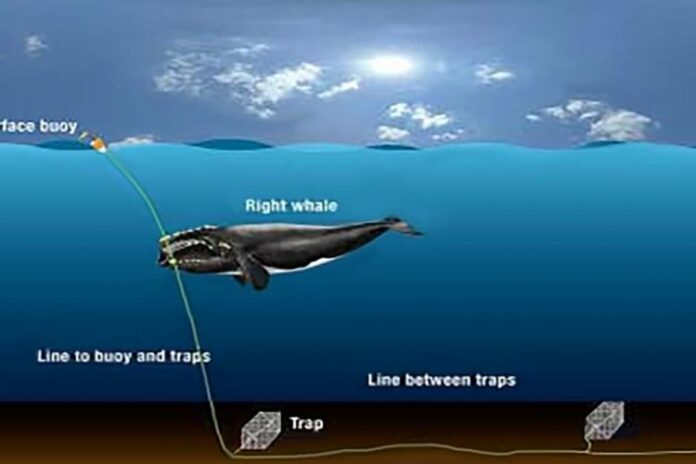
This fishery operates primarily with traps that are set out by fishermen in fixed locations. The lines connecting traps to each other (groundlines) or to the surface buoy (vertical lines) can entangle marine mammals. Large whales, including endangered North Atlantic right whales, are particularly susceptible to entanglement because their habitat and feeding areas overlap with fisheries. The gear can cut into a whale’s body, cause serious injuries, and result in infections and death.

Entanglement in fishing gear is one of two primary threats to the North Atlantic right whale species’ survival (the other is vessel strikes). NOAA Fisheries implemented the Atlantic Large Whale Take Reduction Plan, which reduces injuries and deaths of large whales due to incidental entanglement in fishing gear. It includes requirements such as the use of sinking groundlines, surface gear markings, a minimum number of traps per trawl, and weak links. The take reduction team is in the process of updating these requirements to further reduce the risk of entanglement.

It is OLE’s responsibility to enforce these rules in order to protect species like the right whale. The use of remotely operated vehicles has made it possible for OLE to inspect gear without having to physically retrieve the gear. The ROVs are equipped with a video camera, lighting, sonar, and a manipulator arm. When deployed, the ROV can detect and record any gear or tag violation from the ocean surface down to the ocean floor.

James Landon, director of NOAA’s Office of Law Enforcement, said:

“We are excited about the usage of ROVs in our ongoing efforts to promote gear compliance in offshore lobster fisheries. The successful deployment of this technology improves our ability to effectively and safely do our jobs and should help to boost NOAA efforts to protect endangered species like the North Atlantic right whale.”

Evergreen takes delivery of two more 12,000 TEU ships

0

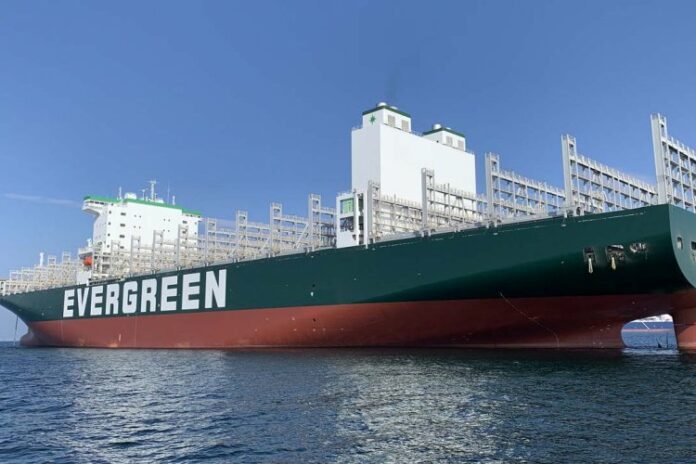
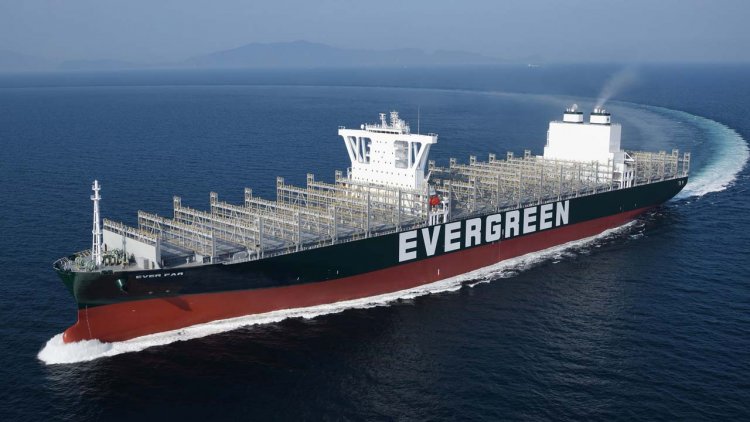
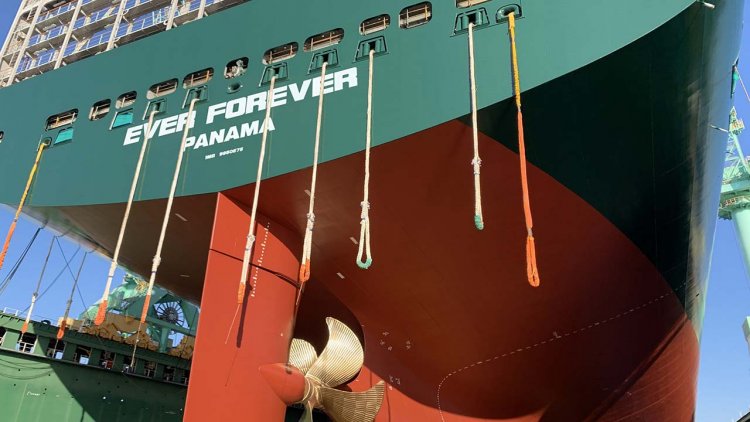
Evergreen Line has taken delivery of its sixth and seventh new 12,000 TEU class F-type containerships. Ever Forever was built at the Geoje Shipyard of Samsung Heavy Industries. 

The name of this ship symbolizes her owner’s corporate philosophy of sustainable development. Ever Far was delivered by Imabari Shipbuilding, the name represents Evergreen’s comprehensive service network.

With the blessing of fleet superintendents and the shipyards’ executives, the two new large containerships set sail in good order after the delivery procedures were completed. The ships’ 58,000-horsepower main engines are powering the technically advanced vessels to their allocated loading ports on Evergreen’s trans-Pacific services while the propellers, which measure nearly ten meters in diameter, are driving them efficiently toward their new employment.  

Ever Forever will be put into service on the Asia-US East Coast (AUE) service, which follows a port rotation of Xiamen, Kaohsiung, Hong Kong, Yantian, through the Panama Canal to Colon Container Terminal in Panama and then to Savannah, New York, Norfolk and Baltimore before heading back to Asia.

Ever Far is deployed on the South China-Taiwan-US West Coast (HTW) route, with a service scope covering Kaohsiung (or Taipei Port in the future), Xiamen, Hong Kong, Yantian, Los Angeles and Oakland.

The F-type containerships have a length of 334 meters, a width of 48.4 meters, and a scantling draft of 15.5 meters. The dimensions are within the draft limitations and terminal operation standards of major ports in the U.S.  The ship’s hull adopts the twin-island design, in which the navigation bridge is located in the fore section of the ship and the engine room is located semi-aft. This configuration helps to prevent containers on the deck from affecting the view from the bridge and increases cargo loadability.

The optimized hull design reduces wave resistance, decreasing fuel consumption and greenhouse gas emissions. The F-type ship is equipped with a facility to remove both sulfur oxide and nitrogen oxide exhaust gases; ballast water treatment systems; electric deck machinery; air-sealed stern shaft seals; alternative maritime power (AMP) and other environmental protection features.

Evergreen has introduced the Smart Ship System into the design of the F-type ships, which has been certified by the relevant class societies. This advanced system can provide a full range of valuable information for both the crew and the supervising team ashore, helping to monitor the ship’s operational condition.  This assists the crew to conduct safe and timely navigation and maintain trim optimization in accordance with changing weather and sea conditions.  The ultimate aims are to reduce fuel consumption, optimize navigational routings and contribute to Evergreen’s green initiatives.

Due to the consequences of the COVID-19 global pandemic, the container shipping market has experienced a significant demand to ship sought-after products to help contain the epidemic, and to satisfy the consumers’ changes in life-styles such as working from home. The abrupt market change has led to extremely tight capacity. As the two new ships are entering service, extra space can be provided to meet customers’ eager demand for shipping capacity, just as a timely rain shower will quench a thirst.          

Evergreen Line has already been advancing its fleet enhancement plans. With the addition of these two new vessels, Evergreen has now taken delivery of sixteen newly built containerships, including seven F-type ships of 12,000 TEU and nine C-type ships of 1,800 TEU this year. These additions will not only provide more space to meet the demands of shippers, but also ensure more efficient service to facilitate global trade.

Evergreen has another 53 newbuildings to be delivered, including vessels owned by the carrier and ships chartered in. This order book still contains ten A-type ships of 24,000 TEU, thirteen F-type ships of 12,000 TEU, fourteen O-type ships of 2,500 TEU and sixteen C-type ships of 1,800 TEU, all to be delivered by the end of 2022.

With the delivery of these new ships, Evergreen’s fleet renewal program will continue as older ships are gradually phased out and chartered vessels are returned to their owners.  The result will be one of the youngest, most technically advanced and sustainable containership fleets in the world, achieving Evergreen’s ideals of a greener future and enhanced competitiveness. 

Kloosterboer Vlissingen chooses Navis solution for its reefer container terminal

0

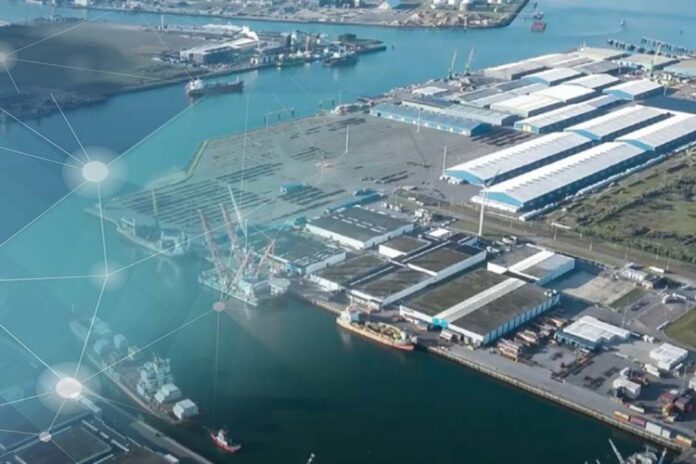
Navis, a part of Cargotec Corporation, has announced that Kloosterboer Vlissingen has gone live with Navis 360 Managed Services in the cloud to aid in its automation and modernization goals and to enhance the terminal’s performance on N4.

Located in The Netherlands, Kloosterboer Vlissingen is a leading handler of reefer containers in the region and currently operates at 250,000 TEU, annually. With strategic plans for growth, Kloosterboer Vlissingen needed a solution that could handle its business as they scaled, increase automation offerings at the terminal and optimize operations to remain competitive in the industry, which led them to selecting Navis N4 for its TOS. Along with N4, the terminal opted to enhance its terminal operations with Navis 360 Managed Services to ensure its N4 infrastructure is managed and  functioning to its full potential, allowing the team to focus on daily operations at the terminal. The terminal deployed several 360 Managed Services solutions – including Monitoring and Diagnostics, Upgrade Testing Services, Application Management Services and Database Services – to make the most out of their TOS investment.

Dennis Lobel, Project Manager IT at Kloosterboer Vlissingen, said:

“Working with the Navis team, we were able to seamlessly deploy Navis 360 Managed Services in the cloud to boost the capabilities of the N4 TOS being used on site. We are looking forward to getting the most out of our TOS with 360 Managed Services and having our system run at its peak performance to help our team maximize ROI.”

Roy de Witte, Project Engineer at Kloosterboer, said:

“We have also subscribed to Managed N4 Upgrade Services to help us run our business better on N4 TOS. The added service gives us peace of mind that our key business processes will be automatically tested and validated before receiving an N4 upgrade, which will help us run our operations at an optimal level.”

Jacques Marchetti, General Manager of EMEA at Navis, said:

“Navis 360 Managed Services helps our customers keep up with the technical demand of the TOS and provides value by finding strategic ways terminals can improve performance to meet their business goals. We are proud to offer a solution to help our customers get the most out of their N4 TOS so they can focus on the meaningful work servicing their customers, and are thrilled to partner with Kloosterboer Vlissingen to help the terminal unlock its full operating potential.”

KVH partners with ioCurrents for KVH Watch Maritime IoT solution

0

KVH Industries has announced that ioCurrents, a leader in real-time, remote vessel analytics, has joined the KVH Watch® Solution Partner program and will offer KVH Watch connectivity as part of its maritime services.

The company is the creator of the MarineInsight™ platform, which uses machine-learning algorithms to support maritime maintenance and fuel optimization and has thus far relied on vessels’ existing communications systems for data transfer. KVH Watch’s dedicated connectivity will enable ioCurrents to use real-time data to provide customers with actionable insights and engage in real-time video troubleshooting sessions during the course of a sea voyage.

Jon Best, head of partnerships for ioCurrents, says:

“The ioCurrents MarineInsight platform notifies key stakeholders, onboard and shoreside, when and where to focus with real-time, remote vessel analytics. Together, ioCurrents and KVH will enable people to have better troubleshooting conversations when it matters most by offering an unprecedented, comprehensive ship-to-shore experience, providing key insights with unmatched speed and reliability.”

Sven Brooks, senior director of IoT business development for KVH, says:

“The ioCurrents approach is a great example of a company using data and analysis to prevent component failures, increase fuel efficiency, minimize downtime, and improve overall vessel and fleet performance. We are extremely pleased that they have chosen our KVH Watch service as their connectivity solution and we look forward to being their partner as maritime IoT continues to grow throughout the industry.”

The adoption of digital processes to increase operating efficiencies has been accelerated by the COVID-19 pandemic, which has put a spotlight on the need for remote maintenance. However, often an IoT company is not in control of connectivity from the vessel and must rely on slow, intermittent communications or cellular communications at port. This circumstance prevents continuous real-time IoT data transfer and the ability to take action at sea. Affordable high-speed connectivity like KVH Watch enables shoreside monitoring of the assets onboard a ship with the ability to do video interventions to fix problems in real time. Further, this reduces maintenance costs and delays in port.

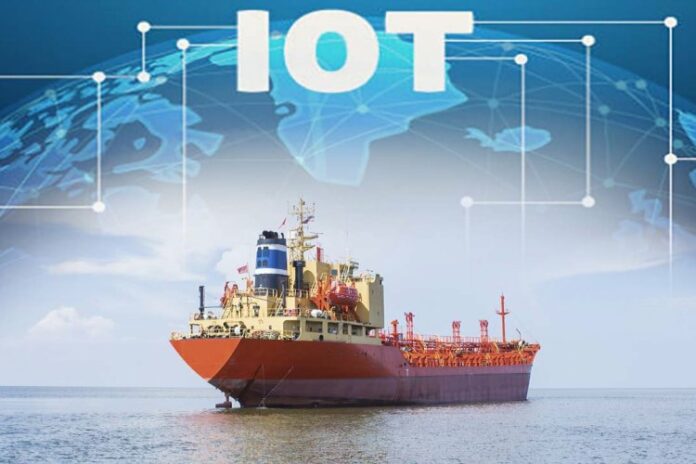
KVH Watch is an IoT Connectivity as a Service solution that provides Flow, secure 24/7/365 machine-to-cloud satellite connectivity for remote monitoring of onboard equipment plus the ability to perform on-demand Remote Expert Interventions using video, voice, or text via KVH’s global HTS network. KVH Watch is designed for maritime equipment manufacturers, multicard service providers, and shipyards seeking affordable monthly subscription-based connectivity that L-band and cellular services cannot deliver at deep sea.