-8.6 C
New York
Home Blog Page 719

PTTEP and Eni win a new offshore exploration block in UAE

0

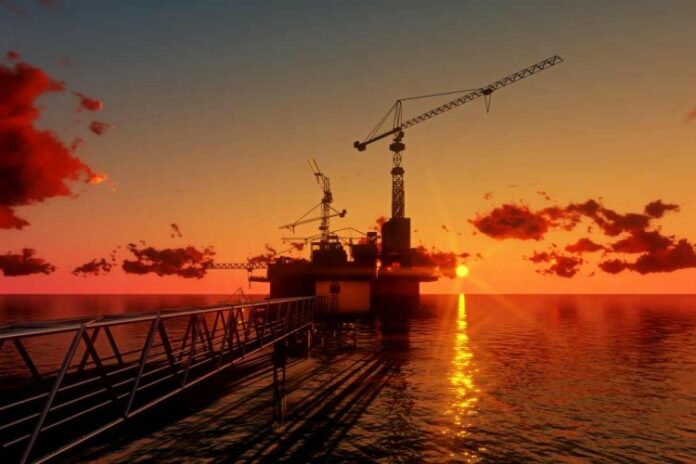
PTTEP together with its strategic partner “Eni” are once again awarded a new exploration block – Offshore Block 3, the largest offshore exploration block opened in 2019 for the concession bidding in the United Arab Emirates (UAE). This investment expansion provides PTTEP more opportunity to strengthen its investment portfolio in the Middle East. 

Mr. Phongsthorn Thavisin, Chief Executive Officer of PTT Exploration and Production Public Company Limited (PTTEP) revealed that its subsidiary, PTTEP MENA Limited and Eni Abu Dhabi B.V. (Eni), a subsidiary of Italy-based oil and gas company Eni, were together the successful bidders and awarded the concession for Offshore Block 3 from the Abu Dhabi National Oil Company (ADNOC), the UAE’s national oil company, on behalf of Abu Dhabi’s Supreme Petroleum Council.

The exploration phase of the agreement has a maximum period of up to 9 years and, subject to successful exploration, an overall concession term will extend to 35 years from the commencement of the exploration phase for development and production phases in which ADNOC has the option to hold a 60% stake.

Offshore Block 3, located offshore UAE, lies next to the existing 2 blocks in which PTTEP and Eni won the licensing bidding round in 2019. This is considered as one of the significant milestones in seizing investment opportunity in one of the world’s top petroleum potential area as well as the company’s key strategic areas. All 3 exploration blocks are well-equipped with infrastructure and facilities necessary for oil and natural gas business development, with market demands ready to support the petroleum output.

Mr. Phongsthorn said:

“This concession award offers another great opportunity for PTTEP to strengthen collaboration with world class strategic partners Eni and ADNOC. The consortium will bring capabilities, experiences and technology to accelerate the development of Offshore Block 3, as well as Offshore Blocks 1 and 2, and lead to a successful discovery. The strategic partnership has been established to jointly contribute to the petroleum development in UAE and be part of the growing industry. Meanwhile, this business progress has also reinforced our presence in the Middle East following the company’s Execute & Expand strategy. Such approach aims to sustainably increase both petroleum reserves and production in the future.”

His Excellency Dr. Sultan Ahmed Al Jaber, UAE Minister of Industry and Advanced Technology and ADNOC Group CEO, said:

“This concession award reinforces ADNOC and Eni’s growing partnership across our value chain and deepens relationship with Thailand’s PTTEP, one of the key markets for our crude oil and products. This again validates our targeted approach to value-add partnerships that contribute the right combination of capital, technology, capabilities and market access to accelerate the development of Abu Dhabi’s hydrocarbon resources.

Despite volatile market conditions, we are making very good progress in delivering Abu Dhabi’s second competitive block bid round, underscoring our world-class resource potential and the UAE’s stable and reliable investment environment. We continue to welcome partners that share our vision to sustainably unlock value from our hydrocarbon resources for our mutual benefit, as we deliver on our 2030 strategy and enable long-term returns to the UAE.”

Mr. Claudio Descalzi, Chief Executive officer of Eni, said:

“This award follows the one achieved in 2019 for exploration Offshore Blocks 1 and 2 offshore by the same consortium, which will contribute through their expertise in exploration to add further resources and exploit all potential synergies with the surrounding fields.”

Offshore Block 3 covers in total 11,660 square kilometers and is the largest offshore exploration block among all areas opened for the concession in UAE. New 3D seismic data has been acquired for a part of the block and suggests the promising potential of this concession area. PTTEP MENA and Eni, the operator of the block, will hold 30% and 70% stake respectively.

Offshore Blocks 1 and 2 are now under subsurface study, petroleum potential assessment with exploration drilling planned in 2021.
Wärtsilä helps Wintershall Noordzee mitigate offshore hazards

0

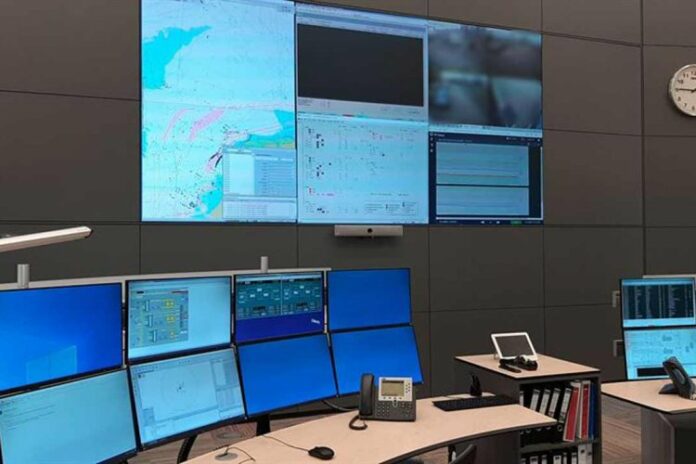
The system was ordered by Netherlands-based Wintershall Noordzee B.V. to provide greater safety for their offshore installations in the North Sea. The order was placed in Q1 2020 and the project was finalised with full customer acceptance in November.

The Wärtsilä Navi-Harbour WebVTS features an early warning system to avoid collisions between the offshore platforms and vessels in their vicinity. It works by providing remote access to Automatic Identification System (AIS) or Vessel traffic Service (VTS) data sources to maintain constant and full situational awareness, utilising a standard Internet browser. The WebVTS decision support tools effectively mitigate potential marine hazards and risks. The application also supports navigational maps, traffic management tools, ship history, and works in various languages.

Manué Gerrits, Central Control Room Supervisor with Wintershall Noordzee B.V., says:

“Wintershall Noordzee’s North Sea offshore facilities operate in challenging sea and weather conditions. A high number of ships, such as ferries, fishing vessels, offshore suppliers and guard vessels, are operating in the southern part of the North Sea and transiting to the major North European ports. We therefore require the highest levels of safety for both the installations and the crews manning them. For this reason, we selected Wärtsilä’s Navi-Harbour WebVTS 5.0 software solution, the very latest available solution of its type, to enable analysis of alerts based on AIS information. This provides us with a sophisticated and reliable means of maintaining situational awareness.”  

Charles Wyng, North Europe Sales, Wärtsilä Voyage, says:

“The system makes it possible for vessels in the vicinity of the platforms to be visible, not only locally but also in Wintershall Noordzee’s Central Control Room (CCR) located in Den Helder. In addition, the historical record generated by the system can be used later for playback and analysis, helping to drive continuous improvement of future operational efficiency.” 

Following the successful completion of this project, Wintershall Noordzee’s early warning system has been significantly upgraded. The Wärtsilä solution features the latest technology for providing an integrated overview of the traffic situation in any area covered by existing Wärtsilä VTS or AIS monitoring systems. The delivery scope included deployment of the AIS-Monitor Redundant Basic software, Navi-Harbour WebVTS, a VTS Information System, an AIS Network Server, an AIS Network Viewer, plus training and three years of maintenance services.
 

Satellites can reveal risk of forced labor in the world’s fishing fleet

0

Vessels known to have crew that are subject to forced labor behave in systematically different ways to the rest of the global fishing fleet, reveals a new paper published in the scientific journal, Proceedings of the National Academy of Sciences. The discovery was used to build a first-of-its-kind model to identify and predict vessels at high risk of engaging in these abuses.

The study found that up to 26 percent of the approximately 16,000 industrial fishing vessels analyzed were at high risk of using forced labor, a type of modern slavery. As many as 100,000 individuals are estimated to work on these high-risk vessels, many of whom are potential victims of forced labor. The study also shows where these high-risk vessels fished and the ports they visited.

Gavin McDonald, project researcher at the Environmental Markets Solutions Lab, University of California, Santa Barbara (UCSB) and lead author on the study, said:

“For several years now, international media has shone a spotlight on forced labor in the world’s fishing fleet, but its extent has been largely unknown. By combining satellite data, machine learning and on-the-ground expertise from human rights practitioners, we have identified vessels with a high risk of engaging in human rights abuses. Our findings can be used to unleash new policy and market actions that have not previously been possible.”

The research team compiled 27 different vessel behaviors and characteristics that might indicate forced labor on board and can be observed using Global Fishing Watch’s satellite vessel monitoring data.

Machine learning techniques were applied to a database of approximately 16,000 longline, squid jigger and trawler vessels to build the predictive model that can discriminate between high and low risk vessels. The database includes 22 vessels that have previously been publicly identified by news agencies and NGOs to have labor abuses on board. The study assessed the reported vessels against risk indicators defined by the International Labour Organization (ILO) and determined they were highly likely to have engaged in forced labor.

Looking at annual behavior across the 16,000 vessels from 2012-2018, the model correctly predicted forced labor in more than 90 percent of reported high-risk activity and discovered as many as 4,200 new high-risk vessels.

The study found the most important indicators for distinguishing high-risk vessels include traveling farther from ports, higher engine power, more fishing hours per day, more time spent fishing on the high seas, and fewer fishing voyages in a given year than other boats.

David Kroodsma, research director at Global Fishing Watch and co-author on the study, said:

“Global Fishing Watch uses satellite technology and machine learning to monitor industrial fishing vessels at sea; this study shows we can apply the same technologies to gain a better view into what is happening on deck. The study represents a new frontier in our ability to shed light not only on whether vessel operators are fishing responsibly, but also the likelihood that they are treating their crew fairly.”

Longliners had the largest total number of high-risk vessels. But when looking at the prevalence of high-risk vessels within fleets—squid jiggers had the highest percentage of high-risk vessels, followed closely by longline fishing vessels and then, to a far lesser extent, trawlers. High-risk longliners were found to be operating globally, whereas areas to the west and southeast of South America, the southeast of Russia and to the west of India were found to be hotspots for high-risk squid jiggers.

High-risk vessels visited ports predominantly in Africa, Asia and South America, although exceptions include Canada, New Zealand, the United States, and several European countries. These high-risk vessels visited ports in 79 countries in 2018, including 39 countries that are Parties to the FAO Port State Measures Agreement, a treaty aimed at tackling illegal, unreported and unregulated fishing through the enhancement of port State control. These ports are both potential sources of forced labor as well as transfer points for seafood caught using forced labor.

Squid jiggers and longliners flagged to China, and longliners flagged to the Republic of Korea, Japan and the fishing entity of Taiwan were most frequently found to be high risk.

Valerie Farabee, director of research and analysis at Liberty Shared and co-author on the study, said:

“By continuing this research and further drilling down to specific indicators, we can improve our ability to analyze patterns of vessel behavior that can detect illegal activity, such as forced labor at sea. This ability to zero in on bad actors is a potential game-changer for human rights organizations and enforcement agencies worldwide.“

UCSB and Global Fishing Watch aim to further develop this model to provide governments, enforcement bodies, and international agencies with a robust tool that can be used to assess risk of forced labor on vessels and support targeted inspections through relevant policy mechanisms. A forced labor risk tool may also be useful to the seafood sector and market-based programs when they conduct supply chain risk assessments, helping to incentivize improved working conditions. 

Chelsea Scantlan at the Walmart Foundation and funder of the study said:

“Global Fishing Watch and UCSB’s forced labor model and research highlight ways that technology and machine learning can provide transparency and help focus interventions and resources more effectively for regulators and industry. This research is an important step and demonstrates both a smart approach and strong potential to drive more targeted action.”

Forced labor, restriction of movement, debt bondage, and poor working conditions, are increasingly recognized as part of a human rights crisis in the fisheries sector. The ILO estimates that 16 million people were victims of forced labor in 2016, with 11 percent in agriculture, forestry and fisheries. 

Aegir installs water handling module on Woodside’s Pluto Alpha Platform

0

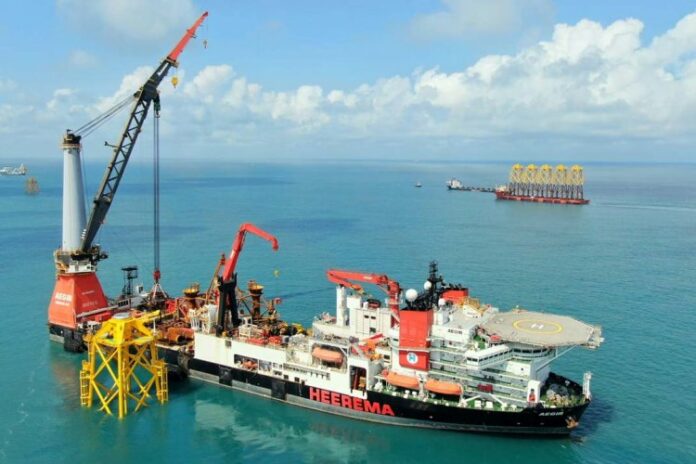
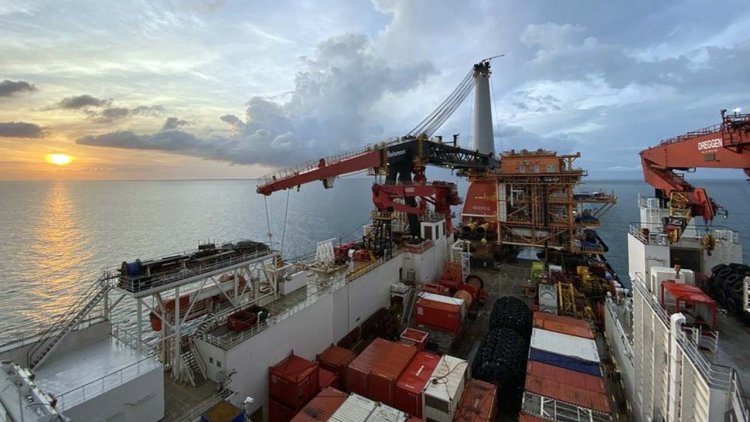
Heerema’s heavy lift vessel Aegir has transported and installed the 1650 metric ton water handling module for client Technip FMC on the Woodside operated Pluto Alpha platform. 

Aegir picked up the module from the MMHE yard in Johor,  Malaysia, on November 14. From here, Aegir safely transported the module to the Woodside operated Pluto field and completed the installation within 4 hours. The Pluto field is located 190 kilometers northwest of Karratha, Western Australia, in 85 meters of water. 

The Pluto A Platform is a not-normally manned platform, and the newly-installed water handling module consists of facilities for water separation and treatment, together with upgraded power generation units.

Despite scheduling challenges introduced by the global situation, the excellent collaboration between Technip FMC, Woodside, and Heerema resulted in the unit’s safe and successful installation.

This project follows Aegir’s success in Qatar with the installation of the Al-Shaheen Gallaf 1 project. Now the vessel will receive some upgrades in Singapore in preparation for a busy 2021 portfolio.

Equinor and partners to invest NOK 3 billion in the North Sea Statfjord Øst field

0

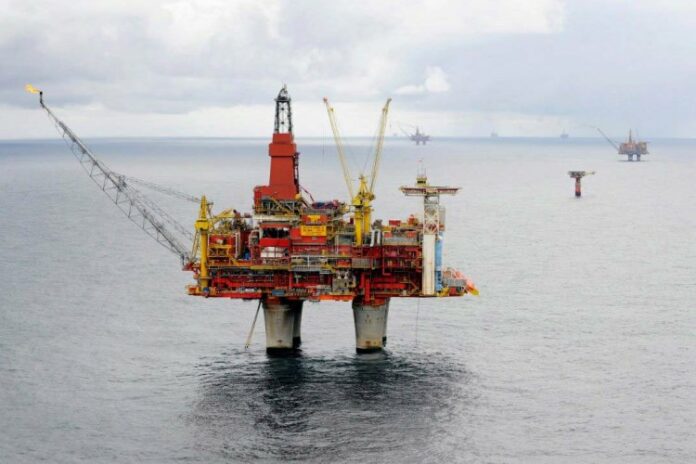
Equinor and its licence partners have decided to invest NOK 3 billion in the North Sea Statfjord Øst field to improve recovery by 23 million barrels of oil equivalent.

Written notification of material changes to the Plan for Development and Operation Statfjord Øst was submitted to the Ministry of Petroleum and Energy 16.12.2020.

Kjetil Hove, Equinor’s senior vice president for Field Life eXtension (FLX), says:

“The decision to improve recovery on Statfjord Øst will add considerable value to society and owners and will create positive effects for suppliers. Our ambition is to maintain safe and profitable production and secure valuable activity from the Norwegian continental shelf (NCS) for several decades.”

Statfjord Øst is tied back to the Statfjord C platform by pipelines. A total of four new wells will be drilled from existing subsea templates. The project also includes modifications on Statfjord C and a new pipeline for gas lift.

Hove says:

“We will be a leading late life operator on the NCS. In order to achieve this, we must work in new ways to reduce costs, thereby offering new opportunities for investments in late life fields ensuring profitable reservoir management. The Statfjord Øst decision is a good example of this.”

This decision enables an improvement of the recovery factor on Statfjord Øst and gives an important contribution to extending the life of the Statfjord C platform and the Statfjord Øst field towards 2040.

The original oil volume in place on Statfjord Øst was 415 million barrels of oil. The current recovery factor is 56 percent. As a result of this project, the expected recovery factor is increased to 62 percent.

Plans call for installation of a pipeline for gas lift, modifications on Statfjord C and drilling of new wells in 2022 – 2024. Production start is scheduled for 2024.

The Statfjord Øst development comprises subsea installations that include three templates. The field is located five kilometres north-east of Statfjord C. The field came on stream in 1994.

The licence partners in Statfjord Øst Unit: Equinor Energy AS (31.6875%), Petoro AS (30.0000%), Vår Energi AS (20.5500%), Spirit Energy Norway AS (11.5625%), Idemitsu Petroleum Norge AS (4.8000%), Wintershall Dea Norge AS (1.4000%).

After several extensions of the Statfjord field life, the current goal is to maintain safe and profitable operation until 2040. Statfjord is part of FLX, which was established to meet the strategic opportunities and challenges of late life fields in relation to Equinor’s competitiveness.

FLX aims to ensure that Equinor is the leading company in safe and efficient operations with low carbon emissions from late life fields on the NCS.

Port of Tyne signs Dogger Bank site development option

0

This successfully concludes the preliminary phase of a state-of-the-art development to build the operations and maintenance (O&M) base of the world’s largest offshore windfarm.

Dogger Bank Wind Farm is a 50:50 joint venture between Equinor and SSE Renewables. The project is being built in three equal phases of 1.2 GW, and Eni will take a 20% stake in the first two phases when transactions are complete in Q1 2021.Equinor will operate the wind farm for its life of up to 35 years and as such will construct the O&M base. Over 200 people will be based there or offshore to ensure the turbines are operating and ready to generate electricity for six million UK homes.  

Under the terms of the option agreement contract, Dogger Bank Wind Farm will retain full rights to develop its windfarm O&M facility for a set period, although initial works are expected to commence in early 2021.

Port of Tyne is currently approving construction bids to complete its landlords works, involving the construction of a new access road, improved drainage facilities, enabling works for electricity infrastructure and a quay upgrade. The port will be completing these initial works by July 2021, ready for the full building phase to commence by Q3 of 2021. The construction works, including the new portside facility, will be ready for its offshore service operational vessels (SOVs) when the wind farm operations are scheduled to begin during 2023.

Halfdan Brustad, Vice President for Dogger Bank at Equinor said:

“This marks the start of a very exciting journey, both for us, our partners and the Port of Tyne, in preparing the home for the world’s biggest offshore wind farm. As the first tenant in the Port’s Tyne Clean Energy Park, we are pleased to contribute towards the Port’s net zero ambition, and we hope that basing such significant infrastructure here will attract investment and catalyse green economic growth in the area.

“Dogger Bank Wind Farm will be the UK’s largest single source of renewable electricity and we are proud to drive forward the Government’s ambition to power every home in the country with electricity from offshore wind.”

Matt Beeton, CEO of Port of Tyne said:

“As we work towards submitting our world-class freeport coalition bid, this contract signals the completion of a very exciting first step for both Port of Tyne and Equinor. This option agreement represents a catalyst to ignite future development of the port’s nascent renewables cluster and will trigger additional investment in Tyne Dock Enterprise Park as a further development opportunity for related commercial activities.”

MSC calls for urgent solution for seafarers on chartered bulk carrier ANASTASIA

0

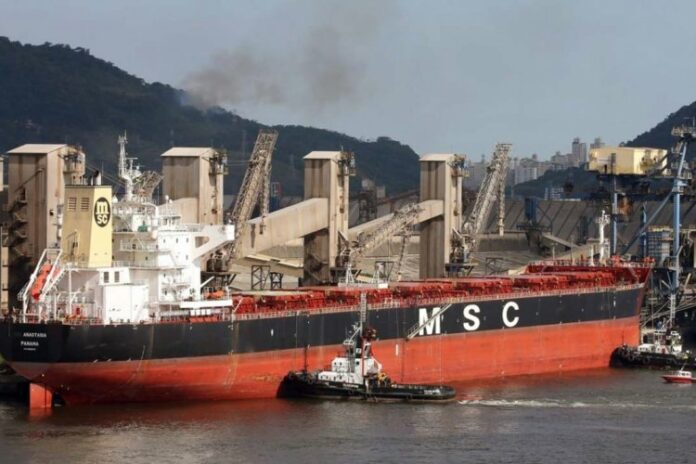
MSC Mediterranean Shipping Company is calling for an urgent crew change solution for the bulk carrier “ANASTASIA”, which is stuck off the coast of northern China, and is among dozens of ships in a waiting line near the port of Caofeidian.

MSC has repeatedly requested during the ship’s voyage that the seafarers onboard should be relieved to return home to their families. These proposals have not yet been implemented by the chartering parties which determine the ship’s movements. China has prohibited a crew change at Chinese ports due to COVID-19 restrictions and MSC’s mid-December requests for a crew change at anchorage or in Japan, a few days sailing away, have not been carried out.

As the technical operator of the ship, MSC is very concerned for the well-being of these sailors and is in regular contact with them, and with their families ashore, as well as supplying a clinical psychologist for remote support. Many of the crew have been at sea for several months longer than was initially anticipated. After local authorities recently blocked MSC’s attempt to send a doctor to visit the ship in person, the company is currently seeking to remedy this through diplomatic channels.

MSC’s daily attempts to seek a solution follow several months of proposals to allow the vessel to make a port call that would facilitate crew relief.

MSC first attempted to change the crew of the ANASTASIA in Hong Kong in June 2020. A subsequent attempt in early August to change crew in Hong Kong was prohibited due to local authorities’ COVID restrictions. Japanese authorities later in August approved the vessel to berth at Mitusure Island in Japan, but the request was not implemented. During the period August to December, further attempts to permit a crew change in Manila, Hong Kong, Singapore and Busan were also refused, including as recently as 17 December 2020 after MSC suggested a potential deviation to Japan for crew change.

MSC, as the technical operator of the ship, cannot simply order the master to deviate to a port for a crew change, as the vessel could be arrested as a result. This would only perpetuate the problem and may result in the crew remaining onboard for even longer than necessary.

MSC has already shared information with various authorities and encourages governments to take an interest in forging a solution to this growing humanitarian problem, not only for seafarers onboard the ANASTASIA, but also on dozens of other non-MSC vessels in the area which we understand to be stuck in a similar situation due to trade issues between China and Australia. We have brought the matter to the attention of the UN International Maritime Organization, and other international governmental and industry bodies.

Ivory Coast announces the creation of its first Marine Protected Area (MPA)

0

The announcement is the culmination of years of work by the Ivorian government, the Abidjan Convention, Swedish Government and local non-governmental organisation Conservation des Espèces Marines (CEM), supported by the University of Exeter and the Wildlife Conservation Society.

This work was done alongside communities in Grand-Béréby to strengthen protection of marine biodiversity and fisheries resources, and to enhance local livelihoods.

The Minister for the Environment and Sustainable Development, Professor Joseph Seka Seka said:

“Today I announce our decision to create Cote d’Ivoire’s first Marine Protected Area in Grand-Béréby, a ‘partially protected’ area that will include an integrally protected zone closed to all activities, and an eco-development zone that will support sustainable fishing practices and ecotourism activities.”

In September, the Ivorian government stated its intention to create five MPAs – and today’s announcement confirms the first of these.

A legal process will now take place before the MPA rules come into effect.

The MPA location includes important sea-bed habitats and reef ecosystems, as well as globally significant nesting and foraging grounds for the leatherback, green and olive ridley turtles.

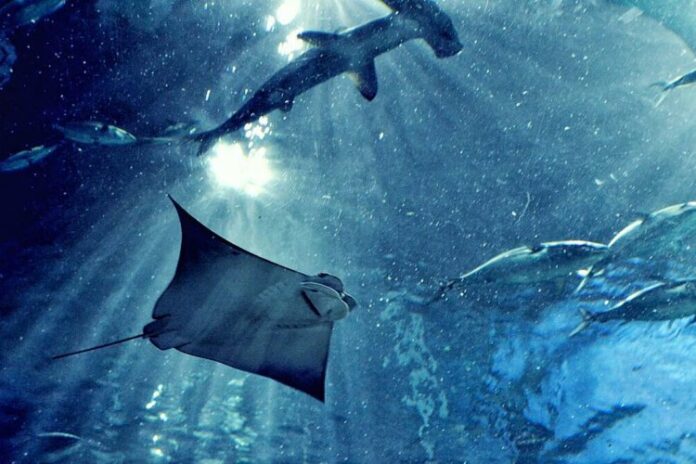
It will also protect more than 20 species of sharks and rays, including hammerheads, manta rays and guitarfish – a group of rays now considered the world’s most threatened marine fish.

Abou Bamba, Executive Secretary of the UNEP Abidjan Convention, said:

“The government of Cote d’Ivoire should be widely applauded for this truly momentous decision, which shows tremendous leadership that we hope will resonate and be replicated across the Atlantic facade of Africa to unlock the economic potential of the continent coastal zones.”

Alexandre Dah, President of CEM, said:

“The government of Cote d’Ivoire should be congratulated for translating our science into policy, with this new MPA both safeguarding globally important populations of threatened marine species, as well as supporting the livelihoods of local communities who depend on fisheries resources.”

The creation of the MPA relied on detailed scientific data collected by a team including the University of Exeter, who were supported by funding from the UK government’s Darwin Initiative and the Rainforest Trust.

The research included participatory work with local communities to collect data on the biodiversity and health of the waters, including underwater surveys of marine habitats and previously undocumented reefs, and satellite tagging of sea turtles.

Dr Kristian Metcalfe, of the Centre for Ecology and Conservation on Exeter’s Penryn Campus in Cornwall, said:

“This MPA is in a really unique area of marine biodiversity, whose reefs provide a natural refuge that will now be complemented by legal protection.
Levels of marine protection in West Africa are generally low, so the Ivorian government’s creation of a Marine Protected Area is a big statement that will hopefully act as a regional exemplar.”

ecoSPEARS to deploy clean water technology at Port of San Diego

0

As part of a two-year pilot project under the Port of San Diego’s Blue Economy Incubator, ecoSPEARS, a cleantech solutions company ushering in the carbonless future of environmental cleanup for toxic contaminants, will deploy NASA-developed technology to remove Polychlorinated Biphenyls (PCBs) from sediments in America’s Cup Harbor.

The primary goal will be to determine how much PCB mass the SPEARS technology will remove over a predetermined period.  The SPEARS technology will be deployed starting December 14.

Commissioner Rafael Castellanos, Port of San Diego Board of Port Commissioners, said:

“Our Blue Economy Incubator program seeks groundbreaking ways to protect the environment and San Diego Bay. The results of this pilot project have the potential to demonstrate an innovative win-win approach to a long-time pollution problem in waters worldwide. With a green approach that uses less emissions, energy, and water than traditional cleanup methods, this pilot project is a perfect complement to our efforts as a Port to ensure San Diego Bay remains a vital resource.” 

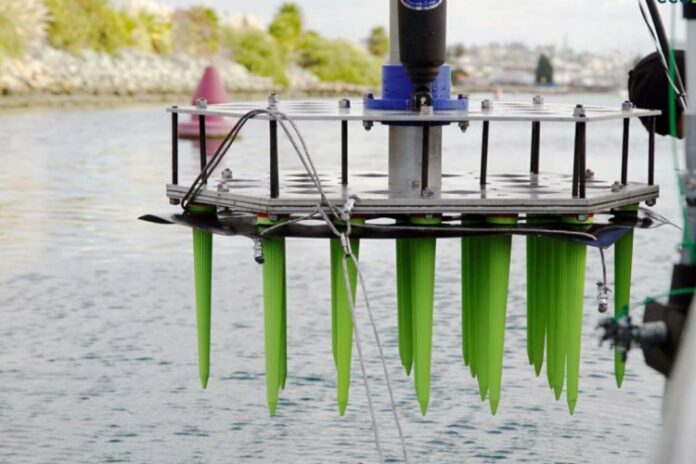
ecoSPEARS is the exclusive licensee of the NASA-developed Sorbent Polymer Extraction and Remediation System (SPEARS), a sustainable remediation technology to extract PCBs, dioxins, and other persistent organic pollutants from the environment. 

Serg Albino, CEO of ecoSPEARS, said:

“We are extremely excited about our relationship with the Port of San Diego and its Blue Economy Incubator. Areas like America’s Cup Harbor – where dredging and capping options are challenging – are prime candidates for our technology. We are fortunate to have a forward-thinking steward of the bay in the Port of San Diego that pushes the status quo when it comes to implementing clean innovation.”

SPEARS is an innovative, in-situ technology that absorbs PCBs “like a sponge”, from contaminated sediment in a safe and environmentally-friendly manner. SPEARS is a scalable mat-liner of plastic spikes filled with a proprietary reagent. They are deployed down into contaminated sediment or around challenging areas such as piers, harbors, pylons, or sensitive wetland areas where dredging may not be feasible. A key differentiator between SPEARS and environmental dredging is that SPEARS does not destroy the aquatic habitat nor resuspend contaminants.

Developed in 1929, PCBs were used worldwide in electrical equipment like capacitors and transformers, and as a flame retardant in everyday goods. The toxic chemical was banned from production in 1979 and is considered the most widespread contaminant in the world. PCBs are persistent, meaning they do not readily break down once in the environment. PCBs generally biomagnify along the food-chain, which leads to greater PCB concentrations in organisms that are higher up in the food chain.

Maersk to shift vessel calls to new container terminal in Kalundborg

0

A.P. Moller – Maersk has announced the signing of an agreement with Maersk to regularly call Kalundborg as APM Terminals will establish and operate a new container operation at Kalundborg in agreement with Port of Kalundborg. 

The agreement between A.P. Moller – Maersk and APM Terminals covers two weekly feeder services with rotation Bremerhaven (DEBRV), Hallstahammer (SEHAL), Helsingborg (SEHEL), Kalundborg (DKKLD), Aarhus (DKAAR), Fredericia (DKFRC) and back to Bremerhaven (DEBRV) totaling approximately 30 pct. of the volumes of the island of Zealand in Denmark. In turn Kalundborg will be added to the global supply lines as volumes for connection to the North Europe/Asia coverage AE5 will be moved via Aarhus.

Stig Kirkegaard, Country Manager Denmark of A.P. Moller – Maersk, said:

“Kalundborg is a port undergoing rapid development and investments and now also with APM Terminals as an operator, we see a great synergy in moving our business to Kalundborg. Also, Kalundborg is situated well to cater for our growth ambitions in Zealand and to manage our current customer base better and more sustainably.” 

APM Terminals has agreed with Port of Kalundborg to establish terminal operations in the area Ny Vesthavn effective March 2021. The new area has been established by Port of Kalundborg with a water depth of 15m and fully paved with the required infrastructure to start operations. APM Terminals will be ramping up presence so staff and equipment will be in place to start operations and service customers in March.

Dennis Olesen, Managing Director Nordics, APM Terminals, said:

“We are proud that A.P. Moller – Maersk as our first customer subsequently has chosen APM Terminals in Kalundborg to serve as their main point of logistics in the Eastern part of Denmark. With Kalundborg, we see an opportunity to provide customers with a great service and an efficient and competitive product in a strong location which is well connected, accessible and closer to industry and customers of the port.”

The agreement will take effect as of 1st March 2021. A.P. Moller – Maersk has called the Port of Copenhagen regularly since 1968.