-5.7 C
New York
Home Blog Page 713

ClassNK releases guideline for survey and facilities/equipment of LNG bunkering ships

0

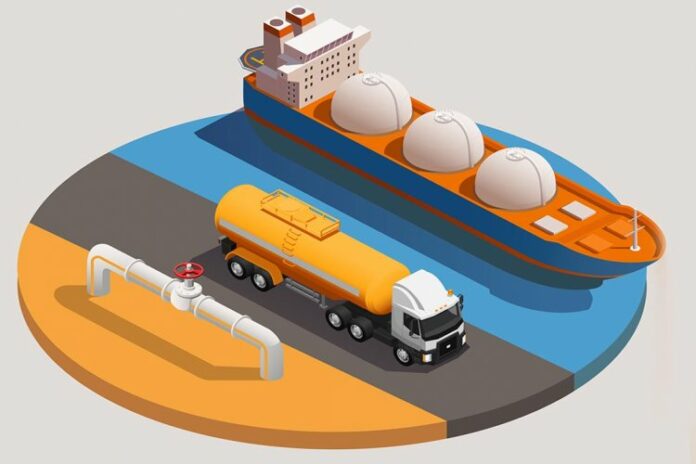
Leading Classification Society ClassNK released its Guideline for Survey and Facilities/Equipment of LNG Bunkering Ships, which outline the additional safety requirements of liquefied gas carriers that supply LNG fuel at sea.

The number of LNG-fueled ships has been increasing in recent years as their CO2, SOx, and NOx emissions have a lower environmental load compared to ships that use conventional oil fuels. On the other hand, the facilities that supply LNG as fuel from quay facilities to general ships are still limited.

Liquefied gas carriers supplying LNG fuel at sea are considered candidates for ensuring variations in fuel supply, and more liquefied gas carriers (LNG bunkering ships) that supply LNG to ships are also being built and operated.

There are currently no established international conventions for the facilities/equipment of ships that transfer LNG to other ships at sea, and additional safety equipment has been considered individually. Based on the examinations conducted so far, ClassNK has developed the Guideline which compiles the requirements for additional equipment for the safe transfer of LNG, a cryogenic substance, between ships, and surveys.

The Guideline stipulates the layout and system design of LNG bunkering ships, fuel transfer systems, and operation, as well as class notations according to the equipment to be installed.

Aramco continues progress in digital transformation with SAP strategic alliance

0

The agreement with SAP is another step in Aramco’s digital transformation journey, paving the way for further integration of new technologies in a rapidly evolving technological landscape.

The SAP ERP system will deepen the deployment of innovative IR4.0 technologies including cloud-based services, embedded analytics, mobility, machine learning, artificial intelligence, advanced analytics and Internet-of-Things solutions.

By extending the strategic alliance with SAP Saudi Arabia, Aramco’s contribution to the in-Kingdom business ecosystem will be enhanced through job creation, training and by localizing supplier services and R&D. In addition to enabling greater efficiencies, SAP’s Data Center in Saudi Arabia will offer new cloud solutions to Aramco and other companies.

Ahmad A. Al Sa’adi, Aramco Senior Vice-President of Technical Services, said:

“We are committed to our digital transformation program, which is improving our ability to meet the needs of our customers around the world and setting a new standard for technology deployment in our industry. Technologies and solutions within digital transformation initiatives will touch all facets of our operations. This is just one more example of how we are applying best practice in this space and embracing 4IR solutions. It is an important milestone on our digital journey and also contributes to our iktva target.”

Luka Mucic, Member of the Executive Board of SAP SE, Chief Financial Officer, said:

“In 23 years of strong collaboration, Aramco and SAP have become strategic partners. With numerous co-innovation initiatives, we have jointly introduced oil and gas best practices, enhanced business operations, and expanded the horizon of opportunities in this industry. Aramco has taken the next step on their digital transformation journey and towards becoming an Intelligent Enterprise, implementing S/4 HANA and the Business Technology Platform amongst others.”

SAP’s new platform will serve the entire Aramco organization, supporting the Company’s Digital Transformation Program and enabling new processes for a majority of the company’s enterprise applications and solutions. The new architecture leverages emerging technologies that will propel Aramco into a new era of Intelligent Enterprise and benefits include faster processing, intuitive user experience, real-time reporting, integration with cloud solutions and system consolidation, which reduces total cost of ownership.

Energy company buys ultra-modern tugboat from Sanmar

0

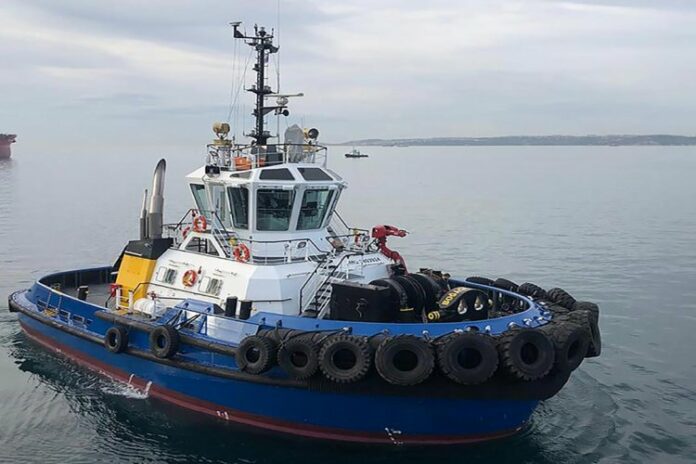
Sanmar Shipyards has sold another of its popular multi-purpose technologically advanced Bogacay Class tugboats, this time to fellow Turkish company Eren Energy.

Built in 2018 at Sanmar’s state-of-the-art purpose-built Altinova Shipyard, Bogacay XXXlll is an example of the exclusive to Sanmar RAmparts 2400SX design from Canadian naval architects Robert Allan Ltd.

The modern twin Z-drive, diesel powered tug has been designed for maximum efficiency in the performance of ship-handling duties for sea going ships.

Eren Energy is part of the Istanbul-headquartered conglomerate Eren Holding, which has business interests in paper, packaging, cement, energy, retail, textile, tourism and ports, including Eren Port on Turkey’s Black Sea coast.

Bogacay XXXlll is the third tugboat that Sanmar has sold to Eren Energy. The tug has an overall length of 24.4m and a moulded beam of 11.25m. Its two main engines each produce 1,765kW of power to give the vessel a bollard pull of 60 tonnes.

Bogacay XXXIII comes with Class 1 fire-fighting capability and can achieve a free running speed of 13 knots. It has a fuel capacity of 74.2m3.

Cem Seven, President of Sanmar said:

“It is always pleasing when an existing customer returns to do more business with us. I am delighted that Eren Energy have once again come to Sanmar to meet their operational needs. Bogacay XXXlll is an excellent example of one of our range of our modern industry-leading tugboats.”

Recovery of an endangered Caribbean coral from parrotfish predation

0

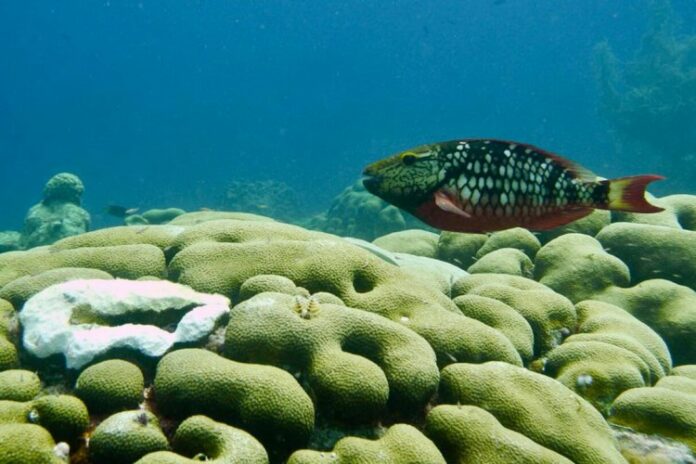
In recent decades, Caribbean reefs have become increasingly dominated by algae. Parrotfishes are important herbivores on coral reefs that feed upon algae, yet some species also occasionally feed upon live coral – a behavior scientists call corallivory. Researchers believe parrotfishes are likely to have a net positive impact on reefs for the majority of corals, yet they may have negative impacts on frequently targeted coral species.

A new Cal Poly study reveals that the size of scars parrotfishes cause on corals may determine how likely corals are to heal.
 
Little is known about the healing rates of Caribbean corals from parrotfish predation scars. Understanding the capacity of corals to heal and the factors that influence recovery rates will help scientists and managers better understand whether corals are likely to lose tissue after predation or recover.
 
A Cal Poly research team monitored the healing of the Great Boulder Star Coral, Orbicella annularis, from parrotfish predation scars. Orbicella annularis is an important reef-building coral and an endangered species – it is also one of the most heavily grazed coral species by parrotfishes in the Caribbean. To better understand the recovery of this coral from predation, they tracked over 400 bite scars on the islands of St. Croix and Bonaire for up to two months.
 
Their study, published in Coral Reefs, revealed that the initial size of scars strongly influenced coral recovery rates. Small parrotfish predation scars healed rapidly, and 87% of observed scars were small enough that corals may fully heal. In contrast, large scars – likely resulting from concentrated, repetitive predation – showed minimal healing. While infrequent, these large scars were responsible for the vast majority of coral tissue loss from parrotfish corallivory.

This work represents a major step forward in the understanding of how parrotfish feeding can directly impact corals. It provides the first evidence that corals are able to recover from the vast majority of parrotfish predation scars and will allow scientists to estimate the net impact of parrotfish foraging.

The team is working on the next steps, which include estimating how shifts in coral cover and parrotfish abundance may influence the intensity of parrotfish corallivory across three regions of the Caribbean in a collaborative study with researchers from UC Santa Barbara, also led by Rempel.

Rempel said:

“Overall, our findings suggest that the immediate negative impacts of parrotfish predation on coral tissue loss for this species seem to be driven by a few exceptionally large predation scars. Ultimately, we hope that this work will help researchers and policymakers better understand the complex role of these fishes for coral reef resilience and conservation.”

Port of Los Angeles expects more than two dozen cruise ship calls through early February

0

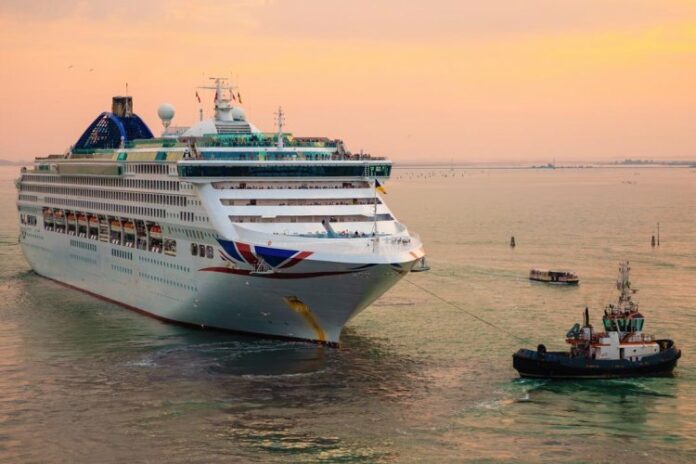
Expect to see more cruise ships — all without passengers — in and around the Port of Los Angeles in the weeks ahead. The visits for fuel, supplies and services are part of the cruise lines’ operations to reestablish the ships in U.S. waters as a prerequisite to meet federal regulations in order to resume cruising in the future.

Cruise operations have been suspended since March due to the pandemic, and no date has been set yet for U.S. passenger sailings. The Port continues to closely monitor the situation and is working with the Centers for Disease Control and Prevention (CDC), U.S. Coast Guard (USCG), U.S. Customs and Border Protection (CBP), California Department of Public Health, Los Angeles County Department of Public Health and other emergency and public health agencies. The CDC recently issued a Framework for Conditional Sailing Order, outlining a phased resumption of cruise ship passenger operations.

Princess Cruises, Holland America and Norwegian Cruise Line cruise ships are scheduled to send ships arriving in Los Angeles this week and through the new year, periodically docking at the Los Angeles Cruise Terminal for fuel, food, supplies, and/or services. No vessels will be carrying passengers.

The Port of Los Angeles is expecting more than two dozen cruise ship calls through early February.

In addition to increased precautions to minimize community spread of and exposure to COVID-19, cruise ship safety implementations while at berth include Passenger Ship Safety Certificate (PSSC) training and Marine Evacuation System (MES) replacement.

In 2020, the Port of Los Angeles experienced 93 cruise cancelations—more than 70% of total cruises—due to the pandemic. Each time a cruise ship calls in Los Angeles, it contributes about $1 million to local businesses and the economy. Losing these cruise ships amounts to losing nearly $100 million in economic activity on the LA Waterfront.

Antarctic shipping season arrives with ice-class vessel

0

The Australian Antarctic Division (AAD) has chartered the vessel to undertake two voyages to Casey, Davis and Mawson research stations in Antarctica.

The first voyage is scheduled to depart for Casey research station on 9 January after cargo and equipment is loaded for resupply, and expeditioners board the vessel.

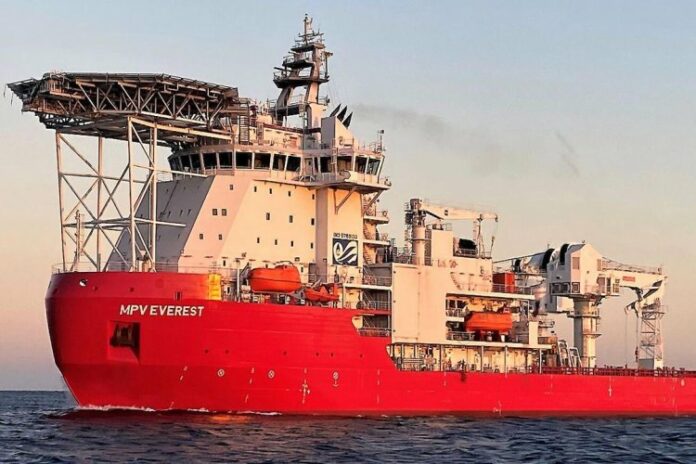
Built in 2017, the 140-metre long MPV Everest is an ice-strengthened ship with the ability to break sea ice up to one metre thick, and an international crew experienced in polar conditions.

Owned by Maritime Construction Services (MCS), the multipurpose vessel can carry bulk fuel and has cargo space for up to 96 twenty-foot containers on its decks, as well as a helipad above the bridge.

By comparison, Australia’s newly completed icebreaker RSV Nuyina (currently undertaking sea trials in the North Sea and due to arrive in Hobart next year) is 160.3 metres long.

The AAD’s 2020-21 summer season is focussed on preventing the introduction of COVID-19 to Antarctica and keeping people safe.

Activities have been scaled back to changing over teams and resupplying stations, with around half of the usual 500 people travelling south.

Stringent quarantine measures by MCS and AAD are in place to prevent COVID-19 cases on MPV Everest.

Crew members of the MPV Everest were COVID-19 PCR tested three times during a fourteen day isolation period prior to joining the vessel in South Korea.

Expeditioners travelling south on the first voyage are currently in isolation in Hobart, and will undertake COVID-19 testing before boarding the vessel.

DEME Offshore completes Moray East foundation installation

0

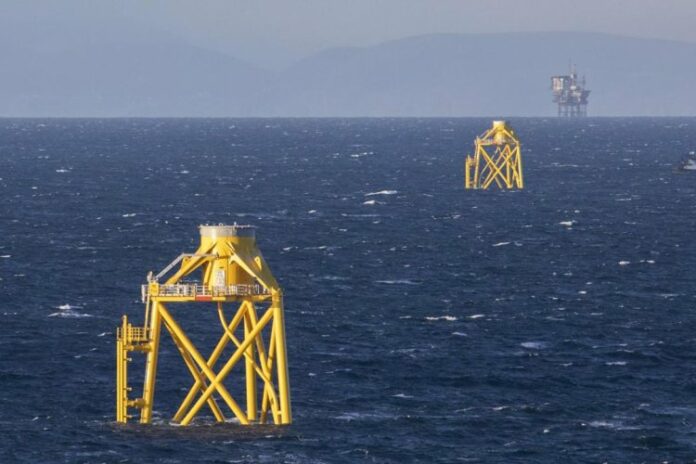
DEME Offshore was awarded the full EPCI scope for 100 wind turbine foundations plus three offshore substation platform foundations in December 2018. 

To ensure a timely production flow, DEME Offshore contracted Lamprell for the fabrication of 45 wind turbine foundation jackets and three offshore substation jackets. The remaining 55 jackets were awarded to Smulders, which constructed them at facilities in Belgium and Newcastle.

Despite the many challenges brought about by the Coronavirus pandemic and the unfortunate incident on board of the ‘Orion’ just shortly before the delivery of the vessel to DEME and the offshore construction start, DEME Offshore successfully installed the final jacket foundation on the 26th December 2020.

Bart De Poorter – General Manager DEME Offshore commented:

“Despite the unprecedented challenges we have faced on this project we are extremely proud of how our teams have navigated through difficult times. This was only possible by meticulous  planning, thorough preparation, excellent cooperation with our subcontractors and by working closely with our Customer and partners.

Thanks to countless mitigation and acceleration measures taken by our teams and our global supply chain we have been able to obviate several challenges, including  the COVID-19 pandemic at multiple project locations, border closures and adverse weather events at several worksites. DEME Offshore has shown to its client and the offshore wind industry its commitment and capability to finalise a job on time, even in such circumstances.

At  a technical level, we delivered unique solutions, such as a combined WTG foundation and OSP foundation design, accurate and high speed pre-piling, a pile-pin locking system for grouting and special lifting and positioning tools.”

Enterprise and Navigator begin service on Houston ship channel ethylene storage tank

0

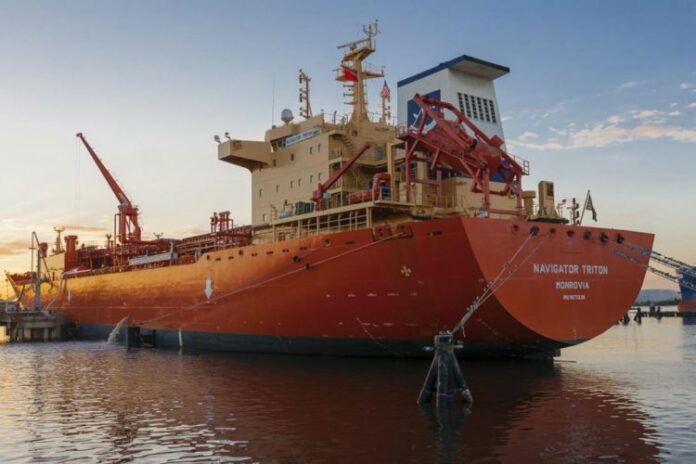
Enterprise Products Partners L.P. and Navigator Holdings Ltd. have announced that service has begun on a new 30,000-ton refrigerated ethylene storage tank at the ethylene export terminal, which is owned 50/50 by affiliates of the two companies.

Navigator Atlas, a 21,000 cubic meter ethylene gas carrier, became the first vessel to utilize the new service when it was loaded at the facility located in Morgan’s Point, Texas on December 23, 2020. The tank will facilitate faster vessel loading, increasing efficiency for the terminal’s customers and enabling the terminal to reach an annual nameplate export capacity of 1 million tons per year.

A.J. “Jim” Teague, co-chief executive officer of Enterprise’s general partner, said:

“Our fully commissioned Morgan’s Point ethylene export facility is the largest and most reliable supply source for waterborne ethylene in the world. The terminal is backed by the supply of the entire U.S. Gulf Coast via our growing ethylene midstream services, which include our open access storage and market hub in Mont Belvieu. Our ethylene export, storage, and transportation services highlight our vision to provide midstream services for the petrochemicals industry that allow our customers to focus on their unique competitive advantages in the U.S. and in growing international markets.”

David Butters, Executive Chairman of Navigator Holdings, said:

“The commissioning of the Morgan’s Point terminal in the face of a yearlong pandemic is testimony to the high-quality talent and dedicated team assigned to this project. We congratulate all employees and third-party contractors for the superb job in completing the export terminal on time and under budget. We expect the terminal to operate at capacity, utilizing Enterprise’s vast interconnected ethylene platform, and to create strong demand for Navigator’s fleet of specialized ethylene capable vessels.”

The new ethylene storage tank is supplied by a 600 million pound ethylene storage cavern at Enterprise’s Mont Belvieu, Texas complex. Enterprise also has the capability to further expand its underground caverns to accommodate additional ethylene storage. Ethylene is the primary feedstock for a wide variety of consumer products, including cell phones and computer parts, food packaging, apparel, textiles, and personal protective equipment.

Cargostore Worldwide expands into East Africa, supplying suite of containers to Mozambique

0

Cargostore supplies a range of Shipping Containers to East Africa, delivering a range of units to Mozambique.

Cargostore Worldwide, the leading supplier of ISO and DNV 2.7-1 container solutions has announced their expansion into East Africa, supplying a range of container types to Mozambique in support of on and offshore projects in the region.

The increase in demand follows the realization of Mozambique’s Liquefied Natural Gas (LNG) project, which now develops into the planning stage after its discovery in 2010 and is currently on track to deliver the LNG in 2024.

Cargostore’s growth into Mozambique comes in quick succession after their expansion into Mexico in Q4 2020, which highlights their bold growth strategy and drive to support growing industries worldwide.

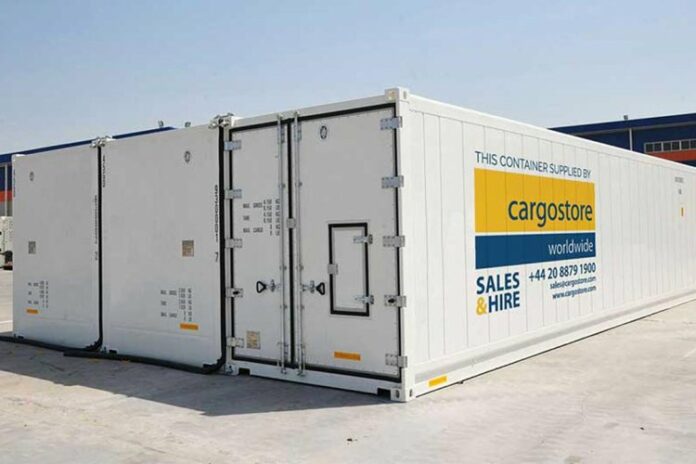
With a range of ISO Refrigerated Containers due to arrive in January 2021, including Event Reefer Units and Dual Temperature Containers, Cargostore is well equipped to support projects in the new year, with some already booked out to clients on arrival.

Furthermore, a range of DNV 2.7-1 units are being prepared to be shipped during 2021 for all offshore requirements.

Says Kevin Cudby, Sales Director Intermodal, said:

“The decision to expand our presence into East Africa was a logical step in our business growth strategy, following the increase in demand for ISO containers. We look forward to expanding our range of containers available in the region throughout 2021 to better support our clients.”

Says Andy Hart, Vice President Offshore, said:

“Having recently travelled to Mozambique and interacted with several clients already, our goal is to provide DNV 2.7-1 units to match the demand of our clients, and we are preparing to deliver our offshore containers in 2021.”

CIMC Raffles and Huadian Heavy Industries signed strategic cooperation agreement

0

CIMC Raffles and Huadian Heavy Industries Co. Ltd. held a signing ceremony of “Comprehensive Strategic Cooperation Agreement on Offshore Wind Power and Offshore Equipment” in CIMC Offshore Engineering Institute participated by representatives from both companies.

Huadian Heavy Industries Co., Ltd., one of the largest offshore engineering general contracting companies in China, is an important part of Huadian Group’s engineering technology sector committed to providing total solutions for customers in offshore wind power engineering, material transportation engineering, thermal engineering, steel structure engineering, etc. with its business model including EPC general contracting, equipment manufacturing and investment operation.

Founded in Shandong for more than 40 years, CIMC Raffles is a leading general contractor of offshore engineering equipment in China. Relying on the ability and experience accumulated in offshore engineering, ocean ranching and other fields, CIMC Raffles has successfully developed products such as floating wind power equipment representing the future trend through independent innovation and China EU interaction.

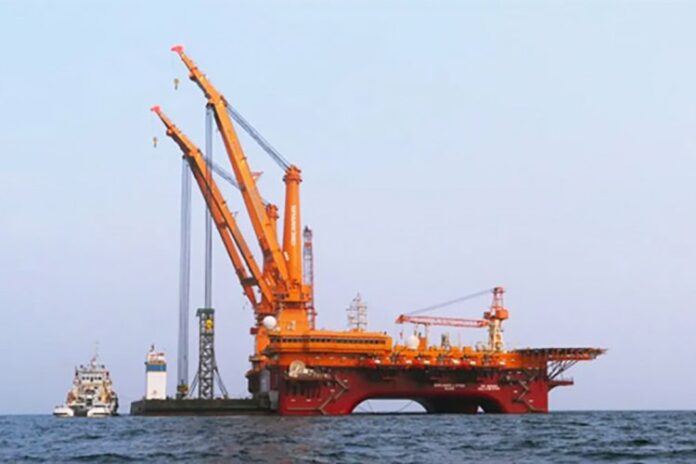
In recent years, CIMC Raffles has quickly entered into the offshore wind power business and signed strategic cooperation agreements with several national wind power partners providing wind power installation ship, offshore substation, wind turbine jacket foundation and other projects. CIMC Gretha, the semi-submersible crane vessel built and owned by CIMC Raffles is also to participate in offshore wind energy projects.

In the future, CIMC raffles and Huadian Heavy Industries will maintain close communication and cooperate in many fields such as offshore wind mill installation, equipment leasing and sales, innovative applications of offshore wind power technology as well as resource integration to jointly expand Shandong, national and even global markets.