-5.7 C
New York
Home Blog Page 712

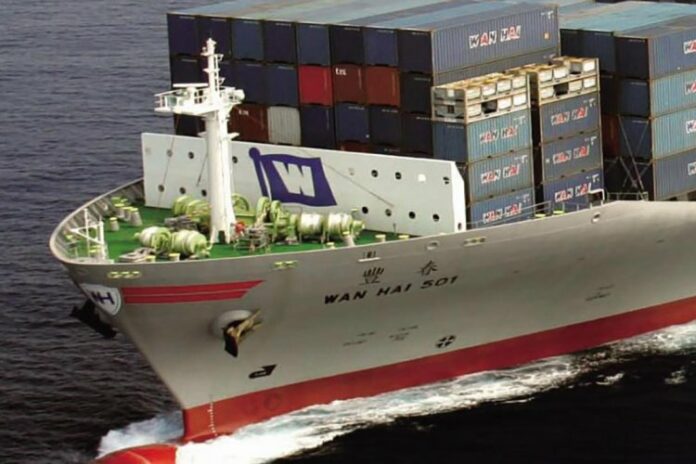
Wan Hai Lines to launch independent CV7 express service

0

Wan Hai Lines will expand further on its already extensive intra-Asia network by launching a new weekly service between East China – Taiwan and Ho Chi Minh(CV7).

The service will be operated by two container vessels with a capacity of 650 TEU.

Port rotation of the service is as following:

Shanghai-Kaohsiung-Ho Chi Minh-Shanghai

The first voyage is scheduled from Shanghai on Jan 12th, 2021. The CV7 service which connects Shanghai – Kaohsiung and Ho Chi Minh directly will provide clients with better transit time and more service options. It will also strengthen Wan Hai Lines’ current services to better serve customers’ needs.

DSC carries out naintenance and repair to seven CMA CGM vessels

0

Damen Shiprepair and Conversion (DSC) has recently carried out a series of works on seven vessels owned by CMA CGM, a world leader in shipping and logistics.

The projects took place between June and December last year at Damen Shiprepair Amsterdam (DSAm) in the Netherlands and Damen Shiprepair Dunkerque (DSDu) in France. The last vessel is scheduled to leave DSDu later this month.

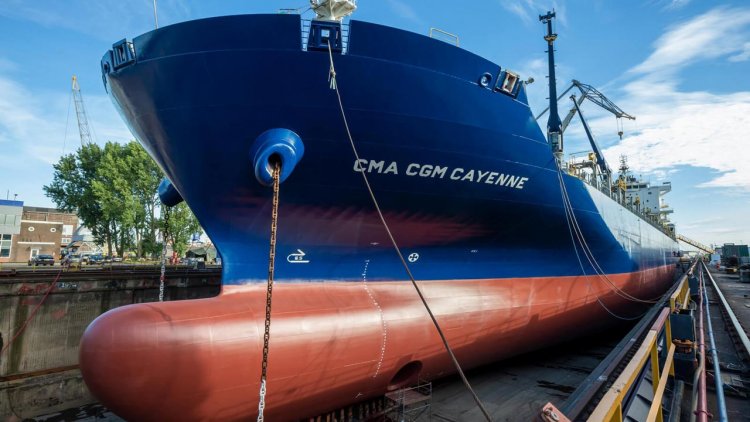
In a continuous operation running between June and August, DSAm performed back-to-back maintenance and repair works on CMA CGM Cayenne, CMA CGM Saint Laurent and CMA CGM Marseille – identical 190 metre, 2,100 TEU container sister vessels.

The three ships underwent similar programmes, centred around their five year surveys. Additional works included the vessels being reinforced with 11,000 kilograms of steel welded to the bow section. Each ship had its cargo cranes maintained and five annual load tests were performed. The yard also repainted the vessels.

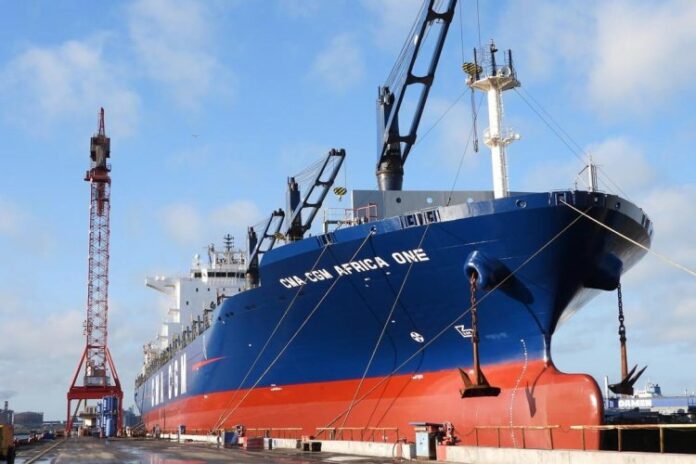
At DSDu, the vessel Africa Three, Africa Four, Africa Two and Africa One (in that order) arrived for back-to-work programmes between July and December 2020 for maintenance and repair works this time centred on the vessels’ ten year surveys, including offloading all hatch covers, hull painting and cell guide repairs. At the same time, DSDu successfully installed ballast water treatment systems to each vessel.

Damen sales manager Alexandre Richerd said:

“On behalf of Damen I would like to thank CMA CGM for entrusting our repair yards with these projects. The work has not been without its challenges, particularly coming, as it did, during the coronavirus pandemic, which certainly added a layer of complexity. However, working hard, with a keen focus on the safety and wellbeing of all involved and in close cooperation with CMA CGM, we’ve been able to get the work done.”

Rivertrace publishes new digitalisation white paper

0

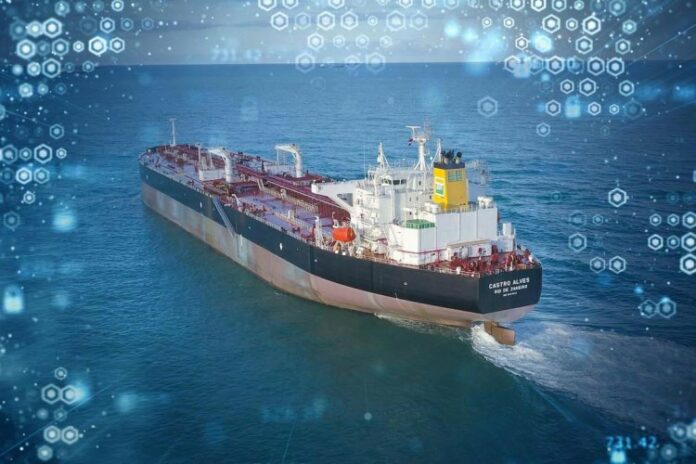
Entitled ‘Maritime Industry 2.0: The Future is Digital’, the white paper explores key milestones passed in the shipping industry’s digital transformation journey to-date and examines how traditional, manual methods for monitoring and record keeping are evolving towards the greater use of electronic documentation, supported by digital monitoring equipment.

The move towards exploiting the power of digitalisation for monitoring and reporting purposes has been accelerated by a recent shift international regulation. From the 1st October 2020, the International Maritime Organization (IMO) amendments to MARPOL Annexes I, II, V and VI that permit the use of electronic record books entered into force.

This permitted use of electronic oil record books is a welcome step change in the industry, and Rivertrace supports this transition with the development of smart monitoring technologies and services, and collaborations with other original equipment manufacturers (OEMs).

In publishing the new white paper, Rivertrace has advised that greater demands for electronic methods of reporting, and also for the collection and transfer of data from ship to shore, are fast becoming the norm. Therefore, many adaptations will be required, supported by innovative technologies and connectivity that support smarter shipping to ensure a smooth transition into the digital era.

Mike Coomber, Managing Director of Rivertrace, says:

“For Rivertrace, the evolution of smart water quality monitoring technology is part of embracing digital transformation in our specific area of technical expertise. We are continuously developing our systems to support automated data logging and we are putting our services online to support those customers who prefer to use electronic formats for reporting and the calibration of equipment. We are also working to connect our water monitoring systems and enhancing and expanding the ways in which we can help our customers remotely is always evolving.”

Two months at sea to explore the Southern Ocean’s contribution to climate regulation

0

A team coordinated by two CNRS researchers and involving colleagues from Sorbonne University, Toulouse III–Paul Sabatier University, the University of Western Brittany and Aix-Marseille University, will traverse the Southern Ocean from January 11 to March 8, 2021, aboard the Marion Dufresne II research vessel chartered by the French Oceanographic Fleet.

Their goal is to better understand the sequestration of atmospheric CO2 in the ocean, and especially how the chemical elements essential to this storage are supplied, transported and transformed by the ocean

The Southern Ocean, which surrounds the Antarctic continent, south of the Atlantic, Pacific and Indian Oceans, is a wild region that is difficult to explore. It plays a key, yet complex, role in the capture and storage of atmospheric CO2. A wide range of factors need to be taken into account, including biological activity (surface photosynthesis, carbon export to the deep ocean and its sequestration in sediments) and ocean circulation.

To understand these processes it is necessary to quantify them, which can be done by measuring what are known as geochemical elements (silica, nitrate, iron, zinc, as well as elements such as thorium, radium and rare earths). The vast majority of these tracers are present in minute concentrations in seawater.

The SWINGS1 oceanographic cruise, starting on January 11 and involving 48 scientists, is part of the international GEOTRACES program, which since 2010 has been constructing a chemical atlas of the oceans, compiling data describing the biogeochemical cycles of these trace elements and their isotopes in the world’s oceans. The data is acquired using very strict protocols, compared and validated among the different countries, and made available in an open database.

This is the first time that such a comprehensive marine survey has been carried out in the Southern Ocean. Its goal is to determine the sources (atmospheric, sedimentary, hydrothermal, etc) of these elements, some of which (iron and zinc for example) play a crucial role in the photosynthetic activity of phytoplankton. The scientists will be studying their physical, chemical and biological transformations at all depths of the Southern Ocean, as well as their ultimate fate, when they sink into the deep ocean and are stored in sediments.

In addition to the SWINGS scientists, a team from OISO (Indian Ocean Observation Service), which is assessing the proportion of CO2 from anthropogenic emissions and the resulting ocean acidification, will embark on the Marion Dufresne II during the cruise. Another temporal data monitoring program, THEMISTO, will be studying open-ocean ecosystems. Finally, a third project (MAP-IO) will use the Marion Dufresne II to carry out, among other things, physical measurements of the distribution of aerosols and trace gases. With these three projects complementing the SWINGS goals, scientific cooperation lies at the heart of the new cruise.

The expedition was funded by France’s National Research Agency ANR, the French Oceanographic Fleet operated by the National Institute for Ocean Science IFREMER, the CNRS National Institute for Earth Sciences and Astronomy INSU, and the ISBlue University Research School.

ClassNK advises ships to install ballast water management systems early on

0

Leading Classification Society ClassNK has been analyzing the retrofitting status of ballast water management systems (BWMS) on its registered ships periodically since 2018. 

The status has been updated based on the latest data and the Society has confirmed that installation deadlines based on the BWMS Convention for many of its registered ships are still concentrated in the year 2022.

As of the end of November 2020, 7,220 of the 9,159 ships registered with ClassNK are obligated to install BWMS in accordance with the BWM Convention. Among these, 3,982 ships have completed the installation, leaving 3,238 ships that still require attention. Although the number of ships without BWMS has decreased by 1,280 since August 2019, the installation deadline for these ships remains largely concentrated in 2022.

As difficulties are expected in the installation of BWMS if everyone around the world waits until 2022, ClassNK recommends installing well in advance. In addition, plan approval applications are also expected to concentrate during this period, therefore early application is strongly recommended. 

Current Direct project seeks to support marine electrification

0

Current Direct, a new €12-million research and innovation project funded by the European Commission’s Horizon 2020 program, is proposing an innovative lithium-ion cell optimized for waterborne transport, using novel manufacturing techniques allowing for a consistent cost reduction compared to the current market prices. Additionally, a swappable containerized energy storage system optimized for cost and operation in the waterborne transport industry will be developed.

The overarching aim of the Current Direct project is to develop and demonstrate an innovative interchangeable waterborne transport battery system and Energy-as-a-Service (EaaS) Platform in an operational environment at the Port of Rotterdam at TRL7 that facilitates fast charging of vessels, fleet optimization and novel business models.

The Current Direct project is dedicated to:

  • significantly reduce the total cost of waterborne transport batteries;
  • cut GHG emissions of the marine transport sector through electrification of vessel fleets;
  • increase the energy density of waterborne battery cells; and
  • trigger investments for innovation, job and knowledge creation in the European marine transport and battery sector.

By changing the model for acquiring and storing energy aboard vessels, Current Direct seeks to create a new energy economy, adding thousands of new jobs. Current Direct provides a vehicle for energy companies, institutional investors, and government stakeholders to participate in the green transformation of Europe’s merchant and passenger fleet.

Current Direct brings together thirteen partners from across Europe’s marine electrification value chain. The project is led by Spear Power Systems, makers of the world’s lightest, most flexible marine batteries certified to the most stringent international safety standards.

Blackstone Technology is lowering the cost of manufacturing tomorrow’s 3D printed lithium-ion cells using active materials from Umicore. The University of Hasselt will use its electrochemical expertise to develop physics-based models of the Current Direct cells that will help optimize the life and return on investment of battery systems deployed across Europe as part of the Current Direct Energy as a Service platform developed by the accomplished engineers and data scientists at Rhoé Urban Technologies and Aviloo.

Naval architecture and marine engineering company Foreship will lend its expertise to EDP CNET’s in depth knowledge of electrical markets to ensure the Current Direct platform targets optimal vessels and locations maximizing reductions in emissions. VUB’s material science experts are creating low-cost composites to improve the safety of battery packs that are designed for recyclability and feature VITO’s smart cell monitoring electronics.

Wärtsilä will develop modular battery containers and charging infrastructure that will be certified to innovative standards by Lloyd’s Register. The project will culminate in a demonstration of the Current Direct battery, shore charging, and asset management platform by Kotug in Rotterdam.

Vessel operators, ports, shipyards, naval architects, energy companies, certification bodies, regulators, and sustainability focused investors are invited to join the project in a series of virtual workshops to share ideas and learn about how Current Direct can change the way business is done. Contact CurrentDirect@spearps.com to learn more.

Founded in 2014 by Jeff Kostos, President & CEO, and Dr. Joon Kim, CTO (both who launched Kokam America in 2005), Spear designs and manufactures safe, high performance energy storage systems (ESS) for clients with some of the world’s most demanding industrial and defense applications. Spear’s Trident brand marine batteries offer world class safety that is 30% lighter and 10% smaller than the closest competitor.

Spear takes a chemistry-independent approach towards integrating its in-house, designed, scalable electronics, software, and mechanical systems with the most application-appropriate chemistry in order to maximize the value for its clients.

Another Med Marine tugboat for SAAM towage

0

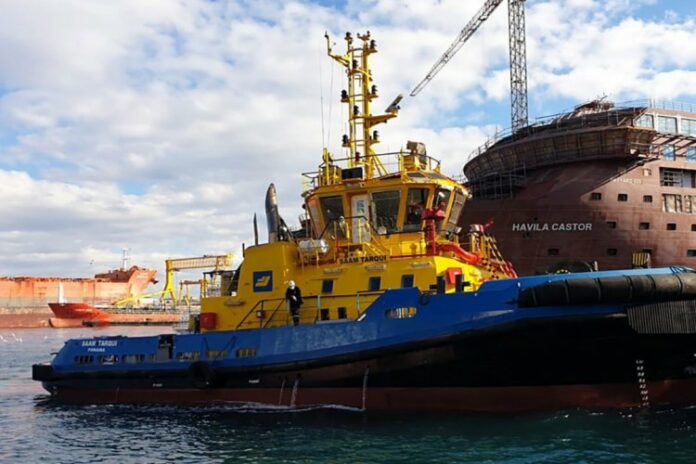
Med Marine and SAAM Towage shook hands for a MED-2575 class tugboat which was previously being operated in Med Marine’s national fleet in addition to her five identical sisters.

SAAM Tarqui, previously called “Efesan Port”, will join SAAM Towage’s fleet in Equador. She is a RAmparts 2500W design by Canadian designer Robert Allan Ltd. It is a very economical, compact but pretty robust design that is widely accepted, well-proven among the top operators all over the world.

Med Marine offers 60, 70 and 75 tonnes bollard pull options to its clients in this design.

Pablo E. Caceres, Technical Director from SAAM commented about this delivery:

“We are very glad to introduce the SAAM TARQUI to our operations, especially following her combination of size and power. These allow us to satisfy our clients’ safety matrixes in terms of pushing/pulling capabilities while delivering a versatile tugboat that could adjust to restrictive spaces of operation”

Melis Üçüncü, Sales Manager from Med Marine, also said:    

“We are very glad with this repeat order from SAAM a year after delivering SAAM Itza, MED-A2360 tugboat, to SAAM Guatemala. SAAM Tarqui belongs to MED-A2575 class which is another design that Med Marine has strong expertise in building and operating. We built and delivered 11 units with different bollard pull options in this design and we have years of experience in operating them in our national fleet. We believe that Med Marine is a well-trusted business partner for SAAM and we have proven ourselves with our previous delivery. We value SAAM’s trust and We wish that this cooperation will continue many years to come. ”

The vessel utilises two WARTSILA W9L20 engines that develop a total output of 3600 kW with a free sailing speed of 12 knots and bollard pull of 70 tons. Two PERKINS 4.4TW2GM gensets provide total 168 kw electrical power for vessel services, including the deck machinery. She drives two KONGSBERG US 205 FP azimuthing thrusters and she is equipped with two FFS FIFI E fire-fighting pumps which can deliver 2.710m3/h. Deck machinery includes DMT fore anchor towing winch, DMT aft towing winch and MAMPAEY quick release disc type towing hook.

Iran’s Revolutionary Guards Corps seized a South Korean-flagged tanker

0

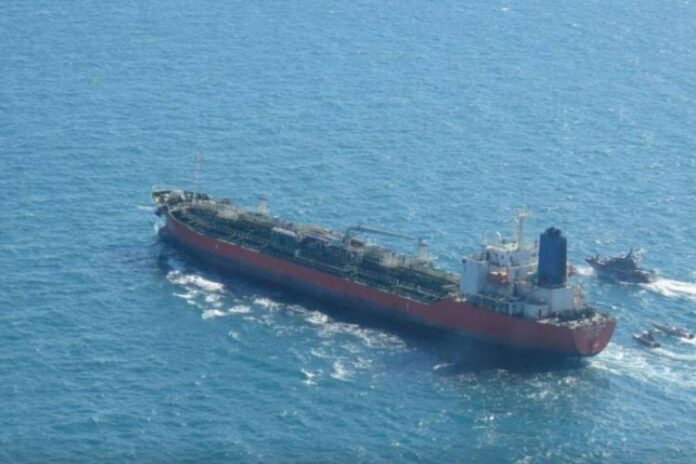
Iran’s Revolutionary Guards Corps seized a South Korean-flagged tanker in Gulf waters and detained its crew, Iranian media said on Monday, amid tensions between Tehran and Seoul over Iranian funds frozen in South Korean banks due to U.S. sanctions.

Several Iranian media outlets, including state TV, said the Guards navy captured the vessel for polluting the Gulf with chemicals.

State television quoted Iranian Foreign Ministry spokesman Saeed Khatibzadeh as saying:

“According to initial reports by local officials, it is purely a technical matter and the ship was taken to shore for polluting the sea.”

The semi-official Tasnim news agency published pictures showing the Guards’ speed boats escorting the tanker HANKUK CHEMI, which it said was carrying 7,200 tonnes of ethanol.

It said the vessel’s detained crew members included nationals of South Korea, Indonesia, Vietnam and Myanmar. Iran’s state TV said the tanker was being held at Iran’s Bandar Abbas port city. The ship had 20 crew members, according to South Korea’s foreign ministry.

The incident comes ahead of an expected visit by South Korea’s deputy foreign minister to Tehran. Khatibzadeh said the visit would happen in coming days, during which officials would discuss Iran’s demand that South Korea release $7 billion in funds frozen in South Korean banks because of U.S. sanctions.

Source: Reuters 

Nakilat takes delivery and management of LNG carrier newbuild

0

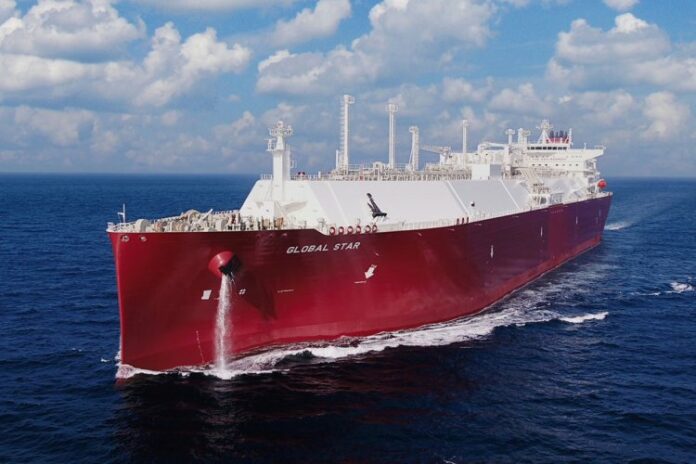
Built by Daewoo Shipbuilding & Marine Engineering (DSME), this is the second out of the four LNG carrier newbuilds to be delivered to Global Shipping Co. Ltd., a joint venture of Nakilat (60%) and Maran Ventures Inc. (Maran Ventures) (40%).

The first newbuild “Global Energy” was safely delivered in May 2020. The delivery of all four newbuild LNG carriers will bring Nakilat’s fleet to 74 vessels, which is just under 12% of the current global LNG fleet based on carrying capacity.

Nakilat’s Chief Executive Officer Eng. Abdullah Al Sulaiti said:

“Nakilat welcomes a new addition into our world’s largest LNG fleet, a technologically-advanced newbuild that allows us to provide additional capacity and flexibility to our customers and gives us a greater competitive edge in this dynamic marketplace. Technically operated and commercially managed in-house, this significant milestone bears testament to the company’s superior ship management capabilities and further affirms our global leadership position in energy transportation.

Nakilat has been demonstrating remarkable accomplishments with the completion of fleet management transition for seven LNG carriers and delivery of onenewbuilds within a year, tactfully executing its strategic long-term growth as part of the efforts to optimize costs hence maximize returns for our shareholders.”

Al Sulaiti added:

“We have seen a shift in terms of management and vessel technology in the industry, which we have taken into consideration. Constructed in South Korea, the four modern vessels each have a cargo carrying capacity of 173,400 cubic meters, equipped with some of the  most advanced and environmentally sound technology with in the market today, with two of them being equipped with ME-GI while the other two with X-DF propulsion technologies. These vessels also feature an optimized hull design and employ other advanced technologies which help to strengthen Nakilat’s position as the leading transporter of clean energy.”

Oceanographers have an explanation for the Arctic’s puzzling ocean turbulence

0

Eddies are often seen as the weather of the ocean. Like large-scale circulations in the atmosphere, eddies swirl through the ocean as slow-moving sea cyclones, sweeping up nutrients and heat, and transporting them around the world.

In most oceans, eddies are observed at every depth and are stronger at the surface. But since the 1970s, researchers have observed a peculiar pattern in the Arctic: In the summer, Arctic eddies resemble their counterparts in other oceans, popping up throughout the water column. However, with the return of winter ice, Arctic waters go quiet, and eddies are nowhere to be found in the first 50 meters beneath the ice. Meanwhile, deeper layers continue to stir up eddies, unaffected by the abrupt change in shallower waters.

This seasonal turn in Arctic eddy activity has puzzled scientists for decades. Now an MIT team has an explanation. In a paper published today in the Journal of Physical Oceanography, the researchers show that the main ingredients for driving eddy behavior in the Arctic are ice friction and ocean stratification.

By modeling the physics of the ocean, they found that wintertime ice acts as a frictional brake, slowing surface waters and preventing them from speeding into turbulent eddies. This effect only goes so deep; between 50 and 300 meters deep, the researchers found, the ocean’s salty, denser layers act to insulate water from frictional effects, allowing eddies to swirl year-round.

The results highlight a new connection between eddy activity, Arctic ice, and ocean stratification, that can now be factored into climate models to produce more accurate predictions of Arctic evolution with climate change.

John Marshall, professor of oceanography at MIT, says:

“As the Arctic warms up, this dissipation mechanism for eddies, i.e. the presence of ice, will go away, because the ice won’t be there in summer and will be more mobile in the winter. So what we expect to see moving into the future is an Arctic that is much more vigorously unstable, and that has implications for the large-scale dynamics of the Arctic system.”

Marshall’s co-authors on the paper include lead author Gianluca Meneghello, a research scientist in MIT’s Department of Earth, Atmospheric and Planetary Sciences, along with Camille Lique, Pal Erik Isachsen, Edward Doddridge, Jean-Michel Campin, Healther Regan, and Claude Talandier.

For their study, the researchers assembled data on Arctic ocean activity that were made available by the Woods Hole Oceanographic Institution. The data were collected between 2003 and 2018, from sensors measuring the velocity of the water at different depths throughout the water column.

The team averaged the data to produce a time series to produce a typical year of the Arctic Ocean’s velocities with depth. From these observations, a clear seasonal trend emerged: During the summer months with very little ice cover, they saw high velocities and more eddy activity at all depths of the ocean. In the winter, as ice grew and increased in thickness, shallow waters ground to a halt, and eddies disappeared, whereas deeper waters continued to show high-velocity activity.

Marshall says:

“In most of the ocean, these eddies extend all the way to the surface. But in the Arctic winter, we find that eddies are kind of living beneath the surface, like submarines hanging out at depth, and they don’t get all the way up to the surface.”

To see what might be causing this curious seasonal change in eddy activity, the researchers carried out a “baroclinic instability analysis.” This model uses a set of equations describing the physics of the ocean, and determines how instabilities, such as weather systems in the atmosphere and eddies in the ocean, evolve under given conditions.

The researchers plugged various conditions into the model, and for each condition they introduced small perturbations similar to ripples from surface winds or a passing boat, at various ocean depths. They then ran the model forward to see whether the perturbations would evolve into larger, faster eddies.
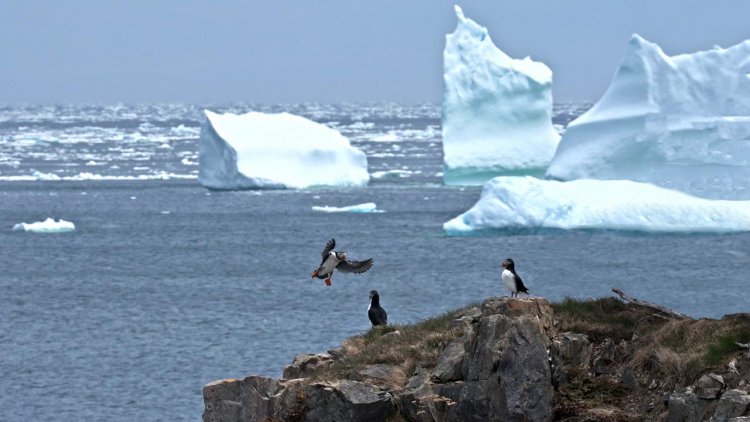
The researchers found that when they plugged in both the frictional effect of sea ice and the effect of stratification, as in the varying density layers of the Arctic waters, the model produced water velocities that matched what the researchers initially saw in actual observations. That is, they saw that without friction from ice, eddies formed freely at all ocean depths. With increasing friction and ice thickness, waters slowed and eddies disappeared in the ocean’s first 50 meters. Below this boundary, where the water’s density, i.e. its stratification, changes dramatically, eddies continued to swirl.

When they plugged in other initial conditions, such as a stratification that was less representative of the real Arctic ocean, the model’s results were a weaker match with observations.

Marshall explains:

“We’re the first to put forward a simple explanation for what we’re seeing, which is that subsurface eddies remain vigorous all year round, and surface eddies, as soon as ice is around, get rubbed out because of frictional effects.”

Now that they have confirmed that ice friction and stratification have an effect on Arctic eddies, the researchers speculate that this relationship will have a large impact on shaping the Arctic in the next few decades. There have been other studies showing that summertime Arctic ice, already receding faster year by year, will completely disappear by the year 2050. With less ice, waters will be free to swirl up into eddies, at the surface and at depth. Increased eddy activity in the summer could bring in heat from other parts of the world, further warming the Arctic.

At the same time, the wintertime Arctic will be ice covered for the foreseeable future, notes Meneghello. Whether a warming Arctic will result in more ocean turbulence throughout the year or in a stronger variability over the seasons will depend on sea ice’s strength.