-6.6 C
New York
Home Blog Page 711

MSC Cruises to resume scheduled sailings in the Mediterranean from 24 January

0

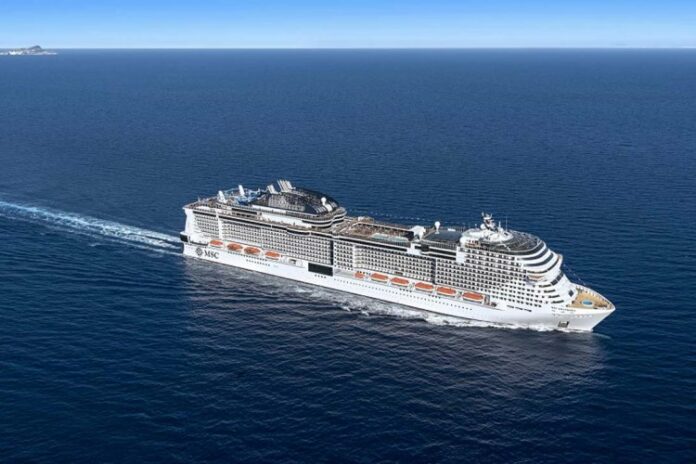
As a result of the extension of the restrictive measures related to movement within Italy, as set out in the latest decree from the Italian government preventing access to and use of ports of embarkation until 15 January, MSC Cruises has announced that it is forced to cancel the cruises of MSC Grandiosa departing from Genoa, Italy on 10 January and, as a measure of precaution, to also cancel the cruise departure of 17 January.

As a result, the first cruise of MSC Grandiosa following the temporary suspension of operation in connection with the implementation of these same measures during the Christmas and end-of-year festivities, will now depart from Genoa on Sunday 24 January.

The Company’s flagship will resume her planned weekly cruises leaving every Sunday from Genoa and calling the Italian ports of Civitavecchia, Naples, Palermo and Valetta in Malta, with embarkation available in each port in Italy. MSC Grandiosa will offer these itineraries until 21 March, after which she will remain in the Western Mediterranean to offer cruises from the summer programme with a new itinerary.

From 14 February MSC Magnifica will also resume her operation departing from Genoa for 11-night cruises designed to enable guests to discover the West and Eastern Mediterranean in Italy, Greece and Malta.

MSC Cruises is in the process of contacting all travel agents and guests affected by the two cancelled cruises of MSC Grandiosa.

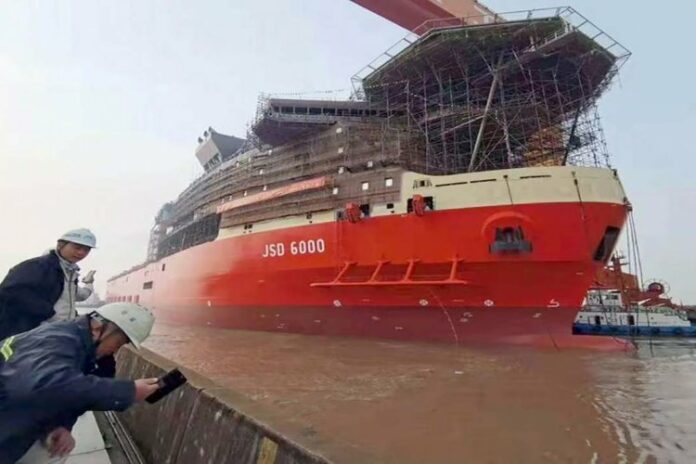
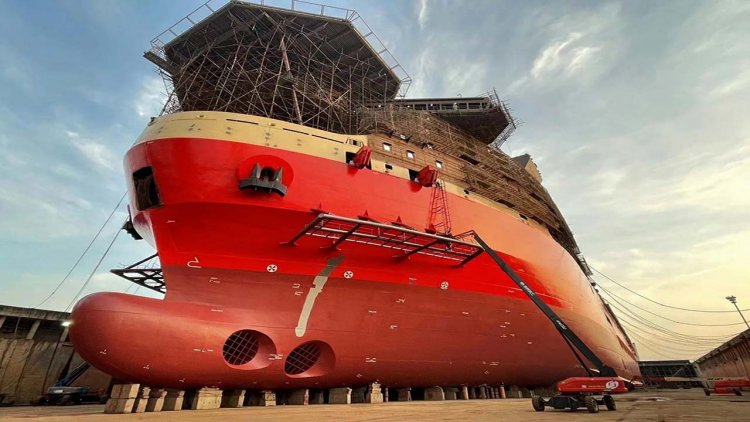
Launching of the JSD6000 heavylift vessel

0

After 18 months of hard work and dedication of all team members and other parts involved in the project, the vessel construction activities will continue at the ZPMC Changxing base for further challenges up to sea trials and delivery stage.

The ‘JSD 6000’ features heavy lift, S-Lay, and J-Lay via large, off-center moonpool capabilities. This will allow the DP vessel to serve deepwater and SURF (Subsea Umbilicals, Risers and Flowlines) projects as well as shallow water EPCI (Engineering, Procurement, Construction and Installation) projects.

The vessel represents the third customised version of the ULSTEIN SOC 5000 design after the Seven Borealis and Aegir. It is also the second version classed by Lloyd’s Register.

MAAP adopts Kongsberg’s simulation-based elearning solutions

0

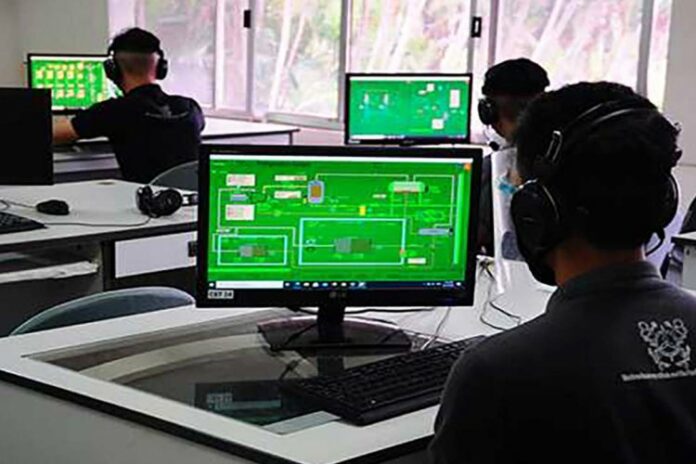
Kongsberg Digital reports that the Maritime Academy of Asia and the Pacific (MAAP) has adopted its new K-Sim eLearning solution, as well as commissioning installation of a cutting-edge K-Sim Safety firefighting simulator at its premises in the Philippines.

Kongsberg Digital is heading the digitalization of the maritime training industry and is continuously adding new simulation-based training applications to its digital platform, K-Sim Connect. Already adopted by many training institutes, K-Sim Connect has provided more than 23,000 cloud-based simulations to customers worldwide last year.

MAAP – a leading institution of excellence for maritime education and training in the Asia-Pacific region – has for decades been a pioneer in the use of new simulation-based training tools. Now, the Academy has started using Kongsberg Digital’s K-Sim Engine eLearning solutions to deliver cloud-based tuition to its student engineers, consolidating its position as a leading adopter of the new digital technology.

Designed to provide highly realistic representations of real engine models, this cutting-edge eLearning tool allows students to practice and prepare for their exams anytime, anywhere and at their own pace, whilst providing a comprehensive simulation resource.

Admiral Eduardo Ma. Santos, President at MAAP, comments:

“The K-Sim Connect platform with its applications and services is a timely and cost-effective solution for the limitations posed by the recent global coronavirus pandemic on maritime education and training in the Philippines. MAAP signed up for 100 simultaneous user licenses that will provide our students continuing access to simulation-based engine room exercises online, without the need for face-to-face collaboration with the instructor-facilitator.”

Engr. Gerardo Ramon Galang, Director for IT and Simulator Support added:

“Our new normal now consists of combining video conferencing and other collaboration apps with the K-Sim Connect eLearning solutions during the actual conduct of simulation exercises, enabling a seamless transition from the traditional mode of learning while maintaining the same high standards in delivering quality maritime simulator training services to our students and customers.”

Andreas Jagtøyen, VP, Kongsberg Digital, says:

“We’re very pleased to see how well received our digital solutions for the maritime training market have been since we started rolling them out last year. As a leading educational establishment in Asia, MAAP have always been among the first to adapt to the latest training methods. Their choice to add our cloud-based simulation solutions to their physical KONGSBERG simulators is a welcome endorsement of our new digital simulation services.”

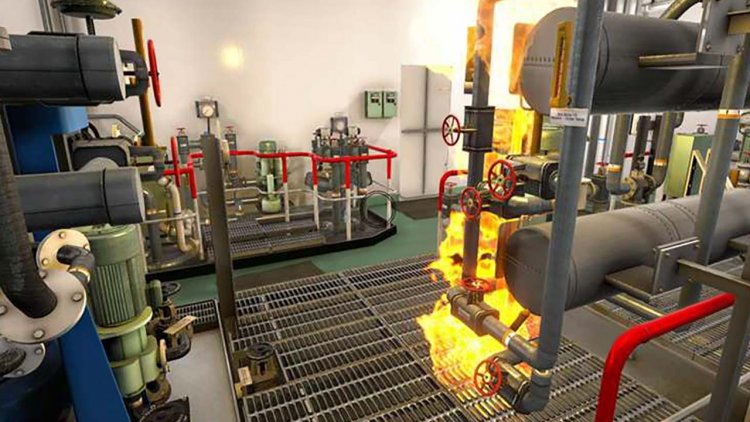
Also included in the latest contract with MAAP is Kongsberg Digital’s new full-mission K-Sim Safety simulator, which will deliver the ability to carry out safe, realistic advanced firefighting and onboard search and rescue procedures in a cost-efficient manner. Using a replica of the layout on board a real crude oil carrier, an interactive 3D environment combines precise object and equipment models with immersive visuals, exposing trainees to a broad range of situations related to preventing and dealing with onboard fires. As with all Kongsberg Digital’s simulation solutions, K-Sim Safety is designed to conform with relevant STCW regulations.

Yxney Maritime signs up as new Inmarsat Fleet Data Application provider

0

Norwegian-based scale-up Yxney Maritime and Inmarsat, the world leader in global, mobile satellite communications, have signed an agreement for Yxney Maritime to join the fast-growing group of certified application providers to provide a dedicated application for Inmarsat’s Fleet Data service.

Fleet Data collects data from onboard sensors, pre-processes that data, and uploads it to a central cloud-based database, equipped with a dashboard and an Application Process Interface (API). 

Yxney Maritime has developed the Maress software, a solution for data-driven decarbonisation that allows fuel and emission data to be used for making better decisions on how to increase efficiency and to reduce a ship’s carbon footprint.

Yxney will use the Fleet Data API integration to provide their clients, including a number of leading offshore vessel operators, with a robust and simple way to connect live-data from their vessels to Maress. The new partnership makes it even easier for ship owners, offshore vessel operators and energy companies to join the network of industry leaders using Maress to foster a collaborative approach towards a sustainable maritime industry.

Gjord Simen Sanna, Yxney CEO, says:

“Through the partnership with Inmarsat, we´re excited to provide vessel owners and operators with a plug-and-play solution to feed actual asset data into the Maress software to make better strategic decisions on how to reduce emissions footprint.” 

Marco Cristoforo Camporeale, Head of Digital Solutions, Inmarsat Maritime, says:

“We are delighted to be working with an innovative scale-up company such as Yxney Maritime who have a solution that is in great demand with owners and operators who want to reduce emissions. Working with Yxney Maritime enables our customers to harness the power of their existing onboard data to help support the IMO’s decarbonisation goals with full emissions transparency.”

Using Fleet Data, in combination with Maress is a cost-effective package that unlocks high-quality data analysis and data sharing possibilities – giving users a competitive edge in a market where the quest for reduced emissions is paramount.

Pollutants rapidly changing the waters near Ieodo Island

0

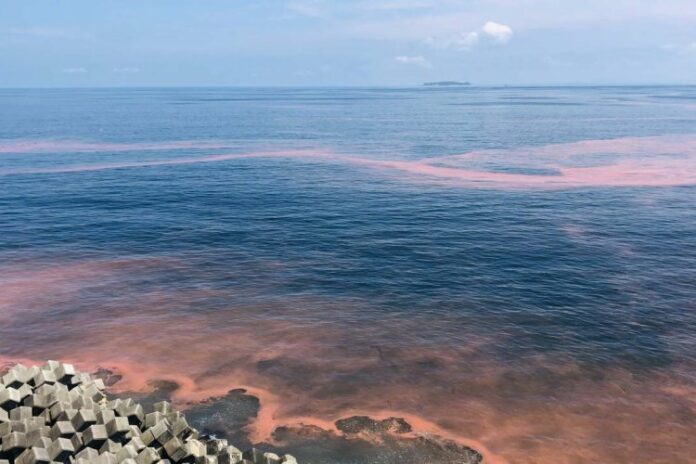
Red tide is a phenomenon in which phytoplankton proliferate as nutrient or sewage flow into seawater, making it appear red. 

Professor Kitack Lee and Ph.D. candidate Ji-Young Moon (first author) of POSTECH’s Division of Environmental Science and Engineering have confirmed that the inflow of nitrogen pollutants since the 1980s has disturbed the nutrient balance in the northeast Asian waters and is changing the species of phytoplankton responsible for red tide.

The team also found that the fastest change in the oceanic conditions caused by this inflow of nitrogen pollutants is happening in the waters near the Ieodo Ocean Research Station, located downstream of the Changjiang River of China. These findings were recently introduced in the journal Limnology and Oceanography.

The Northeast Asia region, including Korea, China, and Japan, has seen an increase of nitrogen pollutants because of the rapid population growth and industrialization in modern times. As the nitrogen pollutant flows into the sea as a result of floods and monsoons, northeast Asian waters have experienced an unexpected massive fertilization. Many scientists have warned that these nitrogen pollutants not only increase harmful algae bloom in the coastal waters, but also lead to deterioration of water quality and changes in the formation of marine ecosystem species.

The researchers analyzed the nutrient concentration data and the occurrence of red tide in the East China seas and coastal waters of the Korean Peninsula in the past 40 years since the 1980s. The results show that a wide range of oceans in this region have changed from being nitrogen deficient to phosphorus (P) deficient, while at the same time the concentration of nitrate (N) has been higher than that of silicate (Si). In particular, it has been confirmed that the major phytoplankton in Korea’s coastal waters are also changing from diatoms to dinoflagellates.

The research team explained that this is direct evidence that the nutrient regime in the northeast Asian marginal sea is changing as the amount of nitrogen pollutants is increasing, which is further creating phytoplankton species and disrupting the marine ecosystem.

At the same time, the team verified that the fastest place to see these oceanic changes due to the inflow of nitrogen pollutants was in the waters around Ieodo Ocean Research Station.

Professor Kitack Lee who led the study said:

“Since the changes in the waters near Ieodo Ocean Research Station will soon occur in the waters near the Korean Peninsula, long-term observation of the concentration of nutrient in the coastal waters and changes in the ecosystem are necessary. The findings can be used as important scientific evidence for establishing environmental policies, such as setting nitrogen pollutant emissions.”

UAntwerp and Port of Antwerp testing innovative technology for autonomous shipping

0

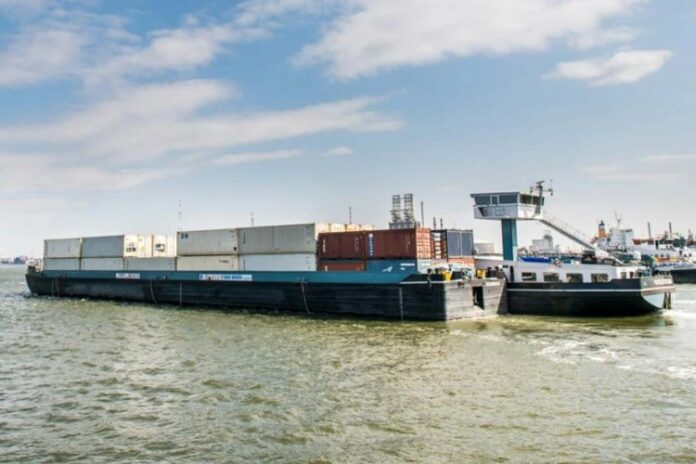
Automated navigation is the future of inland shipping. Innovative research carried out by UAntwerp and the Port of Antwerp is bringing us one step closer to this dream. The key: 3D sonar sensors, inspired by the way bats see the world.

Port alderman Annick De Ridder says:

‘In 2019, over 42% of all goods entered or left the port of Antwerp via inland waterways. In other words, inland shipping is crucial if we want to ensure the accessibility of our city and our port. By focusing on technology such as unmanned navigation, we want to further increase both the market share and the competitiveness of inland shipping.’

Svetlana Samsonova, a liaison officer, says:

‘Unfortunately, inland shipping is not exactly a sexy sector. Attracting young talent to this sector is not an easy feat. That’s why we focus so strongly on innovation. Unmanned vessels can lead to substantial cost savings, as well as provide an answer to our increasing traffic congestion problems and the rising costs of road transport. Smart vessels definitely have a part to play in the multimodal transport approach that the Port of Antwerp wants to help develop further.’

Prof. Jan Steckel develops advanced sensor systems that can withstand harsh conditions. He says:

‘In order to achieve fully autonomous navigation, constant monitoring of the ship’s surroundings is absolutely crucial. Cameras can be used, of course, but when visibility is poor – due to dust, water sprays, mud, smoke or fog – they don’t work properly.’

Sonar sensors, however, remain fully functional under such circumstances. They can provide a reliable picture of the ship’s surroundings at a low cost. Steckel:

‘We drew our inspiration from the way bats use echolocation. They emit sound waves, and when those waves hit objects, the bats hear the echoes of these collisions, allowing them to avoid obstacles flawlessly.’

CoSys-Lab is a world leader in innovative sonar technology, which has many possible uses. For instance, the researchers are also looking into applications in the mining industry, where trucks equipped with these sensors could drive automatically from point A to point B.

For the project with the Port of Antwerp, the researchers developed a 3D sonar sensor with 32 sophisticated waterproof microphones. The project is called eRTIS, which stands for ’embedded Real Time Imaging Sonar’. Steckel: ‘The information is transmitted in real time, because if there are any delays, the ship could crash into something. The ‘Imaging Sonar’ part refers to reflected sound waves hitting the sensors to create a picture of the surroundings.’

In the last weeks of 2020, the technology was successfully tested on the Tuimelaar, one of the Port of Antwerp’s test vessels. In 2021, there will be a follow-up project: as part of the Smart Docking Innovation Challenge, the Port of Antwerp has given the green light to Prof. Jan Steckel’s 3D Sonar and Lidar for Vessel Monitoring project.

Med Marine’s new series tug now operates in Hadera

0

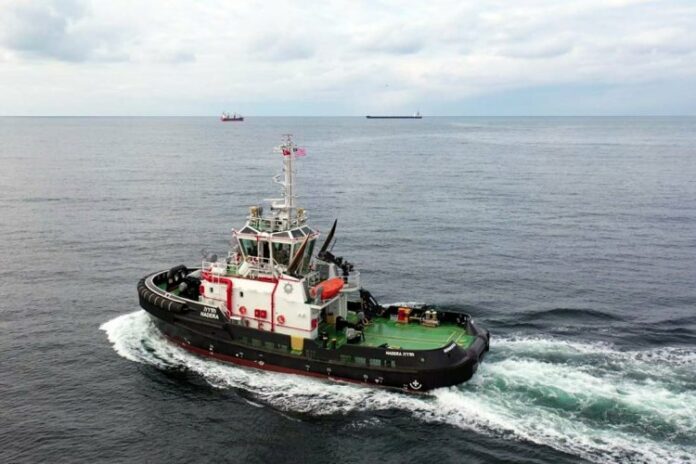
Med Marine delivered a new series tug MED-A3280-SD (shallow draft) tugboat to National Coal Supply Corporation (NCSC)’s fleet operating in Hadera. NCSC is a state company that handles the procurement and transportation of coal in Israel.

Named after the port she will be operating, HADERA was successfully delivered to NCSC around the middle of December 2020.

MED-A3280-SD model tug which belongs to Robert Allan’s RAmparts 3200-SD design is the shallow draft adaptation of RAmparts 3200 series that are well-known for their versatile/multi-purpose nature and enhanced ship-handling, coastal towing, escort, general purpose duties. RAmparts 3200 is one of the most widely accepted design in the industry with more than 400 of this series in worldwide service today.

Med Marine has successfully built and delivered more than two dozen tugboats with this design. Yet, HADERA is the first RAmparts 3200-SD vessel with shallow draft. Being a shallow draft tug, it is quite easy for her to operate in shallow and difficult waters such as rivers etc.

Eylül Turhan, Business Development Chief from Med Marine, expressed her feelings about this delivery & said:

“It is an excitement and a great pleasure for us to work with The National Coal Supply Corporation for our former but shallow water adapted design. Thanks to Robert Allan Ltd’s expertise, we were able to build this lower draft MED-A3280-SD series tug with full performance capabilities. Besides limited draft requirement, NCSC’s request for noise levels even lower than IMO regulations enabled us to improve ourselves further. We are happy to serve our customers with our experience and proven designs with tailor made revisions”

NCSC also commented on this successful delivery with following words:

“NCSC as Owners, and The Port of Hadera as operators of the vessel, are most grateful for the final result that manifested itself in our new built tug “Hadera”, which was constructed in the Med Marine’s yard in Eregli. It is a result of close and determined co-operation between the companies, in the most difficult of times.”

Qatargas awards offshore engineering contract to McDermott

0

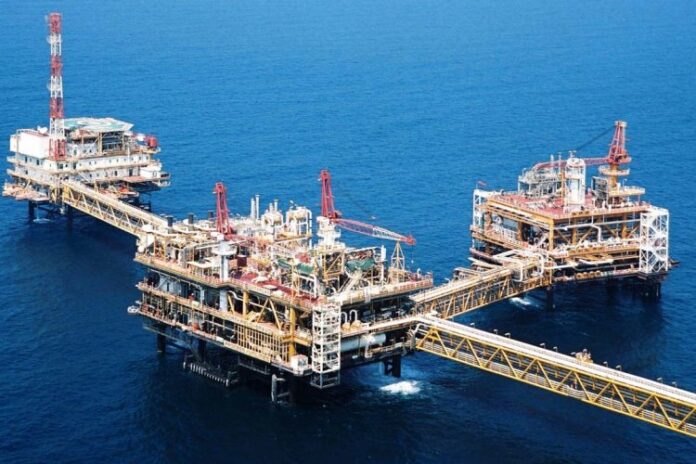
McDermott International, Ltd has been awarded a contract from Qatargas to deliver front-end engineering and design (FEED) work for Qatar Petroleum’s North Field South (NFS) project.

Tareq Kawash, McDermott Senior Vice President, Europe, Middle East and Africa, said:

“For more than 30 years, McDermott has executed projects in Qatar’s North Field, and we will leverage our experience and local resources to successfully deliver this project. As oil and gas field development continues in the region, we are poised to build on this initial work to further support Qatargas as they progress the subsequent phases of the NFS project.”

The contract scope includes the replication of five offshore wellhead platforms. The FEED contract will be executed from McDermott’s Doha office and work will begin immediately.

Boskalis bolsters market position in subsea services through acquisition Rever Offshore

0

Boskalis announces the acquisition of all the shares of Rever Offshore’s subsea services business (‘Rever’). Rever, formally known as Bibby Offshore, offers a broad range of solutions in the area of subsea construction, inspection, repair and maintenance.

Rever has historically operated in the North Sea out of Aberdeen (United Kingdom) and holds a strong track record. Through this transaction, Boskalis will obtain two diving support vessels of which one is fully owned (Rever Polaris) and a second chartered (Rever Topaz). The group employs an onshore staff of around 130 in addition to approximately 220 offshore workers.

The 2020 annual revenue is approximately EUR 90 million, most of which is generated through numerous framework agreements. Based on projected cost synergies, the acquisition payback period is expected to be less than three years.

Through this acquisition, Boskalis strengthens its current position in the subsea services market in Northwest Europe, Africa and the Middle East and its capabilities to serve both the traditional oil & gas market and the rapidly expanding offshore wind market. On the important North Sea subsea market, Boskalis is now a solid top three player opening up ample opportunities for operational efficiencies and synergies.

Chiyoda grabs LNG-to-power project deal in Papua New Guinea

0

Chiyoda Corporation has announced that it has been awarded the design development and engineering of a new Floating, Storage, Re-gasification and Power Generation (FSRP) facility by Kumul Petroleum Holdings Limited (KPHL).

This project is an important step towards meeting the demand and supply requirement set out in the PNG 2030 Strategic Plan, which has set goals of connecting 70% of the PNG population to secure electricity by 2030. It will also provide PNG’s growing heavy industries with much needed environmentally cleaner and sustainable fuel options for their additional power generation requirements they seek to increase productivity on.

The new FSRP facility will have the capacity to generate 75 MW of power to be exported to the local transmission grid, in addition to being able to load and store 140,000m3 of LNG which can be offloaded to small scale (SS) bulk cargo vessels and redistributed to smaller local power generation locations, and regasify and export gas via pipeline for local heavy industrial power generation. It will be located on the northern coast of PNG, close to Lae, bringing much-needed power generation to the area which contains some of the country’s key resources projects.

Based on Chiyoda’s experience in PNG and its expertise of FSRP facilities, Chiyoda will provide KPHL with a wealth of engineering expertise in partnership with Moss Maritime of Norway and Nippon Yusen Kaisha for the first of the contracts. Chiyoda positions PNG as one of its priority countries for its business field and will contribute to the realization of PNG’s 2030 Strategic Plan.