-6.6 C
New York
Home Blog Page 710

Valenciaport joins the World Ports Climate Action Program

0

Valenciaport is making its debut in 2021 by joining the club of the 12 ports of the world that have the most investments committed to decarbonisation and emission reduction projects, the World Ports Climate Action Program (WPCAP), a working group that jointly promotes actions against climate change and that collaborates closely with the International Association of Ports and Harbours (IAPH).

The WPCAP was created with the main objective of reducing CO2 emissions and improving air quality. The President of the Port Authority of Valencia (PAV), Aurelio Martinez, explained:

“We have adhered to this programme in which the biggest ports participate and which are the mirror in which the rest of the world port system is looked at as their activity has a subsequent impact on the rest of the port scale. It is an action in which the 12 leading ports of the world are participating and which they have invited us to take part in as a recognition of our management in sustainability in recent years in order to launch a joint climate action programme”.

The members of the programme are chosen from a group of ports with a proven commitment to the environment and with full guarantees to be able to meet the requirements of the World Ports Climate Action Program. 

It should be noted that last July, the IAPH awarded two projects in environmental matters that are being led by the Port Authority of Valencia. These programmes are “GREEN C PORTS” – which has also received an EnerTIC award – and “LOOP PORTS”. Both initiatives were awarded in the World Port Sustainability Awards for their initiatives to find innovative solutions to reduce traffic congestion, improve air quality, reduce noise levels, forecast crane productivity and measure emissions in real time in the ports.
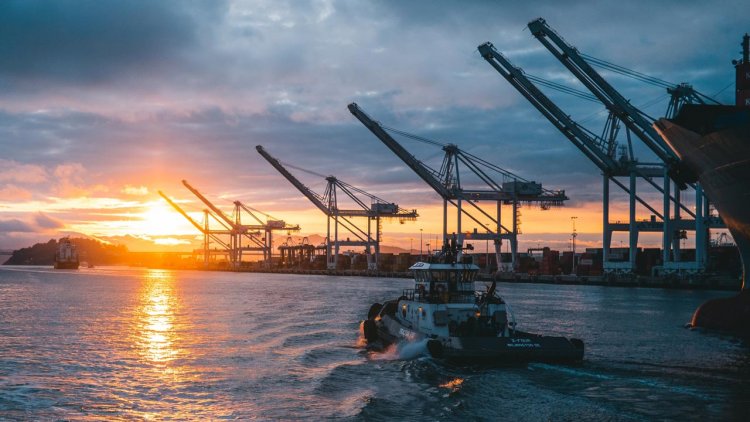
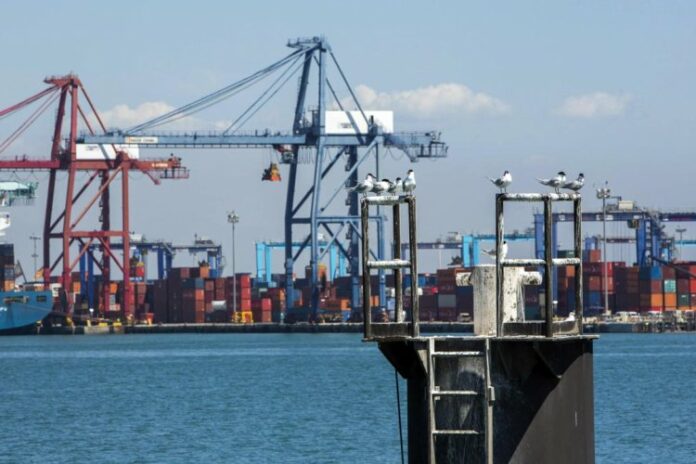
The WPCAP is an initiative to boost and coordinate the efforts of ports with the improvement of the environment by encouraging cooperation between all the actors in the logistics chain. The Port of Valencia will be part of this select group alongside those of Antwerp, Barcelona, Gothenburg, Hamburg, Le Havre, Long Beach, Los Angeles, New York/New Jersey, Rotterdam, Vancouver and Yokohama.

The ports integrated in the WPCAP have thus created a programme of climate measures centred on five axes:

  • Increasing the efficiency of logistics chains through the development and harmonisation of digital tools.
  • To promote the common approach of public policies on the reduction of emissions within large geographical areas.
  • Accelerate the development of renewable energies for ships or other “zero emission” alternatives in the docks.
  • Accelerate the development of alternative fuels for ships, whose emissions are at least 50% lower than those generated by current fuels.
  • Defend the “decarbonisation” of port terminals.

To carry out these lines, the ports involved in the WPCAP are working alongside the International Maritime Organisation (IMO) and representatives of the sector, governments, regulators and other agents to develop measures to advance the decarbonisation of the maritime sector.
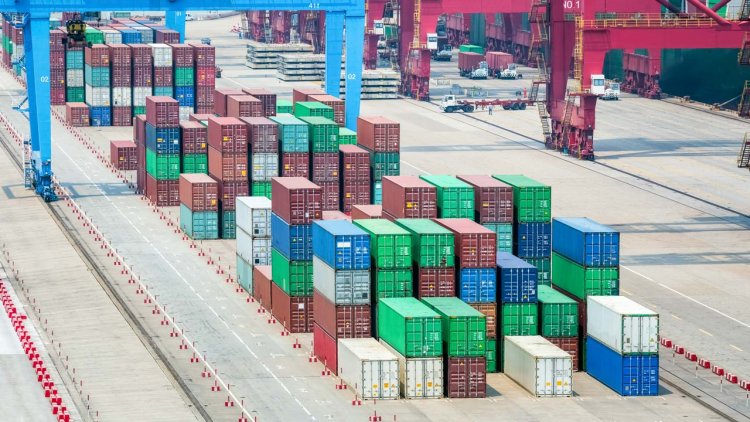
PAV representatives are included in four of the five WPCAP working groups: Efficiency, Policy and Governance, Energy for Vessels, and Decarbonised Terminals.  In this line, initiatives such as the Green Hydrogen with H2Ports roadmap should be highlighted, a pilot project for the area of mobility and maritime transport that is being carried out in the Port of Valencia to incorporate hydrogen in port logistics operations with the aim of reducing its environmental impact, and which will make Valenciaport the first port in Europe to incorporate hydrogen energy in its terminals by 2021.

In the area of sustainable infrastructures, the APV is developing projects such as the new North Terminal and the new Passenger Terminal, initiatives which, from the tendering phase, have the requirements that these installations must fulfil. These are focused on creating ecological, intelligent and accessible terminals that combine the generation of wealth and employment with respect for the environment.

Thus, the project presented by TIL for the new North Terminal of the Port of Valencia is designed to minimise CO2 emissions and energy consumption. Thus, it has measures to promote railway intermodality, it will be fully electrified for the supply of ships, 98% of the machinery will use electricity, and 100% of the energy will come from renewable sources. In addition, the automation of the equipment, the use of advanced traffic prediction systems, the design of the buildings with energy efficiency criteria, and the external lighting system with LED-type luminaires, will make it possible to minimise energy consumption.
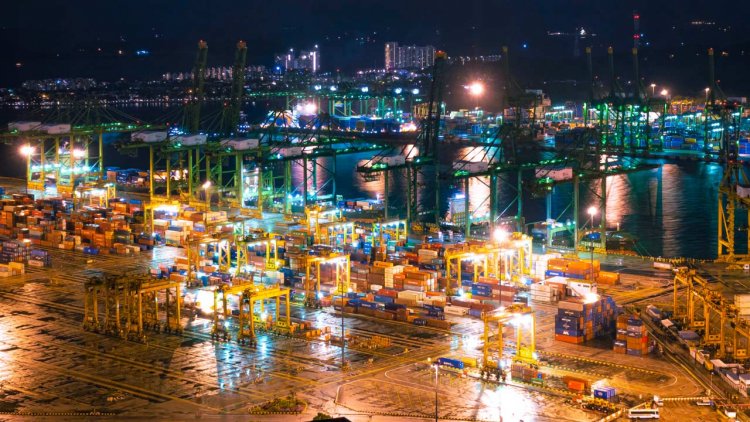
In this line, the new Passenger Terminal project presented by Balèaria will have 100% of the energy coming from renewable sources, the recycling of waste recovered from the ships and the maritime station to produce biofuels, the electricity supply network for the ships at berth, the design of the roofs of the buildings for the installation of photovoltaic solar panels or the protection of the historical and cultural heritage of the buildings.

In addition, the Business Plan includes actions to promote green energy and reduce energy consumption within the framework of Valenciaport 2030, zero emissions. Thus, 3.2 million euros will be invested in energy efficiency programmes and consumption control systems, while 15 million euros are planned for wind power and 2.8 million for photovoltaic systems in the generation of alternative energies.
Finland demonstrates ice technology expertise with innovative icebreaker vessel

0

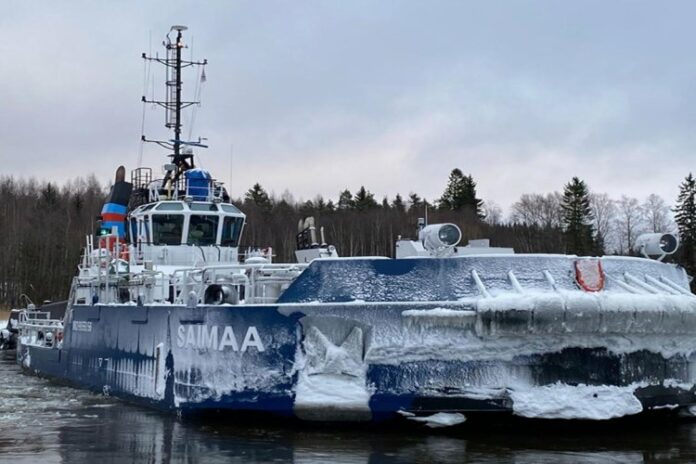
The Finnish Transport Infrastructure Agency has launched the Calypso, a new icebreaker concept boat equipped with an innovative hybrid motorized removable bow powered by Danfoss Editron. The icebreaker vessel is currently moored in Mustola harbor in Lappeenranta and has begun operating on Lake Saimaa and the deep waterways of the surrounding area this winter.

The removable bow, the world’s largest motorized of its kind, has been delivered by Turku Repair Yard as part of the Winter Navigation Motorways of the Sea II project. The €7.6 million scheme, co-funded by the EU Connecting Europe Facility program, aims to develop and enhance the maritime winter navigation system and its safety during the winter. One of its key targets was the creation of a motorized icebreaking removable bow concept, which would enable ice-strengthened vessels to be used as icebreakers during the winter. This specific bow is capable of breaking ice up to 70cm thick.

Danfoss Editron’s hybrid-electric system is powering the removable bow with two generators, built as a DC system, and two propulsion systems. The company has also provided a front supercapacitor so that peak powers can be efficiently controlled. The EDITRON software also cuts fuel and delivers high efficiencies as the diesel generators in the DC system can be driven at variable speeds. The power plan and propulsion system of the removable bow have been designed to be operated from the pusher tug wheelhouse, while the machinery can operate unmanned.

Kari Savolainen, Project Manager at Danfoss Editron, commented:

“We have operations in Lappeenranta, so we can see first-hand how harsh winter conditions directly impact shipping transport. This new kind of removable bow will make the whole industry more efficient and sustainable, as it will enable virtually any kind of tug to become an icebreaker ship. Our EDITRON system is easily adaptable for future optimizations and we are eager to learn more about our supercapacitor’s ability to control the peak powers.”

Juuso Kummala, Industry Line Director at Väylä, added:

“Lake Saimaa’s ice is more solid than sea ice and can reach up to 80cm thick. Developing this innovative design concept for the removable bow and equipping it with its own propulsion system will achieve savings in capital costs, as we will charter the pusher for only part of the year. We are also expecting to see savings in fuel consumption thanks to Danfoss Editron’s hybrid propulsion system.”

As winter temperatures in Finland can plummet to -30°C, icebreakers are a necessity even during mild winters. Introducing hybrid electric power in icebreaking operations will help the country meet its target to lower emissions by 40% by 2030 compared to 1990 levels.

HHLA PLT Italy starting on schedule

0

The announced acquisition by Hamburger Hafen und Logistik AG (HHLA) of 50.01 percent of the multi-function terminal Piattaforma Logistica Trieste (PLT) in the Italian seaport of Trieste has been completed on 7 January 2021. The handling facility will operate as HHLA PLT Italy and is expected to start extended operations in February.

Following approval by the Italian Council of Ministers and the fulfilment of additional formal closing conditions, nothing stands in the way of Hamburger Hafen und Logistik AG’s operation of the HHLA PLT Italy terminal in the Adriatic port of Trieste.

Angela Titzrath, Chairwoman of HHLA’s Executive Board:

“We’re delighted that the purchase of the majority stake has now been completed. At the contract signing in Trieste on September 28 last year, our commitment at the Adriatic port was met with great approval, especially from Italy. Since then, a team from HHLA International has been working intensively on integrating the Trieste terminal facility into the HHLA Group. Together with our Italian partners and our motivated workforce, we want to expand HHLA PLT Italy to become an important southern hub within our port and intermodal network.”

Francesco Parisi, CEO of the Francesco Parisi Group, a co-shareholder of HHLA PLT Italy:

“We are very glad to now have HHLA on board. This provides PLT and the Port of Trieste with a very exciting perspective of growth. We are grateful to HHLA for the strong support given to PLT already in the past months. This is a great incentive to work hard together to make it a success story.”

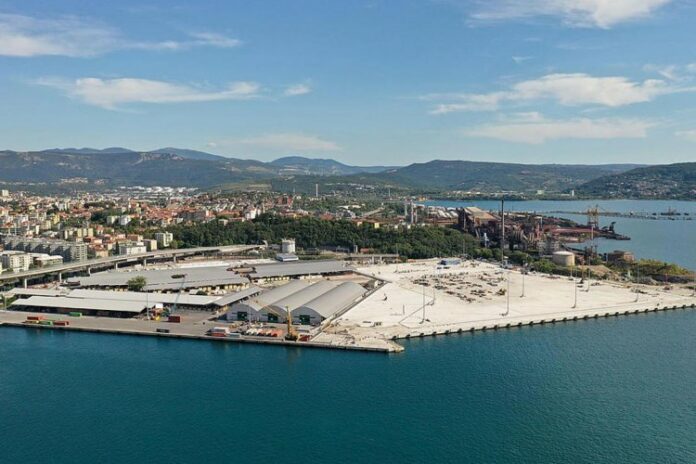
The HHLA PLT Italy terminal facilities are within the Free Port of Trieste and take up a total area of 27 hectares. In the northern section of the facility, mainly general cargo transports are al-ready being handled and logistic services provided. The new heart of the terminal is emerging in the southern section: container and RoRo traffic will be handled in the newly developed area. The site has been prepared as needed, and systemic, technical and staff requirements have been fulfilled. A 35-metre-wide ramp is available for RoRo handling and will process the newest generation of RoRo ships deployed in the Mediterranean. Container throughput will be carried out on the quay side with mobile harbour cranes, and in the storage area with reach stackers. The first mobile harbour crane has already been installed. An identical crane will be delivered in the first quar-ter of 2021. Four additional eco-efficient reach stackers were ordered for container handling to supplement the existing equipment. They are also expected to be delivered in the first quarter.

The strategically relevant position of the Port of Trieste on the Adriatic allows for excellent growth opportunities in hinterland transport. The multi-purpose terminal has its own rail con-nection. HHLA rail subsidiary Metrans already connects the Port of Trieste with its European intermodal network.

The Adriatic region has been developing very dynamically in the past few years. As the north-ernmost port in the Mediterranean, Trieste is the southern gateway to Central and Eastern Eu-rope. With HHLA PLT Italy, HHLA is positioning itself in a growing market that offers good op-portunities for development, including the opportunity to actively participate in and help shape new and changing cargo flows.

€5m EU award to study offshore green hydrogen production

0

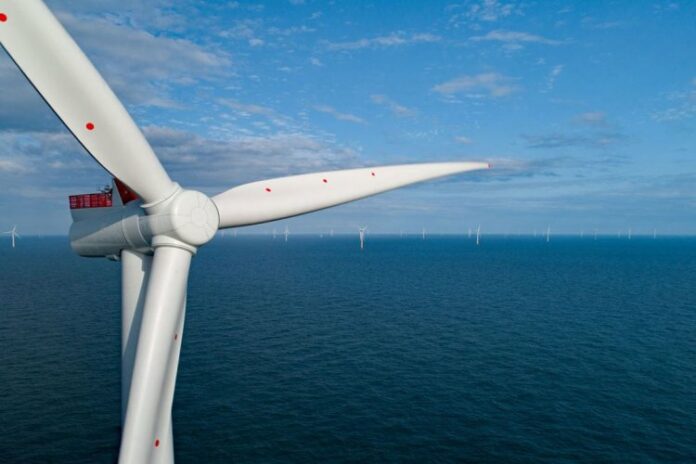
The Fuel Cells and Hydrogen 2 Joint Undertaking (FCH2-JU), a public private partnership of the European Commission, has awarded the consortium behind the OYSTER project, consisting of ITM Power, Ørsted, Siemens Gamesa Renewable Energy, and Element Energy EUR 5 million to investigate the feasibility and potential of combining an offshore wind turbine directly with an electrolyser and transporting renewable hydrogen to shore. The consortium will develop and test a megawatt-scale fully marinised electrolyser in a shoreside pilot trial. The project will be coordinated by Element Energy.

To realise the potential of offshore hydrogen production, there is a need for compact electrolysis systems that can withstand harsh offshore environments and have minimal maintenance requirements while still meeting cost and performance targets that will allow production of low-cost hydrogen. The project will provide a major advance towards this aim.

The electrolyser system will be designed to be compact, to allow it to be integrated with a single offshore wind turbine, and to follow the turbine’s production profile. Furthermore, the electrolyser system will integrate desalination and water treatment processes, making it possible to use seawater as a feedstock for the electrolysis process.

The OYSTER project partners share a vision of hydrogen being produced from offshore wind at a cost that is competitive with natural gas (with a realistic carbon tax), thus unlocking bulk markets for green hydrogen making a meaningful impact on CO2 emissions, and facilitating the transition to a fully renewable energy system in Europe. 

This project is a key first step on the path to developing a commercial offshore hydrogen production industry and will demonstrate innovative solutions with significant potential in Europe and beyond. 

The project is planned to start in 2021 and run to the end of 2024. ITM Power is responsible for the development of the electrolyser system and the electrolyser trials, while Ørsted will lead the offshore deployment analysis, the feasibility study of future physical offshore electrolyser deployments, and support ITM Power in the design of the electrolyser system for marinisation and testing. Siemens Gamesa Renewable Energy and Element Energy are providing technical and project expertise.

Dr Graham Cooley, CEO of ITM Power, said:

“ITM Power are delighted to be part of this exciting project, working alongside industry leaders to explore the potential to harness wind for offshore green hydrogen production.”

Anders Christian Nordstrøm, Vice President and Head of Ørsted’s hydrogen activities, said:

“To create a world that runs entirely on green energy, we need to electrify as much as we can. However, some sectors cannot decarbonise through electrification and that’s where renewable hydrogen could play a significant role. Offshore hydrogen production could be a future, supplemental way of getting large amounts of energy generated from offshore wind power to shore. As the largest offshore wind company in the world, we’re of course keen to better understand what it will take to produce renewable hydrogen offshore as a potential future supplement to production of renewable electricity. Having pioneered the offshore wind industry, we know that thorough analysis and testing are required before deploying new technologies at sea.”

Bart Biebuyck, Executive Director, Fuel Cells and Hydrogen Joint Undertaking (FCH JU), said:

“The OYSTER project is a very exciting addition to the FCH JU pallet of electrolysis projects that will allow the development of an offshore-spec electrolyser for green hydrogen to be generated in the harsh offshore environment. The aim is the optimal integration of electrolysers with offshore wind turbines to store the energy generated in the form of hydrogen. We are absolutely delighted to support this innovative project which reduces the environmental impact in further industrial applications.” 

Michael Dolman, Associate Director at Element Energy, said:

“Offshore wind is now one of the lowest cost forms of electricity generation in Europe and will have an important role in Europe’s decarbonisation plans. There is growing interest in transporting renewable energy in the form of hydrogen, particularly for sites far from shore. Realising such a vision will require further development and innovations of the type to be demonstrated in the OYSTER project, which Element Energy is pleased to coordinate.” 

Total enters a new operated exploration permit in Egypt

0

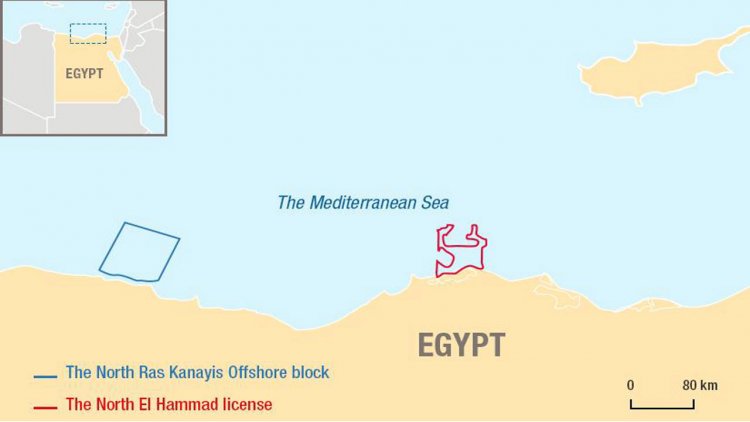
An international consortium led by Total (Total 35% Operator, Shell 30%, KUFPEC 25%, Tharwa 10%) and the Egyptian Natural Gas Holding company (EGAS) have signed an exploration and production agreement for the North Ras Kanayis Offshore block located in the Herodotus Basin, offshore Egypt in the Mediterranean Sea.

This exploration block covers an area of 4,550 sq km, extending from 5 to 150 km from the shore, with water depths ranging from 50 to 3,200 m. The Herodotus Basin is an underexplored area and the agreement includes a 3D seismic campaign during the first three years.

Kevin McLachlan, Senior Vice President Exploration at Total, commented:

‘‘Total is pleased to further strengthen its Eastern Mediterranean position as an operator of this exploration and production agreement. We are excited by the exploration potential of the North Ras Kanayis Offshore block. It reinforces our presence in Egypt, following a gas discovery made in July 2020 with the Bashrush well on the North El Hammad license, to be developed through a tie-in to nearby existing infrastructure.”

Total holds a working interest of 25% in the North El Hammad license, alongside operator ENI (37.5%) and BP (37.5%).

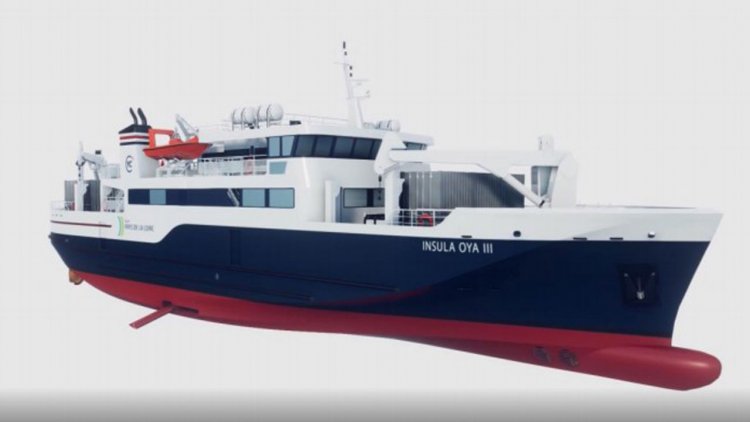
PIRIOU to design a ro-ro passenger ship to serve the island of Yeu-France

0

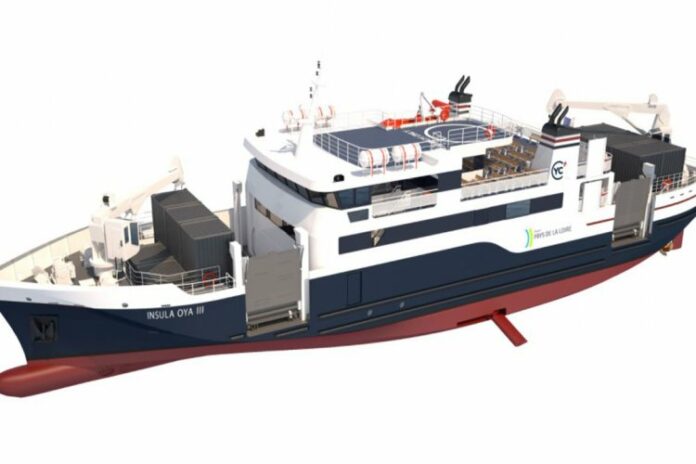
It will be built on a PIRIOU design in collaboration with the Nantes-based naval architecture design office Stirling Design International. This robust and stylish design will offer a great capacity to transport freight and passengers to ensure the maritime service between the island of Yeu and Fromentine.

Piriou will work with several companies based in the Pays de la Loire to complete this project for a delivery in the third quarter of the year 2022.

Vincent Faujour, PIRIOU Group C.E.O. declares:

‘In obtaining this new contract, we are pleased to take up this new challenge and to have obtained the confidence of a new Region – the French West Region of the Pays de la Loire- to complete a vessel that will answer very demanding operation requirements and an optimum comfort for passengers.’

The ro-ro garage offers a great clear under the barrow (12 cars and 4 motorbikes) and the vessel will be able to carry up to 340 pallets and 2 lorries of 19t. The containers storage areas were studied and optimised for easy and fast loading and unloading operations.

The vessel enables transporting 391 passengers: 252 seats in inside lounge (including 5 PMR seats easily reachable from the lift) and 139 seats outside. The passengers’ area was designed to ensure smooth and safe movement between loading/unloading areas and the lounges. 

As required by the Pays de Loire Region and the Company Yeu-Continent, the new vessel will be able to carry out summer rotations in a tight schedule while transporting a maximum amount of freight (40 % more than former INSULA OYA II), hence a very accurate study of the hull and propulsion. Besides, the vessel is equipped with a set of two hydraulic thrusters and two flap rudders. This combination gives the vessel the necessary manoeuvrability to pass the Fromentine channel in all weathers.

In order to combine style and robustness and performance, the ship’s lines were carefully studied with the expertise of the naval architect’s cabinet Stirling Design International. The result is a modern vessel with shapes borrowed from old ships as the marked vertical front pediment, incorporating the high wheelhouse.

In order to provide comfortable transit in rough seas, the vessel is equipped with a pair of stabilizers. Equipped with IMO III engines, the vessel meets the latest environmental standards in force.

Alongside the vessel will be connected to the terrestrial power grid to limit noise and environmental pollution. The power available will be sufficient to carry out loading and unloading operations without a generator in service, thus reducing the carbon footprint.

Bombora and MOL forge partnership to identify marine energy project opportunities in Japan

0

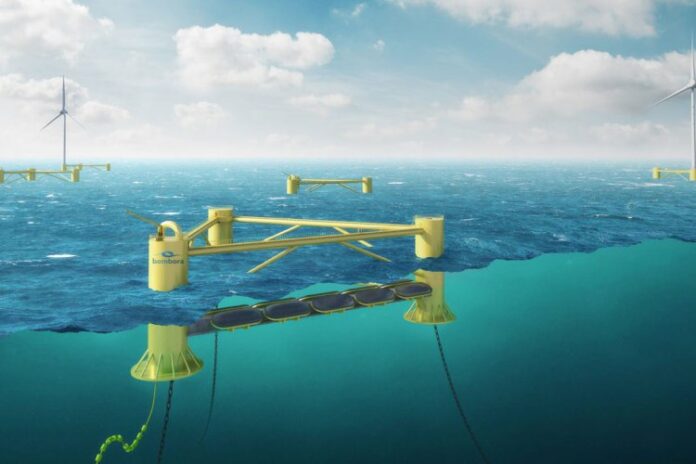
At a time when there is a strong push for offshore renewable power generation in Japan, Mitsui O.S.K. Lines, Ltd. (MOL) have entered into an agreement with leading marine energy developer Bombora to identify wave energy potential across the region.

Following the completion of a detailed internal technology review of Bombora’s unique mWave wave energy converter by the global marine transport group, MOL and Bombora are now progressing to the second phase of their collaboration. 

MOL operates one of the world’s largest merchant fleets and is dedicated to minimising the environmental impact of its business activities and reducing its carbon footprint. The rapidly growing marine renewable energy sector represents a new opportunity for MOL, and it is anticipating significant demand for vessels involved in the construction and ongoing operations across the marine energy sector. The collaborative project with Bombora is an example of MOL’s ambition to mitigate its environmental impact whilst driving new and sustainable business growth opportunities across the region.

MOL will bring its expertise in maritime consultation, offshore marine operations, and regional industry supply chain knowledge to the joint study. This will match Bombora’s mWave™ technology and project development experience to form a strong working partnership.

Bombora’s Development Manager for the Asia Pacific region, Mr Ryota Yamada said:

“We are very pleased to be conducting this strategic site identification project with MOL. The study will seek out opportunities suitable for wave, as well as hybrid wave and wind projects. MOL has a clear ambition to expand its sustainable marine operations into the energy sector and are a significant collaboration partner for Bombora on this pathfinder wave energy initiative in Japan. We know that there is excellent wave resource to be found around this coastline. Having a partner with the expertise of MOL alongside us will help progress projects in this region.”

Mr. Yamada went on to explain:

“With a focus on carbon emission reduction we will work together to find potential development sites for Bombora’s mWave™ to reduce reliance on diesel fuel for island communities. The project will also investigate the broader utility power potential off Japan’s Pacific coastline.”

Japan aims to install between 30GW and 45GW of offshore wind by 2040 as part of the country’s aims to reach carbon neutrality by 2050. The ministry of economy, trade and industry (Meti) also set an interim target of 10GW by 2030. The Japanese Wind Power Association claims a potential of more than 500GW of floating offshore wind capacity in Japan alone, positioning it as one of the world’s most promising and dynamic new offshore energy markets. The MOL/Bombora partnership will analyse the opportunity to capitalise on this growth potential by adding wave energy into offshore wind farms to increase energy production.

Bombora is currently in the final assembly phase of its 1.5MW mWave Pembrokeshire Demonstration Project in Wales with installation scheduled for mid-2021.

Park-Line Aqua supplies shore-based power system inland ports

0

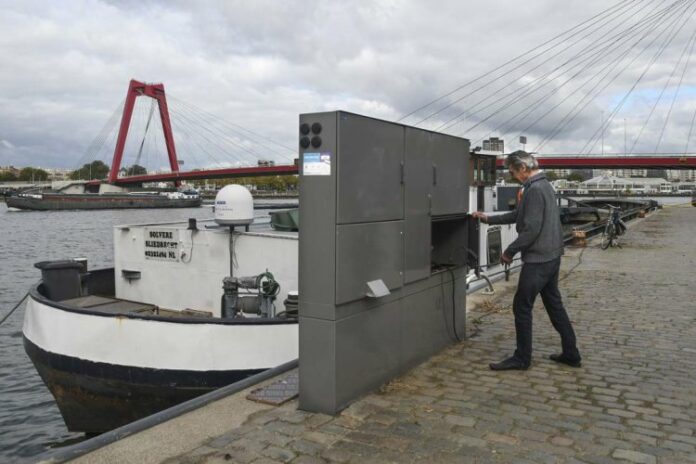
Park-Line Aqua supplies the uniform shore-based power system for inland shipping and river cruises for the Port of Rotterdam Authority, North Sea Ports, Drechtsteden, the Antwerp Port Authority, and the Flemish Water Authority. The Amsterdam company has won the European tender put out by the Port of Rotterdam Authority on behalf of these ‘shore-based power parties’.

A uniform shore-based power system is conducive to user-friendliness and stimulates the use of shore-based power, a facility for supplying ships in port with power. This power allows skippers to make optimum use of their on-board facilities (via a generator or main engine) without any emissions.

The tender is in conformity with the policy of the shore-based power parties to develop the port areas in the Netherlands and Belgium in a balanced way. This means that investments are made not only in the economy but also in improving liveability and the environment. Sustainability is the key word. Government and business together try to ensure that transport by water and railway exceeds transport by road. The reduction of carbon dioxide, nitrogen oxide, and particulates is also high on the agenda.

The joint objectives have led to a joint approach in facilitating the supply of shore-based power as simply and reliably as possible, primarily with respect to the supply and invoicing of electricity via shore-based power cabinets and services in the event of malfunctions on board vessels. Supply of drinking water to the vessels is also realised via this system. The shore-based power parties have made it possible for other ports to get connected to the system, and in fact some have seized the opportunity to do so.

Park-Line Aqua (formerly part of the Parkmobile Group) is a user, service and payment platform for the maritime and logistic sector. The services are focused on digitisation and sustainability improvement so as to create a uniform platform (market-place) with only a single all-inclusive invoice per month. The services are currently operational in more than 50 ports/municipalities in the Netherlands and Belgium and range from shore-based power to collecting port dues.

Keppel delivers Singapore’s first LNG bunkering vessel

0

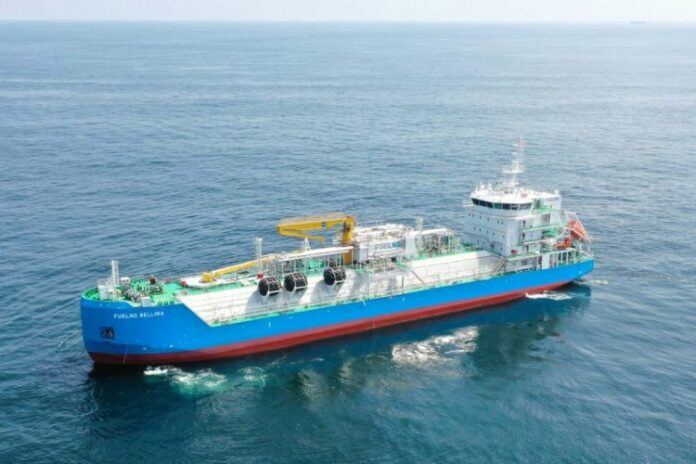
Keppel Offshore & Marine Ltd (Keppel O&M) has delivered Singapore’s first Liquefied Natural Gas (LNG) bunkering vessel, FueLNG Bellina, to FueLNG with a perfect safety record.

Built in Keppel O&M’s Nantong shipyard, FueLNG Bellina is the second LNG bunkering vessel (LBV) and fifth dual-fuel vessel delivered by Keppel O&M. This extends Keppel’s track record in solutions across the gas value chain and is line with Keppel’s Vision 2030, which includes seizing opportunities in LNG solutions and renewables.

The LBV will provide LNG bunker to LNG-powered vessels that call at the Port of Singapore. This facilitates the adoption of LNG as a marine fuel and the growth of Singapore as a global LNG bunkering hub.

Designed by Keppel O&M’s technology arm, Keppel Marine and Deepwater Technology (KMDTech), to its proprietary MTD 7500U LNG design, the LBV has a barge-like extended flat surface to provide bunker to a wide range of vessels. It is also highly maneuverable, minimising tug utilisation during bunkering operations and in turn reducing fuel consumption and emissions.

FueLNG Bellina is also the world’s first bunkering vessel with Smart Notation for its suite of digital services. Equipped with Keppel O&M’s proprietary VesselCare solutions, these smart functions enable remote monitoring and real-time support of vessel operations.

For achieving a perfect safety record and zero lost-time incidents, Keppel O&M was also awarded a safety bonus by FueLNG.

Port of Tilbury begins water-borne coastal deliveries for ADM Erith

0

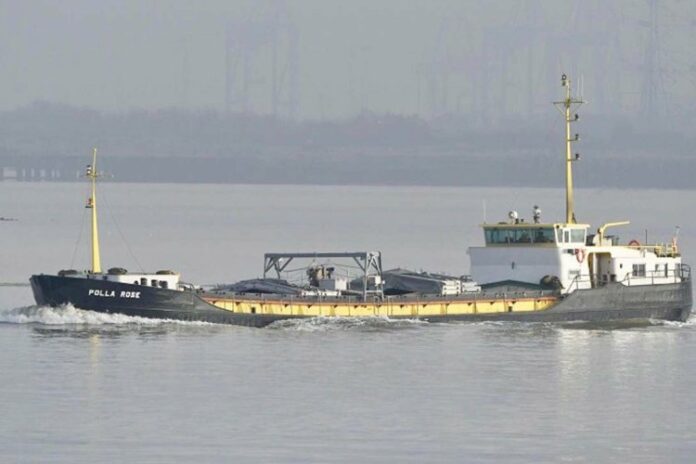
The Port of Tilbury and ADM Erith have successfully launched a twice-daily coastal barge operation to deliver thousands of tonnes of oil seed rape from the port’s grain terminal along the River Thames to ADM Erith’s processing facility.

This form of water borne transport reduces truck journeys and ensures a greener supply chain for both businesses. The coastal vessel the Polla Rose takes the cargo from Tilbury twice a day, Monday to Friday with each trip moving 500 tonnes of oil rape seed at a time.

Each round trip is managed by HCH Marine and takes around seven hours and each day this operation removes 36 truck journeys from the already congested roads.

The Port of Tilbury aims to provide a greener supply chain for customers by using water-borne freight solutions.

Gary Vincent, Asset Manager at the Port of Tilbury said:

“We are very pleased with this new coastal service for ADM Erith. Using the Polla Rose vessel for this cargo movement has been a success both operationally and as a greener supply chain solution for our customer.”

Martin Farrow, General Manager at ADM in Erith said:

“We’re delighted to work together with the port of Tilbury to support our environmental efforts and optimize our supply chain. It also comes at a great time now that our Erith plant is fully operational again.”   

Nick Howard, Managing Director of HCH Marine said:

“We’re very happy to have the support of both ADM and the Port of Tilbury and together we are looking forward to keeping river freight alive and doing our bit to keep road congestion down.”