-7.4 C
New York
Home Blog Page 709

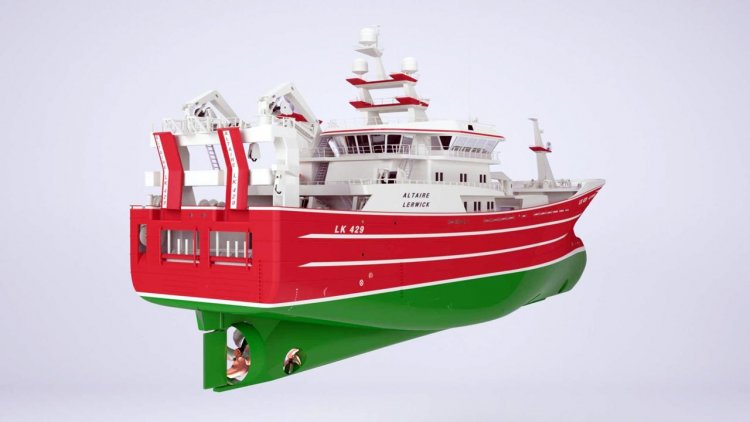
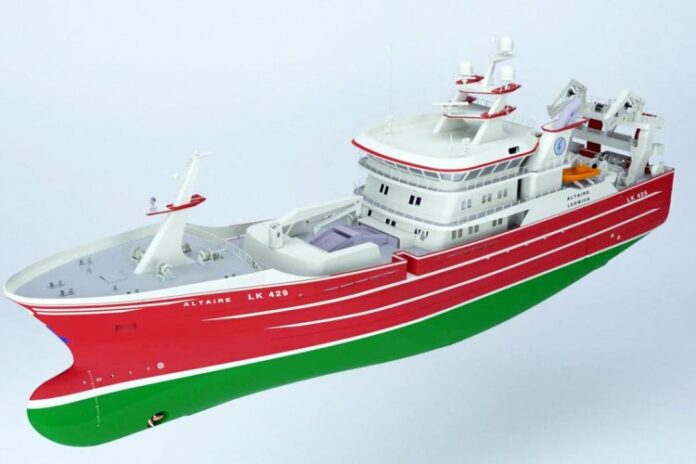
Karstensen Shipyard builds new trawler for Altaire Fishing

0

#468 will carry the proud name “Altaire” and will sail from her homeport of Collafirth , Shetland Islands, UK.

​The new vessel will operate along the same pattern as the existing vessel, with a traditional pelagic trawl fishery, where crew safety and quality of catches are of primary importance, complimented by modern designs and low exhaust emissions.

The design, specification and arrangements of #468 “Altaire” is a result of an extensive and close cooperation between Owners and Yard, where all details are tailor made to suit Owners exact specifications.

The focus has been on optimizing catch quality and hygiene, to allow the new “Altaire” to land first class quality pelagic fish. Working environment, safety and comfort for the crew, has also been major issues during design works.

Most main suppliers are already chosen and many represent repeats of owners previous choices of suppliers, such as Wartsila and Karmøy Winch, giving testimony to satisfaction with these products.

New “Altaire” is scheduled for delivery in May 2023.

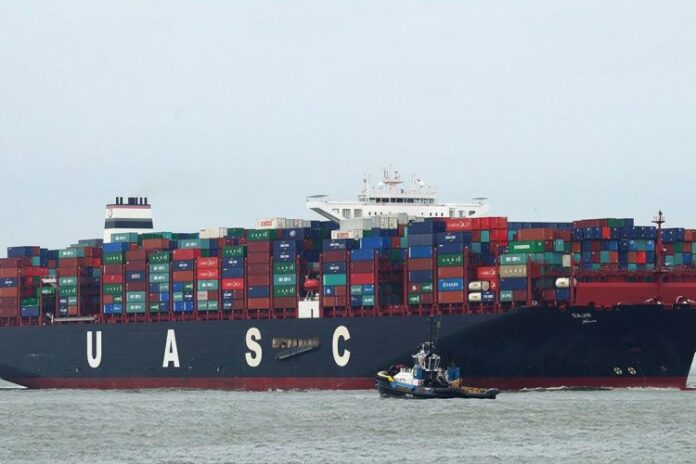
Hapag-Lloyd is also to sail on LNG

0

When the vessel was commissioned in 2015, the then owner, UASC, presented Sajir as ‘LNG-ready’.

Nevertheless, Hapag Lloyd estimates the cost of this retrofit to be around €35 million, according to Ship & Bunker. Hapag Lloyd – which merged with UASC in 2017 – operates another 16 LNG-ready container ships. Sajir’s performance will need to prove whether it qualifies for the retrofit.

According to Ship & Bunker, Sajir will bunker LNG in both Rotterdam and Singapore, where it will be a customer of FueLNG Bellina, a joint venture between Keppel Offshore & Marine and Shell Eastern Petroleum. This is Singapore’s first LNG bunkering vessel for these types of ships.

In addition to the retrofit, Hapag-Lloyd has also ordered six LNG-powered 23,500+ TEU ships from the Korean shipyard Daewoo Shipbuilding and Marine Engineering. The vessels will be delivered between April and December 2023, and they will also bunker LNG in Rotterdam.

Hapag-Lloyd is the second major container carrier to use LNG as a marine fuel. In June 2020, the CMA CGM Jacques de Saade arrived in Rotterdam. This 23,000 TEU container ship is also LNG powered and the first in a series of nine in this class. MOL collaborated with Total on the development of Gas Agility specifically to promote this energy transition in the shipping industry. This LNG-bunkering vessel will bunker French container ships in Rotterdam.

Caledonian Maritime Assets awards ferry design contract

0

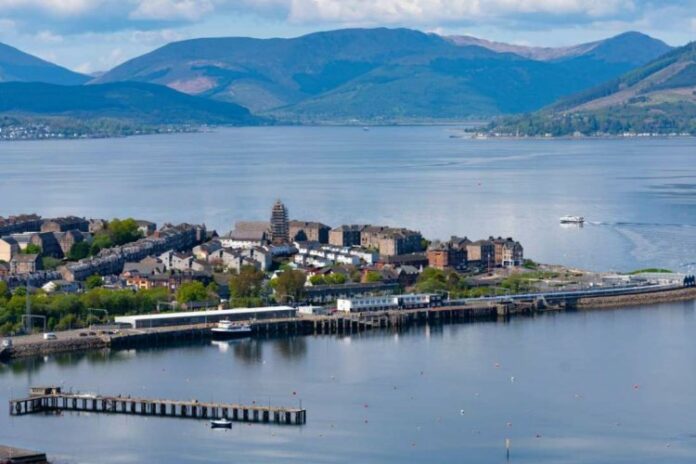
Caledonian Maritime Assets Limited (CMAL) has awarded a contract to international design and engineering firm BMT to provide consultancy services for the concept design of a new passenger ferry for the Gourock, Dunoon and Kilcreggan routes. The new ferry will be designed to replace the vessels currently operated on the routes by CalMac.

The £155,000 contract is part of the Gourock Harbour Infrastructure & Vessels Project, which is a partnership between Transport Scotland, CMAL, CalMac and Argyll and Bute Council.  The project covers the redevelopment of Gourock Ferry Terminal and works to the harbour infrastructures at Dunoon and Kilcreggan, as well as the delivery of new passenger-only vessels.  When complete, it will provide a modern, reliable and resilient lifeline passenger ferry service between the terminals at Gourock, Dunoon and Kilcreggan.

With a strong focus on reducing the environmental footprint, BMT and CMAL will investigate and evaluate the application of energy efficiency solutions to make the new vessel design more sustainable while still offering the high level of safety and reliability expected from a lifeline ferry service.

Andy Crossan, senior technical manager and projects director at CMAL, said:

“BMT has a strong track record of advanced vessel design, knowledge and experience, and has a thorough understanding of the challenges and the opportunities offered by the port infrastructure redevelopment.  The contract award is an important milestone in the new vessel project, which will provide much-needed investment in the ferry service for the local community and the overall vessel fleet.”

Sylvain Julien, director at BMT, said:

“BMT is committed to leading the way in designing vessels that lower the environmental impact, and we welcome the opportunity to work with CMAL to work towards increased sustainability by leveraging our deep understanding of advanced ferry design and operation.”

Wallenius Wilhelmsen returns ships from lay-up

0

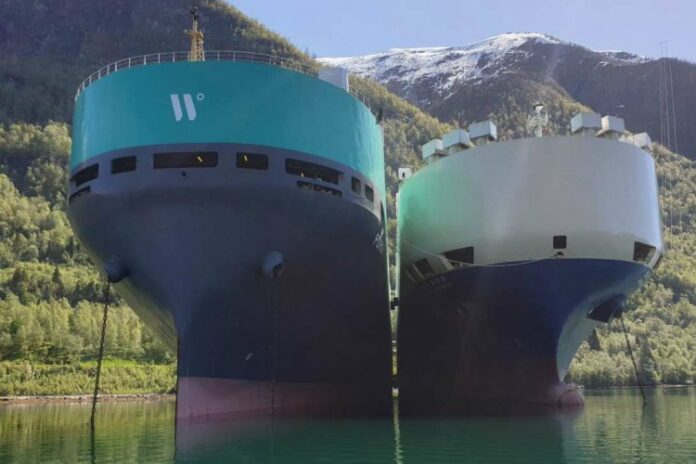
Now, as the Company enters in 2021, Wallenius Wilhelmsen are returning up to nine of these vessels to the sea, to replace capacity the Company currently source through short-time charters.

The onset of the Covid-19 pandemic saw a significant reduction in demand for cargo-carrying capacity across the globe. In response, Wallenius made the decision to recycle four vessels in its 123-strong fleet and put others into cold lay-up, essentially taking them out of service as the Company weathered the storm.

While the pandemic is still very much part of our reality, reduced capacity and rising rates in the charter market have led to the decision to bring up to nine of Company’s vessels back into service so they can continue to deliver competitive solutions for its customers.

Plans are in place to reactivate these vessels during the first quarter of the year to replace the capacity currently sourced through short-term charters.

Craig Jasienski, CEO of Wallenius Wilhelmsen, said:

“Flexibility in the fleet has been a core strategic choice since the inception of Wallenius Wilhelmsen, ensuring our ability to adjust the fleet to our needs and shifting market demand.”

To further support flexibility in the fleet, later this year the Company will also be welcoming its fourth HERO vessel, the last newbuilding in the Wallenius Wilhelmsen HERO series.

Port of Tyne Clean Eenergy Programme cuts carbon emissions by 700 tonnes in 12 months

0

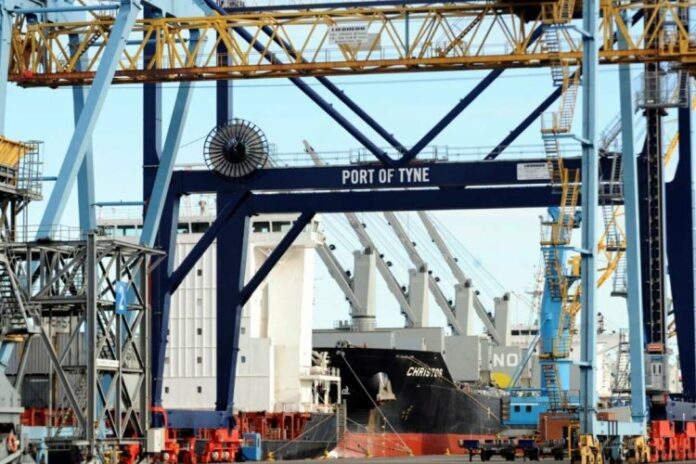
Port of Tyne has completed a detailed modelling exercise and long term analysis of its electricity network, as part of its award-winning decarbonisation and clean energy strategy. This process enables the port’s leadership to understand both current and future energy requirements in line with Tyne 2050’s ambitious net zero roadmaps for Port of Tyne to become carbon neutral by 2030 and an all-electric port by 2040.

Currently the Port of Tyne is working through an innovative asset electrification programme, which involves the conversion of legacy materials handling assets from diesel to low carbon electricity. Once completed this will include a first for a UK port – to successfully convert an existing diesel powered Liebherr mobile harbour crane to be fully electric. Existing diesel powered  Drax Hoppers used for bulk materials handling are also being electrified. These two initiatives alone have reduced the port’s diesel consumption by 260K litres and eliminated 700 tonnes of CO2 emissions – enough to power over 80 UK homes for a year.

Port of Tyne has also invested in a new fleet of electric vehicles, LED lighting in every building and asset, smart energy monitoring meters and a team is also evaluating the potential for installing solar panels on warehouse buildings. The switch to LED lighting alone across the port’s estate has saved over 2.5M kWh of energy. As further evidence of the port’s commitment to becoming a clean energy enterprise and innovation hub, Port of Tyne has also launched Tyne Clean Energy Park, to provide a convenient, versatile strategic base for the north east’s rapidly growing renewable energy sector.  

UK Power Network Services is helping the Port of Tyne to achieve a detailed understanding of its current electricity network, forecasting the impact that electrification will have on the port’s electricity load and ensuring long term operations remain resilient.

Matt Beeton, CEO at the Port of Tyne says:

“We welcome the government’s allocation of £20m to help the maritime sector adopt clean energy and have made significant progress in this direction. To date, we have invested £2 million into clean energy projects, we have cut emissions to improve local air quality and launched a new clean energy business park for the renewable energy supply chain. All our clean energy investments reduce carbon consumption and lower our costs – going forwards we will be allocating up to 30% of our annual capex for more net zero improvements as we continue to prioritise green innovation and sustainability.”

Researchers discover a new tool for reconstructing ancient sea ice to study climate change

0

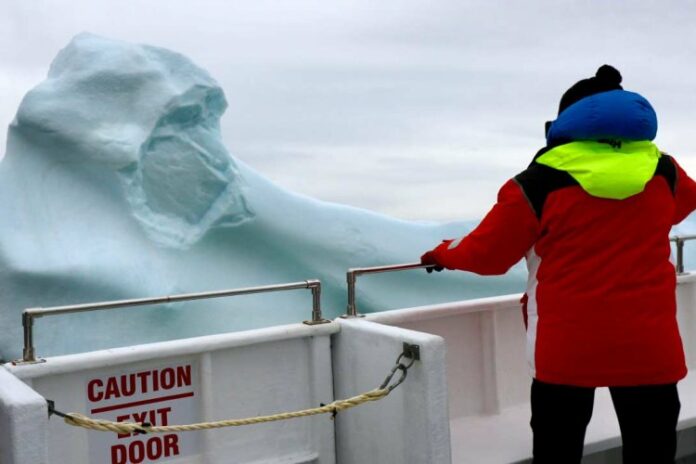
In a study published in Nature Communications, the researchers show that an organic molecule often found in high-latitude ocean sediments, known as tetra-unsaturated alkenone (C37:4), is produced by one or more previously unknown species of ice-dwelling algae. As sea ice concentration ebbs and flows, so do the algae associated with it, as well as the molecules they leave behind.

Karen Wang, a Ph.D. student at Brown and lead author of the research, said:

“We’ve shown that this molecule is a strong proxy for sea ice concentration. Looking at the concentration of this molecule in sediments of different ages could allow us to reconstruct sea ice concentration through time.”

Other types of alkenone molecules have been used for years as proxies for sea surface temperature. At different temperatures, algae that live on the sea surface make differing amounts of alkenones known as C37:2 and C37:3. Scientists can use the ratios between those two molecules found in sea sediments to estimate past temperature. C37:4—the focus of this new study—had been long considered a bit of problem for temperature measurements. It turns up in sediments taken from closer to the Arctic, throwing off the C37:2/C37:3 ratios.

Yongsong Huang, principal investigator of the National Science Foundation-funded project and a professor in Brown’s Department of Earth, Environmental and Planetary Science, said:

“That was mostly what the C37:4 alkenone was known for—throwing off the temperature ratios. Nobody knew where it came from, or whether it was useful for anything. People had some theories, but no one knew for sure.”
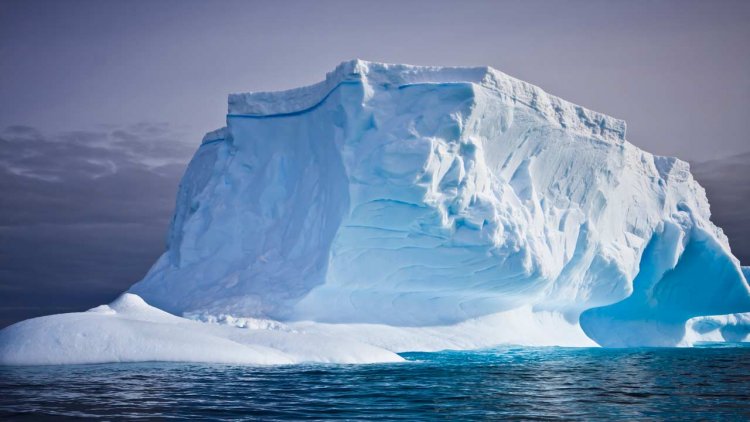
To figure it out, the researchers studied sediment and sea water samples containing C37:4 taken from icy spots around the Arctic. They used advanced DNA sequencing techniques to identify the organisms present in the samples. That work yielded previously unknown species of algae from the order Isochrysidales. The researchers then cultured those new species in the lab and showed that they were indeed the ones that produced an exceptionally high abundance of C37:4.

The next step was to see whether the molecules left behind by these ice-dwelling algae could be used as a reliable sea ice proxy. To do that, the researchers looked at concentrations of C37:4 in sediment cores from several spots in the Arctic Ocean near the present-day sea ice margins. In the recent past, sea ice in these spots is known to have been highly sensitive to regional temperature variation. That work found that the highest concentrations of C37:4 occurred when climate was coldest and ice was at its peak. The highest concentrations dated back to the Younger-Dryas, a period of very cold and icy conditions that occurred around 12,000 years ago. When climate was at its warmest and ice ebbed, C37:4 was sparse, the research found.

Huang, a research fellow at the Institute at Brown for Environment and Society, said:

“The correlations we found with this new proxy were far stronger than other markers people use. No correlation will be perfect because modeling sea ice is a messy process, but this is probably about as strong as you’re going to get.”
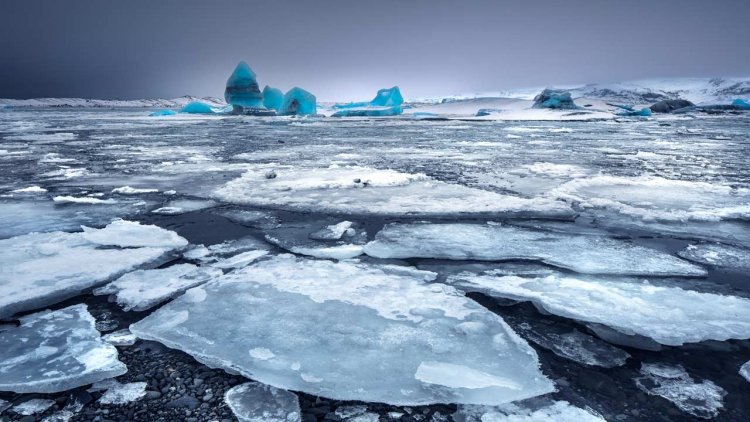
And this new proxy has some additional advantages over others, the researchers say. One other method for reconstructing sea ice involves looking for fossil remains of another kind of algae called diatoms. But that method becomes less reliable further back in time because fossil molecules can degrade. Molecules like C37:4 tend to be more robustly preserved, making them potentially better for reconstructions over deep time than other methods.

The researchers plan to further research these new algae species to better understand how they become embedded in sea ice, and how they produce this alkenone compound. The algae appear to live in brine bubbles and channels inside sea ice, but it may also bloom just after the ice melts. Understanding those dynamics will help the researchers to better calibrate C37:4 as a sea ice proxy.

Ultimately, the researchers hope that the new proxy will enable better understanding of sea ice dynamics through time. That information would improve models of past climate, which would make for better predictions of future climate change.

New service at MCT links Southern Philippines to Asia, Middle East

0

Mindanao Container Terminal (MCT) welcomes the new year strong with the launch of Regional Container Line’s (RCL) South Philippines 6 (RSP6) service that connects the Philippines’ Visayas and Mindanao regions to Asia and the Middle East via Singapore.

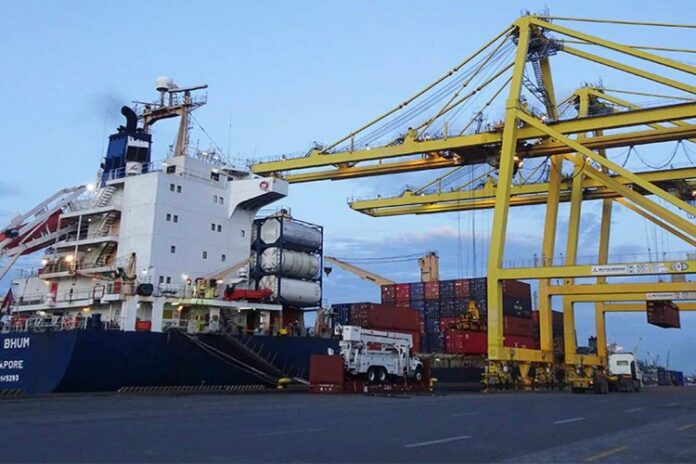
Launched in the Philippines through RCL’s Southern Philippine agent Eagle Express Lines, the fixed-day weekly service made its first port call to MCT on December 19 with the 628-TEU MV Pira Bhum.  

The service is operated by two vessels and covers the Singapore – Cebu – Cagayan – Singapore route.  The vessels turn in Singapore, which serves as a transhipment hub and provides competitive connections from Cebu, Cagayan de Oro, and Zamboanga to other Southeast Asian markets, the Indian subcontinent and the Middle East, while additionally serving the markets further north such as China and South Korea.

Roberto Locsin, MCT general manager, says the regular service calls can be considered as a product superhighway that will aid farmers, manufacturers, and other producers in the Philippines. They enable producers to deliver time-sensitive commodities fast and in-bulk without the huge cost:  

“Now more than ever, local businesses need help to bounce back, and the new service line will undoubtedly give them the boost they need.”

Jose Gabriel la Viña, PHIVIDEC Industrial Estate Administrator and CEO, is optimistic about the growth potential of the new carrier service:

“For the City of Cagayan de Oro and the rest of Misamis Oriental, the new service strengthens our position as a major agro-industrial exporter.  The availability of a regular and predictable service to a major international hub also presents opportunities for entrepreneurs and industries to move up the value chain.  This could only mean higher incomes, more jobs, and a more comfortable life for our people.”

Angelito Colona, Eagle Express Group chairman and chief executive officer, sees the new RCL service as a bright opportunity for the country, while Eagle Express Lines general manager Marlon Isah de Guzman described it as “a game-changer” that will set the benchmark for the industry.

MISC takes delivery of Seri Erlang – its second very large ethane carrier

0

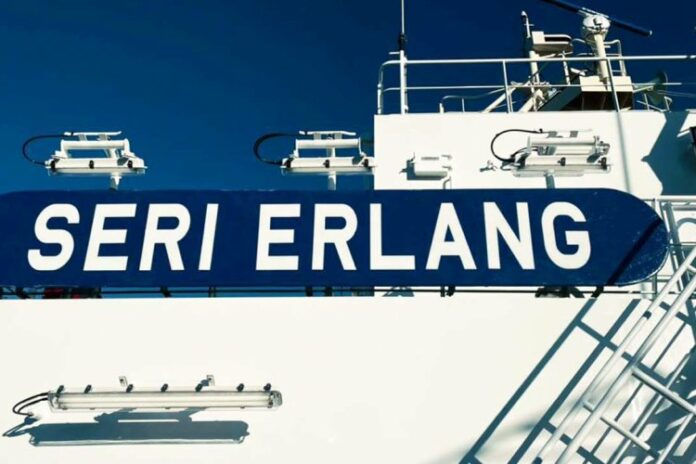
MISC Berhad (MISC) has taken delivery of Seri Erlang, its second Very Large Ethane Carrier (VLEC) at the Samsung Heavy Industries (SHI) shipyard in Geoje, South Korea. Purchased by MISC in July 2020, this VLEC is the second of the six contracted VLECs, purpose-built for longterm charter to Zhejiang Satellite Petrochemical Co. Ltd. (STL).

Seri Erlang will join her sister vessel – Seri Everest to safely transport ethane from U.S to China to support STL’s ethane cracker facility in China. Both VLECs are managed by MISC’s shipmanagement arm, Eaglestar Shipmanagement Gas (S) Pte. Ltd.

Mr. Yee Yang Chien, President and Group Chief Executive Officer of MISC, said:

“We are pleased indeed to make a brilliant start at the very beginning of 2021 with the safe delivery of Seri Erlang. My sincere appreciation for the commitment and seamless collaboration of all parties involved in the delivery of MISC’s second VLEC. This shared success is premised on our strategy to support the expanding ethane market requirements. We look forward to the delivery of the remaining four (4) VLECs as we progress into 2021. Commencing the year on strong tailwinds, we remain positive for favourable developments in the industry and more opportunities in Asia, which has now become a vital demand centre for the ethane market.”

With more than 98,000 cbm of total cargo capacity, Seri Erlang is equipped with a highly efficient reliquefaction unit and a unique high-pressure ethane fuel supply system. The newbuild is powered by a MAN B&W 7G60ME-C9.5-GIE Gas Injection Ethane engine, complemented with the latest Pump Vaporiser Unit (PVU), making her one of the very few vessels in the world with ethane burning capability.

Built with a cargo containment system for dual cargo loading, Seri Erlang is also delivered with LNG Ready notation by ABS where the VLEC can be upgraded to trade liquefied natural gas (LNG) cargoes in the future.

Seri Erlang and Seri Everest will be joined by their four sisters to be delivered throughout the first half of this year. Upon delivery of all the VLECs, MISC will be the largest transporter of ethane in the world. 

New hard-working Havyard vessel for the salmon farming industry

0

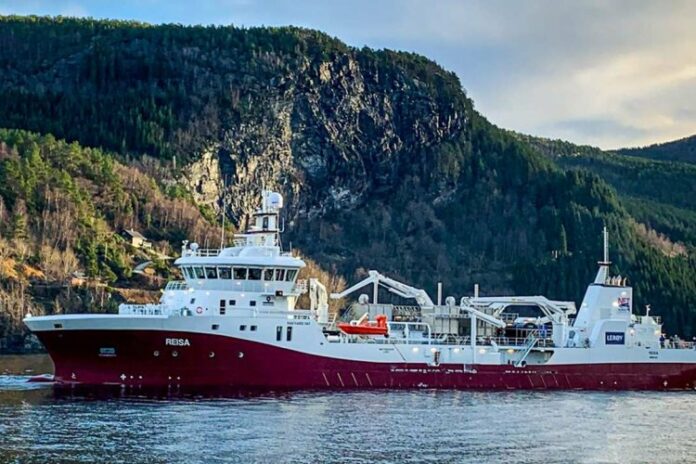
The ‘Havtrans’ series sets the standard for medium-sized wellboats in the industry. ‘Havtrans’ was further refined through ‘Namsos’ and ‘Steigen’, and the sister ship ‘Reisa’ will now serve as a new, useful tool for handling and transporting salmon.

Four Havyard ships have been delivered so far, and two more are scheduled for delivery from Havyard New Ship Technology to Norsk Fisketransport AS (NFT) later this year.

‘Reisa’ has a circular tank capacity of 3,250 cubic metres. Kjetil Myren, the designer with responsibility for the wellboat segment at Havyard Design & Solutions, says that circular tanks enable the vessel to transport larger quantities of fish while ensuring calmer conditions and higher survival rates, thereby enhancing fish welfare. He adds:

“The special hull design makes the “Havtrans” vessels move smoothly through the water, reducing both emissions and fuel expenses.”

‘Reisa’ is currently designed with extensive capacity for closed transport and infection protection with a dual delousing system that includes freshwater treatment and a flushing system.

Tore Bø, project manager at the Leirvik yard, has been involved in all the ships in the ‘Havtrans’ series. He says that fitting out ‘Reisa’ was the easiest project of them all, despite challenges relating to the coronavirus and the fact that they have taken greater control and ownership of more of the equipment on board. Bø describes the work performed by the project organisation and the production in Leirvik as a masterpiece. He says:

‘The project organisation and the production in Leirvik have pulled off a masterpiece. This goes to show that the workers at the yard in Leirvik are highly capable shipbuilders.’

The boat was nonetheless a few months’ delayed due to delayed delivery from the hull yard in Turkey and coronavirus challenges at the yard in Norway.

Tore Bø says:

‘The workers at Leirvik made a tremendous effort and fitted out the vessel much quicker than we feared. In addition, the cooperation with Norsk Fisketransport has been good throughout the process, and we are now pleased to be able to deliver such a robust, modern piece of hard-working machinery to NFT and the aquaculture industry.’

The next boat in the ‘Havtrans’ series is scheduled for delivery in early summer, while the third will be completed this autumn.

Norwegian Electric Systems has delivered the bridge solution and the automation and electrical power systems on board. Norwegian Greentech has delivered the ballast water treatment system, while Havyard Design & Solutions designed the boat and New Havyard Ship Technology fitted it out.

Princess Cruises extends pause of guest cruise vacations through May 14, 2021

0

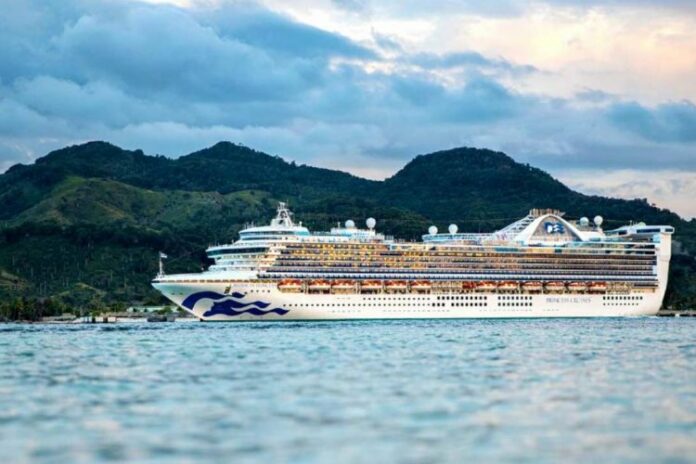
As Princess Cruises continues to prepare and develop its plans to meet the “Framework for Conditional Sailing Order” issued by the U.S. Centers for Disease Control and Prevention (CDC), in addition to the uncertainty around travel restrictions, the company is extending its pause of guest cruise vacations on ships sailing through May 14, 2021. This includes sailings in the Caribbean, the California Coast, along with early season Alaska and Europe cruises.

Jan Swartz, president of Princess Cruises, said:

“We appreciate the patience from our loyal guests and travel advisors as we work to meet the health and safety requirements for our return to service. We continue to prepare our ships for our return to service and we are eager to see our guests back on board to create summertime memories.”

Guests currently booked on these cancelled voyages will have the option to receive a refundable Future Cruise Credit (FCC) equivalent to 100% of the cruise fare paid plus an additional non-refundable bonus FCC equal to 25% of the cruise fare paid.

To receive the above FCCs, no action is required by the guest or their travel advisor. The FCCs can be used on any cruises booked by May 1, 2022 and sailing by December 31, 2022. Alternatively, guests can request a full refund for all monies paid on their booking through this online form. Requests must be received by February 15, 2021 or guests will be registered for the Future Cruise Credit option.

Princess will protect travel advisor commission on bookings for cancelled cruises that were paid in full in recognition of the critical role they play in the cruise line’s business and success.

Princess Cruises previously paused global guest cruise vacations and cancelled all departures on all ships through March 31, 2021.

The most current information and instructions for booked guests affected by these cancellations, and more information on FCCs and refunds, can be found online at Information on Impacted & Cancelled Cruises.