-7.4 C
New York
Home Blog Page 708

Damen completes work on German diving bell ship

0

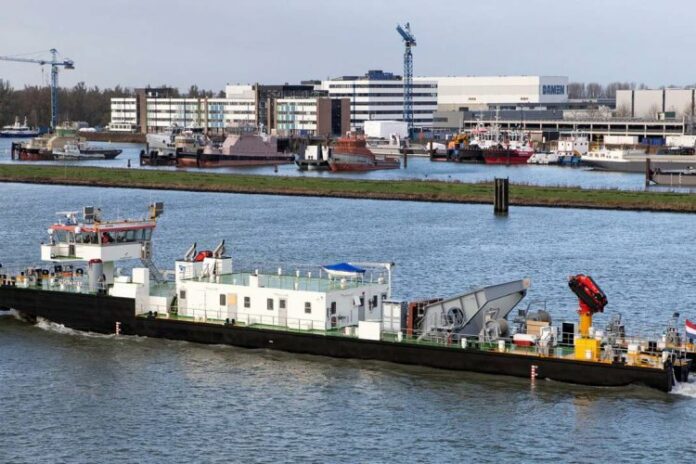
Damen Shipyards Group has completed construction and outfitting of a diving bell ship for client FMSW Koblenz (Department Machinery Southwest) / operator WSA Rhine (Waterways and Shipping Office) according to schedule. Following her completion, the vessel has recently undertaken successful river trials.

Following the trials, Damen sales manager Remko Bouma, said:

“We are very pleased to have completed construction of this iconic vessel on schedule and to the satisfaction of the customer. This is the result of a very constructive collaboration between all parties, including FMSW Koblenz and Damen Shipyards Hardinxveld. This close cooperation and hard work has led to an efficient project execution and a beautiful vessel.”

The on-time completion of the ship comes despite the challenging conditions posed by the coronavirus outbreak. Putting in place robust safety measures, Damen was able to continue work on the project throughout the year.

Project manager newbuild at Damen Shipyards Hardinxveld Marius van Wijngaarden, said:

“Although much of the work has taken place against the challenging backdrop of the ongoing coronavirus pandemic, the excellent cooperation between all parties has made this project a success.”

Gerald Rose, project manager from FMSW said:

“In 2018, we awarded the contract for the replacement of the TGS Carl Straat to Dutch shipbuilder Damen. Due to the unique nature of the vessel, this is a particularly challenging project. Both parties would like to build an excellent vessel for the operator – WSA Rhine – and I think this has been successful up to now. The Dutch not only live by the water, the work with it and this is impressively confirmed by this vessel.”

There has, however, been an impact on the project; due to the pandemic, the delivery of the diving equipment to Damen has been delayed. As a result, the diving bell ship will now commence operations next summer. Until that time, the ship will wait at Damen Shipyards Gorinchem in the Netherlands. Here, Damen will provide the vessel’s crew with familiarisation training in the meantime.

The vessel will succeed the existing Carl Straat, which has been performing her duties since 1963. The successor vessel will draw significantly on the proven design of her predecessor.

The new diving bell ship will operate on the Rhine and its tributaries. She will provide dry conditions, in a pressurised atmosphere, in which personnel can work below the water. Her main scope of work will be the search and recovery of lost cargo and wreckage as well as inspection for construction projects.

The vessel will also be capable of providing barrel anchors in gravelly and rocky areas in order to perform sampling activities.

Damen has applied the latest technology to the new vessel to ensure her suitability for future operations. She features high-performance diesel-electric propulsion compliant with EU Stage V standards, guaranteeing a constant cruising speed of 13 km/h.
Shell Marine awarded global lubricants contract with Carnival Corporation

0

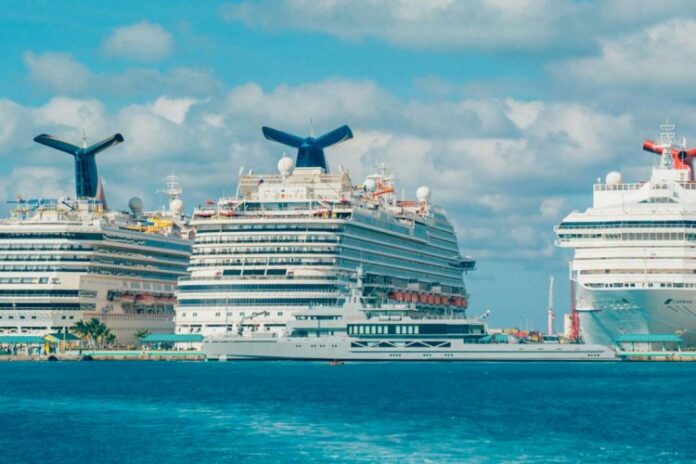
Shell Marine has been awarded a multi-year contract to provide marine lubricants to cruise line operator Carnival Corporation’s global fleet of 89 ships. Carnival will also offset the carbon dioxide emissions from the marine lubricants it purchases from Shell, through Shell’s nature-based carbon credits.

Joris van Brussel, General Manager, Shell Marine, said:

“Shell Marine is working with our customers to help the shipping sector decarbonise. This is in line with Shell’s ambition to become a net-zero emissions energy business by 2050 or sooner, in step with society and our customers. Through our marine lubricants and integrated service offering which includes technical and digital services, we’re helping customers like Carnival optimise engine efficiency, thus reducing a ship’s environmental impact. We are delighted that our integrated approach and carbon-neutral marine lubricants can help bring customers like Carnival a step closer to achieving their sustainability ambitions.”

Michael T. Mcnamara, Vice President Global Fuel Sourcing, Carnival said:

“Addressing climate change is a top priority for us and we are committed to delivering a cleaner, more efficient and sustainable cruise experience. Aligning the supply chain with our decarbonisation strategy was a key consideration and Shell’s carbon-neutral marine lubricants support our efforts to reduce our carbon emission by 40% by 2030. We have made significant progress and welcome this initiative from Shell Marine on our decarbonisation journey.”

NYK participates in LNG-to-power project in Papua New Guinea

0

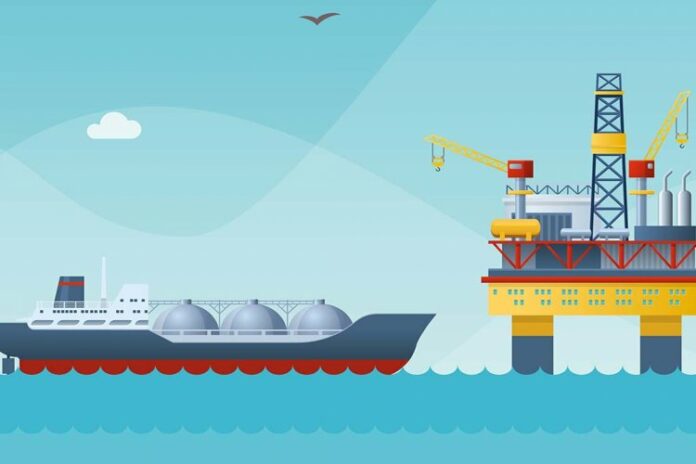
NYK will participate in the design, development and engineering work of a floating LNG storage and regasification power generation facility (FSRP) planned near Lae, the capital of Morobe province in Papua New Guinea (PNG), together with the Chiyoda Corporation and Moss Maritime AS, a Norwegian company.

This design, development and engineering work contract was received by the Chiyoda Corporation from Kumul Petroleum Holdings Limited, a national oil company in Papua New Guinea.

This project is an important step toward meeting the supply and demand requirement set out in the PNG Development Strategic Plan 2010– 2030, which has set a goal of connecting 70% of the PNG population to secure electricity by 2030.

The project will additionally contribute to the reduction of GHG (greenhouse gas) by providing environmentally friendly and sustainable energy to meet the increasing demand for industrial power generation in the country in the future.

The new FSRP facility will have the capacity to generate 75 MW of power to be exported to the local transmission grid, in addition to being able to load and store 140,000 m3 of LNG that can be offloaded to small scale vessels and redistributed to local areas. The LNG can also be regasified and exported as gas via a pipeline to local areas as well.

In accordance with the NYK Group’s medium-term management plan “Staying Ahead 2022 with Digitalization and Green,” the company has indicated its goal to integrate ESG principles into management strategies to contribute to the achievement of SDGs through business activities including participation in FSRP projects. To meet changing energy demand, the NYK Group will continue to provide a wide variety of services throughout the energy value chain and promote activities toward the realization of a sustainable society.

EU and Greenland reach agreement on new fisheries partnership

0

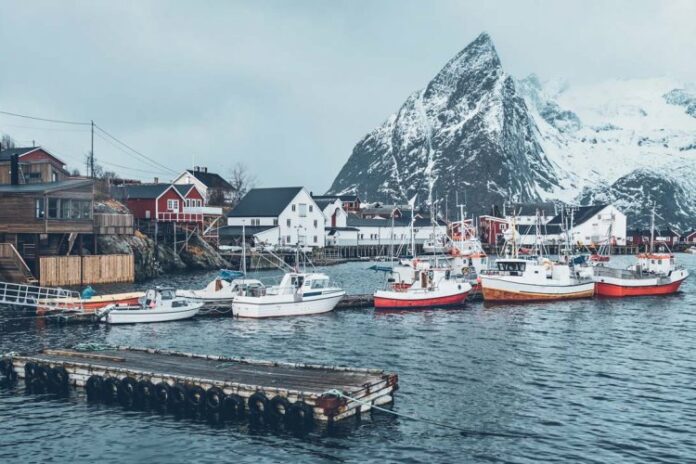
This is the only mixed Sustainable Fisheries Partnership Agreement (SFPA) in the North Atlantic, and the third most important agreement in place for the EU in financial terms.

It will allow the EU fleet (12 large-scale industrial trawlers) to continue fishing in Greenland waters for a duration of 4+2 years while continuing to contribute to the development of the fisheries sector in Greenland.

Fishing opportunities have been negotiated for the same species as in the current protocol (Cod, Redfish, Greenland Halibut, Northern Prawn, Capelin and Grenadier). Fishing opportunities for Mackerel have also been included in the agreement at a 0 TAC level. Any quota of Mackerel transferred by Greenland in the future will be dependent on Greenland signing the Coastal States Sharing Arrangement on the management of mackerel with the EU. The reference prices have also been updated, using a methodology agreed between both parties and taking into account current market prices.

Based on the fishing opportunities and the newly negotiated reference prices, the EU will provide Greenland with an annual financial contribution of €16 500 000. A significant part of this contribution, €2 900 000 per year, is specifically earmarked to promote the development of the fisheries sector in Greenland. For the whole duration of the protocol, the estimated value amounts to €99 000 000. Additionally EU ship-owners will pay license fees for the fishing opportunities.

This new SFPA represents an important step forward in the partnership between the EU and Greenland, which dates back to 1985. The new agreement upholds the principles of the common fisheries policy such as transparency, governance of fishing activities, non-discrimination, respect of the scientific advice and scientific cooperation on data collection and analysis. It complies with Greenland’s legislation and the management and scientific measures taken in the context of the Northwest Atlantic Fisheries Organisation (NAFO), Northeast Atlantic Fisheries Commission (NEAFC) and the International Council for the Exploration of the Sea (ICES). Through the new SFPA, cooperation on monitoring, control and surveillance on fishing activities will be further reinforced.

Each Party will now initiate the necessary legislative procedures for the signature and conclusion of the new agreement and its implementing protocol.

ESVAGT’s new SOV for Vestas is ready

0

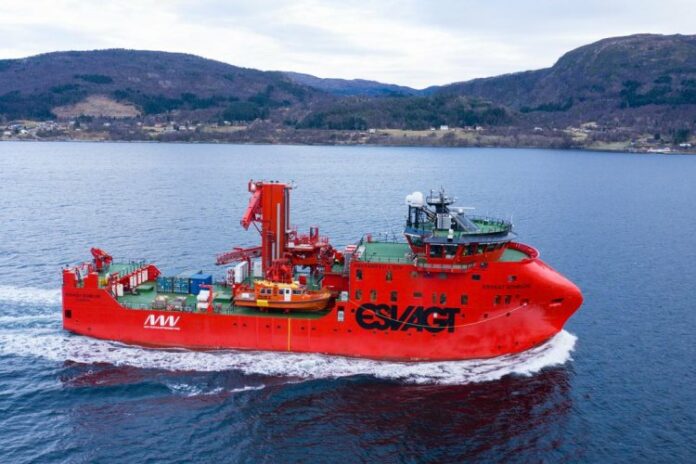
Despite both a lengthy corona shutdown and financial problems for the shipyard, ESVAGT’s SOV newbuilding is now ready to start working for Vestas at Borssele 3-4 and Northwester 2 wind farms.

NHST-146, the first of three SOV newbuildings for Vestas, is ready and accepted by the Class and by ESVAGT, and has been ready at its base port in Oostende since January 8th.

Prior to the vessel completion was an atypical process, says Project Director Gerner Eskelund:

‘Firstly, Havyard Shipyard was affected by an financial crisis that stopped work at the shipyard for months. Work on several of the more essential parts of the vessel had to wait – for example parts of the electrical equipment, and the work could only be resumed after a renegotiation with banks and with the shipyard. Fortunately, construction of the three hulls continued in Turkey at Cemre Shipyard.’

This lasted until the fall, when the shipyard in Norway unfortunately was forced to shut down due to Covid-19. In total, around 20% of the shipyard’s workers got tested positive, and the shipyard had to wait several weeks before reopening, once the health authorities had introduced a series of intensified guidelines re. control and work processes.

The hurdles have meant that the vessel is now ready to start its charter a couple of months behind schedule – not as planned, admits Kristian Ole Jakobsen, DCEO at ESVAGT, but:

‘We are thankful for having such strong partners in Vestas, Cemre Shipyard, Havyard Design & Solutions and New Havyard Ship Technology, who have all shown understanding, flexibility and a strong will to pull together when needed.’

SOV NHST-146 is the first of three newbuildings for Vestas. The vessels will be operating in the wind farms Borssele 3-4 (NL), Northwester 2 (B), Triton Knoll and Moray East (both UK), and will in total contribute to delivering more than 2,500 MW green energy from 2021 and up to fifteen years onwards.

All three vessels have their hull built in Cemre Shipyard in Turkey, after which Havyard completes the vessels in Norway.

The next two SOVs are to be delivered later in 2021. 

Corvus Energy receives ESS order from Wärtsilä for four Harvey Gulf OSVs

0

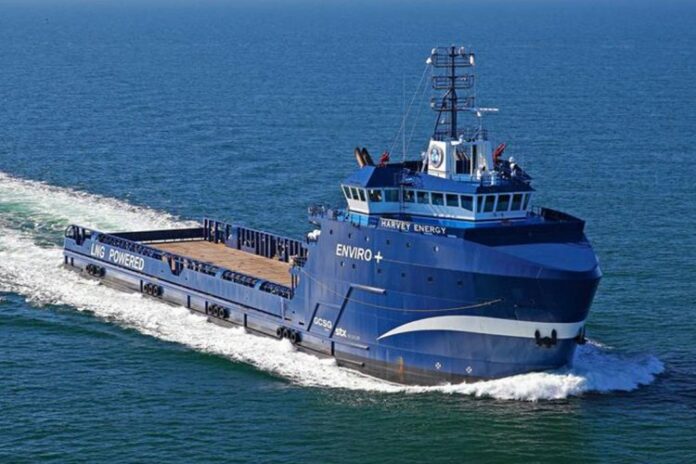
The orders follow the successful sea trial of Harvey Energy, the first-ever LNG-battery hybrid retrofit of a platform supply vessel (PSV) in the Americas.

Harvey Gulf CEO, Shane Guidry has reported that clients and investors are increasingly demanding energy efficiency and emissions reduction. He said:

“This fleet of vessels will be crucial in assisting our clients’ efforts to achieve net carbon zero, and we will continue to listen to them and invest in technology that will assist with their goals.”

Wärtsilä will integrate the battery-based ESSs, each with a capacity of 745 kWh, into their LNG-fueled hybrid-electric propulsion system. The ESS and Wärtsilä Energy Management System (EMS) will allow the vessels to operate in Dynamic Position mode on a single engine augmented by battery power, to operate more efficiently in transit and other operational modes, and to operate on battery-power only when stationary.

Wärtsilä again selected Corvus Energy’s industry-leading and award-winning Orca Energy ESS as the battery type for this application. Its robust design, high C-rate and proven performance makes it the ideal fit for the critical role it serves meeting demanding load profiles on the offshore platform supply vessels.

Sveinung Odegard, Vice President Sales North America and President of Corvus Energy, USA, says:

“We are very proud and pleased to be selected again by Harvey Gulf and Wärtsilä. Our technology, understanding of customer needs and commitments towards lifecycle support is again being acknowledged by receiving this order. We look forward to continuing serve the integrator and vessel owner in the years to come.”

The four LNG-battery hybrid vessels Harvey Liberty, Harvey Power, Harvey Freedom and Harvey America will be fitted with the 1100VDC – 745 kWh ESSs in 2021 and are expected to go into service in early 2022.

KR grants AIP to HMD for 30,000m3 LNG carrier with prismatic IMO type-B tank

0

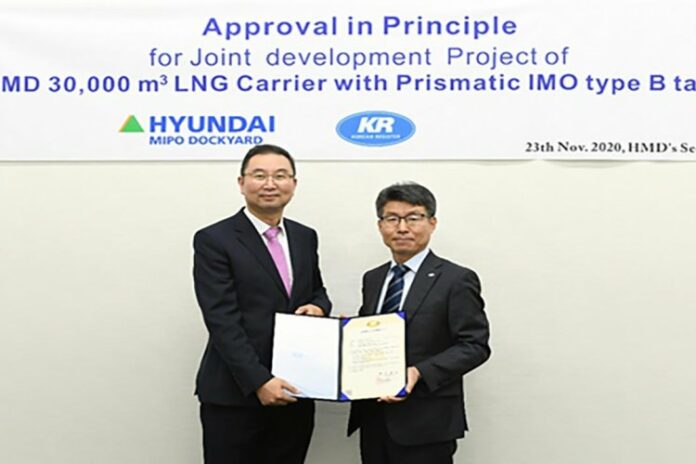
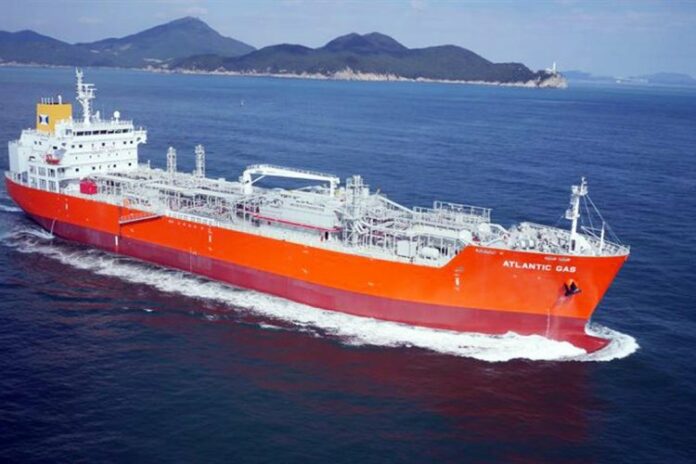
The Korean Register (KR) has awarded Approval In Principle (AIP) for an LNG carrier with a prismatic IMO type-B tank built by Hyundai Mipo Dockyard. The ship is a small to medium-sized LNG carrier with a B-type cargo tank developed as a result of a technical collaboration project between KR and Hyundai Mipo Dockyard, which began in February 2020.

The type-B tank is usually applied to the Fuel tanks of large sized container ships or bulk carriers but HMD has developed the technology to apply it to small and medium-sized LNG carriers of 30,000 m³ capacity. KR has carried out the cargo hold fatigue analysis, the crack propagation analysis and gas leakage rate calculation and has verified the new LNG carrier’s compliance with of the IGC Code (the International Code for the Construction and Equipment of Ships carrying Liquefied Gases in Bulk).

While membrane-type hull and cargo holds have been designed and built for large ships, there is a growing interest in applying the same technology to small and medium-sized LNG carriers in order to meet the recent increase in demand for LNG as an eco-friendly fuel and the expansion of LNG bunkering infrastructure.

The advantage of the HMD type-B tank lies in the possibility of a separated design for the hull and the cargo tank, ensuring appropriate structural stability inside the tank to manage the impact load caused by the motion of the liquid cargo, and through its design flexibility as a fuel tank.

The LNG cargo tank has been developed through high-level engineering, for example, crack propagation analysis has been used to install a partial drip tray which is installed at the lower part of the LNG cargo tank by calculating the amount of leaked gas in the support structure which is supporting the cargo tank.

Nam Young-joon, executive vice president of HMD, said:

“The partial second barriers have made it difficult to design this type B cargo tank, but the potential high hull space utilization has driven the development of this technology. We expect increasing demand for small and medium-sized LNG carriers in the future, as a direct result of this AIP.”

Kim Yeon-tae, executive vice president of KR Technical Division said:

“Through this joint cooperation, KR has successfully developed the technology and plan approval to apply B-type cargo tanks to small and medium-sized LNG carriers, we will continue to provide the technical support needed by Korean shipbuilding industry to support the development of new market-leading concept ships.”

Fugro partners on ‘4S’ global satellite observation seafloor mapping innovation

0

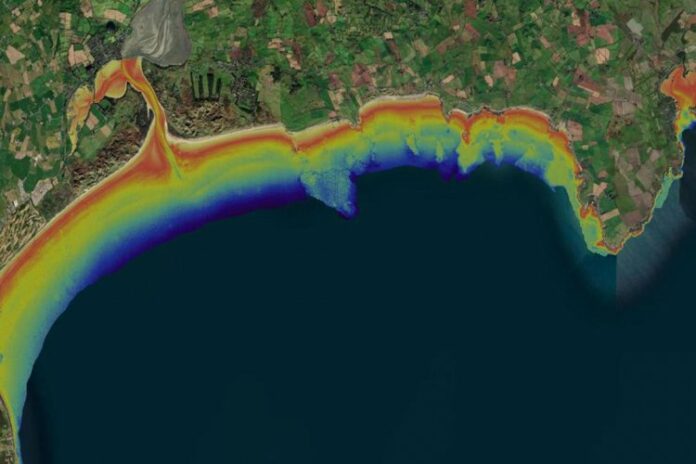
The 3-year project, named ‘4S’ (Satellite Seafloor Survey Suite), will develop an online cloud-based solution that will use highly automated earth observation algorithms and workflows to remotely map and monitor seafloor habitats, morphology and shallow water bathymetry. 

Fugro will lead the project’s business and integration actions, and their hydrographers and Geo-data specialists will evaluate the solution via several use cases around the globe.

4S will leverage artificial intelligence, physics models, and satellite and airborne data to derisk marine site characterisation activities in the shallow water zone by quickly analysing seafloor properties using less personnel and equipment. The 4S consortium includes experts from the fields of satellite data analytics, hydrography and biology, and is being led by EOMAP, the world’s leading company for optical remote sensing of aquatic environments. Other project partners include the Hellenic Centre for Marine Research, QPS, Länsstyrelsen Västerbotten, CNR ISMAR, the Hydrographic Institute and Smith Warner International Ltd.

Dr. Knut Hartmann, 4S Project Coordinator and COO of EOMAP, said:

“The aim of 4S is to achieve a seamless integration of satellite-data analytics into marine and coastal workflows. We’re combining recent advances in satellite sensors, data analytics and cloud infrastructure to benefit marine reporting, monitoring and surveying methods.”

Dhira Adhiwijna, Fugro’s 4S Project Manager, said:

“Fugro is honoured to be part of an exciting EU innovation that could result in faster and safer Geo-data insights for our energy and infrastructure clients. Upon completion, 4S will be integrated into our high-speed hydrography offering and provide innovative solutions that will also derisk marine site characterisation activities.”

This project has received funding from the European Union’s Horizon 2020 research and innovation programme under grant agreement No. 101004221.

Ferry Münsterland will be converted and provided it with an LNG propulsio

0

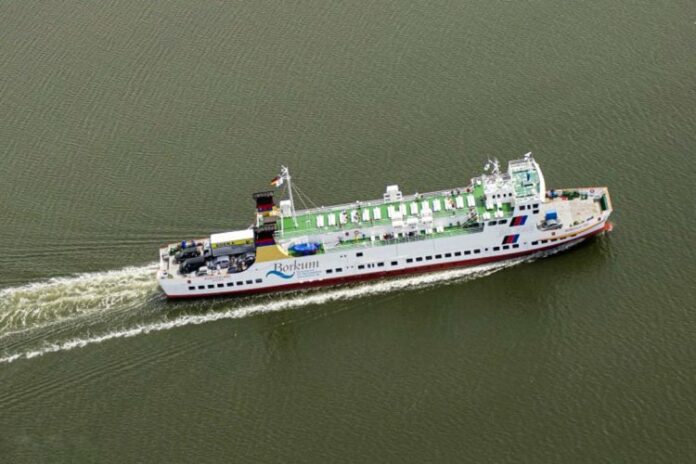
In the upcoming weeks this ferry will be converted and provided it with an LNG propulsion.

In the past weeks, Royal Niestern Sander designed and built a completely new aft ship for the passenger ship from 1986, including dual fuel engines, LNG storage tanks, propulsion systems, all LNG installations, pipelines and other systems. This completely new stern will replace the existing stern of the Münsterland. 

Thanks to its expertise and facilities, the yard follows a unique conversion method that offers the possibility of reducing the idle time of an existing ship – and therefore the loss of income – to a minimum.

In July 2019, shipyard Royal Niestern Sander and AG Ems signed the agreement for the conversion of the passenger ship Münsterland and provide it with an LNG propulsion. The ship receives a contribution from the European Regional Development Fund of the European Union for this innovative project.

Wärtsilä FOS to optimise performance of UltraShip’s entire fleet

0

The solution saves costs while increasing safety by automatically optimising the route and speed of the vessel. It also provides the fullest and latest voyage data, keeping both onboard and onshore personnel informed and notified. The contract was signed in Q4 2020 and roll-out will take place during the first and second quarter of 2021.

As part of the contract, Wärtsilä Voyage will upgrade the ships’ onboard electronic chart display and information systems (ECDIS) to support the FOS. The upgrade includes charts delivery service and weather route optimisation software.

Kaj S. Pilemand, Chief Technical Officer at UltraShip Aps, said:

“The digitalization, currently underway in the shipping industry, is something we actively participate in, to raise the efficiency of our operations. We see Wärtsilä’s FOS as an important enabler in reaching our goals, and recognize the potential benefits it offers.”

Alex Van Knotsenborg, Global Sales Director at Wärtsilä Voyage, commented:

“Efficiency is central to everything in today’s marine business, and the efficiency of voyage planning, tracking, management, and reporting is considerably enhanced with the Wärtsilä FOS. The technology digitally connects the ships to their shore base, eases navigation, and supports the crew in selecting the optimal route.”

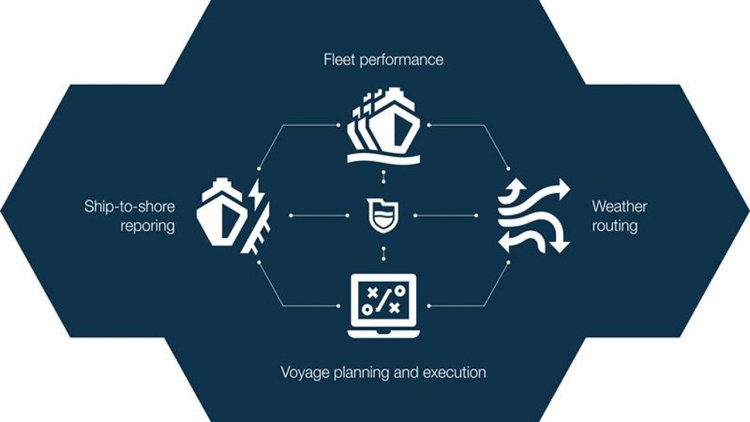
The Wärtsilä FOS is an integrated service that combines individual processes that are otherwise separate from each other. It features a unique platform that integrates with the ship’s planning station and ECDIS using immense cloud computing power, machine learning, data analytics, and mobile applications to efficiently connect the vessel, its manager, operator, and the port.

Among the many benefits offered are a four-hour reduction in voyage planning time, automatic weather optimisation pop-up alerts, remote ECDIS diagnostic support, and fuel cost savings through better route and speed selection.