-7.8 C
New York
Home Blog Page 706

FrontM signs up as new Inmarsat Fleet Connect dedicated bandwidth application provider

0

FrontM and Inmarsat, the world leader in global, mobile satellite communications, have signed an agreement for FrontM to join the fast-growing group of certified application providers to offer a dedicated application for Inmarsat’s Fleet Connect service.

Fleet Connect is a dedicated bandwidth service that provides connectivity independent of the ship owners’ primary bandwidth, allowing Application Providers to have an always-on, or on-demand, two-way communication channel to the vessel.

With the help of Fleet Connect, FrontM can now offer their Collaboration and Workflow Automation Platform, a cloud and edge (offline) enabled, mobile, desktop and web solution, designed to digitise maritime business operations and processes, whilst humanising employee experiences. The collaboration capabilities include video conferencing, VoIP and team messaging, which are highly optimised for satellite connectivity and are architected to enable dedicated bandwidth connection.

Lisa Moore, VP, Commercial Product Management at FrontM, says:

“We are proud to become an official Certified Application Provider for Inmarsat, which will help our customers to rapidly deploy and digitalise their business operations via a micro-suite of video conferencing and workflow applications across our platform. By combining Inmarsat Fleet Connect and FrontM’ technology customers will have guaranteed access to the bandwidth they need to support their real time streaming services, enabling efficient collaboration between ship and shore teams over Inmarsat’s network.”

Marco Cristoforo Camporeale, Head of Digital Solutions, Inmarsat Maritime, said:

“We are delighted to be working with a technology start-up such as FrontM, which helps us to support our customers to rapidly digitalise their operations and change their overall approach to crew welfare onboard.”

This collaboration enables ship owners and operators to undertake real-time telemedicine and video conferencing, troubleshoot mission critical issues, and access e-learning for improved crew welfare.

Dive Technologies chooses Sonardyne’s technologies for its DIVE-LD AUV programme

0

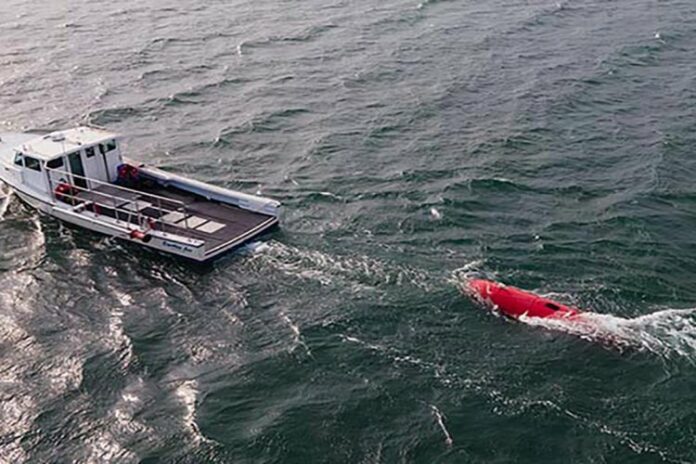
Quincy, Massachusetts, based underwater robotics innovator Dive Technologies has chosen a complete suite of Sonardyne technologies for navigation, tracking and control of its large displacement DIVE-LD autonomous underwater vehicle (AUV) programme.

The DIVE-LD AUV is being developed to meet a wide range of long-endurance mission requirements, across the commercial, research and defence sectors. To support long-distance and long-duration navigation, while minimising complexity and payload space consumption, the vehicle is fitted with Sonardyne’s industry leading hybrid navigator SPRINT-Nav.

For underwater positioning and acoustic communications, the DIVE-LD is fitted with Sonardyne’s AvTrak 6 – a combined transponder, modem and emergency relocator beacon all in one. To cover all its concepts of operations (CONOPS), including tracking and communication during development and testing, Dive Technologies has also acquired Sonardyne’s most capable Ultra-Short BaseLine (USBL) system, Ranger 2, with its latest, compact Gyro USBL.

The DIVE-LD AUV, measuring 48 inches in diameter and 19 feet long and designed for operations down to 6,000 m water depth, is currently in production in the US with sea testing ongoing in New Bedford.

Founded in 2018, Dive Technologies’ rapid development program has included support from the Defense Advanced Research Projects Agency (DARPA) and technology partnerships with organizations including the Center for Marine Autonomy and Robotics at Virginia Tech.

A key part of the development has been to opt for high-performance, off-the-shelf systems, such as SPRINT-Nav for navigation, allowing the company to focus on building certain customized systems in-house. SPRINT-Nav, which is available across a range of performance levels, all in the same form factor, also supports Dive Technologies’ focus on mission adaptability, as does Ranger 2.

Tim Raymond, Dive Technologies’ Director of Research and Development, says that Ranger 2 offered a proven platform with a track record across a wide range of use cases, offering flexibility and scalability in functionality and complexity.

He says:

“With a new development effort underway for Dive Technologies’ DIVE-LD autonomous underwater vehicle, we had a wide range of use cases in mind and needed a single system capable of supporting the various mission sets we had in mind. We also needed a topside system which could scale in functionality and complexity with our vehicle as we continue to add features and capabilities, from our initial testing where our needs were just tracking and emergency commands, to more advanced features such as USBL aiding and SMS transmission of vehicle and data health metrics.

Ranger 2 is a good fit for both of these needs and it has enabled us to meet our challenging goals of simultaneous development and testing while maintaining consistent and impressive performance even in challenging operating conditions. The system has proven reliable, easy to use, and portable to support mobilisation on a variety of support vessels.”

Ranger 2 is Sonardyne’s highest performing USBL system, capable of simultaneous long range target tracking, dynamic positioning (DP) and subsea communications. It is being supplied to Dive Technologies with Sonardyne’s new compact Gyro USBL, which combines the vessel heading, pitch and roll data that’s critical to USBL system precision, with an acoustic transceiver in a single housing, supporting system simplification and ease of mobilization.

SPRINT-Nav combines Sonardyne’s SPRINT INS sensor, Syrinx 600 kHz DVL and a high accuracy intelligent pressure sensor into a single housing, making it one of the smallest combined inertial navigation instruments on the market. SPRINT-Nav’s tight integration of raw sensor data at a low level provides unprecedented navigational performance and precision for subsea vehicles, consistently outperforming competing systems in customer trials.

Built for simple integration on medium to large AUV platforms, AvTrak 6 combines the functions of transponder, transceiver and telemetry link in one low power unit, leaving more payload space and power for other instruments. It enables AUVs to undertake simultaneous LBL ranging, USBL tracking via a surface vessel and robust telemetry for AUV to vessel and AUV-to-AUV communications.


Abu Dhabi Ports accelerates Transportr’s ICD with premium logistics services

0

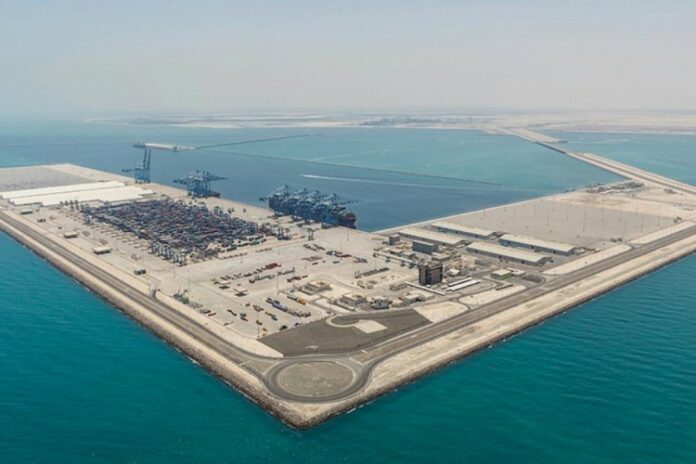
Abu Dhabi Ports, part of ADQ, one of the region’s largest holding companies, has signed an agreement with Transportr Ltd to manage its inland container depot (ICD) in Musaffah, provide handling facilities within the ICD and deliver fully inclusive transportation solutions for containers between the ICD and Khalifa Port.

The agreement will not only improve connectivity between Transportr’s depot located within Ittihad Paper Mill LLC and Khalifa Port, but will also aid in reducing costs for transport of containers, while simultaneously improving the efficiency of the supply chain.  Transportr had already secured the movement of over 15,000 TEUS for 2021 from several prominent industrialists located in ICAD 1, 2 and 3, and is expected to increase the handling to over 20,000 TEUs over the course of next year.

Saif Al Mazrouei, Head of Ports Cluster at Abu Dhabi Ports, said:

“Leveraging our expertise in delivering top of the line logistics services, as well as our long-standing experience as a facilitator of trade within the emirate of Abu Dhabi, we will aid Transportr in reducing costs and streamlining their operations. Connectivity for the entire Musaffah trade will also be improved through reduced waiting times, increased availability and integration with shipping lines.”

Alaa Hawari, General Manager of Transportr, said:

“The ICD establishment at the heart of Mussafah will be instrumental as we target significant strengthening of our digital freight marketplace operations and infrastructure, in addition, to collectively address the challenge of empty miles within the industry. Transportr’s unique ICD logistics model along with its efficient digital freight network will provide customers with access to a new fully integrated logistics model for servicing diverse range of cargo.”

Under the new contract, Abu Dhabi Ports will bring forth its full logistic capabilities to oversee inward and outward container handling at Khalifa Port, delivery of orders, processing customs documentation and procedures, container terminal handling, truck loading and unloading, as well as container inspections.

At the same time, the company will provide ICD-related container handling services as part of the contract offering shipping lines, local importers, and or exporters the ability to collect and offload containers within the ICD.

In addition to assisting Transportr, one of the fastest-growing digital freight platform in the UAE, in achieving greater economies of scale through reduced transportation costs — thanks to the utilisation of mixed-sized containers to and from its Mussafah-based ICD — the operation is expected to improve supply between the companies under the group’s umbrella via an ongoing shuttle service.

LDA and Tidal Transit in another French offshore wind farm vessel deal

0

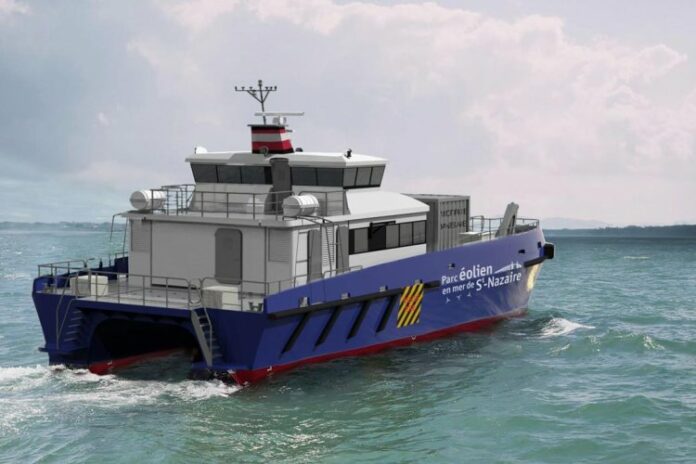
The Louis Dreyfus Armateurs Group and its partner Tidal Transit have announced the signature of a new contract for a Crew Transfer Vessel for the Saint-Nazaire offshore wind farm.

French shipyard OCEA has been selected for the construction of this new innovative unit designed by the naval architects of MAURIC. LD Tide (a joint venture between Louis Dreyfus Armateurs and Tidal Transit) will operate the CTV for the transfer of maintenance technicians to the Saint-Nazaire offshore wind farm. This unit will be the third vessel to be operated by LD Tide on the future SaintNazaire offshore wind farm.

Following an international call for tenders, Saint-Nazaire offshore wind farm selected LD Tide for an innovative CTV (T-foils, carrying capacity up to 24 technicians, high operability, intelligent bow fender, etc.). In addition to this contract, two other industrial partnerships have been established by LD Tide with French companies, allowing the structuring and development of the French maritime industry
dedicated to Marine Renewable Energy.

The innovative design of this new unit has been entrusted to MAURIC, a naval architecture firm based in Nantes and a member of Neopolia, while construction will be carried out by French shipyard OCEA, a leader in the design, construction, and maintenance of aluminium ships, with production sites based in La Rochelle, Sables d’Olonne, Fontenay-le-Comte and Saint-Nazaire. The CTV will sail under the French flag and will have the mission of ensuring the transfer of technicians (up to 24 technicians per crossing) between the coast and the farm for maintenance of the electrical substation and of the wind turbines in their operating phase.

With 80 GE Haliade 150-6MW wind turbines, the Saint-Nazaire wind farm will offer an installed capacity of 480 MW and will supply 20% of the electricity consumption of the Loire-Atlantique department, in France.

Equinor selected for largest-ever US offshore wind award

0

Under the award, Equinor and incoming strategic partner bp will provide 1,260 megawatts (MW) of renewable offshore wind power from Empire Wind 2, and another 1,230 MW of power from Beacon Wind 1 – adding to the existing commitment to provide New York with 816 MW of renewable power from Empire Wind 1 – totaling 3.3 gigawatts (GW) of power to the State.

The execution of the procurement award is subject to the successful negotiation of a purchase and sale agreement, which the partnership looks forward to finalizing together with the New York State Energy Research and Development Authority (NYSERDA).

As part of the award by NYSERDA, the companies will partner with the State to transform two venerable New York ports – the South Brooklyn Marine Terminal (SBMT) and the Port of Albany – into large-scale offshore wind working industrial facilities that position New York to become an offshore wind industry hub.

Anders Opedal, CEO of Equinor, says:

“These projects will deliver homegrown, renewable electricity to New York and play a major role in the State’s ambitions of becoming a global offshore wind hub. The U.S. East Coast is one of the most attractive growth markets for offshore wind in the world. The successful bids for Empire Wind 2 and Beacon Wind 1 represent a game-changer for our offshore wind business in the U.S. and underline Equinor’s commitment to be a leading company in the energy transition. These projects will also create value through economies of scale and support our strategic ambition of becoming a global offshore wind major.”

Siri Espedal Kindem, President of Equinor Wind U.S., says:

“Together, Equinor and the State of New York will create a robust offshore wind supply chain capable of manufacturing, assembling, and staging these projects at scale. As Equinor works to expand its renewable energy presence across the United States and the globe, New York’s leadership clearly illustrates the transformative benefits of offshore wind on climate goals and economic activity alike. We are looking forward to developing Empire Wind and Beacon Wind together with local authorities, communities and our incoming partner bp in growing this new industry.”

Taken together, these offshore wind projects will help the State’s economic rebound and strengthen disadvantaged communities while helping the State achieve its nation-leading renewable energy goals.

CyberLogitec to implement OPUS Terminal at Apical Balikpapan’s new terminal

0

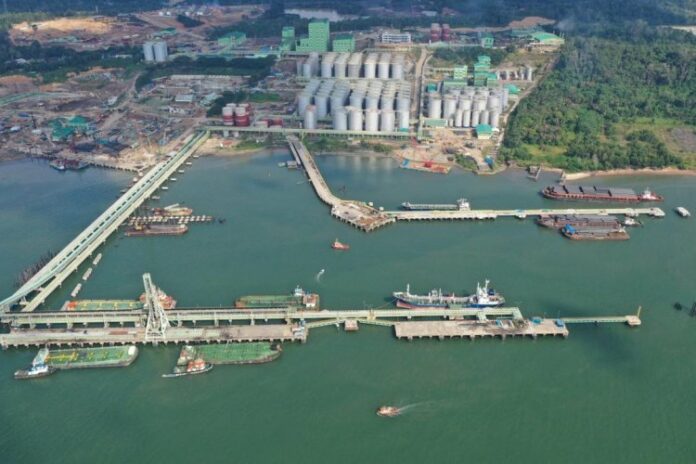
CyberLogitec, the leading provider of terminal operation solutions, together with Apical Balikpapan, part of Apical Group, have signed a partnership agreement to implement OPUS Terminal at Apical Balikpapan’s new terminal in Indonesia.

Apical’s important key commitment in the palm oil industry, sustainability, has always strategically been at the core of their business. As such, APICAL sees supply chain traceability is a fundamental first step towards producing sustainable palm oil. To reinforce these objectives, as well as to more efficiently manage growth in customers’ orders across the world and optimize throughput of their liquid bulk shipments, the Apical Group is enhancing its operations by expanding its berth and storage facilities at their own dedicated terminal in 2020, and has chosen CyberLogitec’s OPUS Terminal to drive new infrastructure and business from 2021.

As the palm oil industry is complex and involves numerous stakeholders, there is a pressing need to ensure that all processes are optimized and streamlined to achieve improved service levels while reducing unnecessary costs.

In implementing CyberLogitec’s OPUS Terminal Operating Systems (TOS), APICAL can ensure that operations at can be performed at peak efficiency. Moving away from a traditionally manual method of managing jetty operations, the new TOS unlocks data-backed intelligence that allows the port operator to make informed decisions based on real time operating data, boosting overall productivity and agility in improving the terminal’s response times.

Peter Setiabudi, PT Kutai Refinery Nusantara’s Director shared:

“As the world’s leading palm oil exporting country, optimised, and data-centric container port operations around Indonesia can help boost overall competitivity of Indonesian palm oil. This also represents a point of importance, as the industry strives for greater sustainability. Cutting edge TOS will allow APICAL greater traceability of imports and exports and minimises any margins of error to ensure we have full visibility around products handled through the port. We hope that our move to modernise our port operations will inspire others in their own journeys in sustainability.”

Jason Jae-Seung Hyeon, CEO of CyberLogitec, said:

“CyberLogitec is thrilled to team up with Apical Group as they enter this new phase of operational excellence and traceability. We are confident our solution will be the catalyst to boost the productivity and efficiency at their port operations and contribute towards their drive for a sustainable ecosystem.”

ABB to provide Azipod® electric propulsion for eco-friendly superyacht

0

Debut contract with Dutch luxury yacht builder Oceanco on Azipod® technology installation project paves the way for broader cooperation on sustainable electric propulsion in a market expected to exceed $10 billion by 2025

Specified for a superyacht built to the highest sustainability standards, ABB’s integrated project scope covers the supply of two 2.5 MW Azipod® units, together with propulsion drives and controls.

The scalability of Azipod® propulsion means that it is equally well-suited to the environmentally conscious superyacht sector, a market where owners also place special value on the highest comfort standards brought by lower noise and vibrations.

Azipod® technology is based on a steerable propulsion system whose electric drive is contained in a submerged pod outside the ship’s hull rotating through 360 degrees. 

Remco Jurgens, Naval Architect, Oceanco, said:

“With Oceanco’s ultimate goal of zero impact on the environment, we are delighted to collaborate with ABB Marine & Ports, whose leading-edge technologies are known for delivering the sustainability benefits increasingly sought by superyacht owners.”

The two companies are assessing the potential for the integration of complete power and propulsion systems in future projects, he added.

Thomas Hackman, Market Development Manager, Superyachts, ABB Marine & Ports, said:

“We are very pleased to have closed this first deal with Oceanco, and we look forward to collaborating in the future. Our two companies share an ethos of sustainable business development that provides a strong foundation for our relationship.” 

Both companies have recently underlined their commitment to sustainable development and ambitious targets that will also help decarbonize the marine sector. As part of its Sustainability strategy 2030 launched in November 2020, ABB will achieve carbon neutrality across its own operations and will support its customers in reducing their annual CO2 emissions by at least 100 megatonnes, equivalent to the annual emissions of 30 million combustion cars. Meanwhile, the superyacht builder has launched the Oceanco NXT initiative to collaborate with partners across different business sectors with the ultimate aim of designing and building zero-emission superyachts.

Jurgens said:

“We see ABB as a leading supplier and an essential partner for future developments. Efficient energy management systems, energy storage, and advanced propulsion systems are considered fundamental to achieving our goal.”

CGG Satellite Mapping completes Barents Sea seeps study for NPD

0

CGG’s Satellite Mapping group recently completed an innovative high-resolution hydrocarbon seeps study commissioned by the Norwegian Petroleum Directorate (NPD). 

CGG Satellite Mapping has over twenty-five years of experience in the detection and characterization of offshore seeps and slicks based on its expert remote sensing processing and analysis of Synthetic Aperture Radar (SAR) satellite imagery. To meet the requirements of the study, CGG Satellite Mapping custom-tasked next-generation SAR satellites to acquire a large collection of high-spatial-resolution SAR imagery at a high revisit frequency. Subsequent advanced processing and analysis by its experts identified the presence of small-scale naturally occurring seepage slick features, unlocking valuable subsurface intelligence. 

Richard Burren, Director of Satellite Mapping, CGG, said:

“By applying our world-leading remote sensing knowledge to imagery delivered by the latest satellite missions our Satellite Mapping group provides clients with previously unobtainable insights into the presence and behaviour of natural seepage in offshore environments. These studies hold great value for increasing geologic system knowledge and decreasing risk, which is of particular interest across marginal areas of mature basins at present. They also complement our Seep Explorer product, the industry’s only integrated global onshore and offshore seeps database for regional-to-target subsurface source de-risking.”

Maersk Drilling secures one-well UK contract for Maersk Resolve

0

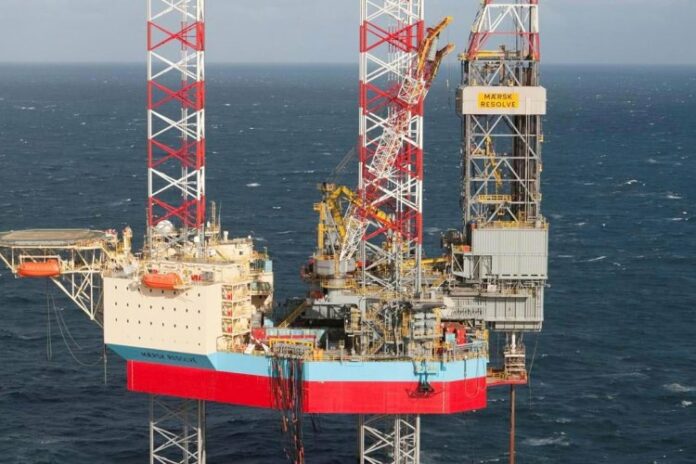
The contract is expected to commence in March 2021, with an estimated duration of 131 days. 

The firm contract value is approximately USD 11.3m, including additional services, mobilisation and demobilisation. The contract includes an option to add plugging and abandonment of one well.

COO Morten Kelstrup of Maersk Drilling says:

“We’re excited to be able to build on our relationship with Spirit Energy with our first UK well for the customer, for whom we previously completed a highly successful subsea development campaign in Norway. We will surely be able to continue our close collaboration and mutual focus on operational excellence, and in addition the campaign at Grove will benefit from Maersk Resolve’s experience with safely and efficiently drilling challenging Zechstein formations as part of the rig’s latest assignment in Dutch waters.”

Maersk Resolve is a 350ft, Gusto-engineered MSC CJ50 high-efficiency jack-up rig which was delivered in 2009. It completed a campaign offshore the Netherlands in October 2020 and is currently warm-stacked in Esbjerg, Denmark.

Siemens Gamesa to close its plants in Spain

0

The closure of the Somozas factory is a result of a lack of orders for the SG 2.X-114 model produced at the plant, and because it would be unable to competitively produce larger blade models demanded by the market.

Specifically, the company has no confirmed orders for this blade model in Spain in 2021 and there are no plans to have any projects with this turbine in the future, as demand has ceased in Spain.

The Spanish market, like the global market in general, now demands larger turbines that the Somozas plant cannot produce competitively because its costs are higher than those of other factories. In addition, in the case of Siemens Gamesa’s larger turbines, which will see significant demand in the coming years, it would be impossible to produce them at the Somozas plant because of site and logistic constraints.

The Cuenca plant, which is exclusively focused on the repair of blades, is no longer sustainable in an extremely competitive repair market as well as a growing trend to replace rather than repair blades. In addition, Cuenca is not sustainable in the long-term as center for larger blades repair due to site constraints.

A collective dismissal agreement will soon be presented for up to 266 employees. Negotiations with the local workers council are intended to start in the coming days, in accordance with applicable rules and regulations.

The decision is in line with Siemens Gamesa’s ongoing activities aimed at improving competitiveness, in particular in its Onshore business, and delivering long-term sustainable profitability. The company will continue to shape its organization and cost base to the conditions of the global wind market, which is characterized by intense competition and price pressures that have eroded margins of wind turbine manufacturers, including Siemens Gamesa.

Siemens Gamesa’s Onshore CEO Lars Krogsgaard, said:

“We urgently need to return to the path of profitability and the only way to do it is by applying measures such as these, and those ones already carried out in our Onshore business in the last year and a half. We have analyzed all the options, but concluded there is no alternative. These are tough measures, but necessary to put the company back on track and guarantee its sustainability and the employment of the more than 24,000 employees of Siemens Gamesa, around 4,400 of them in Spain.

We will do our best during the negotiations with the unions to support our colleagues through this transition and minimize the impact the decision has on our employees.”