-8.7 C
New York
Home Blog Page 705

Construction begins on Carnival Cruise Line’s 2nd Excel-class ship

0

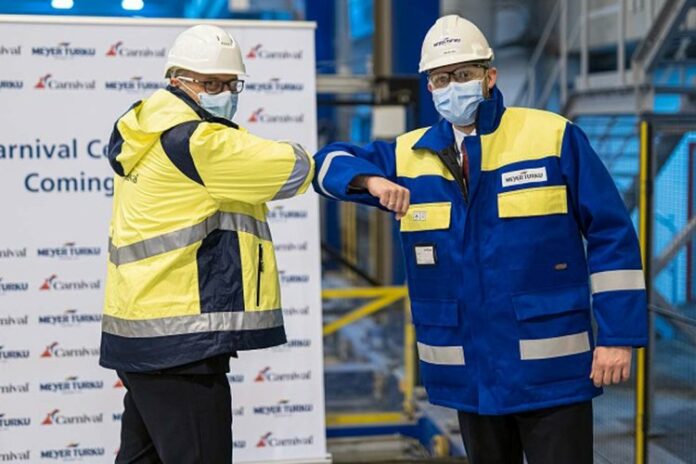
The maritime tradition to mark the first steel cut for a new ship took place for Carnival Celebration at the Meyer Turku shipyard in Finland, as Carnival Cruise Line prepares for its next Excel-class ship that will debut next year.

A sister ship to the highly anticipated Mardi Gras, Carnival Celebration is scheduled to begin sailing from PortMiami in November 2022, part of Carnival Cruise Line’s year-long 50th birthday festivities.

Following the ceremony – which was attended by Carnival’s Senior Vice President of New Builds Ben Clement and Meyer Turku’s CEO Tim Meyer – work officially began on Carnival Celebration’s innovative offerings, many of which have made Mardi Gras one of the most anticipated ships in cruising. Like Mardi Gras, Carnival Celebration will also include BOLT, the first roller coaster at sea, along with unique design features created specifically for this vessel, and new signature venues that will be specific to this ship.

Christine Duffy, president of Carnival Cruise Line, said:

“The steel-cutting ceremony marks the beginning of yet another exciting chapter for Carnival Cruise Line. Not only will Carnival Celebration feature signature amenities from Mardi Gras but usher in a new era for Carnival Cruise Line with some special innovations created just for her that we’re sure our guests will enjoy. We’re equally excited about Carnival Celebration’s role in our 50th birthday festivities which will serve as an unforgettable way for our fans to mark this exciting milestone in our company’s history.”

Carnival Celebration is scheduled to debut in November 2022 and will offer year-round service from PortMiami’s new Terminal F being constructed specifically for Carnival Cruise Line.  The addition of Carnival Celebration to Miami will maintain PortMiami’s position as the top embarkation port for Carnival Cruise Line.

Carnival’s 50th Birthday festivities begin in March 2022 – the company’s birthday month – with a series of commemorative sailings that will feature special entertainment and itineraries and continuing all year long, culminating with Carnival Celebration’s arrival in November.  

MSC joins Hydrogen Council to collaborate on decarbonisation

0

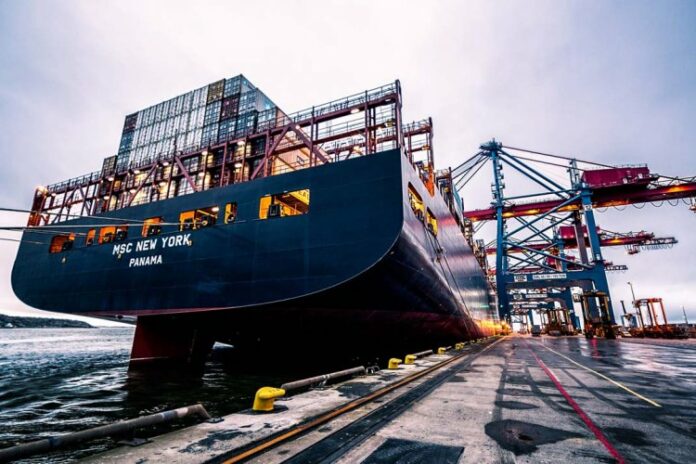
MSC Mediterranean Shipping Company announced it has joined the Hydrogen Council, a global industry body, as a steering member to foster cross-sector collaboration that will accelerate R&D related to clean hydrogen derived fuels and solutions.  

The initiative is part of MSC’s wider approach to decarbonisation which has already seen the company pioneer the use of biofuels as a blended marine fuel and now sees MSC work with others to advance the exploration viability of hydrogen and fuels derived from it as potentially viable fuel sources for container shipping.

Bud Darr, Executive Vice President, Maritime Policy & Government Affairs, MSC Group, said:

“MSC is actively engaging with a wide range of stakeholders to accelerate the development of clean hydrogen fuels for shipping. The future of shipping and decarbonisation will rely on strong partnerships from both the perspective of technology collaboration and procurement. There must be a massive injection of energy and capital into R&D efforts to bring alternative fuels and alternative propulsion technologies to the marketplace to decarbonise all industries in the longer term. Initiatives such as the Hydrogen Council provide just the right platform to accelerate R&D, as well as to facilitate cross-industry collaboration.”

The Hydrogen Council is a global CEO-led initiative that brings together leading companies with a united vision and long-term ambition for hydrogen to foster the clean energy transition. 

Industry partnerships are needed to accelerate the development of clean hydrogen and fuels derived from it for the benefit of the entire container shipping industry. MSC contributes actively to the work of industry groups and associations, as well as initiatives such as the Hydrogen Council to facilitate cross-sector information sharing.

Equinor will test floating solar off Frøya

0

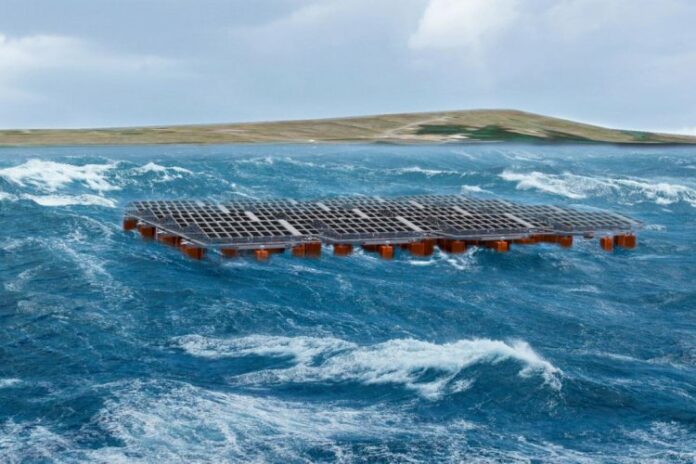
Together with Moss Maritime the company wants to start testing off the island of Frøya. The plan is to build a floating pilot plant off Frøya near Trondheim in the late summer of 2021. It is set to become the world’s first pilot plant for floating solar power in rough waters.

The municipality of Frøya has been positive to and is involved in the planning of the pilot plant. Equinor has filed an application with the Norwegian Water Resources and Energy Directorate. Planned to measure 80 m x 80 m, the plant will tower less than 3 metres over the sea surface. According to plans the pilot will be tested for minimum one year. The project is a collaboration between Equinor and the technology company Moss Maritime.

The purpose of the pilot plant is not primarily to see how much energy it can produce, but how the weather conditions affect the plant. The Norwegian coast and continental shelf are world-class when it comes to oil, gas and wind, but when it comes to sun, other regions offer better conditions. As a test area, Frøya is still very suitable.

Hanne Wigum, the head of the Equinor technology unit focusing on wind and solar power, says:

“The municipality of Frøya has been a good collaboration partner for us. We have reached an agreement with the grid owner, allowing the electricity that is produced to enter the power grid on Frøya. In addition, the nearness to our research centre in Trondheim, and the expertise possessed by the Sintef and NTNU research institutions, represent an advantage for us.”

Frøya mayor Kristin Furunes Strømskag looks forward to the further collaboration. She says:

“It is very exciting that Frøya has been chosen as the host municipality for the testing of new renewable energy sources, such as solar power. With our natural conditions, we are a good location for a full-scale pilot plant within research and development.”

The pilot plant will be an important milestone for Moss Maritime as well.

Alexander Thøgersen, vice president, engineering, at Moss Maritime, says:

“We have been working on this concept for the past three years, most recently through our partnership with Equinor, and the concept has been substantially matured, both technically and economically. The floating pilot plant will be an important step on the road towards technology commercialization, and an important arena for further development and optimization of the concept.”

This is the third research project that Equinor is involved in. Equinor is already involved in a project off Sri Lanka. Here a concept in calm waters is being tested to decide how to produce as much energy as possible.

In addition, Equinor is involved in a project in the Netherlands. Here three different floating solar power concepts are being tested on a lake. This provides important knowledge about the resilience and predictability of production under rougher conditions than in other current production sites for floating solar power.

Wigum says:

“We choose to perform several research projects in parallel because of the rapid growth within renewable energy. This enables us to acquire optimal knowledge about this as early as possible.”

Equinor has not made any decision on the production of power from floating photovoltaic panels, besides the research projects.

Maersk Supply Service steps up its commitment to clean the ocean of plastic

0

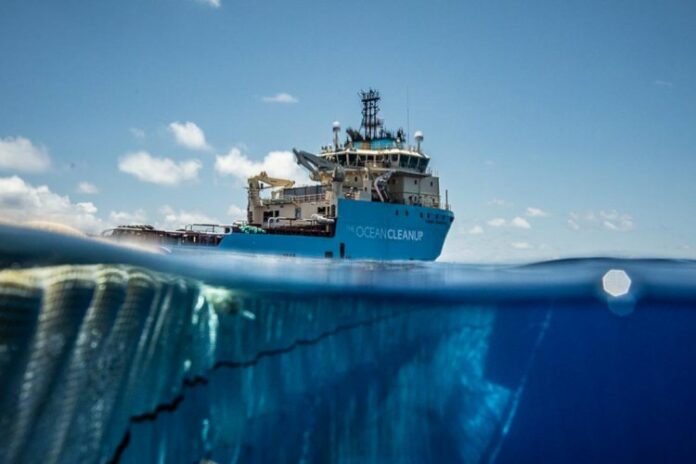
Maersk Supply Service A/S will continue to provide marine support to rid the ocean for plastic. At the same time, Maersk Supply Service is launching a Plastic Policy to increase its focus on how it can reduce plastic waste from its own operations and supply chain.

Since 2018, Maersk Supply Service A/S has provided marine support for The Ocean Cleanup. Its anchor handlers Maersk Launcher, Maersk Transporter and Maersk Handler and crew have been supporting various test phases of the offshore operation in the Pacific Ocean and the North Sea. The first collection of plastic waste was turned into new, fully recycled products in fall 2020.

Steen S. Karstensen, CEO of Maersk Supply Service, says:

“Our seafarers sail the ocean every day and see the increasing problem with plastic polluting our oceans. As a responsible maritime operator, Maersk Supply Service is committed to ensuring the oceans remain a healthy environment for future generations to come. We look forward to continuing the collaboration with The Ocean Cleanup and providing project management and marine support over the coming years.”

By introducing a Plastic Policy, Maersk Supply Service is strengthening its focus on how it can reduce plastic waste. The policy has three navigating principles:

  • Use our marine expertise to help come up with solutions to rid plastic from the oceans
  • Avoid unnecessary plastic in our operations
  • Engage with suppliers, partners, customers and employees to find solutions to minimise plastic use. We will be transparent about our results and learnings

Karstensen says:

“Plastic waste in our oceans is an increasing issue. With the new Plastic Policy, we commit to how we will work to reduce our plastic footprint and actively take part in solving this global environmental problem. We will do this in partnerships and close collaboration – with our employees, suppliers, partners, customers and industry peers. A great takeaway from the collaboration with The Ocean Cleanup is the willingness people have to find solutions that are both impactful for the marine industry and are bettering for the environment. We believe that we can make a change and we can do more together.”

Samsø Rederi to replace the maintenance system on Prinsesse Isabella with SERTICA

0

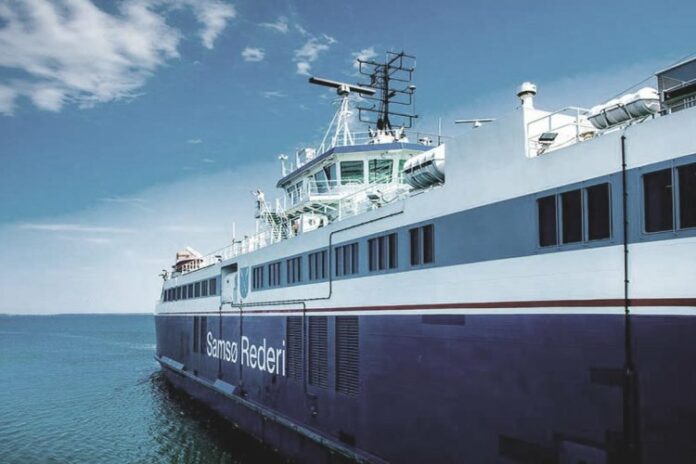
Samsø Rederi chooses to replace the current maintenance system on Prinsesse Isabella with SERTICA in relation to the commission of the new ferry Lilleøre.

Per Nymann, Technical Manager at Samsø Rederi, tells:

“As a lifeline to Samsø it is important for us that we have a safe and efficient operation. With a system like SERTICA we can plan and optimize maintenance digitally and simplify internal workflows with mobile apps.”

Hans Christian Jensen, Sales Manager at Logimatic, adds:

“Last month I visited Prinsesse Isabella to sign the sales contracts and at the same time I gave a 5-minute training in using the SERTICA app. 5 minutes is all it takes because it is meant to be easy.”

Christian Damhøj Jensen, Chief Engineer on board Prinsesse Isabella agrees and elaborates:

“The app is actually surprisingly smart, and it has to be dead-simple for an old man like me. All I have to do is take a picture, start a job and press the button when the job is done.”

The simplicity and mobility in the form of an app is on the reasons why Samsø Rederi has chosen to change to the maintenance system SERTICA. Per Nymann, Technical Manager at Samsø Rederi, concludes:

“We expect to have an easier workday with a logical and user-friendly maintenance system enabling us to each our goal with only a few clicks. We know SERTICA from other shipping companies and know that they have a great support in Aalborg.”

Kawasaki Integrated Maritime Solutions is certified for innovative technology

0

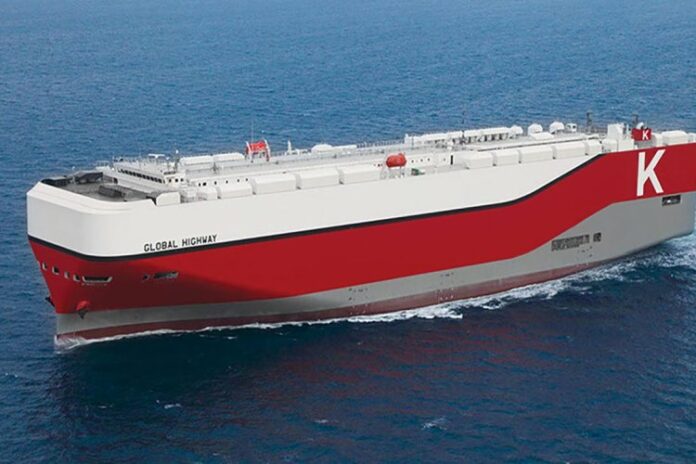
Leading Classification Society ClassNK certified “Kawasaki Integrated Maritime Solutions”, jointly developed by Kawasaki Kisen Kaisha, Ltd. (“K” LINE) and Kawasaki Heavy Industries Group, as its first Innovation Endorsement*1 for Products & Solutions, the Society’s new certification service for innovative technologies.

In July 2020, to promote the spread and development of innovative technologies, the Society launched Innovation Endorsement as the swift certification service in cooperation with technological front runners to establish appropriate evaluation criteria. Among the certification categories, “Products & Solutions” covers digital equipment and software technology installed for use on vessels.

“Kawasaki Integrated Maritime Solutions” is an integrated ship operation and performance management system, jointly developed by “K” LINE and Kawasaki Heavy Industries Group, and its variety of applications with operation data that automatically sent to the shore from vessels are utilized for early detection of abnormalities with live data monitoring, performance analysis to maintain and manage fuel efficiency, and optimum navigation support to maintain safe and economical routing.

Receiving “K” LINE’s application, ClassNK’s experts verified the functions of “Kawasaki Integrated Maritime Solutions” which include operation data collection, ship-shore data communication, data transaction record & alarm, data aggregation for monitoring & analysis, automatic trim chart generation, performance calculation & analysis, and weather routing, and issued the certificate. This marks the first Innovation Endorsement certification for Products & Solutions by ClassNK.

Port of Felixstowe selected for UK Government 5G trial

0

Using a 5G Private Network installed by Three UK, the port’s installation has been selected as part of the Government’s 5G Trials and Testbeds Programme to drive investment and innovation in 5G and to support the development of new use cases and commercial deployment. 

The £3.4 million project has received £1.6 million from the Government as part of 5G Create, a competition to support innovators exploring new uses for 5G to improve people’s lives and boost British businesses.

Working with its partners Three UK, Cambridge University and Blue Mesh Solutions, along with key subcontractors Ericsson and Siemens, the project will test the potential of 5G across two use cases: enabling remote-controlled cranes via the transmission of CCTV and; deploying Internet of Things sensors and Artificial Intelligence to optimise the predicative maintenance cycle of Felixstowe’s 31 quay-side and 82 yard cranes.  Harnessing the speed, low-latency and high-capacity of 5G, the project will demonstrate the productivity and efficiency gains of such technology, whilst reducing unplanned outage. 

Matt Warman, Minister for Digital Infrastructure said:

“We want to unlock 5G’s potential to revolutionise a wide range of UK industries and 5G Ports is just one project the government is backing to achieve this. Our ports will be more vital than ever as we forge an ambitious new global trading position for the UK post-Brexit, so I’m eager to see what 5G can do to maximise efficiency at Britain’s biggest and busiest container port in Felixstowe.”

Chris Lewis, Chief Executive Officer Hutchison Ports UK, added:

“Being the largest UK port to introduce 5G technology will allow the Port of Felixstowe to deploy innovative technologies to boost efficiency and improve safety for our workforce. It ties in well with Government policy to create a network of Freeports to act as hotbeds for innovation and to act as hubs for global trade.”

Mike Tomlinson, Managing Director, Business Three UK, said:

“This project brings together the UK’s largest holder of 5G Spectrum with the UK’s largest container port, supported by world-leading experts in Operational Technology and Narrow Band Internet of Things.  This is the perfect platform to test and demonstrate the full potential of 5G mobile technology to a vital and complex industry and develop use cases for wider industries.” 

Richard Brooks – Managing Director and CTO of Blue Mesh Solutions said:

“Connecting IoT sensors into high speed, low latency 5G networks creates a new paradigm for automation and fast decision making. 5G telecommunications infrastructure needs large industry partners, but the creation of new IoT devices and solutions can be commercially exploited by small fast- moving innovative businesses such as Blue Mesh Solutions.”

The Port of Felixstowe, together with Hutchison Ports’ Harwich International Port, is part of the Freeport East project team to create a major Freeport centred on the two East coast ports. The 5G trial will help deliver on the Government’s objective for Freeports to act as hotbeds for innovation.

RIMS BV creates GDI to focus on the drone and ROV element of the business

0

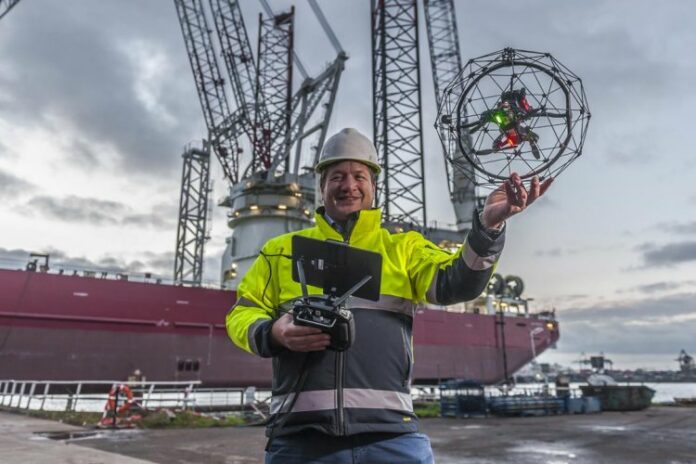
RIMS (Robotics in Maintenance Strategies) BV, an established class approved supplier of UAV inspections in the maritime industry have created Global Drone Inspection (GDI), to focus on the drone and ROV element of the business.

GDI will sit alongside RIMS, but with a different service portfolio offering. GDI will provide all the services around inspections of assets by drones and ROVs, including 3D modelling, while RIMS will continue to support clients with the development and integration of new technologies within their maintenance strategies.

David Knukkel, CEO, GDI & RIMS said:

“With GDI, we aim to provide a centre of expertise in remote inspection technology which can be easily found by clients who need a specialist in this domain. GDI will build on the experience and success of RIMS which was set up in 2015. In last five years RIMS has brought the drone service to a professional level, and were the first maritime Class Approved service provider, supporting surveyors with the inspection of ship structures, mobile offshore units and confined spaces using Remote Inspection Technology, and it is our intention to replicate this level of success for GDI.”

GDI will be looking to strengthen its portfolio in line with future trends through partnership creation with well recognised partners and service suppliers, offering a total solution for inspections, NDT-measurements (non-destructive testing), presentation of information and repairs.

Equinor and YPF partner with Shell in the CAN 100 block offshore Argentina

0

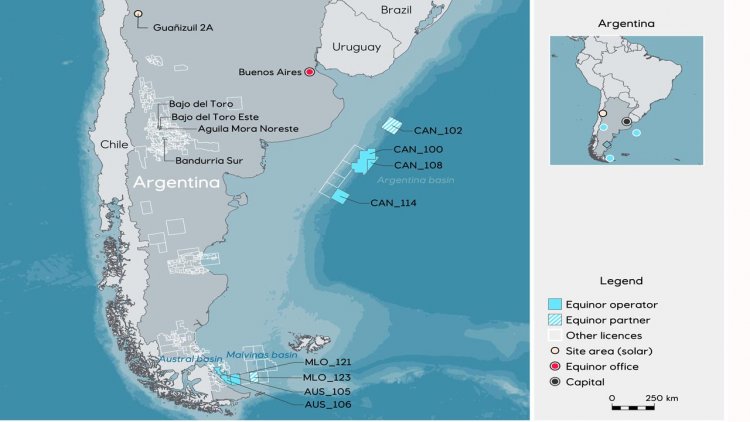
Equinor and YPF has today entered into an agreement with Shell to jointly farm-down 30% non-operated interests in the CAN 100 block, located in the North Argentinian Basin, offshore Argentina.

In October 2019, Equinor farmed in to the YPF CAN 100 block and agreed to take over the operatorship. Equinor and YPF currently both hold 50% equity in the license, and will after the transaction hold 35% each, with Shell holding the remaining 30% in the block.

The CAN 100 block comprises an area of 15,000 km2 and is the largest block in the North Argentinian Basin.

The agreement is pending governmental approval.

Opinion: Future of gas in energy transition to be defined in 2021

0

Wood Mackenzie vice president Massimo Di Odoardo said:

“Policy makers will need to provide clarity on decarbonisation plans, including how they see the role of natural gas, following pledges to achieve climate neutrality. Gas players will have to show commitments to decarbonise natural gas, including through carbon capture, utilisation and storage (CCUS) and blue hydrogen. Decarbonising natural gas will become a strategic priority for the gas industry.”

In the outlook report, Wood Mackenzie identified five themes that would impact the industry this year.

1. Asian and European policies to support gas demand in the medium term

Almost 50% of today’s global carbon emissions and 75% of today’s LNG demand are covered by countries with carbon neutral goals. The resilience of gas in the energy mix will depend upon the pathways policy makers adopt to achieve net-zero targets.

The acceleration in coal-to-gas switching is a key theme to watch in Asia as coal accounts for over 50% of the region’s energy mix. In Europe, additional coal plant retirals in Germany and Poland could support more gas utilisation in the medium term, similar to what is happening in other European countries. Additionally, firm policies in support of CCUS as well as blue hydrogen, would support gas demand in hard to decarbonise sectors.

2. Large-scale CCUS and blue hydrogen projects in Europe could take FID in 2022

Players across the gas value chain have announced proposals for the development of large-scale CCUS projects to decarbonise localised industrial clusters and/or to use in combination with steam methane reformers (SMRs) to produce blue hydrogen from natural gas.

New momentum is building up for CCUS for industrial and power plants too, where costs for capturing CO2 could be in excess of US$100 per tonne CO2. Public support and regulation, as well as new business models have all been key to support recent developments.

Di Odoardo said:

“Companies are forming partnerships to exploit economies of scale, share investment costs across the value chain and monetise by-products. Industrial clusters, which account for 15-20% of global CO2 emissions, are emerging as ‘sweet spots’, combining interests and expertise from industrials, utilities, infrastructure players and international oil companies. Projects will need to show tangible progress this year. Their success will be crucial to ensure gas remains resilient in the future energy mix as countries sets out plans to achieve net-zero energy systems.”

3. Expect Biden to make net-zero carbon announcements but unlikely to turn into legislation in 2021 

During the presidential campaign, Biden announced an ambitious US$2 trillion ‘clean energy revolution’ seeking to accelerate the US energy transition, including setting a net-zero carbon emission target in the power sector by 2035 and stating a US return to the Paris Climate Agreement.

Di Ordoardo said:

“If implemented, these policies could have long-term effects on the US energy landscape. We anticipate zero-carbon power generation to reach 58% by 2035, supported by strong penetration of wind and solar.  But with gas-fired generation increasing to 36%, or 32 billion cubic feet per day, a significant gap towards the net-zero target would remain. A change to reach net-zero carbon emissions in the power sector in 2035 would require a dramatic shift from the current environment.”
4. 2021 prices: TTF to average US$5.6/mmbtu and Asian LNG spot average US$7.6/mmbtu

Global LNG prices have made an impressive climb from the US$2.0 per million British thermal units (mmbtu) experienced for most of the summer, with Asian LNG prices trading above US$20/mmbtu. Prices will come down in Q2, but the current cold spell in the northern hemisphere signal what looked like a finely balanced summer just a month ago, is now looking increasingly tight.

Di Odoardo said:

“Much of the LNG price spike has been driven by cold weather, supply disruption and lack of shipping capacity, and delays at the Panama Canal. Fundamentals have been playing a role too, with Asian LNG demand in Q4 2020 already at pre-coronavirus levels. With the current cold spell expected to continue throughout most of January, Asian LNG demand in Q1 2021 will remain strong, paving the way for additional demand for LNG stocking in the summer across North Asia. This, in turn, will reduce the pressure on Europe to absorb excess LNG supply in the summer.”

Despite global LNG supply expected to increase by 17 million tonnes (Mt) in 2021, mainly as a consequence of full utilisation of US LNG through the summer, the current cold spell in the northern hemisphere is paving the way for a tighter global gas market throughout the year. Low temperatures mean that storage levels in Europe are already more than 15 billion cubic metres lower than last year and are now close to the past five years’ average. On the other hand, expectations of higher coal and European carbon prices, also partially driven by the current cold spell, provide headroom for higher European summer gas demand.

Di Odoardo said:

“Global prices reached record lows in 2020, with TTF averaging US$3.2/mmbtu and Asian LNG spot averaging US$3.9/mmbtu. 2021 will show a stark difference, we anticipate TTF averaging US$5.6/mmbtu and Asian LNG spot averaging US$7.6/mmbtu.”

5. 2021 long-term contract signing to hang on Qatar’s resolution to press ahead with North Field East

Following a raft of LNG project cancellations last year, current high prices will have emboldened LNG developers. However, for new projects to be developed, contract activity will need to pick up.  Buyers will be looking to assess their portfolio requirements and just how comfortable they are in committing for new long-term firm LNG vs increasing their spot market exposure.

Di Odoardo said:

“Buyers will want to understand just how resilient spot LNG prices will be this summer, following the hype in the winter. And they will want clarity on domestic policy attitudes towards gas, following carbon neutrality pledges in Northeast Asia. Buyers will be confident that a wave of uncontracted LNG will be hitting the market post 2025, including from LNG Canada (14 Mt) and the projects that have taken FID in 2019 (70 Mt). But they might start questioning Qatar’s commitment to quickly move forward with its 32 million tonnes per annum (mmtpa) North Field East project, following continued delays.

“The market will need around 85 mmtpa of new LNG supply by 2030. Provided Qatar takes FID early this year, most buyers will be in no rush to secure more long-term supply, despite oil indexation levels being below 11% Brent currently. A buyer’s market remains despite the current winter Asian LNG spot price spike. However, further delays to Qatar’s FID, will push some buyers to look for new long-term commitments.”