-8.6 C
New York
Home Blog Page 703

Maersk Drilling awarded two Suriname floater contracts by Total

0

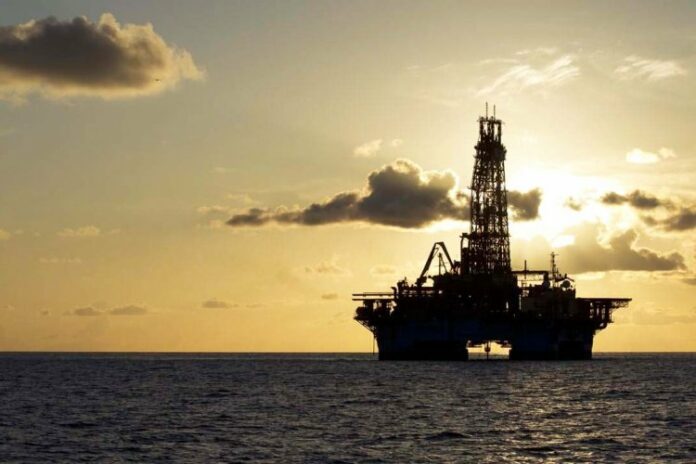
Based on the previously announced Conditional Letter of Award, Maersk Drilling has been awarded contracts for the deepwater rigs Maersk Valiant and Mærsk Developer from Total E&P Suriname, Suriname Branch, for Total’s exploration and appraisal project in Suriname’s Block 58. 

Mærsk Developer and Maersk Valiant will be employed for an estimated combined total duration of 500 days. Mærsk Developer is expected to commence operations in January 2021, while Maersk Valiant is expected to commence operations in March 2021. The total value of the firm contracts is approximately USD 100m, including rig modifications, integrated services provided, and a mobilisation fee for Maersk Valiant. The contracts include various extension options.

COO Morten Kelstrup of Maersk Drilling says:

“We’re thrilled to firm up these contracts, adding further to our long-standing relationship with Total for whom we have a great track record from our collaboration on a number of deepwater exploration projects. We’re happy to add to our presence in the exciting Suriname-Guyana basin and will be able to leverage the fact that Mærsk Developer is already operating offshore Suriname to quickly start up operations including provision of a range of integrated services to maximise efficiency.”

Mærsk Developer is a DSS-21 column-stabilised dynamically positioned semi-submersible rig, able to operate in water depths up to 10,000 ft. It was delivered in 2009 and is currently mobilising for the Total campaign after recently completing a contract offshore Suriname.

Maersk Valiant is a high-specification 7th generation drillship with integrated Managed Pressure Drilling capability which was delivered in 2013. It is currently warm-stacked in Aruba after finishing a campaign offshore Mexico in June 2020.
New ship Silver Dawn floats out in Ancona

0

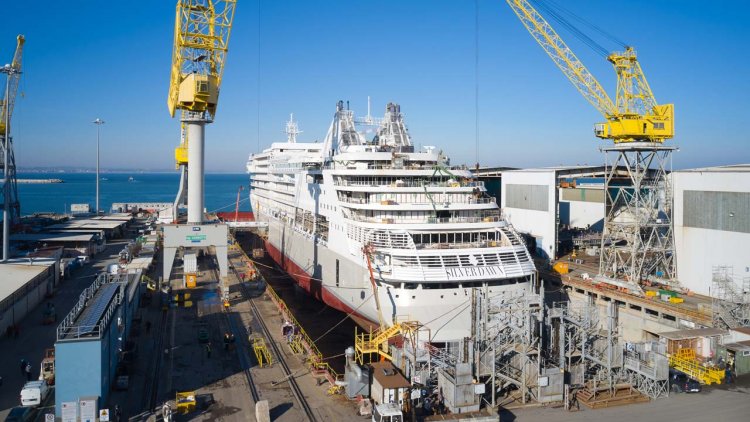
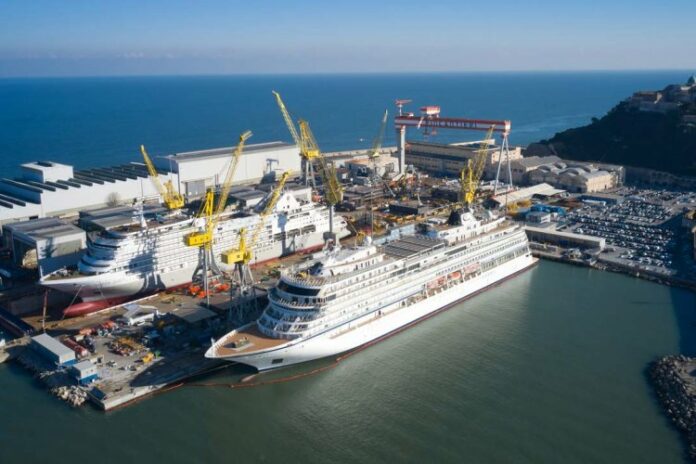
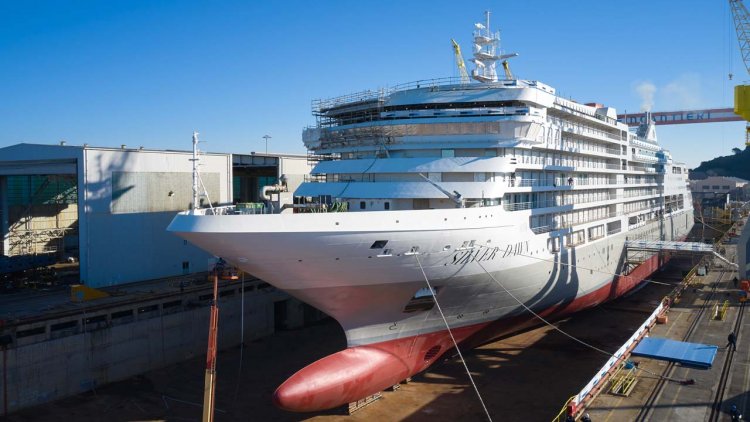
Silversea Cruises’ new ship Silver Dawn touched water for the first time on January, 14 during her float-out at the Fincantieri shipyard in Ancona, Italy.

The fitting out phase will now begin — during which Fincantieri’s  craftspeople will bring the ship’s elegant interiors to life. Silver Dawn will become the 10th ship in the leading ultra-luxury cruise line’s fleet. With the delivery of both Silver Origin and Silver Moon in 2020, and with the delivery of Silver Dawn scheduled for November 2021, Silversea Cruises—and the global cruise industry in general—continues to demonstrate great resilience.

Roberto Martinoli, President and CEO of Silversea Cruises, says:

“We proudly celebrate this major milestone in the build of our beautiful new Silver Dawn. Our long-term collaboration with Fincantieri continues to push boundaries in the ultra-luxury cruise industry, while the ongoing support and expertise of the Royal Caribbean Group has been invaluable to the ship’s build. While Silver Dawn takes influence from our beloved ships Silver Muse and Silver Moon, our guests will benefit from many pioneering enhancements aboard the tenth ship in our fleet. We look forward to revealing these in the coming months”.

Luigi Matarazzo, General Manager Merchant Ships Division of Fincantieri, stated:

“Based on the very successful design of Silver Muse, Silver Dawn is the fourth ship we will have built for Silversea. For a shipbuilder there can be no better acknowledgement than the one of a demanding and prestigious owner who welcomes innovation with enthusiasm. We are therefore extremely proud to celebrate the launch of this ship. She consolidates the technological and management leadership of our Group which takes on even greater value in the very challenging situation we are experiencing”.

The third ship in the Muse-class series, and part of a long-term plan to grow and enhance the cruise line’s already luxurious fleet, Silver Dawn will be a sistership to Silversea’s Silver Muse, built in the Fincantieri shipyard of Sestri Ponente (Genoa) in April 2017, and Silver Moon, which was delivered in Ancona in October 2020.

Accommodating just 596 guests in 298 ocean-view suites – 96% of which will have a private veranda – and with a crew-to-guest ratio of 1:1.45, Silver Dawn will maintain the small-ship intimacy and spacious accommodation which are the hallmarks of the Silversea experience. She will offer guests many exciting enhancements when compared to Silver Muse and Silver Moon, which will be unveiled in due course. Providing superlative comfort and an enhanced onboard experience, she will unlock authentic travel experiences for Silversea’s discerning guests in the world’s most spectacular destinations.


Update: Cargo ship sinks off Turkey’s Black Sea coast, two dead

0

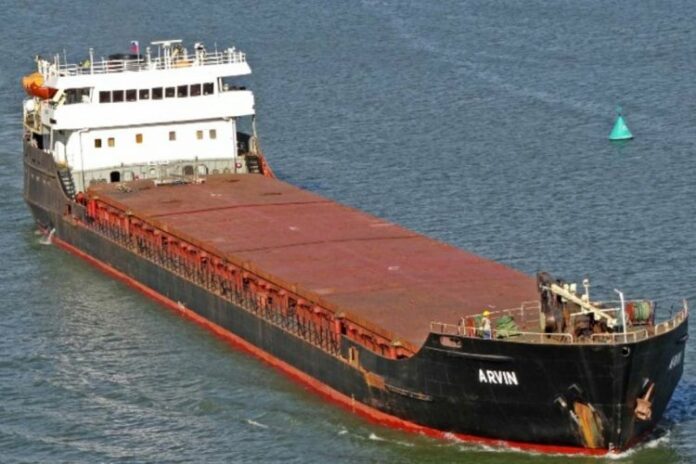
Bartin Governor Sinan Guner said the dry cargo ship, ARVIN, sank off the coast of the Inkumu region in poor weather, according to the state-owned Anadolu news agency. He said five of the 13 crew members had been rescued so far.

The cause of the incident was not immediately clear.

The governor was quoted as saying:

“So far, five people have been rescued. The lifeless bodies of two people were pulled onto the (rescue) boat.”

Guner said rescue operations were underway despite the poor weather conditions, which initially saw rescuers struggling to reach the crew. He added civilian ships had also been asked to help.

He said lifeboats carrying the crew members, all of whom are Russian nationals, could be seen 600-700 metres from the shore and that a Navy vessel had been deployed to reach them. “In case there is an opportunity to fly, we requested a helicopter,” he said.

The Turkish defence ministry confirmed it had deployed a vessel to help with the rescue operations.

Source: Reuters

Update:

According to the representative of the Ministry of Foreign Affairs of Ukraine Oleg Nikolenko on Twitter, 10 Ukrainians and 2 foreigners were on board the ship Arvin. 6 people were rescued, 2 died. The search and rescue operation against 4 sailors continues. Ukrainian consuls went to the port of Bartin to provide consular assistance. Hotline: +90 539 550 98 98.

Update: Foreign Ministry spokesman Oleg Nikolenko added:
“5 Ukrainians and 1 foreigner were rescued from the ship Arvin, which was flying the flag of Palau. They are hospitalized. Their condition is satisfactory. Relatives were informed. The search for 5 sailors continues.”

Research: Upper ocean temperatures hit record high in 2020

0

Even with the small COVID-19-related dip in global carbon emissions due to limited travel and other activities, the ocean temperatures continued a trend of breaking records in 2020. A new study, authored by 20 scientists from 13 institutes around the world, reported the highest ocean temperatures since 1955 from surface level to a depth of 2,000 meters.

The report was published on January 13 in Advances in Atmospheric Sciences and concluded with a plea to policymakers and others to consider the lasting damage warmer oceans can cause as they attempt to mitigate the effects of climate change.

Lijing Cheng, lead paper author and associate professor with the International Center for Climate and Environmental Sciences at the Institute of Atmospheric Physics (IAP) of the Chinese Academy of Sciences (CAS), said:

“Over 90% of the excess heat due to global warming is absorbed by the oceans, so ocean warming is a direct indicator of global warming—the warming we have measured paints a picture of long-term global warming. However, due to the ocean’s delayed response to global warming, the trends of ocean change will persist at least for several decades, so societies need to adapt to the now unavoidable consequences of our unabated warming. But there is still time to take action and reduce our emissions of greenhouse gases.”

Using a method developed at IAP/CAS, the researchers calculated the ocean temperatures and salinity of the oceans down to 2,000 meters, recording data from all available observations from the World Ocean Database, which is overseen by the National Oceanic Atmospheric Administration and the National Center for Environmental Information.

They found that in 2020, the upper 2,000 meters of the world’s oceans absorbed 20 more zettajoules than in 2019. That amount of heat could boil 1.3 billion kettles, each containing 1.5 liters of water.

Cheng asked:

“Why is the ocean not boiling? Because the ocean is vast. We can imagine how much energy the ocean can absorb and contain, and, when it’s released slowly, how big the impact is.”

The researchers reported other effects, such as ocean salinity pattern amplification and more stratification due to the upper layer warming quicker than the deeper sections. Both changes could cause harm to ocean ecosystems.

Cheng said:

“The fresh gets fresher; the salty gets saltier. The ocean takes a large amount of global warming heat, buffering global warming. However, the associated ocean changes also pose a severe risk to human and natural systems.”

Cheng noted the 2020 wildfires that ravaged Australia, parts of the Amazon region, and the west coast of the United States:

“Warmer oceans and a warmer atmosphere and also promote more intense rainfall in all storms, and especially hurricanes, increasing the risk of flooding. Extreme fires like those witnessed in 2020 will become even more common in the future. Warmer oceans also make storms more powerful, particularly typhoons and hurricanes.”

The researchers will continue to monitor the ocean temperatures and the impacts warming has on other oceanic characteristics, such as salinity and stratification.

Cheng said:

“As more countries pledge to achieve ‘carbon neutrality’ or ‘zero carbon’ in the coming decades, special attention should be paid to the ocean. Any activities or agreements to address global warming must be coupled with the understanding that the ocean has already absorbed an immense amount of heat and will continue to absorb excess energy in the Earth’s system until atmospheric carbon levels are significantly lowered.”

Huisman signs LOI for delivery of 2,600mt Leg Encircling Crane

0

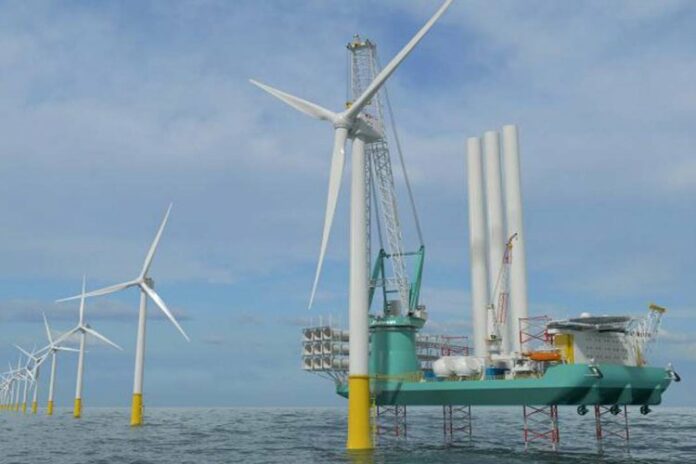
Huisman has announced that it has signed a Letter of Intent (LOI) with Yantai CIMC Raffles Offshore for the delivery of a 2,600mt Leg Encircling Crane (LEC) for OIM Wind’s BT-220IU Wind Installation Unit. The LOI includes the option for the delivery of a LEC for a second installation unit.

In order to be deployed for offshore wind installation, the crane setup of the BT-220IU unit has been optimised. With its 140m long boom and 2,600mt lifting capacity, the new Leg Encircling Crane enables OIM Wind to install the next and future generation’s wind turbine generators and foundations safely and efficiently. In highest position, the crane’s main hoist is capable of lifting the maximum load of 2,600mt with a hook height of approximately 165m above main deck level. 

For this project, Huisman will implement the same robust and proven technology on drive systems and slewing bearings as used for the LECs that the company has been delivering to the offshore wind market over the past years, e.g. to installation vessels Seajacks’ Scylla and Van Oord’s Aeolus. Huisman LECs are characterised by their lightweight, yet robust crane designs, with a high level of reliability, positioning accuracy and energy efficiency. 

The BT-220IU Wind Installation Unit has been designed by CIMC’s engineering office in Yantai, P.R. of China, and its subsidiary Bass Tech AB, Sweden, based on technical input and market knowledge from OIM Wind Ltd. The crane for the first unit will be built at the Huisman production facility in Xiamen, P.R. of China. Huisman will deploy its Skyhook Crane for the installation of the LEC along its quayside, scheduled for late 2022. 

Oddgeir Indrestrand, OIM’s Founder, President and CEO:

“OIM have been working closely with Huisman over a long period, and we are very pleased to install Huisman’s ‘state-of-the-art’ 2,600mt Leg Encircling Crane, and more of their products aboard our upcoming newbuilds.” 

David Roodenburg, CEO at Huisman:

“Huisman is excited to build upon the relationship with CIMC and OIM to deliver this Leg Encircling Crane and support the development of sustainable offshore wind projects. We have great respect for their entrepreneurship and are very proud to be participating in their ambitions for the future.” 

Features & benefits of the Huisman Leg Encircling Crane:

  • A fully electrically driven system, resulting in high positioning accuracy, efficient energy use, reduced maintenance and high reliability.
  • In-house developed slew bearing system, providing highly reliable and accurate positioning of the crane.
  • A unique Lambda boom design ensuring a lightweight and stiff design.
  • Stiff construction of the Lambda shaped boom leading to reduced motion at the crane tip.
  • Small tail swing allowing for optimised utilisation of free deck space.


Costa Toscana floated out at Meyer Turku shipyard

0

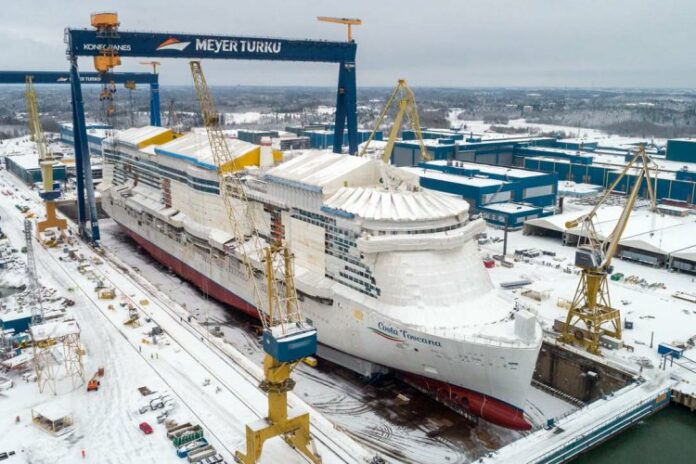
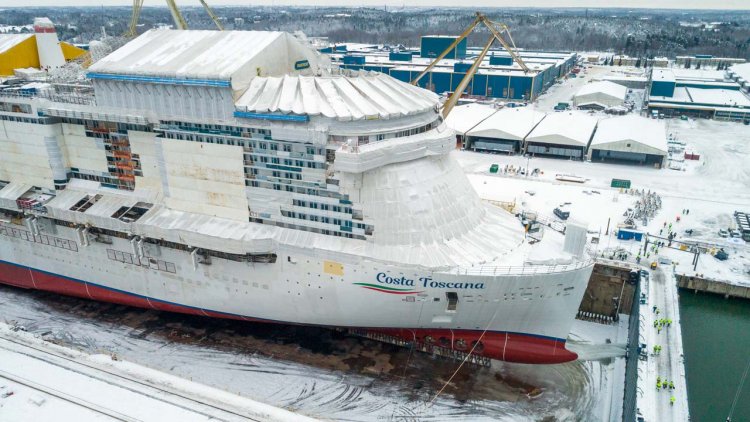
The LNG powered, 185 000 GT, cruise ship Costa Toscana was floated out to the outfitting pier at Meyer Turku shipyard. 

CEO of Meyer Turku, Tim Meyer, says:

“The float-out is always a very special occasion for us shipbuilders, as the ship is finally set to her natural environment. As this is also the start of the final stage of shipbuilding, all the exciting colors, venues and features will start taking their final form. In the coming months she will be finalized at the pier and then tested and commissioned in the autumn for delivery.”

Chief Commercial Officer of Costa Cruises Mario Zanetti explains:

“Looking beyond the pandemic, we are focusing on to complete the transformation of our fleet and operations into a sustainable model. In addition to LNG technology, we are developing other innovative solutions, such as shore power and batteries, as we continue to work towards achieving zero emissions over time.”

Costa Toscana is a sister ship to Costa Smeralda, delivered from Turku in 2019. As befits her name, she will present to the guests the best of Italy’s famous region with delicacies, food, wine and relaxed living. Adam D. Tihany has curated the design of the interior, as with Costa Smeralda.

Costa Toscana is powered by liquefied natural gas (LNG) and has been designed with a circular economy concept. The use of LNG will eliminate all sulfur dioxide emissions and almost all particular matter emissions (95-100% reduction), while also significantly lowering emissions of nitrogen oxides (direct reduction of 85%) and CO 2 (up to 20%). The ship also has an intelligent energy efficiency system, and 100 % of the ship’s recycling materials (such as plastic, paper, glass and aluminum) will be carried out of the ship and recycled.

Rowan Viking drilling rig back at the Edvard Grieg field

0

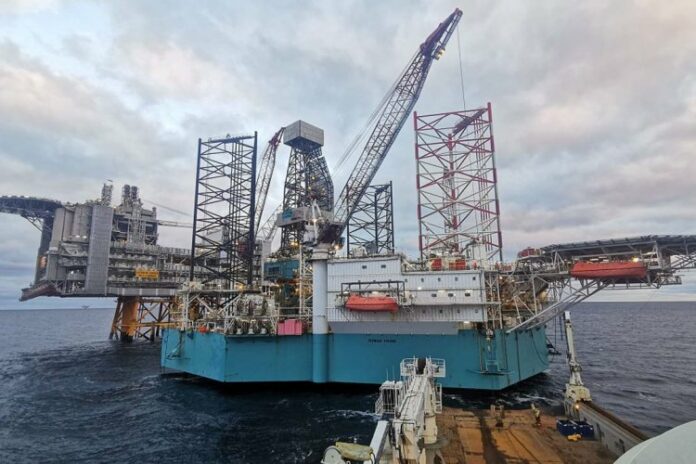
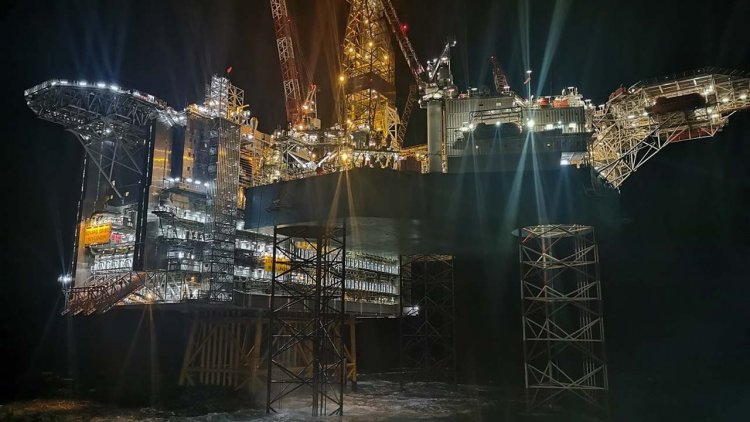
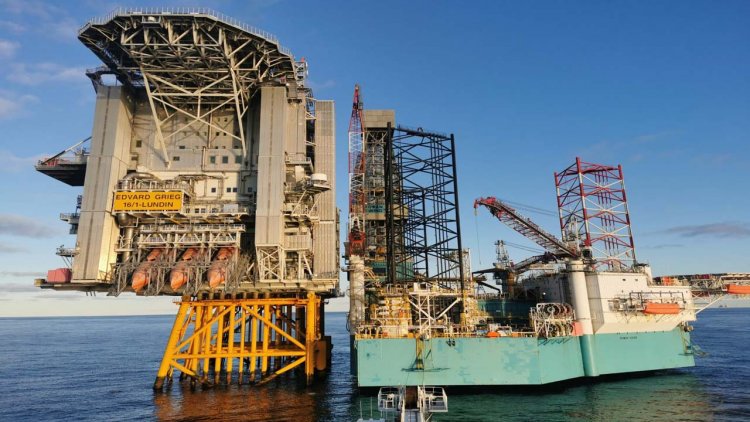
This is the same rig that drilled all the production and injection wells on the Edvard Grieg field during both the development and production phases.

The Rowan Viking has been stationed in the Åmøy fjord, preparing for the assignment. Last weekend, the rig retracted its legs and embarked upon the tow-out to the field. This is a complex operation that requires good planning and a high level of precision.

Several vessels are involved, both for anchor-handling and to tow and manoeuvre the rig into place, alongside the Edvard Grieg platform. It has now been secured on the seabed, with a gangway connection to Edvard Grieg.

The Edvard Grieg platform is designed to not have its own drilling equipment on board. Instead, a separate drilling rig is used, one that has the option of pushing the actual derrick out, making it possible to drill straight down through the platform deck at Edvard Grieg.

According to current plan Rowan Viking and Edvard Grieg will be joined partners until late October.

Brittany Ferries to commence Rosslare-Cherbourg route two months early

0

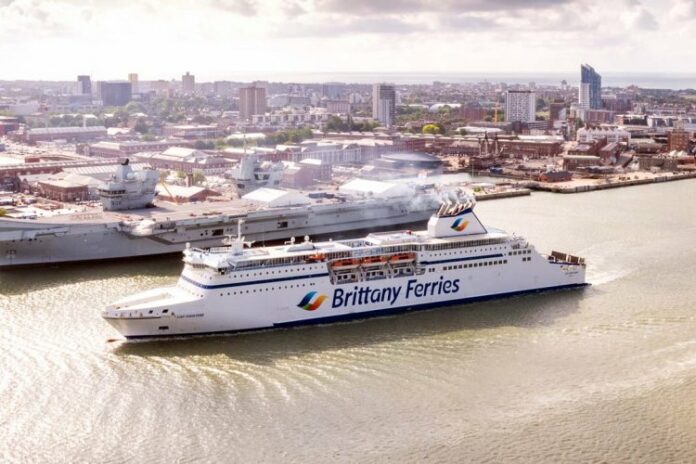
Brittany Ferries has moved quickly to support the freight sector and to meet the needs of an industry battling Brexit. It has today confirmed its new weekly crossing connecting Cherbourg with Rosslare, which was due to commence in March, will now begin on Monday 18 January 2021. This will initially be served by vessel, Cap Finistère.

Irish and French hauliers have traditionally relied on the UK-land bridge when transporting goods to and from mainland Europe. However, since the beginning of the year, more companies have sought an alternative to the additional administration, new formalities, greater costs and potential delays that come from carrying goods though the UK.

Brittany Ferries therefore confirms today that Cap Finistère will cover the twice weekly sailing connecting Rosslare and Bilbao, taking over from Connemara until 10 February. As a consequence of this ship’s flexibility, Brittany Ferries will also add a weekly rotation connecting Rosslare with Cherbourg to the schedule, opening this Ireland-France route two months earlier than originally planned.

Christophe Mathieu, Brittany Ferries CEO, said:

“Brittany Ferries prides itself on decisive action, based on the flexibility of its fleet and we can meet the needs of the marketplace quickly. Cap Finistère is our fastest Ro-Ro vessel and she is therefore well suited to opening this new Brexit by-pass, making an additional sailing each week connecting France and Ireland.”

Glenn Carr, General Manager, Rosslare Europort, said:

“All at Rosslare Europort welcome Brittany Ferries’ swift response to the needs of Irish industry in commencing this year’s Rosslare to Cherbourg services two months earlier than planned. We have worked closely with Brittany Ferries in ensuring that arrangements for the service were quickly put in place, further cementing Rosslare Europort’s position as Ireland’s Gateway to Europe.”

Cap Finistère is 204 metres long and weighs 33,000 gross tonnes. She entered service with Brittany Ferries in 2010, serving the company’s long-haul routes connecting Portsmouth (UK) and Santander and Bilbao (Northern Spain). She has plenty of space for drivers and passengers, with 265 en suite cabins. Her garage decks offer nearly 2km of space for freight vehicles, and she is the fastest ship in the fleet with a top cruising speed of 28 knots.

Scientists offer road map to improve environmental observations in the Indian Ocean

0

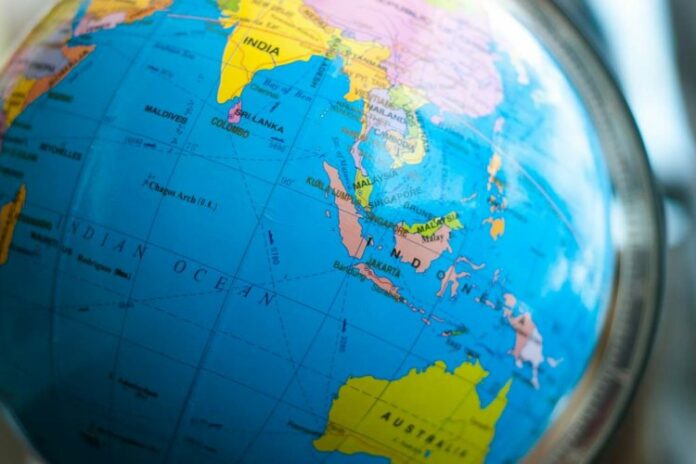
A group of more than 60 scientists have provided recommendations to improve the Indian Ocean Observing System (IndOOS), a basin-wide monitoring system to better understand the impacts of human-caused climate change in a region that has been warming faster than any other ocean.

The group, led by Lisa Beal, professor of ocean sciences at the University of Miami (UM) Rosenstiel School of Marine and Atmospheric Science, provides a road map for an enhanced IndOOS to better meet the scientific and societal needs for more reliable environmental forecasts in the next decade. The 136 actionable recommendations from the three-year, internationally coordinated review were published in the Bulletin of the American Meteorological Society.

The scientists call for four major improvements to the current observing system:

1) more chemical and biological measurements in at-risk ecosystems and fisheries;

2) expansion into the western tropics to improve understanding of the monsoon;

3) better-resolved upper ocean processes to improve predictions of rainfall, drought, and heat waves; and

4) expansion into key coastal regions and the deep ocean to better constrain the basin-wide energy budget.

Although the smallest of the major oceans on Earth, the Indian Ocean is home to roughly one-third of the global population living among the 22 countries that border its rim. Many of these countries are developing or emerging economies vulnerable to climate changes such as sea level rise and more extreme weather events. The Indian Ocean also influences climate globally and is thought to have played a key role in regulating global mean surface temperatures.

The Indian Ocean Observing System, established in 2006, is a multinational network of sustained oceanic measurements that underpin understanding and forecasting of weather and climate for the Indian Ocean region and beyond. IndOOS is part of the Global Ocean Observing System (GOOS) which is coordinated through the World Meteorological Organization and the Intergovernmental Oceanographic Commission of the United Nations.

IndOOS-2 will require new agreements and partnerships with and among Indian Ocean rim countries, creating opportunities for them to enhance their monitoring and forecasting capacity, said the authors.

Lauritzen Bulkers signs the Neptune Declaration on Seafarer Wellbeing and Crew Change

0

The declaration was developed by the Maritime Industry Crew Change Taskforce created as an outcome of the Global Maritime Forum’s 2020 Virtual High-Level Meeting.

The taskforce brings together representatives of companies from across the maritime value chain as well as organizations including ICS, ITF, International Maritime Employers’ Council, the Global Maritime Forum and the World Economic Forum.

The declaration is a statement of intent towards solving the international crew change crisis. The declaration identifies the following main actions:

  • Recognise seafarers as key workers and give them priority access to COVID-19 vaccines
  • Establish and implement gold standard health protocols based on existing best practice
  • Increase collaboration between ship operators and charterers to facilitate crew changes
  • Ensure airline connectivity between key maritime hubs for seafarers

The Maritime Industry Crew Change Taskforce has stated that a collaborative and multi-stakeholder response is necessary to solve the crisis; and that shipowners, ship-operators, ship managers, charterers, customers, insurers, ports, unions, associations, airlines and governments all have a role to play.

Niels Josefsen, CEO of Lauritzen Bulkers said:

“We support this initiative and look forward to playing our part as an owner-operator to tackle the crew change crisis”.

The formal launch of the declaration will be in late January 2021, in conjunction with the World Economic Forum’s Davos Agenda Week.