-10 C
New York
Home Blog Page 702

Corvus Energy introduces standardized ISO footprint containerized battery room solutions

0

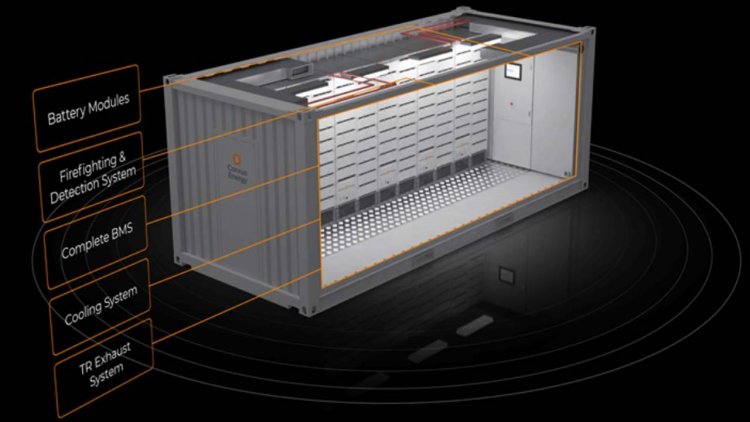
The Corvus BOB is a standardized, class-approved, modular battery room solution available in 10-foot and 20-foot ISO high-cube container sizes.

The complete energy storage system (ESS) comes with battery, battery monitoring system (BMS), cooling, TR exhaust, and firefighting and detection system. The “Plug and Play battery room” simplifies integration into any system integrator’s power management system on board a ship.

Though Corvus started on a container concept back in 2016, Shell has been the major driving force behind the modular and standardized thinking. The energy major believes that owners and operators of many vessel types will benefit significantly from the flexibility offered by a modular, containerized battery system.

Bo Jardine, Shell’s Global Category Manager – Marine, responsible for chartering offshore support vessels (OSVs), says:

“Batteries are going to be on board as the industry decarbonizes, regardless of which fuel are used now or in the future. The benefit of a containerized battery system is that you can add more containers if additional capacity is needed or move containers to another vessel in your fleet if charter contracts or operational requirements require it. It is easy to exchange the ESS when new technology is available and take the ESS off for a second life on shore. Upfront builders’ risk in the shipyard is reduced via the ability to pre-test and assure the battery solution before integration into a vessel. Furthermore, costly rework to the vessel is avoided and turnaround to change battery capacity is faster.”

The Corvus BOB will also provide a supporting gateway for the integration of future fuels technologies such as hydrogen fuel cells into vessels.
Ronald Hansen, SVP Ship Solutions at Corvus Energy and project lead, says:

“The Corvus BOB is a flexible, cost-effective energy storage solution that reduces complexity and risk for the system integrator, shipowners and design companies. With the Corvus BOB, they get a fully approved stand-alone battery room without having to spend time on the configuration inside. The BOB is suitable for both retrofits and newbuilds and we are confident that the solution will enhance project planning and schedules in addition to save time and cost for transportation, installation and commissioning. Being a fully scalable ESS with a standard ISO footprint also makes it an ideal solution for projects where increased capacity is needed. We will continue working closely with all integrators to provide them with the best possible solutions.”

The first Corvus BOB system will incorporate the Corvus Orca ESS, the world’s leading battery system suitable for a wide range of vessels including offshore vessels, cruise and ferries, merchant vessels, workboats and fishing vessels. The system will be DNV-GL type approved.Efraim Kanestrøm, VP Sales at Corvus has worked closely with shipowners and operators in the development phase of the product. He said:

“We are extremely happy to have the Corvus BOB ready for the market as we see a big need for a standardized plug and play solution to simplify battery installations for both shipowners and integrators. The ISO container footprint on the battery room It is a well-known standard and makes the transportation and installation predictable for all parties.”

In the near future, standardized Corvus BOB containers will be available with the full range of Corvus batteries, so that customers can choose the battery type and unit size best suited for each project application. Use of a common BMS will enable combinations of Corvus ESS with different characteristics to be installed and operate in concert to provide optimum energy and power availability.

Alfa Laval joins forces with marine industry players to accelerate decarbonization

0

Alfa Laval has joined a project with DTU Energy, Haldor Topsoe, Svitzer and the Mærsk Mc-Kinney Møller Center for Zero Carbon to accelerate the development of solid oxide fuel cell (SOFC) technology, which can use green fuels to generate electricity. 

The International Maritime Organization (IMO) targets a 50 percent reduction of vessel-related greenhouse gas emissions by 2050. Today, global shipping accounts for around 3 percent of global carbon emissions, a share which is estimated to increase in the coming decades (as other industries tackle climate emissions). To achieve the long-term target of decarbonization the industry must shift towards new fuel types and technologies.

To accelerate the development of viable technologies, a coordinated effort within applied research is needed across the entire supply chain. The project, ‘SOFC4Maritime’, will target utilization of future green fuels – such as ammonia, hydrogen or bio-methane – for power production onboard marine vessels.

Sameer Kalra, President of the Marine Division, says:

“Addressing shipping’s environmental challenges – and climate change in particular – will require a diverse range of strong technologies. By partnering with fellow marine industry experts, we can investigate the possibilities and bring them to fruition in time to make a difference.”

Hapag-Lloyd deploys extra-loader for easing disruptions in India

0

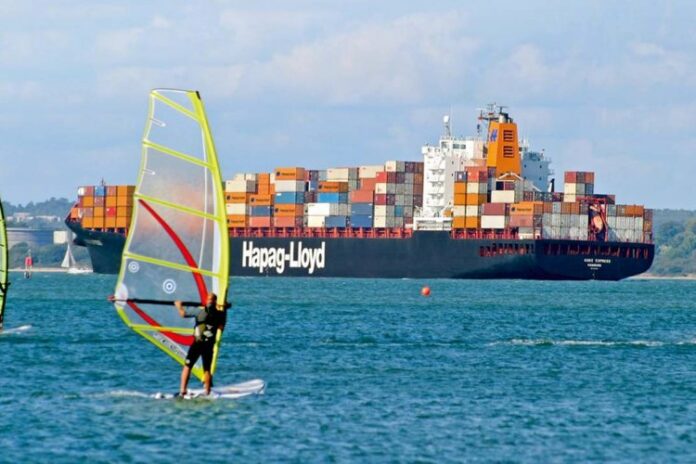
Hapag-Lloyd has invested in additional services to ease the build-up of containers in India and also to improve the challenging situation at the port of Colombo which is heavily congested.

Starting end of January, Hapag-Lloyd is offering a fortnightly sailing from Chittagong to Krishnapatnam connecting Bangladesh onto the South India – Europe Express service (IEX). Furthermore one extra-loader vessel will be deployed between India and North Europe improving Hapag-Lloyd´s current service portfolio.

Lars Sorensen, Managing Director India of Hapag-Lloyd:

“With these extra loader we are able to improve our service offers for customers in India and Bangladesh but also in North Europe. The huge demand we are currently seeing is pretty unprecedented and we do our utmost to support our customers with extra capacity.”

The Great Lakes Towing Company names latest Damen Stan Tug harbour tugs

0

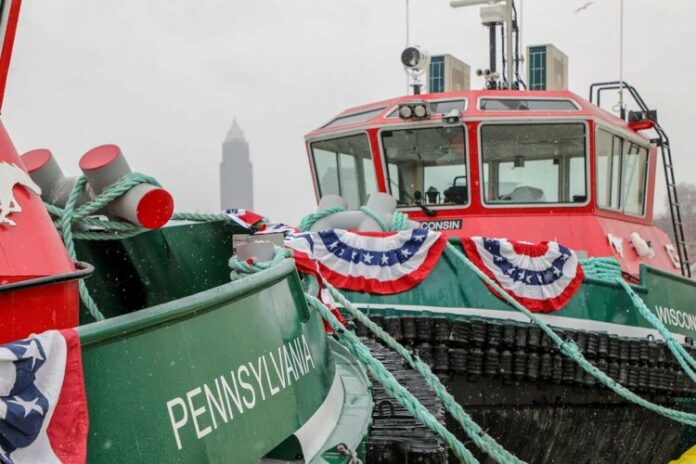
On 16th December, The Great Lakes Towing Company named two new tugs, the Pennsylvania and Wisconsin, at the Cleveland, Ohio, facility of its sister company Great Lakes Shipyard.

The new tugs are the fourth and fifth vessels in a series of ten Damen Stan Tug 1907 ICE harbour tugs that Great Lakes Shipyard is building for The Great Lakes Towing Company’s operations, via Damen Technical Cooperation (DTC).

Operated by two-man crews, these compact and versatile tugs deliver up to 30 tonnes of bollard pull and can be found in operation all over the world. Their relatively small size and high manoeuvrability makes them ideal for the Great Lakes region with its narrow waterways and many low bridges. The tugs’ ability to operate safely in icy waters is also essential given the very cold temperatures that occur there in the winter. The vessels for The Great Lakes Towing Company are also fitted with hybrid propulsion systems to minimise emissions when idling and also to reduce main engine lifecycle costs.

In his opening remarks at the ceremony, Joe Starck, president of The Great Lakes Towing Company, paid tribute to the resilience shown by the employees of the shipyard in completing the tugs despite the many challenges presented by the COVID-19 pandemic. He also thanked the companies’ stakeholders, many of whom had tuned-in during the virtual event, for their support through these challenging times.

First to be named as the snow fell was the Pennsylvania, sponsored by Louise Kandzer, partner of Gregg Thauvette, the company’s senior vice president – operations. This was then followed by the naming of the Wisconsin, sponsored by Sally Stevens, the wife of Robert Zadkovich, vice president – business development.

The new tugs are replacing four existing boats from the Towing Company’s fleet that are being retired as part of the company’s modernisation programme, which was initiated largely in response to the US Coast Guard Subchapter M regulations coming into force in 2016. The new tugs will operate throughout the Great Lakes and up into the St. Lawrence Seaway. The first Damen Stan Tug 1907 ICE for The Great Lakes Towage Company entered service in July 2017 and the sixth tug in the programme will be delivered later this summer.

Great Lakes Shipyard is building the tugs under the terms of a Licensing Agreement with Damen and is the exclusive builder of Damen’s Stan Tug 1907 ICE harbour tugs in the USA.

Arklow Shipping chooses Satcom Global Aura VSAT for new build vessel communications

0

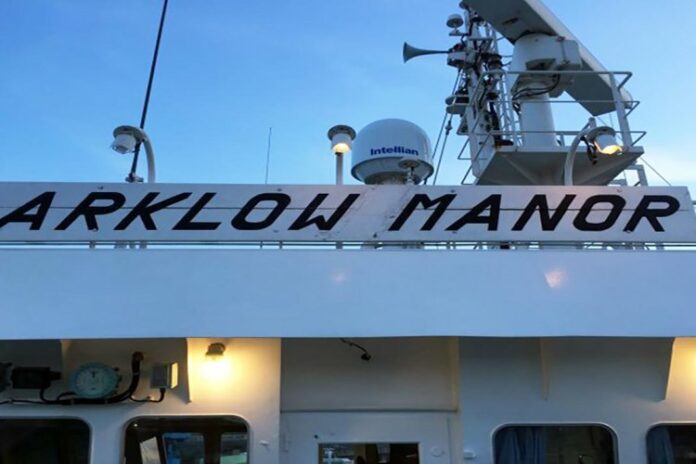
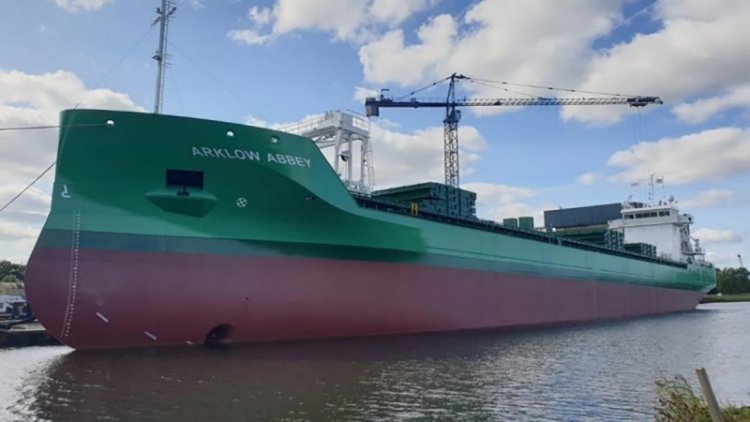
Arklow Shipping (Arklow), the Ireland headquartered ship owner and charterer, has contracted communications solutions provider, Satcom Global, to install Aura VSAT across seventeen new build vessels which will begin delivery in 2021.

The new vessels will be activated on a range of Aura service packages, all with Committed Information Rate for guaranteed service quality, and companion options to suit their different sailing patterns. Ten new C-Class vessels will benefit from unlimited Ku-band connectivity with 4G back-up to complement their short sea shipping requirements and operations close to shore. The additional Seven 6,500-ton vessels will have Iridium Certus activated onboard as a high-speed back-up to the primary VSAT connection.

Graeme Gordon, Global Commercial Director at Satcom Global, commented:

“As an early adopter of Aura VSAT, we are delighted that Arklow has chosen to extend the service to their new build vessels, ensuring access to the same quality technology and user experience that other vessels in the Arklow fleet have benefited from. It is a pleasure to work with the Arklow team, and we look forward to supporting their evolving communications needs long into the future.”

Arklow currently has 20 vessels using Satcom Global Aura VSAT, supporting communications requirements for both business operations and crew connectivity and wellbeing.

Declan Lott, IT Manager at Arklow Shipping commented:

“We have firsthand experience of the excellent quality connectivity Aura VSAT delivers, so it was a natural decision to install the service across our growing fleet of vessels. As a ship owner and manager, it is imperative to keep operations running smoothly and the in-depth knowledge that Satcom Global has of our fleet and our needs, enables them to deliver a first-class service and support.”

Satcom Global is providing Intellian v85NX Ku-band systems to deliver the Aura VSAT service to Arklow vessels, boasting the most efficient and high performing RF gain over any other sub 1m antenna on the market. Iridium Certus will be supported by the new feature-rich Intellian C700 terminal.

Satcom Global has worked with Arklow for over 15 years. Prior to adopting VSAT technology for their vessels, Satcom Global supplied Arklow with a range of satellite communications solutions, including Inmarsat and Iridium services for vessel voice, data connectivity and GMDSS safety services.

Arklow was established in 1966, with seven owned ships. In the 50 plus years that has followed, the company has bought, sold and built vessels, with a steady company expansion scheme resulting in an impressive fleet portfolio of 59 ships today.

UCLA researchers propose strategy that uses seawater to trap billions of tons annually

0

Most experts agree that halting climate change—and the global warming, extreme heat events and stronger storms that come with it—will require the removal of carbon dioxide and other greenhouse gasses from the atmosphere. But with humans pumping out an estimated 37 billion metric tons of carbon dioxide annually, current strategies for capturing it seem likely to fall short.

Now, a UCLA research team has proposed a pathway that could help extract billions of metric tons of carbon dioxide from the atmosphere each year. Instead of directly capturing atmospheric carbon dioxide, the technology would extract it from seawater, enabling the seawater to absorb more. Why? Because, per unit volume, seawater holds nearly 150 times more carbon dioxide than air.

The researchers outline their concept, dubbed single-step carbon sequestration and storage, or sCS2, in a paper published today in the journal ACS Sustainable Chemistry & Engineering.

Senior author Gaurav Sant, director of the UCLA Institute for Carbon Management and a Samueli Fellow and professor of civil and environmental engineering and of materials science and engineering at the UCLA Samueli School of Engineering, said:

“To mitigate climate change, we need to remove carbon dioxide from the atmosphere at a level between 10 billion and 20 billion metric tons per year. To fulfill a solution at that scale, we’ve got to draw inspiration from nature.”

Since the atmosphere and the oceans are in a state of equilibrium, if carbon dioxide were to be extracted from the ocean, carbon dioxide from the atmosphere could then dissolve into it. In this scenario, seawater is like a sponge for carbon dioxide that has already absorbed its full capacity, and the sCS2 process aims to wring it out, allowing the sponge to absorb more carbon dioxide from the atmosphere.

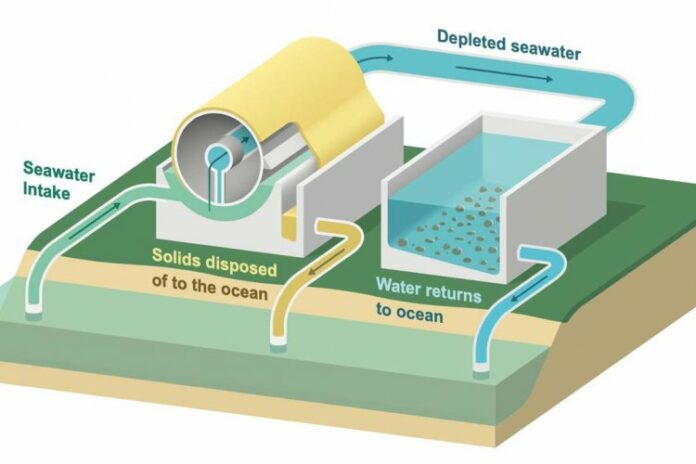
The proposed technology would incorporate a flow reactor—a system that continuously is fed raw materials and yields products. The seawater would flow through a mesh that allows an electrical charge to pass into the water, rendering it alkaline. This kicks off a set of chemical reactions that ultimately combines dissolved carbon dioxide with calcium and magnesium native to seawater, producing limestone and magnesite by a process similar to how seashells form. The seawater that flows out would then be depleted of dissolved carbon dioxide and ready to take up more. A co-product of the reaction, besides minerals, is hydrogen, which is a clean fuel.

sCS2 is meant to durably store carbon dioxide in the form of solid minerals. The first author Erika Callagon La Plante, a former UCLA assistant project scientist, added:

“Durable, safe and permanent storage is the premise of our solution.” 

The team carried out detailed analyses of the material and energy inputs and the costs required to realize their concept, as well as what to do with the byproducts. Unsurprisingly, given the enormous magnitude of the carbon challenge, they estimate that it would take nearly 1,800 sCS2 plants to immobilize 10 billion metric tons of carbon dioxide each year, with a cost in the trillions of dollars.

Sant said:

“We should be clear: Managing and mitigating carbon dioxide is foremost an economic challenge. Many of today’s approaches for carbon management either require more clean energy than we can produce or are unaffordable. As such, we need to create solutions that are accessible and that will not impoverish the world. We have tried to use a lens of pragmatism to consider how we may be able to achieve synthetic interventions at an unprecedented scale, while considering the finite energy and financial resources we have.”

Still, the researchers believe that sCS2, even at smaller scales, represents an advance in carbon-capture and storage that should be considered as a potential part of any overall strategy for confronting climate change.

DP World Antwerp Gateway orders fleet of Automated Stacking Cranes from Konecranes

0

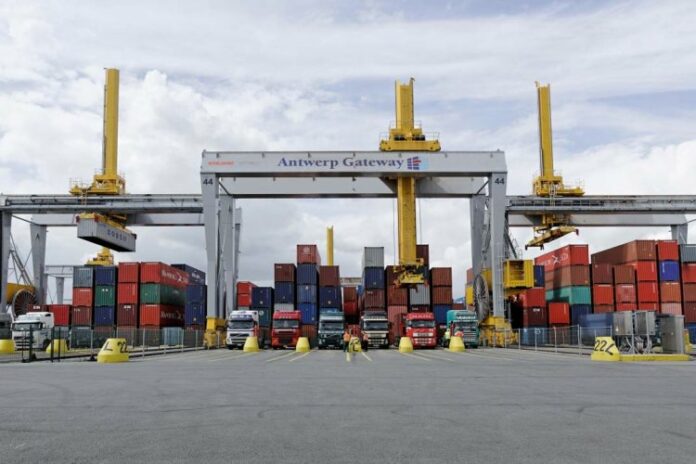
DP World Antwerp Gateway has ordered a fleet of 34 Automated Stacking Cranes (Konecranes Gottwald ARMGs) for its container terminal in Antwerp, Belgium. 

The cranes will be an expansion to the current fleet of 20 ARMGs currently in operation. The first batch will be delivered in Q2 2022, the last batch by 2026. This order was booked in December 2020.

DP World Antwerp Gateway was very motivated to continue their current operating concept, using their current ASC system delivered by Gottwald in 2006. With this new ASC system, featuring a fleet of Konecranes Gottwald ARMGs, the advantages of the latest automation technologies will be exploited.

Jef Lambregts, Head of Projects at DP World Antwerp Gateway, said:

“We had a series of deep discussions with Konecranes regarding every aspect of our automation expansion at our terminal. Eventually, we were convinced that Konecranes could provide every dimension needed. We need technology continuation of our current ASC concept. We want to take advantage of the latest developments in automation technology. We will get improved automated truck handling and remote operation ergonomics.”

The new ASC system order will follow the Gottwald ARMG design concept, the most notable physical feature being the rigid guiding beam for container load control. A new trolley design has been developed to support an increased lifting height. The new design will be based on Konecranes’ proven technology, with a hybrid of existing systems for auto-landing on the truck chassis.

As part of the project, TBA will extend the existing Equipment Control System (ECS) used at the terminal. The TBA ECS is highly flexible and field-proven, able to operate reliably and efficiently across every type of automated container handling equipment and every Terminal Operating System (TOS) and equipment combination.

The new Konecranes Gottwald ARMGs will stack containers 1-over-6 spanning 9 container rows, providing excellent stacking density.

Port Services from Konecranes will also be part of the delivery. There will be an extension to the current Service Level Agreement (SLA), which will include software updates.

Fraunhofer IWES is carrying out an offshore survey in the German Baltic Sea

0

Fraunhofer IWES is conducting a boulder detection and geohazard survey of 50 wind turbine locations and the associated OSS within the Baltic Eagle offshore wind farm on behalf of Iberdrola S.A.

The three-week measurement campaign in the Baltic Sea took place back in October and November 2020, using the novel proprietary Manta Ray G1 system developed by Fraunhofer IWES for data recording. The acquired data are currently being interpreted at the institute with the goal of completing the project by the end of April 2021.

Iberdrola S.A. and Baltic Eagle GmbH were awarded the rights to construct the Baltic Eagle offshore wind farm in the Baltic Sea in 2018. The Baltic Eagle OWF is located northeast of the German island of Rügen in the direct vicinity of existing and planned offshore wind farms.

Kevin O’Reilly, Ground Engineering Manager for Baltic Eagle, explained:

“We are happy to be working with Fraunhofer IWES on boulder detection to minimize the risks involved in installing large diameter monopiles in challenging ground conditions.”

When constructing offshore wind turbines, boulders and other geological features (shallow gas accumulations, cohesive strata) may pose a risk to the erection of the wind turbines. In particular, boulders in the sediment can cause damage to the driven piles during installation of the support structures. Potential termination of installation and extended delays can result in high costs for wind farm developers. Accurate knowledge of the sub-seafloor geology (e.g., position of boulders in the sub-seafloor) allows for efficient, small-scale micro-siting of the foundations, thus minimizing the installation risks.

The Manta Ray G1 is a novel data acquisition system developed by Fraunhofer IWES and the University of Bremen specifically for the purpose of diffraction imaging and the localization of point diffractors within marine sediments. Diffraction refers to the deflection of waves by an obstacle. In addition to the diffraction data, conventional 3D seismic reflection data are acquired along the profile lines. The system operates on the principle that objects within the seafloor act as point diffractors when illuminated by a signal source. 

The recording of the resulting acoustic diffractions and accurate processing of the diffracted energy allow localization of the original diffraction, i.e., the boulder in the sediment. The specially designed acquisition geometry of the Manta Ray G1, together with synthetic aperture processing, allows blanket coverage of the survey area, resulting in excellent overall data coverage as well as time- and cost-efficient survey operations.

Dr. Benedict Preu, Head of Department Sub-surface Investigations at Fraunhofer IWES, stressed:

“Fraunhofer IWES is supporting Iberdrola in de-risking the monopile foundations planned in Baltic Eagle by deploying its proprietary boulder imaging technology. Tasks like these showcase our ability to provide tailored solutions for the challenges posed by offshore site investigation. As such, we are making a major contribution to supporting the wind energy industry to overcome the limitations of state of the art technology.”

ABB Azipod electric propulsion makes bulk carrier debut in Oldendorff ship delivery

0

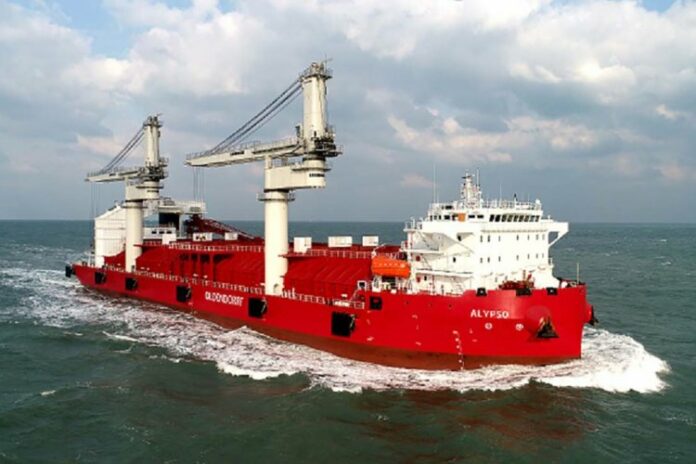
The delivery saw two 1.9-MW Azipod® units installed on each of the 21,500-DWT transshipment bulkers for Germany’s largest bulk carrier owner, as part of a package of electric, digital and connected solutions from ABB.

The scope of supply also included diesel-electric power plant, drive systems complete with two bow thruster motors, power management systems for propulsion and cargo handling, as well as a 50/60-Hz connectors to draw on zero emission shore power when in port.

Joern Westfehling, Newbuilding Manager, Oldendorff Carriers, said:

“Collaborating with ABB has been a very positive experience.  We look forward to reaping the operational rewards of Azipod® propulsion, such as enhanced vessel efficiency and increased maneuverability.”

Mr. Jiafa Jiang, Vice General Manager of Chenxi Shipyard (Yangzhou) Co., Ltd added:

“This was Chengxi Shipyard’s first time installing Azipod® technology, and the process went remarkably smoothly. Compared to a conventional propulsion system, ABB Azipod® propulsion has greatly reduced the construction complexity for the yard thanks to its simple design and ease of installation. ABB worked seamlessly with Chenxi Shipyard to ensure successful delivery of this world’s first self-unloading transshipment vessel. I would like to devote my appreciation to the ABB project and commissioning team for their professional working spirit.”

Controlling a fleet of around 700 ships, around 95% of Oldendorff’s owned fleet is comprised of ‘eco’ newbuilds delivered since 2014, which are specifically designed for low fuel consumption and reduced carbon footprint. And since its forthcoming vessels will be tasked with transferring cargo from oceangoing ships in deep water for delivery to a port with restricted draft and space, maneuverability is also a vital consideration.

Juha Koskela, Division President, ABB Marine & Ports, said:

“We are delighted that the first bulk carriers to feature Azipod® propulsion have been successfully delivered. The project fully demonstrates that Azipod® is the go-to solution for environmentally conscious operators of all ship types. Because the electric drive motor is housed within a submerged pod outside the ship’s hull, the Azipod® unit is capable of 360-degree rotation, improving maneuverability and operational efficiency. This also frees up cargo space on board, potentially boosting vessel profitability further.”

Rolls-Royce supplies mtu gas engines for world’s first LNG tugboat with hybrid system

0

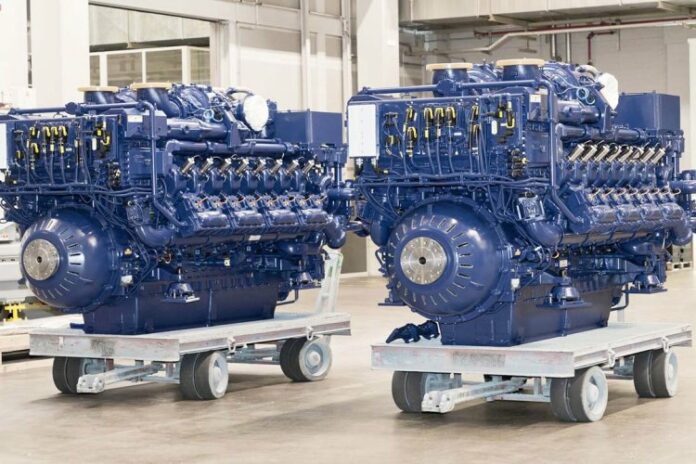
Rolls-Royce is supplying two mtu 16V 4000 M55RN gas engines to Sembcorp Marine Integrated Yard for the construction of the world’s first liquefied natural gas (LNG)-hybrid powered tug. 

The harbour tug will be operated in Singapore by Jurong Marine Services, a wholly owned subsidiary of Sembcorp Marine. The new LNG-hybrid tug is the first of 12 tugs that Sembcorp Marine plans to design and build to replace the existing diesel-powered ones between now and 2025.

Chew Xiang Yu, Head of Rolls-Royce Power Systems’ commercial marine business in Asia, says:

“We are very happy to be part of Sembcorp Marine’s efforts in environmental protection and adopting new green technologies in their operations. The mtu marine gas engines are part of Rolls-Royce’s Green and High-Tech programme. Without exhaust gas aftertreatment, they emit no sulfur oxides only very small quantities of nitrogen oxide, and particulate mass is below the verification limit.”

This is the first LNG-hybrid tug to be powered by mtu gas engines worldwide. Designed by LMG Marin (Norway), part of the Sembcorp Marine group, to deliver 65T Bollard Pull (BP) with ABS Class, the LNG-hybrid tug is estimated to be completed in the later part of 2021. The main propulsion system of the tug comprises twin 16-cyclinder mtu Series 4000 gas units which will provide a combined total power of 2984 kilowatts at 1600 RPM (revolutions per minute). The new gas engines are able to deliver performance comparable to a high-speed diesel engine.

Equipped with multipoint fuel injection, dynamic engine control and enhanced turbocharging, the engines cater for dynamic acceleration capabilities, high power output and reduced emissions considerably below the current IMO III limits without the need for exhaust aftertreatment. The LNG-hybrid propulsion system will be able to provide flexibility to cater for various operational modes and is able to switch between low emission liquefied natural gas (LNG) engines and zero-emission battery power.

The new mtu gas engines are already powering ferries operated by the Dutch shipping company Doeksen in the specially protected Wadden Sea. A Lake Constance ferry operated by Stadtwerke Konstanz will also start operating in 2021 with the new mtu gas engines.