6.8 C
New York
Home Blog Page 7

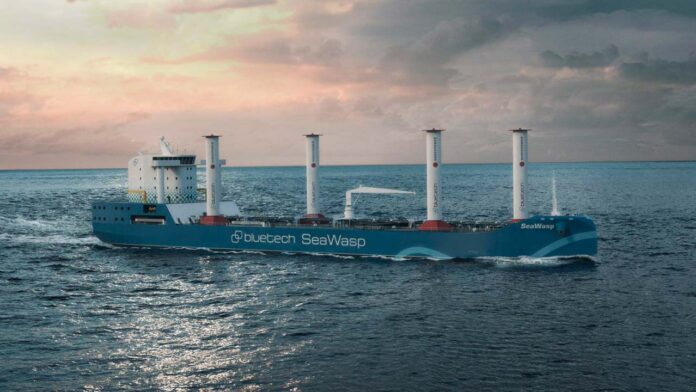
Norsepower and Bluetech take the wind propulsion to the next level in SeaWasp tanker concept

0

As part of INSW’s long-term sustainability strategy, the partners set out to explore how much extra savings and emission reductions ship design, in conjunction with Norsepower Rotor Sails™ could provide to the concept.

The outcome is a resounding confirmation of the technology’s potential with total savings of up to 876 kW of propulsion power on one representative INSW MR tanker route from San Francisco to South Korea – equating to around 597.2 MT of fuel per annum, and the additional fuel savings attributable to the design contributing up to 13.5% of those savings in certain conditions.

“We focused on more than just energy savings and emissions reduction — our goal was a concept design that works in the real-world conditions of the MR trade.” explained Michael LaGrassa, Director of Performance and New Construction at INSW. “That meant ensuring reasonable build costs, equivalent cargo capacity, and a design fit for purpose. Our approach was to test a wide range of scenarios across the MR trade, rather than rely on selectively favorable assumptions.“

With Norsepower Rotor Sails at its core, Bluetech’s design modifications were demonstrated to extract signifanctly greater forward thrust. In one of the simulations, on a San Francisco–South Korea route, two 35m x 5m Norsepower Rotor Sails delivered an average propulsion power of 876 kW — equivalent to 597.2 MT of fuel annually. Bluetech’s Director of Energy Savings Solutions, Sam Robin, emphasised: “We set out to develop a ship that is entirely WASP-optimised while maintaining every essential operational feature and meeting trade-specific restrictions. The result is a vessel design that significantly enhances propulsion without compromising practicality.”

The SeaWasp project also investigated performance across less favourable wind conditions. On the South Korea–Singapore route, for example, savings of 185.9 MT of fuel were still achievable. This balanced approach was important to ensure the commercial projections of the project remained realistic.

Bluetech’s naval architects incorporated a range of innovations to maximise efficiency. “The BT50 design is itself approximately 12% more efficient than the typical tanker performance profiles in the sample fleet. Our design modifications enhance that efficiency even further,” said Robin.

Above the waterline, the design includes an aero superstructure and semi-enclosed mooring stations to reduce wind disturbance. Beneath the waterline, a new fin system dubbed ‘blueSURF’ was shown by CFD analysis to significantly increase power saving potential. Juha Hanhinen, Bluetech’s Head of Hydrodynamics, admitted: “We were surprised by how significant the fin effect was — it creates a powerful case for combining hydrodynamic improvements with wind propulsion.”

Norsepower also supported comparative studies of different Norsepower Rotor Sail™ configurations. “In the simulations related to this specific case, four 24m x 4m sails were marginally better, but overall, the two 35m x 5m sails offered the highest potential savings at lower cost,” explained Severi Sarsila, Sales Engineer at Norsepower.
KONGSBERG to deliver combat system to Germany and Norway’s 212CD submarines

0

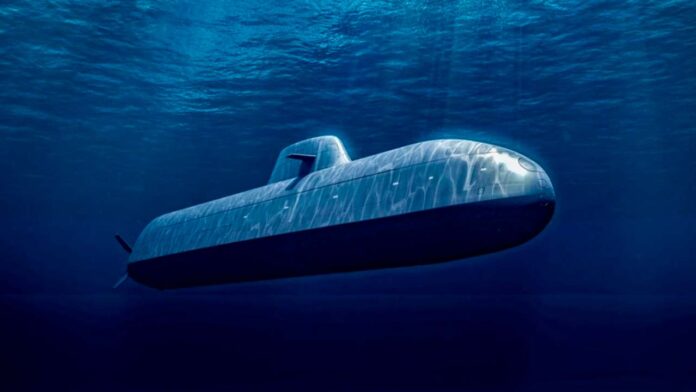
Kongsberg Defence & Aerospace has signed a contract for the delivery of ORCCA® combat system elements to four 212CD submarines for the German Navy and two for Norway.

Earlier in December 2025, the Norwegian government announced plans to acquire two more 212CD submarines, in addition to the four that have already been ordered. The proposal is awaiting formal approval by the Norwegian parliament (Stortinget).

“Following these orders, Norway and Germany will together operate a fleet of 12 modern submarines equipped with the industry’s most advanced combat system. Submarines are an important strategic capability, helping to deter potential adversaries and strengthen the defense of national interests,” said Eirik Lie, President of Kongsberg Defence & Aerospace.

KONGSBERG signed the contract with kta naval systems, which was established to develop combat systems for non-nuclear submarines, and to develop, produce and maintain combat systems for submarines from TKMS. Kta naval systems is a joint venture between TKMS, its Naval Electronic Systems business unit (ATLAS ELEKTRONIK) and Kongsberg Defense & Aerospace.

Ocean Winds launches its first offshore wind and metocean measurement campaign

0

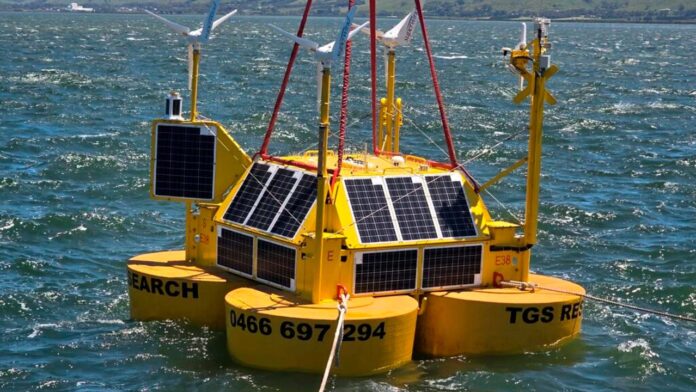
Ocean Winds (OW) has launched its first offshore wind and metocean measurement campaign for its High Sea Wind project in Gippsland, Victoria; working with TGS, a leading global provider of energy data and intelligence

The campaign will collect high-quality wind, wave, current, and environmental data in the High Sea Wind feasibility licence area using an EOLOS floating LiDAR buoy equipped with advanced sensors. All data will be rigorously quality-controlled and delivered daily, ensuring transparency and reliability for project partners and stakeholders. The resulting dataset will be critical to informing turbine selection, project design, environmental assessments, and grid planning.

By providing accurate information on Gippsland’s offshore environment, this campaign also aims to strengthen trust with local communities, industry partners, and policymakers. The High Sea Wind project will leverage these insights to grow the regional supply chain, open new opportunities for local businesses, and contribute to Australia’s shift toward clean energy.

Pelayo Rodriguez Alonso, Head of Business Development APAC for Ocean Winds, said: “At Ocean Winds, we believe robust data is the foundation of responsible offshore wind development. Through High Sea Wind, we are committed to delivering insights that empower communities, inform investment, and accelerate Australia’s journey toward a sustainable energy future.”

Through the 1.3 GW High Sea Wind project, enough electricity will be generated to power one million Victorian households annually, while preventing up to 5.3 million tons of CO₂ emissions each year.

GTT receives an order from HD KSOE for the tank design of a new LNG Carrier

0

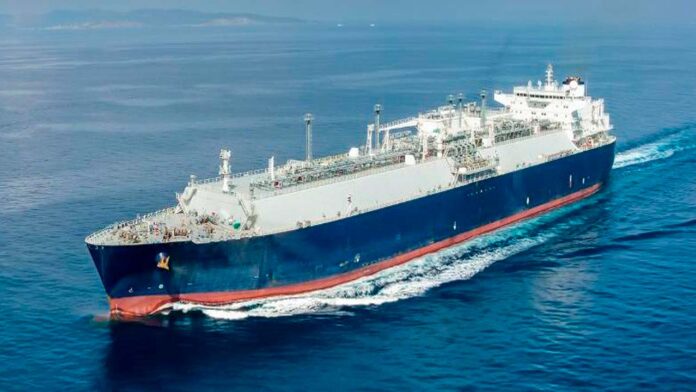
GTT announces that it has received, in the fourth quarter of 2025, an order from HD Korea Shipbuilding & Offshore Engineering (HD KSOE[1]) for the tank design of a new Liquefied Natural Gas Carrier (LNGC).

The LNGC will be built by the shipyard Hyundai Samho Heavy Industries (HSHI) on behalf of the ship-owner Hyundai Glovis. With a total capacity of 174,000 m³, the vessel’s cryogenic tanks will be fitted with the Mark III Flex membrane containment system, a technology developed by GTT.

Delivery of the vessel is scheduled for the fourth quarter of 2028.

Austal awarded contract for two Evolved Cape Class Patrol Boats for ABF

0

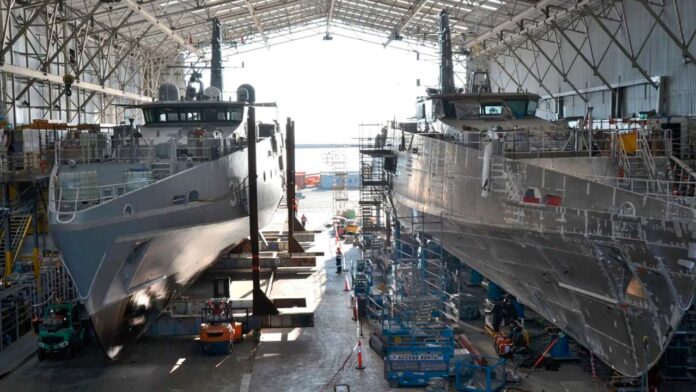
Austal Limited announces that Austal Ships Pty Ltd has been awarded a further contract extension for the construction of two additional Evolved Cape-class Patrol Boats for the Australian Border Force (ABF).

This latest award, valued at over A$135 million brings the total number of Evolved Cape-class Patrol Boats contracted to Austal to 14 vessels, reinforcing the long-standing partnership between Austal, the Australian Border Force and the Royal Australian Navy in delivering critical maritime capability for Australia’s national security.

Austal Limited Chief Executive Officer, Paddy Gregg, said the additional vessels continue to strengthen Maritime Border Command’s readiness and operational reach.

Paddy Gregg said:

“Over the past five years, the Evolved Cape-class Patrol Boats have proven themselves as highly capable, reliable assets for Australia’s border protection missions. With nine Evolved Capes already delivered and performing exceptionally with the Royal Australian Navy, and two more already under construction for the Australian Border Force, this new order further enhances Australia’s maritime surveillance and response capability across Northern Australia and our vast maritime domain.”

Austal delivered eight original Cape-class Patrol Boats to the Australian Border Force between 2012 and 2015; these were followed by additional orders and deliveries to the Royal Australian Navy (2 vessels) in 2017 and Trinidad and Tobago Coast Guard (2 vessels) in 2021.

Since 2020, the Commonwealth of Australia has ordered 12 Evolved Cape-class Patrol Boats for the Royal Australian Navy, and Australian Border Force. The addition of these thirteenth and fourteenth Evolved Capes reflects continued confidence in the platform’s performance, Austal’s proven reliability and the strength of Australia’s sovereign shipbuilding capability.

The Evolved Cape-class Patrol Boat design features expanded accommodations for up to 32 personnel, enhanced quality-of-life systems and advanced sustainment technologies to maximise operational availability. The vessels support a wide range of constabulary and naval missions and are a key element of Australia’s border security architecture.

Construction of the two new patrol boats will take place at Austal’s Henderson shipyard in Western Australia, supported by a proven national supply chain and integrated project teams from the Department of Defence and the Australian Border Force.

TechnipFMC awarded subsea contract for the Coral North FLNG development offshore Mozambique

0

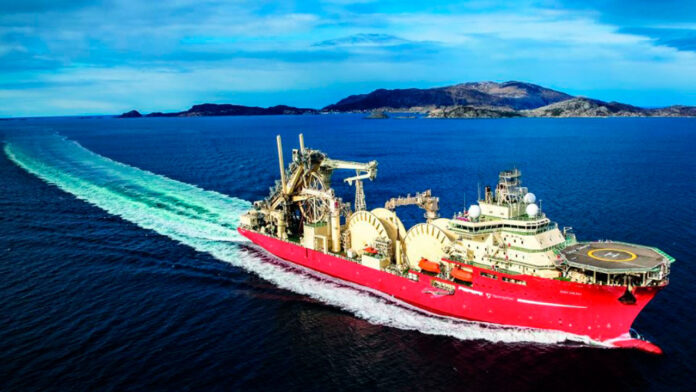
TechnipFMC has been awarded a substantial Engineering, Procurement, Construction, and Installation contract by Eni S.p.A. for the Coral North development, the second floating liquefied natural gas (FLNG) project offshore Mozambique, in water depths of approximately 2,000 meters.

Jonathan Landes, President, Subsea for TechnipFMC, commented: “We are excited to once again work with Eni and their consortium partners in Mozambique. We will leverage our experience gained from the successful delivery of Coral South—the world’s first FLNG project in ultradeep water—by replicating our proven playbook with an enhanced approach.”

TechnipFMC will manufacture and install flexible flowlines and risers, as well as install subsea manifolds and umbilicals.

Bluewhale Offshore and OOS Group sign agreement and launch of BlueOOS

0

Under the agreement, Bluewhale Offshore shall hold a substantial stake in OOS-International B.V., a well-established offshore specialist with more than 15 years of experience in offshore accommodation, heavy lift, decommissioning, and field maintenance services across global markets. Bluewhale Offshore, based in Singapore, is part of the CIMC Group with its own shipyard CIMC Raffles in Yantai (China).

By bringing together Bluewhale’s capabilities in asset management with OOS Group’s expertise in project execution, ship management and offshore operations, the partnership creates a robust platform for delivering safe, reliable, and cost-efficient solutions throughout the full lifecycle of offshore projects.

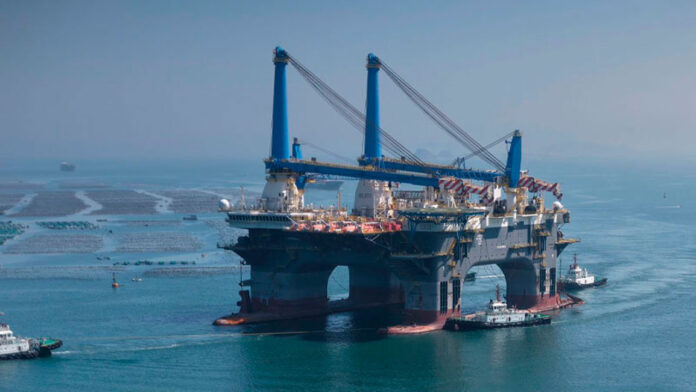
A key element of this next phase is the introduction of BlueOOS. Operating under this new name, the former OOS International brand will continue its activities with full operational responsibility within the new structure. BlueOOS represents the combined strengths of both organizations and serves as the unified identity for their shared ambitions. The organization will operate and manage a fleet consisting of three semi-submersible units configured for both accommodation and heavy lift, one accommodation-focused semi-submersible unit, and two liftboats. BlueOOS has a total contract backlog of more than USD 700 million which makes BlueOOS the new market leader in providing high-end offshore accommodation solutions.

In the period ahead, the focus will be on executing a disciplined integration process, aligning systems and operating practices, and ensuring uninterrupted delivery for ongoing projects. Health, Safety, and Environment (HSE) will remain the uncompromising foundation of all activities.

DEME secures two marine works contracts in Italy and Spain

0

DEME’s Dredging & Infra segment has secured two marine works contracts in Southern Europe, highlighting its expertise in environmental remediation and coastal protection.

In Italy, DEME will deliver marine works for the prestigious 38th America’s Cup sailing competition in Naples, including offshore breakwaters and seabed remediation at the Bagnoli-Coroglio site. Meanwhile, in Spain, DEME will restore three beaches along the Valencian coastline through a large-scale nourishment project, to combat erosion and safeguard the shoreline for the long term.

Jan Vandenbroeck, Area Director South Europe, comments: “These two contracts underscore DEME’s commitment to delivering sustainable, innovative solutions to complex marine challenges – from environmental remediation to coastal protection – while supporting the legendary America’s Cup and safeguarding natural heritage. They also strengthen our position in the Mediterranean, where DEME continues to partner with local stakeholders to deliver high impact projects.”

The project in in the Bay of Naples focuses on the remediation and redevelopment of the Bagnoli–Coroglio industrial area. A consortium of DEME and Italian companies Savarese Costruzioni and Iterga Costruzioni Generali will perform marine works including 900 meters of offshore breakwaters, the removal of approximately 130,000 m³ of sediments, and demolition of the decaying central pier and former steel plant service buildings. Substantial completion is scheduled by next summer to enable urban regeneration and preparations for the preliminary regattas of the America’s Cup.

In Spain, DEME has been awarded the Valencia beach nourishment project by the Ministry for Ecological Transition (MITECO) in a joint venture with Rover Maritime.

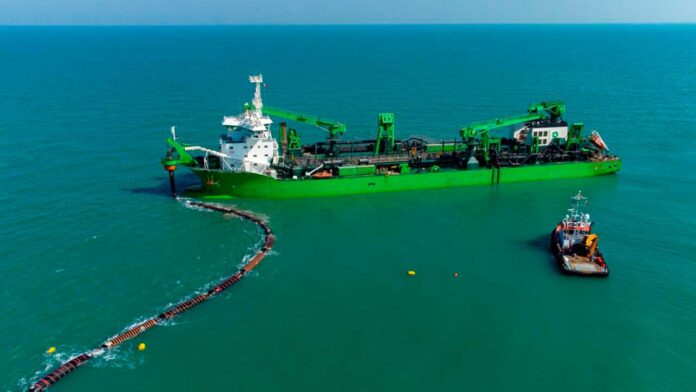
The project will restore and protect three popular beaches (Sagunto, Sueca, and Cullera) which have suffered severe erosion over recent decades. Works include dredging and placing approximately 3 million m³ of sand using DEME’s advanced trailing suction hopper dredger Bonny River, which can operate at depths beyond 100 meters. Additional measures such as dune restoration and new groins will ensure long-term coastal stability, allowing residents and visitors to enjoy the coastline in its natural splendor once again.

Breaking the ice: divers head beneath UK’s polar research ship in Antarctic sea ice mission

0

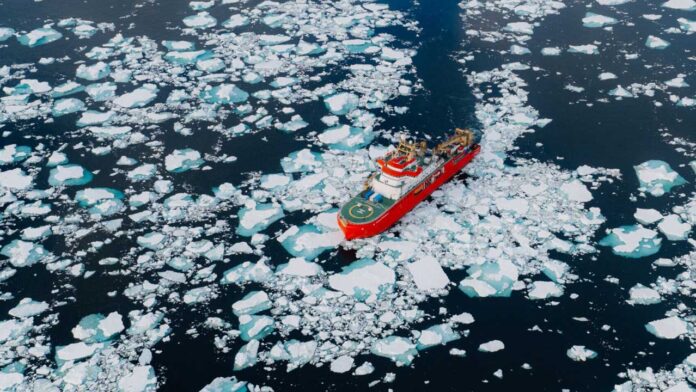
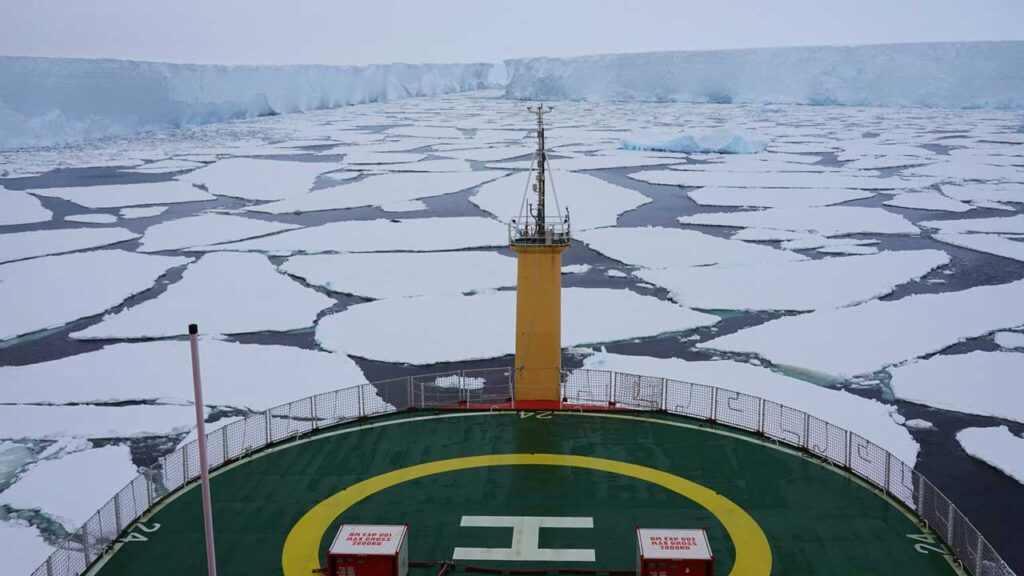
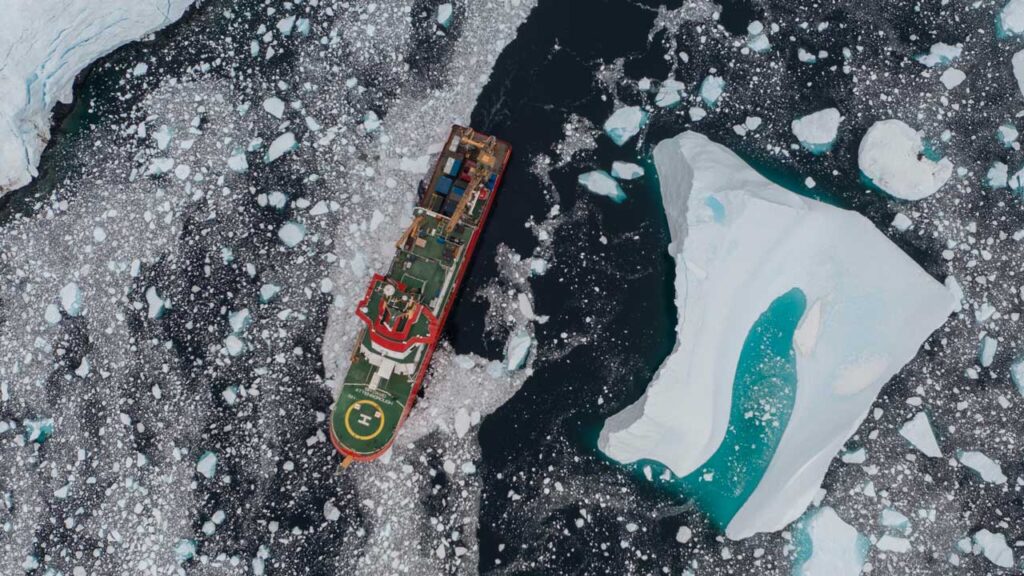
Specialist divers will be entering the icy waters of the Weddell Sea, Antarctica this festive season (22-29 December) as part of a groundbreaking mission to test RRS Sir David Attenborough’s (SDA) ability to navigate through challenging sea ice conditions.

Entering the water via a tethered cage lowered directly over the ship’s stern, the divers will deploy twice a day beneath the UK’s state-of-the-art polar research ship. They’ll be retrieving groundbreaking measurements of how the vessel’s propellers interact with sea ice – using instrumentation deployed in the Antarctic for only the second time.

The SDA made its maiden voyage to Antarctica in 2021 and has completed several important science expeditions since then. While it’s already shown its capability to break through sea ice, these trials will test the ship’s performance in specific ice conditions. Importantly, the results of this mission will mark a significant advancement in understanding how polar research vessels cope with sea ice and, importantly, make a significant contribution to maritime safety in polar environments.

Central to the ice trials is an instrumented propeller blade that will record the forces and loads experienced by the propellers as the ice flows under the ship. The instruments have a limited battery life , requiring divers to deploy beneath the vessel twice daily – typically morning and evening – to download data and recharge the instruments.

The ship will be put through its paces in two distinct types of ice: level fast ice – ice that is attached to the coast and stationary – and large ice floes containing pressure ridges. These ridges form when the floes are pushed together by wind and ocean currents. Understanding how the vessel responds to these features is crucial for determining its operational limitations.

Each testing sequence follows a carefully choreographed pattern. For level fast ice, the ship will drive through the ice, recording data as it goes. Teams will then be lowered onto the ice to measure its properties – including thickness, salinity, temperature – and collect ice cores which can be tested for crushing strength. To test the ship’s performance in the ice ridges, the team will take ice measurements before the vessel breaks through. The ship will then move through the ice ridge, again collecting data on the how the propellers are affected.

The trials also include turning manoeuvres in pack ice and ‘glancing impact’ tests, where the ship drives at an angle into the edge of an ice floe whilst sensors record the pressure on the hull.

The data collected by the instrumented propeller, combined with measurements from strain gauges on propeller shafts, borescopes (which will capture photos and video of the ice moving under the ship) and pressure sensors on the hull, will provide unprecedented insight into ship-ice interactions.

Dive operations also form a critical component of the testing programme. A diver will be deployed under the ship twice a day to download the data and to recharge the propellor instruments.

The trials will focus on areas around James Ross Island and the eastern Antarctic Peninsula.

The results could have implications for the ship’s scientific programme, potentially enabling operations in ice conditions previously considered too challenging. The data will also help optimise engine performance, with potential benefits for fuel efficiency and carbon emissions.

Photos of dive operations will be available from 30 December 2025.

RWE to sell Polish offshore wind development project to PGE

0

RWE has signed an agreement with PGE for the sale of its F.E.W. Baltic II offshore wind development project in the Polish Baltic Sea.

The wind farm has a planned capacity of 350 megawatts and will be located approximately 50 kilometres from shore, north of the Polish town of Ustka. The transaction is expected to be closed in the first quarter of 2026. The parties already completed the transfer of an Environmental Decision and related data for the adjacent wind development site 44.E.1. to PGE.

Today, RWE already operates onshore wind and solar farms with a combined capacity of more than 660 megawatts in Poland.

Sven Utermöhlen, Chief Executive Officer RWE Offshore Wind: “We are convinced that, in synergy with their other portfolio, PGE is better positioned to realise this project than RWE would be on a standalone basis. However, our target to further grow our offshore wind portfolio remains unchanged. We are currently building four large-scale offshore wind farms in four European countries and have several further offshore projects under development.”

The company currently operates 19 offshore wind farms in five countries with a total installed capacity of 6.2 gigawatts (GW) – RWE’s share in these projects amounts to 3.3 GW. Furthermore, RWE currently has four offshore wind projects under construction in four countries: Sofia off the coast of northern England, Thor in Denmark, OranjeWind off the Dutch coast and Nordseecluster north of the German island of Juist. Once completed, these projects will have a combined generation capacity of 4.8 GW, with RWE’s share amounting to 3.1 GW.