-7.1 C
New York
Home Blog Page 699

DryBMS: New quality standard for dry bulk sector to be governed by new NGO

0

The standard will be governed by a new NGO to be established later this year and will support the improvement of safety in the dry bulk segment.

Both RightShip and INTERCARGO have strongly and consistently advocated the need for significant improvements to dry bulk safety standards. In August 2020 both organisations combined their expertise to create a single framework for the whole industry.

Supported by the International Chamber of Shipping (ICS) and BIMCO, DryBMS now exists as a simple set of best practices and key performance indicators and raises the bar on safety, environmental and operational excellence.

RightShip’s CEO Steen Lund says that he is confident that such a programme will be supported and adopted:

“We are proud to launch DryBMS to the industry. The standard is a product of extensive collaboration with many stakeholders within the dry bulk sector.

“We believe that this ensures the program will be supported and adopted across the industry as a whole. The rapid delivery of the initial consultation document means that we are a step closer to providing consistent, meaningful safety expectations for the dry bulk industry.

“Handing the standard over to a new and independent NGO will ensure the standard is protected and governed with the industry’s best intentions at heart.”
Dimitrios Fafalios, Chairman of INTERCARGO agrees:

“This is an important step, not only for the industry, but for the sector as a whole.  We are all collaborating in a scheme that is being developed by the industry and for the industry, which will deliver a truly robust standard with the buy-in of those that the industry relies upon to implement and support it.”

David Loosley, Secretary General & CEO of BIMCO, said:

“Safety, of people, environment and assets is the primary focus of DryBMS, but the anticipated cascading effect is operational excellence which will benefit all stakeholders. We very much support this collaborative industry effort to develop a single standard and congratulate the efforts of RightShip and INTERCARGO in bringing this initiative to fruition.”

Guy Platten, Secretary General of International Chamber of Shipping, said: “We’re pleased to have worked closely with RightShip and INTERCARGO to bring this important new quality standard to the dry bulk sector. Shipping has, and always will, adhere to the highest possible standards and best practices. The introduction of DryBMS is yet another example of the industries continued efforts to raise the bar on safety, environmental impact and operational excellence.”
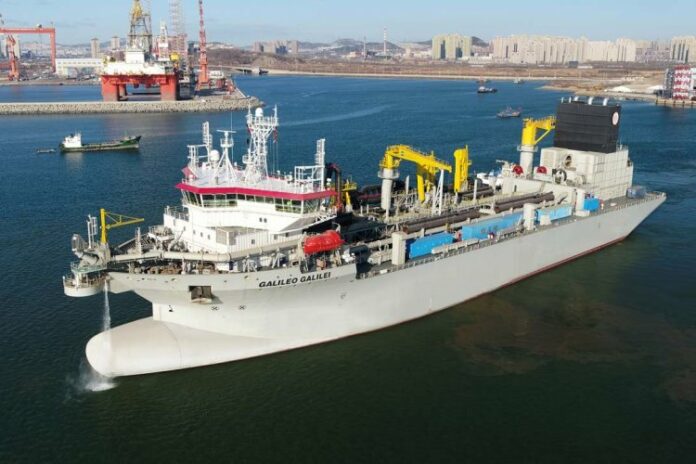
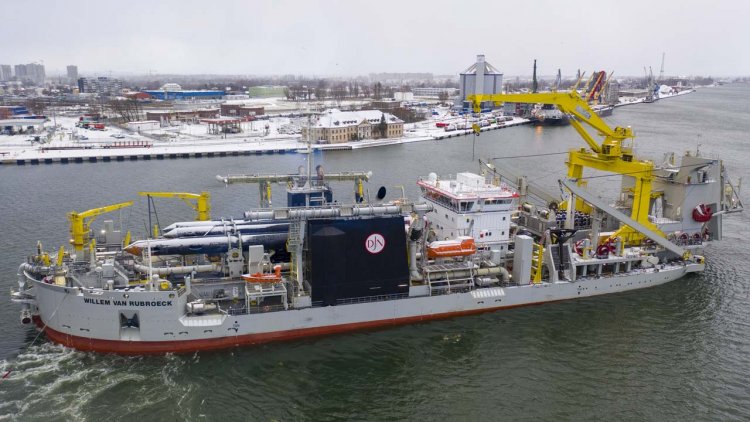
Jan De Nul welcomes two brand-new vessels to its fleet

0

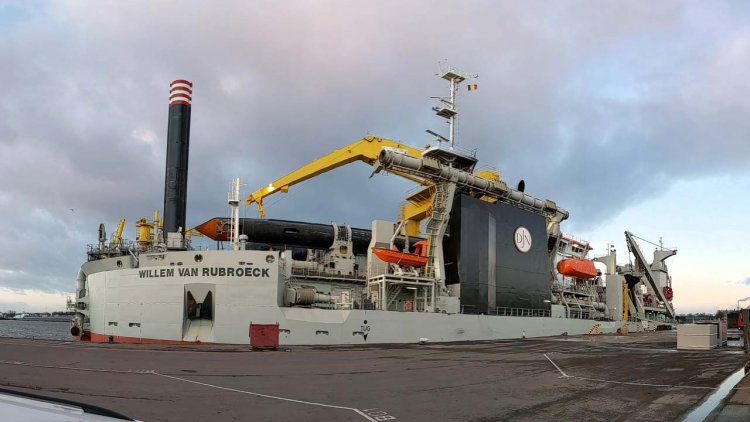
This powerful cutter suction dredger, the largest in Jan De Nul’s fleet, with a total installed power of 40,975 kW, three dredging pumps of 8,500 kW each, a cutter capacity of 8,500 kW and with an operational working depth up to 45 metres.

The Willem van Rubroeck is built to dredge in very hard rocky soil. And thanks to her size, this vessel can cope with more difficult conditions, such as higher waves and more challenging weather conditions.

The Willem van Rubroeck left the shipyard Remontowa in Poland last week. The coming weeks, the vessel will be moored along the quay of Jan De Nul’s logistics hub in Zelzate, Port of Ghent, and prepared for her first assignment.

After successful sea trials last week, the Chinese shipyard Cosco was able to deliver the Trailing Suction Hopper Dredger Galileo Galilei. This dredger has a hopper capacity of 18,000 m³ and joins the medium-sized hopper dredgers of Jan De Nul Group. A special feature of this vessel and unique in Jan De Nul’s hopper fleet is that she has two separated hoppers on board. This allows the dredged material to be spread evenly over both hoppers, thus optimally controlling the load and the draught.

Havyard developing hydrogen zero-emission vessels in new segment

0

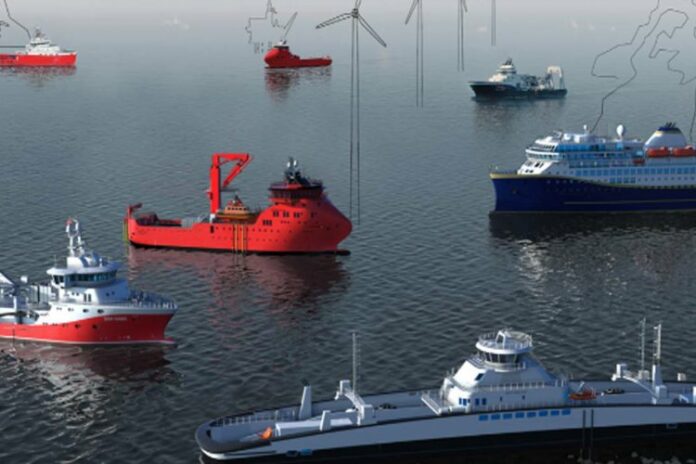
Europe is devoting extensive resources to achieving the climate goals, and the maritime industry is part of the solution. Green solutions and zero-emission vessels are in high demand in several segments.

Now, a European player has contracted Havyard to develop a new ship concept for cargo transport, and it must be emission free. The partner was first introduced to Havyard by Invest in Norway, who has been working with this company for the last 2 years in supporting their entry to the Norwegian maritime industry.

Lars Conradi Andersen, Vice President Sales, says that through this pilot project, Havyard will combine the company’s expertise in hydrogen energy systems and ship design to develop a brand new concept for transporting cargo between European ports.

He says:

‘The framework for this contract is to develop a ship that uses hydrogen-based fuel as its primary energy source while at the same time giving the client an effective and safe ship. The goal is to design a large ship that can sail longer distances with zero emissions.’

The new partner has taken note of Havyard’s hydrogen expertise and work on zero-emission vessels, in addition to Havyard Design’s advanced simulation tool for developing energy-efficient solutions.

Hydrogen-based fuels must be stored differently than traditional fuels, since they require more space and different security systems.

Andersen says:

‘Havyard is the ideal partner in this regard, since our research and development work in the area of both hydrogen and simulation-driven ship design has given us unique cross-cutting expertise in how to design ships with low environmental impact.’ 

Havyard has now established the company Havyard Hydrogen AS as a spin-off of the company’s R&D work in the area of hydrogen propulsion for large vessels that has been carried out over many years, for example through the Pilot-E project FreeCO2ast.

Executive Vice President of Havyard Hydrogen Kristian Osnes says the team is very excited about the contract with the European player, and that Havyard’s green transition work has been noticed in the European market.

Osnes says that they are noticing a trend where the market demands specific zero-emission solutions, and he is looking forward to getting to grips with the challenges of combining the right technology with the right ship design for this client. He says:

‘This is precisely the type of project that we need to expand the portfolio of zero emission solutions into new ship segments.’

The European player has enquired about Havyard’s vessel operations studies and the possibility of using Havyard Ocean LAB to create a digital twin of the ship and put it ‘in operation’ on a virtual ocean. This allows us to experiment with hundreds of alternatives to clarify the basic size and framework conditions for the ship.

The client can then select the best alternatives and the process continues with quality assurance and documentation of the variables of the ships that have made it to the final round. Finally, a digital copy is made of both the ship and the planned route including all information about weather and wind, current and wave data. In this way, the ship has been in digital operation before it has even been built, and all adjustments can be made to ensure maximal efficiency in terms of both the environment and budget.

Crowley awarded fuel distribution contract for Arctic North Warning System

0

The U.S. Defense Logistics Agency-Energy (DLA-Energy) has awarded Crowley Solutions a five-year, $15 million contract for fuels transportation and distribution services for the Canada North Warning System locations supporting the nations’ joint security efforts.

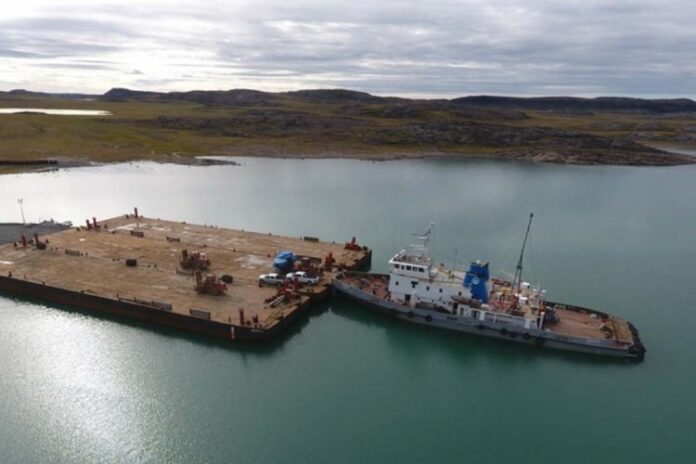
Serving the Canadian arctic region, Crowley will provide ocean transportation of Aviation Turbine, Kerosene Type Jet A-1 w/FSII & CI to stations across the region, leveraging decades of experience in the Arctic. Services will include tanker transport and lighterage-to-barge deliveries at shore – including fuel over-the-shore services.

Crowley’s services will operate based on the company’s proven capabilities to transport and distribute fuel in austere and remote environments – often with minimum infrastructure — to ensure reliable energy supply chains for governments’ critical fuel needs.

Crowley will work in concert with the Government of the Northwest Territories (GNWT) Marine Transportation Services Division to deliver fuels via barge in the region, as well as in collaboration with indigenous peoples there.  The joint operations will leverage economies of scale to provide efficiency and dependability for the governments and the fuel service locations in the North Warning System, serving 21 radar sites spanning the Arctic from Labrador to the Alaska border.

Crowley’s Sean Thomas, vice president, said:

“We are honored the governments trust Crowley to provide the highest degree of operational excellence, asset capability and understanding of the Arctic and the North Warning System. This service will provide reliability, value and high-quality fuel services that make the best use of assets by Crowley and the governments.”

John Vandenberg, assistant deputy minister, programs and services, said:

“Our joint effort with Crowley will put to efficient use the Government of the Northwest Territories’ marine assets to ensure fuel reaches these critical defense stations for both nations within our Northwest region. Our modernized tug-and-barge fleet will couple with Crowley’s tank vessels and other assets to meet and exceed the growing demands of the Western Canadian Arctic.”

LOC China wins eighth Offshore Wind Farm contract

0

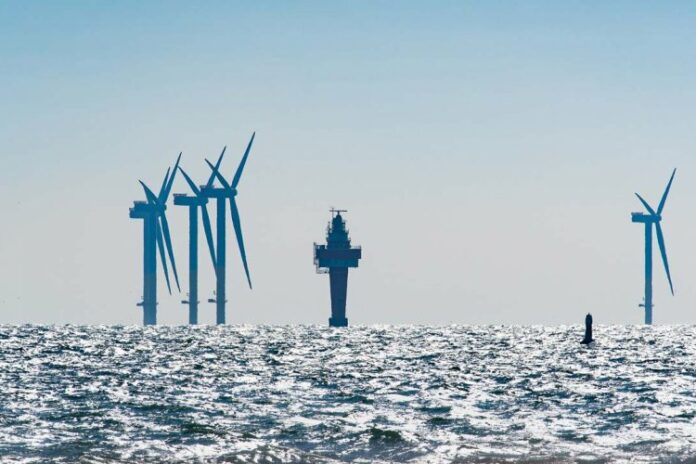
LOC, part of the AqualisBraemar LOC Group, has announced its China subsidiary (“LOC China”) recently won a contract to provide Marine Warranty Survey (“MWS”) services for the transportation, installation and construction operations to the Xuwen OWF, offshore South Guangdong, China.

The contract, which was signed at the end of last year, was the eighth Offshore Wind Farm (“OWF”) contract awarded to LOC China in 2020.

The addition of this latest contract means LOC China will have contributed to a total capacity of 3.9GW across 14 OWF in China alone.

Under the terms of the agreement, the team at LOC China will review all the procedural documentation and site attendance, as well as approve marine operations and provide marine assurance and risk survey services for the suitability of the support and construction fleet. Once approved, the Group will oversee the installation of 95 turbines at the field, with a combined capacity of 600MW.

Commenting, Wenchao Shi, Managing Director at LOC China:

“To have ended 2020 with our eighth offshore wind farm contract in the year for the provision of MWS is a clear demonstration of our expertise and knowledge of the offshore renewables sector within the Chinese market. Winning the most recent contract at the Xuwen field has put the team in a strong position to begin 2021. Furthermore, in merging with AqualisBraemar and its group company OWC, we effectively double our presence in the Asian offshore wind and reinforce our capabilities in China itself, giving us an even stronger platform to support Chinese Offshore Wind and other renewable energy developments in 2021.”

MBOX Terminals signs subscription agreement for Octopi by Navis for its terminal in Serbia

0

Octopi, part of Navis and Cargotec Corporation, the provider of operational technologies and services that unlock greater performance and efficiency for leading organizations throughout the global shipping industry, announced today that MBOX Terminals has selected Octopi by Navis for its new intermodal terminal located in Nis, Serbia, making it the first Octopi customer in Europe.

The terminal selected Octopi’s cloud-based TOS because it provided a modern, comprehensive solution that would optimize operations and increase visibility for stakeholders of the terminal.

As the first intermodal terminal in South and Central Serbia, MBOX Terminals DOO offers direct access to regions of Central and Southern Serbia, Western Bulgaria and Northern Part of North Macedonia. With a capacity of 50,000 TEUs annually, MBOX Intermodal Terminal will operate as the new gateway to the Serbian market and will open the door for new ports to the region via ocean and rail connections. MBOX Terminals selected Octopi by Navis for the TOS at its intermodal location because it is a contemporary platform that will help their team increase visibility of cargo movements for all carriers and other clients, with no additional IT investment, which will help them be a strong competitor in the industry. Additionally, DSP Data and System Planning, certified partner for Navis, will design the Business Process Management, contributing to the operations start-up of the new terminal.

Dejan Nikolic, CEO of MBOX Terminals, said:

“When we needed a TOS for our new intermodal terminal, we knew we would get the best results with Octopi by Navis due to their stellar reputation and proven track record in the industry. We are looking forward to implementing Octopi at MBOX Intermodal to help give us a competitive edge and achieve our goal of becoming the main point in container transportation in the region.”

Martin Bardi, Vice President of Global Sales, Octopi by Navis, said:

“As a result of the changing industry landscape, we are seeing more customers looking for cloud-based solutions to manage their operations. We are thrilled to be expanding our customer base to Europe and are eager to help MBOX Terminals reach their short and long term business and operational goals with Octopi.”

Kongsberg Maritime to supply equipment to world’s largest floating offshore wind farm

0

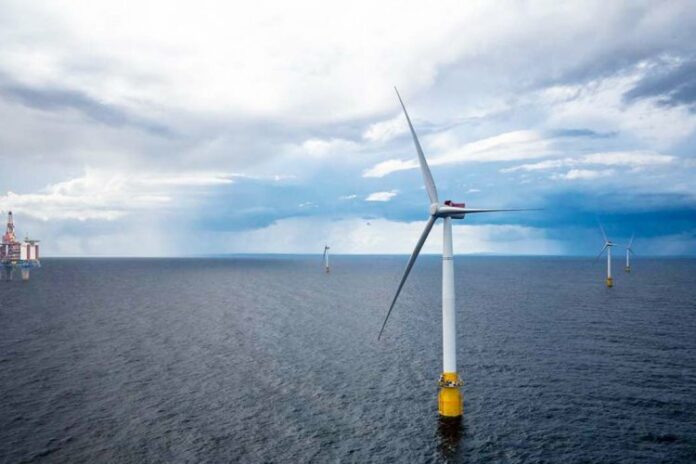
The 88MW installation is the first of its type to be installed to supply renewable energy directly to offshore oil and gas platforms, and Kongsberg Maritime will supply technologies from its existing offshore product portfolio to meet the specific challenges posed by operating in this challenging and sometimes hostile environment.

By using proven equipment which is already successfully in use in other areas of the offshore maritime market, KONGSBERG is able to ensure safe, tried-and-tested performance whilst at the same time reducing both cost and development time.

Kongsberg Maritime’s world-class portfolio of solutions for positioning in the offshore environment is built on many years of experience and application know-how, and core to this product delivery is its DPS position reference system and Motion Reference Unit (MRU). The DPS exploits all available GNSS infrastructure to deliver continuously available, reliable position information, and is ideally suited to monitor the location of the turbines relative to the seabed. This will help to ensure secure, safe and optimal positioning for each unit within the wind farm.

The MRU will check roll, pitch, yaw and heave motion, informing the blade trimming system to ensure that the turbine is not overloaded in strong winds and thus likely to become unstable. Marine traffic situational awareness and visibility to other vessels will be facilitated by the AIS AQ610 base station. All the KONGSBERG equipment permits remote access and monitoring.

Vidar Bjørkedal, Vice President Sales & Customer Support, Kongsberg Seatex AS, said:

“We are delighted to be involved with this innovative project. Kongsberg Maritime’s offshore positioning portfolio leads the market, and it is a testament to the versatility of these existing technologies that they are being shown to be optimal for use in a range of diverse applications, including windfarms.”

ULSTEIN: Cruise vessel ‘Ocean Victory’ ready for sea trial

0

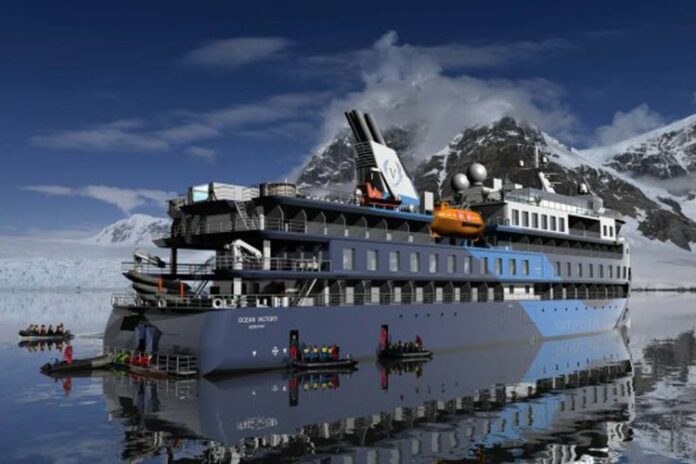
The expedition cruise vessel ‘Ocean Victory’, under construction at the CMHI yard in China, is scheduled for sea trials in the end of week 3, 2021. This is vessel number three in the series of Ulstein designed X-BOW expedition cruise vessel of the CX103 design for SunStone Ships.

All the expedition cruise vessels are on long-term hire to various operators. The ‘Ocean Victory’ has been chartered out to Albatros Travel for Antarctica journeys in the winter season and to American Queen Steamboat Co., through its sister company Victory Cruises, for Alaska cruises in the summer.

The INFINITY series of expedition cruise vessels are the first to be designed with the ULSTEIN X-BOW. Although proven in more than 100 ships, mostly offshore ships, the introduction of this feature to the cruise industry has redefined the cruising experience. In head seas, the impact will be absorbed, leading to reduced vibrations and reduced sea spray. This means that during the sea crossings, the vessel can keep higher speed, while comfort level is high. Important to note is that reduced friction when moving forward means reduced fuel consumption, which in turn, leads to reduced harmful emissions.

KVH Partners with GreenSteam for KVH Watch Maritime IoT Solution

0

KVH Industries has announced that GreenSteam, developers of vessel performance optimization solutions for a sustainable shipping industry, has joined the KVH Watch® Solution Partner program and will offer the KVH Watch service as part of its enhanced performance platform for improved data mobility. 

KVH Watch’s dedicated connectivity will support GreenSteam’s core services, facilitating the movement of data from vessels to shore-based analysts more frequently and reliably in real-time. This will enable customers to better understand the factors leading to fuel wastage and develop more effective sustainability optimization strategies, ultimately reducing costs.

Daniel Slater, head of business development at GreenSteam, says:

“The lifeblood of GreenSteam is data volume, however, without the ability to move this data off a ship in a timely manner to enable rapid assessments and responses, its impact is lessened. As vessels are becoming increasingly sophisticated data generators, this partnership with KVH Watch will enable us to benefit from significant advances in satellite communications by improving the flow of information. This in turn will support shipowners and charterers to make better operational decisions, saving time and money, while reducing emissions.”

Sven Brooks, senior director of IoT business development for KVH, says:

“This is an excellent opportunity for the maritime sector to capitalize on the exceptional gains made in satellite communications and performance optimization technology in recent years. The combination of our Watch HTS connectivity with GreenSteam’s machine learning solutions can result in operational efficiencies, cost savings, and increased sustainability for fleets. This represents one more way that shipping is benefitting from digitalization.”

Digitalization is proving to be a transformative tool for the maritime industry, but with the sector now evolving beyond the data collection stage, attention is turning to the management, storage, and transfer of the data generated. Without real-time data flow from the vessel, machine-learning solutions must rely on incremental data transfers, therefore limiting the accuracy and confidence of the IoT analysis and prediction. With dedicated satellite connectivity, shipowners can capitalize on real-time data analysis to support vessel optimization throughout the course of a sea voyage..

KVH Watch is an IoT Connectivity as a Service solution that provides Flow, secure 24/7/365 machine-to-cloud satellite connectivity for remote monitoring of onboard equipment plus the ability to perform on-demand Remote Expert Interventions using video, voice, or text via KVH’s global HTS network. KVH Watch is designed for maritime system optimization providers such as GreenSteam, maritime equipment manufacturers, multicard service providers, and shipyards seeking affordable monthly subscription-based connectivity that L-band and cellular services cannot deliver at deep sea.

ABS AIP for DSME’s solid oxide fuel cell technology

0

ABS has granted Approval in Principle (AIP) to Solid Oxide Fuel Cell (SOFC) technology developed by Daewoo Shipbuilding & Marine Engineering Co., Ltd. (DSME).

Granting of AIP follows two joint development projects between ABS and DSME, the latest to develop SOFC technology to replace at least one of three diesel generators typically on-board a Very Large Crude Carrier (VLCC).

ABS is now working with DSME on future research and development areas to be carried out during detailed design and testing of the SOFC technology.

Patrick Ryan, ABS Senior Vice President, Global Engineering and Technology, said:

“Fuel cells are an important technology in the development of next generation marine propulsion systems and can make a significant contribution to the industry’s decarbonization ambitions. We are proud to be able to support DSME in developing this system and realizing its potential.”

Dr. Dong-kyu Choi, DSME Executive Vice President, said:

“We have completed the conceptual design, including how to effectively deploy fuel cell systems in a limited space and utilize them safely through joint development projects with ABS, and these joint research results will serve as a cornerstone for future design and test evaluation.”