-4.7 C
New York
Home Blog Page 698

Panama Canal to optimize supply routes for COVID-19 vaccine distribution

0

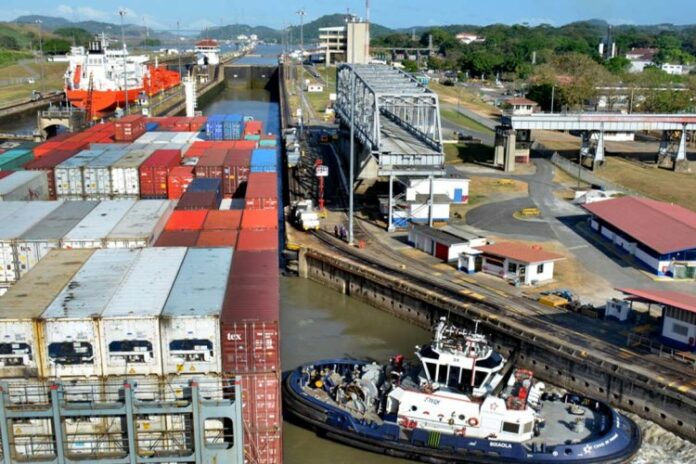
Panama’s logistics capabilities and strategic location at the crossroads of the Americas make it uniquely positioned to assist in meeting the demand imposed on supply chains by the worldwide pandemic.

As part of the agreement, the Panama Canal, PPC and PSA Panama have agreed to undertake joint initiatives to establish an alliance of cooperation and explore working together to form a logistic hub on the Pacific side of the Panama Canal for the storage and distribution of the vaccine and supplies for the region. 

Panama Canal Administrator Ricaurte Vásquez Morales said:

“By forging this partnership, we aim to affirm Panama’s contributions to overcoming this global challenge. We have served the world throughout this global pandemic and together will facilitate its swift recovery through our combined capabilities as the logistics hub for the region.”

The Panama Canal will look into the development of additional facilities to store and/or break-bulk vaccine cargoes, as well as power sources or redundancies and connection roads to both terminals on the Pacific side. 

Jared Zerbe, CEO, Panama Ports Company (PPC), said:

“With this partnership, PPC reiterates its commitment to continue supporting the country when it needs it the most. We will provide the necessary infrastructure and logistics management capabilities through our port equipment, state-of-the-art technological tools and above all with the experience and leadership in the region of our staff in the management of refrigerated containers, a fundamental piece in the transfer and storage of vaccines.”

Alessandro Cassinelli, PSA Panama International Terminal’s General Manager, said:

“Once again, the Pacific of Panama will prove its pivotal role in the logistic of the supply chain of the Americas. This time with an even more complicated but honorable cause which is the receipt and distribution of the vaccine that will help mitigate the devastating worldwide effect of the COVID-19 Pandemic. PSA Panama is proud to play a part in the handling and distribution of the vaccines in Panama. We are ready to offer our combined expertise and the passion of our people coupled with our state of art infrastructure for the greater good.”

PSA Panama and PPC will cooperate with the design and equipment necessary to transport the containers with the vaccine between the terminals and the facilities. The ports will also provide operational expertise to explore their current terminal’s capacities to handle increased refrigerated containers. 

Samskip launches direct container services between Amsterdam and Ireland

0

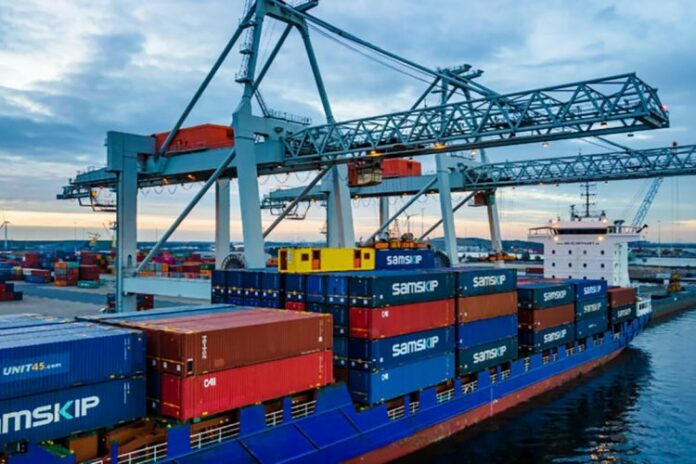
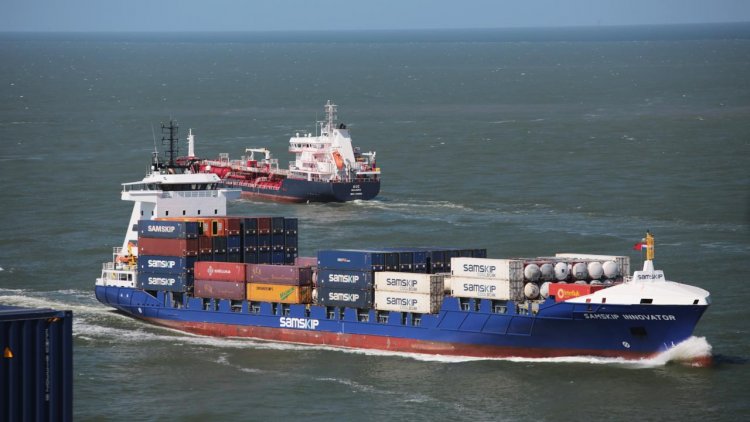
Samskip has ramped up its shortsea container connections between Ireland and North Continental Europe by introducing a new dedicated service link into Amsterdam. 

The weekly connection will mean Irish imports can avoid post-Brexit hassles applying to goods received via UK-based distributors, while exports will benefit from greater reach into EU markets in the northern Netherlands, Germany and beyond.

Launching on January 25th, the fixed day service departs from the TMA Terminal Amsterdam on Monday evenings for arrival in Dublin on Wednesday and a weekend return to Amsterdam. This complements Samskip’s existing Rotterdam-Ireland shortsea services by offering rail, barge and road customers in the Netherlands a new Monday night departure to Ireland.

Thijs Goumans, Head of Ireland Trade, Samskip, said that the service launch came at a time when importers and exporters in Ireland-mainland Europe trades continue to weigh up options as the consequences of Brexit for supply chain management became clear.

He said:

“The Ireland-North Continent freight market is in a dynamic phase, and fixed day container services to/from Amsterdam provide the certainty on which supply chain managers serving the Dutch and German markets can base business growth.” 

Subject to initial moves, Samskip would consider calls to connect other ports in Ireland to Amsterdam direct.

Richard Archer, Regional Director, Samskip Multimodal, said:

“Shortsea container services can once more prove themselves more than a match for ro-ro, particularly for products previously shipped to distributors in the UK then redistributed across the Irish Sea. Amsterdam is a high-performance port connecting straight into the hinterland area and the entire Samskip Ireland team is delighted by this new commitment to pan-European transport.”

Koen Overtoom, CEO Port of Amsterdam, commented:

“We are very pleased with this expansion of the port’s short sea network. It underlines the strength of the services Samskip and TMA Logistics offer, as well as our strategic position. Ireland is a key market, and in these rapidly changing times a direct link presents tremendous opportunities. We will continue to work with TMA, Samskip and international partners to make this service a lasting success.”

Michael van Toledo, General Manager TMA Amsterdam, said Samskip’s rail links to Duisburg and TMA’s congestion-free road access offered a platform for growth in FMCG volumes into Ireland and pharma and dairy exports moving the other way. 

He said:

“The service could have been custom-made for our ambitions to grow Amsterdam as a hub for shortsea container business. It targets the greater appetite for direct North Continent services to Ireland post-Brexit, with TMA’s cross-docking winning over trailer operators in markets further south.”

Baker Hughes secures order with Petrobras to expand digital capabilities

0

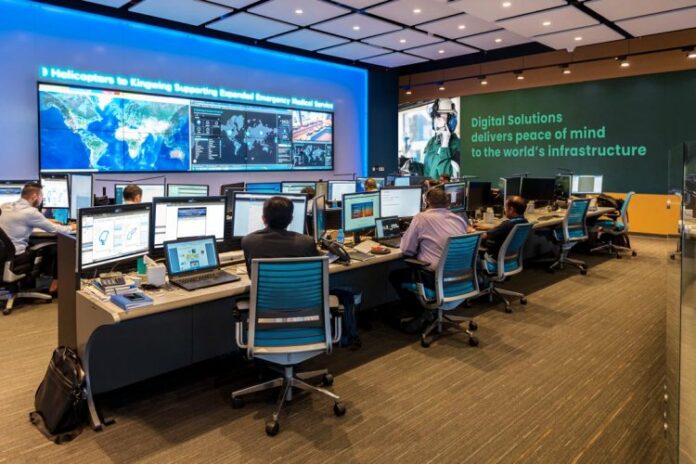
Baker Hughes announced today an order with Petrobras to provide a suite of digital solutions across Petrobras sites in Brazil. 

The order, booked in the fourth quarter 2020, will further expand Petrobras’ digital capabilities following a third quarter 2020 order for a three-year frame agreement across multiple Baker Hughes Digital Solutions product lines.

Baker Hughes will support Petrobras’ thermal plants; refineries; gas treatment units; production plants; offshore platforms; and floating production, storage and offloading units (FPSO) with its technologies, ensuring the latest regulatory requirements are achieved. The order includes flare monitoring and calibration technologies, cybersecurity and remote monitoring services, and interconnected machinery protection systems and sensors.  

Rami Qasem, executive vice president of Digital Solutions at Baker Hughes, said:

“Through our integrated suite of technologies, we can leverage data and the power of our software and hardware systems to significantly advance Petrobras’ digital transformation journey. In addition, our deep domain expertise in industrial asset management will support Petrobras with reducing risks and emissions while maintaining safer operations.”

Baker Hughes technologies use real-time analytics to help customers improve machinery health, eliminate unplanned outages, reduce downtime, and avoid catastrophic failures. Petrobras will benefit from several capabilities across Digital Solutions product lines, including:

  • Bently Nevada’s latest generation Orbit 60 system, System 1 software licenses, and remote monitoring services for advanced industrial asset management.
  • Panametrics’ Flare.IQ advanced flare gas monitoring and optimization system, and FlareCare services and parts for reduced carbon and methane emissions.
  • Nexus Controls’ distributed control systems, cybersecurity services and human-machine interface (HMI) upgrades for safer and more reliable operations.

The Messina Strait: the area with the largest marine litter density worldwide

0

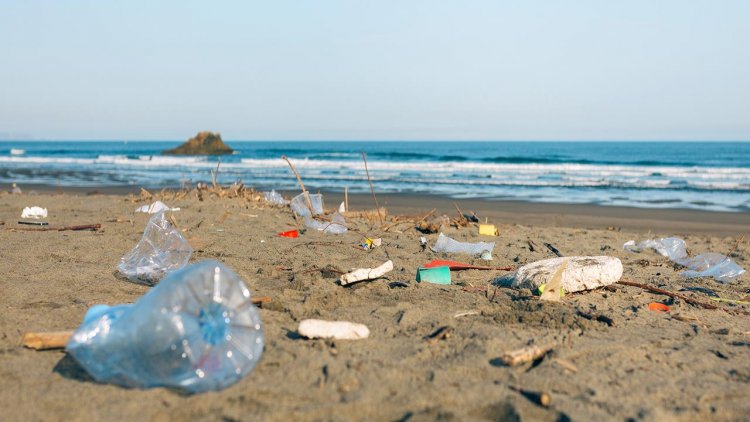
The Messina Strait, a submarine bridge separating the island of Sicily from the Italian Peninsula, is the area with the largest marine litter density worldwide –more than a million objects per square kilometre in some parts–, as reported in a new review paper published in the journal Environmental Research Letters. 

Also, over the next thirty years, the volume of rubbish in the sea could surpass three billion metric tons (Mt), as cited in the study, whose corresponding authors are the experts Miquel Canals, from the Faculty of Earth Sciences of the UB, and Georg Hanke from the European Commission’s Joint Research Centre (JRC), where scientists carry out research in order to provide independent scientific advice and support to EU policies.

Led by the University of Barcelona, this paper gathers the results of the scientific meeting on macrolitter that took place in May 2018, promoted by the European Commission’s Joint Research Centre (JRC) and the German Alfred Wegener Institute (AWI). A team of twenty-five scientists from across the world treated issues such as data needs, methodologies, harmonisation and needs for further development.

The ocean floor is increasingly accumulating marine litter. Whereas the largest seafloor litter hotspots –likely in the deep sea– are still to be found, plastics have already been found in the deepest point on Earth, the Mariana Trench –at a depth of 10,900 meters– in the Pacific Ocean. In some cases, litter concentrations reach densities comparable to large landfills, experts warn.

Professor Miquel Canals, head of the Consolidated Research Group on Marine Geosciences at UB, says:

“The extent of marine litter on our seas and oceans is not yet fully known. The marine regions most affected by this problem are in landlocked and semi-enclosed seas, coastal bottoms, marine areas under the influence of large river mouths, and places with high fishing activity, even far from land.”

The level of waste treatment in coastal countries is decisive: the less treatment –or the more deficient–, the more waste reaching the ocean, and therefore, the ocean floor, which is a problem that affects specially third world countries”.

Plastics, fishing gears, metal, glass, ceramics, textiles and paper are the most abundant materials in seafloor litter hotspots. Geomorphological features, the submarine relief and the nature of the seafloor determine the distribution of litter items on the seabed. Ocean dynamics, —that is, processes such as dense water cascades, ocean currents and storms— ease the transport and dispersal of litter across the ocean, from coasts to abyssal plains, thousands of meters deep. However, these factors do not occur in all ocean ecosystems and also vary over time and in intensity where they take place.

Due to a gravitational effect, light waste is usually transported along and into marine regions where dense currents flow —i.e. submarine canyons and other submarine valleys— and where flow lines concentrate, such as nearby large submarine reliefs. Finally, materials transported by ocean dynamics accumulate in depressions and quiet marine areas.

The properties of materials dumped in the marine environment also affect their dispersion and accumulation on the ocean floor. It is estimated that 62% of the dirt accumulated on seabeds is made of plastics, which is relatively light and easy to transport over long distances. On the other hand, heavy objects such as barrels, cables or nets are usually left at the point where they are initially fell or got entangled.

Litter is a new threat to marine biodiversity. It is already known that nearly 700 marine species, 17% of which are on the IUCN red list, have been affected by this problem in several ways. Seabed entangled fishing gears can cause serious ecological impacts for decades because of ghost fishing. The slow decomposition of fishing nets –usually made of high-strength polymers– aggravates the detrimental effects of this type of waste on the marine ecosystem.

Miquel Canals says:

“In the Mediterranean Sea seafloor marine litter already is a serious ecological problem. In some places of the Catalan coast, there are large accumulations of waste. When there are strong storms, such as Gloria, in January 2020, waves throw this waste on the beach. Some beaches in the country were literally paved with rubbish, thus showing to which extent the coastal seabed is littered. There are also noticeable concentrations of waste in some submarine canyons outside Catalonia”.
 

First vessel to receive responsible Fishing Vessel Standard (RFVS) Certificate

0

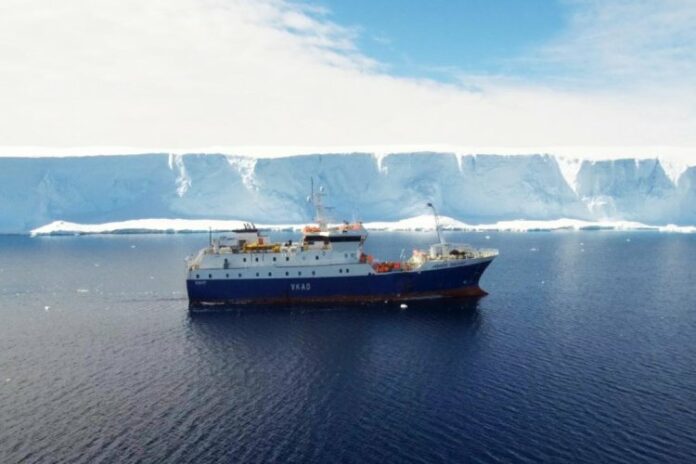
The vessel, Antarctic Discovery, belongs to Australian Longline Fishing, operating in a Marine Stewardship Council Certified fisheries for Patagonian and Antarctic Toothfish. 

The 56m vessel carries a crew of 20-25, plus two observers, for trips into very challenging waters, often for a couple of months at a time.

Malcolm McNeill, Managing Director Australian Longline Fishing, commented:

“We were very keen to get independent, credible, certification that we recruit and care for our crews in accordance with global conventions. Our customers need that assurance. Now we can demonstrate that we are caring for both the fish and the people who harvest them, and we all feel good about that.”

Preparation and timing were cited as key to a successful audit by Marty Johnson, Vessel Coordinator. The vessel was in dock in New Zealand being prepared for its next trip, while Marty Johnson was in Hobart, where the company is based. Audit days and crew interviews were carefully planned so as not to detract from those preparations.

Marty Johnson said:

“Spending time discussing what we needed to prepare, with Global Seafood Assurance and with Lloyds Register, helped make sure we used audit time efficiently. We needed to sharpen up in a few areas, but that was a useful exercise in itself. We plan to have a second vessel audited in a few months and will be even better prepared.”

Rupert Howes, CEO Marine Stewardship Council, commented:

“I am delighted that the first vessel to be awarded under GSA’s Responsible Fishing Vessel Standard, operates in a MSC-certified fishery. Whilst the MSC standard is focussed on environmental criteria, we have long recognised the industry-wide importance of strengthening workers’ protection and welfare at sea.

MSC participated in the development process for the RFVS, and very much welcome this and other initiatives which seek to verify and improve labour conditions and crew welfare at the vessel level through independent verification processes. That vessels already participating in the MSC programme, are part of the first wave to undergo RFVS audits, is a huge credit to their skippers and crews and testament to the fact that many of our partners set the benchmark for best practise across the global fishing industry.”

Subsea 7 awarded contract offshore Angola

0

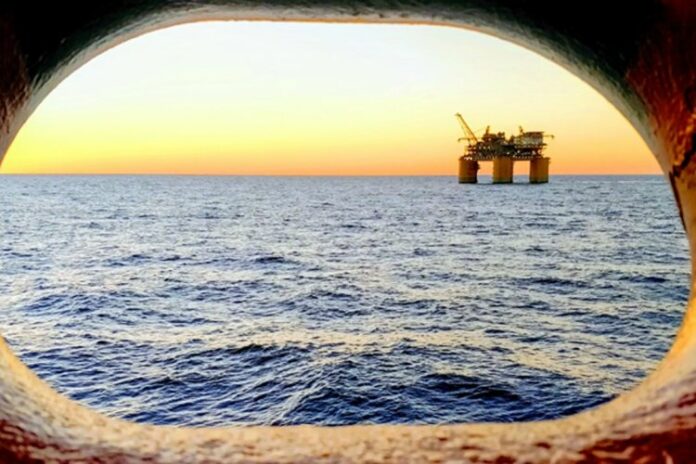
The contract is for the Sanha Lean Gas Connection (SLGC) project comprising the construction and installation of the Lean Gas Platform (LGP) system in Block-0 offshore Angola, at a water depth of approximately 70 metres.

Project management and engineering will be performed from Subsea 7’s offices in Paris and Lisbon. Fabrication will take place at Sonamet’s yard in Lobito, Angola from 2021 to 2022, while offshore operations will occur from 2022 and 2023.

Gilles Lafaye, Senior Vice President Africa, Middle East and Caspian Region, says: 

“We are delighted to have been awarded this contract by CABGOC, following a public tender. This is the result of a long-term collaboration with the client and a track record of delivering successful projects. The project reinforces Subsea 7’s presence in Angola and our commitment to support Africa’s energy industry”.

SMST equipment ensures safe W2W for newbuild CSV Rem Energy

0

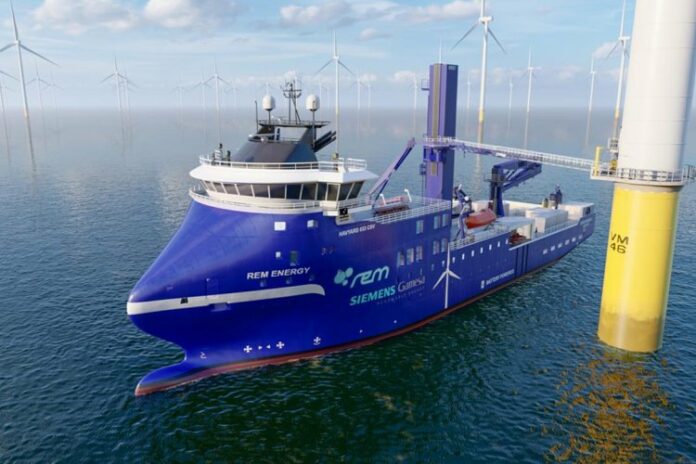
In December 2020, Rem Offshore AS has signed a contract with Green Yard Kleven in Ulsteinvik for the building of the Construction Service Vessel (CSV), Rem Energy, for performing maintenance on various offshore wind farms in Germany. 

SMST will contribute to this newbuild CSV by delivering its safe and efficient walkway and lifting solutions, including cargo handling options. With this delivery SMST meets the strong focus of the vessel’s design on safe walk-to-work operations and secures an optimal workflow.

Recently, also the contract between Green Yard Kleven and SMST was signed. SMST will deliver a modular system package consisting of an Access & Cargo Tower with elevator and motion compensated gangway and a 3D motion compensated crane. The SMST mission equipment helps to safely transfer Rem’s maintenance personnel and cargo to the offshore wind turbines. 

Ronny Pål Kvalsvik, Technical & Purchasing Manager at Rem Offshore AS, says:

“By delivering their walk-to-work equipment to Rem Energy, SMST assures a thorough and proven execution of the vessel’s design principle. Future requirements regarding the safety of people and goods are secured.”  

The vessel, designed by Havyard Design & Solutions AS, will serve a five year contract for Siemens Gamesa Renewable Energy in the Global Tech 1 offshore wind farm. To increase the operational flexibility of the vessel, SMST’s motion compensated gangway can operate on both starboard and portside. The landing height systems of the Access & Cargo Tower provides access to platforms up to 12 meter above sea level. 

Jelle Dijk, Sales Manager at SMST, says:

“With this maximum flexibility can be achieved in the current project, but also in future offshore wind farms of Siemens Gamesa in the North Sea and Baltic Sea.”

Jelle Dijk explains:

“Our newest type of rental gangway, the so-called Telescopic Access Bridge L-Series, is successfully operating on board the Rem Inspector since November 2020. This vessel will perform the role as a frontrunner to the newbuild, executing its windfarm maintenance operations. We are very pleased with our close cooperation with Rem Offshore AS and will proudly support them in current and future projects.”

Cashman announces design contract to expand its hopper dredge fleet

0

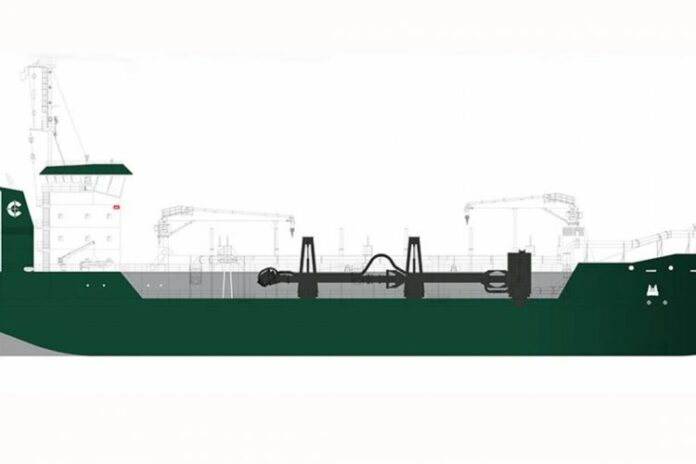
Cashman Dredging and Marine Contracting Co., LLC of Quincy, Massachusetts, has announced the execution of a design contract with IHC America Inc. for a new 6,500 cubic yard trailing suction hopper dredge.

The new vessel will complement Cashman Dredging’s current fleet of specialized dredging equipment and will primarily service the coastal protection and navigation maintenance markets when it enters service in 2024.

Jay Cashman, Founder, and Chairman of the Board, said:

“Innovation has always been a driving force at Cashman. It’s the key to the company’s continued success in creating the next generation of modern infrastructure, in revitalizing the nation’s ports and waterways, in preserving the environment, and in providing alternative sources of clean energy. This capital investment design announcement made today not only reflects Cashman’s unwavering commitment to this core principle but also demonstrates our dedication to supporting the nation’s infrastructure needs in partnership with the U.S. Army Corps of Engineers and to protecting U.S. economic and national security.”

Based in Houston, Texas, IHC America’s Sales Director Rafael Habib, stated:

“We are very grateful to have been selected by Cashman to design and engineer its new 6,500 cubic yard hopper dredge. We are thankful to Cashman for showing trust and confidence in our team. This IHC dredge design will not only be one of the most technologically advanced dredges in the country with the latest safety features, but it will also allow Cashman to easily maneuver in shallow-draft areas, providing the company with greater dredge project versatility. We look forward to working closely with the Cashman team in the weeks and months ahead.”

Cashman Dredging and Marine Contracting Co., LLC provides dredging services along the East Coast, Gulf Coast, and in the Caribbean Basin, specializing in the areas of navigation, beach renourishment, environmental dredging, and coastal resiliency. 

Boluda Towage acquires Dutch Towage & Salvage Company Iskes

0

Vicente Boluda Ceballos, Boluda Towage SL, and Jim Iskes has today signed in Amsterdam an agreement with the Dutch family-owned Towage & Salvage company, to acquire their port towage activities in Eemshaven (the Netherlands), Lubeck (Germany) and Lisbon (Portugal) as well as its offshore activities, plus and with the management and office staff in the head office in IJmuiden, the Netherlands.

Iskes will remain a separate entity directly under Boluda’s headquarters in Valencia, Spain, and as such will continue to manage the aforementioned harbour towage activities.

It has also been agreed that Iskes will focus on strengthening and further expanding the offshore activities of Boluda in North West Europe, with a close watch on the Baltic market, Kiel Channel and Poland.

After the official closing of the transaction, the local management team of Iskes Towage & Salvage will be headed by Ronald Vergouwen as Managing Director. Former owner Jim Iskes will stay on board as strategic advisor.

Commenting on the sale, Iskes owner Jim Iskes, stated:

“We are very happy to join the Boluda Group because it is also a family-owned company, with short direct lines and a similar spirit. We could not be more pleased with this combined organisation and asset portfolio. Although we find ourselves in exceptionally challenging times at this very moment, we are committed to consolidate Boluda’s future prospects, to continue strengthening Boluda’s position as European tugboat market leader, and to open up new opportunities with our innovative attitude.”

Vicente Boluda Fos, Chairman at Boluda Corporación Marítima commented:

“We have been long friends of Iskes and we value their entrepreneurial spirit and pioneering vision. This is why we are very pleased that they wanted to become part of our Group.”

Vicente Boluda Ceballos, Executive vice president of Boluda Towage, added:

“We have recently experienced the benefits of the synergies resulting from this partnership. For example, the Iskes tug GINGER has assisted our London port operation in recent weeks. Having exciting times ahead of us we certainly intend to deploy Iskes’s professional crews and experienced employees on future projects.”

Shell, MHI, Vattenfall and Wärme Hamburg sign Letter of Intent for 100MW Hydrogen Project

0

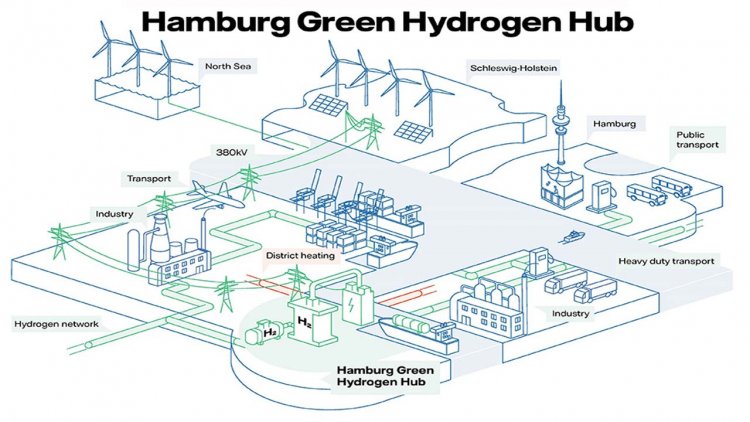
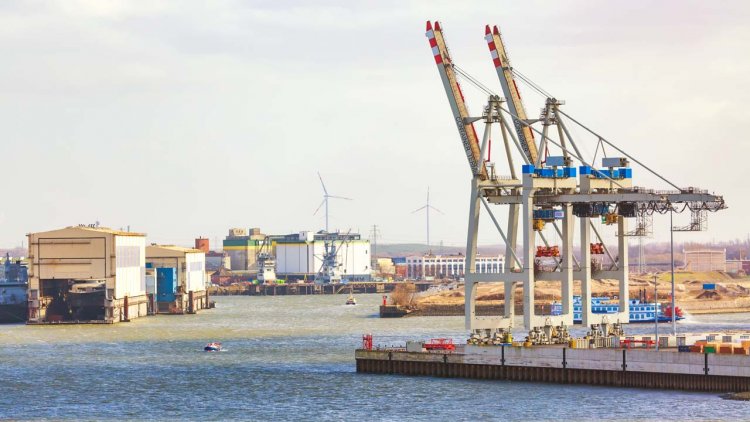
The companies Shell, Mitsubishi Heavy Industries (MHI), Vattenfall and municipal company Wärme Hamburg are planning how they can jointly produce hydrogen from wind and solar power at the Hamburg-Moorburg power plant site and utilize it in its vicinity. To this end, the four companies have now signed a letter of intent. 

In addition to the construction of a scalable electrolyser with an initial output of 100 megawatts, the further development of the site into a so-called “Green Energy Hub” is planned. This includes the exploration of the extent to which the existing infrastructure of the Moorburg location can be used for the production of energy from renewable sources. In this context, concepts for the necessary logistics chains and storage options for hydrogen will also be considered. Subject to final investment decision and according to the current state of planning, once the site has been cleared, the production of green hydrogen is anticipated in the course of 2025 – making the electrolyser one of the largest plants in Europe.

The partners intend to apply for funding under the EU program “Important Projects of Common European Interest” (IPCEI). This should take place in the first quarter of 2021 with the submission of a first outline of the project. The four partner companies view the energy location as having ideal conditions for further use. It is connected to both the national 380,000 volt transmission network and the 110,000 volt network of the City of Hamburg. In addition, overseas ships can call at the location directly and use the quay and port facilities as an import terminal. The municipal gas network company also intends to expand a hydrogen network in the port within ten years and is already working on the necessary distribution infrastructure. Numerous potential customers for green hydrogen are located near the site, thus enabling the project to cover the entire hydrogen value chain – from generation to storage, transport and utilization in various sectors. With these prerequisites, the Moorburg location is optimal for the German federal state of the Free and Hanseatic City of Hamburg and Northern Germany and can become a potential starting point for the development of a hydrogen economy.

For many years, Moorburg was the site of a gas-fired power plant operated by Hamburgische Electricitäts-Werke, and Vattenfall had been operating a coal-fired power plant here since 2015. Its commercial operation was terminated after the power plant won a bid in the auction for the nationwide coal phase-out in December 2020. A decision by the transmission system operator on the system relevance of the plant is expected in March 2021. The City of Hamburg and Vattenfall are striving to clear [partial] areas of the site as soon as possible for the project to produce green hydrogen and the development of a Green Energy Hub.
In their efforts to form a consortium, the four companies can also count on the support of the City of Hamburg’s government. In their coalition agreement, the governing parties agreed to examine and support the feasibility of sector coupling and the establishment of hydrogen production in the city-state.

Jens Kerstan, Chairman of the Supervisory Boards of Wärme Hamburg GmbH and Gasnetz Hamburg GmbH as well as the Free and Hanseatic City of Hamburg’s Minister for the Environment and Energy, says:

“For Hamburg as a city that embraces the energy transition, this agreement is a vital step. At the Moorburg site, we will be producing green hydrogen on a large scale in collaboration with experienced partners from industry, while at the same time establishing a Green Energy hub for climate-friendly energy. This is a bold venture that now needs to be filled with life. This project will be a major lever for reaching our climate goals. The gas pipeline networks in the port and around Moorburg are now being expanded to accommodate hydrogen and to facilitate supplies to industry and large businesses. Our hydrogen future is now taking shape, and Hamburg intends to be at the forefront here. The Hamburg Senate supports these efforts, and Hamburg’s public companies play a decisive role in this.”

Michael Westhagemann, Minister for Economy and Innovation of the Free and Hanseatic City of Hamburg, says:

“I always believed in the project at the Moorburg site. There is no better location in Hamburg for a scalable electrolyser of this size. Via the 380 kV connection and the connection to Brunsbüttel, we have direct access to the supply of green electricity from wind power – and thus the possibility of actually producing green hydrogen in relevant quantities. With this announcement, a big step will be taken towards a long-term decarbonisation of the port and a competitive hydrogen economy in the metropolitan region of Hamburg and I congratulate the partners on this forward-looking project.”
Kentaro Hosomi, President and CEO Energy Systems, Mitsubishi Heavy Industries, says:

“We are looking forward to having the opportunity to apply our engineering and technology expertise to realize this project together with our partners. The establishment of a green hydrogen hub that is fully integrated into Hamburg’s industrial infrastructure would show Europe and the world that the hydrogen economy is real and can make a significant contribution to the decarbonization of the energy system and heavy industry.”

Fabian Ziegler, CEO of Shell in Germany:

“In the future, green hydrogen will play a very important role in the energy system and therefore also for us. We keep an eye on the development of the entire value chain for hydrogen; from the entry into electricity production from offshore wind to the expansion of capacities for green hydrogen production as well as to the supply for mobility or transport applications and other industries. To achieve this, we need to and we want to collaborate with strong partners. We consider this project of the consortium of four together with the city of Hamburg to be exemplary.”

Andreas Regnell, Senior Vice President and Head of Strategic Development, Vattenfall, says:

“The production of fossil free hydrogen is one key to the decarbonisation of the industry and the transport sectors. Vattenfall wants to enable fossil free living within one generation and we have high ambitions to grow within renewable energy production in the markets where we operate. In this project we can contribute with our expertise and experience and the unique Moorburg site that has the infrastructure that is necessary for large scale production of hydrogen. We are therefore pleased that we can support the city and the industrial location of Hamburg in implementing their ambitious climate goals.”

Christian Heine, CEO of Wärme Hamburg GmbH and Gasnetz Hamburg GmbH, says:

“Hydrogen has enormous potential not just as a means of power storage. Wärme Hamburg has pledged to make available all sources of waste heat and to utilize this climate neutral heat. This is the reason why Wärme Hamburg decided, to take part in the electrolyser project. In addition we want to evaluate if we can use the existing infrastructure at the Moorburg site, also to use other, additional forms of renewable energy. Moorburg has the potential to become an innovative urban hub for renewable energies.”