-4.7 C
New York
Home Blog Page 697

Joint study to explore the potential for ammonia as a marine fuel in Singapore

0

ABS, Nanyang Technological University (NTU), Singapore, and the Ammonia Safety and Training Institute (ASTI) are collaborating on a study of the potential of ammonia for Singapore, exploring supply, bunkering, and safety challenges with the marine fuel.

Titled Ammonia as a Marine Fuel in Singapore – Supply Chain, Bunker Safety, and Potential Issues, the joint study will look at safety protocols and possible gaps in the supply chain of ammonia as a marine fuel, specifically bunkering for marine vessels.

ExxonMobil, Hoegh LNG, MAN Energy Solutions Singapore, Jurong Port, PSA Singapore and ITOCHU Group with their partners, are initial project partners, contributing technical information about marine fuel handling, vessel to vessel transfer and bunkering in the Port of Singapore.

Panos Koutsourakis, ABS Director of Sustainability Strategy, said:

“Ammonia is a fuel with significant potential for marine applications and ABS is leading the way in understanding challenges in the safe design and operation of ammonia-fueled vessels. It is also clear that Singapore has the potential to play a critical role as a strategic downstream location to receive, store, consume or bunker ammonia. We are proud to be able to utilize our industry-leading experience with ammonia to contribute to understanding the opportunities and challenges presented by ammonia to the Port of Singapore.”

Professor Jasmine Lam Siu Lee, Director, Maritime Energy &  Sustainable Development Centre of Excellence, NTU Singapore, said:

“This joint study is timely as it is aligned with NTU Singapore’s Maritime Energy & Sustainable Development (MESD) Centre of Excellence’s focus on alternative fuel research for the maritime industry, and ammonia is a key potential marine fuel. We look forward to working together with ABS and ASTI, in a collaboration supported by the Singapore Maritime Institute, to jointly deepen the understanding on various aspects of ammonia’s maritime applications. The research effort is in tune with Singapore’s long-term maritime decarbonization strategy, contributing to a more sustainable Maritime Singapore.”

Gary W. Smith, ASTI President and CEO, said:

“Ammonia is set to play an important role in helping decarbonize the maritime industry and ASTI is very pleased to be part of this study. We are committed to contribute as much experience and information as we can regarding ammonia safety to this important project.”

Brian Østergaard Sørensen – Vice President and Head of R&D, Two-Stroke Business – at MAN Energy Solutions, said:

“We view this study as closely aligned with our own strategy of cooperating with external partners to develop sustainable technologies and believe ammonia to be a very interesting candidate as a zero-carbon fuel. A suitable engine technology is, of course, key and MAN Energy Solutions already has a convincing track-record in developing engines running on alternative fuels. Indeed, we aim to deliver the first ammonia-fueled, two-stroke engine in 2024. We look forward to adding our expertise to this study to the benefit of Singapore, which is such a vital shipping hub.”
Wärtsilä participating in EU-funded project to decarbonise long-distance shipping

0

The technology group Wärtsilä, as part of a consortium led by the University of Vaasa in Finland, will play a major role in an important project aimed at reducing the environmental impact of shipping. Project CHEK – deCarbonising sHipping by Enabling Key technology symbiosis on real vessel concept designs, has been granted funding of EUR 10 million by the EU as part of its Horizon 2020 research and innovation programme.

In addition to the University of Vaasa and Wärtsilä, the other project partners are BAR Technologies, Cargill Ocean Transportation, Climeon, Deltamarin, Hasytec Electronics, Lloyds Register, MSC Cruises, Silverstream Technologies and World Maritime University.

The goal of the CHEK project is to reduce emissions from shipping through the integrated use of low-carbon energy forms and technologies. These include the use of hydrogen fuel, wind power, electric batteries, heat recovery, air lubrication, and new anti-fouling technology. Development work on the way by which vessels are designed and operated is also included.

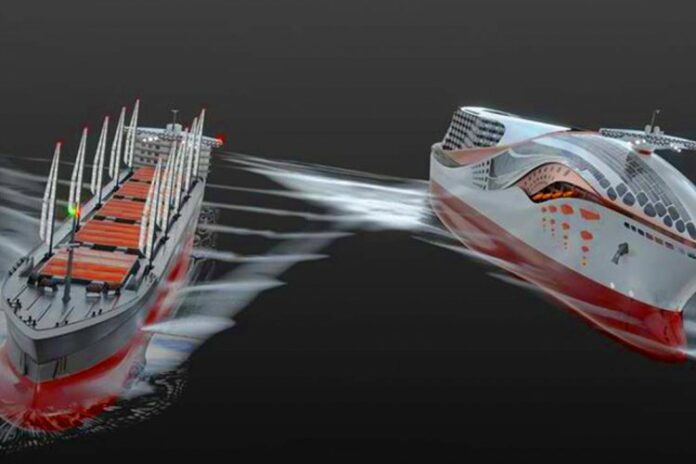
The project will design two concept vessels; a bulk carrier, which will utilise sails to capture wind energy, and a cruise ship that will operate with a Wärtsilä designed engine running on hydrogen fuel. It is estimated that by combining new and innovative technologies, greenhouse gas emissions can be reduced by 99 percent, energy savings of up to 50 percent can be achieved, while black carbon emissions can be cut by more than 95 percent. Several key enabling technologies will be demonstrated in practice on actual operational ships.

Jonas Åkerman, Director of Research and Technology Development at Wärtsilä, says:

“CHEK represents another significant step in Wärtsilä’s commitment and efforts to decarbonise marine operations. There is no silver bullet to meeting the challenge of combating climate change, you need to exploit a number of parallel paths, and that’s exactly what we are doing together with our partners here. What makes the project so exciting is that we are stretching what can be done.”

The project dovetails with Wärtsilä’s extensive investments in developing an ecosystem of co-creation. The company’s Smart Technology Hub in Vaasa is a new state-of-the-art innovation centre driving research, development, and production aimed at creating solutions for a more sustainable world. This initiative is complemented with Wärtsilä’s Smart Partner Campus platform, where stakeholders are invited to participate in the co-creation of win-win solutions.

In addition to developing and testing the hydrogen engine, Wärtsilä’s contributions to the project will include the following;

System integration for both vessels, including hybridisation, energy storage and shore power connections; Developing a modular fuel-flexible powertrain for reduced fuel consumption and optimum efficiency; Implementing the novel gate rudder system for enhanced manoeuvrability and better efficiency; and Route optimisation for the wind assisted bulker to take advantage of prevailing and forecasted wind conditions.

Wärtsilä is already well advanced in researching potential future ‘clean’ fuels capable of making a real contribution to decarbonising shipping operations. Drawing on its unparalleled experience in developing marine engine technology and supply systems for a broad range of fuels, including LNG, LPG and volatile organic compounds, Wärtsilä continues to invest in research into fuels such as bio and synthetic LNG, ammonia, methanol, bio-diesel, as well as hydrogen.

The CHEK project is scheduled to kick off in spring 2021. With the new vessel design method, the results of the two test vessels can also be applied to other vessel types, such as tankers, container ships, general cargo vessels, and ferries. The project will also undertake the preparation of future scenarios, and an analysis of factors affecting the development potential for low-carbon shipping, such as the current infrastructure.

METIS and Hivecell agree to lead maritime digitalization from the edge

0

Maritime data analytics specialist METIS Cyberspace Technology has completed proof of concept trials to confirm that edge computing from Hivecell is wholly compatible with its cloud-based shipboard data acquisition solution. 

Completion opens the way for fully scalable Hivecell stack processing power to be used at locations onboard ship, resulting in significant bandwidth savings and improved response times for ‘smart’ ship owners and managers.

In a maritime industry awash with smart devices yet tied to centralized systems management, cloud storage is increasingly connecting the dots, with processing power ‘at the edge’ enabling only information relevant to decision-making to be uploaded. On top of reducing hardware and data traffic, edge computing saves on server maintenance and training, while integration is easier.

Hivecell delivers a plug and play ‘hive’ of smart cells, deployed on the ship in an ‘edge-as-service’ solution that requires no hardware investment. Crunching data in situ, the distinctive yellow cells pre-process relevant information for upload. Trials at Hivecell using the virtualized METIS Data Fusion Server (DFS) validated Hivecell edge-as-a-service as ready to work with existing METIS cloud-computing software.

METIS chief executive officer Mike Konstantinidis said:

“Following the trials, Hivecell can be offered as an integral part of the innovative artificial intelligence-based solutions METIS has developed to empower shipping’s digital transformation. METIS and Hivecell are each innovators in their specialized domains, and each looks forward to identifying common opportunities to implement game-changing solutions that can accelerate maritime digitalization.”

Jeffrey Ricker, co-founder and CEO of Hivecell, said:

“There’s a lot of talk from companies who claim to be able to provide computing power at the edge, but a ship is certainly the true edge. Our solution is programmed with existing hardware and is simple to deploy, enabling the fleet managers to process data from the METIS system more easily than ever before, which enables faster decision making.”

More than 250 ships are registered to the METIS cloud platform, the multiple award-winning solution that combines automated data acquisition with high-grade qualitative and quantitative analysis for stakeholders including fleet managers, chartering departments and ships personnel. From its Athens headquarters, METIS has expanded globally, opening offices Vancouver and establishing partnership agreements in Singapore, London, Hamburg and Limassol.

While non-exclusive, the agreement between METIS and Hivecell also opens the way for further development work focusing on improving system redundancy and deploying more machine-learning (ML) at the edge using open-source cloud computing, said Konstantinidis. He said:

“Both companies continue to work towards greater integration and interoperability, as part of a common commitment that we see as seamlessly providing additional value to shipping customers.”

DNV GL awards AIP to KSOE for wing sail propulsion system

0

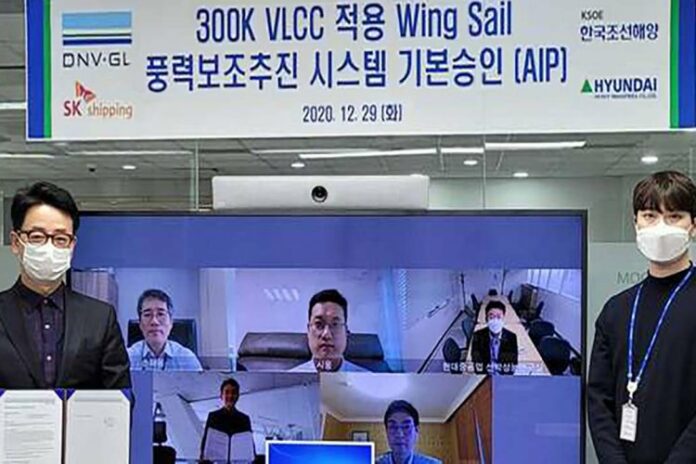
The virtual award ceremony recently took place in the presence of Hyunjoon Shin, Head of the Future Ship Research Department of KSOE, Haeyong Son, Vice President of SK Shipping, and Sung Ho Shin, Key Account Manager of DNV GL Korea.

The wind-powered auxiliary propulsion system for ships is the result of a joint research project from KSOE, the shipbuilding holding company of Hyundai Heavy Industries Group, and SK Shipping, to develop wind-powered eco-friendly propulsion solutions.

Hyunjoon Shin of KSOE said:

“We are speeding up efforts to bring eco-friendly technologies to the market. The wing sail system will reduce fuel consumption by more than 6%. We will take the lead in the next-generation ship market and continue to strengthen our technological competitiveness.”

Haeyong Son of SK Shipping added:

“This is a promising technology that shows new possibilities for ship owners to be able to meet IMO standards for reducing carbon emissions.”

The wing sail design is 20 meters wide, 50 meters high and installed vertically on both sides of the deck. It rotates its wings according to the direction and intensity of the wind to provide auxiliary propulsion to the ship. The wing can be lowered to 10 meters in height, making it flexible in case of bad weather or when passing under a bridge. 

DNV GL undertook the AIP by reviewing the initial drawings related to design loads, system responses, redundancies and components submitted by KSOE, while SK Shipping provided their expertise and insights on the technology from an owner’s point of view.

Vidar Dolonen, DNV GL Regional Manager Korea & Japan, said:

“As a result of the joint research with two leaders of Korea’s maritime cluster, it was a meaningful project to which we contributed our expertise. The wind propulsion for ships is an effective solution which helps meeting the IMO regulations for greener shipping. DNV GL is ready to deliver a wide range of related services for further projects.” 

The new wing sail propulsion system can be installed on many types of vessels and is expected to further increase the efficiency of future ship operations. The AIP is also a big step towards awarding a ship DNV GL’s new additional class notation, WAPS (Wind Assisted Propulsion System). In addition, DNV GL has recently developed a standard for the certification of wind assisted propulsion systems in response to enquiries for the independent assessment of those systems.

ABS awards industry’s first AIP for deep-sea mining vessel to CMI

0

In an industry first, ABS has awarded China Merchants Industry (CMI) Approval in Principle (AIP) for its deep-sea mining system design.

The AIP follows publication of the ABS Guide for Subsea Mining in October 2020 and is the first to be issued that conforms to the new Guide.

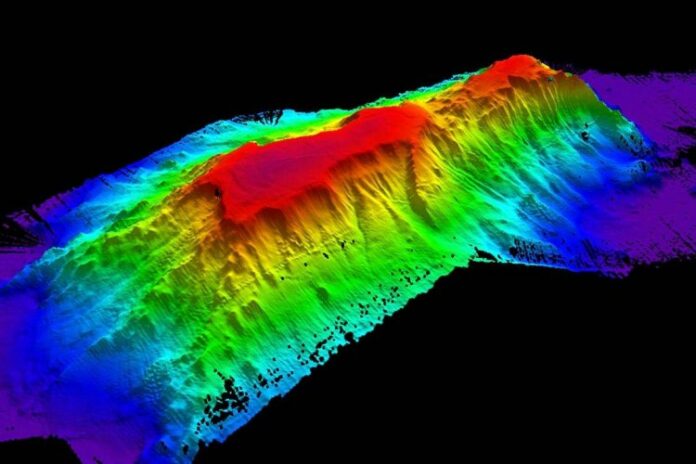
CMI’s design focuses on retrieving cobalt-rich ferromanganese crust deposits attached to seamounts. The project ultimately entails development of subsea mining machines, high concentration and large particle slurry lifting systems and offshore mining support vessels.

Matt Tremblay, ABS Senior Vice President, Global Offshore, said:

“Demand for resources to support the low carbon economy means sustainable subsea mining will increasingly be viewed as a key technology. As the leader in offshore classification, ABS is pleased to be able use its experience to support CMI, which is taking an important step in the development of a subsea mining system and we look forward to continuing cooperation with CMI in this important field.”

Mr. Xian-Fu Hu, CMI General Manager, said:

“The prototype of the deep-sea mining vehicle developed by CMI was successfully tested in September on the seabed 1,300 meters below the South China Sea and completed the first joint operation test with a manned submersible. We really appreciate ABS support and assistance in the development of this subsea mining design.”

MISC’s Seri Everes completes first cargo loading

0

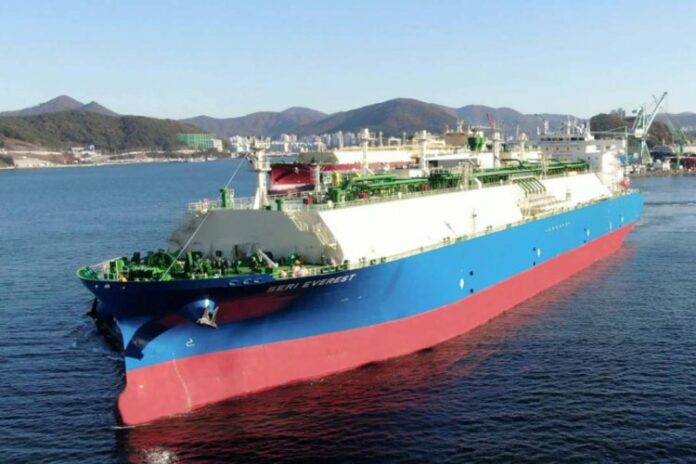
This landmark loading was successfully completed on 17 January 2021. The cargo was loaded under the expert supervision of Eaglestar, the appointed shipmanager at the newly constructed Orbit Ethane Export Terminal in Nederland, US. Seri Everest is the first second generation VLEC to export ethane out of the new terminal.

MISC’s President & Group Chief Executive Officer, Mr. Yee Yang Chien said:

“We are pleased to add on another significant chapter at the start of 2021 with Seri Everest’s first loading which is a historic one indeed, given that this accomplishment marked the first cargo loading for the largest VLEC of its kind currently operating in the market. I believe this is the start to many achievements ahead in serving the market needs for ethane. The steady increase in trading volumes has allowed us to gain the first mover advantage as our vessels offer more cargo capacity to accommodate production growth.

This successful feat would not have been possible without the hard work and dedication of our project team and the crew of Seri Everest. I am proud of these accomplishments and would like to congratulate the teams at shore and the crew at sea for this success. This historic milestone demonstrates our commitment to our client and our delivery assurance in accordance to the highest safety and quality standards. My appreciation also goes out to all parties involved especially Energy Transfer, the operator of Orbit Terminal for ensuring the safety of the operation at the terminal.”

Seri Everest is currently on the return of her maiden voyage from the US to Lianyungang ethylene plant located at Jiangsu province, China. Throughout her maiden voyage and during the operation, MISC and Eaglestar have adopted the new normal of robust safety measures and procedures including limited personnel onboard during operation, social distancing, and minimal close contact.

Seri Everest is the first from a series of six VLECs that MISC purchased in July 2020. All the six VLECs are contracted to Zhejiang Satellite Petrochemical Co. Ltd. (STL) for a long-term charter of 15 years

Siem Car Carriers’ fleet continues to grow with super-eco vessels

0

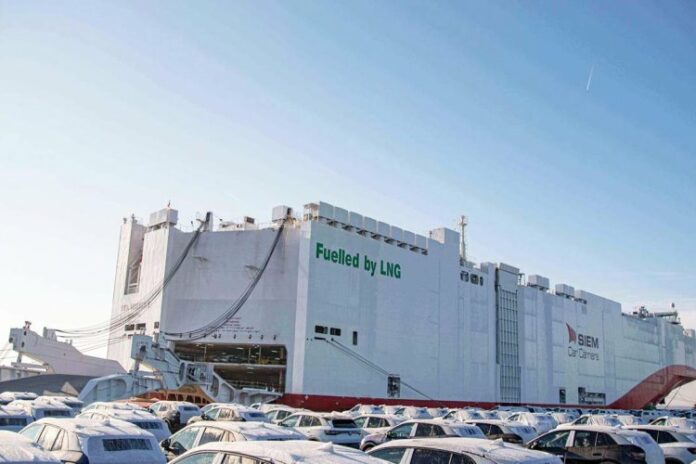
The Siem Aristotle, the second of two ships, is on her maiden voyage from Emden, Germany to North America.

The ship’s first bunkering commenced, taking on over 800MT of eco-friendly LNG fuel. Nearly 4800 cars for VKWL were loaded, bound for Canada, USA, and Mexico. The vessel is 200 meters long, 38 meters wide with a maximum draft of 10 meters and her sailing speed of up to 19 nautical miles per hour. The Aristotle recently made port calls in Halifax, NS, Baltimore MD and Vera Cruz, MX. 

Operating exclusively for Volkswagen Group, the Aristotle is the second installment in SIEM CAR CARRIERS’ fleet that is revolutionizing how long-distance shipping is conducted. Fueled by Liquid Natural Gas, it reduces carbon dioxide emissions by up to 25%, nitrogen oxide emissions by up to 30%, particulate matter by up to 60% and sulphur oxide emissions by up to 100%. Looking to the future, these vessels have sparked the necessary change toward climate-neutral shipping in the maritime industry.

The vessel will be managed by SCC’s sister company – Siem Ship Management based in Gdynia, Poland. While in Emden, the experienced management and crew took all precautions necessary to ensure safe bunkering of LNG for the vessel.

Shipping demands vaccine priority for seafarers amid crew change crisis

0

The renewed call comes as mutations of the COVID-19 virus continues to put struggles to crew changes. Since the beginning of the pandemic, restrictions have forced hundreds of thousands of seafarers to overrun their contracts, rising concerns over ship safety, crew fatigue and access to healthcare.

Between March and August 2020, ICS estimates that only 25% of normal crew changes were able to take place, while current estimates show up to 400,000 seafarers are stranded at sea by the crew change crisis, with up to 400,000 unable to join ships.

More recently, the spread of new variants of COVID-19 in Brazil, South Africa and the UK has contributed to stricter crew change restrictions globally. The Philippines, for example, has expanded its temporary crew change ban to 35 countries, barring foreign seafarers from disembarking at Philippine ports. The UK is banning travellers from South America, and the US has also toughened its entry requirements.

This is part of a wider global retrenchment around ease of travel, which the shipping industry fears could result in hundreds of thousands of seafarers becoming the collateral damage of government inaction.

In view of the above, ICS demands that governments “take their duties to seafarers seriously and avoid a repeat of the mistakes of 2020”. The ILO’s high-level committee of legal experts found last year that governments had breached seafarers’ rights and failed to comply with several provisions of the MLC during the COVID-19 pandemic.

The average ship has a mix of at least three nationalities onboard, and sometimes as many as 30. This fact makes the possibility of vaccinating by nationality, which is the current model of vaccine distribution, challenging. Priority access to vaccines for all seafarers, and clear ‘vaccine passport’ protocols in line with World Health Organization (WHO) recommendations, is seen as vital to the maintenance of global trade.

Prior to the ILO’s ruling in December 2020, the UN General Assembly adopted a resolution that calls for all countries around the world to designate seafarers as key workers.

While more than 40 countries have so far recognised seafarers as key workers, the majority of seafaring nations have not, creating growing demand from within industry for new solutions to the issue of vaccine distribution, before the humanitarian crisis facing seafarers gets any worse.

Guy Platten, Secretary General of the ICS, commented:

“The benefits of vaccinating those responsible for transporting the vaccine and PPE around the world should be obvious. Governments must class seafarers as ‘key workers’ and give them priority access to the vaccine, as the inability to rotate crews from their ships risks the passage of the critical medical materials needed for the global vaccination effort. If we want to maintain global trade, seafarers must not be put to the back of the vaccine queue. Governments will not be able to inject their citizens without the shipping industry or, most importantly, our seafarers.”

Trelleborg awarded contract for Jiangsu Qidong Offshore Wind Project in China

0

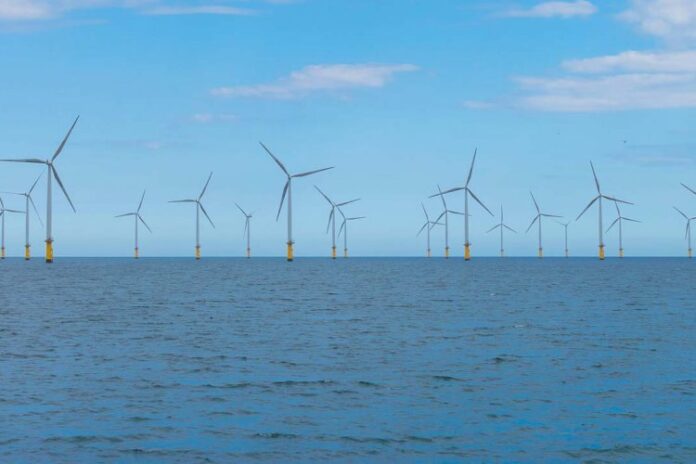
Trelleborg’s applied technologies operation has been awarded a contract by Torgy LNG AS to provide 190 integrated cable protection systems for Jiangsu Qidong offshore wind farm project, located in Jiangsu, China. Trelleborg’s NjordGuard cable protection system will protect inter array grid power cables on the project from over-bending, abrasion, and fatigue. 

Ralph Wu, Sales Manager for renewables at Trelleborg’s applied technologies operation in China, states: “We are proud to be selected to provide Trelleborg’s NjordGuard cable protection system for Jiangsu Qidong, one of China’s biggest offshore wind projects. It’s fantastic to support this prestigious project.”

Alexander Aguilera, CEO at Torgy LNG AS, states:

“We are very proud to be working on the Jiangsu Qidong offshore wind farm project and as we always strive to deliver at the highest quality and safety standards. Trelleborg’s NjordGuard cable protection suited us very well for this purpose, it also feels good to work in parallel with another Scandinavian international group, providing our state-of-the-art technology in the growing renewables sector in China.

Production of the 190 NjordGuard cable protection systems will take place across Trelleborg’s manufacturing facilities in Singapore and England. Project engineering works will commence immediately, with installation activities scheduled for execution at the beginning of 2021.

NjordGuard is an integrated cable protection system designed and developed to protect offshore windfarm power cables in wind turbine generators and offshore substations. Easily assembled on a cable lay vessel to allow speedy installation, the system is manufactured in highly abrasion resistant and API 17L certified Uraduct® material, which enables the protection system to travel over the seabed without damage, extending the system life. Most importantly, it facilitates easier installation, reuse, and removal without diver and ROV intervention, optimizing efficiency and maximizing safety.

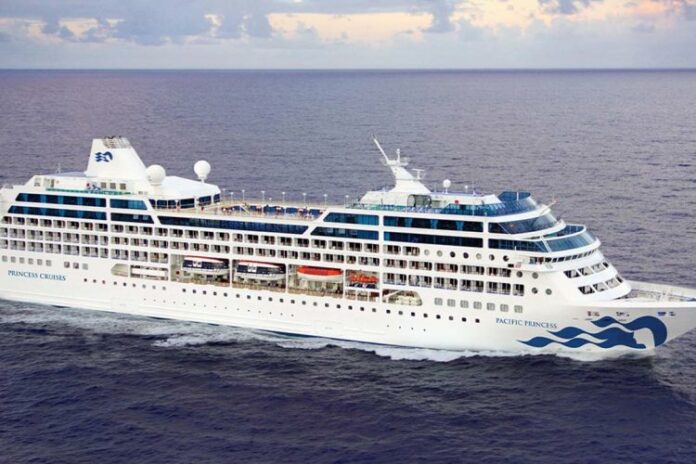
Princess Cruises announces Pacific Princess to leave the fleet

0

The sale of the cruise ship is in line with parent company Carnival Corporation’s plan to accelerate the removal of less efficient ships from its fleet.

Pacific Princess first joined the cruise line’s fleet in 2002, and originally entered service in 1999 as R3 for Renaissance Cruises. The boutique-style ship offered an intimate cruising environment, with a total of just 670 passengers, but incorporated many of the dining and entertainment options available on the cruise line’s larger cruise vessels.

Pacific Princess sailed more than 1.6 Million nautical miles, 11 World Cruises and offered distinctive itineraries to sought-after destinations all over the world. In fact, The Love Boat’s “Captain Stubing” and Princess Cruises Ambassador Gavin MacLeod was on the ship’s navigation bridge as the ship sailed under the Golden Gate Bridge for the first time to kick off the inaugural season sailing to Alaska from San Francisco in May 2003.

Jan Swartz, Princess Cruises president, said:

“Pacific Princess holds so many memories and cherished experiences to all who sailed upon her. Pacific Princess offered a traditional style of cruising to unique destinations. While it’s difficult to say goodbye to our ‘Love Boat,’ our World Cruise and exotic itineraries continue onboard our Medallion Class-enabled Island Princess and Coral Princess, featuring the best Wi-Fi at sea, allowing guests to keep in touch with loved ones and share vacation memories along the way.”

Another historic moment for Pacific Princess was sailing a throwback cruise, recreating the cruise line’s very first itinerary to the iconic Mexican Riviera in celebration of the 50th anniversary of Princess Cruises on December 3, 2015. Attending this special cruise included the cast of “The Love Boat”.