-9 C
New York
Home Blog Page 693

Study: Ready for the next step towards the Belgian hydrogen economy

0

The climate objective to reduce CO2 emissions in Belgium by 80% by 2050 compared to 2005 levels is a major challenge and requires a large-scale switch from fossil fuels to renewable energy. 

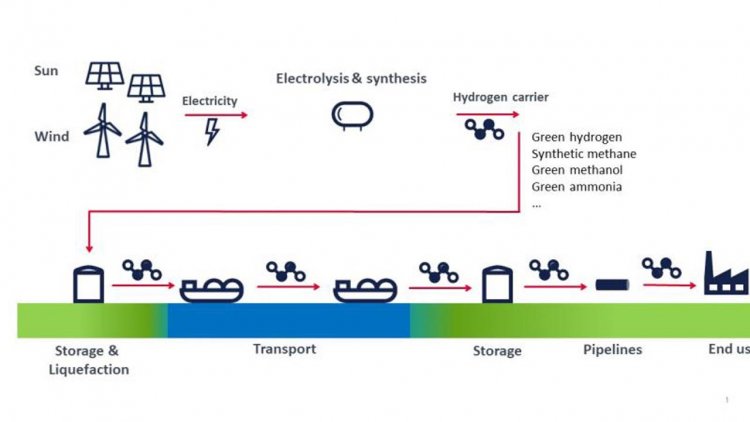
It is clear that solar and wind will be the renewable energy sources of the future. However, in Belgium and Western Europe, there is not enough wind or solar energy, while other regions in the world in fact have solar and wind energy in abundance. In order to achieve a reliable, affordable and sustainable energy system, local production of solar and wind energy will therefore have to be supplemented by the supply of some of the necessary renewable energy from abroad. Molecules can act as energy carriers to efficiently transport green energy through pipelines and ships. Hydrogen, as a carrier of renewable energy, plays an important role in the blend of end-user solutions.

Over a year ago, seven major industrial players and public stakeholders joined forces and expertise to jointly analyse the opportunities for importing green hydrogen into Belgium. The coalition, consisting of DEME, ENGIE, Exmar, Fluxys, Port of Antwerp, Port of Zeebrugge and WaterstofNet, has now completed a large-scale industrial study mapping out the financial, technical and regulatory aspects of the entire hydrogen import chain – from production abroad to delivery via ships and pipelines to Belgium and internal distribution – and providing a basis for the further roll-out to industrial applications.

After thorough analysis of all the elements, the study concludes that importing this form of renewable energy is a necessary and feasible solution to the growing shortage in Western Europe. Various types of hydrogen-derived carriers from a range of supply regions will be able to provide cost-competitive renewable energy and raw materials by 2030-2035. The most promising green energy carriers are ammonia, methanol and synthetic methane. These can be deployed through existing modes of transport – such as pipelines and maritime transport in particular – and growing markets, encouraging a rapid start.

According to the study published by the hydrogen import coalition, this import of renewable energy through green hydrogen carriers will therefore become an essential part of our energy supply, complementing the sustainable transition based on domestically generated energy. Belgium has maritime ports and extensive pipeline infrastructure, is linked to the major industrial clusters and has the capacity to meet its own energy needs and those of surrounding countries.

Now that the feasibility study has been completed, the coalition partners want to take some concrete next steps. They will analyse how to prepare the seaports to receive the hydrogen carriers of the future, seeking maximum synergy to serve its national interests. Specific pilot projects are being set up whereby they can make maximum use of the Flemish expertise and strength in the area of logistics, industry and technology for the development of a sustainable economy and the climate transition in our own region and a broader hinterland.
Alexander De Croo, Prime Minister of Belgium:

“Hydrogen will play a decisive role in the energy transition and in making our industry sustainable. This study provides essential new insights for the further roll-out of a hydrogen economy and the further reduction of CO2 emissions. The next step is to develop a long-term strategy for importing hydrogen.”

Jan Jambon, Prime Minister of the Flemish Government:

“Flanders is ideally positioned to play a pioneering role in the hydrogen economy at a European level. It has the energy hubs of Antwerp and Zeebrugge, it has transportation infrastructure, an extensive network of pipelines to those ports and to Germany, and technology companies operating in it.”

Jacques Vandermeiren, CEO at Port of Antwerp:

“We want to give hydrogen every chance as an energy carrier, a basic element for chemistry and a fuel, and are therefore committing ourselves as an active pioneer in the hydrogen economy. As a world port and Europe’s largest integrated chemical cluster, we are an important link in this chain. The outcome of this study and its next steps offer promising perspectives for a further large-scale roll-out of hydrogen applications.”

Annick De Ridder, Port Alderman:

“This study confirms that hydrogen can play a key role not only in making the port of Antwerp sustainable, but also in the rest of Europe. It is therefore crucial that, as a port of the future, we live up to our ambition and play a pioneering role in terms of sustainable solutions. Thanks to the collaboration between this coalition of partners with the right expertise and the government bodies involved, we have all the assets we need to take further concrete steps in this regard and to set an example for other ports and regions.”

Tom Hautekiet, CEO Port of Zeebrugge:

“As a multifunctional energy hub with a state-of-the-art LNG infrastructure, (i.e. storage capacity and pipelines), the port of Zeebrugge is ideally suited to receive the hydrogen carriers of the future. Together with the partners in this coalition, we wish to develop our role in projects concerning the import and export of hydrogen and participate in creating a hydrogen economy.”
EDF announces Blyth Floating Offshore Wind Scheme

0

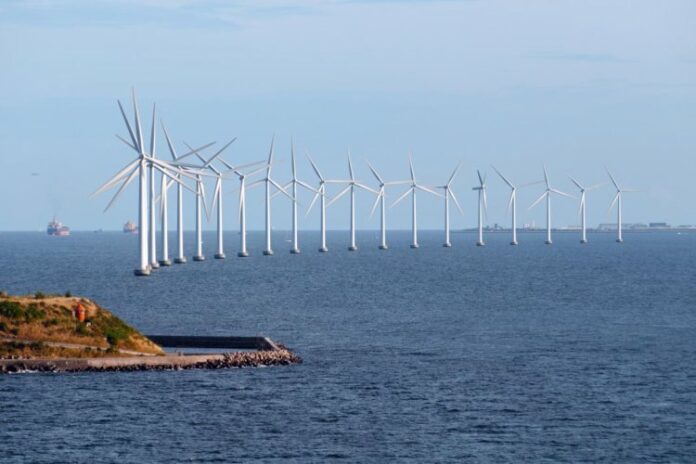
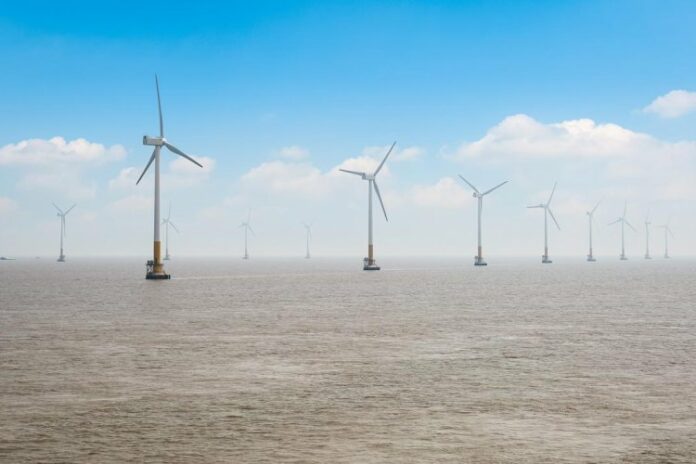
The first phase of the wind farm consists of 5 wind turbines and was constructed in 2017 with a generating capacity of 41.5MW.  It was the first UK offshore wind farm to utilise float and submerge gravity base foundations, as well as 66KV rated inter array and export cables to connect the turbines to an onshore substation.

EDF Renewables is already working on project planning for phase two with a consent variation and procurement activities underway to use the Blyth site for the installation of up to 5 further turbines.

The capacity for phase two has still to be finalised but the current consent for BOD wind farm is for a maximum of 99.9 MW, leaving a remaining capacity of 58.4MW.

The BOD Phase two project will feature turbines constructed on floating sub structures and once completed would be among the first projects of this kind in English waters.

Port of Blyth Chief Executive Martin Lawlor, said: “We’re delighted that EDF Renewables have announced they are to make this exciting proposal a reality. Blyth is synonymous with offshore wind innovation as a home to the first turbines installed and decommissioned in UK waters and of course as the location for the world leading test facilities of the Offshore Renewable Energy Catapult.

“As the host for the wind farm’s O&M base we look forward to supporting EDF Renewables and its partners throughout the construction phase and into operations.”

Director of Offshore wind at EDF Renewables, Michele Schiavone, said:

“We are very excited about this next phase of the BOD project and want to further the demonstration of construction and operation of floating turbines to show that floating wind is technically feasible and cost competitive in water depths of 50-60 metres.

“With the Contract for Difference (CfD) mechanism providing a potential route to market, we are confident that floating turbine technology can accelerate the UK’s journey to a net zero future where clean energy powers all our lives. We will use the project to support the further development of this emerging technology.”

CSM signs cloud-based simulator training partnership with Wärtsilä Voyage

0

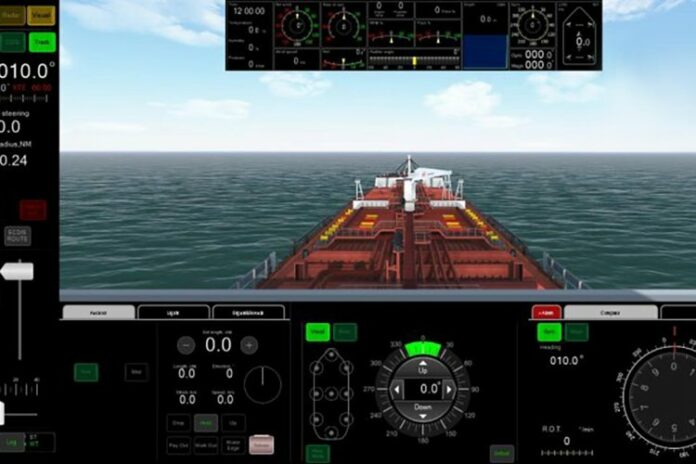
Columbia Shipmanagement (CSM) has partnered with Wärtsilä Voyage to launch cloud-based simulator training for its Maritime Training Centres Worldwide (including Russia, Latvia, Ukraine, Georgia, Korea, Croatia and the Philippines).

Columbia Shipmanagement is one of the world’s leading shipmanagement companies, with over 40 years of experience in the industry. It currently employs over 15,000 people worldwide and manages 380 vessels.

Welcoming the move, Capt Faouzi Fradi, Group Director Training at CSM, said:

“While officers and crew have been kept away from classrooms and simulators for several months because of the pandemic, Columbia has worked hard creating innovative solutions to ensure continuation of their professional development as well as their readiness to operate safely and effectively onboard. We are delighted to announce our partnership with Wärtsilä Voyage and we believe this solution will satisfy the training needs of our officers and meet the requirements of our clients. We will certainly continue our cooperation with AWA Marine and Wärtsilä in the Philippines and will install similar hardware simulators in our training centre when the restrictions will be lifted. Cloud-based solutions will continue to be the best choice in the future to train those seafarers located far from our training facilities, or those who are unable to travel during their vacations. Maintaining their training needs while supporting their wellbeing is our continuous goal.”

Liam Murphy, Director at AWA Marine, added:

“For this project we will be providing CSM with Wärtsilä Voyage’s cutting-edge cloud-based simulator technology. This will allow it to continue training its crew to the highest standards available in the maritime industry, from the world’s leading provider of Bridge and Engine Room Simulators. This project is actually the result of another existing development, which was unfortunately delayed due to COVID-19, so we had to adjust our course to adapt to the ongoing situation. The Wärtsilä cloud-based simulation training will be a perfect stop gap solution while face-to-face training can’t be allowed. We very much look forward to our ongoing partnership and cooperation with CSM, and for some exciting developments to be announced in 2021.”

Ensure safety of onboard cargo intake with the advanced lashing solutions by Navis

0

Navis, the leading provider of maritime software solutions for efficient and compliant cargo, stowage planning and vessel performance, announced that the MACS3 loading computer has successfully implemented the latest following lashing rules – ABS 2019, BV 2020, DNVGL 2019, and LR 2019 into its software. The successful implementation of the lashing rules clearly demonstrates that MACS3 is the most advanced and progressive loading computer in the world, responding constantly to the needs of the maritime industry.

Lashing plays a key role in the operations and performance of container vessels with many benefits including, enabling containerships to sail out to sea safely when cargo is loaded and preventing vessels and cargo from damage due to heavy weather conditions or inadequate lashing calculations. Despite the benefits, one of the most well-known constraints of lashing is that it significantly reduces a vessel’s potential cargo. Implementing the latest lashing rules in the MACS3 loading computer will help shipping companies maximize their cargo intake while helping ensure greater safety. 

Daniel Abt, from DNV GL – Maritime, said:

“We are pleased to be able to certify that the MACS3 loading computer can successfully implement our new StowLash3D-software and software development kit (SDK). StowLash treats each stack of deck containers as an individual 3D finite element model and correctly models non-linearities in the lashing system introduced by lashing rods and twistlocks, as well as geometric nonlinearities in the stack. We have also focused on making the software flexible so it can be easily extended to deal with non-standard container types and other cases that require advanced calculation options. The software has also been verified by full-scale measurements, to optimize container cargo deck stowage at appropriate safety levels.”

Ajay Bharadwaj, Sr. Director Product Management for Navis Carrier and Vessel Solutions, said:

“We are constantly working with classification societies and lash makers to ensure that newer rules are implemented so our market-leading loading computer software performs at its peak. It is important that our product is up to date so our customers can confidently implement it as part of their operations.”

“It is crucial to have a holistic approach to maximizing operational performance and efficiency that is why Navis integrates the latest lashing rules as well as into its following software solutions –  StowMan & MACS3 API. “The collaboration between the classification societies, lash makers, and Navis Carrier and Vessel Solutions will help shipping companies ensure that their ships will sail out with maximum safety and efficiency with the holistic Navis approach.” 

Cadeler is on a mission to digitalize internal administrative processes

0

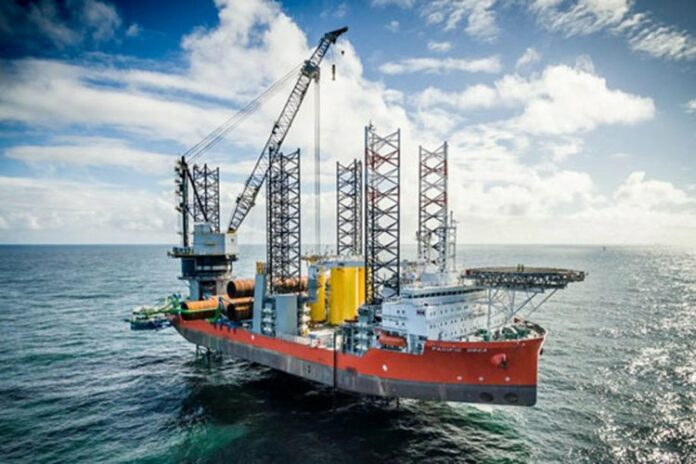
Cadeler recently invested in an improved crane to meet the future offshore wind market demand. Now the organization is looking inwards to optimize its maintenance, procurement and safety processes in a new fleet management system. 

The investment in SERTICA is more than just implementing new software. Cadeler is moving towards digitalized processes to reduce time spent on administrative tasks, providing more time for its employees to focus on tasks which create value.

Peter Sundell, Procurement Manager, at Cadeler tells:

“One of the reasons for choosing SERTICA as one of our key systems in our organization is because we want a flexible, stable, and modern system that can support us when optimizing our internal processes.”

With the implementation of a fleet management system operating across the entire organization, Cadeler is investing in extensive training and workshops. This is to ensure that they use the system in the best possible way.

Peter Sundell explains:

“We were impressed by Logimatic´s extensive experience with the processes related to procurement, maintenance and HSEQ in the maritime business and look forward to close collaboration during the project to ensure a smooth transition.”

Jens Ipsen, Project Manager at Logimatic, adds:

“This is an interesting project because a lot of experts from both Cadeler and SERTICA are involved. When changing internal processes, it is important to introduce all relevant stakeholders and agree on the best possible processes before we start building the data.”

Jesper Achard Henriksen, Customer Success Manager at Logimatic, is one of the experts involved in the project. He is normally involved later in the process but as a Marine Engineer and SERTICA expert, he can provide the necessary advice to ensure a swift transition to digital processes.

Peter Sundell is looking forward to kick off the project and is particularly excited about introducing automated processes in relation to invoice and inventory management. He also tells:

“The system will give us transparency and synergy across departments both on the shore side as well as onboard our vessels. The ability to combine data from SERTICA with information from other key systems in our business will be a strong asset when taking strategic decisions intended to support our growth.”

Sirius Shipping installs FuelOpt™ on two more vessels

0

Sirius Shipping made their first installation of the propulsion automation system FuelOpt™ in 2016 and has continued to implement the system to other vessels on their fleet over time. Today, we are pleased to announce that 2 more vessels in Sirius fleet will be equipped with our FuelOpt™ system.

FuelOpt™ provides a direct interface between the machinery and vessel crew on the bridge for controlling the parameters that matter most for ship operational efficiency: speed, fuel consumption, engine power or a combination of these. Once the system is activated, FuelOpt™ dynamically controls vessel propulsion based on the commands set, adapting the propulsive power to the changing environmental conditions.

On vessels with a controllable pitch propeller, FuelOpt™ acts as a dynamic tuning system for the propulsion machinery and regulates the propeller’s pitch and RPM separately to operate the engine and propeller at optimal conditions. In this way, the system ensures to produce the maximum amount of propeller thrust with the minimum amount of power, hence wasting significantly less energy.

Jonas Backman, Managing Director at Sirius Shipping, says:

“At Sirius Shipping we are committed to offering our customers an efficient, safe and environmentally friendly marine transport today and tomorrow. We have been collaborating with Lean Marine since 2016 and we are very satisfied with the fuel saving results of the FuelOpt™ system. Our customers confirm the systems added value on operational performance as well. In 2021, we will be installing FuelOpt™ on our chemical/product tankers Donia and Tellus.”

Seafarer killed in piracy attack: governments urged to act, or risk more deaths

0

The Liberia-flagged Mozart was attacked off the coast of Nigeria when four armed pirates attacked the ship, beating crew members and shooting one seafarer dead.

Following the attack, Turkey’s authorities identified the slain man as Farman Ismayilov, an Azerbaijani engineer and only non-Turkish crew member on board. President Tayyip Erdogan’s office said on Sunday that his government would be organising for the “rescue of kidnapped ship personnel”.

David Heindel, ITF Seafarers’ Section Chair, said:

“We thank Turkey for their attempts to rescue the surviving crew but West African governments also must act to stop the deaths of more seafarers off their coastlines.”
“Governments must take immediate action to prevent more seafarers being murdered in the Gulf of Guinea.”

Regional governments committed to better coordination of naval enforcement activities in Abuja, Nigeria in 2019, but the ITF has been outspoken on the growing danger for crew passing through the Gulf of Guinea.

ITF Seafarers’ Section Coordinator Fabrizio Barcellona said the governments had failed to protect seafarers from armed pirates, arms dealers and drug smugglers.

Barcellona said:

“This severity of this latest attack must now drive robust action from government to protect seafarers and the movement of trade around West Africa. Governments need to make good on their commitments to deter pirates with a strong naval and coastguard presence. Without immediate action, more seafarers risk being shot and killed. The Gulf of Guinea is becoming a ‘bay of blood’”.

Northland Power acquires a 49% interest in Baltic Power Offshore Wind Project

0

Northland Power Inc. has announced that it has entered into an agreement with PKN ORLEN S.A. to acquire a 49% interest (subject to regulatory approvals) in the Baltic Power offshore wind project in the Baltic Sea (“Baltic Power”) with a total capacity of up to 1,200 megawatts (MW) of offshore wind generation. 

Baltic Power is a mid-development stage project located approximately 23 kilometers offshore from Poland’s coast in the Baltic Sea. The project, which secured its location permit, signed its grid connection agreement as well as filed its environmental permit in 2020, allows Northland to capitalize on the growth in renewable energy demand in a growing Central European market. Inclusive of the purchase price, Northland expects to invest approximately PLN 290 million (CAD $100 million) towards the Baltic Power development in 2021, of which, some of this amount represents development expenditures that will be spent throughout 2021.

Mike Crawley, Northland’s President and Chief Executive Officer, said:

“Today’s announcement reflects Northland’s continued growth and leadership in renewable energy and strengthens our position as a global leader in offshore wind development. We are excited to partner with PKN ORLEN to expand our presence in Europe through the development of the Baltic Power offshore wind project, but more importantly, further contribute to the global decarbonization transition by helping Poland fulfill its renewable energy ambitions.”

PKN ORLEN is the largest company in Central and Eastern Europe and is publicly listed on the Warsaw Stock Exchange. The Company is part of the ORLEN Group, which has operations in six markets: Poland, the Czech Republic, Germany, Lithuania, Slovakia, and Canada. PKN ORLEN is a major player on the Polish energy market, with generation capacity of 3.2 GWe.

The Northland and PKN ORLEN partnership (collectively, the “Partnership”) will co-develop the Baltic Power opportunity that is expected to secure a 25-year Contract for Difference (CfD) offtake agreement, providing Northland an investment consistent with the company’s objectives of creating high-quality projects underpinned by revenue contracts that deliver predictable cash flows. Construction activities are scheduled to start in 2023 with commercial operations expected in 2026.

Baltic Power is a natural addition to Northland’s extensive offshore wind portfolio and provides the company with a new market to further enhance the geographic and regulatory diversity in its portfolio and cashflows. Currently, Northland has controlling interests in three operational offshore wind facilities in the North Sea, Gemini, Nordsee One and Deutsche Bucht farms with a total combined gross capacity of approximately 1,200 MW (890 MW net to Northland). Once complete, Baltic Power will substantially increase Northland’s total gross offshore wind capacity in Europe up to approximately 2,400 MW (1,500 MW net).

Poland’s draft energy policy foresees the need to add 10 to 12 GW of offshore wind capacity and an additional 15 GW of solar capacity by 2040 and the country’s recent passing of its Offshore Wind Act paves the way for Poland to develop offshore wind. This will result in a significant amount of investment into renewable energy generation. Once complete, Baltic Power will make a significant contribution to the future of clean and green energy production in Poland.

UCI and NASA JPL scientists study impact of warm, salty water beneath glaciers

0

Scientists at the University of California, Irvine and NASA’s Jet Propulsion Laboratory have for the first time quantified how warming coastal waters are impacting individual glaciers in Greenland’s fjords. Their work is the subject of a study published recently in Science Advances.

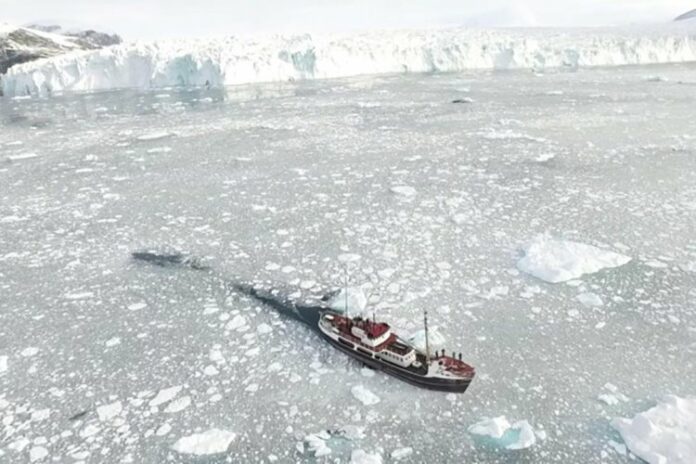
Working under the auspices of the Oceans Melting Greenland mission for the past five years, the researchers used ships and aircraft to survey 226 glaciers in all sectors of one of Earth’s largest islands. They found that 74 glaciers situated in deep, steep-walled valleys accounted for nearly half of Greenland’s total ice loss between 1992 and 2017.

Such fjord-bound glaciers were discovered to be the most subject to undercutting, a process by which warm, salty water at the bottom of the canyons melts the ice from below, causing the masses to break apart more quickly than usual. In contrast, the team found that 51 glaciers positioned in shallower gullies experienced less undercutting and contributed only about 15 percent of the total ice loss.

Lead author Michael Wood, a post-doctorate researcher at NASA’s Jet Propulsion Laboratory in Southern California, who began this research as a doctoral student at UCI, said:

“I was surprised by how lopsided it was. The biggest and deepest glaciers are undercut much faster than the smaller glaciers in shallow fjords. In other words, the biggest glaciers are the most sensitive to the warming waters and those are the ones really driving Greenland’s ice loss.”

The study highlighted the dynamic whereby deeper fjords allow the intrusion of warmer ocean water than shallow ones, hastening the process of undercutting with some of Greenland’s largest glaciers.

The ice in Greenland is more than two miles (three kilometers) thick in places. At the edges of the land mass, the vast glaciers extending from the ice sheet travel slowly down valleys like icy conveyor belts, which inch into the fjords and then melt or break off as icebergs. The ice is replenished by snowfall that is compressed over time into the ice pack.

If the ice sheet were in balance, the amount of snow accumulating on the top would roughly equal the ice lost from melt, evaporation and calving—chunks breaking free from anchored masses and floating off into the ocean.

But the ice sheet has been out of balance since the 1990s. Melt has accelerated and calving has increased, causing glaciers that extend into the sea to retreat back toward land. Together, these are resulting the ice sheet shrinkage.

According to the research team, the build-up of warm salty water at the bottom of fjords has been accelerated by increasing temperatures in the summer months, which heat the surfaces of glaciers, creating pools of meltwater. This liquid leaks through cracks in the ice to form subsurface freshwater rivers which flows into the sea where it interacts with salty water beneath fjords.

Glacier meltwater is free of salt, so it is lighter than seawater and rises to the surface as a plume, dragging up warm water and putting it in contact with the bottoms of glaciers. Fjord depth is a fairly immutable factor, but other factors such as seawater temperature and the amount of meltwater from glaciers surfaces are greatly impacted by climate warming. All three factors combine to cause accelerated deterioration of Greenland’s ice sheet, the researchers said.

As the water temperature around Greenland’s coastline is predicted to continue to increase in the future, these findings suggest that some climate models may underestimate glacial ice loss by at least a factor of two if they do not account for undercutting by a warm ocean.

The study also lends insight into why many of Greenland’s glaciers never recovered after an abrupt ocean warming between 1998 and 2007, which caused an increase in ocean temperature by nearly 2 degrees Celsius. Although ocean warming paused between 2008 and 2017, the glaciers had already experienced such extreme undercutting in the previous decade that they continued to retreat at an accelerated rate.

Petrofac secures enhanced North Sea contract with INEOS FPS

0

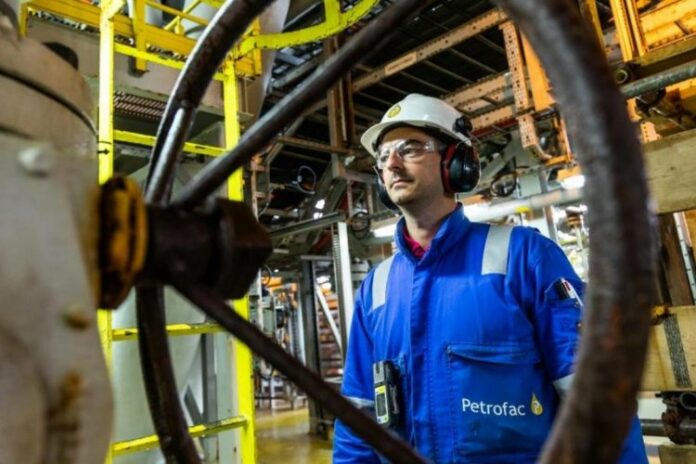
Under the terms of the agreement, Petrofac will continue to supply personnel to the Unity Platform in the Central North Sea, the onshore Cruden Bay Terminal and other landline sites. The contract has also been reconfigured to include engineering and construction support.

This award strengthens Petrofac’s existing relationship with INEOS FPS in the UKCS, where it already provides a Maintenance Consultancy service.

Offshore personnel will continue to be deployed via Petrofac’s dedicated 24/7 Delivery Hub, through which all of its Operations and Maintenance contracts are managed. The Hub offers flexibility of shared resources across contracts, enabling fluctuating client requirements to be managed in a flexible, cost-effective way.

Nick Shorten, Managing Director for Petrofac Engineering and Production Services, West, said:

“Over the past year we have been supporting INEOS FPS as they work to transform the Forties Pipeline System, and during this time our teams have developed a great understanding of both our client’s onshore and offshore sites. The enhancement of this contract demonstrates our client’s continued confidence in our ability to maintain safe operations while delivering improvements to production efficiency. We very much look forward to continue working with INEOS to unlock further value.”