-9 C
New York
Home Blog Page 692

Höegh LNG signs a 10-year charter with H-Energy for their LNG import terminal in India

0

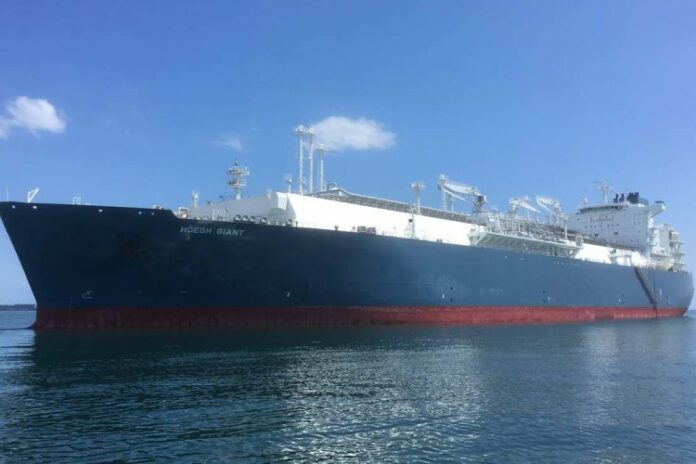
Höegh LNG Holdings Ltd. has completed and signed all documentation for its 10-year charter with H-Energy and selected the FSRU Höegh Giant to serve this agreement. The binding commitment was announced in a stock exchange notice on 19 November 2020. The agreement is for a period of 10 years with annual termination options after year five.

FSRU Höegh Giant is currently completing its LNGC charter with Naturgy, and will then proceed directly to Keppel Shipyard for minor modifications, in addition to pre-completion of the vessel’s five year periodic class survey, originally scheduled for 2022 as this will improve efficiency and reduce costs. The vessel is expected to be off hire for approximately 40 days in the first quarter of 2021 before the start-up under the H-Energy contract in March 2021.  

Höegh Giant will be the first FSRU operating in India and will deliver natural gas to the 56 km Jaigarh-Dabhol pipeline connecting the LNG import terminal to the national gas grid and will also deliver LNG for onshore distribution through LNG truck loading facilities, as well as reloading LNG onto small-scale LNG vessels for downstream distribution or LNG bunker services.

The H-Energy/HLNG FSRU terminal will allow for the replacement of coal consumption with natural gas at a scale which reduces CO2 emissions with up to approximately 120 million tonnes, NOx emissions with approximately 97% and SOx emissions with approximately 99% over the 10-year period. 

President and Chief Executive Officer Sveinung J.S. Støhle says:

“We are delighted to have completed the agreements with H-Energy for the first FSRU LNG import terminal in India, in particular given the strong ESG profile of this project which is in line with HLNG’s vision to provide our customers with the infrastructure to access clean and affordable energy. A roadmap with H-Energy also includes the joint development of the downstream small-scale LNG market in the region, using the FSRU as the terminal for storage and re-loading to smaller vessels. India is a high-growth market and we see clear potential for Höegh LNG to provide additional FSRUs and clean energy solutions to this market over the coming years.”
SAFEEN and AMLS launch marine logistics provider OFCO – Offshore International

0

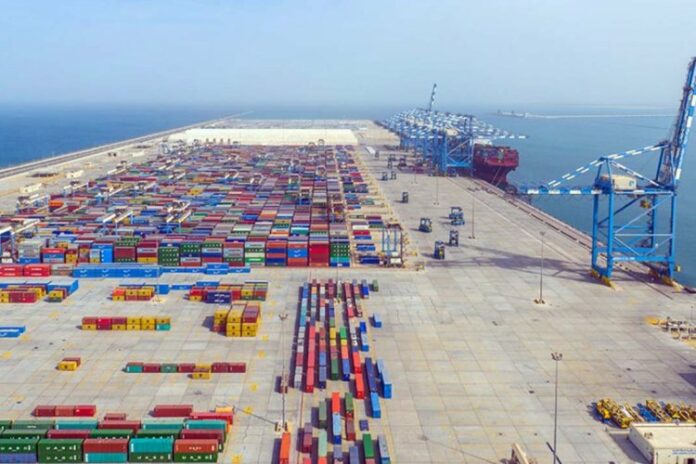
SAFEEN, Abu Dhabi Ports’ maritime arm, has recently signed a historic agreement with Allianz Marine & Logistics Services (AMLS), to launch a new international provider of integrated maritime logistic services.

Operating under the title of Offshore Support and Logistics Services Company (OFCO – Offshore International), headquartered in Abu Dhabi, the new joint venture will be one of the largest, most capable, and cost-efficient providers of onshore and offshore integrated logistics solutions and subsea services in the GCC region and beyond.

Setting itself apart from the competition, OFCO combines SAFEEN’s strategic position and experience as a port marine operator, with AMLS’ diversified fleet and expertise in offshore logistics and supply chain management, making it the leading fully-integrated supplier of marine logistics solutions and services in the GCC.

Thanks to the synergy of world-class fleet assets, management systems, and supply base operations, OFCO is uniquely-positioned as a ‘one-stop-shop,’ offering clients a spectrum of service solutions including integrated logistics for oil and gas/engineering procurement and construction (O&G/ EPC) companies, inspection repair and maintenance (IRM), and subsea services, supported by Abu Dhabi Ports’ land-based operations.

OFCO’s broad range of services will be aimed towards large offshore infrastructure projects, which include ongoing operations within the regional oil and gas sector, as well as future projects set to be launched in the coming years.

Captain Mohamed Juma Al Shamisi, Group CEO of Abu Dhabi Ports, said:

“The launch of OFCO represents a significant leap forward for SAFEEN, which is one of the main pillars of our maritime business. By adding OFCO to our extensive portfolio of trade, logistics, and port services, we are in a position to offer our regional and global customers a very comprehensive and compelling end-to-end value offer, in one place and at the same time. Working closely with trusted partners, we are responding to market needs and expanding Abu Dhabi’s role as the regional and global hub for offshore services.”

Captain Maktoum Al Houqani, Head of Maritime Cluster, Abu Dhabi Ports, said:

“When we considered the growth of the global offshore support vessel market, as well as the offshore projects market, we saw a tremendous opportunity and potential for a new integrated marine logistics provider. With access to a growing diversified fleet of modern vessels, our partnership with AMLS will allow us to take our expertise and capabilities to new horizons, and unleash our full potential as a preferred global maritime services provider.

“What makes OFCO unique in our marketplace is that it offers an unbeatable combination of efficiency, capability, expertise, and value for our customers, our emirate, and our country as a whole. We believe that the market is ready, and so are we.”

Ahmed Khalil, General Manager of Allianz Marine & Logistics Services, said:

“Our partnership with SAFEEN is a significant milestone for AMLS. By engaging with one of the subsidiaries of Abu Dhabi Ports Group, which is positioning Abu Dhabi as a major global gateway for offshore logistics and services, we are enhancing not only our ability to support regional infrastructure projects, but are expanding our existing portfolio internationally as well.

“With access to one of the largest service fleets marine services provider in the Arabian Gulf, we believe that OFCO will be a game changer for the oil and gas market, providing integrated offshore logistics solutions and operational excellence to our clients.”

As part of a wider value offering, OFCO’s customers will also have access to a broad spectrum of trade logistics and services offered by Abu Dhabi Ports, which include offshore, onshore, base operations, logistics, industrial zone, and maritime services.

APM Terminals Elizabeth converts to green energy

0

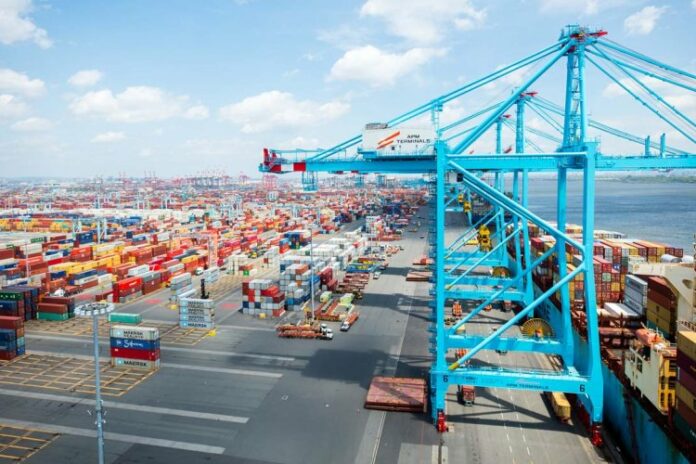
APM Terminals Elizabeth embarked on a decarbonizing plan in 2016 as part of a multi-year effort to reduce energy consumption through improved efficiency, equipment upgrades, and electrification to reduce emissions and create a safer, cleaner working environment for employees. The project has generated a reduction in CO2 emissions from an average of 18 kg CO2/TEU in 2016, to 16 kg CO2/TEU in 2020.

In January 2021, APM Terminals Elizabeth took the next step in their decarbonization journey, by starting to use green power, from a supplier that offers renewables such as wind and solar. This is expected to reduce CO2 emissions by 45% in 2021, slashing 7 kg CO2/TEU from the current 16 kg CO2/TEU intensity. This translates into an estimated emissions reduction of 8000 metric tons of CO2 in 2021.

Jon Poelma, Managing Director of APM Terminals Elizabeth, said:

“Our decision to pursue greensourced energy reflects our overall long-term company plans to decarbonize our terminal operations. We’re progressing on that goal through a multi-year program that aligns with our customers who are also decarbonizing their logistics chains and looking to work with like-minded companies.”

APM Terminals Elizabeth has also introduced a new gate complex designed to improve the trucker experience, reduce truck idling and improve turn times. Average turnaround time reductions of 11 minutes have already been seen, representing a reduction of 3 kilograms CO2/TEU, benefiting the trucker community and wider New Jersey port area.

Other actions underway to reduce emissions include improving operational efficiencies and traffic management on the terminal.

Mr. Poelma added:

“We’re on a path to achieving net zero carbon emissions and making significant steps this year. We will continue to focus on emission reduction and working with our customers to reduce their supply chain emissions, while collaborating with federal, state and local authorities to achieve this goal together.”

APM Terminals Elizabeth operates one of the largest container terminals in the Port of New York/New Jersey, investing $200 million in upgrading the facility to improve the customer experience, enhance productivity and expand capacity for future growth as part of a five year modernization program. A near dock rail facility, Millennium Marine Rail (MMR) is operated jointly with Maher Terminals and handles 60% of intermodal cargo to the hinterland – as part of APM Terminals Elizabeth’ gateway port, first call vessel status.

Graph shows operational carbon intensity (kgCO2/TEU) for 2016 – 2020, and forecasted intensity in 2021 once switched to wind energy. Emissions are calculated from monthly fuel and electricity consumption following the Green House Gas Protocol, and divided by the number of containers moved across the berth. This gives the operational emission intensity figure.

Corvus starts developing maritime fuel cell systems with Toyota technology

0

Corvus Energy is set to start development and production of sustainable, large scale maritime-certified hydrogen fuel cell systems.

Corvus is spearheading a collaboration with Norwegian partners Equinor, shipowners Norled and Wilhelmsen, ship design company LMG Marin, the NCE Maritime CleanTech cluster and R&D institution the University of South-Eastern Norway (USN) to develop and produce modularised and cost-effective PEM (Proton Exchange Membrane) fuel cell systems for the international marine market. The project has received EUR 5.2m in funding from state agency Innovation Norway bolstering Corvus’ front-runner position in clean technology for maritime and other sectors. The development is scheduled to showcase its first marine fuel cell system onboard a vessel in 2023 and the product will be marine certified and available for commercial delivery from 2024.

The initiative combines Norwegian maritime expertise together with fuel cell modules supplied by one of the world’s largest fuel cell producers Toyota, who has 30 years’ experience in the development and production of fuel cells for the car market and other land-based applications. Corvus and Toyota signed a partnership on 18 December 2020. The agreement secures Corvus access to proven fuel cell technology while enabling large-scale production and competitive pricing. The production will be Norway’s first of its kind, strengthening the country’s pole position in the global efforts towards decarbonizing shipping.

Interest in hydrogen for maritime applications has been increasing rapidly, with hydrogen power seen as an important step to reach shipping’s ambitious goal to cut greenhouse gas emissions by 50% by 2050. Reducing the cost of fuel cells and increasing access to the technology is crucial to accelerate the transition. The initiative represents an important step towards achieving both goals by producing modularised systems not available on a large scale today. The Corvus-Toyota partnership will become a strong player enabling a significant increase in capacity of marine fuel cells to the market.

Corvus Energy CEO Geir Bjørkeli said:

“Adding fuel cell modules to our product portfolio is a natural step for Corvus and advances our vision to be the leading supplier of zero-emission marine solutions. Fuel cell technology has reached a maturity level where scale-up of systems will be the next step. Toyota is in the forefront of the development and is by far the best partner for us to make this a success.”

Thiebault Paquet, Director of the Fuel Cell Business Group at Toyota Motor Europe, said:

“Decarbonisation is inevitable and at Toyota, we are convinced that hydrogen will play a central role in creating a better future, both environmentally and economically. Our recently established Fuel Cell Business group in Brussels is looking forward to working with Corvus Energy and the consortium members to offer fuel cell solutions for marine applications. This project will play an important role in the development of the Hydrogen Society.”

Corvus’ new dedicated fuel cell division will design and certify the marine fuel cell system using the Toyota fuel cell technology as a building block for larger systems. Furthermore, a specific marine control system uniting the battery and fuel cell operation will be developed for easy integration with power management systems from a range of system integrators. Backed by strong owners in the form of Norsk Hydro, Equinor, Shell and BW Group, Corvus plans to scale up production to mirror its world-leading position in battery systems. The development partners USN and NCE Maritime CleanTech will contribute knowledge within hydrogen safety, while Equinor, Norled, Wilhelmsen and LMG Marin will bring key experience from ongoing hydrogen projects.

MSC Cruises’ upcoming ships to further company’s environmental commitment

0

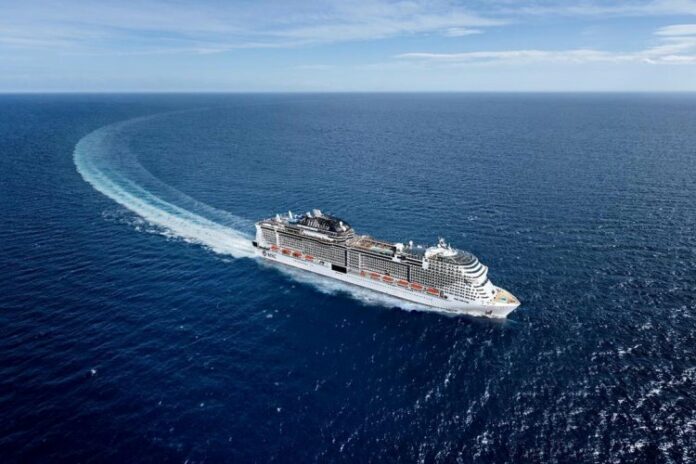
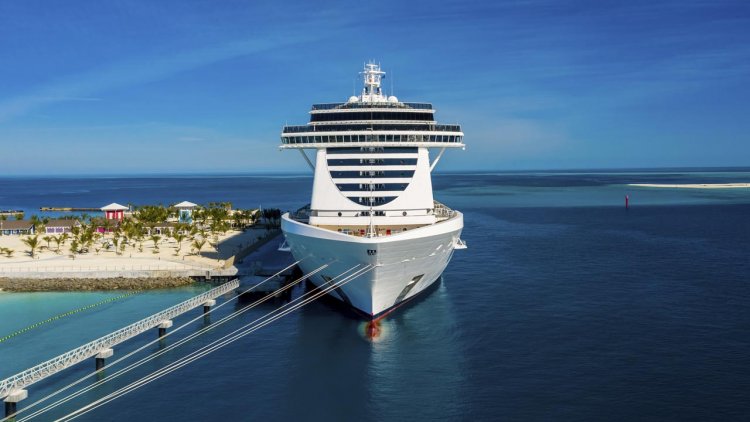
2021 will see two new MSC Cruises ships come into service, MSC Virtuosa and MSC Seashore, the latest ships to be delivered as part of the Company’s long-term new builds programme.

As every ship that joins the MSC Cruises fleet, these ships are being equipped with a wide range of latest-generation environmental technologies and equipment that will minimise their impact.

Both ships will feature hybrid exhaust gas cleaning systems (EGCS) and cutting-edge selective catalytic reduction systems (SCR), achieving a 98% reduction of sulphur oxide (SOx) emissions and reducing nitrogen oxide (NOx) emissions by 90%.

Their wastewater treatment systems have been designed in line with the International Maritime Organization’s MEPC 227(64) Resolution and achieve purification standards that are higher than most wastewater treatment facilities ashore.

As all MSC Cruises’ newbuilds, they will also be equipped with shore-to-ship power connectivity, allowing them to connect to local power grids while at berth at ports where this infrastructure is available.

Pierfrancesco Vago, MSC Cruises’ Executive Chairman, said:

“Our long-term goal is to achieve a zero-impact cruise operation and this is the journey we are on today. As we work with our partners to identify new technologies that will bring us closer to this goal with each new ship that we build and bring into service, we continue to equip our ships with the latest and most effective technologies in the market.”

In parallel, MSC Cruises has announced that it is partnering with several industry leaders in a research project that promotes low-carbon shipping by combining progressive energy technologies and innovative ship design.

Led by the University of Vaasa, the CHEK Consortium – deCarbonising sHipping by enabling Key Technology symbiosis on real vessels concept designs project – involves, in addition to MSC Cruises, the World Maritime University, Wärtsilä, Cargill, Lloyds Register, Silverstream Technologies, Hasytec, Deltamarin, Climeon and BAR Technologies.

Pierfrancesco Vago said:

“We are delighted to partner with other industry leaders in their fields to together research and develop new solutions that will support the road to decarbonisation of shipping. This is another example of our commitment to the accelerated development of next-generation environmental technologies and solutions.”

The consortium is in line to receive significant funding from Horizon 2020 – the European Union’s framework programme for research and innovation.

The project will seek to demonstrate the synergistic benefits of innovative technologies including hydrogen propulsion, ultrasound antifouling, hull air-lubrication, waste to energy systems and digitalised optimisation software, fully integrated to maximise efficiency across all aspects of ship operation.

Results will be widely disseminated to support improved competency across the industry.

Looking ahead, in 2022 MSC World Europa, the Company’s first LNG-powered vessel, will be delivered and in 2021 work will begin on a second LNG ship, the fifth Meraviglia class ship.

MSC World Europa will be amongst the most technologically advanced cruise ships in the world, bringing a range of environmental innovations to the market.

Chief amongst these is a 50-kilowatt, LNG-powered solid oxide fuel cell technology project that offers a potential to reduce greenhouse gas emissions by a further 25% compared to a conventional LNG engine.

As sustainable, non-fossil-based fuels like bio LNG become available at scale, MSC Cruises anticipates their widespread deployment on its LNG-powered ships to further reduce greenhouse gas emissions.

Linden Coppell, MSC Cruises’ Director of Sustainability, said:

“Every new ship that joins our fleet incorporates solutions to minimise our environmental footprint. MSC Virtuosa and MSC Seashore will be no exception. As new technologies are identified, we also work to improve the existing fleet, investigating retrofit opportunities, incorporating new energy reduction measures, working extensively with industry experts and seeking out drop-in alternative fuels to achieve the ambitious carbon intensity reduction goals of our industry.”

Ince launches cyber security solution for the maritime sector in cooperation with Mission Secure

0

International legal and professional services firm, Ince, has announced the launch of a specialist cyber security solution in conjunction with Mission Secure, one of the world’s leading Operational Technology (OT) cyber security companies. The venture signals the development, by newly established InceMaritime, of a first of its kind integrated legal advisory, business consultancy, and technology offering for the maritime sector.

Beginning with cyber security, over the course of 2021, InceMaritime plans to launch further managed service solutions in key areas for the maritime industry. This comes at a crucial time of unprecedented change and regulatory transformation for businesses in the maritime sector.

The launch of InceMaritime is founded on an understanding of the increasing complexities of the maritime industry and the need to provide fully integrated and all-encompassing solutions that enable organisations to respond to the challenges facing the sector. This requires collaboration between industry partners with specialist expertise, and the creation of transparent ecosystems that can protect ship owners and operators, and help them thrive in a transforming market.

InceMaritime will provide clients with a fully integrated cyber security offering that protects on-shore and on-vessel OT networks, safeguards operations, and ensures compliance and business continuity.

The joint proposition comprises:

  • A full audit of a company’s existing policies to ensure compliance in line with the new ISM Code for Cyber Security Guidelines (IMO 2021).
  • The implementation of the patented Mission Secure Platform, the first integrated platform built for OT cyber protection, which is designed to harden vessels’ control systems networks against cyber threats.
  • The deployment of Mission Secure Managed Services, providing 24/7 cyber security monitoring, threat hunting, and incident response support to ensure continual vessel resilience for ship owners and managers.
  • Legal and crisis management services in the event of a cyber attack.

The integrated offering will provide ship owners, operators and managers with complete reassurance that the significant operational, commercial and compliance risks that they face from the impact of cyber attacks are mitigated. With 92% of estimated costs arising from cyber attacks being uninsured, and the access and limits of cover often restricted, it is intended that owners and operators who sign up to the new service will benefit from better insurance terms and preferential premiums. In addition, P&I Clubs and insurance companies will also benefit from a reduction in potential claims.

From 1 January 2021 onwards, all ship owners and managers must ensure that systems and management for handling cyber security risks are incorporated into vessels’ safety management systems (SMS) from the date of the next annual audit of the SMS. This requirement to be verified is mandated by IMO and enforced by Port State Control. Despite this, many organisations are not ready for compliance or don’t fully appreciate the full impact and the threat of cyber attacks; meaning their operations are ripe for a cyber attack and that they are exposed commercially, as well as failing to comply with the new regulations, creating a real risk of Port State Control detention.

Commenting on the announcement, Julian Clark, Global Senior Partner at Ince, said:

“Cyber security is one of the industry’s greatest challenges. The threat level and sophistication of hackers increases every day with the result that many shipping companies do not fully appreciate the seriousness of the issue they face. The combination of the new IMO requirement together with the devastating impact a cyber attack can have on their operations creates yet another burden for those engaged in vessel operation. In such an ever-evolving risk scenario, who can an owner/operator turn to for a cost effective, reliable solution? Our cooperation with Mission Secure brings all the essential elements that an organisation needs to fully protect itself – from compliance to advanced technology implementation – into one, combined offering.”

“The maritime industry is transforming and becoming more complex. The launch of InceMaritime is responding to this and provides a viable, proactive and loss prevention solution for the market. We want to provide both advice and action, where we will collaborate and bring in specialist experts, like Mission Secure, to provide clients with the best possible solution to help them navigate industry challenges, stimulate growth and thrive.”

Rick Tiene, Vice President at Mission Secure, said:

“There have been a number of recent high profile cyber attacks within the maritime industry that highlight the impact on operations and the high financial cost faced. Cyber attacks are becoming increasingly sophisticated by the day, and organisations are struggling to keep up with the security challenge.”

“Of most concern is the fact that even if they are compliant with the latest IMO regulation as well as other industry cyber security guidelines, the reality is that they will not be sufficiently protected, particularly from OT cyber attacks. Ship owners and managers need to move beyond just basic compliance, and away from a tick-the-box approach to cyber security. By partnering with Ince, we can provide a complete cyber security solution for clients that not only ensures compliance, but utilises the very latest, military grade, advanced technology to provide the necessary ongoing protection.”

CMA CGM to operate and manage the Port of Alexandria’s future terminal

0

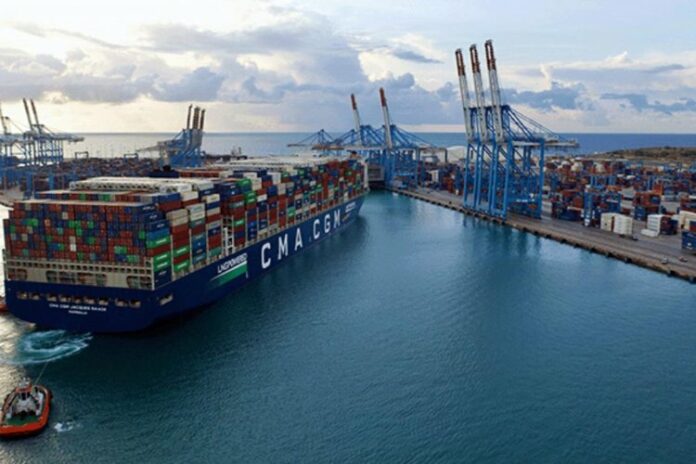
During the trip to Egypt of Rodolphe Saadé, Chairman and Chief Executive Officer of the CMA CGM Group, a world leader in shipping and logistics, the Egyptian authorities have confirmed their intention to enter into a long-term partnership with CMA CGM for the operation and management of Pier 55, the Port of Alexandria’s upcoming multi-purpose terminal. 

This partnership will also include the development of logistics solutions, digitalization, the contribution to the training of younger generations in maritime and logistics, as well as other investments.

The terminal, which covers an area of 560,000 square meters with quays of over 2 km in length, will have a capacity of around 1,5 million TEUs (Twenty Foot Equivalent Units) and will facilitate the deployment of the Group’s larger vessels. Operations are planned to start in 2022. In Egypt, the Group currently employs almost 300 people and calls 6 ports, linking the country to the rest of the world. Each year, Group’s vessels cross the Suez Canal more than 700 times.

CMA CGM strengthens its strategic positioning and expertise as a container terminal operator in the Mediterranean with terminal capacities of almost 7 million TEUs including:

  • Marseilles-Fos, dynamic container terminals in a leading port
  • Seville, a niche terminal at the heart of the Andalusian area
  • Malta, a leading transhipment hub in the Mediterranean
  • Thessaloniki in Greece, an important gateway for Southeast Europe
  • Lattakia, the historic Syrian leader in container traffic

At the crossroads between Africa, Asia and Europe, the Mediterranean represents a major area for the development of the Group’s operations in maritime transportation, port operations and logistics.

Committed to the energy transition of the maritime industry, the Group will also deploy on its service between Asia and the Mediterranean LNG-powered vessels of 15,000 TEUs by the end of 2021. As part of his strategic vision, Rodolphe Saadé has decided to choose Marseille-Fos to bunker these new LNG vessels, making the Mediterranean a major area for the development of the use of LNG.

Carnival and PortMiami break ground on Terminal F expansion

0

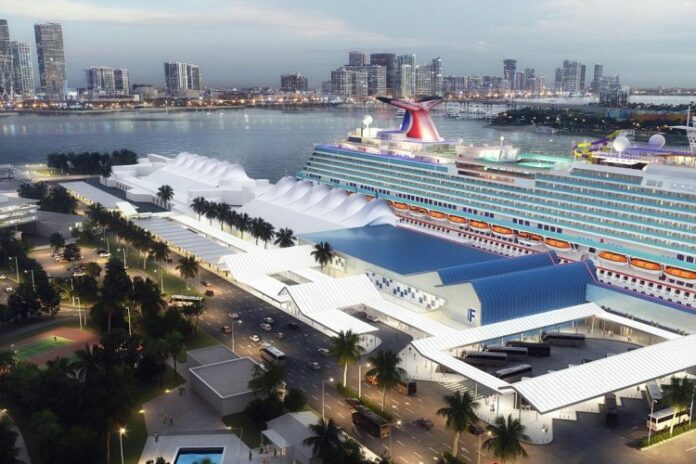
Currently under construction in Finland, Carnival Celebration is set to debut in 2022, as part of the line’s 50th birthday festivities.

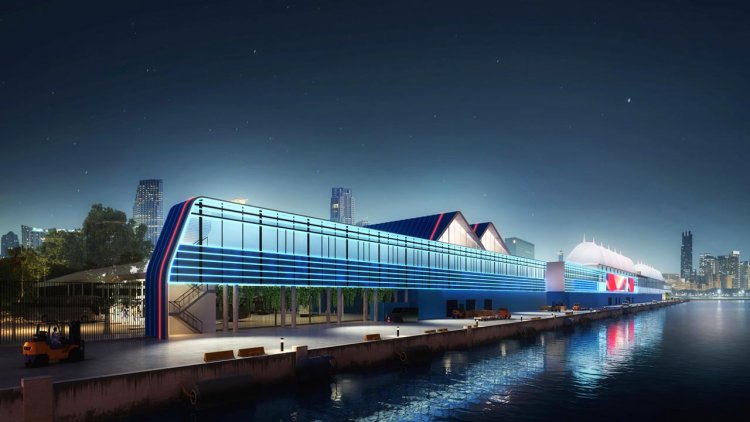
Miami-Dade Mayor Daniella Levine Cava and Carnival President Christine Duffy, along with county commissioners and construction partners, used ceremonial shovels to officially mark the beginning of construction on the expansive 471,000-square-foot facility which will be Carnival’s third terminal at the port and its largest in South Florida.

Carnival Cruise Line got its start when the original “Fun Ship,” the TSS Mardi Gras, departed on its inaugural voyage from PortMiami in March 1972, starting a nearly 50-year relationship that has seen Carnival grow to become the World’s Most Popular Cruise Line and PortMiami earn the distinction as The Cruise Capital of the World.

Mayor Levine Cava said:

“I’m grateful to Carnival Cruise Line and Lemartec for their partnership with Miami-Dade County. Despite the global pandemic, today’s groundbreaking is another example of the growth happening at PortMiami – The Cruise Capital of the World – and how together, we can and we will continue to thrive.”

Duffy said:

“We are proud of Carnival’s role in making Miami the cruise capital of the world, and today marks the continuation of an incredible 50-year partnership with PortMiami and Miami-Dade County. This expanded terminal built specifically for Carnival Celebration will make an incredible addition to the existing facilities at our largest embarkation port. My most sincere thanks to Mayor Levine Cava and all of the Miami-Dade officials who made this day possible.”

Manny García-Tuñón, President of Lemartec Corporation, a MasTec Company, which is serving as the general contractor, said:

“Both Lemartec and MasTec, like Carnival Cruise Line, are the classic American dream story, born in Miami. We are proud to have been chosen by PortMiami and Miami-Dade County to build this iconic terminal.” 

The terminal’s clean and open design by will allow for exceptional efficiency and flexibility to accommodate Carnival’s newest class of ships, maximizing use of technology to move guests through the embarkation process, providing a seamless boarding experience.

Carnival Celebration will offer a variety of innovations including an onboard roller coaster as well as a Liquefied Natural Gas (LNG) propulsion system, part of Carnival Corporation’s “green cruising platform.”  The ship will also offer a wide range of accommodation categories with 180 suites across 11 different categories, along with unique innovations created just for this vessel.

New shoreside power system reduces carbon emissions at the Port of Gothenburg

0

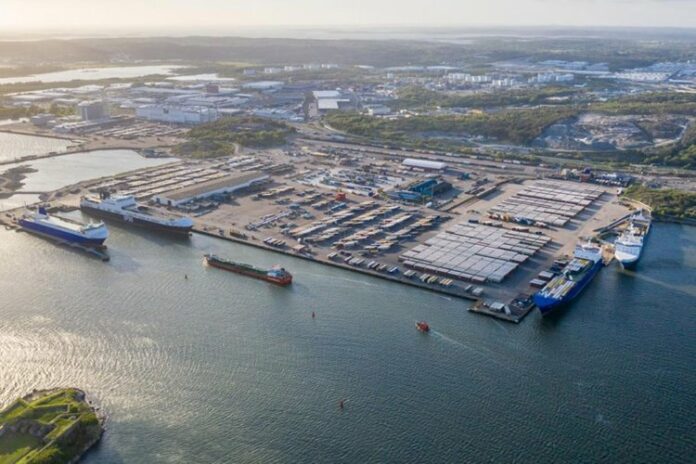
The shoreside power system is currently undergoing tests at yet another quay, which means that even more ships will be able to connect to shoreside power within a few weeks. There is the potential to reduce carbon emissions by 650 tonnes per year.

By connecting ships at berth to a shoreside power facility, carbon emissions can be cut substantially, and emissions of sulphur dioxide and nitric oxide can be reduced to a minimum. This solution also offers a quieter port environment and an improved working environment on board.

The busiest quay at the port – Quay 712 at the Ro-Ro Terminal – is currently undergoing final testing of its shoreside power facility. For shoreside power to work it is not enough to have a landside facility – the ship must also be equipped to use the system. The shipping company DFDS is investing heavily in adapting its ships to shoreside power and their vessel Flandria Seaways will be the first to connect to the new facility.

Poul Woodall, Senior Advisor Climate & Environment at DFDS, said:

“A growing proportion of our ships are being adapted to connect to shoreside power and it will become increasingly important for ports to offer a shoreside power option. The Port of Gothenburg has for a long time been at the forefront in this area, and DFDS has taken a positive view of the expansion that is currently taking place.”

The next shoreside power project at the port was initiated last year. This time around it is the Energy Port that is being investigated with an eye to installing a future shoreside power facility. The project is unique as the Port of Gothenburg would in that case be the first port in the world to have shoreside power for tankers in a hazardous area.

Planning and implementation are scheduled to take place during 2021, with commissioning scheduled for 2022. The annual reduction in carbon emissions generated by ships connecting to a shoreside power supply is estimated at 2,100 tonnes. The port hopes to be able to spread the concept to other ports and lay the foundation for a standard for shoreside power within hazardous areas.

Nikol Nielsen Gulis, Head of Project Management at the Gothenburg Port Authority, said:

“We are looking forward to moving ahead with this work. What is most satisfying is that we are able to commission yet another facility at the Ro-Ro Terminal following excellent collaboration with DFDS and the terminal operator Gothenburg Roro Terminal.”

Shoreside power facilities are also available at the Stena Line quays, and at Quay 700 at the Gothenburg Ro-Ro Terminal.

New NOAA ocean exploration ship to be based in Newport, Rhode Island

0

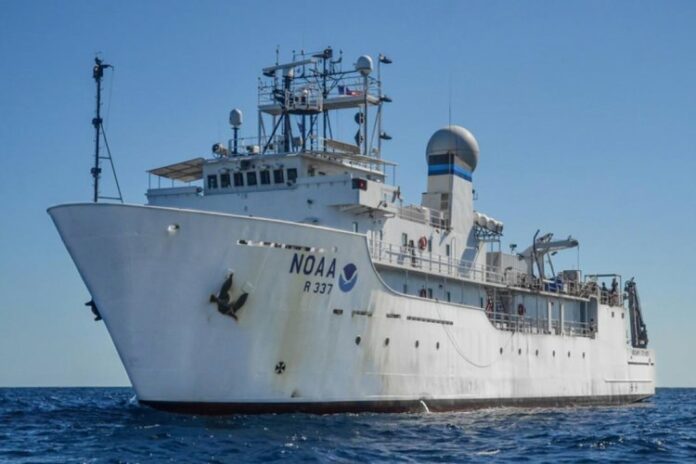
Newport, Rhode Island has been chosen as the future homeport for a new NOAA oceanographic research vessel being built for the agency. 

Rear Adm. Nancy Hann, deputy director for operations for NOAA’s Office of Marine and Aviation Operations (OMAO) and deputy director of the NOAA Commissioned Officer Corps., said:

“Discoverer will be one of the world’s most advanced research vessels. From its Rhode Island homeport, this ship will shed new light on unexplored areas of the ocean with the promise of bringing us many exciting discoveries.”

When commissioned, Discoverer will replace the 32-year-old Newport, R.I.-based NOAA Ship Okeanos Explorer as the only federal vessel dedicated to ocean exploration. The new ship will join NOAA Ship Henry B. Bigelow, a fisheries survey vessel also based in Newport at a NOAA marine support facility soon to be built at Naval Station Newport.

Discoverer will also support the many strong partnerships that NOAA has in Rhode Island and around the nation that promote ocean exploration, research and the development of new technologies.

The timeline for Discoverer’s arrival will depend on construction progress on the new ship. The retirement date of Okeanos Explorer will be based on that aging ship’s condition when Discoverer comes online.

The other new ship being built for NOAA, Oceanographer, will be homeported in Honolulu, as previously announced. The U.S. Navy awarded a contract on Dec. 31, 2020, to Thoma-Sea Marine Constructors LLC of Houma, Louisiana, for the detailed design and construction of this new class of NOAA vessels. The new ships will operate with a crew of 20 and will accommodate up to 28 scientists.

The NOAA ship fleet is operated, managed and maintained by OMAO. NOAA ships are operated by NOAA Corps officers and civilian professional mariners.