-10.3 C
New York
Home Blog Page 690

Jan De Nul vessels first to receive new Bureau Veritas ultra-low emissions notation

0

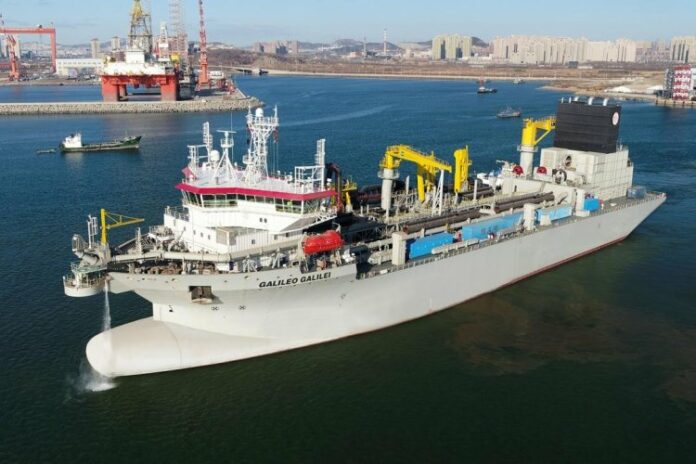
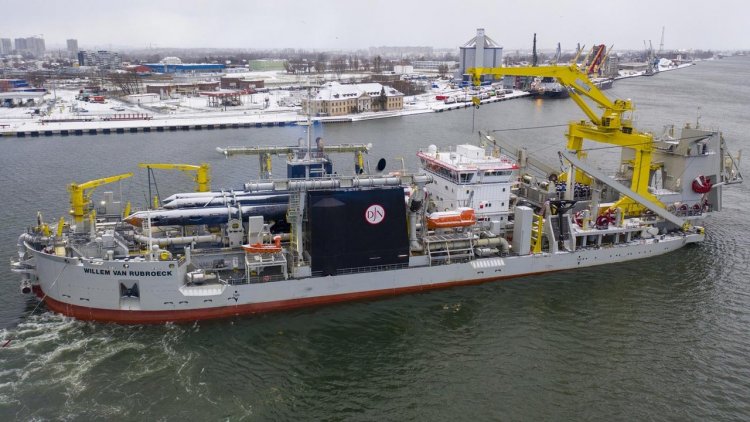
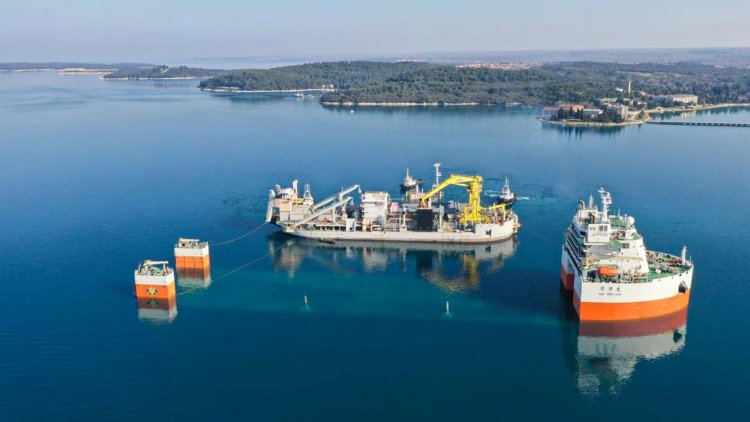
Jan De Nul Group’s newest Trailing Suction Hopper Dredgers, Sanderus, Ortelius, Tristão Da Cunha, Afonso De Albuquerque, Diogo Cão have now become the first ships to receive this recognition.

The Jan De Nul units are specifically designed for ultra-low emissions, including installation of a two-stage catalytic filter system, and can outperform the most stringent low emissions operational policies.

The ULEv notation is Bureau Veritas’ newest recognition for ultra-low emission vessels. It can be assigned to ships that exceed existing MARPOL requirements for lowering pollutant emissions. The voluntary notation accounts for air quality, including hydrocarbons, carbon, NOx and particulate matter, as well as particle numbers. For ship owners looking to distinguish their fleets, the ULEv notation helps demonstrate a real and significant commitment to environmental protection.

Laurent Leblanc, Senior Vice President Technical & Operations at Bureau Veritas Marine & Offshore commented:

“Preserving our environment is nowadays at the heart of all innovation strategies. Thanks to Bureau Veritas expertise and our environmental commitment, we have pioneered the development of rules for low emission vessels and today we are very proud to accompany Jan De Nul on their sustainability journey. BV welcomes the initiative taken by Jan De Nul to make their vessels more environmentally efficient than the requirements of applicable maritime regulation. Bureau Veritas is proud to support and work with  ship-owners on their sustainability journey.”
Patrick Jan, Product Manager at Bureau Veritas Marine & Offshore, explained:

“The Bureau Veritas additional class notation ULEv (for Ultra-Low Emission Vessel) is the most advanced set of requirements regarding the capacity of a ship to emit gaseous pollutants and particular pollutants at a very low level. It is certainly a significant milestone on the path to reducing maritime environmental impact.’

As well as design solutions, Jan De Nul Group is adopting 100% renewable fuel, as a certified sustainable substitute for fossil fuel made from waste flows. Since the end of 2019, its first Trailing Suction Hopper Dredger in Zeebrugge has been operating on 100% biofuel. Jan De Nul Group is considering this switch for other dredging vessels.

Michel Deruyck, Head of Energy at Jan De Nul Group:

“Air pollution is one of the biggest dangers to public health. Marine construction activities are mostly situated in the vicinity of coastlines, ports and harbours, and densely populated areas. Even if the dredging industry accounts for only 0.1% of the total emission of global shipping traffic, we feel personally involved in this issue and regard it as one of our core missions to do something about it.”
Jan De Nul focuses on minimalizing the footprint of its maritime activities on ambient air quality and climate, and therefore designs its latest vessels fitted with a highly advanced exhaust gas filtering system by means of a Selective Catalytic Reduction (SCR) system and a Diesel Particulate Filter (DPF).  

First published in 2019, Bureau Veritas developed the ULEv notation by carefully adapting the European Commission’s Stage V policy for emissions reduction to the specific needs of sea-going vessels. Originally developed for internal combustion engines for non-road mobile machinery – including inland vessels – Bureau Veritas’ experts have reworked the existing requirements to develop an exacting set of standards for seagoing ships. Jan De Nul’s new dredgers reflect a commitment to focus on air quality and minimization of their operational impact.
Cadeler orders deck crane for WIV ‘Wind Orca’

0

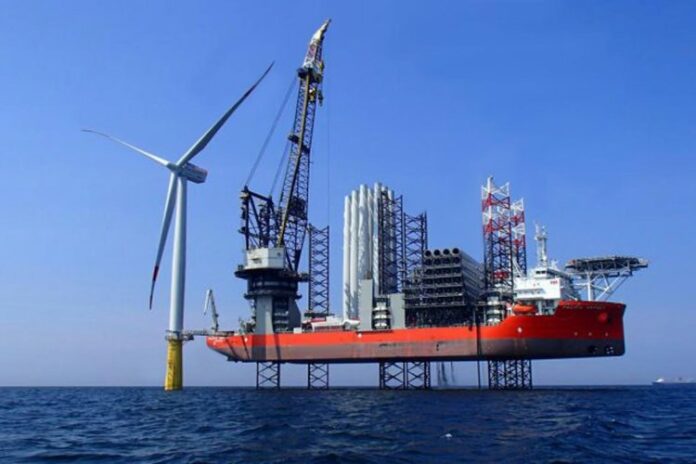
Cadeler has awarded KenzFigee this contract based on its decision to replace the current offshore deck crane on its self-elevating windfarm installation vessel ‘Wind Orca’ in preparation for the changing offshore wind market demands.

KenzFigee will deliver the compact and robust designed electric hydraulic driven Ram Luffing crane with a lifting capacity of 25t (SWL). The KenzFigee Ram Luffing crane is a box boom type with an installed base of more than 50 cranes world-wide. The limited number of moving parts makes this crane highly reliable and the ideal low maintenance crane for harsh offshore environments.

The crane is expected to be delivered for installation in late 2021. After testing and commissioning the Ram Luffing crane will be operational early 2022 and ready for its first assignment on board of the ‘Wind Orca’ as a further improvement of the vessel’s versatility and efficiency.

Jan-Pieter Klaver, CEO of KenzFigee, says:

“KenzFigee is honored to be selected by Cadeler to supply this crane on one of their O-class vessels and contribute to its strategic decision to solidify their position as a key supplier within the offshore wind industry. We will support Cadeler during this project and beyond to make sure this project is the first of many to come.”

Mikkel Gleerup, CEO of Cadeler, says:

“Cadeler looks forward to installation of the deck crane on ‘Wind Orca’ and is confident KenzFigee will deliver an advanced solution meeting our operational needs. Replacement of ‘Wind Orca’s’ current deck crane is necessary to ensure the vessel is ready for future wind turbine installation projects which require a crane with improved reach for lifting various tools and equipment on deck.”

De Klerk takes delivery of two Damen Stan Pontoon

0

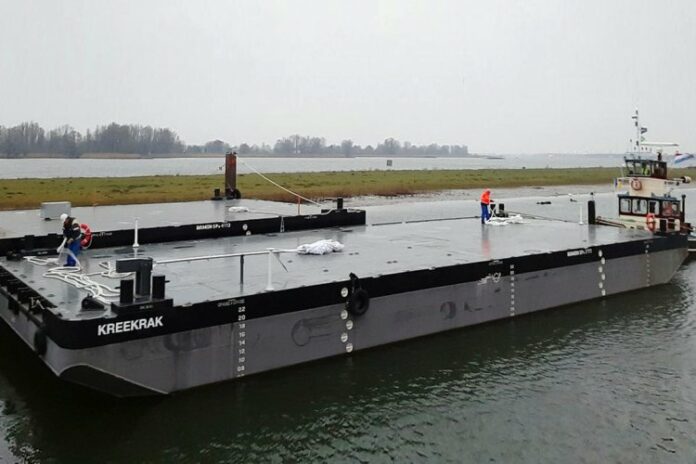
Damen Shipyards Group has delivered two pontoons to De Klerk in Werkendam, the Netherlands. The delivery, which took place on January 8th, consisted of a Stan Pontoon 4111 named Oosterschelde and a Stan Pontoon 3011 named Kreekrak.

De Klerk placed the order with Damen on the 1st of December 2020. The delivery took place quickly thanks to Damen’s practice of building vessels in series. Damen sales manager Vincent de Maat explains:

“In the 1960s Kommer Damen revolutionised our industry with the introduction of standardised shipbuilding. There are numerous benefits of this – amongst which is that it provides operators access to vessels and equipment that are thoroughly proven.

“Additionally, as is the case with these two pontoons, it means we can build for stock. That way, when a need arises for our customers, we are able to respond very quickly.

“One of the main reasons De Klerk has chosen our pontoons is that we have a more solid deck thickness than our competitors. The pontoons will be used for all kinds of civil constructions works. De Klerk also did some civil projects for Damen in the past.”

The pontoons will be the first Damen vessels operated by De Klerk and will support a wide range of civil construction projects.

Wärtsilä’s Hybrid Solution selected for new Isle of Man ferry

0

The technology group Wärtsilä will supply a comprehensive range of solutions for a new 132 metres long RoPax ferry for the Isle of Man Steam Packet Co (IOMSP). It is being built at Hyundai Mipo Dockyard in Korea and will serve the Heysham to Douglas, Isle of Man route. The order with Wärtsilä was placed in the second quarter of 2020.

Wärtsilä has worked closely with the owner to develop a customised integrated solution based on the ship’s operating profile and customer-specific requirements. Reliability, efficiency, and low operating costs were key considerations. Central to the design is the Wärtsilä 31 engine, recognised by Guinness World Records as being the world’s most efficient 4-stroke diesel engine and an engine that can also utilise artificial intelligence (AI) and machine learning in a condition based maintenance regime.

Mr Jim Royston, Fleet Operations and Project Manager at IOMSP, says:

“We have selected Wärtsilä as their solution brings notable advantages in terms of system integration and operational optimisation. It will also have the flexibility to take advantage of alternative future fuels as they become available. Wärtsilä has the experience to deliver a state-of-the-art bridge to propeller solution, along with the track-record needed for this complex newbuild project.” 

Karl Hinks, Sales Manager, Wärtsilä Marine Power, says:

“The Hybrid solution, combining highly efficient engines and energy storage, is increasingly being seen as a practical means for meeting today’s environmental and operating challenges. This solution lowers emission levels and extends the time between engine overhauls, and is an effective future-proof model for ship owners.”

The Wärtsilä scope includes the Wärtsilä 31 engines, electrical and automation including Wärtsilä’s Low Loss Concept (LLC), the energy storage system, and propulsion machinery including the transverse thrusters. Wärtsilä will also supply the latest NACOS Platinum integrated navigation system along with a newly developed, ground-breaking Bridge Console Design and its Aquarius UV Ballast Water Management system. The equipment is scheduled for delivery to the yard during the latter part of 2021.

Bakkafrost signs contract with MEST Shipyard to build fully electric workboat

0

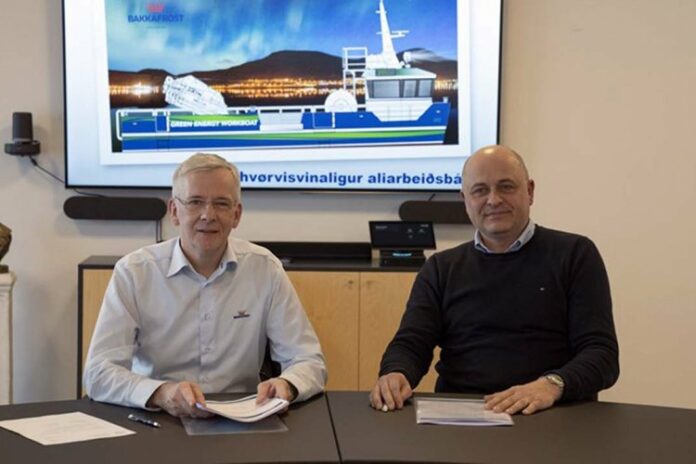
Bakkafrost and MEST Shipyard have signed a contract on the construction of a fully electric workboat. The contract was signed at Bakkafrost’ s headquarters at Glyvrar.

Regin Jacobsen, CEO at Bakkafrost, is pleased with the signing of the contract.

“At Bakkafrost we have a goal to reduce our GHG-emissions by 50% by 2030. We continuously set ourselves ambitious goals regarding our environmental impact, and thus we are continuously looking for visionary projects that contribute to the green transition.

With this project we hope to inspire and provide important knowledge to the industry. Ships and boats play an important role in the Faroe Islands, and it is also in this sector that we find the biggest potential to reduce the overall Faroese GHG-emissions. We hope that this project will inspire the industry to begin the green transition of the maritime sector.”

The project to build a fully electric workboat is a result of the Faroese presidency in the Nordic Council of Ministers and is part of a larger project which aims to find energy solutions that utilize the production of energy in remote areas in a more sustainable way.

The Faroese energy company SEV participates in the project by providing a system that ensures that the workboat is charged in the most sustainable way.

The construction of the workboat is expected to be completed in December 2021.

80% of ports missing out on the benefits of digitalisation, creating ‘last mile’ risks

0

Innovez One today stated that of the 4,900 ports in the world, the majority are not yet using digital technology for even the most basic processes; 80% of ports continue to rely on manual, legacy solutions such as whiteboards or spreadsheets to manage critical marine services such as towage, pilotage and launch boats. This leaves many ports commercially vulnerable and less able to compete in an increasingly digital world.

While the phrase ‘smart ports’ has been used regularly within the maritime industry for a number of years, the benefits of digitalisation remain the preserve of only a few, large ‘Tier 1’ ports that have the profile and financial muscle. This has created a polarised landscape within the port sector.

Many ‘Tier 2 and below’ ports still use manual, paper-based processes or Excel spreadsheets to arrange and execute jobs and rely on personal interaction and paper-based transactions as the norms for shipboard, ship-port interface and port-hinterland-based exchanges. This leads to a range of inefficiencies in ordering, execution, and billing, as well as a lack of sustainability and competitiveness.

Alarmingly, this dynamic makes the ‘last mile’ of a journey at sea a weak link in the global logistics chain, opening up risks of delays, late payments, increased fuel consumption and emissions, reduced revenues, and even safety concerns stemming from a lack of traceability. For the 20% of ports where this is not the case, they have often been able to rely on their own in-house software.

David Yeo, CEO, Innovez-One, says:

“The current dynamic reflects the often-messy reality of port operations, which is a blend of high-tech digital and paper-based, manual processes sitting side-by-side. This causes issues in relation to interoperability, where systems are not talking to each other properly, which is impeding effective execution. However, it also highlights the fact that while global supply chains are becoming increasingly automated, of which ports are an integral part, the majority of ports still overwhelmingly rely on person-to-person systems.”

The ramifications and missed opportunities for ports from increased efficiencies, revenues, sustainability and competitiveness are significant. In particular, towage operators are missing out on the opportunity to make substantial savings of their annual fuel costs by reducing the mileage of tugs while saving yearly maintenance costs and personnel cost savings of their towage vessels.

However, Innovez-One believes that this current dynamic does not need to continue, and that the vast majority of ports are unnecessarily missing out on the opportunity to reap the benefits of digitalisation; particularly when affordable technology, with a fast return on investment, exists and is readily available. Specifically, utilising smart technology and AI models to optimise and solve complex last-mile towage and pilotage challenges, and in doing so, creating a fair and level playing field within the global ports’ marketplace.

Critically, as ports digitise, the solutions developed must be based on a strategic port framework with a set of common criteria. One of the core elements will be to consistently ensure that management systems are based on common design criteria to support an open architecture, enabling different solutions and applications from various suppliers and vendors to co-exist and be interoperable with each other, in real-time. This must be handled in an agile way to secure compatibility, so that port management services can continue to provide services without interruption 24/7/365.

David Yeo concluded:

“It is staggering that digitalisation seems to have only been reserved for the larger top-tier ports and established towage operators. Our mission is to readdress the imbalance, because there is no reason why every port cannot be a smart port; digitalisation should be for the many, not the few. There are software and technologies that exist and are proven, like our marineM platform, which can help ports increase the efficiency, sustainability and profitability of their operations as well as improve their commercial success, and competitiveness, right now and for the future.”

Start of construction of the Femern project, the world’s longest immersed tunnel

0

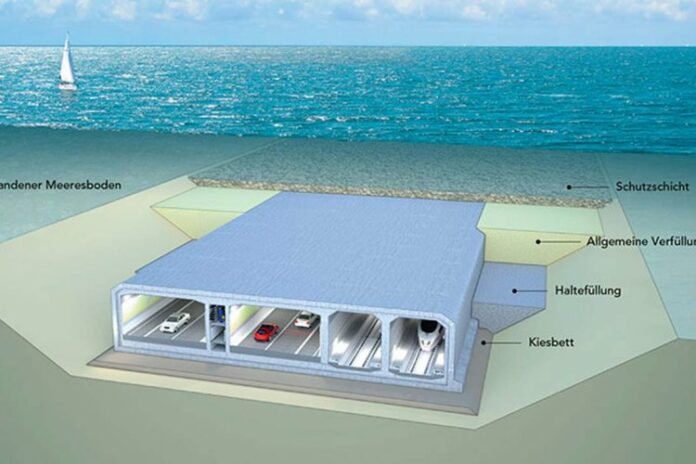
Up to 9 metres high and 43 metres wide, the 18 km long combined road and rail tunnel linking Germany and Denmark will foster trade and tourism in Northern Europe.

Works have started on the Danish side, with the construction of the factory that will manufacture the 200-metre precast concrete box girders that will be immersed to form the fixed link between Denmark’s Lolland Falster region and Germany’s Schleswig Holstein Land. The project will have a workforce of 2,000 employees at the peak of activity. This new infrastructure facility, one of the most ambitious ongoing projects in Europe, will shorten the journey between the German and Danish coasts to just 7 minutes by train and 10 minutes by car from the current travel time of one hour by ferry or a 160 km detour by car. Delivery is scheduled for mid-2029.

Hakim Naceur, Project Director, Tunnel North and Tunnel South Contract:

”We have been looking forward to this moment and are very pleased that this magnificent project can now be realized. It will be a great achievement when complete – an achievement which cannot be done without the help, commitment and cooperation of the owner Femern A/S and of our partners, subcontractors & suppliers and of all the German and Danish stakeholders”.

Christian Lundhus, Project Director, Tunnel, Portal and Ramps Contract:

“Our team which is growing day by day is excited to be part of the project and is already very busy. As of today, we have much focus on the design, the site in Rødby is being prepared for our offices, village and not least the huge factory which is to be used for constructing the tunnel elements”.   

The joint venture comprises VINCI Construction Grands Projets (lead company for the two contracts covering construction of the immersed tunnel and the tunnel precast element factory), Per Aarsleff Holding A/S (lead company for the third contract, which covers the tunnel access ramps), Soletanche Bachy International (a VINCI Construction subsidiary), CFE, Dredging International NV, Wayss & Freytag Ingenieurbau, Max Bögl Stiftung & Co, BAM Infra and BAM International.


Port of Antwerp installs smart bollards with sensors

0

Port of Antwerp and technology company Zensor are joining forces to increase safety at the quay walls. 

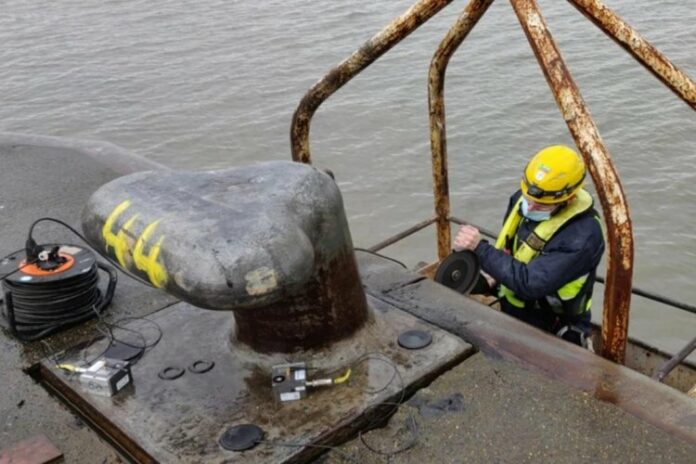
Zensor developed the Bollard Monitor, a digital sensor that measures the tension on a bollard. The first five Bollard Monitors have been installed at the North Sea Terminal, and five more are planned shortly.

The port of Antwerp has some 120.6km of quay walls and 7,000 mooring posts and bollards. This is where ships attach their ropes when mooring up. This way, ships do not move about during loading and unloading. In windy or stormy conditions, the ropes of large seagoing vessels exert an enormous tractive force on the mooring posts and bollards. Bollards, with their bolt or anchor connections, are more sensitive than mooring masts in this respect. If such a bollard – 650kg of steel – were to come loose, there is a risk that a ship could drift away or that people would be injured. Regular inspection and maintenance are therefore required.

In order to measure the tension in the bolt connection of bollards and to warn if a bollard is in danger of coming loose or breaking, Port of Antwerp launched a call in 2020 to devise a digital system for this purpose. Out of the five entries, the ‘Bollard Monitor’ by the Brussels technology company Zensor was chosen as the winner. The Bollard Monitor consists of two built-in sensors, which measure the tension and tension fluctuations on the mounting system. Every 15 minutes, the system sends the information, which is permanently recorded, via a wireless connection and visualises it via a dashboard. This data will help the operational department to optimise the preventative maintenance of the bollards.

Tom Cornelissen, Sales Manager at Zensor, said:

“Zensor makes the bollards at the port of Antwerp intelligent. Instead of on-site checks, the sensors will automatically and immediately indicate when the bolt connections of bollards are being overloaded. The technical services at the Antwerp Port Authority can view the actual load on the bollards live via the online Zensor platform. The system will send out an alert if a bolt comes loose. This is not only much more efficient for maintenance, it also increases safety. The measured data from the bollards is linked to operational data from the Port Authority. The intelligent processing of this combined data provides additional insights and context about the load on these bollards.”

Erwin Verstraelen, PoA, said:

“As part of our vision to lay a digital nervous system over the physical port, we have installed sensors on a number of bollards. With this, we want to measure the impact of large pulls, which will help us to plan maintenance more efficiently. A great example of how we use innovation and partnerships to increase safety at our port.”

Annick De Ridder, port alderman, said:

“With this piece of innovation, we are not only making our port safer and more efficient, but we can also be a source of inspiration for other ports. By continuing to use our port as a testing ground for technological innovation, we will continue to play a pioneering role here.”

Brittany Ferrries introduces three new freight-only services from Ireland to France

0

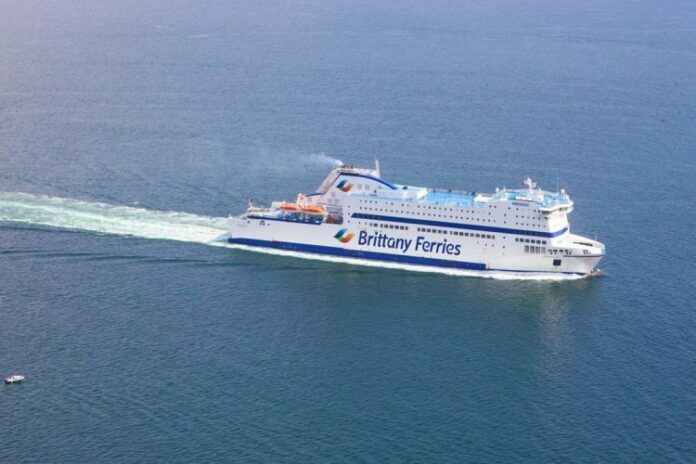
Brittany Ferries has announced that it is introducing three new weekly freight only sailings between Ireland and France. 

The first of two new sailings out of Cork to Roscoff will begin this Saturday. These sailings are in addition to the current Brittany Ferries sailings out of Cork and Rosslare to both France and Spain. The new sailings are in response to demands from both Irish and French hauliers seeking a more direct route.

Normally most lorries travelling between Ireland and France transit via the UK, using ferry services across the Irish Sea and English Channel. However, since new post-Brexit trade rules were introduced on January 1st increasing numbers of Irish and continental hauliers have been deterred from using this ‘landbridge’ due to increased customs checks and paperwork.

 Hugh Bruton, General Manager, Brittany Ferries Ireland, commented:

“It’s clear that Brexit has distorted flows of trade between France and Ireland, there’s now clear and compelling demand both in Brittany and beyond to boost freight capacity direct from the region to Ireland. And Irish traders too are seeking direct links to Western France. We’re always listening to our haulier customers in order to best meet their needs and we look forward to restarting Brittany-Ireland services two months earlier than planned.”

The new Brittany-to-Ireland sailings come in addition to an extra weekly Rosslare to Cherbourg round trip which was introduced in mid-January. This means that from February Brittany Ferries will offer hauliers a choice of eight sailings a week in each direction between Ireland and France.

The company also offers two weekly roundtrips between Rosslare and Bilbao, northern Spain. Altogether the company will be offering 12 sailings a week linking Ireland with France and Spain.

Conor Mowlds, Chief Commercial Officer, Port of Cork said:

“The decision by Brittany Ferries to operate two freight only services from Cork to St Malo and Roscoff is hugely positive for Cork. Importers and exporters now have further transport options to get their freight direct to the EU and bypass the UK Land-Bridge. This announcement comes in the same month as we announced a second freight service from Cork to Zeebrugge. These direct freight services from Cork to the EU strengthen the region by offering more flexibility to Irish customers, ensuring supply chains are maintained. Our relationship with Brittany Ferries spans over 40 years and it continues to go from strength to strength. We wish them every success with this freight service.”

Glenn Carr, General Manager, Rosslare Europort adds: “The continuing commitment of Brittany Ferries to develop new services linking Irish industry to the European continent is once again demonstrated with this new service connecting to St Malo and Roscoff.  We have worked closely with Brittany Ferries to facilitate this new service, which will give further choice and capacity alongside existing Brittany Ferries services between Rosslare Europort and Bilbao and Cherbourg.”

ABS launches digital solution for sustainable marine operations

0

ABS Environmental Monitor™ is the maritime industry’s most comprehensive digital sustainability solution to help shipowners achieve their sustainability goals by leveraging multiple data sources, including vessel routing, waste stream, operations, and emissions data, to provide transparent reporting.

Kash Mahmood, ABS Senior Vice President, Digital Solutions, said:

“ABS is a leader in both maritime sustainability and in the application of digital technologies for enhanced asset management. ABS Environmental MonitorTM brings these together to provide unprecedented levels of insight into the sustainability performance of an individual vessel or fleet. ABS is uniquely well placed to offer this service to shipowners in need of practical solutions for meeting their sustainability targets and developing a detailed understanding of their environmental performance.”

Georgios Plevrakis, ABS Director, Global Sustainability, said:

“Meeting IMO sustainability objectives is a significant challenge and ABS is committed to supporting the industry on this journey. ABS Environmental Monitor is the latest example of how we are applying digital technologies to assist operators in understanding how their assets may be affected by the rapidly evolving landscape of global environmental regulation. A comprehensive solution to monitor sustainability related key performance indicators, ABS Environmental Monitor can help operators make data-informed decisions in light of these new, complex reporting schemes.”