-11.1 C
New York
Home Blog Page 689

INNOSEA appointed on Major European R&D Project for Floating Solar

0

INNOSEA has announced its appointment to join the European Research and Development project for Bringing Offshore Ocean Sun to the Global Market (“BOOST”).

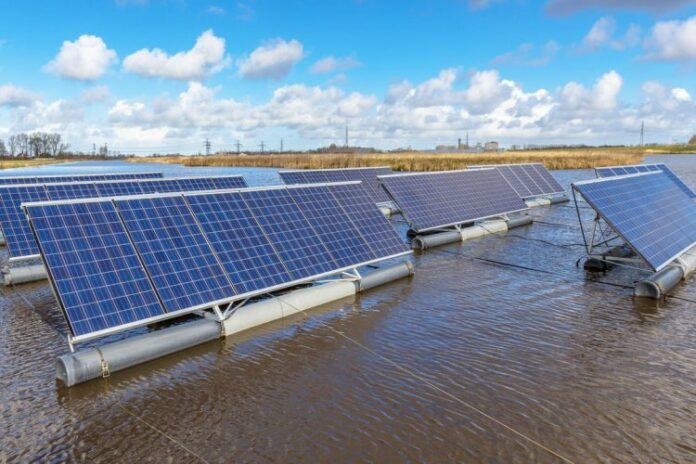
The 4m€ BOOST project, funded and led by the European Commission, aims to design and deliver solutions to build a full-scale 0,25MWp Floating Solar Photovoltaic (“FPV”) in Europe’s sunniest area, the Canary Islands. The offshore test location offers unique environmental challenges to the engineering, with waves of up to 10m and high winds. The contract runs for a duration of approximately 30 months, with work having already officially commenced in January 2021.

The project, as part of the Horizon 2020 programme, is being developed by a consortium of partners including: Fred Olsen Renewables AS; Ocean Sun AS; PLOCAN; and The Institute of Technology of the Canary Islands (ITC).

This appointment follows INNOSEA’s other recent appointment to a multi-national R&D project funded by the European Commission, following their appointment to the TRUST-PV R&D project in Q2 2020. Overall, Innosea will be investing over 100 person months in floating solar R&D to stay at the edge of this emerging sector.

INNOSEA specialises in engineering advisory, feasibility, verification, and consultancy services for marine renewable energies. With offices in Nantes, France and Edinburgh, UK, it is part of AqualisBraemar LOC.

Benoit Briere, INNOSEA Project Manager for BOOST, commented:

“The team at INNOSEA is delighted to have been appointed to join the BOOST project, an innovative programme that aims to deliver offshore floating solar technology to the Canary Islands. Being appointed to a 2nd H2020 grant is a testament to the work INNOSEA has been doing in the floating solar PVs market. Europe’s solar PV plants are currently the smallest in the world in terms of their average size, due to challenges in finding the required land space. BOOST addresses this issue by investing in analyses and the development of solutions to mooring and floating technology, that will support larger-scale floating solar PV developments – combating head-on the issue of land restrictions.”

Titan LNG charters Green Zeebrugge long term from NYK

0

Titan LNG has agreed with Japanese shipping and logistics company, NYK Line to charter the dedicated LNG bunker vessel, Green Zeebrugge. Previously known as the ‘Engie Zeebrugge’, NYK renamed the vessel the ‘Green Zeebrugge’ after becoming the sole owner of the vessel.

The agreement sees Titan LNG charter the Green Zeebrugge for several years from February 2021. The vessel will be used to supply LNG to larger LNG-fueled vessels in the Amsterdam-Rotterdam-Antwerp (ARA) region. With the vessel’s chilled fuel cargo capacity of 5200 cubic meters, the chartering increases the delivery promise of Titan LNG significantly.

The Green Zeebrugge is added to the two already operational barges (FlexFueler’s 001 and 002) and will provide better loading economics for Titan LNG.

Michael Schaap, Titan LNG’s Commercial Director Marine commented:

“We are excited to announce the chartering of the Green Zeebrugge. January has proven exceptionally busy, underlining the timeliness of our decision to secure this additional capacity. Titan LNG caried out seven LNG operations during one weekend, three of which were to large crude shuttle tankers from Equinor, a term contract partner of Titan’s. Using the Green Zeebrugge we were able to ensure safe and timely deliveries to all the vessels.”

Longer term, this charter will increase the accessibility and thereby the uptake of LNG as a marine fuel, as the cleanest available fuel today. Titan LNG supports shipowners in taking active steps to meeting 2030 and 2050 emissions targets with (bio) LNG and other emission reduction strategies.

Schaap continued:

“The use of LNG as a marine fuel has a multitude of benefits — not least its clear pathway to meeting decarbonization targets through the introduction of bio and synthetic LNG. Establishing agreements such as these will help provide greater accessibility to the fuel, enabling more shipping companies to start the journey towards a zero-carbon future today. The expansion of our service area provides excellent opportunities for Titan LNG to gain new customers and serve our current ones even better.”

With the anticipated further acceleration of LNG bunkering demand, Titan LNG is taking bold steps to realize the needed infrastructure in European ports. A variety of LNG bunker vessels enables the use of LNG as a marine fuel to grow quickly. The Titan LNG Hyperion, the 8000 cbm vessel that is nearing Final Investment Decision, will be extra proprietary capacity that will be available early 2023. Titan LNG expects to have the largest network of LNG bunkering vessels in Europe by 2025.

Damen Trading signs contract with GPS Marine for Stan Pontoon

0

Damen Trading has recently sold a stock Damen Stan Pontoon (SPo) 6316 to its client GPS Marine Holding BV in Hulst, the Netherlands. The customer was looking for delivery of a flat-top barge in quick time in order to participate in a project taking place in the IJselmeer lake in the north of the Netherlands. With Damen’s practice of building vessels in series and for stock, the shipbuilder was able to deliver the vessel within two weeks of signing the contract.

GPS Marine Holding BV is a fully-owned subsidiary of GPS Marine Holdings, the Upnor, UK-based marine contractor offering a range of service including civil engineering and construction, backhoe, plough dredging, marine and offshore demolition, international coastal and harbour towage, transport of goods by barge, diving and sub-surface engineering.

The company already operates a number of Damen vessels in its fleet – two SPo 6020, an SPo 3011, two Stan Tug 1606s and a Shoalbuster 2709.

Damen Trading’s senior sales manager Michel Radjiman said:

“GPS Marine Contractors have a number of Damen vessels in their fleet. It’s great to see that they are adding another pontoon as they expand their business in the Netherlands. I’m grateful to John Spencer, MD of GPS, for once again placing his trust in Damen. We trust this fourth barge will prove to be a valuable addition to their fleet and a continuation of a long-lasting relationship.

“I’d also like to thank Paul Verschure, of Dutch Marine BV, John’s colleague in the Netherlands for his expertise and technical assistance during the whole process. His professional performance definitely contributed to the speediness of this deal.”

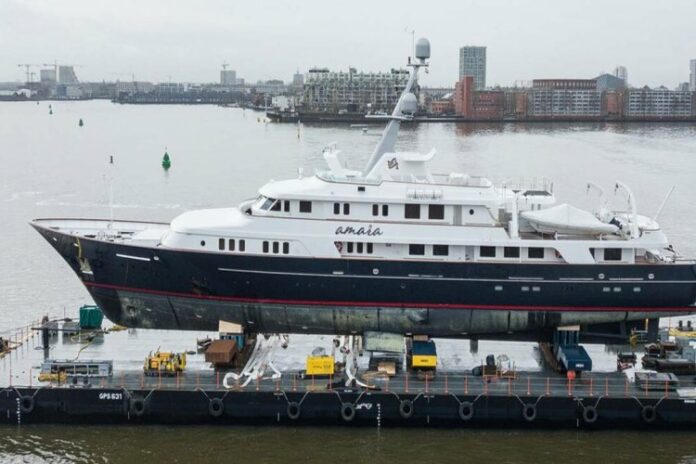
The SPo 6316, which is to be renamed GPS 631 and registered in Hulst, had a swift drydocking at Damen Shiprepair Amsterdam in preparation for her upcoming charter. The yard, says, Tjeerd Schulting, has the motto “Ships must sail”. Upon leaving the drydock, the GPS 631 was immediately put to the test loading and transporting the 58 metre superyacht Amara even before her original assignment started. A clearresult of teamwork between all parties involved.

Damen Trading is a part of Damen Marine Services, specialising in the sale, purchase and chartering of any type of used vessel.

Wärtsilä and SAACKE sign partnership to expand their marine solution offerings

0

The technology group Wärtsilä has signed a strategic partnership agreement with SAACKE, the Germany based global supplier of marine firing plants for seagoing vessels, offshore plants and LNG tankers. The agreement will strengthen the companies’ ability to offer a comprehensive range of leading technology solutions to shipyards and ship owners.

A central feature of the agreement is a cooperation regarding safety, in particular with Inert Gas Systems (IGS) and Gas Combustion Units (GCU). The agreement will also enable both partners to offer larger and more comprehensive scopes of supply. This will in turn benefit customers in the form of technology capability, cost savings, improved services, and easier procurement procedures.

Peter Breidenich, Director of Marine Systems at SAACKE, said:

“Our agreement with Wärtsilä extends our long-standing cooperation to a strategic partnership. This will deliver value to our customers and will improve the market position for both companies.”

Geir Hellum, Product Line Manager, Inert Gas Systems, Wärtsilä Gas Solutions, added:

“We are very excited at the potential benefits this agreement offers, both to the two companies and to their customers. We are confident that by working closely together, we can improve performance for all of us.”

The agreement covers SAACKE’s Boilers, Exhaust Gas Economizers, and air-cooled Gas Combustion Units, as well as Wärtsilä’s Inert Gas Systems and combined Inert Gas & Gas Combustion units. Wärtsilä will also make its Flue Gas system available to SAACKE, thereby making it possible for a single delivery of a Boiler and Flue Gas system, thereby improving system performance and reducing cost.

The joint offering targets the LNGC and LPGC markets, which are expected to remain strong during the coming years. The strategic partnership will provide the market place with a stronger and more competitive vendor. For Wärtsilä, the agreement encourages an increased focus on Gas Systems, while for SAACKE it adds the ability to deliver Boilers and Inert Gas Systems as a single integrated solution for tankers.

SAACKE is the inventor of the Gas Combustion Unit technology. As specialist in combustion systems for seagoing vessels, SAACKE makes it possible with the GCU to transport liquefied natural gas (LNG) safely and reliably at sea.

Samskip launches new groupage service between Hull and Rotterdam

0

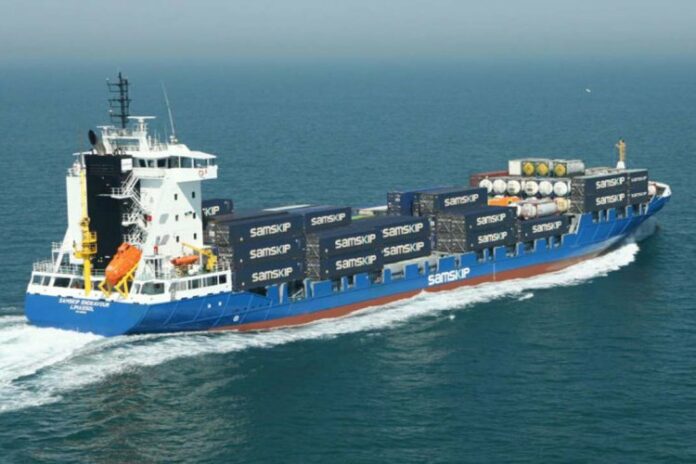
With Brexit now fact, Samskip reacts to a demanding increase of groupage shipping services. By launching a new two-time weekly groupage service between Hull and Rotterdam, importers and exporters that do not have the need for a full container shipping, can now easily avoid post-Brexit hassle and keep shipping costs down with this new premier groupage service. 

With a fixed sailing schedule, this service departs twice per week on Wednesday and Saturday from Hull towards Rotterdam with a three days transit time. Delivery of the goods must happen to the warehouse two days before the planned departure. 

Samskip operates as a licensed customs broker on both sides of the English Channel. Exporters and importers can benefit of no delays to get their goods released. In addition, comprehensive pre – on carriage services are available in The UK and The Netherlands, enhancing shippers’ logistical supply chain to and from the port of arrival or departure.

Thijs Cramer, Business Development Manager Samskip, said that the service launch fits with the current strategy of the company when importers and exporters in UK and mainland Europe continue to change their supply chain management due to Brexit. An extension of the current service connecting to Amsterdam and vice versa will be launched shortly.

Connecting to Europe’s biggest port, Rotterdam is the link towards inland Europe. Samskip’s multimodal connections compliments this groupage service, making it easy to transport your goods into the Northern and Southern European markets by road, rail, or barge. 

Works starts on innovative new flood defence at The Port of Tilbury

0

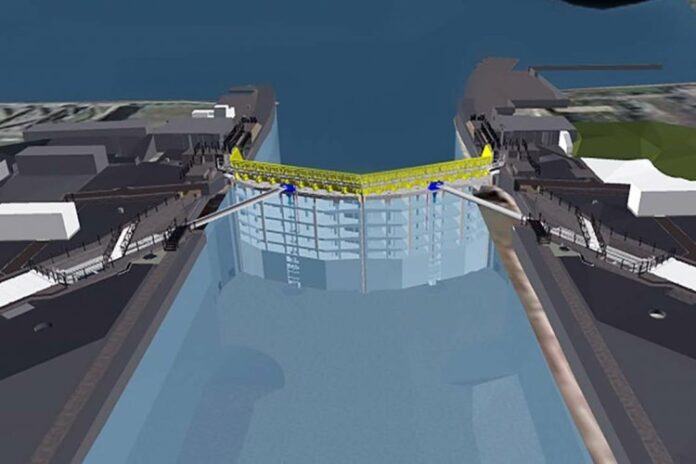
In a project of national importance, the existing port lock gates will be replaced with pioneering dual function lock gates, and the Environment Agency’s tidal barrier will be removed.

This is a major joint project between the Environment Agency and The Port of Tilbury that will safeguard thousands of homes and businesses in the local area.

Work started in January and is expected to last for 18 months with the new lock gates planned for installation in late 2021 / early 2022.

Once the work is completed it will ensure a high standard of flood protection for Tilbury and provide a new navigation lock for operations at the busy port.

Planning for this project has been underway with the Environment Agency and the Port of Tilbury for several years. With total scheme costs of around £34million, the Port of Tilbury London Ltd (PoTLL) is providing a multi-million-pound contribution to the project and will take responsibility for operation and maintenance of the new dual function structure. Funding has also been secured from the Anglian (Eastern) Regional Flood and Coastal Committee. Councillor Gerard Rice represents Thurrock Council on this Committee.

The Environment Agency’s Thames Estuary Asset Management 2100 Programme (TEAM2100) will deliver the works in partnership with a number of contractors including Jacobs and Balfour Beatty.

Sir James Bevan, Environment Agency Chief Executive said:

““We are investing £5.2billion in flood defences over the next 6 years. The Port of Tilbury is vital to our national economy. The new scheme is an important and exciting project that has both a flood protection and navigational purpose, and will help protect jobs and growth.

The Tilbury barrier will reduce flood risk for the Port, residents and business. It is a key part of the Environment Agency’s new Flood Strategy, which aims to make the country resilient to flooding and coastal change – today, tomorrow and to the year 2100.”

Charles Hammond OBE, Group Chief Executive of Forth Ports (owners of the Port of Tilbury) said:

“This is a vital strategic project for not only the port but to safeguard the local community from any flood threat. We have worked with the Environment Agency for a number of years to carefully plan this major project and it is through this successful collaboration that this innovative scheme will become a reality.”

Commenting on the project, Paul Dale, Port of Tilbury’s Asset & Site Director said:

“This is a very important project and an impressive engineering solution that will provide flood defences for homes and businesses in the area for decades to come while ensuring the smooth marine operations at The Port of Tilbury.”

Helena Henao Fernandez, Environment Agency Deputy Programme Director and Sam Stevens, TEAM2100 Delivery Partner Programme Director said:

“We are excited with TEAM2100 progressing the Tilbury Dual Function Lock Gate project into the final stage of construction. This is a complex project that has required extensive planning, complex design solutions and strong collaboration between the Environment Agency, Port of Tilbury and the TEAM2100 delivery team. We look forward to playing our part in bringing this project to a safe conclusion, so that it can provide critical flood protection to Tilbury and the local communities for many years to come.”

Paul Hayden Regional Flood and Coastal Committee chair said:

“This important project has been supported by the Regional Flood and Coastal Committee for many years.  It is excellent news that construction has started.”

This scheme is part of the Government’s long-term investment in flood and coastal defences. Since 2015 it has invested £2.6bn to better protect the country from flooding and coastal erosion and is on course to have better protected 300,000 homes by March 2021. Earlier this year, the Government announced a record £5.2 billion investment in flood and coastal defences and the National FCRM Strategy will help build a better prepared and more resilient nation.

The original port lock gates were installed in 1928 and Tilbury Barrier was constructed in 1980-1981.

Opinion: Global installed offshore wind capacity to see 37% growth in 2021, fueled by China

0

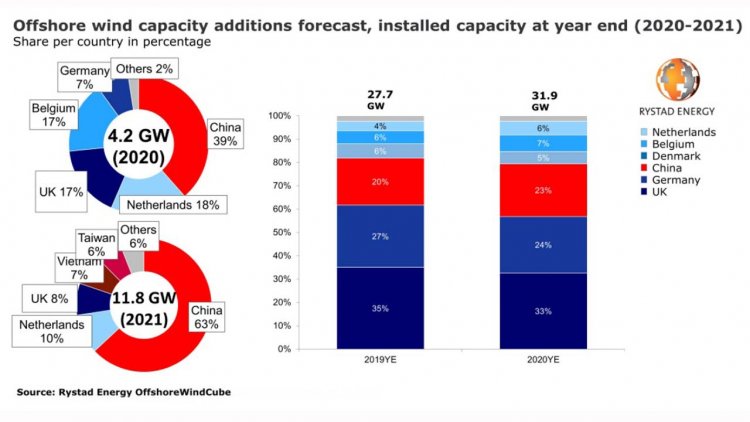
Despite the Covid-19 pandemic, the world’s installed offshore wind capacity rose by 15% in 2020, reaching 31.9 gigawatts (GW) at year-end, from 27.7 GW at the end of 2019, Rystad Energy estimates. China was the main contributor in 2020, accounting for 39% of last year’s additions, followed by the Netherlands (18%) and the UK (17%).

Rystad Energy expects the global installed offshore wind capacity to further increase by 11.8 GW in 2021, a monumental 37% step-up compared to 2020’s 31.9 GW. China will continue to lead the new capacity additions, contributing 63% of the expected growth. 

As Covid-19 hit the Chinese market first, fears over supply chain disruptions emerged, with offshore wind developers worried about delays to projects down the line. And as the pandemic spread throughout the world, risks of a severe slump in construction activity grew. More countries closed their borders and went into lockdown and several manufacturing sites for turbines and other components temporarily shut down operations.

However, with the first wave of the virus settling, the offshore wind market returned to a growth trajectory, supported by increased capacity targets from several nations. While staying resilient in an uncertain market was key in 2020, this year the industry finds itself positioned for record growth, especially as commissioning activities pick up pace in Asia and around the world.

After 2021, China will begin phasing out feed-in-tariffs and many developers are therefore pushing to complete projects during the coming period. As such, this year is expected to see high capacity additions in the country.

Alexander Fløtre, Rystad Energy’s Product Manager for Offshore Wind, says:

“China had a construction backlog of more than 10 GW going into 2020, and Chinese developers are racing to reach maximum commissioning by the end of the year in order to claim full feed-in-tariffs. This means 2021 is going to see major capacity additions, particularly since some projects initially scheduled for commissioning in 2020 ended up slipping into 2021.” 

Europe and the US also saw some delays due to the pandemic. The developers of the second phase of the 50 MW Kincardine floating offshore wind project in Scotland and the Kriegers Flak combined grid solution in Denmark had to delay start-up. In the US, Danish player Ørsted announced in October delays of at least one year for five projects due to permitting issues.

Nevertheless, offshore wind developers stayed committed to their ambitions and continued to make final investment decisions for projects in 2020. The UK sanctioned more than 4.7 GW of offshore wind and the Netherlands followed with over 2.2 GW. As a result, major projects such as Triton Knoll in the UK, Borssele 3 & 4 in the Netherlands and Kriegers Flak in Denmark are expected to be completed during 2021.

In the second half of last year, almost 25 GW of capacity was added to the global backlog. Currently, Brazil has no operational offshore wind capacity, but its backlog grew significantly during 2020 as the country added more than 15 GW to the drawing board.

In addition, other regions in Asia outside China are preparing for a ground-breaking year, Taiwan and Vietnam have finally started to add significant volumes to their project pipelines – making 2021 a year to look forward to in the offshore wind market.

*Note: The report’s numbers are based on full commissioning of the wind farms to an operating level, which may diverge from grid-connected or just installed figures.

Navarino extends Angel’s cyber security protection to ship operator’s onshore infrastructure

0

As shipping company’s fleets become increasingly office-like in their operations, communication and cohesion between onshore / offshore activities has expanded and evolved. This means greater care is needed to protect the infrastructure pervading the entirety of fleet operations, both onboard and in-office.

Powered by Neurosoft, Angel Office is an advanced 24/7 Cyber Security Defense Centre which monitors, detects, responds and analyses cyber threats and attacks.

Angel Office follows a holistic approach to Cyber Defense, through a number of cybersecurity modules for proactive threat hunting, advanced digital forensic analysis, cyber threat intelligence, vulnerability research and advanced deception technologies, which are specifically catered to each organization’s needs to further enhance their security defense.

Angel Office uses state-of-the-art security solutions such as IBM QRadar and IBM Resilient, with standardized methodologies and is supported by a team of highly skilled cyber security analysts and security professionals.

The new service embeds an award-winning Security Orchestration, Automation and Response (SOAR) Platform, for orchestrating and automating incident response processes. This Security Incident Response Platform (SIRP) enables teams to analyze, respond to and mitigate incidents faster, smarter and more efficiently. The latest innovation to SOAR platform Dynamic Playbooks, provides Angel Office team with the agility, intelligence, and  sophistication needed to contend with complex cyber-attacks, which are becoming more and more prevalent across the maritime industry.

Maritime cyber attacks have increased by 900% in just 3 years, with more than 310 reported significant OT attacks last year—up from 50 in 2017. Hackers have now realized the full potential of exploiting and attacking the what was previously an undefended technology haven. However, shipping and its cyber defenses after fast evolving. Along with this evolution are the new IMO cyber regulations released in January of 2021, making services such as Angel Office vital to both the protection of fleets and regulatory compliance.

New technology helps reduce emissions in drilling operations by more than 25%

0

COSL’s ambitious ‘Energy Control’ project has been launched as a means of simultaneously slashing greenhouse gas emissions and substantially lowering fuel and maintenance overheads on the company’s rigs situated on the Norwegian shelf in the North Sea.

Having already spent years pursuing energy efficiency in its drilling operations, COSL called upon the technological expertise of Kongsberg Maritime and the specialist knowledge of NOV to take its corporate aspirations to the next level.

Collaboration between the firms arrived at an integrated solution which combines Kongsberg Maritime’s energy management systems with NOV’s research into energy optimisation. Analysis of historical data on estimated maximum power consumption derived from COSL’s semi-submersible DP3 rigs COSLPromoter and COSLInnovator revealed that it would be possible to make changes that removed the need to run all six of its 4,800kW Wärtsila Vasa 12V32 diesel during drilling operations.

While NOV leveraged this data to work on a new software update for optimal energy usage, Kongsberg Maritime in turn used the estimates to develop the most targeted and efficient means of controlling onboard energy production and distribution. A core principle of the joint solution was to limit and optimise generator usage, and it was soon established that the rig would still be able to carry out full drilling operations using only three of its diesel generators, on average.

By halving the generator capacity, the engines operate at higher loads, which in tandem with the switch-off of the other units results in radically improved fuel efficiency, a sharp decrease in carbon deposits, and a concurrent reduction in maintenance requirements. The annual figures are impressive: fuel consumption will be reduced by around 2,300 tonnes, CO2 emissions by 7,300 tonnes and NOx by 125 tonnes, equating to an overall saving in fuel and emissions of more than 25%. The project is approved and supported by the NOx Fund, a Norwegian Government initiative for reducing NOx emissions.

Photo: Kongsberg Maritime

Kongsberg Maritime’s patented DP system technology is key to maintaining the efficiency of the rig’s installed thrusters, enabling the deployment of a dynamic load prediction strategy which anticipates thruster requirements. The consequent eradication of spikes yields a significant portion of the overall fuel saving. Meanwhile, a KONGSBERG K-IMS (Information Management System) collates the rig’s performance data and uploads it to the cloud so that ongoing improvements can be verified against benchmarked data. K-IMS data is at present being used as an informational basis for setting up a shore-based operations centre at COSL’s main office in Stavanger, Norway.

COSL project leader Torfinn Kalstø says:

“The direct assistance of Kongsberg Maritime and NOV, with Kongsberg Maritime as the turnkey provider of this delivery, has been invaluable in bringing this project to fruition. We can now accomplish complete drilling operations on COSLPromoter and COSLInnovator while using less than 20 tonnes of fuel per day, with scope to reduce that figure even further. We also have the reassurance of knowing that the spare generators are on hand should any changes in conditions or circumstances require them to be used.”

Morten Firing, Operations Manager Offshore & LNG, Global Customer Support, Kongsberg Maritime, adds:

“We’re serious about performance and sustainability, and it’s very encouraging news for the future energy sector that we share this essential goal with far-sighted companies such as COSL and NOV. Our integrated solution is delivering significant improvements in environmental sensitivity and operational cost-effectiveness, making an inarguable case for the adoption of green, digital strategies across the maritime industry. Meanwhile, the built-in digital solution for receiving real time performance data on shore will allow for continuous improvement in all aspects of rig operation for the future.”

K Line shares operation data to enhance maritime efficiency

0

Kawasaki Kisen Kaisha, Ltd. (“K” LINE) and Ship Data Center Co., Ltd. (ShipDC) have agreed to share operation data of all “K” LINE fleet equipped with “Kawasaki Integrated Maritime Solutions”*1 through IoS Open Platform (IoS-OP)*2, the ship IoT data sharing platform promoted by ShipDC.

“K” LINE had so far stored operation data collected from several vessels equipped with Kawasaki Integrated Maritime Solutions to IoS-OP, and has now agreed to expand the sharing for all its owned fleet of about 140 vessels.

Though the development of information and communication technology has made it possible to collect large and various data from ships in operation, approaches for data collection and analysis are still fragmented. For encouraging big data use in the maritime industry, ShipDC is working for the common platform for ship-related data.

This data sharing significantly increases the amount of ship operation data transferred in IoS-OP, and enables IoS-OP members to fully utilize the shared big data to enhance their corporate value, which includes the pursuit of ship safety and economic efficiency, environmental initiatives, and the creation of maritime innovations to strengthen their competitiveness.

Taking this occasion of expanding the data sharing, “K” LINE decided to upgrade its IoS-OP Consortium membership status to the highest rank of “Platinum” to extend its involvement.

“K” LINE and ShipDC aim for safety of ships, contribution to the environment, and economic rationality through the data utilization as well as further acceleration of the collection, distribution, and utilization of data in the maritime industry with IoS-OP at the core.