-11.7 C
New York
Home Blog Page 687

Total and GIG secures seabed lease rights to develop 1.5 GW offshore wind project

0

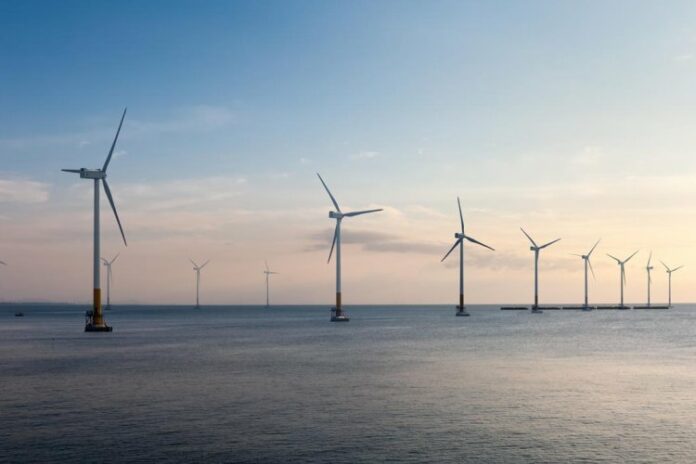
A 50/50 joint venture between Macquarie’s Green Investment Group (GIG) and Total has been successful in securing rights to a seabed lease in the Eastern Regions zone in the Crown Estate’s Offshore Wind Leasing Round 4.

The project, which will be located off the UK’s East Anglian coast, could deliver up to 1.5 gigawatts (GW) of renewable electricity and represents a significant early stage investment in the UK offshore wind sector for both companies.

It will also:

• Support significant employment opportunities and play a critical role in helping the UK meet its ambitious net zero target.
• Enable the two partners to expand in the UK, which is Europe’s most mature market for offshore wind and provides steady growth perspectives and a clear route-to-market.

Both GIG and Total are global renewable energy developers and investors and bring significant expertise, technical capability, and a track record in successful energy development to the project. GIG has supported almost 50% of the UK’s offshore wind capacity in operation. Total continues to build up a strong position in offshore wind after its involvement in the 1.1 GW Seagreen project off the east coast of Scotland and in Erebus, a 96 MW floating offshore wind project in the Celtic Sea, leveraging its long standing industrial activity in the UK.

GIG and Total are currently partnering in South Korea to co-develop a major portfolio of floating offshore wind projects.

Julien Pouget, Senior Vice President Renewables at Total, said:

“Total is delighted to have been awarded 1.5 GW as part of the 4th Round of offshore wind leases from The Crown Estate with our partner GIG. We continue to support the energy transition goals of the UK. This project is our largest renewables development in Europe to date and an important step toward our 2050 net zero ambition. This success builds on our historical expertise in the UK offshore and is paving the way to expansion of our renewable energy offering in the country in line with our strategy of becoming a broad-energy company”.

Mark Dooley, Global Head of Green Investment Group, said:

“With this investment, we’re continuing our pioneering role in the UK’s energy transition, and helping to establish offshore wind as the backbone of its new low-carbon energy system. Building on our track record as one of the country’s largest funders of offshore wind, this represents a significant increase in our commitment to the UK’s offshore wind sector. This adds to our growing portfolio of renewable developments in Europe and grows our global offshore wind development portfolio to over 13 GW.”

Total and GIG were awarded this lease for an annual option fee of £83k per MW/year, during the development phase. There will now be a Habitat Regulations Assessment (HRA) of the possible impact of the project on relevant nature conservation sites in the allotted area. Following successful conclusion of that process the final agreements for lease will be signed sometime in 2022.
Maersk Drilling awarded one-well drillship contract in Korea

0

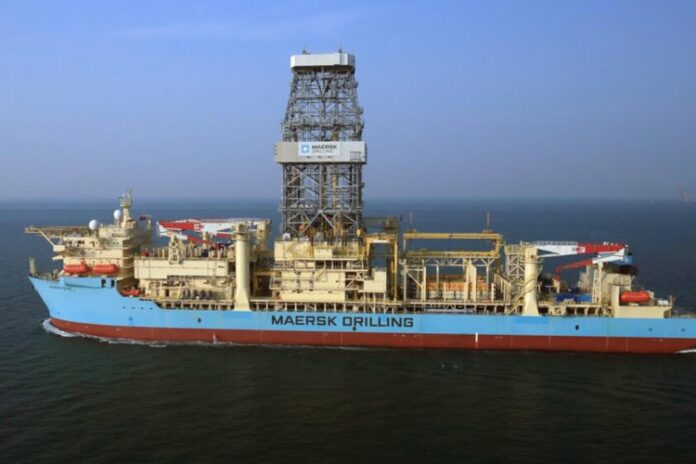
Maersk Drilling has secured a contract from Korea National Oil Corporation (KNOC) for the drillship Maersk Viking to drill one exploration well in Block 6-1 offshore the Republic of Korea.

The contract is expected to commence in June 2021, in direct continuation of the rig’s previous work scope, with an estimated duration of 45 days. The contract value is approximately USD 14.5m, including mobilisation and demobilisation fees.

COO Morten Kelstrup of Maersk Drilling says:

“We’re pleased to be awarded this contract with a new customer in the form of KNOC for their first-ever drillship operation and are confident in our ability to quickly start up operations in Korean jurisdiction after Maersk Viking moves on from its previous job. The rig and its crew have shown an impressive ability to always deliver safe and efficient operations, even during this challenging period marked by a global pandemic.”

Maersk Viking is a high-spec ultra-deepwater drillship which was delivered in 2013. It is currently mobilising for a campaign in Brunei Darussalam after completing a job in the Bay of Bengal in 2020.

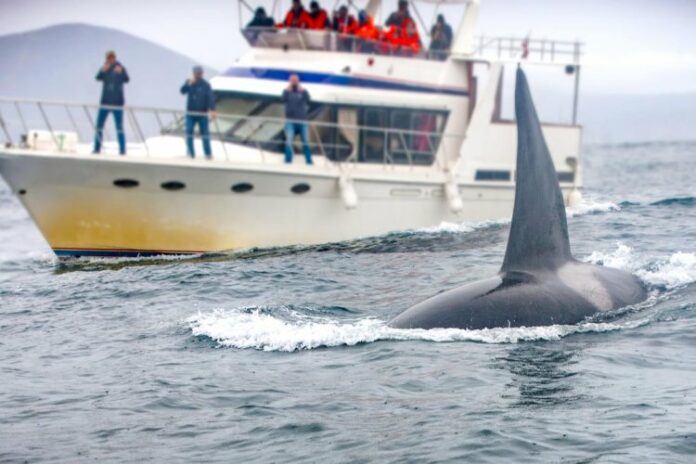
Female resident orcas especially disturbed by vessels, new research shows

0

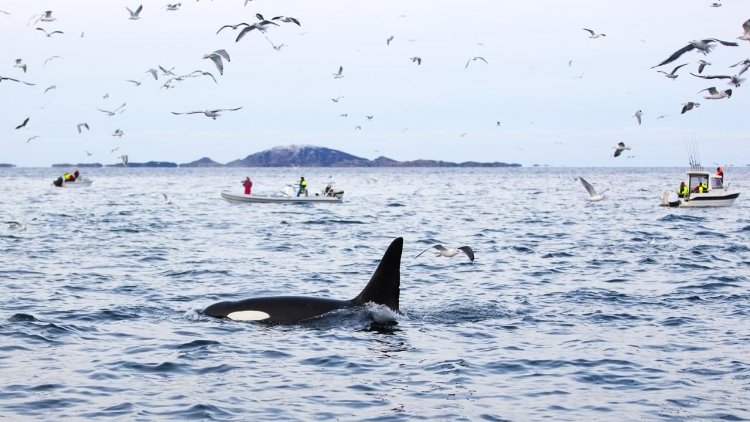
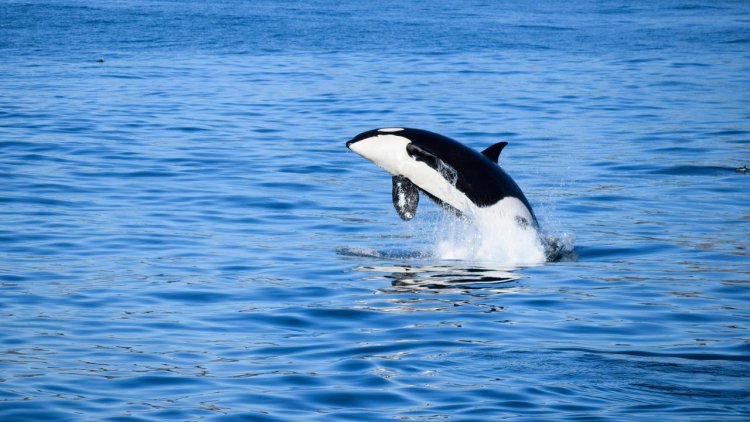
The research, gathered by attaching suction-cup electronic tags to the whales, is a clear wake-up call to the protection endangered mother orcas need, researchers and experts say.

Marla Holt, lead author on the study, and a research wildlife biologist at the National Oceanic and Atmospheric Administration’s Northwest Fisheries Science Center in Seattle, said:

“Anything that takes food away from a mom trying to support a calf, that is something we should carefully consider. We need females to produce calves if we want to move toward population recovery.”

NOAA declared the southern resident orcas in 2015 a Species in the Spotlight, an initiative to bring more attention to the most endangered marine species in the U.S. These latest findings, published Tuesday in Frontiers in Marine Science, are expected to help the agency align its guidelines for whale watching with rules already in place in British Columbia and the state of Washington to be more protective of southern resident mother orcas and their calves.

The Washington Fish and Wildlife Commission recently adopted new rules that forbid commercial whale watching of a southern resident calf up to 1 year old, among other restrictions.

In Canada, whale watch tour operators have agreed to not offer or promote tours of southern resident orcas.

But NOAA has yet to update its own regulations, which are less protective than either the state or Canada. Boaters meanwhile are encountering a confusing three-way regulatory regime of a critically vulnerable species that goes back and forth across the border. Enforcement on the water is also crucial to the effectiveness of the rules.

The new findings on vessel disturbance build on earlier field work that used temporary tags attached to southern resident orcas with suction cups.

The tags record the whales’ movements and allow scientists to observe the orcas’ lives underwater, as they dive, swim and pursue prey. It is those findings that revealed that male and female orcas alike change their behavior when vessels come close—females more than males.

Females will either stop foraging if they are, or not initiate foraging dives.

Just why females are more vulnerable is not exactly known. They have smaller bodies and don’t have the same capacity as males for extended dives. Mothers with calves also stay with their young, and therefore are restricted by the baby’s physical limits to shallower waters, closer to shore. Males are more typically seen in deeper water, foraging alone.

Even kayaks cause disturbance. The reason is the complex maneuvers orcas need to undertake to successfully hunt prey, which involves reconnaissance at the surface, exploration, then the actual deep, foraging dive to nail a fleeing salmon, all using echolocation, or biosonar, to “see” in the dark depths.

Female orcas also share their prey, usually at the surface. Noise by vessels or the presence of even kayaks at the surface where the orcas need to come up to breathe and to share prey all can hinder crucial prey capture and sharing. The effect is most concerning in pregnant and nursing mother orcas, whose nutritional needs are greatest.

Lactation takes more calories than any other activity, and orca moms typically nurse their baby for at least a year. The baby will depend on her for food as long as three years as it learns to hunt. Adult male offspring also often are partly provisioned by their mothers, so the females’ hunting success is crucial to the entire family.

Jennifer Tennessen, a research scientist at NOAA’s Northwest Science Center and another author on the paper, said: 

“There is the potential for mothers to be more vulnerable to disturbance due to this need to be with the calves, they need more prime opportunities to forage. If vessels are close, it may be that it is not worth it, you just wait until conditions are better.”

The orcas are challenged not only by vessel noise, but also pollution and scarce chinook, their preferred prey. A new Washington state report shows Puget Sound chinook are in crisis, as their numbers continue to dwindle, making the orcas work harder than ever to get enough to eat.

There are only 74 southern residents left in a population unique in the world in its culture and affinity for the waters of Puget Sound. They need salmon to survive—and quiet water in which to hunt them. Time is running out for the salmon orcas need and the southern residents that hunt them.

But recent good news from up north also shows when conditions improve, orcas take notice.

Scientists were thrilled earlier when members of some of the northern resident families they had not seen in decades were documented in waters the families had fled, when a local fish farm turned on electronic pingers to scare away seals.

The pingers were turned off long ago, after the B.C. government banned their use. The fish farm was dismantled last year. Then, this winter, the orca families so long absent from Fife Sound, came back. They brought a newborn with them.

Fincantieri: dry dock works start on “Viking Mars”

0

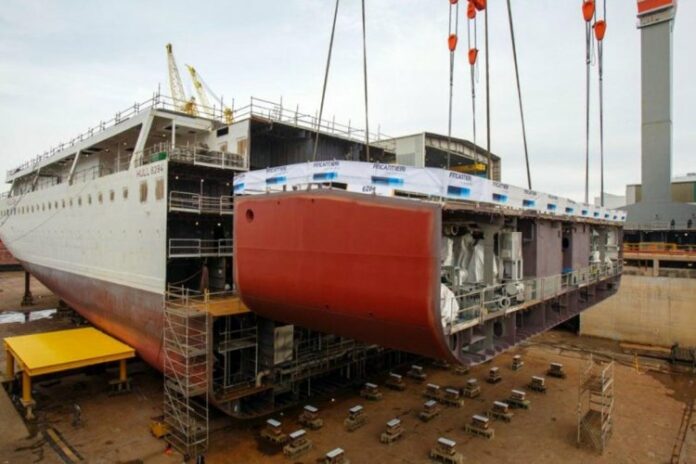
The keel laying of “Viking Mars”, the eighth ocean cruise ship which Fincantieri is building for the shipowner Viking, took place today at the shipyard in Ancona. The vessel will be delivered in 2022.

The unit will be placed in the small cruise ship segment. As its sister ships, she will have a gross tonnage of about 47,800 tons, 465 cabins with accommodation for 930 passengers.

The Viking units are all built according to the latest navigation regulations and equipped with the most modern safety systems, including the “Safe return to port”. They also feature energy-efficient engines, optimized hydrodynamics and hull thereby reducing consumption, as well as systems which minimize pollution produced by exhaust gases, meeting the strictest environmental regulations.

Fincantieri started its partnership with Viking in 2012, trusting the shipowner who was entering the ocean cruise market as a start-up. Today, the cooperation which first began with an order for two ships, has reached a total of 20 units, including the order awarded to Vard for two expedition cruise ships and the options. This is an all-time record, the largest number of units built by a shipbuilder for one sole shipowner.

The first of the series, “Viking Star”, has been built at the shipyard in Marghera and delivered in 2015. The other units, “Viking Sea”, “Viking Sky”, “Viking Sun”, “Viking Orion”, and “Viking Jupiter”, handed over between 2016 and 2019, were all built at the Ancona yard, as well as “Viking Venus”, which will join the shipowner’s fleet this year. Other 9 units, options included, will take to the sea from the Group’s Italian yards between 2022 and 2027.

Total joins the Mærsk Mc-Kinney Møller Center for Zero Carbon Shipping

0

Total joins the Mærsk Mc-Kinney Møller Center for Zero Carbon Shipping as a strategic partner and accelerates its R&D program for carbon neutral shipping solutions in line with its commitment to work together with its key customers to get to Net Zero.

Based in Copenhagen, the Research and Development center is a private initiative, launched with the support of the A.P. Møller Foundation, to promote and contribute to the decarbonization of the maritime industry.

This partnership with allow Total to join forces with leading players across the shipping sector to develop new low-carbon alternative fuels and carbon neutrality solutions. As a member of the Advisory Board, Total will aim at providing strategic and technical guidance for the development of the Center activities.  

Marie-Noëlle Semeria, Chief Technology Officer, Total, underlines:

“This partnership with the Mærsk Mc-Kinney Møller Center is completely aligned to our R&D marine fuels program aiming at net zero carbon emissions. By gathering shareholders across the full chain, this center will accelerate the development of sustainable solutions for shipping. Total will actively contribute to projects through secondments of technical experts and knowledge sharing. We truly look forward to this new collaboration.”

Luc Gillet, Senior Vice President Shipping, Total Trading & Shipping, declares:

“We are very proud of this new cooperation, in line with our Climate Ambition to get to Net Zero by 2050. As a broad energy company, we are actively working on improving the environmental footprint of our customers in the maritime industry and today we reaffirm our support to this key sector. The Center will pave the way towards a greener shipping for the benefit of the whole industry as well as for our own chartering activities.”

Bo Cerup-Simonsen CEO of Mærsk Mc-Kinney Møller Center, says:

“We are very pleased to welcome Total as a strategic partner of our Center. Decarbonizing shipping can only be achieved through comprehensive collaboration across maritime and energy sectors. Total shares our vision of a zero-carbon maritime industry and acknowledgement of the vast effort required to get there. In joining the Center, they bring onboard vital experience and knowledge contributing to establish projects and activities that will accelerate the development of tomorrow’s solution.”

North East coalition files world-class Freeport bid

0

A dynamic business and public sector partnership based in the UK’s leading export region has lodged an exciting and innovative bid for the North East England Freeport, which economic experts have predicted would generate a £2.1 billion boost to UK exports, plus many other significant benefits.

Government support for the proposal would see the North East England Freeport provide a uniquely ambitious and collaborative opportunity for the whole region to thrive, boosting the local economy by over £3.4 billion over 10 years and providing a gateway to long term global competitiveness. Through the North East England Freeport, over 30,000 new jobs are expected to be created for the region, of which 13,000 are highly paid ‘better’ jobs. A further 31,000 jobs will be generated in the construction industries.

The regional consortium formed to operate the North East England Freeport as a virtual free trade zone includes Nissan, the Ports of Tyne, Blyth and Sunderland, Newcastle Airport, seven local and two combined authorities, the North East Local Enterprise Partnership (LEP), plus leading north east universities and innovation organisations. The sites involved will be inter-connected and secured using a state of the art, cybersecure perimeter.

Economic analysis completed by freeport experts Vivid Economics, has highlighted how the North East England Freeport will build on existing regional strengths to drive forward the North East clean growth industrial vision and drive exports and economic recovery. This includes the well-established automotive and advanced manufacturing sectors, a growing clean energy industrial base incorporating offshore wind and renewables, and strengths in innovation, logistics and digital technologies.

Data compiled by consortium members and validated by an independent economic advisor demonstrates that the North East England Freeport would deliver outstanding economic benefits to the region. These include:

  • 61,458 new jobs across the construction, manufacturing, logistics, energy, innovation and business sectors
  • £3.4 billion GVA across the local region
  • Expected GVA of £110,000 per freeport worker, with median earnings of freeport workers 40-62% higher than current regional levels across all sectors
  • Total GVA uplift of c£3,000 per capita within the North East LEP area
  • £2.7 billion in new regional private sector investment
  • £2.1 billion additional UK exports over 10 years

By generating tens of thousands more and better jobs, the North East England Freeport will become a national hub for global trade and investment, a hotbed for innovation, a catalyst for sustainable economic regeneration, while minimising barriers to trade. Each site and partner in the freeport bid consortium will contribute to realising a best-in-class offering that will drive investment and deliver a high impact, economic boost that fully exploits the North East’s unique abilities in advanced manufacturing, life sciences, digital, clean energy and business services.

The North East England Freeport will provide a blueprint for growth, comprising of a multi-site, digitally connected and enabled cybersecure boundary area, with robust customs zones.  This will enable the North East region’s key clusters to manufacture goods cost efficiently and trade internationally, benefiting from tax advantaged policy to stimulate economic development. It will contribute to levelling up in one of the areas of the country where it is needed the most.

The North East England Freeport will include three significant tax sites totalling approximately 600 hectares on which businesses will be able to receive a range of special incentives to invest and grow. They are located in some of the most deprived communities in the region and will create new jobs and supporting skills and employability programmes to ensure jobs are accessible to local people. The activity from these businesses will generate benefits across the region.

The Freeport will be led by a collaborative Governance Board which will bring together leaders from business, local government, higher education and the ports to drive forward the North East England Freeport at pace. This demonstrates the regions determination to deliver long term transformation and commitment to level up the UK economy.

NOAA partners with University of Southern Mississippi on uncrewed systems

0

NOAA and the University of Southern Mississippi (USM) have signed a 10-year agreement to partner on ways to improve how uncrewed systems (UxS) are used to collect important ocean observation data and augment NOAA’s operational capabilities. 

The agreement provides a framework for collaborating with NOAA scientists and UxS operators on projects to further UxS research, development and operations. 

Rear Adm. Nancy Hann, deputy director for operations for NOAA’s Office of Marine and Aviation Operations (OMAO) and deputy director of the NOAA Commissioned Officer Corps, said:

“Mississippi is poised to become a major hub for ocean research and innovation, and NOAA plans to help drive that innovation. This new partnership with the University of Southern Mississippi will greatly enhance our ability to transition these technologies into operational platforms that will gather critical environmental data for the nation.”

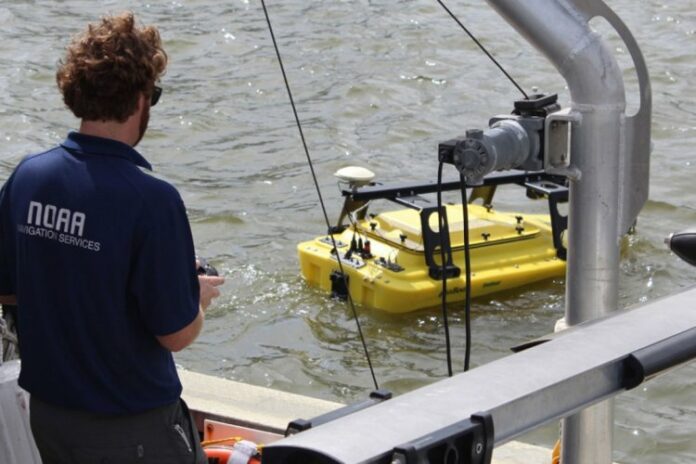
UxS are sensor-equipped vehicles that operate autonomously or are remotely piloted. NOAA currently uses UxS for seafloor and habitat mapping, ocean exploration, marine mammal and fishery stock assessments, emergency response, and at-sea observations that improve forecasting of extreme events, such as hurricanes, harmful algal blooms and hypoxia.

UxS have the potential to transform how NOAA meets its mission to better understand our oceans and their ecosystems. While the use of UxS is not new to NOAA — agency scientists have been experimenting with and using uncrewed systems for research for decades — the recent increase in the availability of highly capable UxS has brought a corresponding increase in their innovative use as a force multiplier for many NOAA programs. Advancing partnerships with academia will be essential to the development and use of these technologies.

Kelly Lucas, associate vice president for research, coastal operations at USM, said:

“We are excited to expand our collaboration with NOAA for research, development, testing and evaluating uncrewed systems. The use of uncrewed systems increases safety and productivity and allows us to expand coverage and access of ocean space, especially in remote, hazardous or extreme environments. Coupled with sensor development, artificial intelligence and machine learning, uncrewed systems will transform data collection and processes to help users make informed decisions.”

The new agreement helps NOAA meet the objectives of the Commercial Engagement Through Ocean Technology Act of 2018, which requires the agency to coordinate research, assess, and acquire uncrewed systems with the U.S. Navy, other federal agencies, industry and academia. In Fiscal Year 2021, NOAA received $13.7 million from Congress to improve and expand UxS operations across the agency, including the creation of the OMAO Uncrewed Systems Operations Center — a key goal of NOAA’s Uncrewed Systems Strategy.

Stena Line plans to launch fossil free ships before 2030

0

This was announced by Stena Lines CEO Niclas Mårtensson during a press conference about the industry collaboration project Tranzero Initiative, in Gothenburg.

In an effort to speed up the transition to fossil-free fuels in the transport sector, Stena Line together with Volvo Group, Scania and the Port of Gothenburg have joined forces in the Tranzero Initiative collaboration project to bring about a significant reduction in carbon emissions linked to the largest port in the Scandinavia. The aim is to cut emissions by 70 per cent by 2030 in the Port of Gothenburg. 

During a press conference about the Tranzero Initiative on Thursday 4 February, Stena Line CEO Niclas Mårtensson announced the company´s plans to launch two fossil free vessels on the Gothenburg-Frederikshavn route before 2030. 

Niclas Mårtensson, CEO Stena Line Group and member of the Swedish Government Electrification Commission, said:

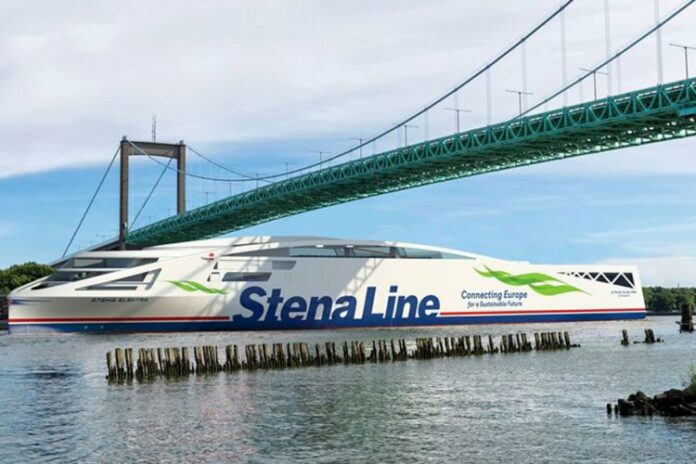
“We now move from vision to vessel with the battery powered vessel Stena Elektra. Within a year we will present the outline specifications and at the latest by 2025 we plan to order the first vessel. This will be a huge step towards fossil free shipping.”

Stena Elektra will be the world’s first fossil free RoPax vessel of its size and will measure approximately 200 metres and combine a passenger capacity of 1000 with 3000 lane metres freight capacity. The vessel will be built in high tensile steel to lower the weight and increase efficiency and it is estimated the vessel will run on battery power for approximately 50 nautical miles, the distance between Gothenburg and Frederikshavn. The battery capacity will need to be approximately 60-70 MWh and the vessel will be charged in port. Stena Line also looking into combining the electrification with other alternative fossil free fuels such as fuel cells, hydrogen and bio methanol for longer reach of the vessels.

Niclas Mårtensson, CEO Stena Line, said:

”The electrification of shipping has only just began. We see a great potential for both battery hybrids and battery powered vessels on several of our short-sea shipping routes in the future. But, it takes more than the electrical ships, we also need to develop the infrastructure and charging possibilities in the ports and terminals in the same pace and that is a reason why collaborations projects like this are so important.”  

Since 2018 Stena Line is operating the battery hybrid vessel Stena Jutlandica on the Gothenburg-Frederikshavn route, using battery power for manoeuvring and powering the bow thrusters when the ship is in port. The batteries are charged with green shore power in port of Gothenburg as well as during operation and in total the CO2 emissions are lowered by 1,500 tonnes per year, equal to the emissions from 600 cars per year. 

Denmark to build artificial island in the North Sea as a wind energy hub

0

Denmark has reached a landmark agreement on the construction of an energy hub in the North Sea. 

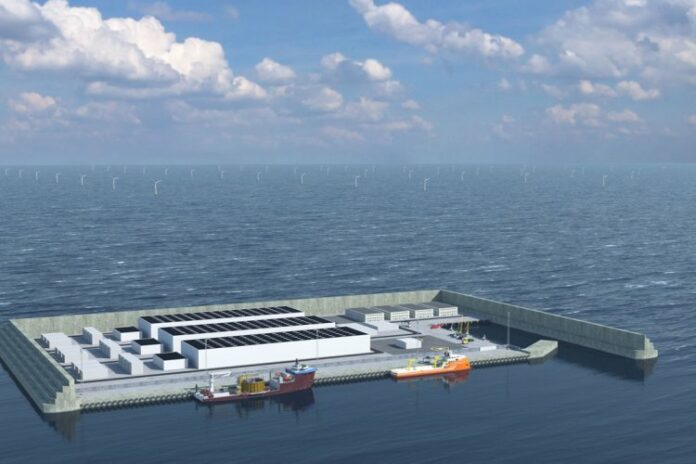
The energy hub will be an artificially constructed island 80 kilometers from the shore of the peninsula Jutland. It will be owned by a public-private partnership. The hub will strengthen the integration of Europe’s power grids and increase renewable electricity production necessary for a cli-mate neutral Europe.

Denmark has introduced cutoff date of 2050 for oil and gas extraction in the North Sea and canceled all future licensing rounds. Today, by agreeing on the construction and ownership of the world’s first energy hub in the North Sea, Denmark takes another significant step in the green transition. The energy hub will produce yet unseen amounts of green electricity and is one of the government’s flagship projects for the green transition in Europe. Fully implemented it will be able to cover the consumption of 10 million European households. 

The Danish Minister for Climate, Dan Jørgensen, says:

”This is truly a great moment for Denmark and for the global green transition. This decision marks the start of a new era of sustainable energy production in Denmark and the world and it links very ambitious climate goals with growth and green jobs.The energy hub in the North Sea will be the largest construction project in Danish history. It will make a big contribution to the realization of the enormous potential for European offshore wind, and I am excited for our future collaboration with other European countries.”

The energy hub will serve as an offshore power plant gathering and distributing green electricity from hundreds of wind turbines surrounding the island directly to consumers in countries surrounding the North Sea. The island is expected to have a total area of at least 120.000 square meters and in its first phase it will be able to provide 3 million European households with green energy.The project will be a public private partnership between the Danish state and private companies. The State will own the majority of the island, but private companies will be crucial for the project to fulfill the potential as regards to innovation, flexibility, cost-effectiveness and business potentials.

The Danish Minister for Climate, Dan Jørgensen, says:

“We are at the dawn of a new era for energy. Last year, Denmark set a cutoff date for fossil fuel extraction. Today we are taking a decisive step toward a clean energy future. The EU has set a goal to achieve climate neutrality by 2050 and the Commission has set a target of 300 GW offshore wind energy in order to attain this goal. By constructing the world’s first energy hub with a potential capacity of 10 GW, Denmark significantly contributes to this ambitious target. Not only by dramatically expanding renewable energy production, but also by supplying our European neighbors with an abundance of renewable energy.”

The artificial island will offer the best opportunities to expand the project, for example by building a harbor and facilities for storage and conversion of green electricity from the nearby wind turbines in the sea. It is the long-term ambition to be able to store green electricity on the island, convert it to liquid green fuel, and send it via subsea cables to Denmark and neighboring countries.

Details about the ownership of the island will be specified in order for a tender for private partnerships to be opened, making the island a reality as soon as possible.

Konecranes wins order for two more cranes on barge from China

0

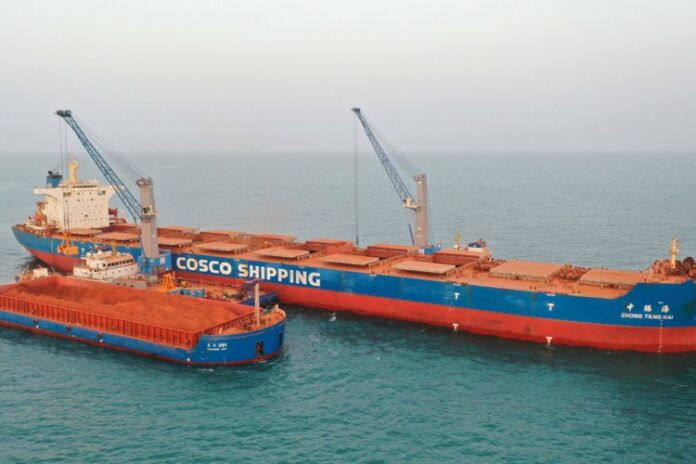
In the first quarter of 2021, Jiangsu Zhenjiang Shipyard (Group) Co., Ltd. ordered two eco-efficient Konecranes Gottwald Model 8 Cranes on Barge. The cranes will be operated by Cosco Shipping Bulk Co. Ltd. (Cosco Bulk) off the coast of Guinea, Africa.

Home to the world’s largest reserves of bauxite, the Guinean mining industry has been expanding. Cosco Bulk, a subsidiary of a world-leading shipping company, China Cosco Shipping Corporation Limited, found they needed more cranes to cope with the volume. These two new cranes will transship bauxite for the production of aluminum from river barges onto ocean-going vessels and will bring the total number of Konecranes Gottwald Cranes on Barge in the region to twelve.

Jerry Fann, Sales Director, Konecranes Port Solutions, says:

“It’s always a pleasure to receive a repeat order from a satisfied customer. Our technology has proved itself once again under challenging conditions. As the number of Konecranes Gottwald Cranes on Barge grows around the world, we have consolidated our leading position in this market. Our cranes on barge capabilities have been growing steadily since launching in 2004, and we will continue to improve them as technology develops.”

Specially built for use on the open sea, the cranes provide a maximum outreach of 43 m and a powerful 63 t grab curve for continuous-duty bulk handling. They are designed in accordance with Lloyd’s Register Code for Lifting Appliances in a Marine Environment, which allows them to be operated at wind speeds up to 24 m/s and at maximum wave heights of 2.5 m.