-11.7 C
New York
Home Blog Page 686

Crowley and Watco partner to support offshore wind energy

0

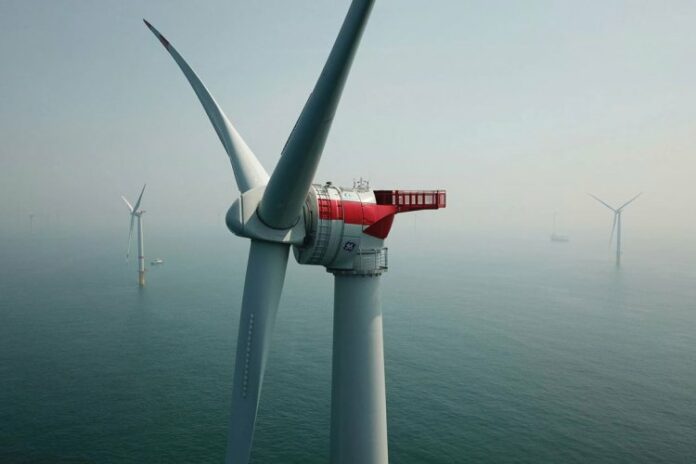
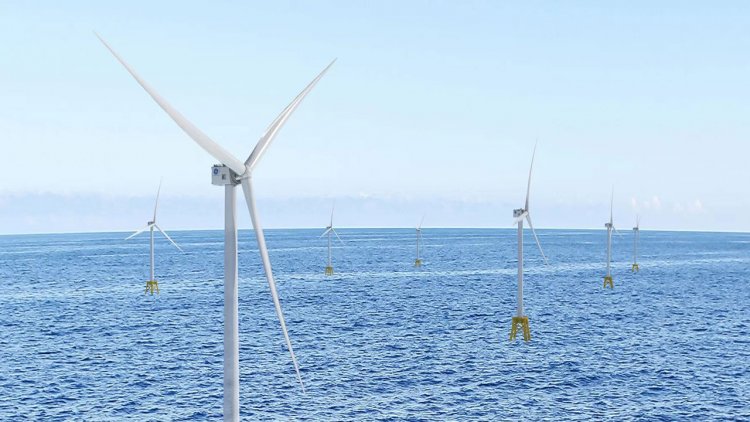
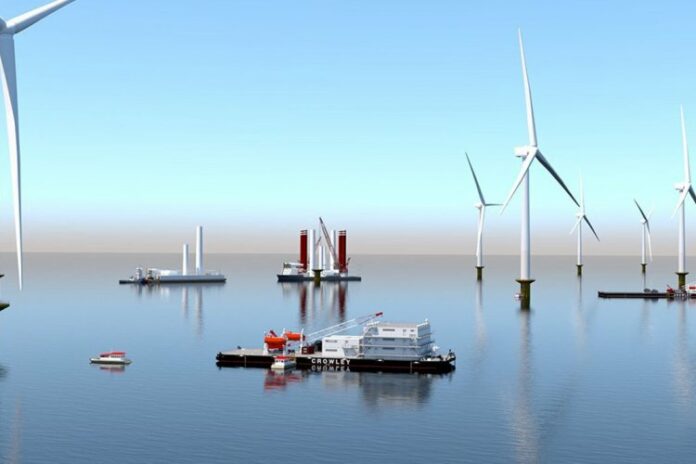
With the growing number of wind projects planned for U.S. waters, the partnership brings together industry-leading project management and logistics experts who can provide a “one-stop-shop” for owners, operators, and local port authorities in support of the offshore wind industry.

Lynda Patterson, senior vice president of Logistics, Watco, said:

“This partnership will provide turnkey services for the offshore wind industry in the area of terminal management. Crowley and Watco will work together to leverage our respective expertise in logistics, project management, and energy support to create innovative solutions to meet full lifecycle project needs. “

Watco will use its skillset in onshore wind terminal management and ongoing relationships with OEMs to develop state-of-the-art terminal management offerings for the offshore wind industry. Watco and Crowley will collaborate to provide customized terminal design, project management, warehousing, logistics, supply chain management and equipment maintenance through their commercial expertise and curated supply chain networks.

Crowley will provide its offshore logistics offerings through the utilization of its Jones Act-compliant fleet of vessels, engineering services and cross-over expertise in oil and gas. This includes the design and operation of service operation vessels (SOVs), crew transfer vessels (CTVs), turbine maintenance, offshore substation repair and maintenance, and additional services necessary to sustain offshore wind energy operations.

Jeff Andreini, vice president, New Energy division, Crowley, said:

“Crowley and Watco are partnering to deliver safe, reliable, comprehensive lifecycle services for the offshore wind sector. We understand that wind power companies entering the U.S. market have big needs, including infrastructure and supply chain. We’ve engineered high performing equipment and logistics offerings to answer their needs, anchored by decades of experience to solve the challenges of both.” 
GSL to acquire seven Post-Panamax containerships on multi-year charters

0

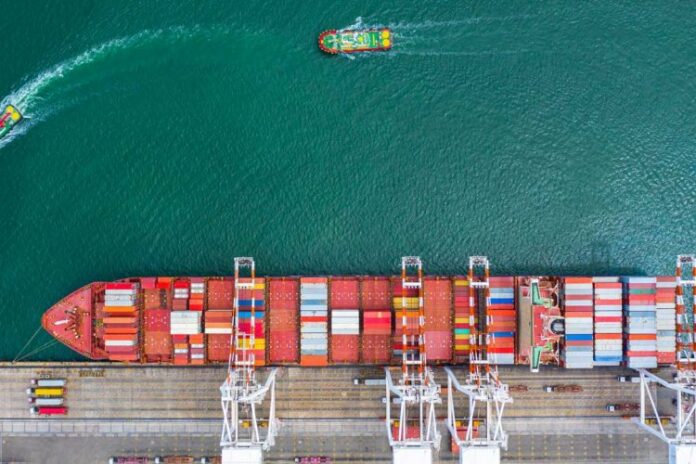
Global Ship Lease, Inc. has agreed to purchase and charter back seven 6,000 TEU Post-Panamax containerships with an average age of approximately 20 years for an aggregate purchase price of $116 million. 

The charters are to leading liner operators for a minimum firm period of 36 months each, followed by two one-year extensions at charterer’s option. The vessels are expected to generate aggregate Adjusted EBITDA of approximately $95 million over the average firm period of 3.1 years, implying a strongly accretive average Purchase Price / Annual Adjusted EBITDA multiple of approximately 4.0x. If all options are exercised, the vessels are expected to generate approximately $126 million of Adjusted EBITDA. With these additions, the Company’s fleet will comprise 50 vessels with a total capacity of 287,280 TEU.

The vessels are scheduled for phased delivery during the second and third quarters of 2021, at which time they will be renamed GSL Arcadia, GSL Dorothea, GSL Maria, GSL Melita, GSL MYNY, GSL Tegea and GSL Violetta. The Company expects to pay for the ships with approximately $40 million of cash on hand, with the balance provided by bank debt.

During the firm period of the contracted charters, the seven ships are expected to add approximately $29 million to annual Adjusted EBITDA, representing an increase of approximately 18% compared to Adjusted EBITDA for the 12 months to September 30, 2020, add approximately $19 million to annual net income, based on today’s LIBOR, representing an increase of approximately 40% compared to normalized net income for the 12 months to September 30, 2020, and add approximately $0.53 to annual earnings per share, an increase of approximately 40% compared to Adjusted earnings per share for the 12 months to September 30, 2020.

George Youroukos, Executive Chairman of Global Ship Lease, commented:

“We are pleased to announce the acquisition of these seven Post-Panamax vessels, consistent with the accretive growth strategy we presented during our recent equity offering. Years of under-ordering in this critically important and in-demand segment have resulted in structural undersupply, with the negligible orderbook ensuring minimal or even negative net supply growth. We believe this transaction will deliver attractive financial returns with predictable contracted cashflows and low residual value risk.

Furthermore, it illustrates our return to accretive growth, leveraging our competitive advantages of strong industry relationships, track record of delivering safe and reliable service to our customers, and proven ability to manage older ships efficiently. Importantly, these charters also provide multi-year contracted cashflows to ensure strong, long-term coverage of our recently initiated quarterly dividend for common shareholders. Having completed the refinancing of our 2022 Notes and our recent equity offering, we are squarely focused on executing our accretive growth strategy and expect to make further progress in that regard.”

Wärtsilä Hybrid Solution will minimise carbon footprint for new Canadian ferry

0

The vessel is being built at the Western Pacific Marine shipyard, and when delivered will serve the Balfour – Kootenay Bay route across Kootenay Lake. The order with Wärtsilä was placed in January 2021.

By opting for Wärtsilä’s Hybrid Solution rather than a conventional propulsion arrangement, the operator will benefit from reduced fuel consumption and a far lower level of exhaust emissions. The minimised carbon footprint was cited as being extremely important for preserving the pristine environment in which the vessel will operate. An additional benefit is that through reducing the running hours of the engines, maintenance requirements and costs are also lowered.

Graham Clarke, President, Western Pacific Marine Ltd., says:

“Wärtsilä was selected based on their experience, reputation, and know-how in developing, delivering, and supporting complex hybrid propulsion systems. These capabilities are extremely important to us, and we very much appreciate and welcome Wärtsilä’s support throughout this project.”

Dave Adams, Senior Sales Manager, Wärtsilä Canada, says:

“We are proud to be providing the integrated hybrid propulsion solution for the Kootenay Lake replacement ferry, and proud also to be playing our part in preserving the beautiful environment of this interior region of British Columbia. The Wärtsilä Hybrid System is in full alignment with our Smart Marine approach towards raising sustainability levels for our customers. This solution is also upgradable to achieve zero emission operations in the future.”

The full scope of Wärtsilä’s supply includes two Wärtsilä 20 generator sets with Selective Catalytic Reduction (SCR) systems, the Wärtsilä’s Hybrid Solution with a DC electrical system and batteries, the energy management system, and the vessel alarm and monitoring system. Wärtsilä will also supply the sewage treatment system and will be responsible for the integration of the various onboard systems. Delivery is scheduled for the second half of 2022.

The 89 metres long double-ended ferry will be capable of carrying 250 passengers and crew, as well as 61 automobile equivalents (AEQs). The British Columbian government already operates two ferries powered by Wärtsilä 20 engines.

By combining its competences in marine electrical, automation and engine technology, Wärtsilä has brought together multiple functions and systems to deliver a single integrated hybrid power module that combines engines, an energy storage system, and power electronics optimised by a unique and highly sophisticated, energy management system (EMS). 

The EMS functions as the ‘brain’ in the Wärtsilä Hybrid System optimising the energy flows between the different power sources, storage and consumers to achieve the highest efficiency possible.

MJR inks partnership with global marine battery supplier Sterling PlanB

0

The partnership will see MJR Power & Automation provide customers across the UK with energy storage solutions and complete marine hybrid and electric propulsion systems.

These solutions will utilize SPBES’ innovative lithium-ion technology, designed and approved for use in both inland and seagoing vessels, ports, harbours and in the offshore sector.

Speaking about the partnership, Paul Cairns, Managing Director at MJR said:

“We are delighted to have formed this strategic partnership with Sterling PlanB. There is no doubt they are the world leader in marine energy storage systems and – by adding their product to our portfolio – this enables MJR to further grow our business in the clean technology space.

“Our expertise and knowledge of marine power and propulsion systems, combined with Sterling PlanB’s world leading design and manufacture of energy storage solutions – we are certain – brings an offering to the marketplace that is very much demanded by the marine companies in their drive to reduce fuel costs and develop sustainable long-term solutions that meet global emission reduction targets.”

And, with a greater focus on the UK’s maritime sector and a growing offshore wind industry, the partnership comes on the back of increasing pressure from the International Marine Organisation (IMO) to support marine companies in achieving marine engine regulations and reduce their Tier I, II and III emissions through the introduction of low carbon energy storage.

Commenting on the partnership announcement, Paul Hughes, President of Sterling PlanB said:

“We are very pleased to have formed this sales and service partnership with MJR Power & Automation. There is no better partner in the UK to distribute, integrate and service Sterling PlanB energy storage solutions.

“Their broad multi-market reach coupled with their in-depth experience, exceptional reputation for customer service and a long list of satisfied clients, makes MJR an ideal partner to develop this most important market.”

Bearing and MOL team up to bring AI to the maritime shipping industry

0

Mitsui O.S.K. Lines, Ltd. and Bearing, Inc. have announced an expansion of their partnership that began in 2019. 

The relationship was originally established with the goal of improving shipping efficiencies within the maritime industry. Through various trials and intensive discussions concerning ship modeling, a range of products including a newly announced AI-powered Smart Routing Engine, has been developed by combining MOL’s maritime expertise and Bearing’s artificial intelligence (AI) technology infrastructure. 

This routing engine automatically analyzes multiple potential routes for a given voyage and recommends prudent, efficient routing through use of optimal main engine output and propeller RPM profiles.

Bearing is a Silicon Valley-based AI technology startup that focuses on streamlining shipping operations. At the core of Bearing’s technology are highly-accurate ship performance models built off of a diverse set of real-world data points. These AI-powered models with some historical voyage data for certain vessels such as vessel speed, trim, main engine operation, weather and sea condition allow Bearing to predict metrics like fuel consumption with state-of-the-art accuracy even without vessels’ design parameters.

Hapag-Lloyd: Green financings concluded for six large container ships on order

0

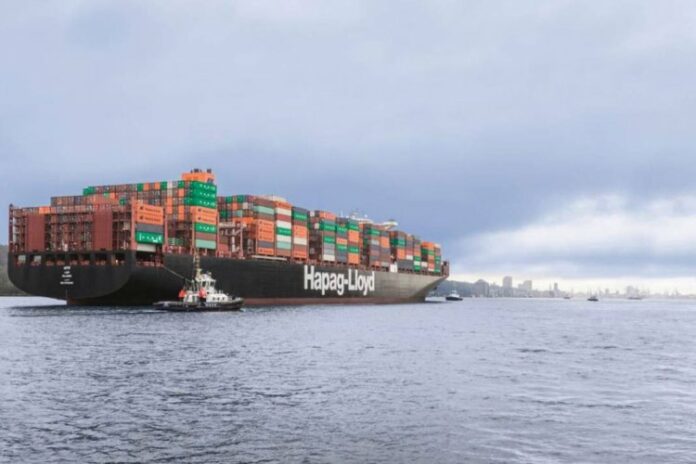
Hapag-Lloyd concludes two debut transactions according to the Green Loan Principles of the Loan Market Association (LMA). 

This has also been verified by an independent expert in the form of a secondary party opinion of the DNV GL. Both transactions are associated with the financing of six ultra-large 23,500 TEU container ships, which were ordered in December 2020.

The syndicated green loan in the amount of USD 417 million has a 12-year maturity and will be used to finance three of the six container ships on order. The credit facility is being backed by the Korea Trade Insurance Corporation (K-SURE), and the syndicate consists of 11 banks. KfW IPEX-Bank and BNP Paribas were in charge of structuring and coordinating the transaction.

The lease financing for the remaining three newbuildings is in the amount of USD 472 million, has a maturity of 17 years plus construction-phase financing, and has been structured by the Industrial and Commercial Bank of China Leasing (ICBC Leasing).

Mark Frese, Chief Financial Officer of Hapag-Lloyd, said:

“Our first green financings are a major milestone for us, as we are breaking new ground in the container shipping segment by financing newbuilding projects geared towards sustainability. The transactions will help us to modernise our fleet while further reducing our CO2 footprint at the same time.”

Thanks to their extremely fuel-efficient high-pressure dual-fuel engines, the newbuildings will be able to reduce CO2 emissions by approximately 15 to 25 percent. This means that in addition to the requirements of the LMA’s Green Loan Principles, the ships will also satisfy the EU Taxonomy’s technical screening criteria for sea and coastal freight water transport. The state-of-the-art vessels are being built in South Korea and are scheduled to be delivered in 2023.  

BAE Systems to power UVM’s vessel with electric power and propulsion system

0

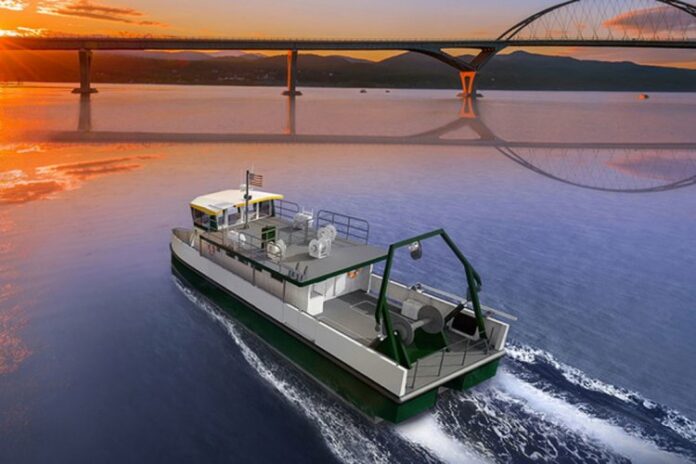
BAE Systems has been selected by Chartwell Marine to supply the electric hybrid power and propulsion system for a new maritime research vessel for the University of Vermont. As part of the contract, BAE Systems will supply and integrate the hybrid system, working with the vessel’s builder, Derecktor Shipyard.

BAE Systems’ HybriGen® Power and Propulsion system will help to reduce both carbon emissions and the use of fuel by the vessel, which will serve as a floating classroom and lab for students of the Rubenstein School of Environment and Natural Resources conducting research on Lake Champlain.

Steve Trichka, vice president and general manager of Power & Propulsion Solutions at BAE Systems, said:

“Using green energy to power transportation in the water is an essential part of establishing cleaner waterways and harbors in places where we live, work, and visit. This proven and reliable technology will create a new and sustainable way for the University of Vermont to conduct its critical research.”

The fully integrated HybriGen Power and Propulsion system includes electric motors, variable speed generators, battery-based energy storage system, and vessel auxiliary power with shore power charging. The technology creates a clean form of power and propulsion for the vessel and its auxiliary power needs such as heat, air conditioning, lighting, and working deck gear. The electric-powered components not only provide emission-reducing benefits to the environment, but also create a smooth ride for passengers and help operators save on maintenance costs.

The technology builds on the company’s 20-plus years of experience developing and integrating power and propulsion systems. Those systems power more than 13,000 transit buses around the globe, including cities such as Boston, New York, and San Francisco. The new system leverages that core technology for the water with controls and components that have passed certification and inspection by the U.S. Coast Guard.

NYK to build two new LPG dual-fueled VLGCs

0

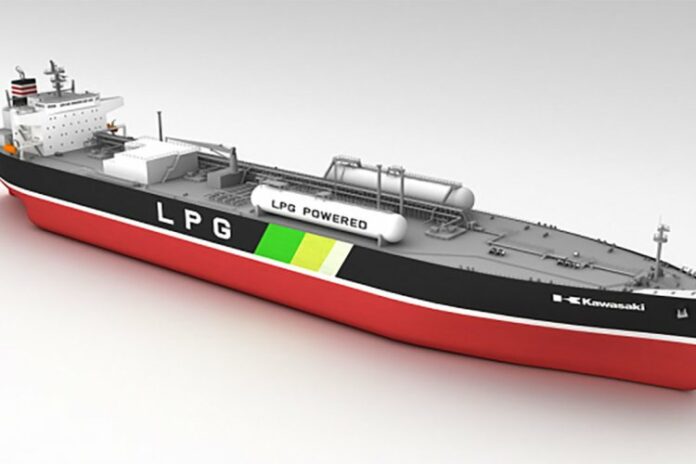
NYK has announced the order of its first two liquefied petroleum gas (LPG) dual-fueled very large gas carriers (VLGCs) to Kawasaki Heavy Industries Ltd.

Both ships will be built at the KHI Sakaide Works shipyard and are set for delivery in 2022.

When LPG is used as fuel, exhaust gas from the ordered VLGCs will contain at least 85% less sulfur oxide (SOx) and 15% less carbon dioxide (CO2) compared to conventional VLGCs equipped with fuel-oil engines.

These new VLGCs will comply not only with the SOx Global Cap regulations that were tightened from January 2020 but also with the EEDI phase 3 requirements.

In addition, by equipping the ships with LPG tanks on deck, it will be possible to load LPG for fuel separately from the LPG cargo. Having the LPG tanks on deck extends the cruising range of the vessel when LPG fuel is used even though the size of the vessel remains the same.

In the future, by promoting the development of an eco-friendly fleet, NYK will provide customers with a low-carbon transportation mode and contribute to the reduction of environmental loads and the realization of a sustainable global society.

ABS awards world’s first notation recognizing infectious disease mitigation

0

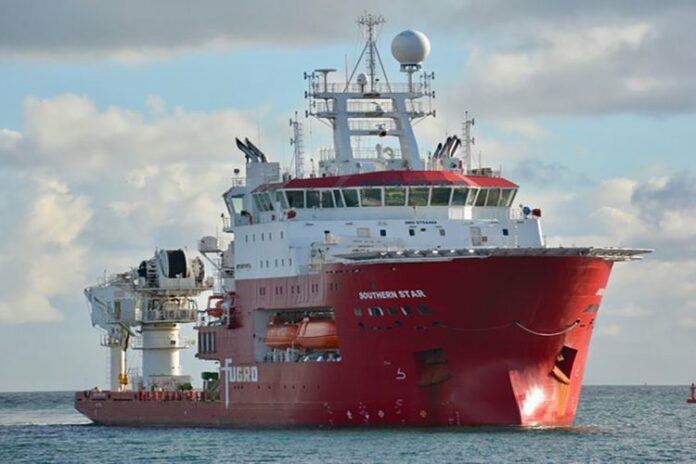
The ABS-classed vessel has met the requirements outlined in the ABS Guide for Mitigation of Infectious Disease Transmission On Board Marine and Offshore Assets, which was developed from a range of independent governmental and commercial guidance, including the United States Centers for Disease Control and Prevention and published in November 2020.

The IDM-A (Infectious Disease Mitigation-Arrangements) notation is offered to vessels that meet the arrangement requirements addressing the configuration of spaces which can be used for the isolation and segregation of crew, passengers and onshore visitors, as well as the ventilation and interior surfaces of certain accommodation or working spaces.

Patrick Ryan, ABS Senior Vice President, Global Engineering and Technology, said:

“The notation breaks new ground for the industry, allowing operators and owners to clearly demonstrate that the risks of infectious outbreaks have been considered. Ensuring marine and offshore assets are operationally resilient to the impacts of infectious diseases is vital today and will continue to be for the foreseeable future. We are delighted to be able to support forward thinking operators such as Tasik Subsea and advance the cause of safety of crews and assets.”

Tasik CEO John Giddens said:

“Like many others we realized an outbreak of COVID onboard our vessel would be a personal and commercial disaster for our crew, our clients and for our company. It would result in stopping the vessel’s work and forcing it to a quarantine anchorage for an extended period, with no movement of people on or off the vessel while the medical issues for our marine and project crew were dealt with.

“As a result, we’ve been carefully managing our operations and implementing measures to protect our crew and vessel from COVID-19 since early last year. We are pleased to now be able to benchmark our measures against an ABS Class standard and are proud to be the first in the world to achieve IDM-A Class notation.

“We could not have achieved this without the diligent assistance of ABS, the support of our client, Shelf Subsea, and the Ship Manager, Thome Offshore, who worked diligently on the hard and soft issues.”

In December of last year, ABS awarded Samsung Heavy Industries Approval in Principle for crew accommodation and ventilation systems on a crude oil tanker, a container carrier and an LNG carrier, designed to mitigate the spread of infectious diseases such as COVID-19.

GE awarded DOE grant to research 3-D printing of wind turbine blades

0

GE Research, GE Renewable Energy, and LM Wind Power, a GE Renewable Energy business were recently selected by the Department of Energy to research the design and manufacture of 3-D printed wind turbine blades.

The GE business units will partner with the Oakridge National Lab and the National Renewable Energy Lab on a 25-month $6.7M project to develop and demonstrate an integrated additive manufacturing process for novel high- performance blade designs for the future of large rotors.  The award was announced by DOE on January 13.

The project will deliver a full-size blade tip ready to be structurally tested, as well as three blade tips that will be installed on a wind turbine. The proposed project will focus on low-cost thermoplastic skin coupled with printed reinforcement.

This project will advance the competitiveness of both onshore and offshore wind energy when commercialized, by lowering manufacturing cost, increasing supply chain flexibility, providing lighter weight blades made with more recyclable materials. All of this will help reduce the cost of Wind Energy. Design cycle time is also reduced enabling more wind farm optimization, which will yield further increases in farm annual energy production and reductions in the levelized cost of energy.

Matteo Bellucci, GE Renewable Energy Advanced Manufacturing Leader:

“We are excited to partner with the DOE Advanced Manufacturing Office, as well as with our world’s class partners to introduce a highly innovative Advanced Manufacturing and Additive Process to completely revolutionize the state of the art of wind blade manufacturing. Additive Manufacturing can bring a step change in cost and performance competitiveness in the wind industry and help GE Renewable Energy support our customers in driving the energy transition farther and faster.”  

Torben K. Jacobsen, Senior Director Advanced Technology Systems and Chief Engineering, LM Wind Power:

“This grant will greatly help LM Wind Power to accelerate our advanced design and manufacturing technology program. It is also a clear acknowledgement of the advanced technical engineering capabilities in our two technology hubs in Greenville, SC and New Orleans, LA. We look forward to work with our partners in this program and deliver tangible outcomes including the use of recyclable materials and reduced manufacturing waste.”

Todd Anderson, Principal Investigator at GE Research, said: “Through GE’s Research Lab, we literally have an entire business portfolio at Wind’s back. Over the years, GE scientists have been successful at applying our legacy of materials and composites expertise in Aviation to the wind energy space. We were the first to introduce lightweight composite fan blades in our jet engines more than two decades ago.  Today, with our business partners and leading National Laboratories, we’re bringing that experience and more to deliver a more advanced wind blade to take wind power to the next level of cost and performance.”