-5.4 C
New York
Home Blog Page 684

Kongsberg to deliver state-of-the-art solutions for next generation FDV

0

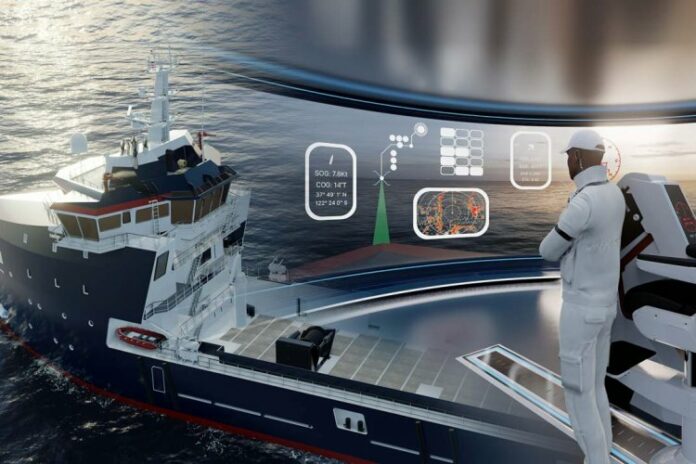
Kongsberg Maritime has signed a Letter of Intent with Brodosplit Shipyard and DIV Group in Croatia to deliver a large technology package for an ST-269 unit being built for the Scottish-based company Triumph Subsea Services, with an option for three more vessels of identical design.

The vessel is designed to be a truly multi-purpose turnkey solution for nearly all the subsea construction tasks encountered within the offshore oil & gas, subsea telecoms, decommissioning and renewables markets.

Crucial to the cost-effective and environmental-friendly profile of the new vessel, KONGSBERG will deliver a Fully Integrated Solution including engines, thrusters, deck machinery, electrical and control systems. Triumph will install an in-house designed bridge with an ergonomic interface, state-of-the-art fuel optimised solutions, digital technology and a well-proven thruster configuration. These solutions, which combine Kongsberg Maritime’s and Triumph Subsea Services’ wide experience in the subsea construction market, will make these vessels truly ready for the future.

These vessels are also the first offshore construction vessels to incorporate KONGSBERG’s Safety Management Control System (SMCS), greatly enhancing crew safety.

Triumph Subsea Services founder and COO Gray Johnstone said: “We are very excited to have been working with KONGSBERG from the initial conceptual stages and to have incorporated the KONGSBERG suite of equipment and systems. This has enabled us to achieve a game-changing vessel with the smallest possible environmental footprint, whilst ensuring maximum operability and safety for our people and the environment.”

Tommy Andree Hove, Regional Sales Director Americas, Kongsberg Maritime, says:

“It’s an honour to be a key supplier for these new Field Development Vessels for Triumph Subsea Services. To be part of a game-changing project in the subsea construction market whilst also contributing to a more environmental-friendly solution mirrors KONGSBERG’s ambitions to deliver new, green technologies and solutions for sustainable oceans.”
Solvang fleet to get operational performance support from Wärtsilä’s OPERIM solution

0

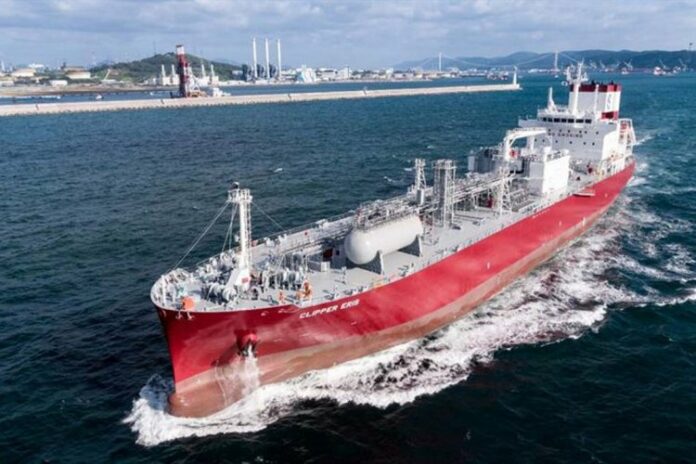
The technology group Wärtsilä has signed an agreement to provide Norwegian shipping company Solvang with its digital Operational Performance Improvement & Monitoring (OPERIM) solution to support the operational efficiency of the Solvang fleet. The 5-year agreement was signed in December 2020 and took effect on 1 January 2021. 

Under the agreement, Solvang will have access to Wärtsilä’s OPERIM technology. This includes the OPERIM cloud application, as well as support from Wärtsilä experts on realising performance opportunities in line with Solvang’s continuous improvement initiative. 

OPERIM is a cloud-based solution containing a digital twin model of the gas cargo handling systems, which enables it to report KPIs and to benchmark best-in-class performance within the fleet. These data insights are available for use by both the crew and onshore teams, and are central to supporting performance improvements needed to achieve optimal efficiency. The system also allows operational adjustments to be made as operating conditions change. The same data also provides valuable feedback to the crew to allow them to improve their operational routines.

The first phase of the agreement will comprise OPERIM being rolled out to 15 Solvang LPG/Ethylene carriers fitted with Wärtsilä cargo handling systems. Monthly fleet management meetings will be held to review the data produced, and to agree on improvement actions. The development of crew competences will also be highlighted. During the second phase of the agreement, OPERIM will be made available to an additional 12 vessels in the Solvang fleet (LPG / Ethylene carriers).

Nicholas Martin, Director Digital Offering, Gas Solutions, commented:

“Lifecycle support to our customers’ installations is a central pillar in the strategy of Wärtsilä Gas Solutions. This agreement marks a step change in our customer offering by combining input from our service experts with our digital solution to deliver a digitally-enabled lifecycle service. This allows us to ensure the products, systems, and solutions that we deliver are properly maintained, and that their reliability and performance are at the optimal level for our customers.”

Solvang’s Fleet Director Tor Øyvind Ask, responded:

“Wärtsilä’s digitally-enabled service provides transparency and valuable insights to our operations. The agreement allows us to use Wärtsilä’s OPERIM solution, but goes further by engaging experts from both sides to work collaboratively to find the best solutions for our business, whether it be in operator usage, operational routines, or the plant performance. We have created a collaborative approach to operational improvements.”

Wärtsilä has a long-standing relationship with Solvang, and has supplied multiple products for their fleet.

Inmarsat report guides superyachts towards IMO 2021 cyber risk management compliance

0

Inmarsat, the world leader in global, mobile satellite communications, has released a new, free of charge report covering new International Maritime Organization obligations and their implications for yachting professionals. The obligations enter into force next year and the report aims to support compliance as owners, managers and captains work to protect superyacht cyber security.

Published by the Inmarsat Research Programme, Cyber Security requirements for IMO 2021 offers unique insights into Inmarsat’s cyber security experience and examples of real cyberattacks on vessels, providing superyacht owners, managers, captains, engineers and technical officers with a guide to the criteria for compliance. By IMO resolution, superyacht Safety Management Systems must be documented as including cyber risk management under the International Safety Management Code no later than the first annual audit after 1 January 2021.

The 40-page document cites the 2020 Inmarsat Superyacht Connectivity Report, which reported that 40 per cent of superyacht professionals surveyed still do not know the difference between anti-virus software and network endpoint security. It also highlights the way threats continue to adapt and evolve, reporting a fourfold increase in cyber attacks on maritime targets that coincides with the industry’s move to home-based working through the Covid-19 pandemic.

To deepen industry understanding of the new cyber security regime, the report summarises industry exposure to date, identifies the vessel-specific vulnerabilities that have driven regulators to act and explores the precedents from outside and inside the maritime sector for IMO rule development. The context provides a vital preamble to a clear and concise guide to IMO 2021 compliance and the steps required to identify, protect against, detect, respond to, recover from and report on cyberattacks aimed at superyachts.

Inmarsat also provides guidance on Fleet Secure Endpoint (FSE), its cyber security protection, monitoring and reporting tool that can support superyacht owners and managers towards compliance. Without additional hardware, FSE’s multi-layered network protection against phishing, spyware, botnets and more updates system status using software on end-user machines.

Once more providing context, Cyber Security requirements for IMO 2021 focuses on FSE as a critical component in Total IT Best Practice for compliance, rather than providing a compliance solution in its own right. It also highlights Inmarsat’s role as partner to Maritime Cyber Security Awareness training developed for Stapleton International by MLA College, which is also available to FSE users.

Peter Broadhurst, Senior Vice President, Safety, Security, Yachting and Passenger, Inmarsat Maritime, said:

“As the superyacht fleet heads towards a new regime on cyber security, this is a significant publication for anyone investigating the fast-evolving threats facing yachts at sea. Anyone wanting to know what the new IMO rules mean and, in Fleet Secure Endpoint, the viable solutions already available to support towards compliance can’t afford to miss Cyber Security requirements for IMO 2021.”

APM Terminals and Maersk jointly developed a Vessel Inspection App

0

New Vessel Inspection App facilitates safer vessel inspections and improves collaboration between APM Terminals and shipping lines during port calls.

Learning from previous incidents, compiling inspection reports and escalating defects is of crucial importance for the Operations teams at APM Terminals. To facilitate this, while focusing on user experience and enabling faster and easier exchange of information, APM Terminals and Maersk jointly developed a Vessel Inspection App, taking a further step towards having a closer collaboration on safety standards.

Designing a mobile app with the user in mind means that terminal staff can now conduct vessel inspections using their mobile devices to record critical safety defects, share photos and escalate issues for repair. Once the inspection is complete, the user can download the PDF report and share it with the shipping line or its agent and vessel directly. This new process means that one set of simplified questions is used for all vessel inspections, which creates a standardised way of working across all terminals globally.

Ruth Gallagher, Global Head of HSE (Health, Safety & Environment) for A.P. Moller – Maersk explains:

“Across APM Terminals, we deploy thousands of people every day to carry out lashing operations on a wide variety of vessels. These people are subject to risks associated with both the operations they undertake, but also with the environment they work in. APM Terminals and Maersk have worked tirelessly throughout 2020 to improve vessel operations and we are proud to be launching this vessel inspection solution that brings people together to solve immediate problems.”

The deployment of new technology allows both port and vessel operators to have visibility of any environmental issue that could impact the safety of people or the effectiveness of operations both in the moment and in advance of arrival.  

Ruth Gallagher adds:

“Having an additional objective feedback on the condition of the vessels’ cargo area from these inspections is a useful assurance that enables us to better evaluate the risks of our operations and to focus on ensuring a safe work environment for everyone working onboard vessels.”

In the future, the new tool will allow other shipping lines and terminal operators to join and create a truly global community, working together to eliminate fatal and life-changing events associated with vessel alongside operations.

Port of Blyth launches of its Bates Clean Energy Terminal

0

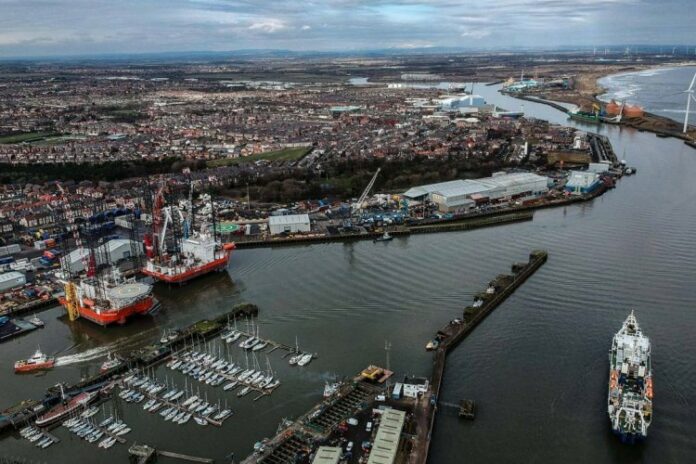
As part of a multi-million pound investment programme, the Port has announced the launch of its Bates Clean Energy Terminal, offering enhanced facilities and the opportunity for low carbon focused investment and innovation.

This major redevelopment scheme supported by North East Local Enterprise Partnership, strengthens the Port’s reputation as one of the UK’s leading offshore energy support bases. It has created an enlarged 17 hectare terminal with two berths, upgraded heavy lift quays, up to 8 hectares of fully remediated, prime quayside development land and with further expansion anticipated.

The Port has is also committed to a decarbonisation strategy for the site and the wider port involving electrification of plant (including a new 120 tonne capacity electric heavy lift crane) and low carbon energy initiatives for new and existing buildings. These include the potential for mine water sourced heating, latest technology solar power and a range of energy efficiency measures.

With the site adjacent to Offshore Renewable Energy Catapult, there is also a significant opportunity for low carbon energy focused research and innovation with collaboration on a range of initiatives such as green hydrogen, shore power, battery storage, vessel automation and subsea robotics being explored. Other partners working on the Bates Clean Energy Terminal include Northumberland County Council and marine fuels specialist, Geos Group.

Martin Lawlor, Chief Executive of Port of Blyth said:

“The launch of the Bates Clean Energy Terminal represents another important milestones in the Port’s development as a major offshore energy base and in our commitment to the national decarbonisation strategy.

With the support of national and regional partners, we are creating a unique opportunity for low carbon focused inward investment and are confident that this initiative will help to further expand the significant offshore energy supply chain already located around the Blyth Estuary.”

Navis Smart Mobile Terminal Suite expands offerings with new Reefer Monitor app

0

Navis, a part of Cargotec Corporation, and the provider of operational technologies and services that unlock greater performance and efficiency for the world’s leading organizations across the shipping supply chain, has announced that it is expanding its Navis Smart Mobile Terminal Suite with the addition of its Reefer Monitor app for Master Terminal by Navis.

The new application is now available for both N4 and Master Terminal customers in the Google Play and Apple App store, and will help reefer clerks effectively monitor conditions for temperature-sensitive cargo through an innovative and intuitive user interface.

Reefer Monitor is Navis’ next-gen mobile application with state-of-the-art technology to provide reefer technicians the ability to monitor temperature, humidity, ventilation and other conditions, via an immersive mobile experience for 24/7 visibility and control over reefer containers in the yard. Several customers that adopted Reefer Monitor early have provided feedback to help Navis shape the app that is now available for all Master Terminal customers today. With the addition of the Reefer Monitor app, Navis continues to broaden its suite of Navis Smart applications, which allows stakeholders to optimize planning, visibility, and asset utilization in terminal operations. These cloud-first applications will help N4 and Master Terminal customers gain more value from sharing and accessing data from their terminal operating system to improve operational performance.

Younus Aftab, Chief Product Officer at Navis, said:

“Operating in the cloud, Navis Smart Applications allow terminal operators to extract and share data with their team in real-time, increasing efficiency, lowering costs and improving customer service at their terminals. With the addition of Reefer Monitor to our offerings, Master Terminal by Navis customers will now have a round-the-clock view into their reefer operations through an innovative solution right on their phones. This new app will allow terminals to further unlock their own data to improve performance and better inform business decisions.”

Maersk Drilling awarded one-well drillship contract in Korea

0

The contract is expected to commence in June 2021, in direct continuation of the rig’s previous work scope, with an estimated duration of 45 days. 

The contract value is approximately USD 14.5m, including mobilisation and demobilisation fees.

COO Morten Kelstrup of Maersk Drilling says:

“We’re pleased to be awarded this contract with a new customer in the form of KNOC for their first-ever drillship operation and are confident in our ability to quickly start up operations in Korean jurisdiction after Maersk Viking moves on from its previous job. The rig and its crew have shown an impressive ability to always deliver safe and efficient operations, even during this challenging period marked by a global pandemic.”

Maersk Viking is a high-spec ultra-deepwater drillship which was delivered in 2013. It is currently mobilising for a campaign in Brunei Darussalam after completing a job in the Bay of Bengal in 2020.

Damen partners with Sea Machines to bring wireless-helm technology to ship-build customers

0

Boston-based Sea Machines Robotics, a developer of autonomous command and control systems for commercial vessels, have announced that it has entered a strategic alliance with Damen Shipyards Group, of the Netherlands, to incorporate the company’s autonomous and wireless-helm systems as standard features in Damen’s global vessel build catalogue.

This partnership increases the accessibility of Sea Machines systems in marine and maritime markets and further propels Sea Machines into mainstream use aboard commercial vessels.

Well known for producing innovative and cost-effective vessels, Damen engages in modular shipbuilding based on standardized designs. The company’s in-stock hull program has been successful to date because it ensures a short and efficient, delivery of proven technology. Now with Sea Machines technology on board, Damen’s customers can take advantage of new operational methodologies that deliver additional efficiencies, increases in productivity and predictability, and opportunities to increase at-sea safety throughout the life of the vessel.

In addition to installing the autonomous-command and wireless-helm systems, Damen will train users to operate Sea Machines systems via the company’s in-house simulator. Fully integrated with Sea Machines’ technology, the simulator will generate a realistic marine domain in which employees and the company’s clients can learn to use Sea Machines’ intuitive user interface and become familiar with modern autonomous-command capabilities.

These capabilities include autonomous transit behaviours as well as collaborative autonomy for unmanned daughter craft operations, and pre-configured pattern autonomy for task-based workboat missions. Sea Machines autonomy incorporates obstacle detection and collision avoidance based on COLREGs for dynamic-domain operations, as well as highly valuable remote-command, remote-machinery and payload control, which allows shore-based command of vessels and on-board equipment.  Customers can leverage reduced-crew or unmanned vessel operations which can greatly increase the productivity of persistent workboat operations or remove personnel from hazardous marine work environments. Across all industries, autonomous systems automate manual, repetitive, and tedious tasks, allowing humans to focus on higher-level operations with reduced risk.

Damen’s Toine Cleophas, manager programs, said:

“This alliance will play an important role towards the realisation of Damen’s strategy, which is built on the continual development of digitalisation, sustainability and operational excellence of Damen products and services. The collaboration forms a part of Damen’s R&D programme Smart Ship and will increase customer value by supporting a more digitalised Damen portfolio.”

Sea Machines’ CEO Michael G. Johnson, said:

“This significant development sends a clear signal to the industry that autonomous marine technology is rapidly gaining adoption and is in-demand among commercial operators. We see a future, where most, if not all, newly constructed vessels will feature autonomous technology as standard. This partnership will accelerate Sea Machines’ position as the ‘go-to’ provider of advanced marine technology and is securing Damen as an innovative industry leader for years to come.”

Partial electrification of Sleipner approved

0

The field centre will be tied to the Utsira High area solution, and Sleipner is expected to cut emissions by more than 150,000 tonnes of CO₂ per year.

Arne Sigve Nylund, executive vice president for Technology, Projects and Drilling in Equinor, says:

“Partial electrification of the Sleipner field centre will contribute to major cuts in emissions from our activities and provide significant assignments for the supplier industry in a demanding time. As the authorities have approved the PDO, we can keep developing the Norwegian continental shelf (NCS) towards the goal of zero greenhouse gas emissions in 2050.”

In June, Equinor and its partners Vår Energi, LOTOS and KUFPEC submitted a revised plan for development and operation (PDO) to the authorities. The investments are in the size of NOK 850 million. Sleipner is scheduled to be tied in to the Utsira High area solution by the end of 2022.

Kjetil Hove, executive vice president for Development and Production Norway in Equinor, says:

“Sleipner is an important field on the NCS contributing enormous value to Norwegian society. The partners have focused on being in the forefront of technology development and innovation to carry out for example carbon capture, injection and storage at the field. The decision to partly electrify the field helps the partners in their effort of further developing the field.”

The Sleipner field centre solution involves laying a power cable from Sleipner to the Gina Krog platform, which will be tied to the power from shore Utsira High area solution.

The Utsira High area solution was originally planned for the four fields: Johan Sverdrup, Edvard Grieg, Ivar Aasen and Gina Krog. The Sleipner field centre and the Gudrun, Gina Krog, Utgard, Gungne and Sigyn tie-in fields will now receive power from shore through the area solution.

In June, Aibel was awarded the EPCIC contract (engineering, procurement, construction, installation and commissioning) for Sleipner modifications. The contract for production and laying of cables was awarded to the NKT cable supplier.

Worth around NOK 400 million, the EPCIC contract will require approximately 170 man-years distributed on two years at Aibel’s offices in Stavanger and at their yard in Haugesund. Purchase of equipment from sub-suppliers is expected to be in the size of NOK 150 million.

Wärtsilä and Siem Offshore sign an agreement to reduce carbon footprint

0

The 5-year agreement will ensure the optimal maintenance required to reduce the vessels’ fuel consumption and emissions by utilising the latest digital technology to provide real-time monitoring and support. The agreement, which was signed in December 2020, also covers the selective catalytic reduction (SCR) emissions-abatement systems installed with the engines.

Included in the agreement is Wärtsilä’s Expert Insight predictive maintenance solution. Expert Insight is an innovative service that leverages artificial intelligence (AI) and advanced diagnostics to monitor equipment and systems in real-time, spot anomalies, foresee potential problems, and enable rapid reaction accordingly. Should anomalous behaviour be detected, it is flagged to specialists at Wärtsilä Expertise Centres, allowing them to support the customer proactively with an appropriate resolution to the issue. The combination of AI, advanced diagnostics, and the company’s extensive equipment expertise greatly enhances the reliability, efficiency, and safety of the installed equipment.

Also included is Wärtsilä’s Data Driven Maintenance  concept and the Lloyd class-approved Wärtsilä connectivity solution with enhanced cyber security. The Data Driven Maintenance enables the ships’ crews to conduct condition inspections using borescope optical instruments. The digital images provided will be sent to Wärtsilä’s technical experts for evaluation, and in most cases will lengthen the time required between engine overhauls. The connectivity solution is an enabler for onshore digital tools providing cloud based services such as remote monitoring, remote optimisation and support. With optimal maintenance procedures, safety is increased and exhaust emissions reduced. 

Dag Honnemyr, Operational Director Siem-Helix, says:

“We appreciate the easy access to remote operational support made possible by Wärtsilä’s leading-edge solutions. This allows us to do maintenance when needed rather than at fixed intervals. We are especially excited with Expert Insight, which allows us to monitor the condition of the engines from ashore, and thanks to artificial intelligence and anomality detection we expect to prevent unscheduled stops that cause loss of revenue.”

Henrik Wilhelms, Director Agreement Sales, Wärtsilä Marine Power, says:

“Lifecycle support is a key element of our strategy, and our advanced digital and data-based maintenance solutions are central to enabling optimal operational performance. The benefit of being able to efficiently monitor the equipment and support customers remotely is enhanced even more today, since due to Corona-related travel restrictions, in-person visits by service engineers can be difficult to arrange. Since our engineers need to travel less, their carbon footprint is reduced, while at the same time we can  optimise the performance of the asset, so it is really a double win.” 

The two vessels, the Siem Helix 1 and Siem Helix 2, each operate with eight Wärtsilä 32 engines. The ships are operating in Brazil’s offshore oil fields.