-5.4 C
New York
Home Blog Page 683

OGTC kicks off project to examine marine vessel hydrogen transportation and storage

0

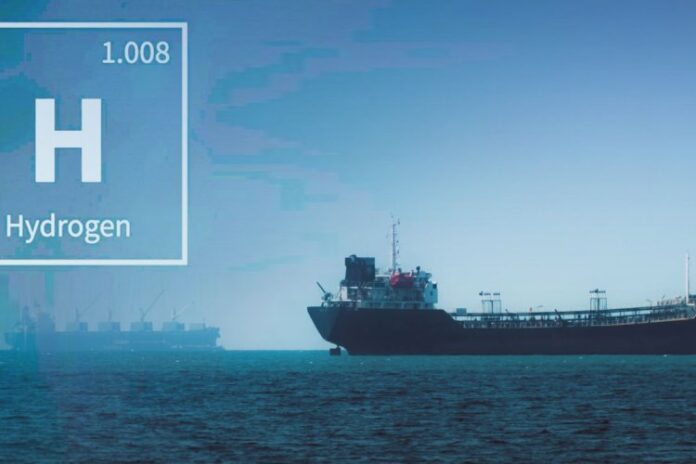
OGTC, in partnership with Scottish Government, Global Energy Group, Pale Blue Dot (on behalf of the Acorn Project), Port of Cromarty Firth, Environmental Resources Management (ERM) and Shetland Island Council, have announced details of a collaborative study to examine the potential of Liquid Organic Hydrogen Carriers (LOHC) for the transportation of hydrogen.

OGTC is committed to developing and deploying technologies to enable an affordable net zero North Sea and this project is an important step to advance knowledge of hydrogen transportation and storage technologies needed to enable a Scottish hydrogen economy to develop.

The project also aligns with the recent Scottish Government Hydrogen Policy announcement to work with research partners to explore the safe and cost-effective options for the marine transport of hydrogen between Scotland and the UK and European ports.

The initial phase of the study will be conducted by Environmental Resources Management (ERM). The project will investigate how liquid organic hydrogen carriers can be used as a mass transportation solution from sources of hydrogen around the UK and Europe.

Focused on safe marine transportation and storage of hydrogen, ERM will evaluate the techno-economical, safety and environmental benefits of LOHC for marine transportation.  The project will also examine the suitability of existing conventional oil and gas assets and ports. 

Importantly, the project will gather evidence to assess the technical and economic feasibility of repurposing existing marine assets for LOHC transportation as well as loading and offloading safety requirements. 

Environmental assessments comparing various mass transportation solutions will determine further phases of the study, which could potentially lead to trials within four years.

OGTC’s CEO, Colette Cohen, said:

“OGTC is committed to accelerating the transition of our industry to an affordable net zero future. This important project will enable us to understand the end-to-end production through delivery requirements for hydrogen which is essential if we are to create an economically viable hydrogen economy, supporting manufacturing and jobs. Working together with our Government and industry partners, we will continue to invest in technology innovation that targets low carbon solutions, alternative fuels and technologies that drive to net zero – positioning the North East of Scotland as a leader in the energy transition.”

Scotland’s Energy Minister, Paul Wheelhouse, said:

“I am delighted at the commencement of this project examining Marine Vessel Hydrogen Transportation and Storage. The Scottish Government is committed to supporting the emerging hydrogen sector in Scotland while also maximising the ‘new-industry’ benefits that the production and export of hydrogen may bring. This collaborative project reflects the opportunities for hydrogen development and energy transition.

“Hydrogen has a potentially very important role to play in ensuring Scotland becomes a net-zero economy by 2045. Our abundant natural resources will support the establishment of a thriving hydrogen sector here, in Scotland, and in the emerging global hydrogen market.

“It is clear that hydrogen is not just an energy and emissions reduction opportunity; it could also have an important role in generating new economic growth for Scotland by creating new jobs, and supporting a just transition. This is why the Scottish Government is investing an additional £100 million over the next five years to help realise this potential.”
The ports of Antwerp and Zeebrugge to join forces

0

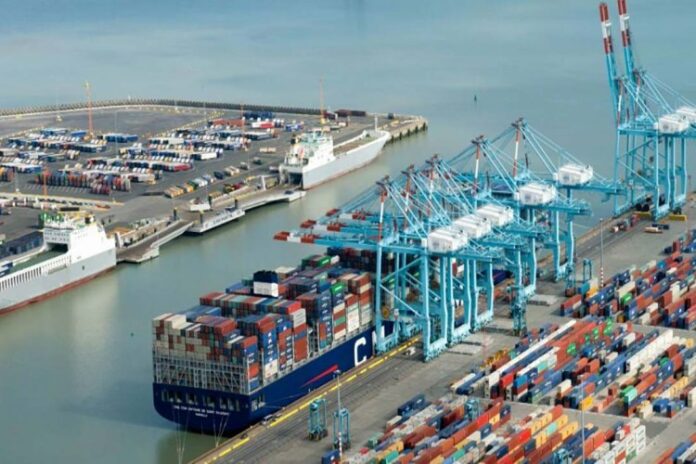
The two-city agreement marks the start of a unification process that is expected to take a year to finalise. Once completed, the ports will operate under the name ‘Port of Antwerp-Bruges’. As a result of the merger, the ports will be able to strengthen their position within the global supply chain and continue their course towards sustainable growth. Furthermore, the unified port will be more resilient to the challenges of the future and will take a lead in the transition towards a low-carbon economy. 

The shared position of the ports of Antwerp and Zeebrugge within the global supply chain will receive a significant boost. The merged port will become the most important container port (157 million tonnes/year), one of the largest break bulk ports and the largest port for the transhipment of vehicles in Europe. Furthermore, the port will account for more than 15% of Europe’s liquid natural gas transited and it will of course remain Europe’s most important chemical hub. Finally, it will be the largest port for cruise ships in the Benelux. With a total transit capacity of 278 million tonnes per year, the unified port will be able to consolidate its leading position in the world.

As part of a joint plan, the two ports have defined three strategic priorities – sustainable growth, resilience and leadership in the energy and digital transition.

Port of Antwerp-Bruges will combine the best of both worlds and will focus on the strengths of each site. The ports of Antwerp and Zeebrugge are largely complementary. For example, Antwerp specialises in the handling and storage of containers, break bulk and chemical products, while Zeebrugge is a major port for RoRo traffic, container handling and the transhipment of liquid natural gas. Working more closely together will make it possible to consolidate sustainable growth, not only of each port’s individual market share, but also of the joint market share of both ports together.

In order to maximise the added value of a unified port, Port of Antwerp-Bruges will seek to develop and make optimum use of the interconnectivity between the two ports. The transportation of goods by rail between the two sites will be bundled, estuary traffic (by inland vessels on the North Sea) will be optimised and pipeline connections will also be on the list of priorities.

Committed strategic investments, such as the new sea lock in Zeebrugge and the additional container capacity in Antwerp, will go ahead. Future investments will be evaluated from a unified operational perspective, so that both port platforms will benefit, and the port continues to meet its customers’ expectations.

Port of Antwerp-Bruges will draw upon the resources, expertise and talent of its teams in Zeebrugge and Antwerp. In the near future, a unified organisational structure and way of working will be developed, while respecting one another’s DNA and corporate culture. Transparent, long-term agreements will be made with regard to the leadership and management of Port of Antwerp-Bruges.

The unified port will be able to respond more rapidly and more effectively to social and technological developments, such as energy transition, innovation and digitalisation.

Sustainability already formed a central part of the strategic direction in Antwerp and in Zeebrugge, but Port of Antwerp-Bruges will set the bar higher. Combining the industrial cluster in Antwerp and Zeebrugge’s location on the coast will create a unique opportunity to address the future energy challenges in Flanders and the wider region. As such, Port of Antwerp-Bruges will take up a leading position as an import hub for green hydrogen and will play an active and pioneering role in the hydrogen economy. In addition, the port, in collaboration with its industrial and maritime customers, will continue its efforts to reduce its carbon footprint and will examine methods of applying CCUS (Carbon Capture, Utilisation & Storage) in order to contribute to the transition towards a low-carbon port.

Finally, Port of Antwerp-Bruges will offer a number of significant advantages in terms of innovation and digitalisation, making it possible to make the supply chain not only more efficient, but also safer and more reliable.

The transaction is subject to a number of customary suspensive conditions, including approval from the Belgian competition authorities. Both parties aim to finalise the transaction in the course of 2021.

Yara Marine Technologies drives towards shore power

0

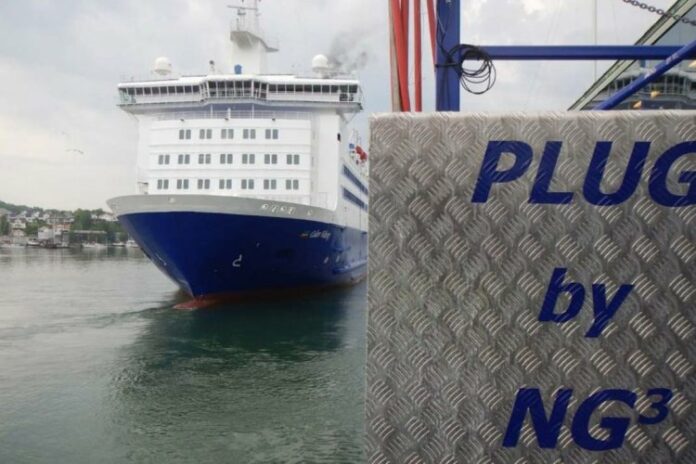
NG3 has been in the business of shore connection systems for the last ten years along with several other technologies for ships, such as automated mooring systems, and gas combustion units for LNG propelled ships. 

Aleksander Askeland CSO at Yara Marine Technologies says:

“We used to do shore power projects on ships some years ago, but the market was too slow. Now, however, with new regulations and grants supporting shipowner’s shore power investments, we are back in the business of shore power. Together with NG3, we are ready to take on new orders.

We sought out NG3 due to their proven competence and mindset to constantly develop and improve their technology. They demonstrate a skillset, and a passion for engineering that makes for a great cultural fit with us.”

Camille Chevreau, Sales and Operations Manager at NG3 says:

“We are excited, confident, and proud to partner with a large yet agile company like Yara Marine Technologies and look forward to tapping into their expertise, engineering capacity, and market relations.”

The EU parliament recently called for a ban on greenhouse gas (GHG) emissions from berthing ships at berth by 2030, in their first reading of the MRV regulation. 

Askeland continues:

“This is a major step for the industry. It will cut emissions tremendously. Both GHG emissions, but also local air pollution, like black carbon, SOx, and NOx, saving thousands of lives, cleaning up the air in our cities.”

The ban would include any ships with a gross tonnage of 5000 or more arriving at, within, or departing from ports under the jurisdiction of an EU Member State. In all practicalities, no GHG emissions at bay, within less than nine years, means ships connecting to power from shore, and possibly batteries. In addition to the EU Parliament initiative, several ports are already introducing a ban on GHG emissions at bay by 2025. In China, shore power shall be used if a cruise ship is at berth with onshore power supply capacity for more than three hours in the emission control areas.

Yara Marine Technologies keeps broadening its portfolio of green technology for the maritime industry. With a strong focus on the IMO 2030 and 2050 targets, Yara Marine Technologies will invest in several technologies to reduce and eliminate GHG emissions.

Askeland explains:

“Yara Marine’s ship-to-shore technology can help to save fuel that would otherwise be used to power vessels while in port. According to the Fourth IMO GHG Study, shore power can reduce overall GHG emissions from ships quite a bit. In addition, it will contribute to better air quality in the proximate port area, facilitate maintenance of the ship’s engines and generators, and reduce noise from the vessel at berth.”

Orange Marine selects VARD’s ship design to expand their fleet of cable ships

0

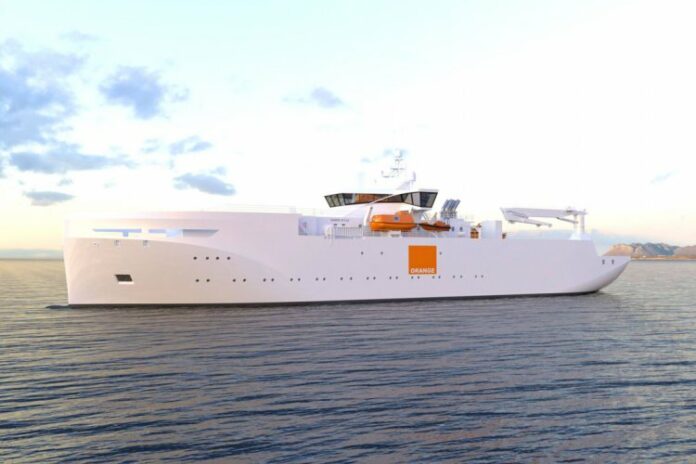
VARD has announced that Orange Marine has again selected ship design from VARD’s extensive design portfolio when expanding their fleet of cable ships. This time specifically designed to its purpose of fiber-optic cable repair.

VARD and Orange Marine’s cooperation goes back to 2012 when VARD was selected for the design and construction of their cable laying and repair vessel of VARD 9 01 design “Pierre de Fermat”. Orange Marine has for the second time chosen VARD as their preferred ship design when adding a cable repair vessel of VARD 9 03 design to their fleet. The vessel will be built by Colombo Dockyard which has experience from building the cable laying and repair vessel of VARD 9 01 design “KDDI Cable Infinity” in 2019 to Kokusai Cable Ship Ltd of Japan.

The VARD 9 03 design for Orange Marine is specially designed for the maintenance of submarine cables, both fiber-optic telecommunication cables and inter-array power cables used in offshore windfarms. VARD has developed the vessel design according to the clients operating requirements with special attention to the vessel hull design in terms of good sea-keeping capabilities and low fuel consumption. Together with its capable maneuverability it is a truly specialized tool for the repair market.

VARD is continuously expanding the portfolio for power- and telecom cable laying and repair vessels and developing inhouse competence and experience within this segment, working with significant companies in the industry. Currently VARD has two power cable laying vessels under construction. The VARD 9 04 design for Prysmian, and the recently signed contract for the VARD 9 02 design for Van Oord.

The experience also includes design and construction from 2011 of the offshore construction and cable laying vessel “Connector” now owned by Jan De Nul Group, and the inter-array cable laying vessel of VARD 9 01 design “Seaway Aimery” built at Remontova Shipyard for Siem Offshore in 2016, in addition to the fiber-optic cable laying vessels “Pierre de Fermat” and “KDDI Cable Infinity”. With this extensive track record VARD is positioned as one of the most experienced designers of cable laying vessels.

Fredrik Hessen, General Manager of Business Unit Offshore and Specialized vessels says:

“We highly appreciate the close cooperation between Orange Marine, Colombo Dockyard and VARD to enable another innovative vessel design within the fiber-optic cable ship segment.”

VIDEO: New Uni Wave200 power device arrived on King Island

0

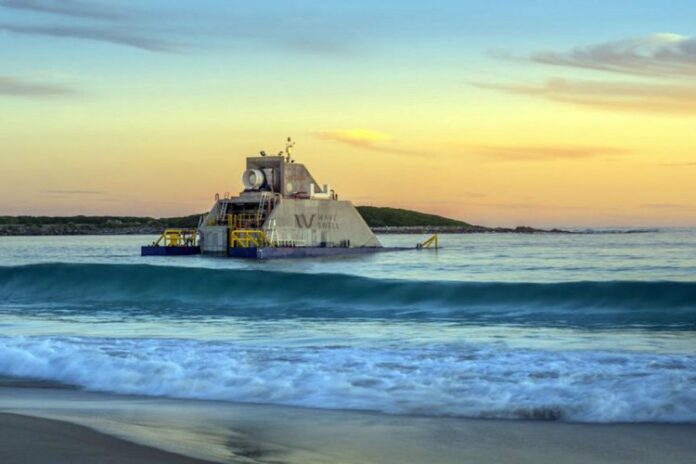
King Island will soon be powered by a combination of wind, solar, battery and ocean power, with the new Uni Wave200 in place and ready to be connected to the island’s microgrid.

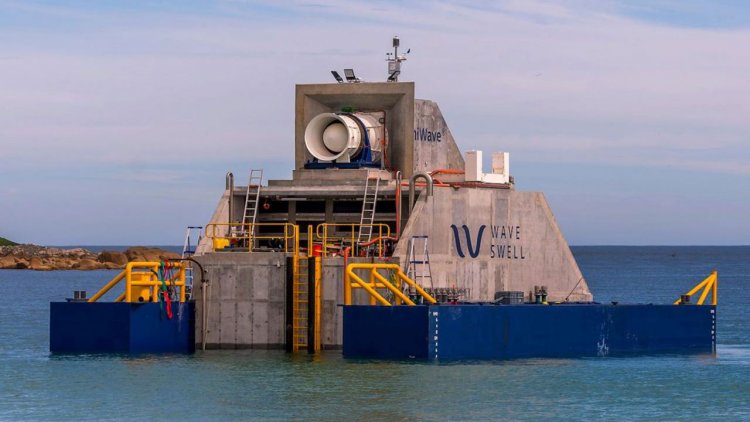
Developed by Melbourne’s Wave Swell Energy, the first Uni Wave200 has been installed at Grassy Bay on King Island’s south-east coast.

The deployment is part of an ARENA-supported trial first announced in 2019, building on a 2011 project which established a hybrid microgrid that supplies more than two thirds of the island’s energy needs through a combination of wind, solar and batteries.

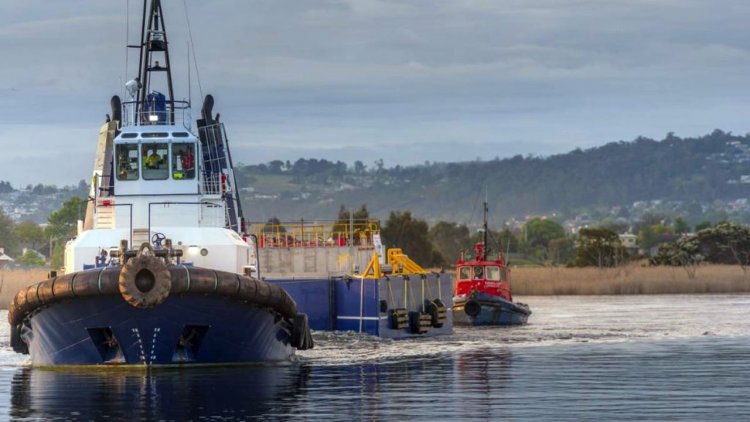
Delivering the unit to an island surrounded by ocean prone to large swells and wild weather was a major undertaking. The Uni Wave’s substructure had to be towed down Tasmania’s Tamar River to the Port of Bell Bay where construction was completed, before setting out on the marathon 40 hour crossing to King Island.

The device now sits partially submerged on the seabed at Grassy Bay, where the movement of waves will force air through a turbine to generate electricity.

Wave Swell’s Uni Wave generator uses an ‘oscillating water column’, effectively creating an artificial blowhole charged by a chamber beneath the waterline.

The company’s co-founder and executive director Tom Dennis, who is also an oceanographer, said:

“Right at the beginning of this project years ago, we did a major survey of the various experts in the world who had experience with wave energy and asked them for their views on the lessons that should be learnt and we need to address… we’ve incorporated all of that to as great of an extent as possible ensure we don’t make the same sorts of errors of the past.”

The work has culminated in the system deployed at King Island, which is able to supply up to 200 kW of power to the microgrid around the clock, complementing the wind and solar power already installed and reducing reliance on the island’s diesel generators. Wave Swell believes future commercial scale units will likely have a capacity of around 1 MW, but could reach as large as 3 MW.

Their first unit was assembled in Tasmania, but the company sees potential to assemble the Uni Wave around the world at hubs close to the places where they will be deployed to minimise transport costs.

The Australian Renewable Energy Agency (ARENA) contributed $4 million towards the $12.3 million trial, which will supply power for the island through a power purchase agreement with Hydro Tasmania. The funding was provided under ARENA’s focus on integrating renewable energy into the electricity system, which is helping to achieve the technological advances and innovations that are key to many scenarios in the transition to a low emissions economy.

Dennis is confident that the technology will compete in time with wind and solar on cost, but has the added advantage of being more predictable and consistent.

He sees four clear benefits in their design over other wave energy conversion systems, which have struggled to produce power reliably at a cost that can compete with other renewable energy technologies.

Unlike other wave generators that capture energy from the sea floor, surface, or somewhere in between, the Uni Wave is capable of capturing all the energy throughout the water column, from surface to seabed. This improves the device’s conversion efficiency, which reduces the cost of energy produced.

Being situated in the shallows also provides comparative ease of access, aiding maintenance which flows through to improved reliability.

By not having any moving parts in the water, Wave Swell’s design is also better able to withstand the harsh marine environment, which has historically proven a major challenge for wave power technologies.

They also see an opportunity for the structure to shield coastlines from erosion caused by waves, taking “the destructive energy in waves and converting it into constructive electricity”.

According to Dennis, designing a device that can survive in saltwater is the greatest challenge for wave power developers, but he is confident that Wave Swell’s commercial scale units will have a 20 year lifespan.

They will trial the Uni Wave200 unit at King Island for at least 12 months, with commissioning on track to be completed in March. At the end of the trial the device will be refloated for removal – a process which has already been tested and will leave the seabed unharmed.

NYK to build four new LNG-fueled PCTCs

0

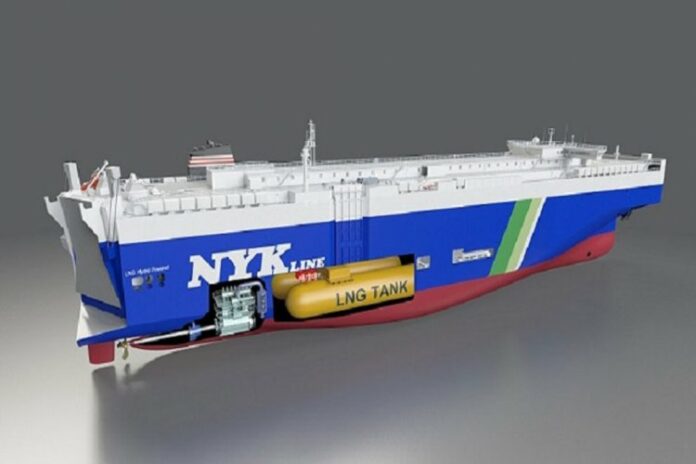
NYK has concluded a ship-building contract with China Merchants Jinling Shipyard (Nanjing) Co. Ltd. for four LNG-fueled PCTCs. These four vessels will be delivered from 2022 to 2023 and are planned to be assigned to transport vehicles mainly to/from Europe and/or to the Middle East.

On these vessels, WinGD’s X-DF2.0 iCER main engine will be utilized for the first time in the world. This engine consumes less gas and reduces GHG by cutting methane emissions from exhaust gas by approximately 50%. Further, the vessels will be equipped with battery hybrid technology, which will improve fuel efficiency by mitigating main engine and electrical generator load fluctuations through the support of batteries.

The use of LNG fuel, together with these new technologies and other developments such as hull modification, will contribute to a reduction of sulfur oxide (SOx) emissions by 99% compared to ships fueled by heavy fuel oil. Likewise, nitrogen oxide (NOx) emissions will be cut by 96%, and CO2 emissions by approximately 40% or more (per unit of transportation).

Concluding this ship-building contract for these four vessels is in line with NYK’s plan to replace current vessels with around 40 newly built LNG-fueled PCTCs over the next decade to achieve NYK’s environment management target, which is to reduce CO2 emissions per ton-kilometer of transport by 50% by 2050. NYK aims to further advance to zero-emission vessels utilizing low-emission marine fuels such as hydrogen and ammonia from around the mid-2030s.

On February 3, 2021, NYK announced the NYK Group ESG Story,*** which aims to further integrate ESG into the company’s management strategy and promotes activities that contribute to the achievement of the SDGs (Sustainable Development Goals) by providing cleaner transportation services, including the introduction of next-generation eco-friendly ships within the PCTC fleet. To strongly promote ESG management, NYK will encourage new value creation as a sustainable solution provider through a business strategy that responds to climate change.

Nautilus Labs enters partnership with Kongsberg Digital

0

Nautilus Labs and Kongsberg Digital have announced a partnership to include Nautilus Labs in the Kognifai open ecosystem. 

Together, the companies will deliver joint value to clients through seamless extraction, contextualization and analysis of quality vessel data for use in AI driven performance tools.

The agreement between both firms, the next iteration of which begins this year, will see the integration of Nautilus Platform within Kongsberg Digital’s Kognifai open ecosystem. KONGSBERG’s Vessel Insight service, hosted in Kognifai, provides a secure and dependable vessel-to-cloud data infrastructure which captures, aggregates and contextualizes all data derived from a vessel’s sensors and other assets, transferring it for storage in the cloud.

Nautilus Labs, meanwhile, puts machine-learning algorithms to work, deploying historical, real-time and predictive analytics to optimize fleet and voyage performance. Nautilus Platform recommends optimal vessel and voyage operating configurations, automatically surfacing insights in the form of recommendations that increase a vessel’s financial returns and improve environmental sustainability.

These technologies seamlessly integrate together to bring about substantial, across-the-board improvements for shipping companies. Kongsberg Digital’s Vessel Insight service gives teams and stakeholders secure and instant access to their vessel data in a structured, standardized and user-friendly format, while the Nautilus Platform provides intelligent and real-time decision support. The result is a joint solution which enhances and encourages cross departmental collaboration while also reinforcing transparency and accountability between key business stakeholders. The operational advancements additionally help businesses not only meet but surpass their profit and sustainability targets.

Eirik Næsje, VP of Vessel Insight, Kongsberg Digital, says:

“The seamless integration of these platforms is driven by a mutual resolve to deliver consolidated value to our clients, providing them with best-in-class solutions. It’s rewarding to see our ethics and principles reflected in a forward-thinking partner like Nautilus Labs, while the distinction of being a Nautilus-preferred provider will increase our global ambit.”

Leigh Jaffe, VP of Corporate Development at Nautilus, says:

“At Nautilus, we believe that collaboration among industry partners is the best way to promote innovation. Partnerships have the power to benefit the entire maritime ecosystem and ocean shipping industry. We are excited to partner with Kongsberg Digital to deliver joint value by enabling clients with turnkey access to Nautilus’s predictive insights and optimization solution. Proliferating access to high frequency data and tying it close to an innovative offering like Nautilus Platform helps our clients exceed profit and sustainability targets.”


Possible strike could affect NCS fields

0

This can potentially lead to a strike which could affect activity at the terminal at Mongstad.

The tariff agreement in scope for mediation is the Oil Agreement – Oljeoverenskomsten 224. The agreement is between YS/Safe, Negotia and Norwegian Oil and Gas Association/Norsk Industri. 

In the event of this mediation not being successful, SAFE has announced that 12 of their members at the Mongstad terminal could be on strike from midnight 15 February.

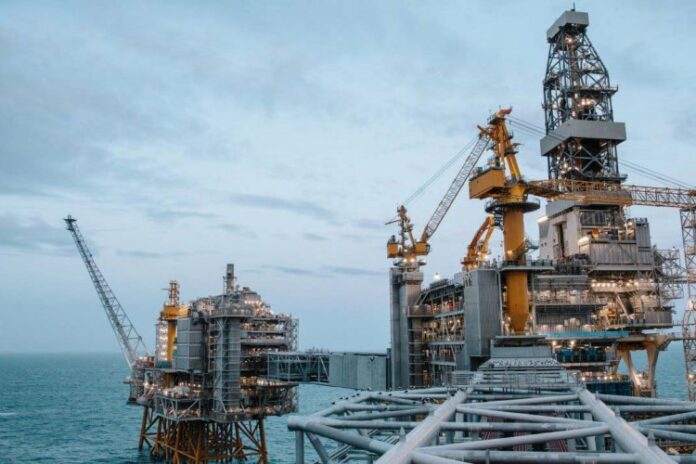
The effect of a potential strike could reduce crude storage and harbour capacity at the terminal at Equinor Mongstad refinery, which could affect the production at several Equinor operated fields on the NCS, including Johan Sverdrup and Troll and it could be necessary to shut down production there until further notice.  

A possible strike could also impact gas exports from the Troll area, and could also impact the Kvitebjørn, Visund, Byrding, Fram and Valemon fields.

Marlink provides value added VSAT for Turkey’s Gungen Maritime & Trading

0

Marlink has been selected by leading Turkish tanker operator Güngen Denizcilik ve Ticaret A/Ş (Gungen Maritime & Trading) to provide Inmarsat’s Fleet Xpress service on four of its six vessels. 

The agreement was concluded through Marlink’s local partner Ozsay Satellite which worked with the company to provide a high quality package of enterprise and crew welfare services.

Well-known within Turkey as an early adopter of technology solutions for compliance, efficiency and environmental performance, Gungen will use the high throughput Ka-band service together with Marlink’s own voice service provided via XChange for Fleet Xpress. The Gungen Suezmaxes will use the services provided by Marlink together with the operator’s own firewall and server system for remote access and synchronization, Cyberoam.

Marlink will provide Fleet Xpress with a bundled L-Band back-up solution, both of which will benefit from enhanced network transparency, which provides users and shore staff with immediate information on which network is in use for specific tasks. This unique tool enables ship and shore staff to analyse usage and prioritise data intensive downloads when in the areas of strongest coverage.

Marlink will also provide its own high quality voice service, configured to provide local Turkish telephone numbers for the ships, which provides added flexibility of two voice communications options, allowing the ship to focus on cost efficiency or highest quality. Gungen has a proactive strategy towards personnel selection and retention, employing highly skilled and qualified staff on shore and at sea, investing in its seafarers with regular online training delivered onboard.

Burak Guler, IT Manager, Gungen Maritime & Trading, said:

“Gungen is a company that follows technology very closely and we implement smart and innovative solutions onto our vessels to improve safety, efficiency and compliance. We like to be ahead of the curve in terms of compliance and the advantages that technology can provide us in achieving efficiency gains and emissions reductions.”

Tore Morten Olsen, President, Maritime, Marlink, said:

“Gungen was one of the first operators in the country to embrace VSAT and is considered one of the most progressive shipping companies in Turkey for its very high operational standards and strong focus on crew welfare. Gungen’s investment in its processes and its people continues with this combination of VSAT data, voice and added value services.”

Ali Islamoglu, Director Satellite Communications, Ozsay Satellite, said:

“Ozsay Satellite focuses on matching individual customer needs with tailored packages of connectivity and value added solutions that go above and beyond the normal level of service. For a forward thinking customer like Gungen, we worked closely with the IT department to create a bundle of added value connectivity from Marlink that meets their requirements.”

Helsinki Shipyard laid the keel of the second luxury expedition cruise ship

0

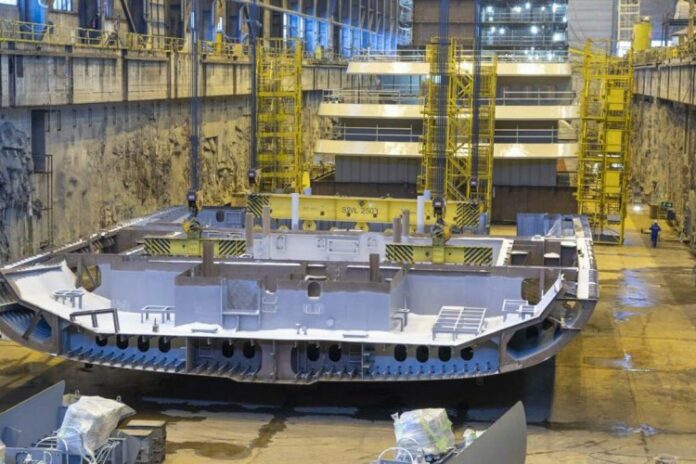
The keel of NB 517 was laid in accordance with the seafaring traditions and taking into account the current restrictions due to COVID-19.

The keel was laid with outfitted and painted block 302 that arrived at the shipyard just at the right time, during the previous weekend. In the keel laying ceremony the representatives of the client and classification society, as well the project and shipyard management were present.

The vessels being built at Helsinki shipyard represent the next generation of polar expedition vessels, and once delivered they will sail worldwide with a strong focus on high-latitude areas.

The two first 113-meters long vessels ordered from the shipyard will carry 152 passengers and 120 crew members after their delivery. The vessels will feature a 4,6, MW diesel-electric hybrid propulsion system with selective catalytic reduction and a 3-megawatt max. battery package. Gross tonnage of the vessels is 10 500 ton, and they have PC5 ice-strengthened hull.

The first vessel of these series will be delivered during year 2021 and the one that celebrated its keel laying now will be handed in the first months of year 2022. The third vessel NB 518, being a bit bigger than her sisters, will be delivered to the client as well in year 2022, at the end of the year.

The Project Manager of NB 516-517 Jonas Packalén commented:

“Newbuildings NB 516 and NB 517 are designed for extreme weather conditions, from one side for polar areas where they can meet quite heavy ice conditions, and from other side for tropical regions. And they are naturally designed to respect the sensitive ecosystems of the regions where they’re going to sail.”