-4.8 C
New York
Home Blog Page 682

Impressive video: Pilotage in bad weather Cork Harbour on February 2021

0

Here’s some impressive video footage Safehaven Marine captured of the Cork Pilots in their Interceptor 48 pilot boat ‘Failte’ undertaking pilot transfers off Cork Harbour during the recent days of strong SE gales.

Roches Point lighthouse recorded 50kts of wind on the 13th as the Cosco bulk carrier passed and the Cork wave buoy 2nm off the harbour entrance recorded waves to 6.7m at the time. The pilot boat coxwain managed to get alongside and safely disembark the pilot despite the challenging sea state. Afterwards on the 15th conditions moderated, with the Gramaldi car carrier able to depart. Respect for the Ports pilots and pilot boats crew in keeping the Port working and shipping moving in such bad sea and weather conditions.

Filtersafe boosts filtration standards in the ballast water treatment industry

0

Filtersafe has today announced the removal of 316L grade stainless steel from its supply chain for ballast water treatment system (BWTS) filters.

The commitment will see Filtersafe switch to 904L grade stainless steel at its manufacturing facilities in Israel and Hong Kong, which produce filters for around 25% of the global BWTS market. Filtersafe’s pledge comes as the company introduces a plethora of technology upgrades as part of a $10m market-feedback program designed to boost the quality, durability, and turnaround time of BWTS filters – all without impacting filter affordability.

Founded with the aim of tackling the world’s most complex water filtration challenges, Filtersafe supplies filters to many of the shipping industry’s leading BWTS manufacturers including De Nora, Ecochlor, Group, Evoqua, ERMA FIRST, SunRui, TeamTec, Techcross, and Wärtsilä. 

Until now, 316L steel has been widely used across the global maritime industry as the material of choice for BWTS filter screens. However, the alloy is prone to early pitting corrosion, which can compromise the overall effectiveness of the filter and the entire BWTS. In contrast, 904L steel is up to 82% more durable, meaning it can more effectively support the longevity of filter systems, as well as lowering maintenance costs. To guarantee the quality of steel used in its filters, Filtersafe has invested in two x-ray fluorescence (HHXRF) analyzers that will enable the company to carry out positive material identification (PMI) testing on every metal alloy that enters its manufacturing facilities.

In addition to the x-ray analyzers, other upgrades that form part of the $10m market-feedback program include an FS laser cutting machine designed to improve repeatability in the manufacturing process, thereby minimizing the margin of error and further reducing the possibility of filter screen corrosion. A newly digitalized warehouse system also brings additional accuracy to the manufacturing progress, adding an additional layer of quality assurance as well as optimizing the production line so that filters can be delivered in four to six weeks – the fastest lead time in the global maritime industry.

Mark Riggio, Head of Marine at Filtersafe, said:

“With ballast water regulations maturing and the global maritime industry shifting its focus to operational compliance, the critical role of filters within overall the BWTS has really come to the fore – with ship owners increasingly understanding that a strong and robust filter is critical to overall system reliability.

As the core material used to build filters, stainless steel should be viewed as a key factor in determining a filter’s long-term performance; it is the first critical building block from which ship owners can realize greater value from their BWTS. By being the first manufacturer to transition away from 316L grade steel, the typical steel used in maritime applications, to 904L we hope to elevate standards across the entire industry and deliver a more efficient balance between filter durability and affordability. At the same time, we’re making a huge effort to introduce new technologies and systems that instill quality across the entire filter supply chain, from start to finish, creating better value for BWMS manufacturers, as well as ship owners and operators.”

Marcie Merksamer, Vice President at EnviroManagement, Inc, said:

“Filtersafe’s switch from 316L grade stainless steel to 904L is a step-change for the maritime industry. The move will not only increase the longevity of Filtersafe’s filters but also minimize maintenance and increase the run-time of ballast water treatment systems (BWTS). This, in turn, improves OPEX for both BWTS manufacturers as well as shipowners, as there will be less potential for system failures.”

Following the introduction of the 904L steel and supporting technology at Filtersafe’s manufacturing facilities, the company is working on an industry outreach program that will see it work with BWTS manufacturers to assess the performance of filters currently in operation.

Dutch industry provides the new CSS with optimal fire extinguishing systems

0

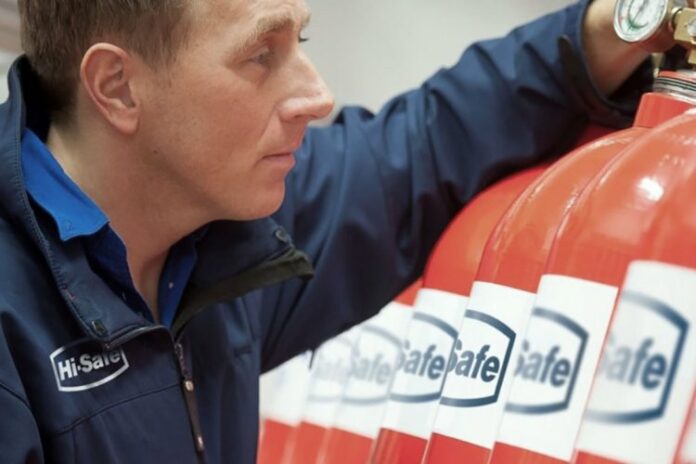
Hi-Safe will provide the Combat Support Ship (CSS) destined for the Royal Netherlands Navy (RNLN) with extinguishing foam and gas systems. Delivery will take place in October 2021; the systems will be commissioned in mid-2023.

Hi-Safe, based in Dordrecht, has extensive experience in advising, designing, supplying, installing and maintaining fire and explosion suppression systems. With approximately 40 employees, Hi-Safe provides an extensive package of solutions and services for various sectors such as data centres, the petrochemical, manufacturing & process and shipping industries. Hi-Safe also has innovative solutions for the energy transition.

In addition to Hi-Safe, InnoVfoam, a Dutch extinguishing foam specialist, is also involved in the design of the extinguishing foam system for the CSS. InnoVfoam, located in Oudkarspel, develops extinguishing foam systems for aviation and industry. The company has internal demonstration facilities and its own quality analysis laboratory.

Hi-Safe and InnoVfoam have also collaborated in the past on the construction of the Joint Support Ship Zr.Ms. Karel Doorman. The companies have supplied a number of fire extinguishing systems for this vessel, including a foam extinguishing system with electrically operated fire extinguishing monitors, adequate for use on the huge helicopter deck.

GTT obtaines two AiP from Bureau Veritas

0

The first Approval is related to the « NH3 Ready » classification of Mark III membrane tanks. This AiP recognizes that the Mark III system, without any major design changes, is suitable for the subsequent containment of ammonia in LNG as fuel applications.

Over the course of the AIP study, a compatibility assessment with ammonia has been carried out for the primary barrier of Mark III technology and a test campaign has been performed to determine the level of reinforcement of the containment system to take into account the higher density of ammonia compared to LNG.

The second Approval obtained from Bureau Veritas relates to the higher design pressure of “1 barg” in LNG as fuel applications, such as large container vessels. Thanks to an already existing alternative design of membrane tanks with specific dome reinforcement, this Approval gives ship-owners more flexibility in all their operations.

These Approvals demonstrate GTT’s ability to offer ship-owners a flexible and future-proof solution enabling them to secure their investment with regard to changes in the supply chain and environmental regulation.

Philippe Berterottière, Chairman and CEO of GTT, said:

“Being “NH3 Ready”, and the alternative “1 barg” design, once again underline the importance of our ability to continuously innovate, in order to provide our customers with even more reliable, performant, safe and flexible technologies. GTT targets bringing increased flexibility to ship-owners required to adapt as well and as quickly as possible to an ever changing fuel world. While we are convinced that LNG is the solution of choice for cleaning-up ship emissions even further, we have to take into consideration that ammonia, coming from green hydrogen, could bring additional reductions in emissions. In offering ammonia compatibility, we open the perspective to owners of a much longer period for ship amortization.”

Matthieu de Tugny, President, Bureau Veritas Marine & Offshore, added:

“Bureau Veritas is helping the industry prepare for the future fuel landscape. It is therefore exciting to support GTT in their continued journey of innovation. Our role is to help the industry understand – and address – both risk and opportunity as we look for energy transition solutions. It is a pleasure to be awarding this first approval for an ammonia membrane containment tank system, based on the tried and trusted Mark III technology, to GTT. Bureau Veritas has made significant investments in expertize to help manage the challenges of the energy transition. This expertize continues to be enhanced and we look forward to being able to share it with our stakeholders to find solutions to the challenges we face.”

New weekly Containerships service in the Port of Liverpool

0

The service, launched on the 29th January, provides a gateway for goods, helping them move more quickly from Europe to the UK and avoid potential congestion issues at the English Channel. 

With this service, the CMA CGM Group demonstrates once again its ability to quickly adapt and build tailor-made solutions that meet its customers’ needs and expectations.

The new connection from mainland Europe runs from Friday to Monday, enabling suppliers to deliver their produce into the UK by the start of the working week.

Port owner, Peel Ports, believe the route will help minimise the impact of external pressures faced by supply chains during the Covid-19 pandemic and changes which have come into effect following the recent Brexit deal agreement.

The route also provides a greener solution, helping to reduce road miles and emissions from long-haul overland transits.

David Huck, Managing Director, Peel Ports Group, said:

“The new service from Containerships is recognition of the need to ease congestion in southern ports closer to the EU border and ensure minimum lead times for their customers. The impact of Brexit and Covid-19 continue to highlight the vulnerability of supply chains to disruption and the need to improve supply chain resilience. We are now moving forward with our plans for 150 new skilled jobs on Merseyside off the back of further business growth.

Throughout 2021, future-proofing will be at the forefront of our business model, driving forward with planned investments in our people, processes and technology. With continued terminal investment and recruitment, as well as our position as the best-connected container terminal in the country, our aim is to increase the Port of Liverpool’s share of the container market by 15% to 20% by 2025.”

Rob Waterman, CEO of Containerships GmbH said:

“Our new DUNK route, connecting Liverpool and Bristol in the UK with Dunkirk in France, gives suppliers on the continent direct access to businesses in the North of the UK. The Port of Liverpool is ideally located, perfectly connected via road, rail, and sea to the rest of the UK, and allows us to bypass the congestion associated with road and rail crossings into the country.”

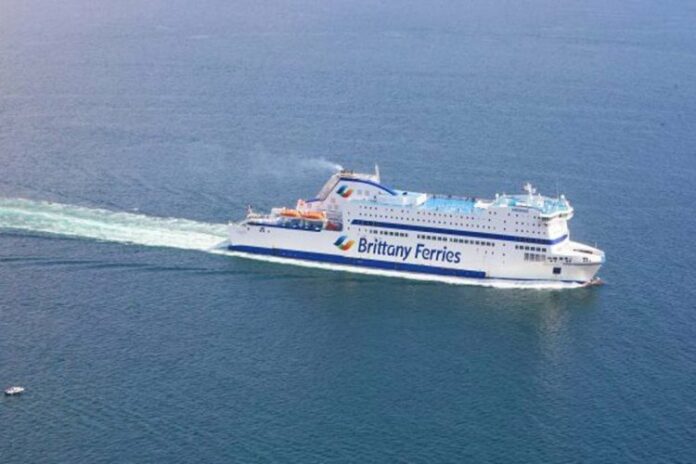
Brittany Ferries says open “sea lanes”, a vaccination-led approach to travel corridor policy

0

While the focus today is rightly on the UK, the transport and holiday company notes that vaccination rates are rising significantly in France and Spain too. These are the countries it serves with ferries departing Portsmouth, Poole and Plymouth. They are also the top two destinations for British holidaymakers.

By summer, the case for reciprocal travel corridors – in the case of Brittany Ferries “sea lanes” – to France and Spain should be persuasive. That’s because the majority of adults are likely to have been vaccinated and infection rates are expected to have continued their downward trend as a consequence.

In France, health minister Olivier Véran confirmed that four million people would be vaccinated by the end of February, rising to 43 million by the end of June. That means around 80 per cent of the adult population in Brittany Ferries’ most popular destination should be vaccinated well ahead of the summer holiday season.

Vaccination rates in Spain are currently higher than in France by proportion of the population and, back home, all over-50s are forecast to have received the vaccine by the end of May.

Christophe Mathieu Brittany Ferries CEO said:

“Vaccine roll-out is moving apace in the UK, thanks to the NHS, volunteers and support of the armed forces. While France and Spain are a little behind, the ramp-up is gaining significant momentum. We all believe that vaccines are the way out of this dreadful crisis. So by spring we think there will be a clear case for the adoption of vaccination-led travel corridors – or in our case sea lanes – that allow holidays to go ahead this summer and for hope to return.”

Vaccination projections are of course not set in stone. Brittany Ferries also acknowledges the Covid crisis is fluid, that protecting the health and wellbeing of the nation is key and that circumstances may change. But, as of today, vaccine roll-out should be an opportunity to present hope and optimism for a brighter summer.

Brittany Ferries says reciprocal travel corridors based on a combination of high vaccination rates and low infections, would offer a clear pathway towards a morale-boosting holiday, supporting the wellbeing of the nation. These measures could be supported by testing, and (potentially) vaccine passports.

Mathieu added:

“Now is the time for optimism, not a shutdown on the summer getaway. Lockdown Britons should look forward to holiday with growing confidence – and the time is ripe for a re-think on travel corridor policy. We should all be encouraged to book with companies that offer flexible travel, allowing easy amendments or refunds, in the event that the situation changes in the months ahead.”

PD Ports steps towards smart port status with new Rotterdam partnership

0

The first phase of the relationship will involve PD Ports leveraging technology used by the Port of Rotterdam to implement a Port Community System (PCS) at Teesport. The partnership will also explore greater data exchange between the two ports as one of the key transport routes between Europe and the UK.

Speaking to PTI, Jan-Willem Rikkerink, IT Director, and Paul Brooks, Harbour Master at PD Ports, noted that this would be another important step onto the ladder of becoming a smart port. 

Rikkerink explained:

‘Paul and I addressed a gap in our digital offering: we didn’t have a digital platform that would be useful for our port users, so we went out into the marketplace looking at what the options were.’

He added that a key part of the digital strategy is to use best of breed systems. PD Ports worked closely with its port community in addressing its needs when it comes to implementing a PCS. After conducting marketplace analysis the decision was to select the Port of Rotterdam’s platform which is transferable and usable by other ports.

Rikkerink said:

‘I think the one thing to emphasise is that this is part of a multi-phase project and we are only on phase one; we’re implementing some the fundamental building blocks.’

From the perspective of the Port of Rotterdam, René van der Plas, Director of Port of Rotterdam International, highlighted the already strong ties between the UK and the Netherlands. With the UK as one of the most important trade partners in Europe and approximately 40 million tonnes of cargo heading there from Rotterdam each year, Van der Plas said it makes sense to try and optimise the supply chains and the transportation between the two ports.

He added:

‘That’s where digitalisation is very important, because by making things digital you will enhance efficiency, transparency and you can blend things better.’

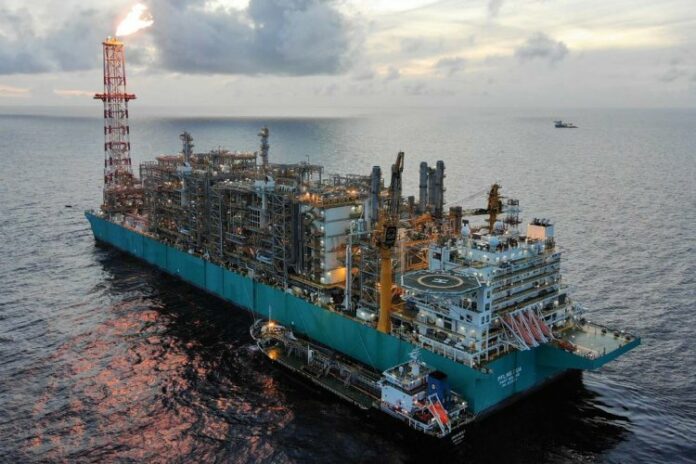
PETRONAS floating LNG DUA marks its commissioning with the production of first LNG

0

PETRONAS marked yet another significant milestone for its second Floating Liquefied Natural Gas (FLNG) facility, PFLNG DUA, with the achievement of its First Drop of LNG production recently. This historic event signifies the ability of PFLNG DUA topside facility to produce on spec LNG product, which further validates the technology concept of floating LNG solutions for deepwater gas fields.

The Company’s first deep water FLNG facility is currently located at the Rotan gas field, 140km off Kota Kinabalu, Sabah. In collaboration with its upstream Production Sharing Contract partner, PTT Exploration and Production, it has successfully completed the subsea commissioning phase and achieved its First Gas on 6 February 2021.

PETRONAS Vice President of LNG Asset Zakaria Kasah said:

“This achievement showcases our focused execution and continuous effort in pushing boundaries to deliver innovative and customer-centric solutions to our customers. Despite operating in a challenging environment which is exacerbated by the COVID-19 pandemic, we managed to commission this megastructure and achieve first LNG production in 7 days upon the first gas in. This is a record achievement, and a great milestone for PETRONAS and the LNG industry.”

PFLNG DUA is expected to deliver its first LNG cargo to customers by the middle of March 2021. Upon commercialisation, PETRONAS will become the first global energy company to own and operate two floating LNG facilities.

Together with PFLNG SATU, which first produced LNG from the Kanowit gas field offshore Sarawak in 2016 and was successfully relocated to Kebabangan field offshore Sabah in 2019, this game-changing solution allows for the processing of LNG to be done offshore hundreds of kilometres away from land. Its versatility enables PETRONAS to unlock remote and stranded gas fields that were previously uneconomical to explore.

PFLNG DUA is capable of reaching gas fields in water depths up to 1,500 metres and produces 1.5 million tonnes of LNG per year. It is part of PETRONAS’ portfolio of LNG facilities around the world, enabling the company to achieve its aspiration to power the world with cleaner energy, and at the same time, transform Sabah into a regional deep-water hub.

SAE installs tidal turbine and new equipment in the Goto Island chain in Japan

0

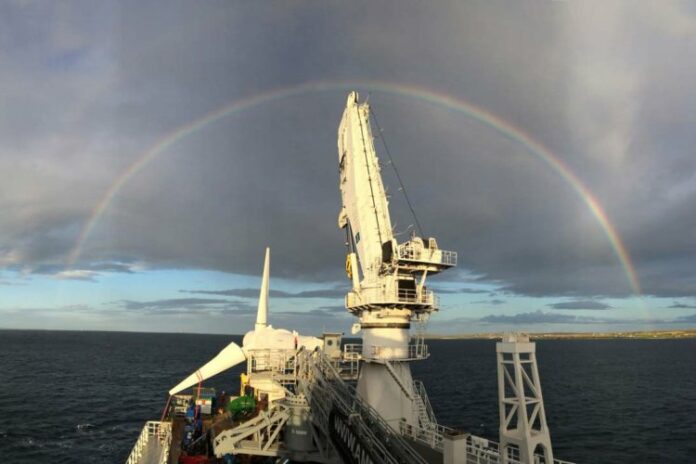
SAE has announced that its Scottish built tidal turbine and generation equipment have been successfully installed in the Goto Island chain in Japan. The tidal turbine clocked its first 10MWh of generation within the first ten days of operation and is now producing clean electricity in Japan.

The project included leasing tidal generation equipment and providing offshore construction services to Kyuden Mirai Energy (“KME”) for a pilot turbine located in the straits of Naru Island, within the southern Japanese Goto island chain. The SAE designed and manufactured AR500 tidal turbine was assembled at SAE’s operations and maintenance base at Nigg Energy Park in Scotland. The turbine was assembled and tested in nine weeks before shipping to Japan.

Offshore construction of the tidal generation equipment took just five days to complete, beginning with the laying of the cable, landing of the foundation structure and ballast to the sea floor, connection of the cable, and finally the installation of the turbine to the foundation.

Graham Reid, CEO of SAE, said:

“We are proud of our team, who worked efficiently and most of all safely during a worldwide pandemic, to bring tidal stream energy to Japan. Throughout the project we have also received great support from our strategic partner, KME, who was supported by a consortium of local and international stakeholders. I would also like to recognise the work of the Scottish Government who continue to support and champion the tidal industry and maximise the benefits to Scotland.

This is a huge milestone for the deployment of clean, renewable energy from tidal stream and we hope it will be the first of many tidal turbines installed in Japan.”

Scotland’s Energy Minister, Paul Wheelhouse, said:

“For over 10 years the Scottish Government has championed the development and deployment of marine energy. We have worked extensively to support the research, development, innovation and demonstration that has made Scotland a global leader in both tidal and wave technology, with several World firsts and initiatives having been progressed in Scotland’s waters.

I would like to congratulate Simec Atlantis Energy on achieving this significant milestone for the company and also for the workers at Nigg Energy Park who built the turbine which is now successfully generating clean, green electricity in Japan. Both the company and the team at Nigg have demonstrated the huge potential for Scotland’s marine energy and the key role it will play in decarbonising our energy both at home and – as demonstrated by this turbine’s successful deployment in Japan – across the World and I look forward to Scotland’s marine energy potential having a further shop window to the international community when delegates gather in Glasgow for COP26, later this year.”

NKT completes offshore repair operation of the BritNed interconnector

0

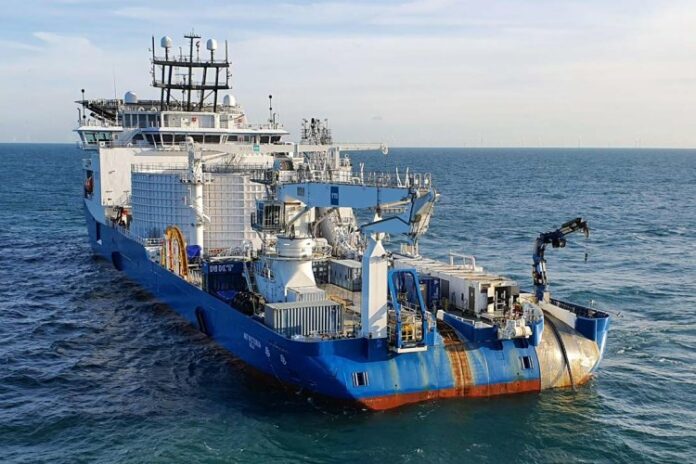
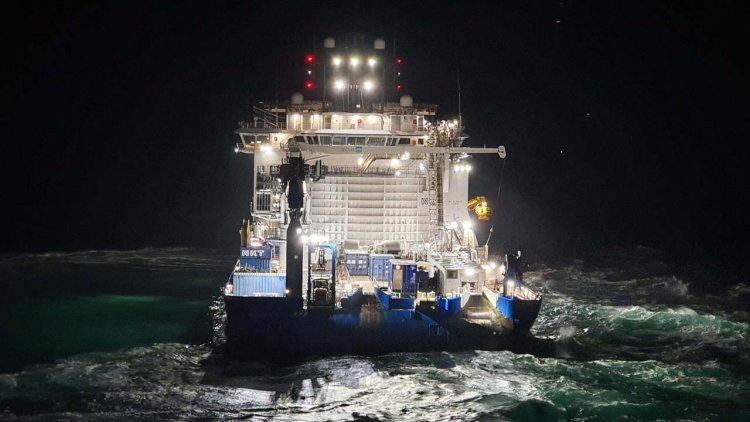
Speed was essential when the BritNed interconnector needed to be repaired, and NKT was awarded the turnkey contract to bring the 450 kV mass impregnated (MI) HVDC power cable back into operation.

After the initial notification, NKT quickly mobilized staff and equipment for localizing the fault, de-burial and cut and seal operation onboard a subcontracted vessel. The damaged power cable section was found at approximately 100 km off the Dutch coast at a water depth of 40-50 meters. The repair works were then executed successfully despite severe weather conditions by the skilled crews of cable-laying vessel NKT Victoria supported by DP2 Assister. The operation was executed within 29 days and the connector is now back in full service.  

For BritNed, the operation went according to plan.

Dennis Stufkens, Operations Director of BritNed, says:

“We are very pleased with the result of the repair operation and look back on a very good cooperation with NKT.”

NKT is one of the leading companies in the market providing both stand-alone repair operations and customized service packages ensuring the fastest mobilization time in the market. 

Axel Barnekow Widmark, Executive Vice President and Head of Service in NKT, says:

“The uptime of interconnecting power cable systems is central to the transition to renewable energy in Europe, and we are proud to have demonstrated once again our repair preparedness by quickly mobilizing our skilled repair team and equipment. The operational success was ensured by an efficient collaboration of all parties involved, minimizing the outage time and bringing BritNed back into operation.”

The BritNed interconnector is part of the investments made by the national grid operators National Grid (UK) and TenneT (Germany/Netherlands) to ensure security and diversity of energy supply needed to drive the transition to renewable energy.