-4.8 C
New York
Home Blog Page 681

SOHAR and Hutchison Ports to jointly conduct a study for SOHAR Port expansion

0

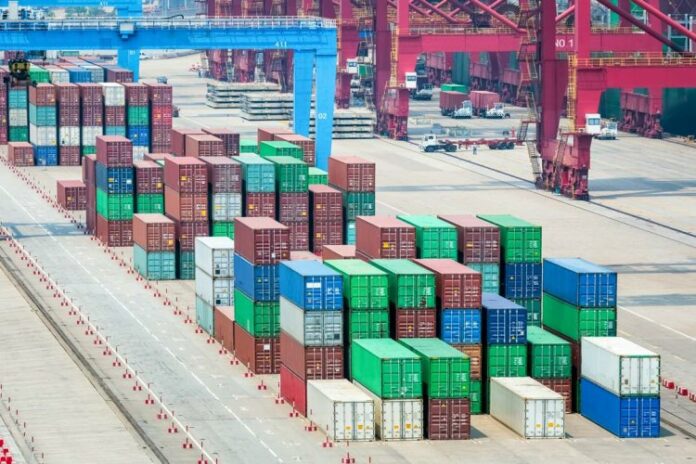
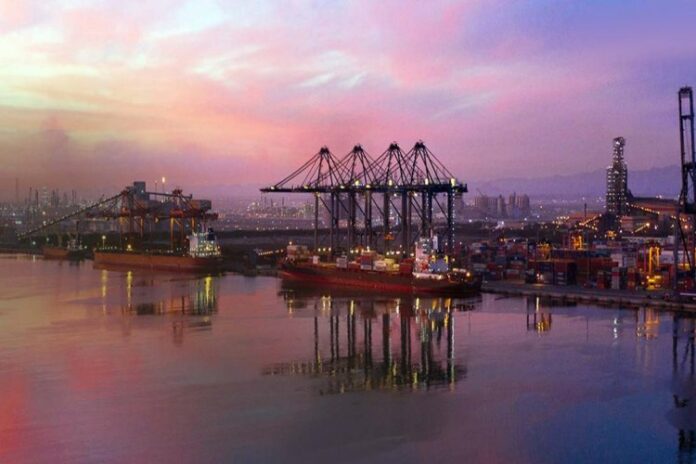
In line with implementing the Sultanate’s aspirations to increase revenue from the logistic sector, in accordance with the objectives of ‘Oman Vision 2040’, SOHAR Port and Freezone signed a Development Agreement with Hutchison Ports Sohar.

The agreement will see a joint Feasibility Study conducted for the expansion of SOHAR Port alongside the addition of a new container terminal capable of receiving mega-vessels.

The feasibility study will commence this year and will assess the social, environmental, logistical, In-Country Value and economic impacts of any future expansion. Moreover, it will provide a clear roadmap for future expansion to meet the needs of the growing local and regional economy. Apart from enhancing the competitiveness of SOHAR Port, at the regional and global levels, especially in containers and cargo handling, it will further contribute towards the generation of more local job opportunities.

SOHAR Port is currently witnessing a growing occupancy rate and efforts should be enhanced to increase its capacity, to enable it to keep pace with future development. The addition of new areas will increase the attractiveness of the Port and comprise the necessary infrastructure to attract important international shipping lines. The successful implementation of the project is set to bring in sustainable economic and social benefits for the Sultanate as a whole, and in particular the Governorate of North Al Batinah.

Hutchison Ports to invest and operate Saudi facility

0

Hong Kong’s Hutchison Ports has signed an agreement that will see the port operator invest and operate JCPDI Port, Jazan City, capital of the Jazan region of south west Saudi Arabia, for the Jazan City for Primary and Downstream Industries.

JCPDI Port is located on China’s Belt and Road Initiative and is the Kingdom’s closest port to East Asia. It is considered a major gateway to the Kingdom’s southern region, which has an estimated population of 4.5m people. The terminals are expected to support economic growth in the entire region and to serve eastern and southern Africa.

To be developed over two phases, the multipurpose port will consist of a container terminal and a general cargo and dry bulk terminal. Each will be equipped with the latest in handling equipment and have quayside draft of 16.5m. Commercial operations of Phase I will launch this year starting with the general cargo and dry bulk terminal. With a berth of 540m, this facility will serve the immediate needs of the growing list of JCPDI tenants. Subsequently , Phase I of the container terminal is expected to start commercial operations in early 2022 and offer 730m  of berth.

Group managing director of Hutchison Ports, Eric Ip commented:

“We have a presence of 20 years in Saudi Arabia, and it is a very important market for Hutchison Ports. Marking a new chapter for us, JCPDI Port is located at the crossroads of the one of the busiest east-west trade lanes and the rapidly growing north-south trade lanes. We look forward to working closely with the Royal Commission to help JCPDI reach its full potential and contribute to the Saudi Vision 2030.”

Also commenting at the ceremony, His Excellency Eng. Abdullah bin Ibrahim Al-Saadan, Chairman of the Royal Commission for Jubail and Yanbu said:

“With the support of the government of the Custodian of the Two Holy Mosques, the JCPDI Port was established to provide modern logistics services in the region to enhance the Kingdom’s presence in this field and support the goals of the Kingdom’s Vision 2030, which aspires the Kingdom to become a global logistics platform. Today, we are signing an investment and operation agreement with Hutchison Ports, one of the world’s leading port operators. We are seeking to provide the best services and to ensure the highest levels of quality and efficiency.”

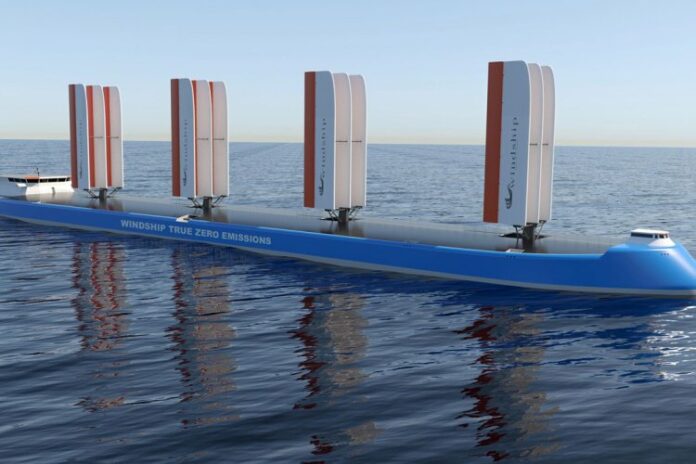
Windship Technology unveils first True Zero Emission ship design

0

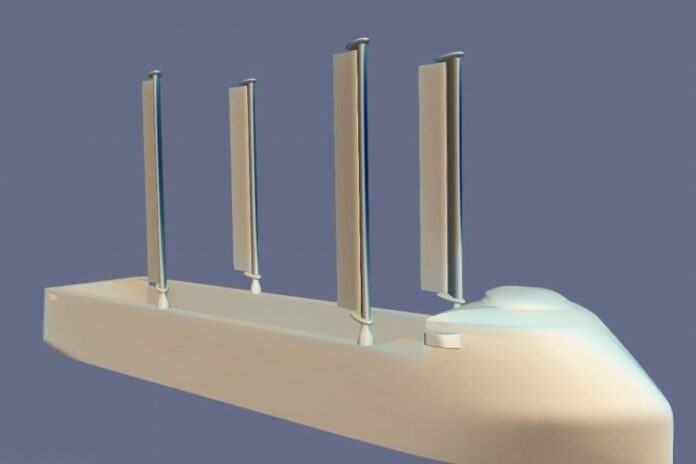
Technical Director Simon Rogers and his design team developed and tested at the renowned Wolfson Unit in Southampton the company’s patented high performance, highly efficient triple-wing rig.

The technical team further developed a new diesel electric ship drive system that eliminates CO2, NOX, SOX and particulate matter to True Zero whilst also incorporating large solar arrays, carbon capture, optimised hull shapes and specialised weather routing software into the overall design package.

The eye-catching triple-wing rigs produce a driving force several multiples greater than single masted solutions of the same height currently being promoted in the industry. The 48m Windship Technology rig is stowable on deck through a unique, innovative stowage solution to aid port navigation and cargo handling. Its composite structure is borne out of technology and design from the wind turbine industry, ensuring reliability and longevity of greater than 25 years.

Professor Philip Wilson, formerly Professor of Ship Dynamics at the Ship Science Department at the University of Southampton is convinced by Windship Technology’s solution saying:

“The holistic approach demonstrated in this solution whereby wind power, solar power and the reduction of harmful exhaust emissions to effectively zero, are all brought together, means that at last there is a design solution that the International Maritime Organisation can champion to achieve its requirements for ‘at least’ zero carbon shipping.”

Now the company announces a significant partnership investment with the international registrar and classification society DNV who will be conducting both an outside-in and inside-out verification to fully assess Windship Technology’s whole-ship design with a view to classifying emission reductions, safety and operability.

Per Marius Berrefjord (Senior Vice President) of DNV commented:

“We are delighted to be working with such experienced professionals at Windship Technology in a project which aims to help transform the entire shipping industry to True Zero. We will work closely with the project team in a fully transparent manner as we now initiate the work to establish a simulation model that will help us verify the GHG emission reduction capability of the technology. We are also preparing for a HAZID that shall verify the safety and operability of ships with Windship Technology installed. These activities will be followed by further verification activities as the project moves forward. Windship is supplying information in a fully transparent manner, and DNV will ensure a thorough verification process.”

Against a backdrop of new build ship orders down over 50% in 2020, and regulators such as the International Maritime Organisation backed by the United Nations demanding environmental and sustainable reform from the industry, Windship Technology is offering a ‘Tesla of the Seas’ solution for shipping. The Windship Technology True Zero Emission solution is presently the only viable and most economical zero emission project for ocean-going bulk carrier and oil tanker ships.

As an investment case, the solution appeals to asset owners looking to secure their investments over the lifespan of a ship’s working life and is attracting significant investor interest in the financial markets. Windship Technology is now looking to cement commercial partnerships with major ship owners, operators and investors with the vision to transform the shipping industry and address the growing emissions issue that can no longer be ignored.

Speaking about the new cooperation with DNV, Lars Carlsson, Director of Windship Technology commented:

“Working with DNV is a major step towards proving true zero emission status. The industry cannot sit back any longer. The clock is ticking and regulation will force a new approach for an industry that is traditionally hesitant to change. Shipping is not fit for purpose in the future. Shipping and oil companies are the only major industries still increasing their emissions and must change and think differently if it is to have any hope of reaching the emissions targets set out in law.”

Elbe fairway adjustment: Shipping profits from further additional width

0

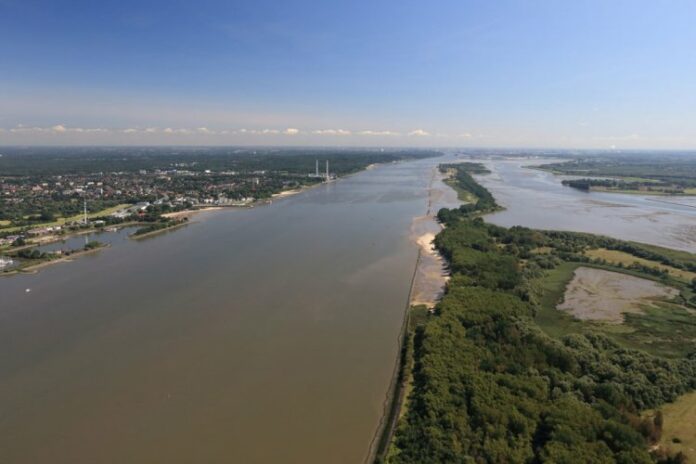
The Elbe fairway has been widened to 385 metres along the eight kilometres between Wedel and Blankenese. From today, seagoing ships with a combined width of 104 metres – instead of the former 90 metres – will safely be able to pass each other.
 
Prof. Dr.-Ing. Hans-Heinrich Witte, President of the Federal Shipping and Waterways Administration, commented:

“The widening of the passing box will make the Elbe still more attractive for international shipping. Additional ship width means time gained and easier planning. This will ensure simpler and more effective traffic flow.”

Senator Michael Westhagemann:

“With completion of the passing box, an essential initial stage of fairway adjustment has been achieved. Services by mega-containerships can now be handled distinctly more rapidly and reliably, and this represents a real gain for shipping.”

The passing box will enable the approach to the Port of Hamburg to be less dependent on tidal ebb and flow. Pending the final completion of fairway adjustment on the Lower and Outer Elbe, some outstanding works connected with the deepening remain to be performed. These include removal of obstacles, profiling, soundings, etc, and nature conservation measures.
 

Awake.AI joins forces with ESA to set up a marketplace solution for maritime logistics

0

The Finnish start-up Awake.AI is accelerating its platform development by introducing a ‘marketplace’ solution to orchestrate complex shipping and port transactions. In November 2020, the European Space Agency (ESA) awarded Awake.AI funding to conduct the project Commander which will develop and pilot the Awake platform and introduce ‘Awake marketplace’.

Awake.AI’s platform is currently used for smart ports and shipping operations by multiple actors such as port authorities and operators, cargo owners and ship operators around the globe. Awake marketplace is the new solution built on top of the existing platform offering new types of communications, ETA improvement, real-time asset tracking and identification and other advanced services to all actors. 

With the help of networked organizations and SaaS (Software as a Service) workflow tools, Awake marketplace will facilitate the organization of complex shipping and port services.

Simo Salminen, Co-Founder and Vice President of Products, Awake.AI, explains:

“We will offer a globally scalable marketplace for smart port and smart shipping services, which is built on leveraging the open APIs provided by the Awake.AI platform. Awake marketplace will enable any third parties to build their own solutions on top of the Awake Platform. It will be a full service one-stop-shop for all smart port services, including service purchases raised by ships when making port calls, trucking and even operational services.”

Karno Tenovuo, Co-founder and CEO of Awake.AI, envisions:

“This project demonstrates, among other industry-leading projects, that Awake.AI is the thought leader of AI-based solutions in maritime, ports and related logistics. We are bringing new revolutions to the market and connecting different logistics actors through a market network type ecosystem, where many participants work in a network-like setup to perform complex transactions like port calls.”

Project Commander was awarded funding by ESA Space Solutions which supports European companies to develop sustainable commercial space-based services, by providing funding opportunities and expert support. 

Dr. Rita Rinaldo, Head of the Partner-led and Thematic Initiatives Section at ESA, says:

“ESA is delighted to support AWAKE AI. with this project which is an excellent example of how Space Solutions uses data from satellites to transform businesses on Earth. ESA has a long history of supporting companies delivering maritime applications relying on space assets and data. Awake marketplace is a clear example of the unique value space can play in the digital transformation of port systems and of the shipping sector.”

DNV GL awards AYRO AiP for Oceanwings wind assist system

0

DNV GL has awarded AYRO an Approval in Principle (AiP*) for its Oceanwings 3.6.3 wind assisted propulsion system for ships. 

As incoming maritime regulations are ramping up the pressure to improve sustainability and reduce emissions, maritime stakeholders are looking to reduce their greenhouse gas emissions and improve their EEDI or EEXI efficiency index, as part of efforts to comply with the IMO 2030 GHG strategy. The Oceanwings wind propulsion system is a 363 square meter 2-elements wingsail applicable for both newbuildings and in the retrofit of existing ships.

Ludovic Gérard, CEO of AYRO, says:

“This AIP award is the result of the work of the entire technical team over the past few months. The Oceanwings® 3.6.3 are suitable for most types of cargo vessels. We continue to receive a lot of enquiries and numerous requests for feasibility studies from shipowners and charterers worldwide, for both retrofits and newbuilding projects. Our mission and vision is to support them in designing their vessels as well as fitting and maintaining the Oceanwings® in order to help them meet the challenges of competitiveness and GHG emission reductions.”

Following 10 years of research, a first prototype in 2017, and the industrial demonstrator Energy Observer in 2019, AYRO continues the development and industrial process of their system with the AiP from DNV GL. After a review of the main plans and documents of the Oceanwings 3.6.3 system against the relevant DNV GL rules for the classification of ships, DNV GL was able to issue an AiP statement confirming that no significant obstacles exist to prevent the concept from being realized.

Hasso Hoffmeister, Senior Principle Engineer at DNV GL – Maritime, said:

“We are very pleased to be able to issue this AiP to AYRO for its Oceanwings 3.6.3 system. National and international regulations, in addition to governments, customers and the public are all increasing pressure on the industry to decarbonize. An AiP can help build confidence in shipowners and operators by demonstrating that new technologies can not only help them improve sustainability, but follow well established, trusted and independent standards.”

DNV GL has also recently developed a standard for the certification of wind assisted propulsion systems in response to enquiries for the independent assessment of those systems.

*An Approval in Principle is an independent assessment of a concept within an agreed framework, confirming that the design is feasible and no significant obstacles exist to prevent the concept from being realized. The AIP is typically carried out at an early stage of a project to confirm its feasibility towards the project team itself, company management, external investors or future regulators.

Port of Rotterdam Authority and municipality united on responding to sea-level rise in the port

0

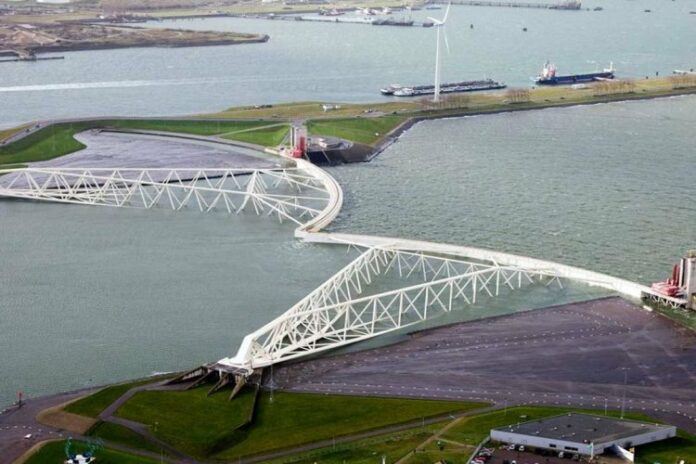
These agreements stem partly from the Port Authority and the municipality’s involvement in the Rijnmond-Drechtsteden Delta Programme. The port area falls within the boundaries of the Municipality of Rotterdam, and the Port Authority (owned by both the state and the municipality) is responsible for its development and management.

The Port Authority aims to counter the effects of climate change while ensuring that the port area continues to make a significant contribution to prosperity and employment in the Netherlands.

The area outside the dykes is the largest of its kind in the country. In areas outside the dykes, residents, businesses and users are themselves responsible for introducing measures to limit the effects caused by any flooding. Over the coming period, the Port Authority will be contacting the business community concerned to provide it with information and draw up agreements on measures designed to ensure the quality of water management in the port continues far into the future.

The port areas are currently safe from high water levels. They were constructed three to six metres above the New Amsterdam Water Level (NAP) and are partially protected by storm surge barriers. In order to remain a flood-resistant port and maintain a healthy business climate, now and in the long term, the Port Authority has launched the ‘flood management adaptation strategy’ programme. The Port Authority is working on this in partnership with the Municipality of Rotterdam, utility and other companies, and Deltalinqs. One of the goals is to raise awareness among businesses of the potential risks that climate change entails. The final reports will describe changes and measures (adaptation strategy) that will be introduced in various port areas – such as Europoort and Botlek – aimed at preventing or limiting the consequences of a flooding event, and ensure continued protection of the area into the future. The integrated strategy for the entire port and industrial area will be completed later this year.

Over the coming decades, the effects of climate change, and in particular the rise in sea levels, mean the risk of flooding will rise in the Port of Rotterdam and its surrounding areas. Current climate scenarios predict a sea level rise of between 35 and 110 cm from 1990 until after 2100. The great economic significance and the presence of vital and vulnerable functions in parts of the port area mean that a timely response to the consequences of this is desirable.

It will allow the port to anticipate the rise in sea level and incorporate it into further development. Consequently, the port will be able to make responsible investments to maintain its flood-resistant status.

Biologists devise new way to assess carbon in the ocean

0

The study, published in the Proceedings of the National Academy of Sciences, provides a universal accounting method to measure how carbon-based matter accumulates and cycles in the ocean. 

While competing theories have often been debated, the new computational framework reconciles the differences and explains how oceans regulate organic carbon across time.

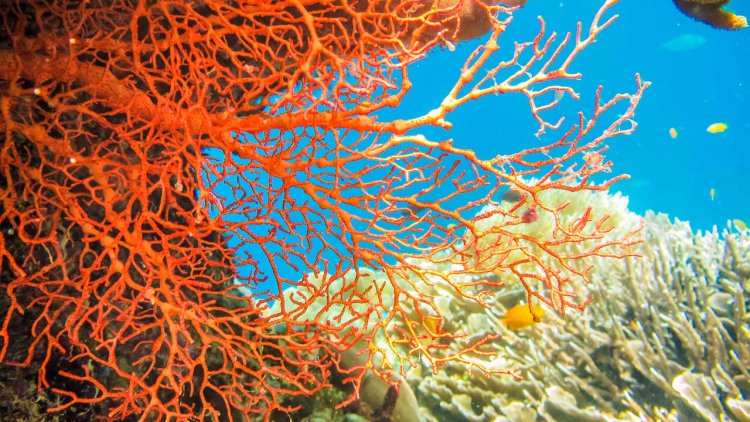
Surprisingly, most of the action involving carbon occurs not in the sky but underfoot and undersea. The Earth’s plants, oceans and mud store five times more carbon than the atmosphere. It accumulates in trees and soil, algae and sediment, microorganisms and seawater.

Naomi Levine, senior author of the study and assistant professor in the biological sciences department at the USC Dornsife College of Letters, Arts and Sciences, said:

“The ocean is a huge carbon reservoir with the potential to mitigate or enhance global warming. Carbon cycling is critical for understanding global climate because it sets the temperature, which in turn sets climate and weather patterns. By predicting how carbon cycling and storage works, we can better understand how climate will change in the future.”

Processes governing how organic matter—decaying plant and animal matter in the environment akin to the material gardeners add to soil—accumulates are critical to the Earth’s carbon cycle. However, scientists don’t have good tools to predict when and how organic matter piles up. That’s a problem because a better reconciling of organic carbon can inform computer models that forecast global warming and support public policy.
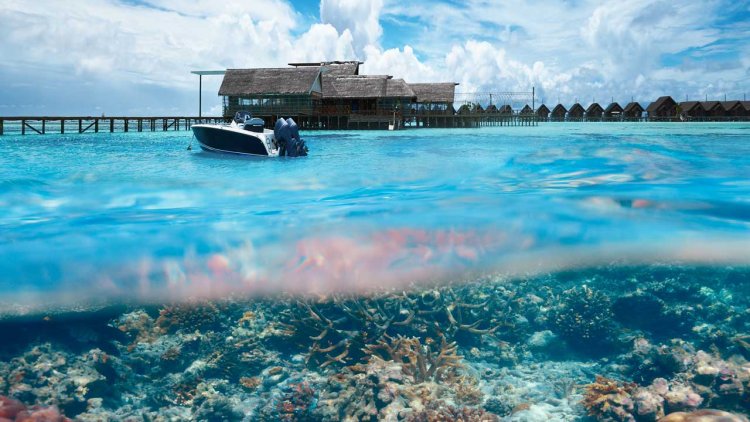
In recent years, scientists have offered three competing theories to explain how organic matter accumulates, and each has its limitations. For example, one idea is some organic matter is intrinsically persistent, similar to an orange peel. Sometimes carbon is too diluted so microbes can’t locate and eat it, as if they’re trying to find a single yellow jellybean in a jar full of white ones. And sometimes, the right microbe isn’t in the right place at the right time to intercept organic matter due to environmental conditions.

While each theory explains some observations, the USC study shows how this new framework can provide a much more comprehensive picture and explain the ecological dynamics important for organic matter accumulation in the ocean. The solution has wide utility.

For example, it can help interpret data from any condition in the ocean. When linked into a full ecosystem model, the framework accounts for diverse types of microbes, water temperature, nutrients, reproduction rates, sunlight and heat, ocean depth and more. Through its ability to represent diverse environmental conditions worldwide, the model can predict how organic carbon will accumulate in various complex scenarios—a powerful tool at a time when oceans are warming and the Earth is rapidly changing.

Emily Zakem, a study co-author and postdoctoral scholar at USC Dornsife, said:

“Predicting why organic carbon accumulates has been an unsolved challenge. We show that the accumulation of carbon can be predicted using this computational framework.”

The tool can also potentially be used to model past ocean conditions as a predictor of what may be in store for the Earth as the planet warms largely due to manmade greenhouse gas emissions.
Specifically, the model is capable of looking at how marine microbes can flip the world’s carbon balance. The tool can show how microbes process organic matter in the water column throughout a given year, as well as at millennial timescales. Using that feature, the model confirms—as has been previously predicted—that microbes will consume more organic matter and rerelease it as carbon dioxide as the ocean warms, which ultimately will increase atmospheric carbon concentrations and increase warming. Moreover, the study says this phenomenon can occur rapidly, in a non-linear way, once a threshold is reached—a possible explanation for some of the whipsaw climate extremes that occurred in Earth’s distant past.

Levine said:

“This suggests that changes in climate, such as warming, may result in large changes in organic carbon stores and that we can now generate hypotheses as to when this might occur.”

Finally, the research paper says the new tool can model how carbon moves through soil and sediment in the terrestrial environment, too, though those applications were not part of the study.

New DNV GL white paper looks to close looming safety gap

0

The white paper identifies a looming “safety gap” between shipping’s existing approach to safety risks and its ambitions for greater digitalisation and the adoption of alternative fuels.

The maritime industry is undergoing a rapid transition to a decarbonised, digitally smart future. However, the new technologies and fuels that the industry is banking on to meet the challenges of the next decades are also creating a new risk landscape and demanding a new approach to safety. If shipping is able to adapt and implement the new safety paradigm identified in the white paper – the end result could be a maritime industry that is not only more efficient and sustainable – but safer as well.

Knut Ørbeck-Nilssen, CEO of DNV GL – Maritime, said:

“To close the safety gap, we will need a collective, ongoing effort. Suppliers, owners, charterers, and yards can work together to ensure we treat vessels holistically, over the entire lifecycle, rather than a collection of separate sub-systems. We need to recognize how any single decision, for example the choice of fuel or introduction of a new digital system, impacts upon other ship systems, the vessel as a whole, and even the fleet. But, if we can all work together, step out of our silos, we can develop the procedures and competencies needed to meet these challenges and enable a culture of continuous improvement.”

The white paper focuses on the twin trends shaping the industry – digitalization and decarbonization – and the different safety-related risks associated with these trends. Digitalization increases system complexity and introduces new ways of operation and collaboration. While decarbonization involves a significant increase in the use of alternative fuels and operations. To deal with these, the white paper focuses heavily on the interaction between technology, organizations, and the greatest asset of the maritime industry: Its people.

Fenna van de Merwe, Principal Consultant at DNV GL – Maritime, and the paper’s lead author, said:

“If we want to ensure our industry transforms safely, we must embrace the idea that whenever we are developing new technologies, systems and processes, the end user must be central to that development process. Our aim should be that throughout the industry we have a shared focus that in both design and operation we are supporting people in their work and decision making. This is essential to understanding these new risks and to building the safety barriers that will enable us to realise the potential of these new technologies and processes safely.”

The white paper concludes that every maritime organization can play a part in facilitating safe and efficient performance, by balancing technology and personnel, utilizing human-centric design, and ensuring the overall wellbeing of their people. Because ultimately, it is the people in these organisations who will lead the industry forward as it transforms to a more digital and decarbonized future.

Repsol Sinopec, TechnipFMC, Petrofac in pact to boost recovery in North Sea

0

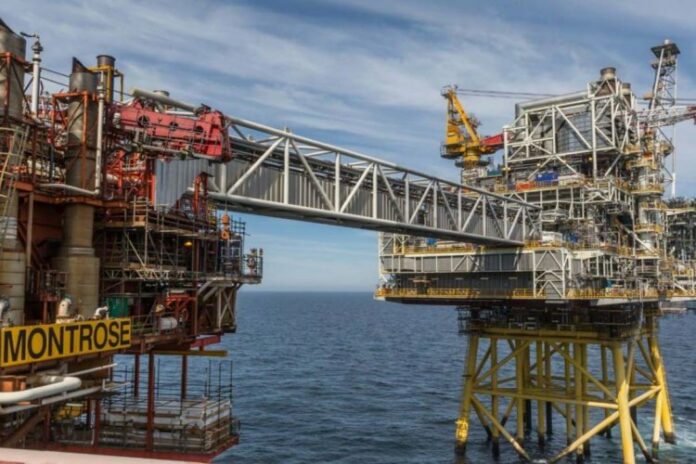
The partnership will work together to offer the owners of oil and gas discoveries near Repsol Sinopec’s existing North Sea infrastructure hubs an integrated, technically robust and commercially flexible solution to meet their near to mid-term development objectives.

Under the terms of the partnership, Petrofac will provide all services associated with topsides engineering and operations support, whilst TechnipFMC will deploy its iFEED® front-end engineering and design solution and its integrated subsea business model, iEPCI™. Repsol Sinopec will provide access to its facilities under the industry-led infrastructure code of practice. Together, the group offers decades of subsea and topsides engineering, project management and operating expertise to create an all-encompassing offering, from the well head to export route.

Nick Shorten, Managing Director of Petrofac’s Engineering and Production Services, West business said:

“With more than three billion barrels locked in marginal fields across the UKCS, small pools represent a big opportunity. Industry level collaborations such as this, will drive the standardisation required to reduce the time and cost of tie-back developments. Petrofac is thrilled to combine the asset knowledge gained as Repsol Sinopec’s operations and maintenance partner, with our engineering and project management expertise in support of this exciting collaboration.”

Jose Luis Muñoz, CEO Repsol Sinopec said:

“As an industry we must get better at recognising the benefits of utilising existing North Sea infrastructure to maximise the economic recovery of the basin, minimise carbon emissions and transition to a lower carbon economy. This industry collaboration brings together three well respected, experienced companies that have the resources, drive and ambition to support the continued success of the industry for many years to come.”

Jonathan Landes, President Subsea, TechnipFMC, said:

“We are delighted to play a part in helping to maximise recovery of oil and gas from the UK Continental Shelf. Leveraging our integrated subsea business models, iFEED® and iEPCI™, we are ideally placed to support and optimize future development opportunities from early concept to first production and beyond while minimising the carbon footprint. With a shared commitment to excellence in Health, Safety, Environmental and Quality standards, we look forward to working with Repsol Sinopec to deliver a culture of efficiency, standardisation and sharing of best practice as we adopt this unique and important alliance in the UK.”