-6.1 C
New York
Home Blog Page 680

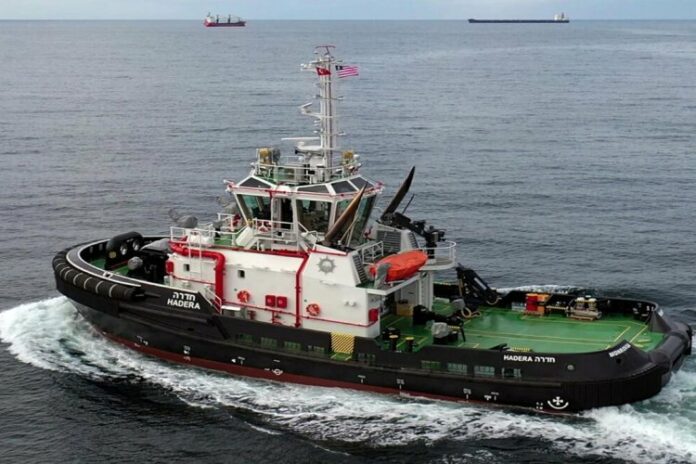
RAmparts 3200-SD ASD tug Hadera delivered to Hadera Port

0

Robert Allan Ltd. has announced that Hadera, a RAmparts 3200-SD ASD tug was successfully delivered to The National Coal Supply Corporation of Israel. 

The newly developed 32 metre ASD tug with escort notation was constructed at Med Marine’s Eregli shipyard and is the third Robert Allan Ltd. designed tug to operate in this Middle Eastern country.

Hadera has a large deadweight capacity, a shallow full load navigational draft of 4.81 metres, and high standard noise control. She is a very quiet boat, especially in the wheelhouse and crew cabins located in the deckhouse and on the lower accommodation deck. The name Hadera is also the name of the port where the vessel will operate.

Key particulars of the Hadera are:

  • Length, overall (excluding fenders): 31.50 m
  • Beam, moulded: 12.60 m
  • Depth, least moulded: 5.40 m
  • Maximum draft (navigational): 5.00 m
  • Gross Tonnage: 494

Main tank capacities at 100% are:

  • Fuel oil: 181.9 m3
  • Potable water: 37.4 m3
  • Ballast: 20.2 m3
  • Fire-fighting foam: 7.2 m3

Propulsion machinery consists of:

  • 2 x Caterpillar 3516C main diesels
  • 2 x Schottel Z-drives

The multi-purpose tug is fully equipped with deck machinery including an escort winch from THR, tow hook, tow pin, stern roller and deck crane.

Ship-handling fenders at the bow consist of an upper row of cylindrical fenders and a lower course of W-fender. Sheer fendering consists of “D” rubbers and “W” block type fendering at the stern.

The accommodations have been outfitted to a high standard for a crew of eight. The deckhouse contains an entrance lobby, the galley, mess, two officer cabins with ensuite WC, and a public WC. The lower deck contains three double cabins with ensuite WC. There are also a provision store and laundry in the lower deck. The wheelhouse is designed with a single split control station which provides maximum all-round visibility with exceptional visibility to the bow and side fendering, as well as operation on the aft deck. The engine room features an acoustically isolated switchboard room.

Records taken during sea trial show none of the crew cabins have noise level higher than 54 dB(A). This means the extremely quiet boat will provide comfortable working and living environment for its crew.

Trial results were as follows:

  • Bollard pull, ahead: 77.5 t
  • Free running speed, ahead: 14 knots

CORSICA Linea converts several systems to SERTICA

0

CORSICA Linea continues to grow their business by adding new vessels to the fleet. To ensure high data quality and increased performance, they have chosen to simplify and align the technical management with one software.

Jean-David Paoli, Project Manager at CORSICA Linea tells:

“We take fleet management to the next level having a modern tool for both maintenance and procurement. Everything is centralized, which saves us a lot of time and work. It also makes it easier for us to add new vessels to our fleet in the future.”

Jens Ipsen, Project Manager at Logimatic explains:

“By converting all systems to SERTICA, we have simplified and aligned fleet management with structured maintenance data. With a standardized component structure, CORSICA Linea can manage maintenance jobs centrally.”

Pierre-Laurent Richaud, Project Manager at CORSICA Linea tells:

“The beauty of SERTICA is that our entire organization can track and trace maintenance and procurement in the same system. We have had to change some internal processes to fit the system, but it actually turns out to be an advantage for us, because it increases consistency and alignment across the vessels.”

During the implementation, CORSICA Linea has prioritized to discuss the processes and system with the crew, and they have already received very positive feedback. Jean-David Paoli tells:

“The crew manage to use the system even before they complete the training. I believe this is a clear sign of a user-friendly and intuitive system.”

LOC launch digital solution enhancing port pilotage safety

0

The service will be based on the development of a digitised training library for port-based ship pilots, creating a structure for the retention of pilotage experience, and reducing risk of marine operations with 360-degree aerial views for pilot operations using drone technology.

In addition to reducing risk, the benefits provided by the platform include:

  • Knowledge retention and peer learning – capturing and retaining experienced piloting skills for the benefit of training the next generation of pilots
  • Improved vision of restricted manoeuvring areas, providing better ‘situational awareness’
  • Demonstrate ‘safe port’ marine operations and management practice
  • Enhanced tracking of CBD from junior pilot upwards, maintaining of skills and on-going competence assessments
  • Secure, simple and maintained data storage

This new solution has been developed in response to an increase in the risk profile of marine operations in ports, with larger ships required to manoeuvre in increasingly relatively small, ports & port basins, and as logistical schedules become tighter.

In developing this solution, LOC combined its digital capabilities with its long-term expertise across marine assurance and risk, and in-house practical experience in port management, pilotage operations and tug handling/operations, to create a fit-for-purpose solution.

Clive Sheard, Ports & Shipyards Consultant, LOC Australia, commented:

“The development of this service is in response to the industry recognising the increased risk profile of marine operations in ports. As a Group, we are ideally placed to be able to find solutions to these problems.

Our experience positions us to provide independent analysis and design for the capture of video libraries tailored to given ports, and unique port risk profiles; and create platforms which can be endorsed within port safety management systems.

In Australia, drone services, and digital recording of drone deployments, are already being rolled out across several port operators and pilotage services and, as such, the value of having a ‘drone’ perspective is already recognised.”

P&O Cruises names second LNG-powered Excel class ship

0

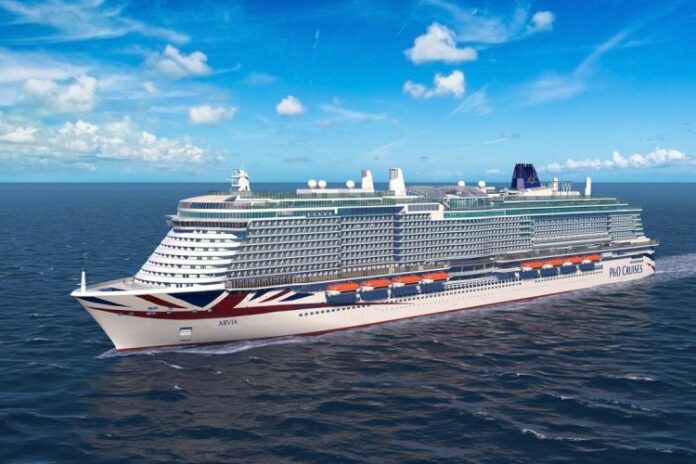
P&O Cruises second LNG-powered Excel class ship, which will join the fleet in December 2022, is to be named Arvia.

Arvia, meaning “from the seashore” will be the sister ship to Iona and holidays on Arvia will go on sale next month. 

P&O Cruises president Paul Ludlow said:

“Arvia will join Iona as an innovative and future-focused ship offering an outstanding, varied and contemporary holiday. Arvia has been designed to travel to the sun year-round and to maximise views of the ocean and the seashore from everywhere on board, so it seemed a very fitting name and one which will reflect the experience for guests on board.

“The seashore is known for its relaxing properties and tranquillity and a holiday on Arvia will, indeed, celebrate this and have relaxation at its heart. The rejuvenating and restorative qualities of a walk on the beach and invigorating sea air will be reflected in the experiences both on board and on shore as well as the vast space on board which has enabled us to include a number of new and extraordinary features.”

The name of the 184,700 tonnes ship was unveiled through a video reveal made up of outlining the letters in the name in various different locations, all relating to the beach and the seashore.

One of the largest offshore Dutch wind farms reaches full commissioning

0

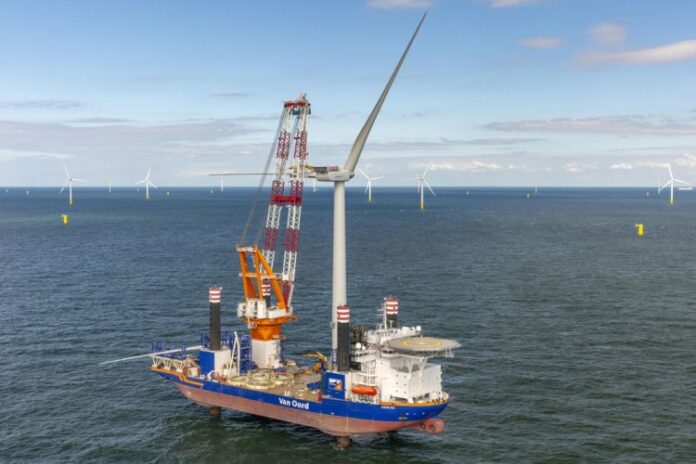
Located 22 kilometres off the Dutch coast and the Province of Zeeland, the wind farm is capable of powering 825,000 Dutch households with renewable electricity. 

The construction of the 731.5 MW wind farm, with in total 77 MW turbines was completed on-time, with official commissioning on 6 January 2021. As the Balance of Plant contractor for the Borssele III & IV offshore wind farm, Van Oord was responsible for the design, engineering, procurement, construction and installation of the foundations and inter array cables together with the installation of 77 turbines of which the last was installed in November 2020. Cable installation vessel Nexus and trencher Dig-It completed the installation and burial of more than 170 kilometres of inter array cables.

Arnoud Kuis, Managing Director Van Oord Offshore Wind, says:

“This is an important milestone for the transition to renewable energy in the Netherlands. We are proud that we are building our fifth offshore wind farm in the Netherlands and by doing so making a significant contribution to the Dutch transition to a renewable energy system. The Blauwwind project team, including all the Van Oord colleagues, have done a fantastic job by showing agility.”

Roeland Borsboom, Project Director for Blauwwind, says:

“This is a great achievement by everybody involved. In difficult circumstances, partly due to the COVID-19 pandemic, we were able to construct the wind farm at a swift pace, without noteworthy problems or incidents. The five Blauwwind consortium partners, the project organisation and the (sub)contractors collaborated incredibly well.”

The Blauwwind consortium consisting of Partners Group, Shell, Diamond Generating Europe, Van Oord and Eneco, won the tender at the Dutch Ministry of Economic Affairs in June 2016. The wind farm is part of the offshore wind roadmap drawn up by the Dutch government. Financial Close was achieved in June 2018, and the first monopile was installed in October 2019. The wind farm is connected to the Borssele Beta platform, built and operated by TenneT, which converts power from 66Kv to 220 kV and transports it to the onshore electrical substation at Borssele. The connection was completed in July 2020. The 731.5 MW wind farm will supply renewable energy accounting for up to 2.3% of total Dutch electricity demand.

Stadion Basin project: Floating production system for salmon will be completed in 2023

0

The world-leading pump manufacturer, Framo, has invested to become joint partner with fish farming company Lingalaks in the company Stadion Laks.

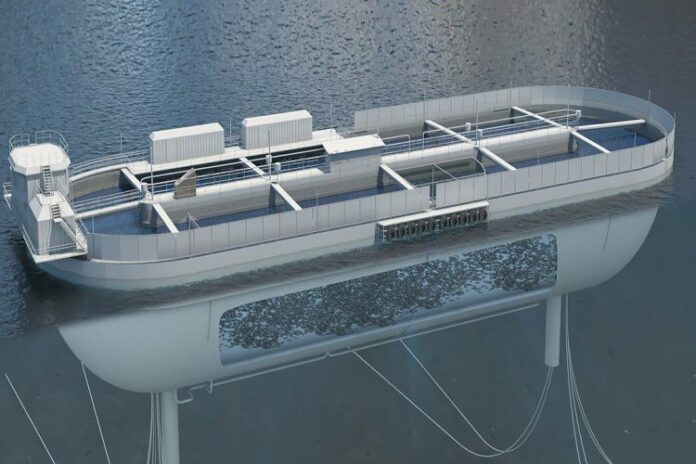
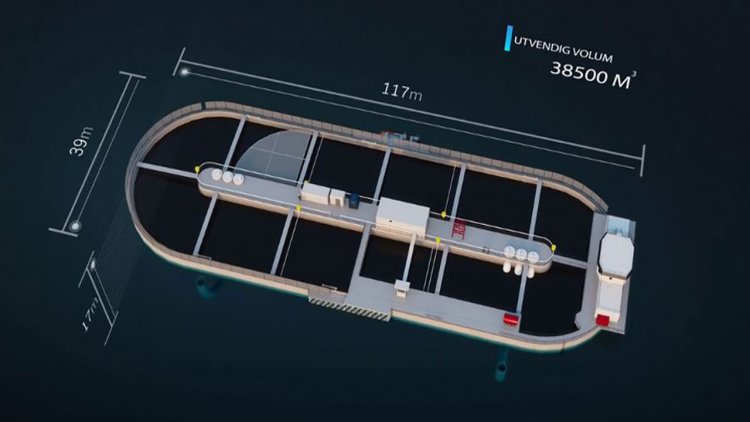
The two companies aim to collaborate on the development of the Stadion Basin innovation project, a closed, floating production system for salmon, scheduled for completion in 2023.

Erlend Haugarvoll, Chairman of the Board for Lingalaks and Stadion Laks, the company behind the Stadion Basin project, confirms:

“The objective with the Stadion Basin is to eliminate problems with salmon lice, accidental release and organic waste, and to provide good growing conditions for salmon. We are delighted that Framo has decided to invest in this important project.” 

Framo and Lingalaks have now signed an agreement for joint ownership (50/50) of the project, which has been awarded development licences equivalent to 1,849 tonnes of biomass.

The basin is designed as a floating, closed, through-flow production unit for salmon farming measuring 39 x 117 metres. Seen from above the basin looks like a sports stadium – hence the name (stadion is the Norwegian word for stadium).

Oddbjørn Jacobsen, Director of Framo Innovation, explains:

“We decided to take part in this project so that we can develop and test new pump technology in the field. Our expertise lies in moving vast volumes of liquids in a controlled manner. Our goal is to be the preferred supplier of pump systems for aquaculture worldwide.”

The objective with the project is to reduce or completely eliminate problems with salmon lice, accidental release, disease and algae, and to find improved methods of handling feed residue and waste products. The plan is to collect sludge and organic waste, such as feed residue and faeces from the fish, and to exploit this as a resource.

Erlend Haugarvoll, Chairman of the Board of Lingalaks and Stadion Laks, says:

“Our goal at Lingalaks is to identify solutions that provide optimal fish health and minimise the impact on our surroundings. We have been working on the Stadion Basin for four years now, and are looking forward to commissioning the system in 2023. If it all turns out as well as expected, it could provide major positive gains in relation to fish health, seafood production in the fjords and for the entire aquaculture industry.”

The plan is to produce the basin in Norway. The technology behind the concept will ensure that all value creation and jobs will remain in Norway, and that the salmon will remain in the sea in Norway rather than being moved to land-based facilities abroad.

Framo will be responsible for the entire through-flow system. This includes taking water from various depths, circulation in the volume of water in the fish farm, removal of sludge and control systems.

Martijn Bergink, CEO of Framo AS, says:

“Closed and semi-closed plants require major pumps to replace the water and create ideal currents. This is where Framo are the experts. Given that our owners, Alfa Laval, are also world leaders within sludge and water treatment, there is little doubt that this will provide for a productive partnership.”

Fugro launches MASSPeople for remote and autonomous training standarts

0

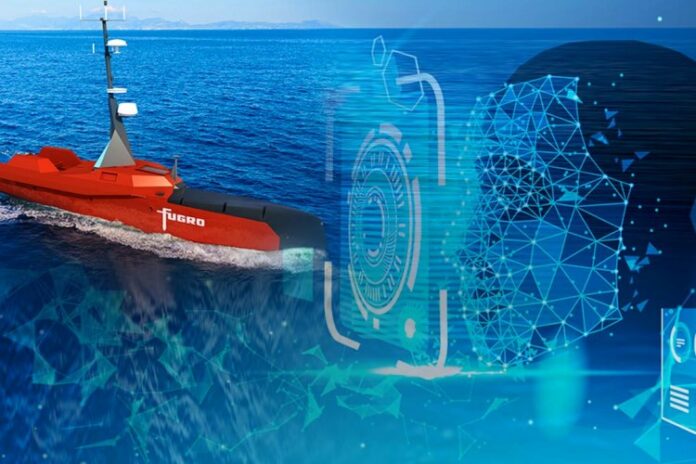
In partnership with SeaBot XR, a leading agency for next-generation cutting-edge learning products and services, and the UK Maritime and Coastguard Agency, Fugro has launched MASSPeople, the Maritime Autonomous Surface Ships (MASS) International Training Standards Working Group.

The group consists of representatives from European and international maritime authorities who will collaborate to develop world-class training and competency standards for remote and autonomous vessels.

The introduction of remote and autonomous technology has brought new ways of working to the maritime sector, and the aim of MASSPeople is to explore the human dimension of remote and autonomously enabled marine surface vessels. 

Fugro and SeaBot XR have already been working together since 2019 to develop new standards and a training framework through which Fugro’s employees can be upskilled in the operation of remote and autonomous vessels, and the new working group will continue these initiatives. MASSPeople will provide recommendations on new competency standards for inclusion into the International Convention of Standards on Training, Certification and Watchkeeping for Seafarers (STCW); the group will also propose specialisms, training structures and qualification requirements for remote and autonomous operators. By focusing on the mariners who operate this new technology, the group aims to ensure that their skills can evolve effectively and to high industry safety standards.

Remko Kloos, Fugro’s Global Director for Fleet Services, said:

“By establishing MASSPeople, we are preparing for the future and the transition to remote and autonomous technology, which is already changing the way our industry operates. This new technology contributes to Fugro’s purpose of creating a safe and liveable world, but it is ultimately our people who make change happen and MASSPeople will ensure they are fully trained and supported in their important mission.“

ENGIE and Equinor join forces in the development of low-carbon hydrogen

0

ENGIE and Equinor announce their partnership to develop joint low-carbon hydrogen activities. 

The partners will investigate the production and market potential for hydrogen from natural gas whereby the CO2 will be captured and stored permanently offshore.

ENGIE and Equinor signed a memorandum of understanding to investigate the development low-carbon hydrogen value chains in Belgium, the Netherlands and France. In the coming months, ENGIE and Equinor will start discussions with potential customers to assess the project, as well as with stakeholders and relevant authorities.

ENGIE and Equinor believe that it is essential to develop low-carbon and renewable hydrogen projects at scale in order to make it possible for industrial customers to significantly reduce CO2 emissions before 2030. This development of low carbon and renewable hydrogen will accelerate the construction of new hydrogen infrastructure and the repurposing of current natural gas infrastructure, thus paving the way for net zero in 2050.

Edouard Neviaski, CEO of the ENGIE’s Business Unit Global Energy Management says:

“We are glad to work on this project with Equinor, a long-standing partner for more than 40 years. ENGIE firmly believes that hydrogen will play a key role in the energy transition. ENGIE produces renewable hydrogen and supports the development of the market for low-carbon hydrogen. Both these technologies will be necessary to accelerate the development of a solid infrastructure and the transition to a carbon neutral economy.”

Grete Tveit, Equinor’s senior vice president for Low Carbon Solutions says:

“Equinor aims to be a leading company in the energy transition. We believe that hydrogen and CCS will be vital if we are going to succeed with the transition. Collaboration and partnerships will be absolutely necessary to find the best solutions. Our two companies have complementary areas of expertise that we can utilize to develop low carbon hydrogen initiatives together.”

VIDEO: Med Marine launched Svitzer’s 30m tugboat

0

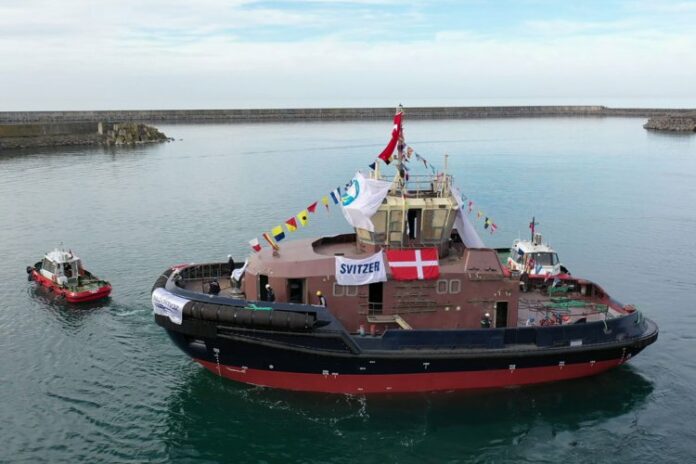
30m 60TBP ASD tugboat, Eregli 85 is being built by Med Marine, leading Turkish shipbuilder and operator, at its group-owned Ereğli Shipyard.

The vessel was successfully launched in Ereğli Shipyard on February 11st, 2021. First vessel of the series Eregli 84 was launched on November 20th, 2020. 
The vessel is a TundRA 3000 / MED-A3060-ICE class tugboat designed by Robert Allan Ltd. The tug will be operated by Svitzer A/S. She is set to be delivered to Svitzer A/S in April 2021.

TundRA 3000 / MED-A3060-ICE design is made for tugs operating in extreme winter conditions, which makes it a great fit for Svitzer’s North European fleet. High-quality and well-designed vessels have some distinctive features compared to other 20 different designs offered in Med Marine’s tugboat portfolio. In this project for Svitzer, the winch is capable to operate over the stern as well via trunk running through the deckhouse. It is also located in an enclosed area to achieve perfect performance even in severe cold weather conditions.

Once delivered, the vessels will operate across Scandinavia, predominantly serving ports in Denmark and Sweden.

TundRA 3000 / MED-A3060-ICE design has following design particulars:

  • LENGTH OVERALL: 30m.
  • BEAM OF HULL: 12.6m.
  • EXTREME BEAM (INCLUDING FENDERS): 13.2m.
  • DEPTH MOULDED: 5.7m.
  • MAXIMUM DRAFT: 5.6m.
  • GROSS TONNAGE: <500GT.
  • MINIMUM BOLLARD PULL: 60ton.
  • POWER: Approx. 3900 kW.

Corvus Energy partners with Seaspan Ferries for Blue Whale ESS field trial

0

Blue Whale is a new large-scale energy storage system (ESS)—a groundbreaking battery system designed for large ships with high zero-emission energy demand, such as cruise ships, large Ro-Pax and Ro-Ro ferries, and cargo ships. Its unique rack-free design of stacking modular blocks provides the industry’s highest volumetric battery room energy density and, consequently, maximizes a ship owner’s passenger or payload opportunities.

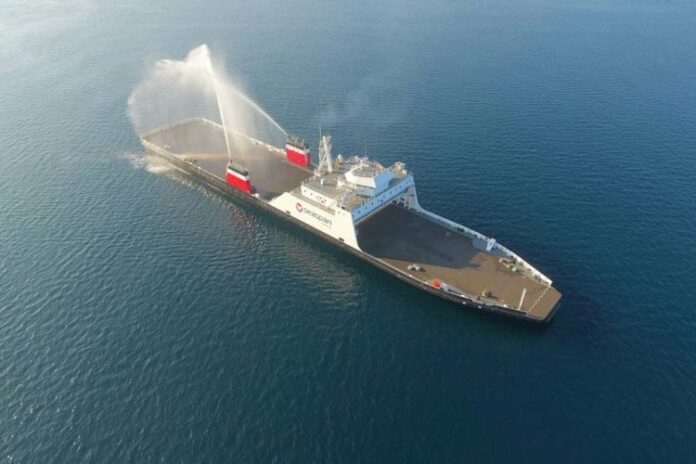
For its inaugural field trial, the Blue Whale battery system will be installed on board Seaspan Reliant, a roll-on/roll-off drop-trailer cargo ferry built in 2016 that sails the Salish Sea, with service between B.C.’s Lower Mainland and Vancouver Island.

Sean Puchalski, EVP Strategy & Business Planning at Corvus Energy, says:

“Seaspan has been an important partner for Corvus Energy. They were amongst the first to install our batteries in North America.”

In addition, Corvus greatly appreciates NRC-IRAP, whose multi-year contributions support the research and development of the Blue Whale ESS product and its Battery Monitoring and Optimization System, as well as the Salish Sea Marine Emission Reductions funding provided by Environment & Climate Change Canada to help make the field trial possible.

Richard Wing, Chief Research & Development Officer at Corvus Energy, says:

“The field trial is an important pre-commercial activity that enables the development team to validate requirements for a high-volume robotic production line and a range of complex post-production processes. During this time of restricted travel due to Covid-19, being able to conduct the field trial in the same location as our Canadian development and manufacturing facilities is a huge benefit and allows us to stay on schedule for commercial product release.”

Corvus’ Wing continues:

“Blue Whale is the result of an extensive, multi-million dollar development effort by our Vancouver R&D team. It leverages what the company has learned over the past decade about maritime energy storage requirements. Rethinking the ESS architecture—the battery chemistry and mechanical, electrical, and software building blocks—from the ground up allowed us to be innovative in so many ways. The new architecture is modular and flexible to suit not only Blue Whale, but an ever-expanding range of maritime energy storage applications in the future.”
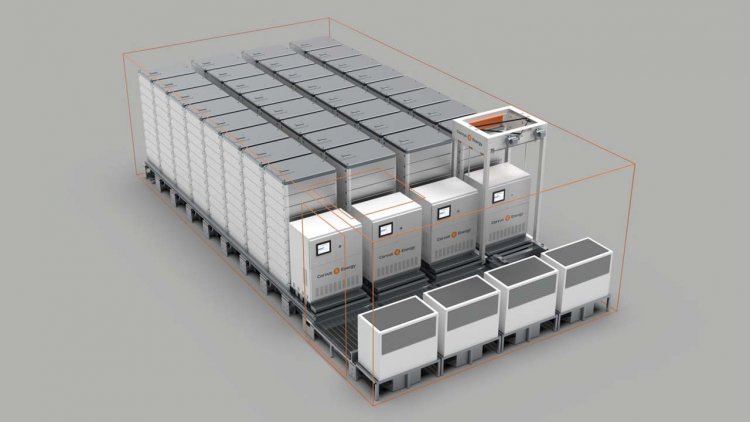
The Blue Whale ESS will replace an in-service first generation Corvus AT6500 ESS in the existing battery room, increasing the vessel’s energy storage capacity from 545 kWh to 1892 kWh.

Corvus’ Wing continues:

“Although Seaspan Reliant is a relatively small vessel for a Blue Whale system and the retrofit will be done on a very tight schedule, the challenging conditions make it ideal for a trial site. Moving and situating the Blue Whale modules and pack controllers into the existing battery room will also test and validate the materials handling equipment and service tools we have developed.”

Installation of the new Blue Whale system is scheduled for Summer 2021, at which time Seaspan also plans to relocate the AT6500 system onto sister vessel, Seaspan Swift.

Blue Whale commissioning and trials will be carried out while the vessel is in full-service operation during the the remaining months of 2021. With three and a half times the previous energy capacity, Seaspan will be able to expand the use of battery power beyond spinning reserve to also provide fuel-efficient peak shaving, load balancing, and even zero-emission operation on battery power only.

Harly Penner, Director of Fleet Renewal and Maintenance at Seaspan Ferries, says:

“The increased battery capacity will give us operational flexibility to enhance service levels while reducing emissions and fuel consumption. We are excited to partner with Corvus again. They have been outstanding collaborators in our quest towards decarbonization through fleet hybridization and electrification.”

Gord Miller, VP Seaspan Ferries, says:

“Seaspan Ferries is committed to caring for the environment, and this is an exciting opportunity to play a role in the transformation of shipping towards a greener and more sustainable industry. This trial will also provide valuable experience locally, as personnel from VARD Marine, BC Hydro and the University of British Columbia will provide integration design, shore charging from the grid infrastructure, and emissions reduction studies respectively—all important areas of expertise to develop as British Columbia develops its coastal emissions reduction plans.”

Once installed, performance data from the ESS will be collected automatically, analyzed and monitored remotely through Corvus’ cloud-based monitoring and optimization system, providing valuable feedback to the R&D team.

The Blue Whale field trial and all key maritime authority certifications are expected to be completed by Spring 2022, at which time commercial deliveries will commence.