-6.1 C
New York
Home Blog Page 679

JAX LNG and TOTE Services conducted their first ship-to-ship LNG bunkering at JAXPORT

0

Crews loaded 1,800 m3 (~450,000 gallons) of LNG from North America’s first LNG bunker barge, the Clean Jacksonville, to the LNG-powered vehicle carrier, Siem Confucius, at JAXPORT’s Blount Island Marine Terminal.

In preparation for the bunkering, JAX LNG worked closely with TOTE Services to utilize the Clean Jacksonville while also gaining acceptance from the U.S. Coast Guard to perform the bunkering during all potential cargo loading conditions. After loading at the JAX LNG facility, the Clean Jacksonville maneuvered alongside Siem Confucius to perform the milestone fuel transfer.

The 7,500-car-capacity Siem Confucius and its sister ship, Siem Aristotle, are Liberian-Registered and regularly call on JAXPORT to unload factory-new Volkswagen Group of America cars and SUVs.

Siem Car Carriers President Jeffrey Campbell said:

“Our modern and eco-friendly fleet helps reduce emissions while maximizing efficiency. We are thrilled to partner with other pioneers in the environmental conservation movement, including Volkswagen, JAX LNG, TOTE Services, and JAXPORT, to reduce emissions while providing world-class service to the industry.”

TOTE Services operates the Clean Jacksonville and has successfully performed more than 150 bunkering events for TOTE’s Marlin class vessels, the world’s first LNG-powered container ships.  

TOTE Services President Jeff Dixon said:

“This commercial bunkering is a major milestone for TOTE Services and a significant step toward supporting clean fueled vessels operating around the world. TOTE Services’ significant experience with LNG – combined with our technical expertise and commitment to safety – allows us to assist other customers adopting use of the cleanest, most readily available fuel for shipping today and into the future.”

JAXPORT CEO Eric Green said:

“Some of the world’s most eco-friendly ships call JAXPORT thanks to the innovation and vision of our customers and port partners. Jacksonville is a global leader in the use of LNG and we are proud to support the continued growth of LNG in the maritime industry and beyond.”

Roger Williams of BHE GT&S, a Berkshire Hathaway Energy Company and joint partner and operator of JAX LNG, said:

“We are delighted to have earned the trust and confidence of Siem Car Carriers to offer our LNG bunker service during the Siem Confucius recent call on JAXPORT. By using the Clean Jacksonville, JAX LNG is leveraging the investment and expertise of our extraordinary partner- TOTE Services.”
Orkney leading the way with hydrogen seafarer training

0

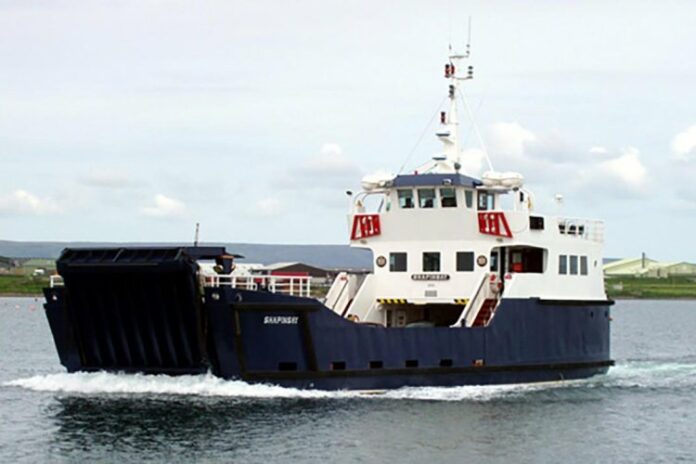
Five crew members from Orkney Ferries’ MV Shapinsay completed the course, equipping them with the necessary skills to work onboard the ferry when hydrogen, a zero-emission fuel, is used in the vessel’s system.

This follows on from an earlier course completed by the crew which focused solely on the handling of hydrogen as a cargo.

The new course, believed to be the first of its kind in the world, was developed and delivered in Orkney by Orkney College UHI’s Maritime Studies department in collaboration with Orkney Ferries and the European Marine Energy Centre (EMEC).

Delivery of the course was supervised virtually by Maritime and Coastguard Agency (MCA) assessors who have now recommended the course and content for official recognition.

The world-leading course is the latest milestone in the HyDIME project – an Innovate UK funded project that will integrate hydrogen storage onboard the ferry operating between Shapinsay and Kirkwall, and trial hydrogen as a fuel in one of the vessel’s auxiliary engines.

The four-day course covered a range of theoretical and practical aspects relating to the use of hydrogen fuel on board vessels. This included storage under pressure, safe working practice around hydrogen gas, refuelling (also known as a bunkering), firefighting as well as operational and safety management procedures specific to the hydrogen equipment installed on the MV Shapinsay.

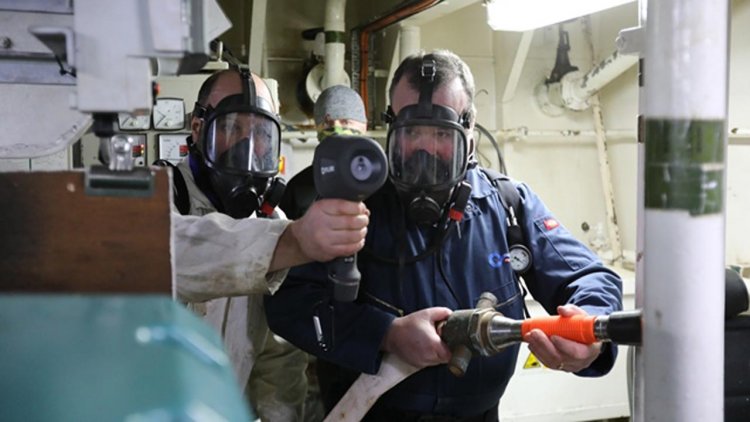
The last day, dedicated to practical training, saw the cohort take part in several practice drills for hydrogen bunkering and fire safety. Each crew member completed a hydrogen bunkering simulation using the training rig facility owned and operated by EMEC at the Kirkwall Pier Fuel Cell with additional support from Northwards, a local haulage company experienced in hydrogen transportation.

Credit Colin Keldie, courtesy of HyDIME

Crew members were also trained in how to detect hydrogen fires which are almost invisible to the naked eye by using thermal imaging, as well as the very specific ways in which fires are fought when hydrogen is present.

The new training will be a requirement in UK waters for working on vessels using hydrogen as a fuel and is an addition to existing international requirements under the IGF code (International Code of Safety for Ships using Gases or other Low-flashpoint Fuels).

Commenting on the new course, Mark Shiner from the Maritime Studies Department of Orkney College UHI, said:

“This has been a great piece of local teamwork between the Maritime Studies department, Orkney Ferries and EMEC. According to the Zero Emissions Ship Technology Association this is a world first and we have cause to be very proud of that indeed. We’ve received some very encouraging messages from hydrogen organisations at home and abroad and enquiries from other European hydrogen vessel projects who are considering using our training. There is huge potential in hydrogen training, not only for seafarers but maintenance technicians, heating engineers, automotive engineers and others. I am looking forward to Orkney College UHI taking this agenda forward, building on what we have done so far.”

Working with a wide variety of partners from the rest of Scotland, UK and Europe, Orkney is playing a pivotal role in the development of green hydrogen technologies through a variety of projects including HyDIME, Surf N Turf and BigHIT, which will help in meeting carbon reduction targets and supporting the further development of renewable energy technologies.

Austal reaches major milestone in construction of trimaran for Fred. Olsen Express

0

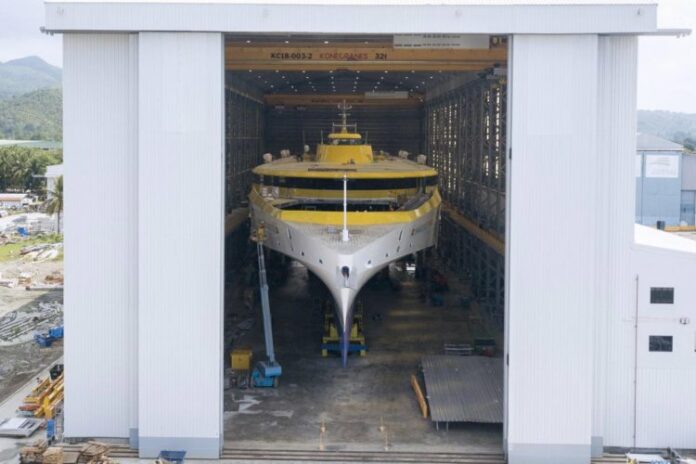
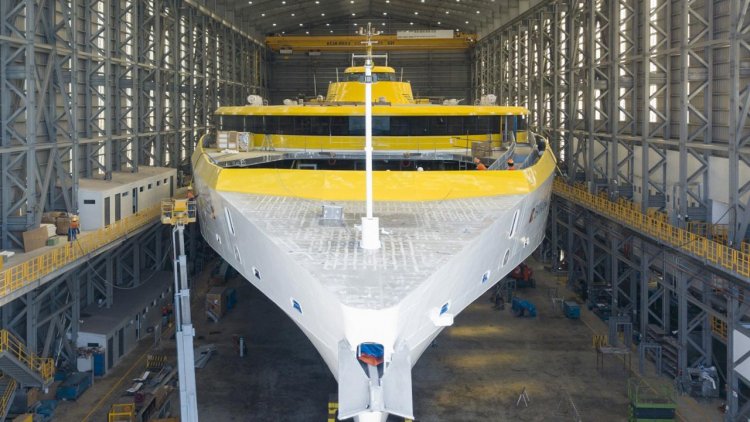
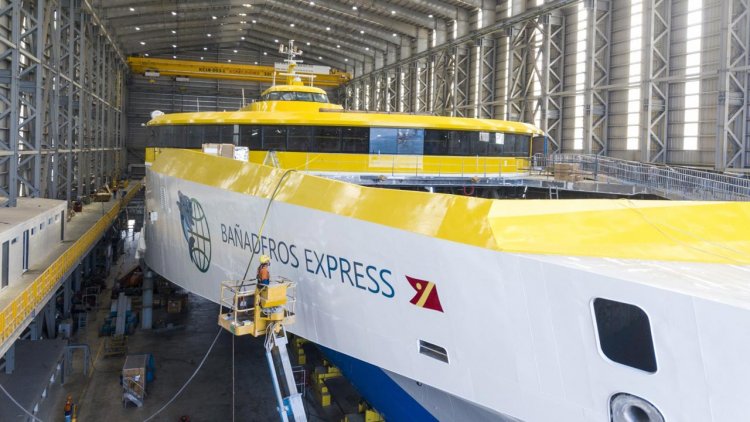
The second of two ‘Auto Express 118’ high-speed trimaran ferries ordered by Fred. Olsen Express of the Canary Islands, Bañaderos Express, is scheduled for launch later this month. Austal Australia delivered the first trimaran of the two vessel A$190 million contract, the Bajamar Express, in July 2020.

Austal Limited Chief Executive Officer Paddy Gregg said the milestone was significant given the continuing challenges around shipbuilding during the COVID-19 pandemic in The Philippines.

Mr Gregg said:

“The successful installation of the waterjets on Bañaderos Express is a great demonstration of the commitment, skill and resilience of the Austal Philippines shipbuilding team.”

“While the shipyard continues to meet all COVID-19 workplace requirements, the team have managed to safely and efficiently install some of the largest components to be installed on the vessel.’

Austal Philippines President Wayne Murray said the accomplishment was even more significant considering the shipyard was both completing final sea trials on the first large vessel completed on the Balamban site and constructing the largest (by volume) ferry ever constructed by the Austal group.

Mr Murray said:

“Austal Philippines is well advanced on the construction of Express 5, a 115 metre high speed vehicle-passenger catamaran ferry for Molslinjen of Denmark and we’re preparing for the imminent delivery of a 109 metre catamaran ferry, FSTR, for Fjord Line of Norway.”

In addition to the installation of the four Kongsberg KaMeWa 125 S3 waterjets, Austal Philippines also completed the installation of the major Austal MOTION CONTROL SYSTEM components, including swinging T-foils, trim flaps as well as the streamlined, drop-down bow thrusters at the same time; effectively all of the highly efficient underwater appendages to the trimaran hull form that help deliver superior seakeeping and passenger comfort.

Marín highlighted the efficient coordination and close collaboration between Fred. Olsen Express and Austal Philippines, to adapt the complex work schedule and to confidently and effectively face the difficulties associated with operating during the COVID-19 pandemic.

Bañaderos Express is a 118 metre aluminium trimaran, capable of transporting more than 1,100 passengers and 276 cars at cruising speeds up to 38 knots. Along with her sister ship, Bajamar Express, the ship features an optimised trimaran hull form and Austal’s industry-leading MARINELINK monitoring and control system. 

DEME Offshore awarded Transport & Installation contract for Hollandse Kust

0

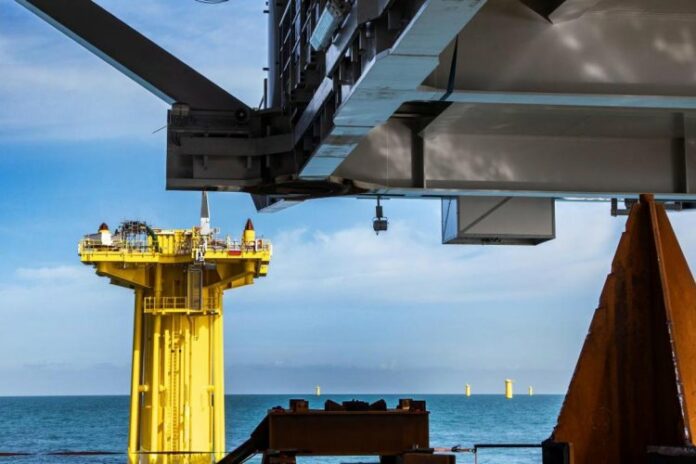
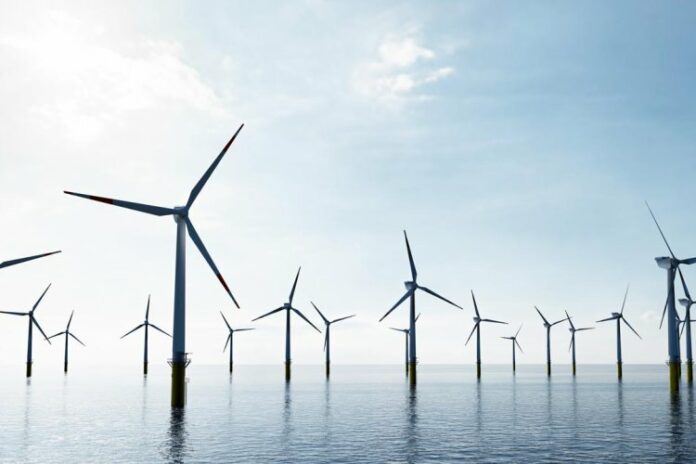
DEME Offshore will also supply and install scour protection for both substations, which will be installed at the Hollandse Kust (noord) and (west Alpha) wind farms.

The contract has been awarded by the joint venture ENGIE Solutions-Iemants (a subsidiary of Smulders) that is responsible for the engineering, procurement, construction and offshore installation of the two substations.

Installation of the scour protection and jacket for Hollandse Kust (noord) is planned for the second half of 2021, while the topside for Hollandse Kust (noord) and jacket for (west Alpha) will be installed during the summer of 2022. The topside for Hollandse Kust (west Alpha) will be installed in 2023.

The offshore substations will be located in the Dutch North Sea. 40% of the Netherlands’ electricity needs will come from offshore wind farms by 2030. TenneT will realise the grid connections for these wind farms.

Bas Nekeman, Business Unit Director at DEME Offshore, comments:

“We are very pleased with the trust one of the most experienced leaders in offshore substation construction has again placed in DEME Offshore. The combination of ENGIE Solutions-Iemants’ extensive know-how, combined with our expertise in tailored solutions for the offshore wind industry, has proven to be successful in the past few years when we have worked closely together to achieve challenging projects such as the SeaMade and Moray East offshore wind farms.”

The offshore platforms Hollandse Kust (noord) and Hollandse Kust (west Alpha) platforms will be located in the North Sea along the Dutch coast and will be operational by respectively 2023 and 2024. In 2030, 40 percent of the electricity demand of the Netherlands will be supplied by the electricity of offshore wind farms. TenneT realises the grid connections for these wind farms.

These 700 MW platforms will be the fifth and sixth large-scale grid connections for offshore wind energy in the Netherlands, built and operated by TenneT. The first high-voltage connections for the wind farms near Borssele are now operational, and will be followed by the connections for Hollandse Kust (zuid) in 2022. TenneT will realise approximately 9.6 GW of high-voltage connections in the Dutch North Sea by 2030.

K-LINE: Adopting full scale of AI data analysis technology for environmental load reduction

0

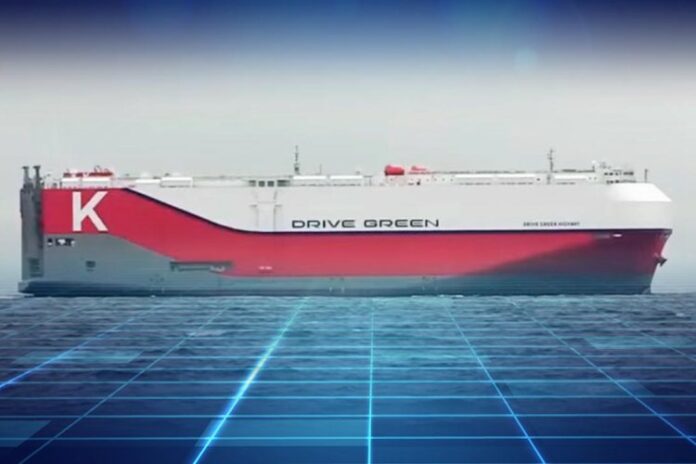
Kawasaki Kisen Kaisha, Ltd. (“K” LINE) has decided to adopt Artificial Intelligence (AI) developed by Bearing, Inc. for the ship ICT system “Kawasaki Integrated Maritime Solutions” on 300+ ships under its operation for the purpose of improving performance evaluation accuracy. 

By combining the high-quality data collection technology that the company has made over 20 years with the world’s most advanced AI technology of Bearing, Inc., “K” LINE will realize higher accuracy of performance evaluation and reduce environmental load by economical and safe navigation.

Accurate evaluation of vessel operational performance in the actual sea area is highly important for enhancing economical operations and environmental friendly measures. With existing IoT technologies, certain level of operational performance evaluation with a certain accuracy using big data obtained in real time is still possible, but further improvement in accuracy is necessary in the shipping, shipbuilding, and marine equipment industries.

For many years, “K” LINE has focused on “collection of high-quality data” and “advanced data analysis technology” and has made various efforts to improve the accuracy of performance evaluation technology. As a part of this, from the end of 2019, the company has conducted a demonstration experiment to verify and evaluate data analysis technology by AI developed by Bearing, Inc.

According to Bearing, Inc. other reason of successful result by the AI adoption is high quality operational data which “K” LINE has been piling up as its long-standing efforts, which makes Bearing, Inc’s AI analysis more accurate, and it can be said that our long-standing efforts have paid off.

In the future, by utilizing Bearing, Inc.‘s technology and high quality operational data, “K” LINE will not only accurately grasp the operational performance of each vessel in the actual sea area and use it for operational management, but also accurately evaluate various fuel reduction efforts in both software and hardware, improve operational performance and advance ship management.

“K” LINE pursues safety, environment and quality as priority initiatives for our value creation in the management plan and accelerate those issues by DX utilizing big data and AI technology.

Joint project simulates wind and wave loads on the piles of offshore wind turbines

0

The support structures of offshore wind turbines, in most cases large steel tubes (monopiles), are subject to huge loads from the wind, waves, and sea currents. 

A joint project between the Leibniz University Hannover (LUH) and the Fraunhofer Institute for Wind Energy Systems IWES together with other partners is examining the properties of the current and next generation of offshore monopiles. These results are then used to develop a reliable calculation method to enable the longest possible service life. The Federal Ministry for Economic Affairs and Energy (BMWi) is funding the Ho-Pile project (investigations into the horizontal load-bearing behavior of XL monopiles under cyclic loading, grant no 0324331) to the tune of around €1,675,000.

In order to replicate offshore conditions, scientists filled the ten-meter deep geotechnical test pit at the Test Center Support Structures Hanover (TTH) of LUH under defined conditions with sand that has typical offshore properties in terms of structure and grain size. The water level was then raised to the upper edge of the sand. 

Severin Spill, the project manager at the Fraunhofer IWES, explained:

“Reproducible offshore-like conditions as well as realistic relationships between soil and pile stiffnesses are important in order to ensure a reliable database for model validation later on.”

Over the past months, 3 piles have been driven into the soil with a diameter of up to 1.50 m and an embedment length of 6.15 m. On this large scale of 1:5, such tests conducted under controllable realistic conditions are unique in Europe.

The cyclical and static load tests on the model piles are now getting underway. To this end, a steel tube tower has been mounted on the installed piles. A hydraulic cylinder which is secured horizontally to the tower head simulates the relevant load situation. The soil and structural behavior were analyzed and assessed during installation and now again during pile testing. The aim is to develop a validated calculation approach which contributes to the longest possible operationally safe life span of at least 20 years while improving the cost efficiency of the support structure.

Today, a different calculation basis is used in virtually every offshore project. Often the calculations are based on methods which were originally developed for the oil and gas industry. These, however, cannot be transferred readily since the monopiles of offshore wind turbines normally have considerably larger dimensions and are subject to greater dynamic loads. 

Florian tom Wörden from the Institute of Geotechnical Engineering at Leibniz University Hannover and Dr.-Ing. Mareike Collmann from the TTH. Since a large share of the costs of an offshore wind turbine can be attributed to the foundation structure, an improved design approach will serve directly to reduce the overall costs of energy generation.

The focus of investigations at the TTH is on the impact of the horizontal wind and wave loads which constantly act on the monopile in a cyclical manner. The results will be the basis for the further development of advanced numerical models which can be used in industrial applications. A universally valid calculation approach which enables a more reliable and more economic monopile design is to be developed. 

Next step toward construction of oceanographic science vessel for Canadian Coast Guard

0

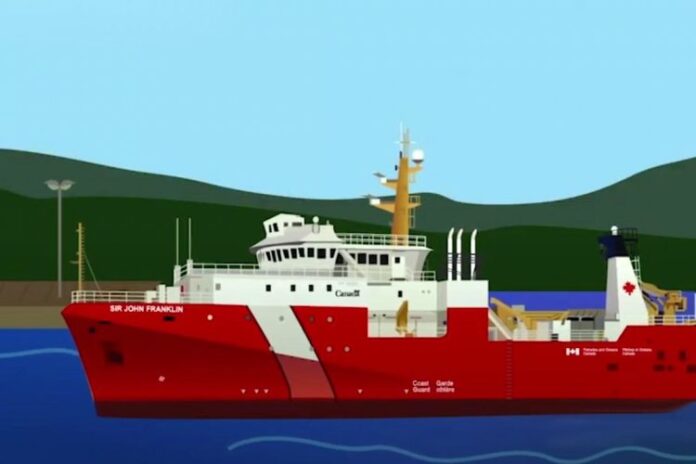
The Government of Canada has awarded a contract of $453.8 million (taxes included) to Seaspan’s Vancouver Shipyards to enable the company to transition the offshore oceanographic science vessel (OOSV) project from the design phase to full construction.

Construction of the OOSV will begin in spring 2021, with delivery expected in 2024.

The OOSV will replace the CCGS Hudson, the Canadian Coast Guard’s oldest and largest science vessel. The vessel will be capable of performing multiple tasks, including oceanographic, geological and hydrographic survey missions. This work will contribute to Canada’s understanding of oceans and the impacts of climate change.

The Government of Canada remains firmly committed to implementing the NSS and delivering important benefits for Canadian shipyards and suppliers across Canada. This contract is expected to create or sustain more than 700 jobs annually. 

Anita Anand, Minister of Public Services and Procurement, says:

“We are celebrating another important milestone under the National Shipbuilding Strategy. The offshore oceanographic science vessel will support the Government of Canada’s scientists in conducting vital research that will contribute to the stewardship of Canada’s ocean resources.”

François-Philippe Champagne, Minister of Innovation, Science and Industry, says:

“There are clear advantages to building this ship in Canada for the Canadian Coast Guard. This contract will mean jobs for workers at the shipyard, opportunities for suppliers and investments in Canada’s economy. It also means a stronger marine industry for Canada, one that will deliver benefits for years to come.”

Mark Lamarre, Chief Executive Officer, Seaspan Shipyards, says:

“Coming on the heels of the first full fleet of new fisheries science vessels being delivered, this build contract for the offshore oceanographic science vessel signals the critical transition from the design phase of the vessel to full-rate construction. We look forward to officially moving the program out of engineering and into the yard, and to cutting steel in the very near future. Watching the iconic red and white of a Canadian Coast Guard ship taking shape in our yard never gets old.”  

Holland Shipyards Group to build new survey vessel for Waterschap Scheldestromen

0

Waterschap Scheldestromen has awarded Holland Shipyards Group for the delivery of a new survey vessel. 

The vessel measures 15,15 m by 4,90 m and will be suitable for sailing along the Zeeland coast, up to 5 nautical miles off the coast. It will be provided with two permanent magnet motors, each with a capacity of 85 kW, and a generatorset with variable speed, ensuring optimal fuel consumption and operational reliability by switching generators on and off automatically.

For its hydrographic survey duties it is equipped with both a singlebeam and multibeam echosounder.

The ship’s design takes in account future plans to be converted into a battery powered full electric vessel.  

Building of the vessel will start in March at the Holland Shipyards Group’s yard in Werkendam.

Kyma joins Kongsberg’s Kognifai Partner Program

0

The first of several applications that will become available to Vessel Insight customers is Kyma Data Analysis. 

This application has previously only been available to Kyma’s premium online customers but will now also become available as a standalone application in the Kognifai Marketplace. The application helps customers gain insight in their power distribution, speed and fuel consumption to reduce their emissions. The next applications in line, expected to be ready and integrated with Vessel Insight, is their charter party and notification center applications.

Eirik Næsje, SVP Vessel Insight, says:

“Having Kyma AS joining the Kognifai Partner Program means giving our customers access to sophisticated tools for overall vessel performance monitoring and evaluating fleet performance overall. We are very happy to have Kyma AS join us and know that this development will benefit customers who are looking to reduce emissions and increase cost-efficiency through Vessel Insight.”

For customers, the partnership between Kyma AS and KONGSBERG means KONGSBERG’s vessel-to cloud data infrastructure will feed data seamlessly to Kyma’s applications. The Data Analysis application generates reports, as required, based on these measurements, including graphical, numerical, and predicted values based on the dataset used. It permits the user to take action to raise the ship performance and make decision to optimize the ship efficiency. With Kyma, customers of Vessel Insight get vessel data and comparison of any parameter available, collected with high frequency.  With these, reports are generated to obtain insights from the data collected by establishing relational comparison and statistical analysis of the variables available. 

Halldor Rongve, Managing Director, Kyma AS, says:

“We are pleased to extend our long cooperation with Kongsberg and excited to join the Kognifai Partner Program to accelerate the pace in the maritime digitalization. This extended cooperation will increase the accessibility of Kyma’s performance solutions by offering parts of our well proven performance optimization software in the Kognifai Marketplace as standalone applications.”

Maersk will operate the world’s first carbon neutral liner vessel by 2023

0

Fast-tracked by advances in technology and increasing customer demand for sustainable supply chains, A.P. Moller – Maersk accelerates the efforts to decarbonise marine operations with the launch of the world’s first carbon neutral liner vessel in 2023 – seven years ahead of the initial 2030-ambition.

All future Maersk owned new buildings will have dual fuel technology installed, enabling either carbon neutral operations or operation on standard very low sulphur fuel oil (VLSFO).

Søren Skou, CEO, A.P. Moller – Maersk, says:

“A.P. Moller – Maersk’s ambition is to lead the way in decarbonising global logistics. Our customers expect us to help them decarbonise their global supply chains, and we are embracing the challenge, working on solving the practical, technical and safety challenges inherent in the carbon neutral fuels we need in the future. Our ambition to have a carbon neutral fleet by 2050 was a moonshot when we announced in 2018. Today we see it as a challenging, yet achievable target to reach.”

Around half of Maersk’s 200 largest customers have set – or are in the process of setting – ambitious science-based or zero carbon targets for their supply chains, and the figure is on the rise.

Maersk’s methanol feeder vessel will have a capacity of around 2000 TEU and be deployed in one of its intra-regional networks. While the vessel will be able to operate on standard VLSFO, the plan is to operate the vessel on carbon neutral e-methanol or sustainable bio-methanol from day one.

Henriette Hallberg Thygesen, CEO of Fleet & Strategic Brands, A.P. Moller – Maersk, says:

“It will be a significant challenge to source an adequate supply of carbon neutral methanol within our timeline to pioneer this technology. Our success relies on customers embracing this groundbreaking product and strengthened collaboration with fuel manufacturers, technology partners and developers to ramp up production fast enough. We believe our aspiration to put the world’s first carbon neutral liner vessel in operation by 2023 is the best way to kick start the rapid scaling of carbon neutral fuels we will need.”

Both the methanol-fueled feeder vessel and the decision to install dual fuel engines on future newbuildings are part of Maersk’s ongoing fleet replacement. CAPEX implications will be manageable and are included in current guidance.

Søren Skou, CEO, A.P. Moller – Maersk, says:

“Our ambition to have a carbon neutral fleet by 2050 was a moonshot when we announced in 2018. Today we see it as a challenging, yet achievable target to reach.”